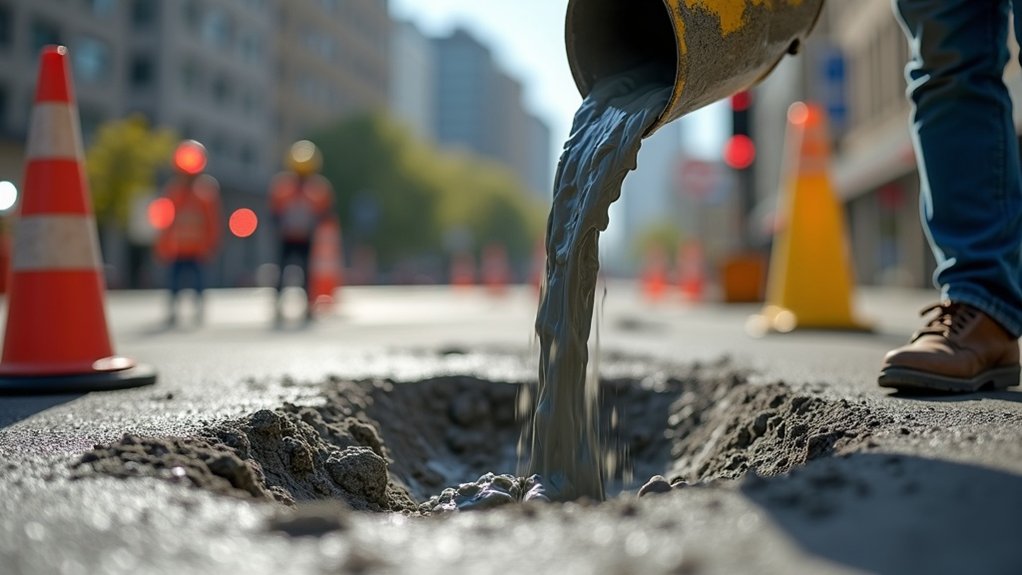
Rapid-hardening concrete is perfect for emergency repairs as it achieves high compressive strength rapidly, allowing for quick traffic restoration and minimal disruption. With setting times of just 15-30 minutes, it can be applied swiftly without the need for specialised tools. Its enhanced durability enables it to withstand harsh conditions, while its cost efficiency helps keep labour expenses down. Proven to perform well over the long term, it’s an excellent choice for urgent infrastructure needs. Explore the many benefits that make it the go-to solution for your projects.
Key Takeaways
- Rapid-hardening concrete reaches high compressive strengths quickly, allowing loads to be applied immediately and reducing downtime during repairs.
- It facilitates quick traffic restoration, enabling roads to reopen within hours rather than days, minimising disruption.
- Its enhanced durability ensures long-lasting performance, capable of withstanding harsh conditions and maintaining structural integrity over time.
- Cost efficiency is improved through shorter project durations, which lowers overhead costs and reduces the number of labour hours needed for repairs.
- The application process is straightforward, requiring minimal preparation, making it ideal for on-site personnel during urgent construction scenarios.
Fast Strength Gain for Immediate Use
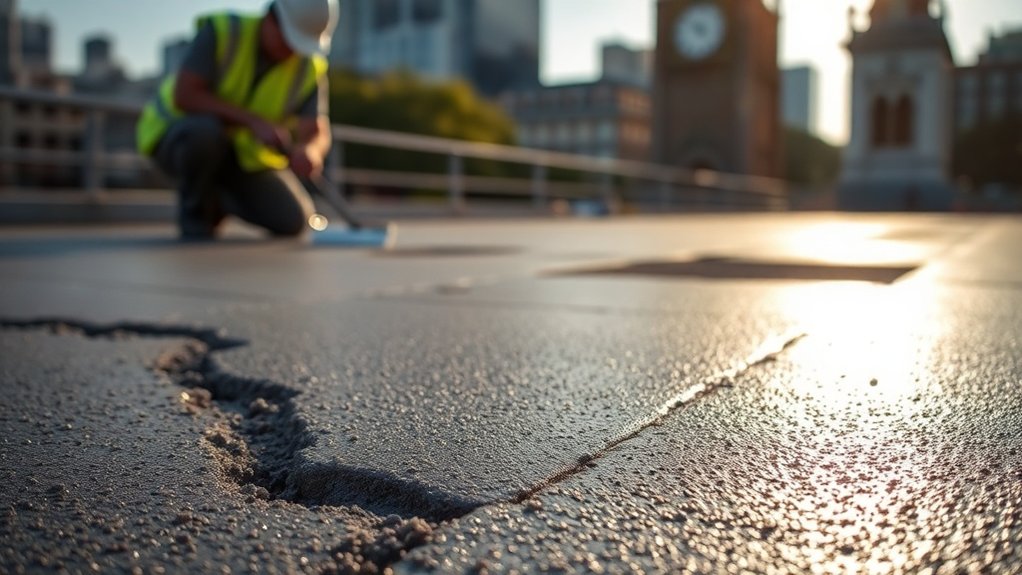
When you need quick structural support, rapid-hardening concrete is a vital solution thanks to its fast strength gain. This type of concrete can reach compressive strengths of around 2000 psi in just 3 hours, with some mixes even hitting 4500 psi in 1.5 hours.
This accelerated performance is largely due to effective hydration, with additives like microsilica and calcium chloride boosting early strength by up to 25%. Additionally, the modulus of rupture can reach about 350 psi in the same period, showcasing its significant flexural strength. This rapid strength development allows for prompt mechanical loading, making rapid-hardening concrete an excellent choice for urgent repairs where structural integrity is crucial. Furthermore, setting indicates loss of fluidity, which means that while the concrete may set quickly, its continued strength development is equally important for long-term performance. Moreover, using high PSI concrete provides enhanced durability and load-bearing capacity essential for emergency structural applications.
Minimizing Downtime in Critical Situations
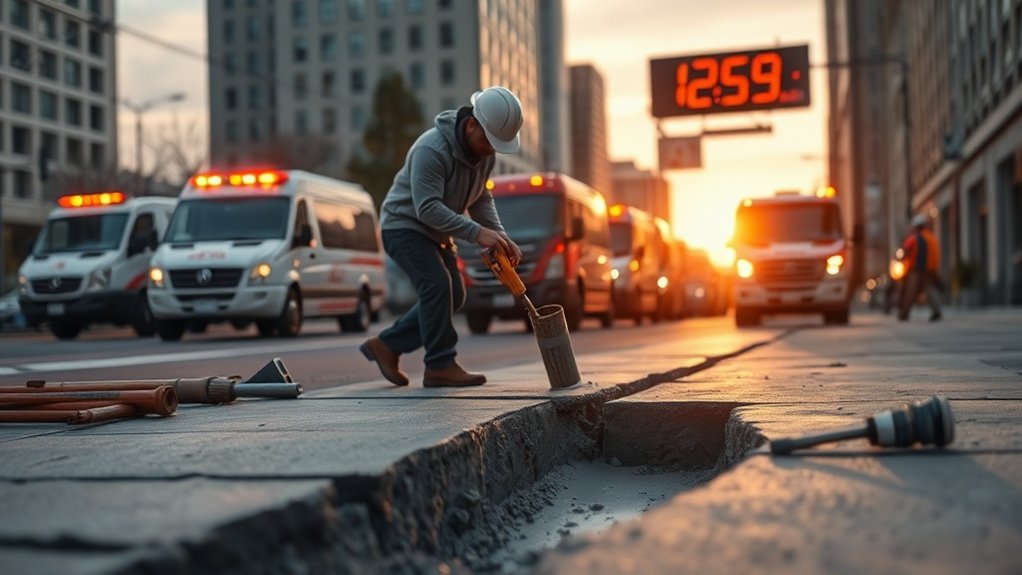
In critical situations, a quick repair using rapid-hardening concrete is vital to minimise downtime. This method allows for swift traffic restoration, significantly reducing disruptions and economic impacts on local areas. For example, when a road is damaged, rapid repairs can get it back open in hours rather than days, helping businesses and commuters alike. This approach not only maintains operational continuity but also boosts overall project efficiency. Additionally, the use of rapid hardening cement ensures that the repaired structures achieve strength faster, further minimizing the time required for repairs. Furthermore, the ability of self-consolidating concrete to flow easily around reinforcements can enhance the effectiveness of these rapid repairs by ensuring a dense and durable mix.
Rapid Repair Turnaround
To minimise downtime in critical situations, rapid-hardening concrete provides a swift solution for repairs. This material achieves a compressive strength of around 25 MPa within just 24 hours, significantly cutting down on waiting times. Its rapid hydration reaction generates heat and quickly forms a robust crystalline structure. This early strength gain allows structures to bear loads shortly after application, facilitating effective repair strategies that ensure quick reopening of vital infrastructure. In emergency situations, this reduces operational downtime, enabling prompt traffic restoration and enhancing safety. Additionally, by lowering labour and overhead costs, rapid-hardening concrete improves project efficiency, making it an excellent choice for urgent repairs in various conditions. Furthermore, the composition of rapid-hardening cement, with high tricalcium silicate content, promotes faster hydration and strength gain, further optimizing repair timelines. The use of high-performance concrete in these applications can further enhance durability and structural integrity, providing a reliable solution during emergencies.
Fast Traffic Restoration
As rapid-hardening concrete becomes more widely used for emergency repairs, its capacity to enable quick traffic restoration is vital for reducing downtime. This type of concrete can gain enough strength to reopen traffic lanes in just 6 to 8 hours, significantly cutting closure times on important roads.
For example, the Highways England often completes slab replacements overnight within a 6-hour timeframe. Fast restoration helps to ease traffic congestion, improving travel reliability and maintaining flow during busy periods.
Furthermore, shorter lane closures enhance safety for both construction workers and motorists by minimising exposure to hazards. By scheduling repairs during off-peak hours, rapid-hardening concrete effectively aids traffic management, ensuring safer and more efficient routes in urban areas.
Economic Impact Reduction
Rapid-hardening concrete allows for quick traffic restoration and significantly reduces economic impacts during essential repairs. By achieving early compressive strength, it enables faster service resumption, which is crucial for economic resilience.
Shorter repair times lead to lower labour costs and less idle equipment, saving money on operations. This early reopening helps minimise disruptions for businesses and logistics, supporting a more sustainable infrastructure.
Quick restoration also reduces traffic detours, benefiting local shops and transport-dependent sectors. Furthermore, efficient use of resources cuts down on material waste and lessens environmental impact.
Although initial costs may be higher, the long-term savings from reduced downtime and increased durability make rapid-hardening concrete a wise investment, offering substantial economic advantages in the long run.
Enhanced Durability for Long-Term Performance

While emergency repairs require quick fixes, ensuring long-term durability is just as important. Rapid-hardening concrete (RHC) stands out with its impressive durability. It can achieve over 70% of its 28-day strength within just two days, which helps to reduce downtime significantly.
RHC also meets vital performance criteria, such as frost resistance, enduring at least 180 freeze-thaw cycles.
Moreover, well-designed mixes lower permeability, which helps prevent moisture damage and increases the material’s lifespan. By controlling shrinkage and improving crack resistance, RHC maintains structural integrity, ensuring that emergency repairs remain effective even in challenging conditions.
Highlighting these factors is essential for successful infrastructure restoration.
Versatile Applications in Infrastructure Repairs
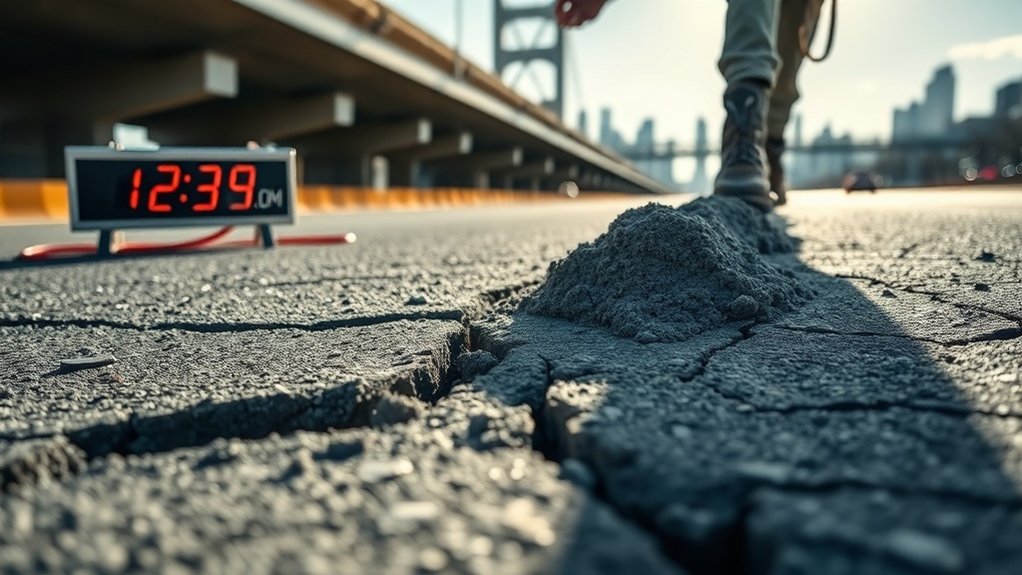
Rapid road rehabilitation relies heavily on rapid-hardening concrete to reduce traffic disruptions.
Its quick restoration of load capacity makes it perfect for urgent infrastructure repairs, such as on roads, bridges, and runways.
This adaptability boosts operational efficiency and ensures that vital infrastructure stays functional with minimal downtime.
Quick Road Rehabilitation
Quick road rehabilitation is crucial for keeping our infrastructure efficient, particularly in busy areas where delays can cause significant disruptions.
Using rapid-hardening concrete, you can achieve over 2000 psi compressive strength in just three hours, allowing roads to reopen quickly. This concrete can be customised with various admixtures to meet specific project requirements while also supporting sustainability by reducing downtime.
Its flexibility allows it to adapt to different surface contours, ensuring it remains durable under traffic loads. Whether you’re using slip-form paving for larger projects or applying it manually for more intricate repairs, rapid-hardening concrete offers great versatility.
Emergency Infrastructure Recovery
Rapid-hardening concrete plays a vital role in emergency infrastructure recovery, offering quick solutions for urgent repairs in various situations. This type of concrete allows for the speedy restoration of bridges, roads, and utility systems, which is crucial for maintaining infrastructure resilience.
It achieves a strength of up to 25 MPa within 24 hours, enabling early load applications and significantly reducing downtime. The adaptability of mix designs means it can be tailored to specific repair needs, while on-site mixing facilitates prompt responses without relying on distant supplies.
This concrete is particularly advantageous in cold weather, where it performs well even in challenging conditions, reducing the risk of frost damage. Overall, its unique properties support rapid recovery efforts, ensuring that essential services remain intact when communities need them most.
Cost Efficiency and Labor Savings Benefits
Using rapid-hardening concrete can significantly improve cost efficiency and save on labour during emergency repairs. Its ability to achieve high early strength means that project durations are greatly reduced, allowing for quicker removal of formwork and less downtime.
In your cost analysis, you’ll notice that lower overhead costs, such as site management and equipment rentals, will lead to budget savings. Additionally, the faster construction process results in fewer man-hours and lower wage costs. This efficiency also reduces exposure to hazardous conditions, improving worker safety.
Furthermore, optimising equipment usage can lower rental fees and maintenance expenses. Overall, these factors lead to a more streamlined operation, ensuring that repairs are completed on time while making the best use of resources across different projects.
Convenience and Ease of Use for Quick Repairs
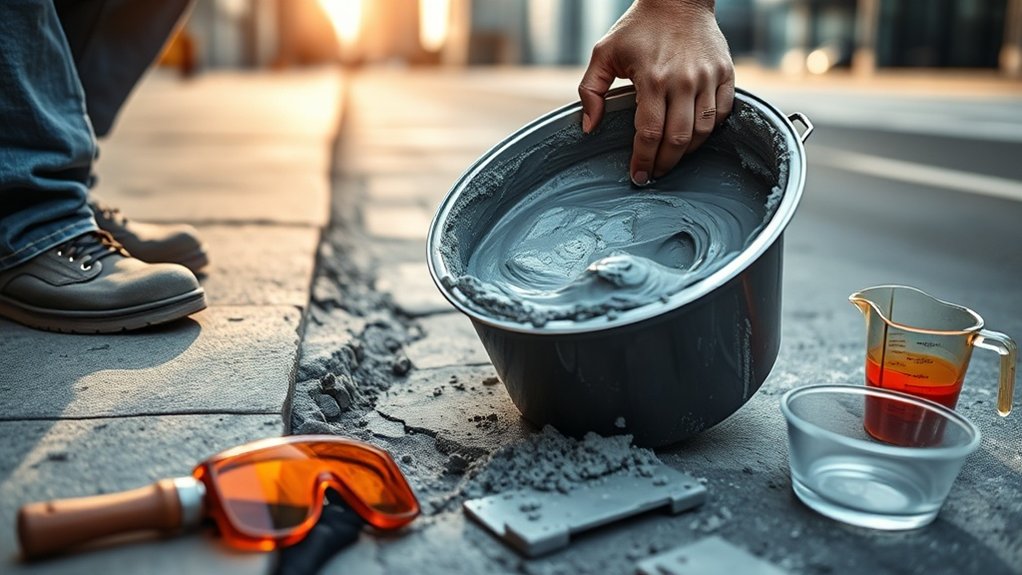
In emergency repair situations, the convenience and ease of use of rapid-hardening concrete are invaluable. Its straightforward application simplifies the repair process, allowing for easy mixing and application. The readily available options, whether pre-blended or two-part, require no special tools, making it accessible for on-site personnel.
| Feature | Benefit | Impact |
|---|---|---|
| Rapid Setting Time | Initial set in 15-30 minutes | Quick application |
| Ready-to-Use Formulations | Minimal on-site preparation needed | Enhanced efficiency |
| Weather Adaptability | Cures in various conditions | Reliable performance |
With rapid-hardening concrete, you can save significant time and improve project timelines, ensuring repairs are completed swiftly without sacrificing quality.
Accelerated Repairs in Disaster Recovery
When disaster strikes, quickly restoring critical infrastructure is vital, and accelerated repairs play a key role in minimising recovery time.
Rapid-hardening concrete is a prime example of innovative materials in this context, achieving around 25 MPa compressive strength within just 24 hours. This rapid strength gain allows for the reopening of roads and bridges within hours, significantly boosting disaster resilience.
Its durability and water resistance further protect against additional damage, ensuring reliable performance in tough conditions. By enabling immediate repairs to utilities and transport networks, this concrete reduces downtime and economic disruption, facilitating swift recovery efforts.
On-site flexible mixing enhances responsiveness, making it essential for emergency situations where time and efficiency are crucial.
The Role of Rapid-Hardening Concrete in Urgent Projects
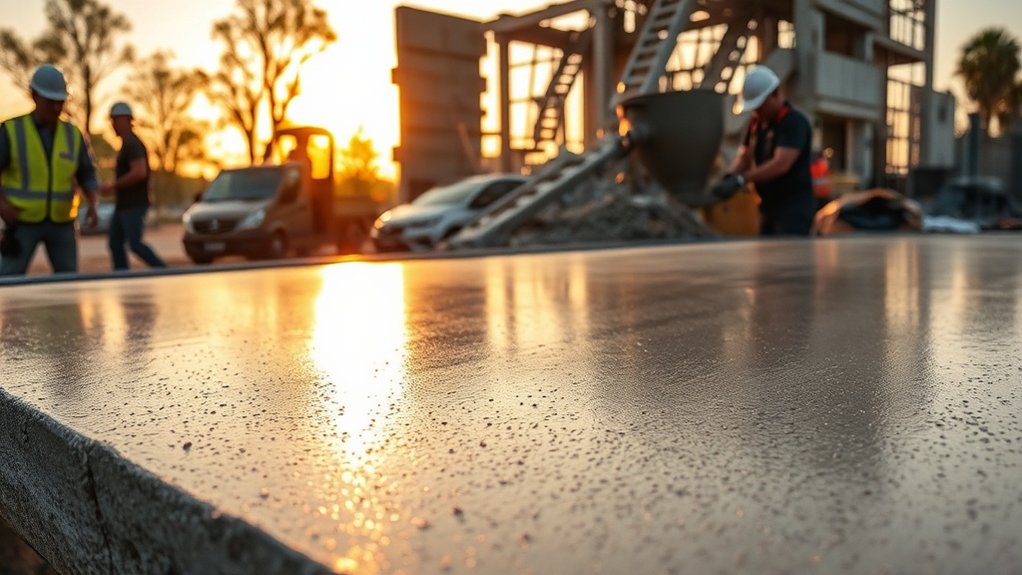
As project demands rise, rapid-hardening concrete becomes vital for urgent construction needs. This material can reach around 25 MPa of compressive strength within just 24 hours, significantly improving project flexibility.
In emergencies, this quick strength gain reduces downtime and allows for the swift reuse of forms, speeding up the installation of subsequent structural elements. Additionally, its lower shrinkage rates minimise the risk of cracking, ensuring structural integrity during the crucial curing phase.
With strong resistance to harsh conditions like frost and moisture, rapid-hardening concrete is an ideal choice for urgent repairs. By optimising schedules and cutting labour costs, it helps you manage resources effectively while tackling immediate construction challenges.
Frequently Asked Questions
How Does Rapid-Hardening Concrete Compare to Traditional Concrete in Performance?
When comparing performance metrics, rapid-hardening concrete stands out for its strength, reaching structural integrity within hours, whereas traditional concrete can take days. This quick setting not only boosts durability but also significantly reduces shrinkage, enhancing long-term resilience. For instance, in construction projects where time is critical, rapid-hardening concrete can allow for faster project completion, making it a practical choice for builders.
What Factors Influence the Curing Time of Rapid-Hardening Concrete?
Temperature and moisture levels significantly affect the curing time of rapid-hardening concrete. Warmer temperatures speed up hydration, while high humidity helps retain moisture. On the other hand, cold or dry conditions can slow down strength development and prolong the curing process. For instance, if you’re working on a project in winter, you might find that the concrete takes much longer to cure compared to a summer setting.
Can Rapid-Hardening Concrete Be Used in Extreme Weather Conditions?
Yes, rapid-hardening concrete performs well in extreme weather conditions. It quickly achieves a strength of over 500 psi, which helps reduce its susceptibility to harsh temperatures. By adjusting the mix appropriately, its resistance to weather can be improved, making it suitable for both hot and cold climates. For instance, it can set quickly during a frosty morning, ensuring construction projects stay on schedule.
Are There Specific Brands Known for High-Quality Rapid-Hardening Concrete?
For high-quality rapid-hardening concrete, consider brands such as Sakrete, Rapid Set, QUIKRETE, and Sika. Each brand offers distinct products, allowing you to select the right mix for your repair needs and conditions.
What Are the Environmental Impacts of Using Rapid-Hardening Concrete?
Have you thought about the carbon footprint of rapid-hardening concrete? Although it provides speedy solutions, there are sustainability concerns due to its cement emissions and environmental effects. This underscores the importance of seeking innovative and better materials in construction practices.
Conclusion
In urgent situations, rapid-hardening concrete is invaluable due to its quick strength gain, enabling immediate use when traditional methods fall short. Time is critical, and the durability it provides ensures long-term performance, offering both quick fixes and lasting solutions. Its versatility makes it suitable for various infrastructure repairs, serving as a reliable choice rather than just a temporary patch. In disaster recovery, its cost-effectiveness and straightforward application turn daunting tasks into manageable ones, proving essential when every second matters.

Overcoming common concrete problems is essential for durability; discover effective solutions to ensure your surfaces remain intact and visually appealing.

How can you transform worn concrete into a stunning surface? Discover the essential steps and options for effective concrete resurfacing.
Discover essential techniques for sealing concrete that can prevent damage, and learn the crucial steps that could save your surfaces Read more