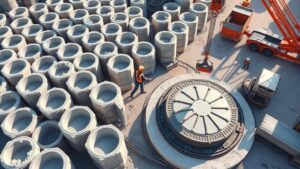
Self-consolidating concrete (SCC) significantly improves your construction projects by offering excellent flowability and ease of placement. This means you can achieve intricate designs without the need for mechanical compaction, making the process simpler. SCC reduces labour time and accelerates project timelines, which can lead to cost savings. Its enhanced surface finish also minimises defects, while its robust structural properties ensure greater durability and longevity. Moreover, SCC’s self-leveling feature contributes to site safety and cleanliness. Explore how SCC can transform your construction methods by considering its many benefits.
Key Takeaways
- The high flowability of self-consolidating concrete (SCC) removes the need for mechanical vibration, making the placement process simpler and reducing reliance on labour.
- Superplasticisers improve workability, enabling effective filling of intricate shapes and tight spaces.
- Quicker placement methods lead to accelerated construction schedules, resulting in significant time savings.
- SCC requires fewer man-hours per cubic metre, which lowers overall labour costs and enhances efficiency.
- A uniform surface finish reduces the need for repairs and secondary treatments, promoting sustainability and ensuring long-term performance.
Flowability and Ease of Placement
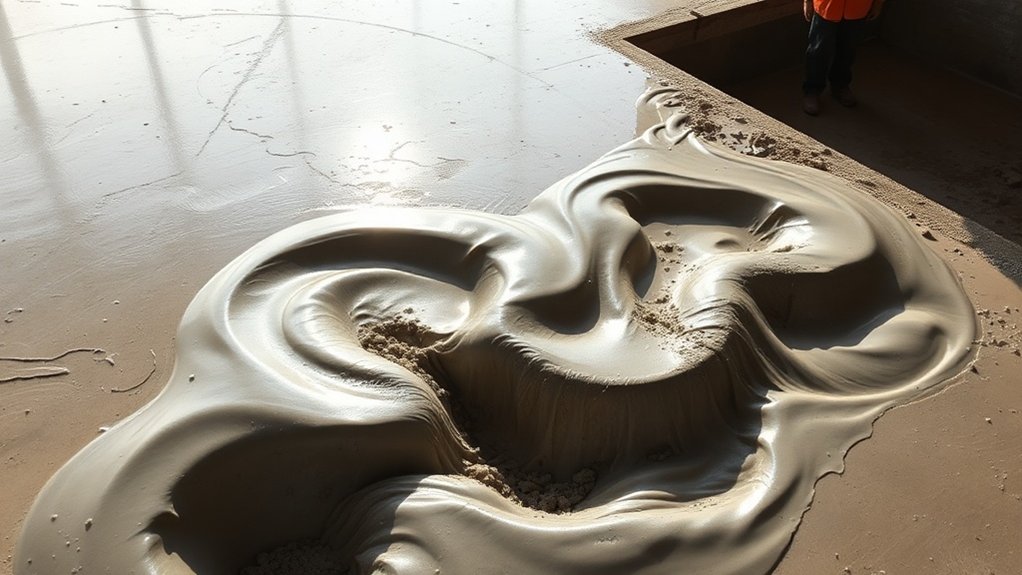
Self-consolidating concrete (SCC) offers excellent flowability, typically measured by a slump flow between 450 and 810 mm (18 to 32 inches), which can be adjusted to suit specific project needs.
This impressive flow performance is due to its low yield stress and controlled plastic viscosity, allowing SCC to spread and fill spaces under its own weight without the need for mechanical compaction.
By adding supplementary cementitious materials (SCMs) like ground granulated blast-furnace slag (GGBS) or fly ash, you can further enhance flowability and improve particle arrangement.
Proper viscosity control helps prevent segregation and ensures consistent placement, particularly in intricate formwork designs.
The relationship between yield stress and viscosity is crucial for SCC’s ability to fill voids and encase reinforcement, significantly boosting placement efficiency and reducing finishing issues. Additionally, superplasticisers and viscosity modifiers are key components that enhance workability for complex projects, streamlining the placement process.
Labor and Time Efficiency
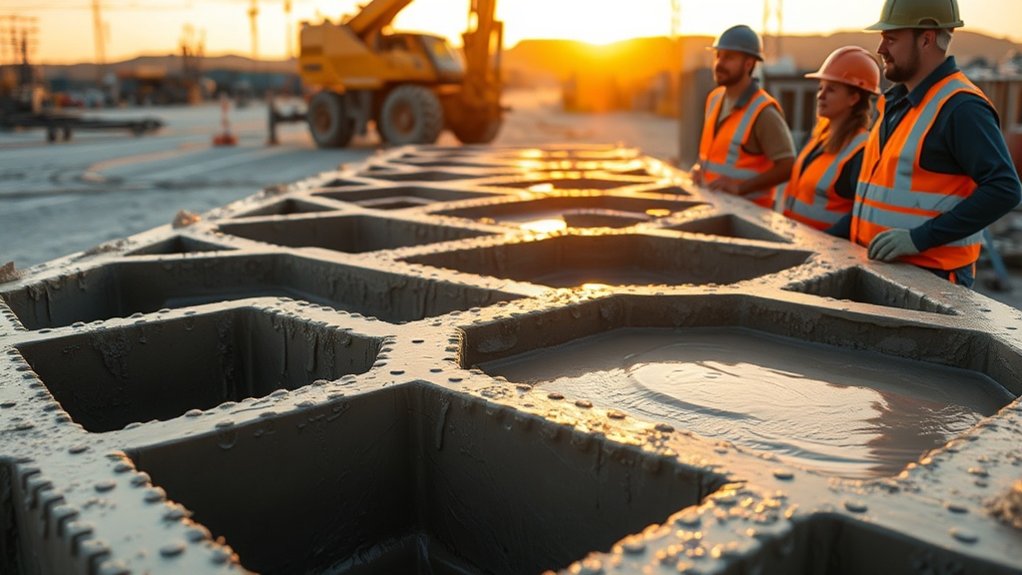
Traditional concrete placement often demands significant labour and time, but self-consolidating concrete (SCC) greatly simplifies these tasks. By eliminating the need for mechanical vibration, SCC reduces the reliance on skilled workers, which subsequently lowers labour costs. This quicker placement method not only speeds up production but also shortens project timelines. Additionally, the high workability of SCC allows it to fill voids and corners more effectively, enhancing the overall efficiency of the placement process. SCC’s self-leveling properties ensure a uniform finish that minimizes the need for additional finishing work.
| Efficiency Aspect | Impact |
|---|---|
| Labour Cost Reduction | Significantly decreases labour expenses |
| Time Efficiency | Accelerates construction schedules |
| Simplified Processes | Streamlines operational steps and reduces training needs |
With SCC, you can expect fewer man-hours per cubic metre, quicker form turnaround times, and a more efficient workflow, resulting in considerable savings on both labour and time.
Improved Surface Finish and Architectural Quality

When using self-consolidating concrete (SCC), you can expect improved surface finishes and architectural quality that enhance project outcomes.
SCC’s high flowability and non-segregating properties allow it to capture intricate formwork details, ensuring a consistent surface appearance without extensive finishing. This leads to fewer surface defects, such as plastic shrinkage cracks, and reduces voids, resulting in greater durability. The ability to flow under its own weight allows for effective placement in heavily reinforced sections, further enhancing the overall construction quality. Additionally, its rheological characteristics contribute to maintaining stability during placement, preventing issues such as segregation.
The uniform matrix promotes consistent colour and texture, offering design flexibility for attractive facades. Additionally, the reduced need for repairs and secondary treatments supports sustainability and lowers overall project costs.
In short, SCC boosts both the quality and efficiency of your architectural concrete projects.
Structural Integrity and Durability
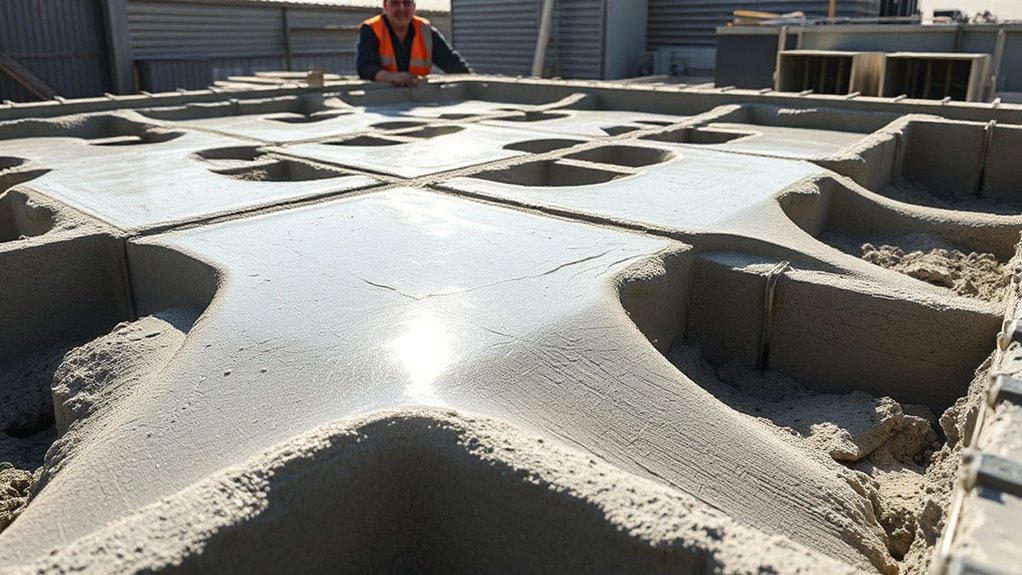
Self-consolidating concrete (SCC) offers significant benefits for structural integrity and durability in construction. Its unique properties ensure that aggregates are evenly distributed, which minimises voids that can weaken the structure.
SCC flows easily into formworks and around reinforcements, eliminating the need for mechanical vibration and resulting in a denser mix. This density enhances both compressive and tensile strength compared to traditional concrete. Furthermore, SCC improves the bond between aggregates and cement paste, reducing permeability and protecting against environmental degradation. This leads to a longer service life for structures. Additionally, SCC’s self-compacting nature reduces the dependency on skilled labor, allowing for faster project completion and efficiency.
Safety and Work Environment Improvements
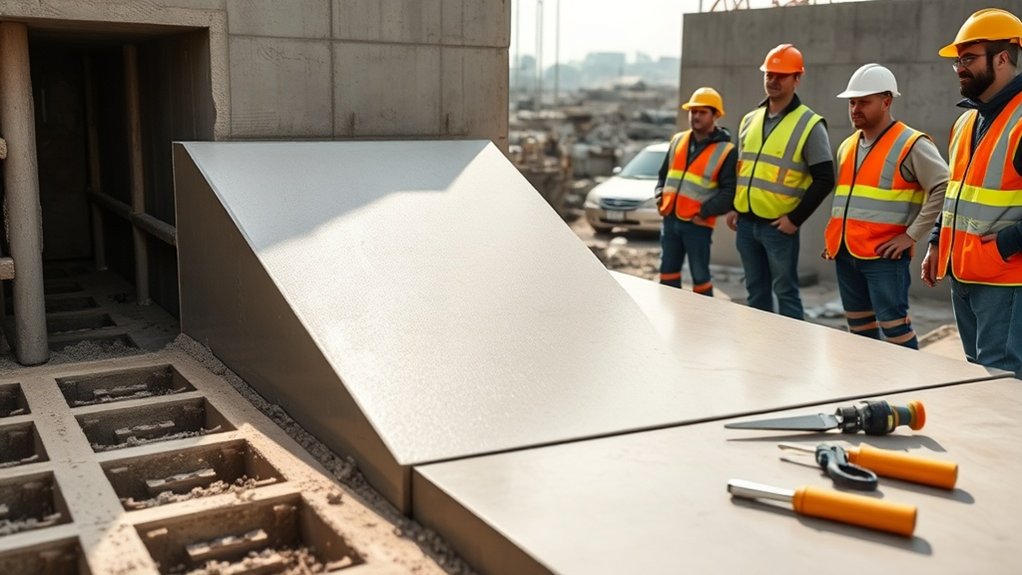
Self-consolidating concrete (SCC) not only strengthens structures and boosts durability but also significantly enhances safety and the work environment on construction sites.
By eliminating the need for mechanical vibration, SCC reduces noise levels and the risk of hand-arm vibration syndrome, which is beneficial for worker health. Its self-leveling properties minimise spillage and limit dust, contributing to a cleaner site and better respiratory safety.
Moreover, faster placement reduces congestion on-site, which shortens workers’ exposure to potential hazards and improves coordination.
Uniform surface finishes lower the need for dangerous surface treatments, offering further protection for workers.
With fewer labourers needed, training requirements are reduced, allowing teams to concentrate more on safety and quality.
Frequently Asked Questions
How Does SCC Compare to Traditional Concrete in Cost?
Self-compacting concrete (SCC) generally costs more than traditional concrete, with prices ranging from £75 to £90 per cubic metre. However, the potential long-term savings in labour, time, and maintenance can make it a more cost-effective choice over the lifespan of a project. For instance, its ability to flow and fill formwork without vibration can significantly reduce workforce requirements on-site.
What Types of Projects Benefit Most From SCC?
Bridge construction and high-rise buildings particularly benefit from self-consolidating concrete (SCC). It improves efficiency, ensures precision in intricate designs, and provides a high-quality finish, making it perfect for challenging architectural and structural projects.
Can SCC Be Used in Cold Weather Conditions?
Yes, Self-Compacting Concrete (SCC) can be used in cold weather conditions. Its effectiveness depends on well-designed mix specifications that include additives to improve flowability. This allows for proper placement and durability, even at temperatures as low as -5°C, without needing external heating.
Is Special Training Required for SCC Placement?
Yes, special training is essential for SCC placement. It’s important to grasp SCC techniques and placement methods, such as formwork design, the effects of vibration, and proper finishing. For instance, understanding how to manage the flow of self-compacting concrete ensures a quality finish and structural integrity throughout the process.
How Does SCC Affect the Curing Process?
SCC influences the curing process by requiring tailored techniques to handle its distinct hydration. Proper temperature control and moisture retention are crucial to avoid surface drying. This ensures effective strength development and durability during the curing phase. For instance, using wet coverings or curing compounds can help maintain the necessary moisture levels.
Conclusion
Incorporating self-consolidating concrete into your projects is more than just a modern approach; it’s a game-changer for your workflow. Its impressive flowability allows for effortless placement, significantly reducing labour time. The result is a smooth, flawless finish that enhances both appearance and structural strength, ensuring your work endures over time. Additionally, a safer working environment means you can concentrate on what truly matters—quality and efficiency. By embracing self-consolidating concrete, you can elevate your productivity like never before.

Just imagine the efficiency and quality boost ready-mix concrete can bring to your construction projects; discover the benefits that can Read more

Perhaps the secret to successful large infrastructure projects lies in ready-mix concrete—discover how it transforms efficiency and sustainability in construction.
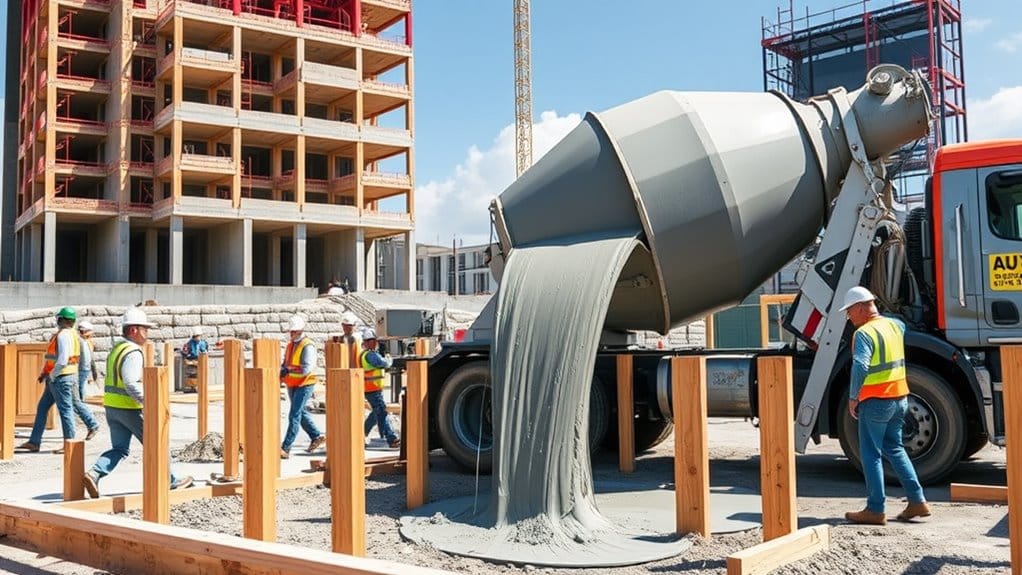
Discover how ready-mix concrete dramatically cuts labor costs in construction, but the real savings might surprise you.