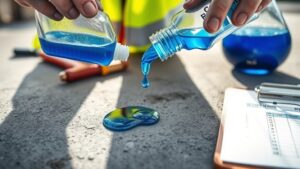
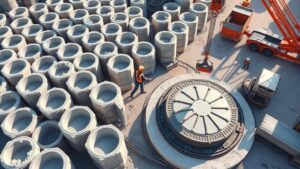
Anti-washout admixtures are vital for underwater concrete as they significantly reduce the washout of cement and fine materials, ensuring the mix remains intact. By improving viscosity and cohesion, these admixtures enable stable placements even in choppy waters, enhancing the performance of submerged structures. They also help protect marine ecosystems from contamination, promoting sustainable construction practices. Understanding their benefits allows for more effective underwater construction techniques, making projects safer and more efficient.
Key Takeaways
- Anti-washout admixtures (AWAs) reduce the washout of cement and fine materials, helping to maintain the integrity of the mix and boost the strength of underwater concrete.
- AWAs enhance cohesion and viscosity, which prevents erosion and segregation during placement in water.
- These admixtures also protect marine ecosystems by minimising environmental impact and preserving water quality around construction sites.
- By reducing the need for dewatering and lowering lifecycle repair costs, AWAs improve the economic feasibility of underwater projects.
- Their adaptability makes AWAs effective in various underwater conditions, ensuring that concrete structures remain stable and durable even in challenging environments.
Resistance to Cement and Fine Material Washout
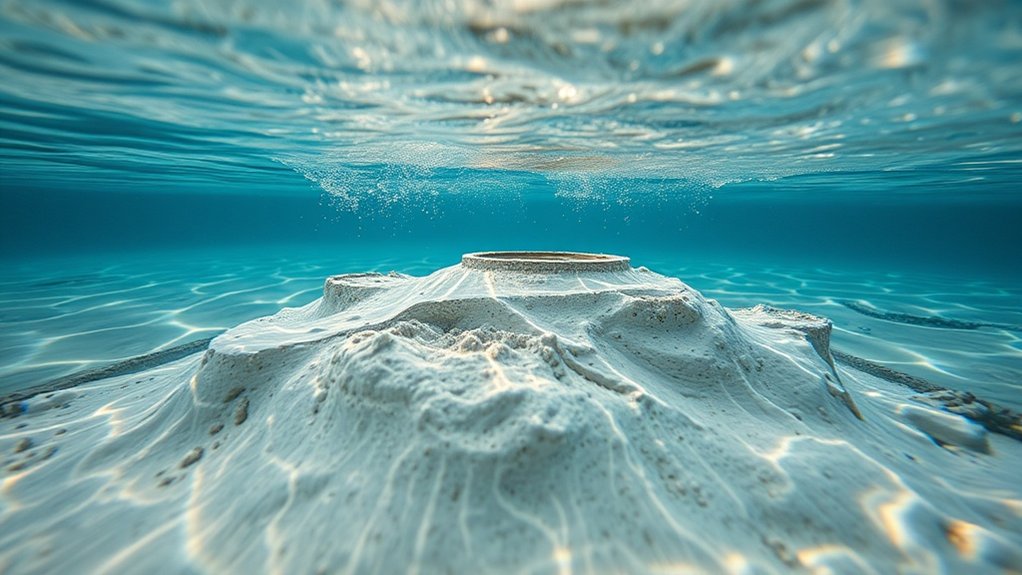
When working with underwater concrete, it’s crucial to prevent washout of cement and fine materials to ensure both structural integrity and environmental safety.
Anti-washout admixtures (AWAs) are key in this process. They create a three-dimensional polymer network within the concrete that interacts with cement and fine particles, helping to keep them together and reducing their dispersion into surrounding water. This increased viscosity and cohesion limit erosion and segregation, leading to a more stable concrete mix when submerged.
If you increase the dosage of AWAs, you’ll notice a decrease in slump flow, which indicates a stronger internal structure. This ultimately results in a significant reduction in washout mass loss, helping to maintain the strength of the cement paste while also protecting aquatic environments from harmful alkalinity. Additionally, these admixtures aim to minimize wash-out material impact on marine environments, contributing to sustainable construction practices.
Improved Concrete Cohesion and Stability

Improved concrete cohesion and stability are essential for the durability and performance of underwater structures.
Adding viscosity-modifying admixtures (VMAs) enhances the mixture’s viscosity, boosting cohesion and reducing the risk of segregation and washout. This is crucial for underwater applications, where a slump flow of 35 to 60 cm ensures consistent cohesiveness during placement. Furthermore, utilizing underwater concrete admixtures specifically designed for aquatic environments can significantly enhance the overall performance of the concrete mix. Additionally, the use of water-reducing admixtures optimizes the water-cement ratio, further contributing to strength and durability.
Using supplementary cementitious materials, such as silica fume, strengthens particle bonding. Additionally, maintaining a sand-aggregate ratio of 40-45% helps minimise segregation.
The tremie placement method is effective in preserving cohesion by preventing water intrusion, leading to a stable mixture with uniform density. This ultimately supports the long-term integrity of underwater structures.
Environmental Protection and Economic Benefits

Underwater construction comes with its own set of challenges, but using anti-washout admixtures can significantly benefit both the environment and your budget.
These admixtures help prevent cement washout, which protects marine ecosystems and improves water quality—key factors for sustainable building practices. By minimising contamination in nearby water bodies, you support marine conservation and adhere to standards like ASTM C 494. Additionally, the use of AWA-C61 as a primary ingredient in these admixtures enhances the cohesiveness of the concrete mix, ensuring stability in flowing water. Furthermore, the incorporation of sustainable concrete materials can enhance the overall environmental performance of your project.
From an economic perspective, anti-washout admixtures reduce the need for expensive dewatering, which can save you a considerable amount on project costs.
They also improve concrete cohesion, allowing for quicker placement and fewer repairs, which further cuts costs. By ensuring the strength and longevity of underwater structures, you not only enhance their performance but also lower lifecycle expenses, benefiting both your project and the environment.
Application Suitability and Versatility
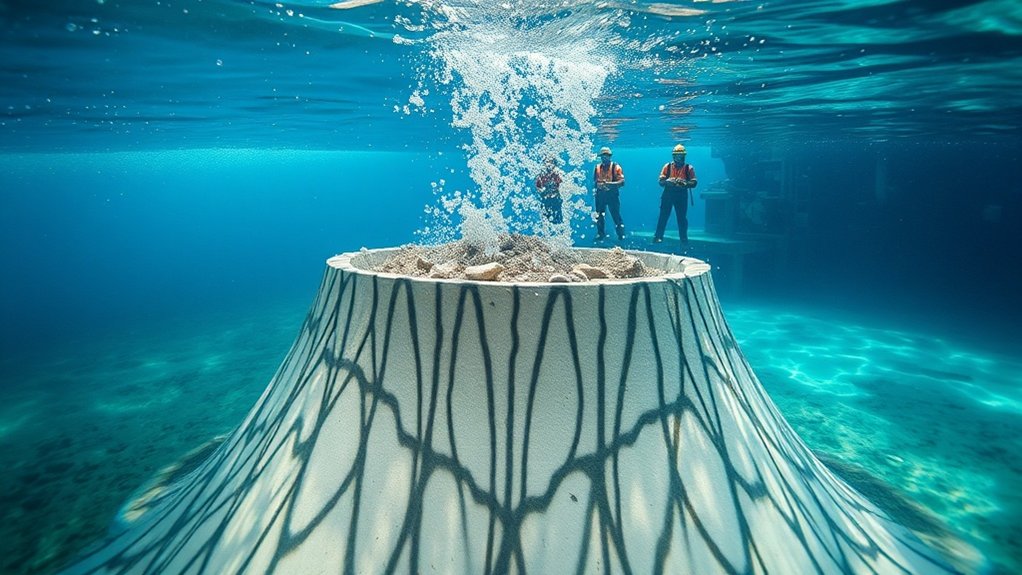
When it comes to anti-washout admixtures for underwater concrete, they perform exceptionally well in various conditions, whether in deep water or intertidal areas.
These admixtures improve the quality of specialised concrete mixes and make the application process simpler, allowing for effective placement without the need for complicated techniques.
Their adaptability makes them ideal for a wide range of underwater construction projects, offering dependable solutions across different environments.
Diverse Underwater Conditions
Anti-washout admixtures significantly improve the performance of underwater concrete in various challenging environments, ensuring effective use in different conditions. They adjust to changing circumstances and address underwater issues, preserving the mix’s integrity during placement.
| Condition Type | Benefits |
|---|---|
| Flowing Water Conditions | Prevents fine particles from washing away, maintains cohesion |
| Varied Underwater Structures | Ideal for marine construction and repairs |
| Temperature Compatibility | Ensures workable mixes in extreme temperatures |
| Placement Techniques | Facilitates pumping and tremie methods |
These admixtures are crucial for large-scale repairs and installations, guaranteeing durability and performance in diverse marine environments. By minimising washout and segregation, they enhance the longevity of vital underwater structures.
Specialized Concrete Mixes
Specialised concrete mixes for underwater applications are highly adaptable, ensuring they meet the specific needs of various construction projects.
By incorporating anti-washout admixtures (AWAs), these mixes can be optimised for marine construction and underwater repairs, compatible with different types of cement.
AWAs improve the bond between cement paste and aggregates, reducing washout and preserving mix integrity in challenging conditions. They facilitate stable mixes with both fine and coarse aggregates, enhancing flowability and strength.
Additionally, AWAs modify the mix’s rheology, ensuring proper workability and pumpability while preventing segregation and bleeding. This makes them vital for creating durable, high-performance underwater concrete solutions tailored to project requirements. Furthermore, the use of self-consolidating concrete can further enhance the flowability and adaptability of underwater mixes, ensuring effective placement even in complex environments.
Easy Application Methods
While there are several methods for underwater construction, anti-washout admixtures (AWAs) are particularly versatile and effective across different techniques.
You can use AWAs with traditional methods such as pumping, tremie, and crane placement to minimise washout. Pumping is especially reliable, maintaining high pressure and a steady flow, which is crucial for maximising the effectiveness of the admixture. These methods help prevent excessive mixing with surrounding water, ensuring the integrity of the concrete.
AWAs are available in user-friendly forms—both powdered and liquid—making them easy to handle and reducing the risk of contamination.
Their adaptability across various underwater environments makes them an essential choice for efficient and reliable concrete placement in structural components.
Performance Enhancement in Underwater Concrete

For optimal performance in underwater concrete, using anti-washout admixtures (AWAs) is essential. These additives enhance flowability and structural integrity, making underwater placement more effective by significantly reducing the dispersion of cement paste and segregation of aggregates.
AWAs create a three-dimensional polymer network that increases viscosity while allowing high flowability, crucial for self-consolidation. This balance helps prevent segregation and ensures the mixture remains cohesive, which reduces the need for mechanical vibration.
Moreover, AWAs boost durability by minimising washout, helping to retain compressive strength and improve resistance to harsh aquatic environments over time.
Chemical and Physical Mechanisms
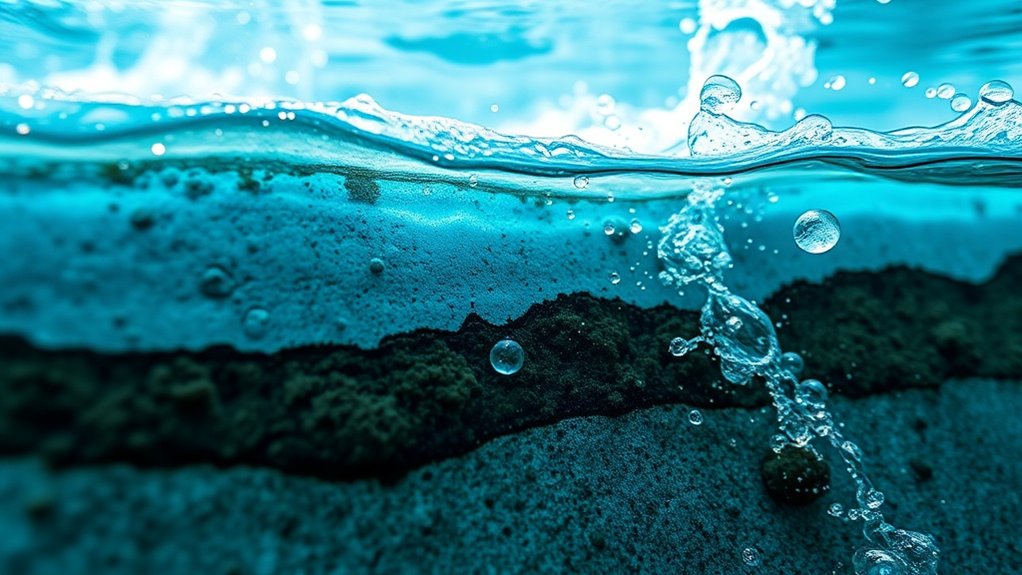
To grasp the chemical and physical mechanisms of anti-washout admixtures (AWAs), it’s essential to recognise the significance of polymer network formation in improving the performance of concrete underwater.
This network boosts viscosity and offers strong resistance to segregation, ensuring the mix stays cohesive and uniform.
Polymer Network Formation
When polymers interact with cement particles, they start to form a complex network that enhances the stability and performance of underwater concrete. At low concentrations, polymers such as polyacrylamide (PAM) attach to cement surfaces, providing initial coverage of the particles.
Once saturation is reached, these polymers link the particles together, which reduces the dispersion of free particles in water and improves network stability.
At higher concentrations, long polymer chains become entangled, forming a strong three-dimensional network that limits water evaporation and decreases pore connectivity.
This entanglement also boosts internal cohesion by minimising microcracks and densifying the interfacial transition zone (ITZ).
As a result, effective interactions between polymers and cement significantly improve the durability and resilience of cement-based structures in underwater environments.
Viscosity Enhancement Effects
The interaction of anti-washout admixtures (AWAs) with concrete components is crucial, primarily because they enhance viscosity, which significantly improves the performance of underwater concrete. A higher viscosity leads to greater mix stability and reduces washout, ensuring a cohesive cement paste matrix. AWAs effectively modify the rheological properties of the mix, allowing for better control during placement. Here’s a summary of the viscosity enhancement effects:
| Mechanism | Impact on Viscosity | Application in Underwater Concrete |
|---|---|---|
| Polymer Adsorption | Increases cohesion | Reduces segregation |
| Shear-Thinning Properties | Enhances flowability | Facilitates pumping |
| Viscosity Modifying Admixtures | Stabilises the mix | Prevents washout |
| Increased Cement Cohesion | Maintains particle bonding | Improves structural integrity |
| Thixotropic Behaviour | Resists water intrusion | Guarantees surface quality |
These mechanisms work together to enhance the overall effectiveness of underwater concrete.
Segregation Resistance Mechanism
Understanding the segregation resistance mechanism of anti-washout admixtures (AWAs) requires examining the chemical and physical interactions within the concrete mix.
Chemically, long-chain polymers interact to form a three-dimensional network that enhances cohesiveness and modifies interfacial forces. This network helps prevent cement particles from detaching during underwater placement.
On the physical side, AWAs aid in particle packing and create a viscous gel-like phase that stops free water from migrating, further reducing segregation.
It’s crucial to optimise dosage; while higher amounts improve washout resistance, they can also reduce flowability. Striking the right balance between polymer type and dosage is essential for effective segregation resistance without compromising workability, which is vital for achieving a stable and uniform underwater concrete microstructure.
Selecting the Right Anti-Washout Admixture
Choosing the right anti-washout admixture is crucial for ensuring the performance of underwater concrete. It’s important to ensure compatibility with your concrete mix design, as this influences both fluidity and durability. Be prepared to adjust the dosage alongside high-range water-reducing agents for optimal results. Conduct thorough performance testing with actual materials to verify compatibility before use.
| Consideration | Details |
|---|---|
| Compatibility | Ensure it aligns with mix design |
| Washout Resistance | Enhances cohesion, reduces loss |
| Compliance | Follow ASTM and Corps specifications |
| Environmental Impact | Reduce sediment contamination |
| Structural Integrity | Preserve cement and aggregates |
Frequently Asked Questions
How Do Anti-Washout Admixtures Affect Concrete Curing Times?
Anti-washout admixtures can slightly prolong the curing process by increasing viscosity, which may slow down hydration rates. However, they help maintain cohesiveness, ensuring the concrete remains strong and durable. This means you still achieve the desired strength while reducing any negative impact on setting times. For example, when pouring concrete in wet conditions, these admixtures can prevent material from washing out, ultimately leading to a more robust final product.
Can AWAS Be Used in Hot Weather Conditions?
Yes, AWAs can be effectively used in hot weather conditions. For example, during a coastal bridge project, they maintained stability and prevented washout, ensuring strong cohesion even in high temperatures. This significantly improved the durability of the concrete.
What Are the Long-Term Effects of Using AWAS?
Using AWAs can improve durability by enhancing resistance to water penetration, but it’s important to weigh the associated costs. For long-term performance and project success, it’s crucial to balance their impact on hydration and strength. For instance, while AWAs may increase initial expenses, they can lead to lower maintenance costs over time by preventing water damage.
Are There Any Compatibility Issues With Other Admixtures?
When mixing, it’s essential to conduct compatibility tests for admixture interactions. Some anti-washout admixtures can conflict with others, affecting workability and strength. Always check compatibility to prevent issues later on. For instance, a combination of certain water-reducing agents may lead to unexpected setting times. Being cautious can save you from complications down the line.
How Do AWAS Impact the Final Appearance of Concrete?
AWAs improve the colour uniformity and surface texture of concrete by preventing washout and ensuring an even distribution of cement paste. This leads to a smooth and cohesive finish, reducing defects and enhancing the overall visual appeal of the concrete. For instance, when used in decorative paving, AWAs can help achieve a consistent look that enhances the beauty of outdoor spaces.
Conclusion
Incorporating anti-washout admixtures into underwater concrete can significantly minimise the risk of washout, preserving up to 80% of your cement and fine materials. This not only ensures structural integrity but also promotes environmental sustainability by reducing waste. These admixtures improve the cohesion and stability of your mix, resulting in more durable underwater structures. Selecting the right admixture is crucial; it can be the difference between a successful project and costly repairs later on.

Discover how water-reducing admixtures enhance concrete performance and durability, but what other advantages do they bring to modern construction?

Just how can fly ash transform your concrete mix for superior performance? Discover the compelling benefits and innovative applications waiting Read more

In hot weather concrete projects, retarders play a vital role in managing hydration, but their effectiveness can be challenged by Read more