Retarders play a vital role in concrete projects during hot weather as they slow down the hydration of cement, which helps prevent premature setting. This extended workability reduces the risk of cold joints and thermal cracking, ensuring that the concrete develops the necessary strength. However, temperature fluctuations can impact the dosage and effectiveness of retarders.
To maximise the benefits of retarders, it’s essential to employ cooling methods and manage moisture effectively. For example, using chilled water or ice in the mix can help lower the temperature. By implementing these strategies, you can optimise retarder use and improve the overall quality and durability of your concrete.
Key Takeaways
- Retarders slow down the hydration of cement, extending workability and preventing premature setting in hot weather.
- They help manage thermal effects, reducing the risk of thermal cracking and rapid moisture loss.
- It’s important to use the correct dosage; too much can cause excessively long setting times and delays on site.
- Combining cooling methods with retarders is vital to regulate concrete temperature and improve their effectiveness.
- Regularly monitoring environmental conditions is essential to ensure that the use of retarders meets the desired performance standards in hot weather.
Understanding the Function of Retarders in Hot Weather Concrete

When working with concrete in hot weather, it’s crucial to understand how retarders function to ensure quality and performance.
Retarders are chemical additives that slow down the hydration process of cement, which delays the reaction between water and cementitious materials. This allows for more flexibility during placement and finishing, helping to prevent premature setting.
By inhibiting the formation of calcium silicate hydrate (C-S-H) gel, retarders keep the concrete workable without sacrificing its final strength. Additionally, they are water-soluble additives that dissolve easily in water, making them effective in various concrete mixtures.
However, it’s important to use the correct dosage; too much can lead to excessively long setting times and potential delays on site.
Retarders can be added either at the batch plant or on-site, enabling adjustments based on specific project requirements to achieve optimal results in challenging conditions.
Benefits of Using Retarders During High Temperatures
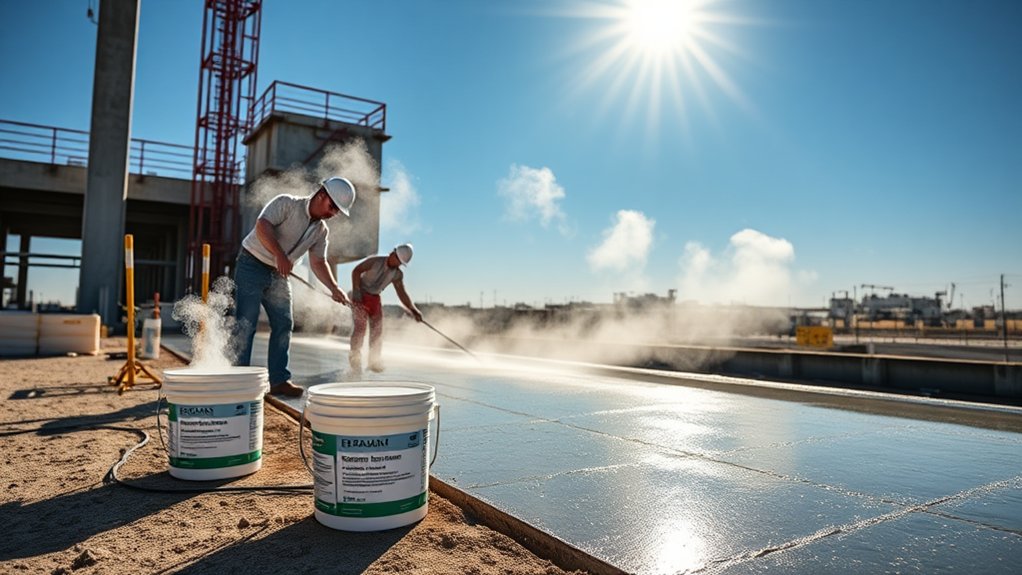
Using retarders in concrete projects during hot weather offers several key benefits that improve workability and overall performance.
Here are some advantages:
- Extended Workability: Slower setting times mean you can handle the concrete for longer, reducing the chances of cold joints.
- Improved Strength Development: Retarders ensure proper hydration, leading to better long-term strength and less risk of surface weaknesses. This is crucial because a 10°C rise in temperature can lead to a 10% strength loss after 28 days.
- Thermal Effect Mitigation: They help keep the concrete’s temperature stable, preventing issues like thermal cracking and rapid moisture loss.
- Better Surface Quality: The slower setting time allows for a smoother finish, reducing defects such as dusting and blistering.
These benefits contribute to higher-quality concrete, especially in challenging hot weather conditions.
Effective Application Techniques for Retarders
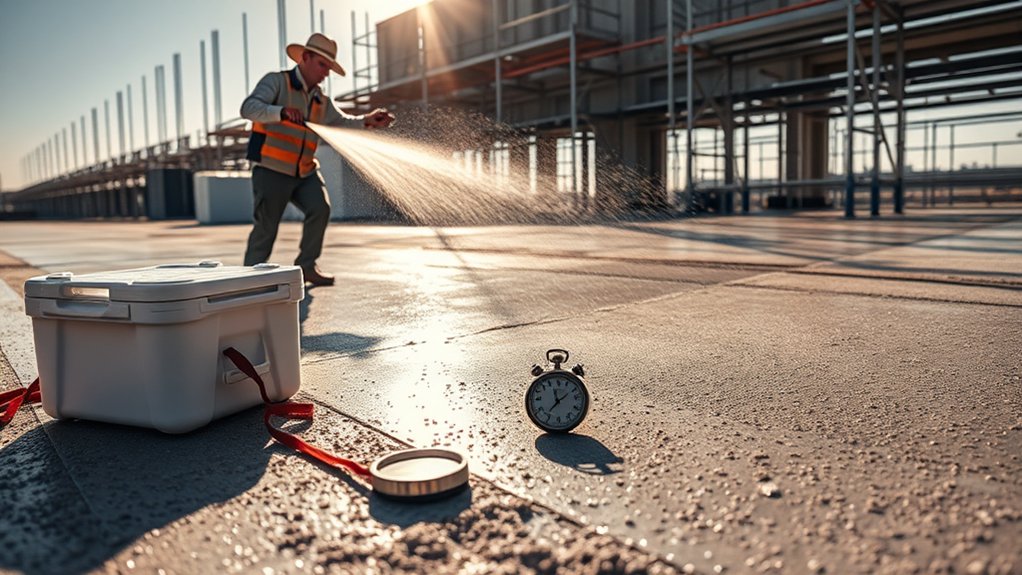
When applying retarders in hot weather concrete projects, using step retardation methods can significantly extend your workable time. It’s also important to consider surface application techniques to keep moisture levels up, particularly for decorative finishes. Additionally, incorporating proper hydration techniques during the application can further enhance the effectiveness of retarders and improve overall concrete quality.
Step Retardation Methods
Effective application techniques for retarders in step retardation methods can significantly improve the performance of concrete in hot weather.
When selecting a retarder, keep these points in mind:
- Retarder selection: Choose a retarder based on the desired delay in setting time and its compatibility with your concrete mix.
- Dosage calibration: Adjust the dosage according to the ambient temperature and the composition of the mix to prevent segregation.
- Consistent mixing: Ensure even distribution by adding retarders during both the batching and mixing stages.
- Regular monitoring: Test and adjust retarder levels based on setting time to maintain chemical compatibility. Additionally, understanding the impact of hydration conditions is crucial for optimizing the effectiveness of retarders in hot weather applications.
Surface Application Techniques
Surface application techniques are crucial for optimising the performance of retarders in concrete projects, especially in warm weather.
Apply the surface retarder after finishing operations and once the bleed water has evaporated. The best time to apply is when a slight moisture layer remains on the surface, ideally within a few hours of placement. Use low-pressure sprayers or rollers for even coverage, following the manufacturer’s specified rates.
Ensure proper surface preparation by avoiding application on vertical surfaces treated with shake-on colour hardeners, as this can prevent proper penetration.
Keep a close eye on environmental conditions; high temperatures may require adjustments in your application timing to ensure effectiveness. Consistency is vital for achieving uniform aggregate exposure during the final wash.
Combining With Evaporation Retarders
When managing concrete in hot weather, combining retarders with evaporation retardants can significantly improve workability and surface quality.
This combination effectively tackles several challenges, such as:
- Application Timing: Apply retarders after screeding for optimal results.
- Cooling Methods: Use in conjunction with retardants to reduce temperature impacts on hydration.
- Curing Techniques: Keep the surface hydrated post-application to enhance durability.
- Aggregate Selection: Opt for aggregates that help control water content and lower evaporation rates.
By understanding the different types of retarders, you can choose the most appropriate products for your project.
This strategic approach not only extends workability but also helps prevent issues like plastic shrinkage and cracking, ensuring a high-quality concrete surface, even in challenging hot weather conditions.
Limitations of Retarders in Hot Weather Conditions

Using retarders in hot weather presents notable challenges that can impact your project.
It’s crucial to employ cooling methods to regulate concrete temperature, but adjusting the dosage of retarders becomes trickier in high temperatures.
Moreover, rapid evaporation leads to moisture loss, which can undermine the effectiveness of retarders.
To combat shrinkage and cracking, you’ll need to implement additional protective measures.
Cooling Methods Required
While retarders can effectively slow down the hydration process in concrete, their limitations become evident in high-temperature conditions, particularly when temperatures exceed 32°C (90°F).
To tackle these issues, it’s essential to use various cooling methods alongside retarders. Here are some effective techniques:
- Cool Aggregates: Shade your stockpiles and dampen dry aggregates to help reduce their temperature.
- Use Ice or Chilled Water: Add ice to the mixing water for better cooling.
- Evaporative Cooling: Employ misting systems or wet coverings to lower ambient temperatures and prevent moisture loss.
- Continuous Temperature Monitoring: Regularly check the temperatures of aggregates and mixing materials to keep everything under control.
Additionally, controlling humidity levels is crucial as it impacts moisture evaporation rates and overall hydration efficiency.
Dosage Balancing Challenges
Balancing the dosage of retarders in hot weather can be quite tricky due to temperature variations that impact their effectiveness. It’s crucial to closely monitor the ambient conditions, as overdosing can delay the removal of formwork, while underdosing may lead to premature stiffening.
| Temperature Condition | Suggested Retarder Dosage |
|---|---|
| Moderate (21-29°C) | Standard dosage |
| High (29-35°C) | Increased dosage |
| Extreme (>35°C) | Maximum dosage with caution |
There’s no one-size-fits-all guideline; adjustments should be made based on real-time temperature readings. Even at higher dosages, retarders won’t prolong setting times indefinitely. Additionally, interactions with other admixtures can affect how well the mix works, highlighting the importance of thorough testing before the job and ongoing adjustments during the pouring process. Moreover, understanding the role of ready-mix concrete in sustainable urban development can help inform best practices for using retarders effectively.
Moisture Loss Limitations
Managing retarder dosages in hot weather can lead to significant moisture loss, which affects concrete durability. While retarders slow down hydration, they don’t stop moisture from evaporating, making early-age drying a real concern.
Here are some key points to consider:
- Extended Plastic Stage: Longer wet curing is essential because setting times are prolonged.
- Evaporation Control: High temperatures increase moisture loss, so effective curing becomes crucial.
- Curing Practices: Use moisture-retaining methods like wet burlap or curing compounds to help reduce shrinkage.
- Temperature Sensitivity: Retarders become less effective above 35 °C (95 °F), so cooling measures are necessary.
Considering these factors is vital for maintaining moisture and ensuring successful curing in hot weather.
Ensuring Concrete Quality and Durability
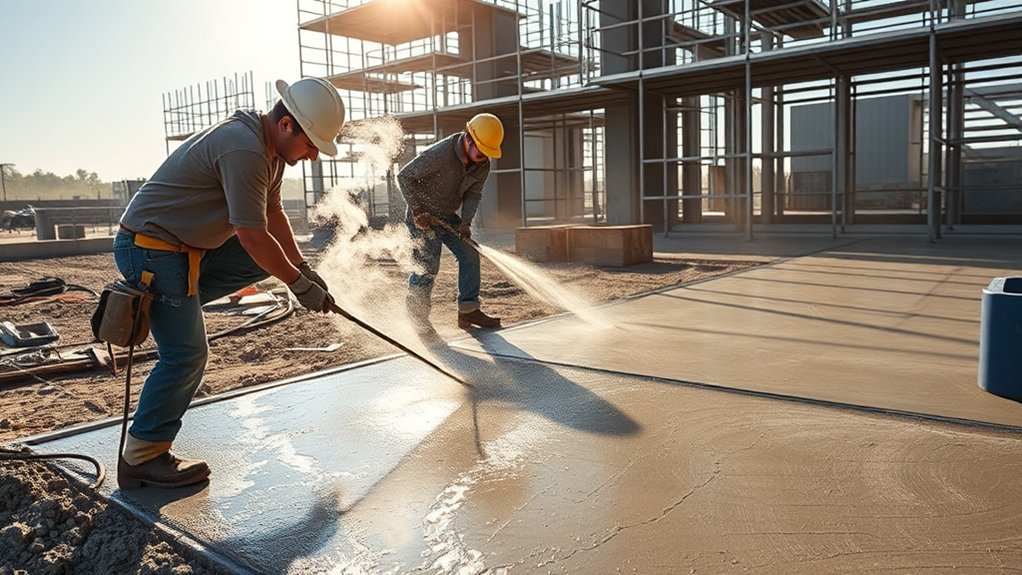
To ensure concrete quality and durability in hot weather, it’s important to adopt effective strategies that tackle the challenges posed by elevated temperatures.
Keep an eye on environmental conditions; high temperatures and low humidity can cause rapid evaporation and shrinkage, leading to increased permeability. Using retarders can help prolong workability, but be mindful of application challenges, particularly with curing, which is crucial for maintaining strength.
Lowering the concrete mix temperature and employing efficient curing methods are essential to avoid surface deterioration.
Be cautious not to add excessive water, as this compromises strength and increases permeability. Conduct regular inspections during and after placement to identify any potential issues early, ensuring a robust, high-quality concrete finish that can withstand the demands of hot weather.
The Impact of Retarders on Setting Times
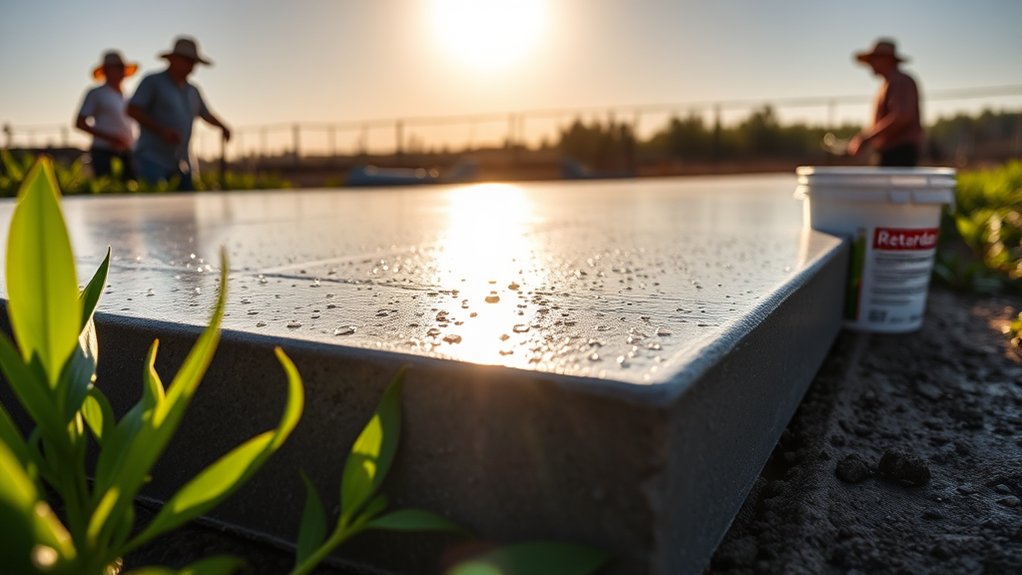
When high temperatures speed up cement hydration, using retarders is crucial to manage setting times in concrete work. Here’s a brief overview of their impact:
- Types of Retarders: Various retarders, such as β-cyclodextrin, can effectively slow down hydration but vary in their efficiency.
- Dosage Impact: Increasing the dosage can proportionately extend setting times; however, too much can compromise the strength of the concrete.
- Finding the Right Amount: The optimal amount of retarder is influenced by the specific mix design and type of cement used.
- Setting Time Example: For example, doses exceeding 0.8% of seignette salt can delay initial setting times by over 48 hours.
Retarders and Their Role in Mass Concrete Projects
In mass concrete projects, using retarders significantly prolongs setting times.
This allows for multiple pours without forming cold joints. The extended workability improves placement quality, ensuring a consistent mix and reducing problems like segregation.
Consequently, you preserve structural integrity and make handling easier during intricate placements.
Extended Setting Times
Hot weather presents significant challenges for mass concrete projects, but using retarders can help extend setting times and maintain workability.
Here are the key benefits:
- Extended Workability: Retarders allow you to keep concrete in its plastic state longer, which is crucial during large placements.
- Temperature Control: They reduce the impact of thermal stress by slowing down the setting process.
- Slump Preservation: You’ll experience less slump loss, which is vital for transporting concrete over long distances.
- Reduced Risk of Cracking: Delaying the setting time helps minimise the risk of cracking caused by thermal stress.
Using retarders effectively ensures your concrete remains workable, boosting the success of your mass concrete projects.
Improved Placement Quality
Retarders are crucial for improving placement quality in mass concrete projects. They enhance workability and ensure better bonding between layers. By increasing the slump by 60-100 mm, they make mixing and placement easier, which is especially important for complex structures.
Various types of retarders help prevent cold joints, thereby strengthening the structure and ensuring uniformity during large pours.
Moreover, by delaying the heat of hydration, these additives reduce the risk of thermal cracking, leading to a better finish. Evaluating the performance of these retarders shows their effectiveness in maintaining joint uniformity, which is vital for overall quality.
When combined with other additives, retarders also improve slump retention, compressive strength, and freeze-thaw resistance, optimising the performance of mass concrete applications.
Combining Retarders With Other Admixtures

When combining retarders with other admixtures, it’s crucial to ensure compatibility to maintain the concrete mix’s performance.
Here are some key points to consider:
- Conduct Standardised Testing: Always carry out both laboratory and field trials to verify the compatibility of the retarder with other admixtures.
- Follow Manufacturer Guidelines: Stick to the recommended dosing to avoid issues such as excessive retardation or loss of workability.
- Use Compatibility Charts: Refer to compatibility charts from admixture suppliers to identify effective combinations.
- Monitor Fresh Concrete Properties: Keep an eye on setting times, workability, and air content to prevent any negative interactions between admixtures.
Practical Uses of Retarders in the Industry

In hot weather, using retarders can significantly improve the workability and performance of concrete mixtures. Various types of retarders provide distinct advantages, helping to counteract fast hydration rates and extend setting times.
By adjusting the dosage, you can maintain the concrete’s consistency, making it easier to pump and place. This is crucial for large projects where avoiding cold joints is vital; retarders allow for successive pours without compromising structural integrity.
In decorative applications, surface retarders can create attractive finishes by delaying the setting of the top layer. They also help reduce segregation and bleeding, leading to a more uniform mixture, which enhances durability and strength.
Trends in Retarder Technology for Concrete

As the demand for high-performance concrete solutions grows, advancements in retarder technology are becoming vital.
Here are the key trends shaping the market:
- Eco-Friendly Solutions: There’s a strong focus on sustainable construction, leading to the development of organic surface retarders.
- Retarder Innovations: Manufacturers are investing in research and development to create tailored admixtures for specific project needs.
- Precise Control: New technologies allow for more accurate regulation of setting times, boosting overall productivity.
- Modular Construction Integration: Retarders are increasingly utilised in modular construction, enhancing efficiency and design flexibility.
These trends not only indicate market growth but also support global efforts to minimise environmental impact while ensuring concrete performance.
Best Practices for Using Retarders in Hot Weather
To manage concrete setting times in hot weather, it’s essential to use retarders effectively. Start by choosing the right type of retarder based on your project’s needs and ensure it works well with other admixtures to avoid issues.
You can add retarders either at the plant or on-site, using step retardation techniques for better control over setting times.
Pre-wet formwork and cool aggregates or mixing water to enhance the retarder’s effectiveness and maintain moisture during curing.
Keep an eye on temperatures to time the application of retarders optimally. Avoid over-mixing or adding water to counteract slump loss, as this can weaken the concrete.
Frequently Asked Questions
Can Retarders Be Used in Cold Weather Conditions?
Retarders should be avoided in cold weather as their benefits can be counterproductive. In these conditions, it’s better to use accelerators, which help achieve timely strength gain and reduce the risk of freezing. This approach ensures the durability and integrity of concrete during the curing process. For instance, using an accelerator can help prevent issues like cracking or setting delays that can occur in colder temperatures.
How Do Different Retarders Affect Concrete Color?
Different retarders significantly affect the colour of concrete by reducing variations and ensuring consistent pigment interactions. For instance, by controlling hydration rates, they help achieve an even finish, avoiding blotches and enhancing the vibrancy of colours during the curing process. This means your concrete can look more uniform and appealing, whether it’s for a driveway or a decorative patio.
Are There Specific Brands of Retarders That Are Recommended?
When comparing brands of retarders, it’s important to assess their effectiveness. Recommended brands such as Sika® Plastiment®, TOP-STOP, and Fritz-Pak provide specific benefits in workability, hydration control, and finishing. These products can enhance performance in various concrete applications, making them reliable choices for your projects.
What Is the Shelf Life of Retarders?
Picture a sealed container of concrete additives on your shelf. Most retarders have a shelf life ranging from 12 months to 2 years, depending on how you store them. This ensures you get the best performance for your projects.
Can Retarders Be Used With All Concrete Mixes?
Retarders cannot be used with all concrete mixes. It’s essential to check the compatibility of specific retarder types with your mix to ensure optimal performance. Different mixtures can react in various ways, which may impact their effectiveness and setting times. For example, a standard mix might work well with one type of retarder, while a more specialised mix may not. Always verify before use.
Conclusion
In hot weather concrete projects, using retarders is akin to having an umbrella on a sunny day—they protect your mix from the detrimental effects of high temperatures. By understanding how to apply them effectively and recognising their limitations, you can ensure your concrete stays workable and durable. Remember to pair retarders with other admixtures for optimal results. Following these best practices will help you achieve a strong, reliable finish, even in the heat.

Discover how water-reducing admixtures enhance concrete performance and durability, but what other advantages do they bring to modern construction?

Just how can fly ash transform your concrete mix for superior performance? Discover the compelling benefits and innovative applications waiting Read more

Consistently achieving superior concrete performance requires understanding hydration stabilizers—discover how the right techniques can transform your projects dramatically.