Precast concrete manholes are produced in controlled factory environments, ensuring they meet durability standards such as ASTM C478. The manufacturing process utilises high-quality materials, including Portland cement and recycled steel for reinforcement. After preparing the moulds, the concrete is cast and cured, which enhances its strength.
Installation requires careful preparation of the base, proper bedding, and sealing of joints to ensure watertightness. This approach not only boosts efficiency but also helps lower long-term maintenance costs. For more insights into their advantages and current market trends, further information is available.
Key Takeaways
Precast concrete manholes are made in a controlled factory setting, which guarantees consistent quality and meets ASTM C478 standards. High-quality materials, such as Portland cement and recycled steel reinforcements, are chosen for their strength and sustainability.
The manufacturing process involves using moulds to create the components, followed by a curing stage that improves durability. When it comes to installation, careful preparation of the base is essential, along with proper joint sealing and suitable bedding material to ensure structural integrity.
Before manholes are delivered and installed, thorough inspections are carried out to confirm the correct dimensions and watertightness.
Overview of Precast Concrete Manholes

Precast concrete manholes are vital access points for underground utilities, ensuring efficient inspection and maintenance of systems such as sewers and storm drains. They play a crucial role in municipal, industrial, and commercial infrastructure projects. These factory-produced structures offer durable, watertight access, reducing on-site construction time and simplifying maintenance. Additionally, the controlled manufacturing environment allows for significant quality control, ensuring each manhole meets the required standards. The use of precast concrete enhances durability, longevity, and impact resistance, making them suitable for challenging environmental conditions.
Standardised manufacturing ensures consistent quality, with options available in various diameters and customisations to suit specific project needs. With a minimum compressive strength of 5000 PSI, these manholes are built to withstand environmental pressures and meet regulatory standards.
Materials Used in Manufacturing

The key to creating durable and efficient precast concrete manholes lies in the choice of materials used in their production.
Portland cement is the main binder, while Supplementary Cementitious Materials (SCMs) like fly ash boost strength and sustainability. This approach not only reduces landfill waste by repurposing industrial byproducts but also lowers environmental impact by increasing recycled content. Additionally, the use of eco-friendly materials contributes to a more sustainable construction practice.
Using locally sourced aggregates, such as crushed stone and gravel, enhances compressive strength and cuts down on transport emissions. Additionally, precast concrete manholes can be designed for quick installation, making them contractor-friendly and efficient on the job site.
Steel reinforcements, often made from 95% recycled material, improve the manhole’s tensile strength and longevity. Additionally, chemical admixtures tailored for specific conditions help optimise workability and durability.
These carefully selected materials ensure compliance with ASTM C478 standards, ultimately improving the performance and lifespan of manholes.
Reinforcement Techniques for Durability
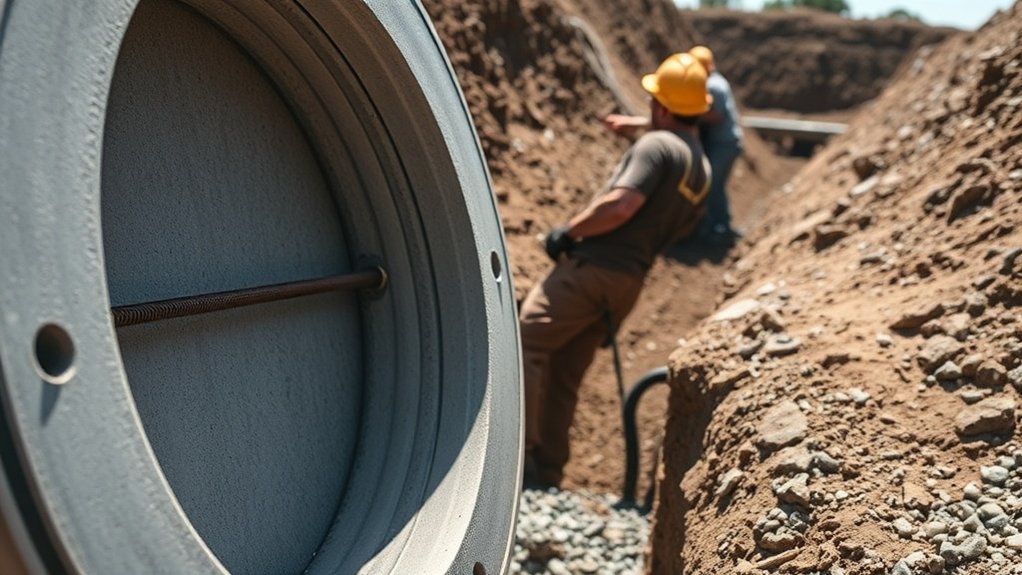
When designing precast concrete manholes, choosing the right reinforcement materials is crucial for durability. Following established design standards helps ensure that the structural integrity withstands various loads. Paying attention to reinforcement techniques around openings and connections can significantly improve the long-term performance of your manholes. For example, using steel bars or mesh in critical areas can prevent cracking and extend the lifespan of the structure. Additionally, standard unreinforced units can resist pressures down to 150m depth, showcasing the importance of adequate design for varying conditions. The use of steel reinforcement enhances the tensile strength of the concrete, making it more resilient against potential failures.
Reinforcement Materials Overview
Effective reinforcement materials are crucial for improving the durability and structural integrity of precast concrete manholes. Common reinforcement types include welded wire fabric and hoop steel, adhering to British Standards equivalent to ASTM A615, typically opting for Grade 60 rebar.
It’s vital to maintain a minimum total wall reinforcing area of 0.0025 times the internal diameter per vertical foot. For base and top slabs, you need at least 0.12 sq. in. of reinforcement per foot in each direction for a thickness of 6 inches.
Proper embedding and covering of the steel help prevent corrosion, while reinforcement at joints is essential for maintaining joint integrity, ensuring leak resistance and structural continuity.
Always verify alignment and spacing to meet project specifications.
Design Standards Compliance
Ensuring compliance with design standards is crucial, but effectively reinforcing precast concrete manholes significantly enhances their durability.
Following ASTM C478 design specifications, manhole components must adhere to strict material and strength requirements, including a minimum concrete compressive strength of 4000 psi. Using hoop steel or welded wire reinforcement not only meets these minimum area specifications but also helps prevent early failures.
Maintaining adequate reinforcement cover and applying protective coatings can greatly improve corrosion resistance.
Sealing joints with resilient gaskets ensures watertightness, which not only meets compliance standards but also extends the lifespan of the manhole.
Ultimately, these practices lead to structures that can withstand environmental pressures, ensuring longevity and reliability.
Enhancing Structural Integrity
Reinforcing precast concrete manholes improves their structural integrity, addressing challenges from environmental conditions and load demands. Typically, welded wire fabric and hoop steel are used to ensure effective load distribution against lateral earth pressures and surface loads.
You follow the standards set by ASTM C478 to maintain a minimum total wall reinforcing area, bolstering strength. Using epoxy-coated reinforcement steel helps prevent corrosion, particularly at exposed ends.
Well-designed reinforcement cages resist bending moments and accommodate openings, ensuring uniformity during the concrete pour. This makes reinforced manholes more resilient to cyclic loading, which reduces the risk of cracks that can compromise watertightness.
Initial Steps in Production

The initial steps in producing precast concrete manholes require careful attention to ensure adherence to project specifications and regulatory standards.
Here’s a straightforward guide to get you started:
- Review the project specifications to confirm dimensions and load ratings.
- Choose high-quality materials, such as Type II Portland cement and suitable aggregates.
- Develop a detailed work schedule and gather the necessary resources.
- Carry out a structural assessment to ensure load-bearing capacity and compliance.
The Casting Process
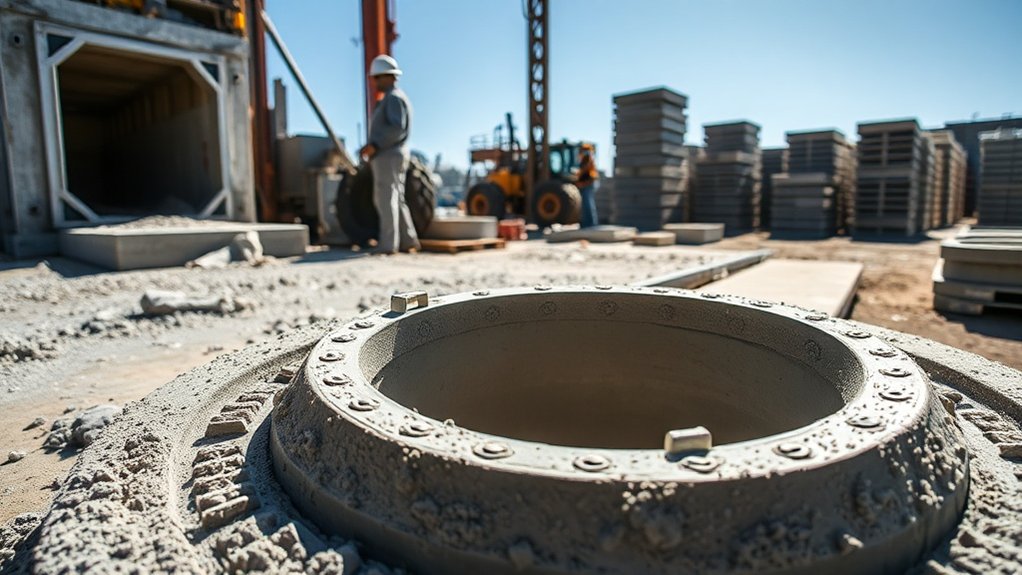
In the casting process, precise mould preparation is essential to ensure all components are correctly positioned and aligned.
Once the moulds are ready, you move on to pouring the concrete, where accuracy is key to prevent air pockets and ensure consistency.
This stage is vital for achieving the structural integrity and quality of precast concrete manholes.
Mold Preparation Techniques
Effective mould preparation techniques are crucial for creating high-quality precast concrete manholes. To achieve optimal results, adhere to these essential steps:
- Mould Cleaning: Clean moulds thoroughly to eliminate any debris and residue, which can lead to surface imperfections.
- Inspection: Regularly check for cracks or damage that may compromise the integrity of the final product.
- Release Agents: Apply release agents evenly to ensure that the concrete doesn’t stick, enabling smooth demoulding.
- Maintenance: Keep moving parts lubricated and in good repair, and store moulds correctly to prevent rust and deformation.
Concrete Pouring Procedures
Before pouring concrete, it’s crucial to prepare your mix according to the design specifications to ensure strength and durability.
Using ready-mixed concrete provides a consistent blend; always check proportions based on the required strength and conditions.
Start pouring the concrete into the formwork from one end, using concrete pumps or cranes to improve efficiency.
Maintain a steady flow to fill all areas and avoid air pockets, and take care to prevent segregation.
Use vibrators to consolidate the mix, eliminating trapped air for a denser structure.
Finally, level and smooth the surface before the concrete sets to ensure a uniform and high-quality finish.
Curing and Stripping Procedures
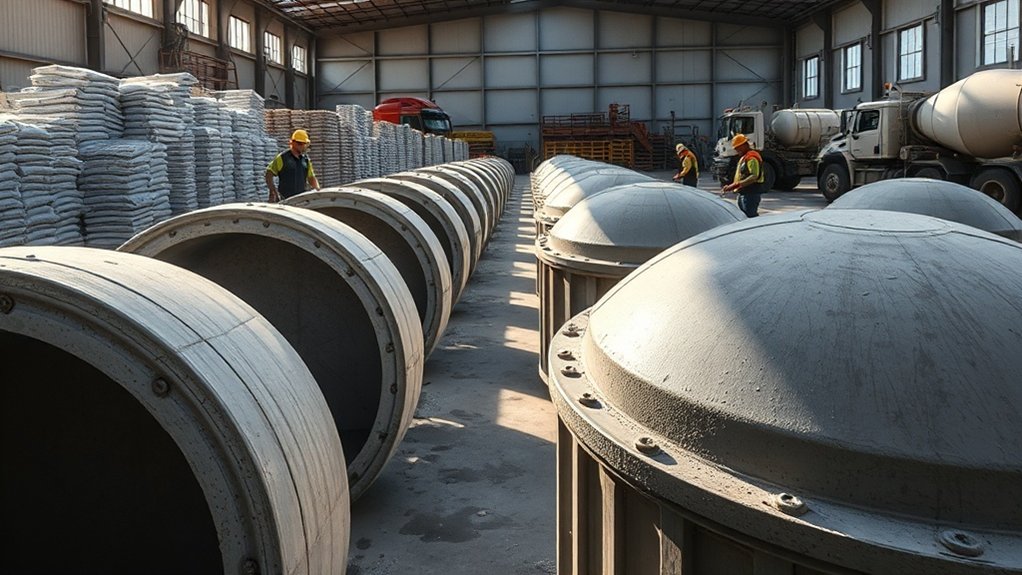
Proper curing and stripping procedures are vital for ensuring the strength and durability of precast concrete manholes.
Here are the key steps to follow:
- Select a Curing Method: Opt for water curing, membrane curing, or saturated steam curing, depending on your project’s requirements.
- Monitor Conditions: Ensure that temperature and moisture levels are adequate throughout the curing process to avoid cracking.
- Timing for Stripping: Remove the formwork only after 24 to 48 hours, ensuring the concrete has achieved sufficient strength.
- Inspect Before Handling: After stripping, check for surface defects to confirm structural integrity before transport.
Adhering to these guidelines will help you achieve optimal results in manhole production.
Quality Control Measures
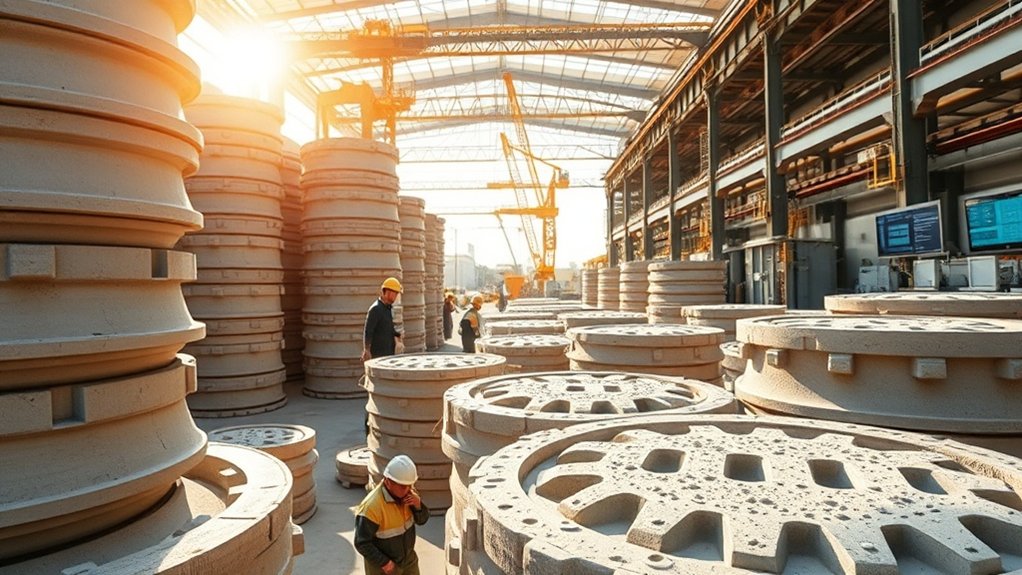
Quality control measures in the production of precast concrete manholes are crucial for ensuring structural integrity and durability. Automated batching systems ensure accurate material proportions, while computerised monitoring keeps an eye on curing conditions, maintaining the right temperature and humidity.
Inspection protocols check reinforcement placement against design specifications before pouring the concrete, and moulds are inspected for cleanliness and proper alignment. During production, visual inspections help spot defects, and compressive strength tests confirm compliance with standards.
Final inspections ensure there are no cracks and that dimensions are accurate before delivery. Once installed, it’s important to check that manholes are clean and foundations are level.
These steps are vital for quality assurance, ensuring only defect-free units are installed, which helps maintain the performance and longevity of the manholes.
Testing Standards and Protocols

To ensure the integrity of precast concrete manholes, it’s vital to follow strict testing standards and protocols. These procedures are crucial for quality assurance and compliance with industry regulations.
The key standards include:
- ASTM C478 – This standard governs the manufacture and specifications of manhole sections.
- ASTM C1244 – It specifies the vacuum testing required to confirm watertightness before backfilling.
- ASTM C497 – This covers quality control tests for concrete pipes and manhole sections.
- ASTM C923 – This standard relates to resilient connectors, ensuring watertight joints between pipes and manholes.
Adhering to these standards helps maintain the durability and reliability of infrastructure.
Installation Procedures
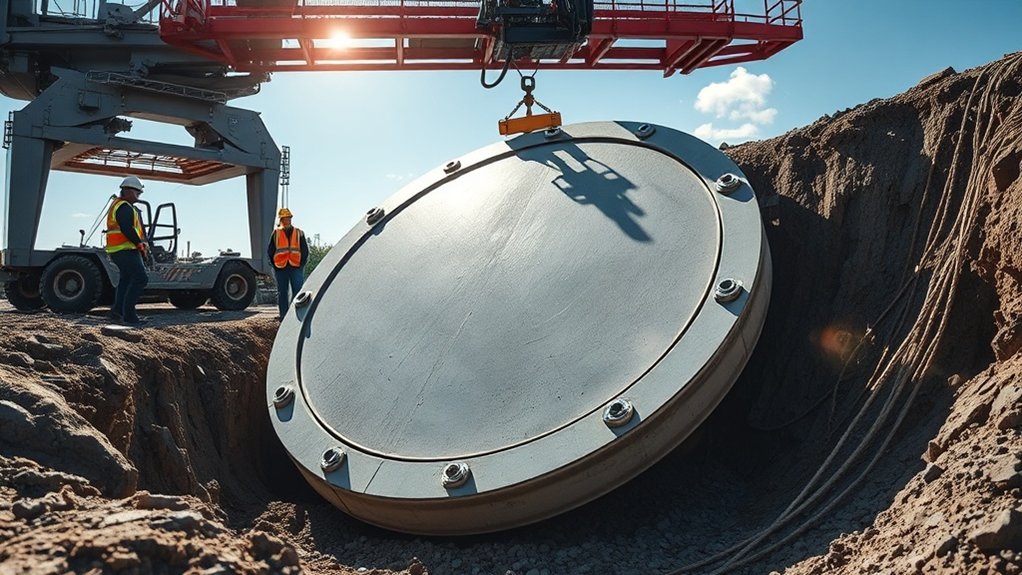
When installing precast concrete manholes, it’s essential to focus on base preparation and effective joint sealing to ensure structural integrity.
Start by grading and levelling the bedding material for a solid foundation.
For sealing joints, ensure they’re thoroughly cleaned and apply gaskets correctly.
Paying attention to these details will significantly improve the longevity and performance of the manhole system.
Base Preparation Techniques
Proper base preparation is essential for the successful installation of precast concrete manholes. To ensure a stable foundation, follow these key steps:
- Excavate the manhole base to the required depth, using subgrade stabilisation techniques for the underlying soil.
- Remove any loose or unsuitable materials and compact the fill as needed, creating a solid base for the precast structure.
- Choose the right bedding material, usually compacted granular material or specified concrete, ensuring it complies with project specifications.
- Level the bedding in both directions, maintaining uniform compaction to avoid voids and prevent differential settlement.
Joint Sealing Methods
Effective joint sealing is crucial for ensuring the integrity and watertightness of precast concrete manholes. When choosing a sealant, consider the joint design and environmental conditions.
Butyl rubber-based sealants are popular as they comply with ASTM C990 standards. Alternatively, hydrophilic elastomeric options like SikaSwell expand when they come into contact with water. For areas with high flow rates, polyurethane sealants such as SealGuard II are suitable.
Ensure sealant is applied at the tightest concrete surfaces to fill the annular space effectively. Aim for a minimum of 50% compression, and keep joint gaps to no more than 10mm (3/8 inch).
Before backfilling, conduct a vacuum test to confirm the seal’s integrity. Following the manufacturer’s guidelines will help ensure reliable performance and prevent leaks in your installation.
Importance of Proper Bedding and Backfill
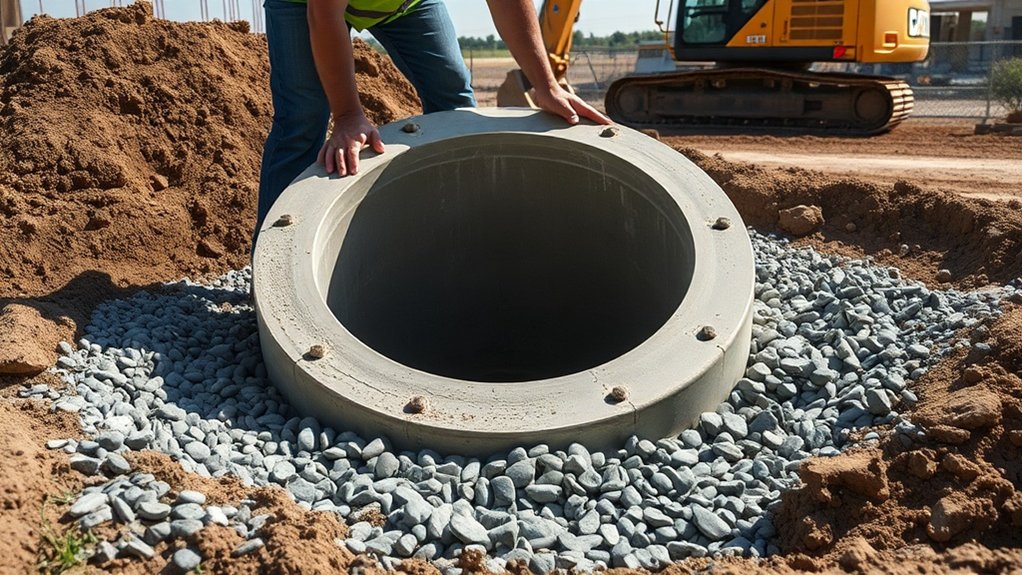
Ensuring proper bedding and backfill for precast concrete manholes is vital for maintaining their structural integrity and avoiding future problems. The importance of bedding is crucial, as it supports load distribution and reduces the risk of differential settlement.
To achieve the best results, follow these guidelines:
- Use at least 150mm of compacted crushed stone bedding.
- Ensure the bedding extends a minimum of 150mm beyond the base perimeter.
- Backfill in layers no thicker than 200mm, compacting each layer thoroughly.
- Keep a 150mm buffer zone between compaction equipment and waterproofed surfaces.
By following these backfill techniques, you can help prevent cracking and shifting, thereby enhancing the longevity and reliability of your manhole installations.
Regular inspections and strict adherence to specifications are key to achieving successful outcomes.
Sealing Joints for Longevity
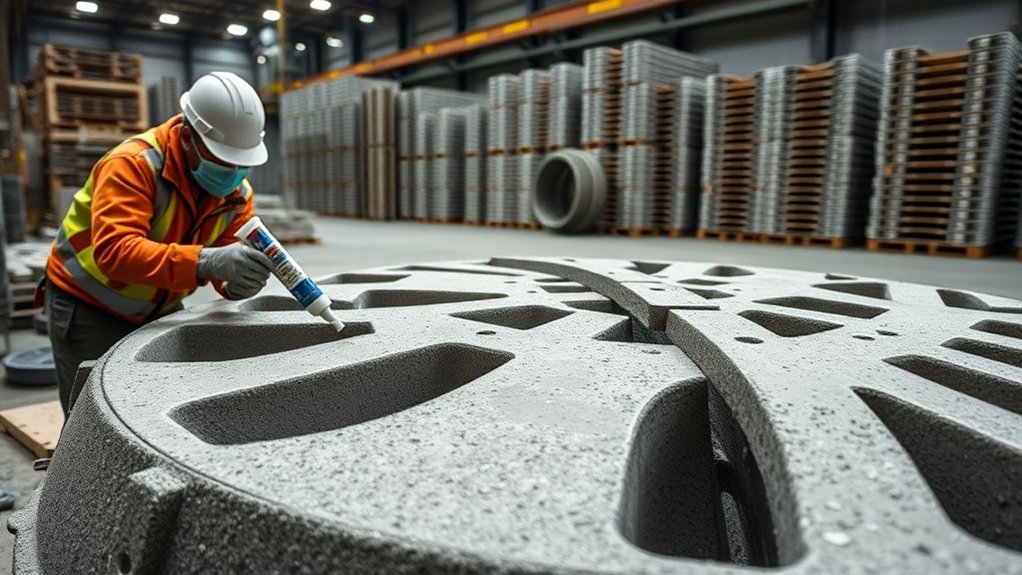
Bedding and backfill provide a solid base for precast concrete manholes, but the durability of these installations relies on the quality of their joints. Proper joint preparation and the right sealant are crucial. Before applying sealants, ensure surfaces are clean and free from contaminants. Use the manufacturer’s recommended sizes for optimal compression to avoid leaks.
| Sealant Type | Key Characteristics |
|---|---|
| Butyl Rubber | Flexible, compliant with ASTM C990 |
| Hydrophilic Elastomeric | Swells when wet to form a watertight seal |
| Cementitious Grout | High compressive strength, offers structural bonding |
| Polyurethane | Prevents water infiltration under high flow rates |
| Other Materials | Hydraulic cement, epoxy, foams, shims |
Market Trends and Sustainability Benefits
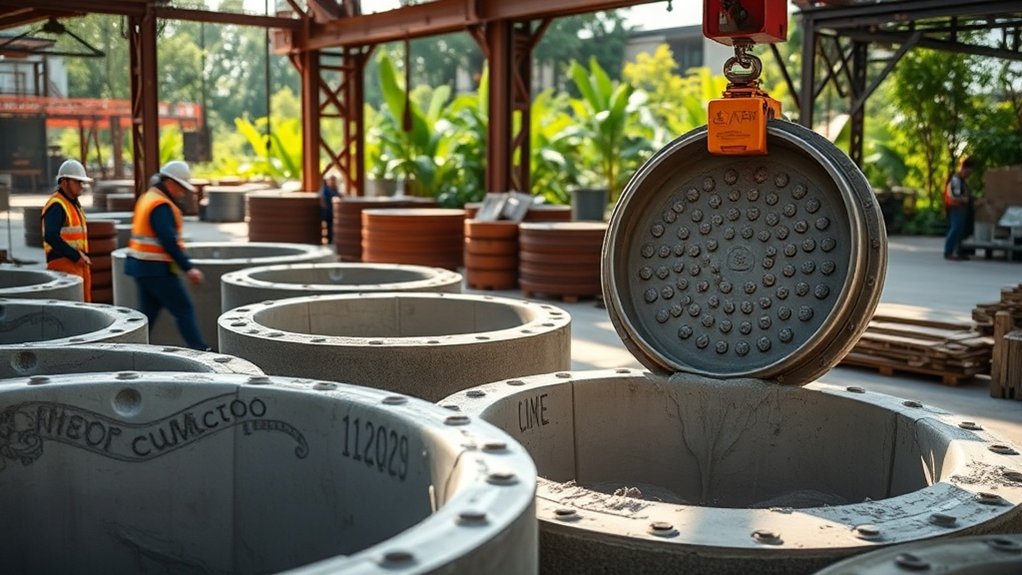
As urbanisation increases and infrastructure investments rise, the precast concrete manhole market is set for considerable growth. This expansion is driven by local councils prioritising sustainable practices and resilient infrastructure.
Key trends include:
- Enhanced durability and lower lifecycle costs for precast solutions.
- Government initiatives supporting smart cities and urban renewal.
- Reduced on-site waste and environmental impact thanks to controlled factory production.
- Greater use of innovative materials for improved performance.
These factors highlight the precast concrete sector’s essential role in meeting regulatory requirements and infrastructure demands.
Frequently Asked Questions
How Long Do Precast Concrete Manholes Last?
Precast concrete manholes usually last between 50 to 100 years. Their lifespan depends on factors such as the quality of materials used and the environment they are exposed to. Regular maintenance can help extend their durability, ensuring they remain effective and reliable for years to come.
What Sizes Are Available for Precast Concrete Manholes?
Precast concrete manholes come in standard sizes from 48 inches to 144 inches. There are various size options available to meet specific project requirements, ensuring you have the right fit for any application you encounter.
Can Precast Manholes Be Customized for Specific Projects?
Yes, precast manholes can be tailored to meet your project specifications. You can customise dimensions, internal features, and materials to ensure the design fits your unique requirements, all while maintaining structural integrity and adhering to relevant standards. For example, if your project requires a specific depth or added access points, these adjustments can be made easily.
What Are the Typical Costs Associated With Precast Concrete Manholes?
Typical costs for precast concrete manholes include material costs, installation fees, and equipment hire. Factors such as raw material prices, transport, and site preparation can significantly affect your overall budget, so it’s important to consider these when planning your project. For example, if raw materials increase in price, it could lead to higher costs for the manholes themselves.
Are There Specific Safety Regulations for Installing Precast Manholes?
Yes, strict safety standards must be followed during installation. Adhering to Health and Safety Executive (HSE) regulations is crucial; around 80% of confined space incidents could be avoided by following proper installation procedures. Compliance is vital for ensuring safety on site.
Conclusion
In summary, precast concrete manholes are impressive due to their robust construction. Each manhole is carefully designed and installed to ensure durability over time. With proper bedding and backfill, they can withstand various environmental challenges for many years. Additionally, by adopting current market trends and sustainable practices, we are not just creating manholes; we are contributing to a more environmentally friendly future.

Narrow your focus on precast concrete and discover how this innovative construction method can revolutionize your building projects. Uncover its Read more

Find out how precast concrete beams revolutionize construction with various types and applications that ensure strength and efficiency; discover their Read more

Pre-tensioned reinforced concrete offers unparalleled strength and efficiency, but what are its key benefits and applications in modern construction? Discover Read more