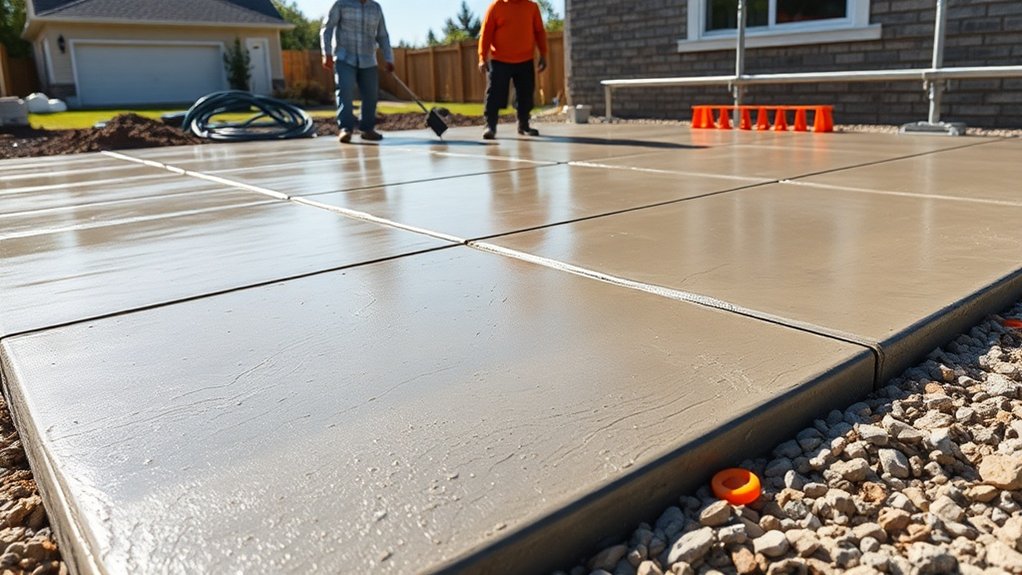
To prevent cracking in residential concrete projects, ensure proper preparation of the subgrade and effective compaction for stability. Level the subgrade for uniform support, and choose a suitable concrete mix with the right water-to-cement ratio. Using admixtures can improve workability, and employing effective curing techniques is vital for optimising strength. Regular inspections and timely repairs are crucial. By adhering to these best practices, you can enhance the durability and longevity of your concrete. There’s plenty more to discover on this topic.
Key Takeaways
- Prepare the subgrade properly by assessing soil type and ensuring a clean, level surface to reduce the chances of cracking in concrete slabs.
- Implement effective drainage solutions to prevent water pooling around concrete areas, which can lead to cracking.
- Choose the right concrete mix with a suitable water-to-cement ratio, and consider using additives to enhance strength and workability.
- Use appropriate reinforcement techniques, such as steel rebar and wire mesh, to boost tensile strength and evenly distribute loads.
- Plan joint placements carefully, including contraction joints at key locations, to manage stress and minimise the risk of cracks in the concrete.
Importance of Proper Subgrade Preparation
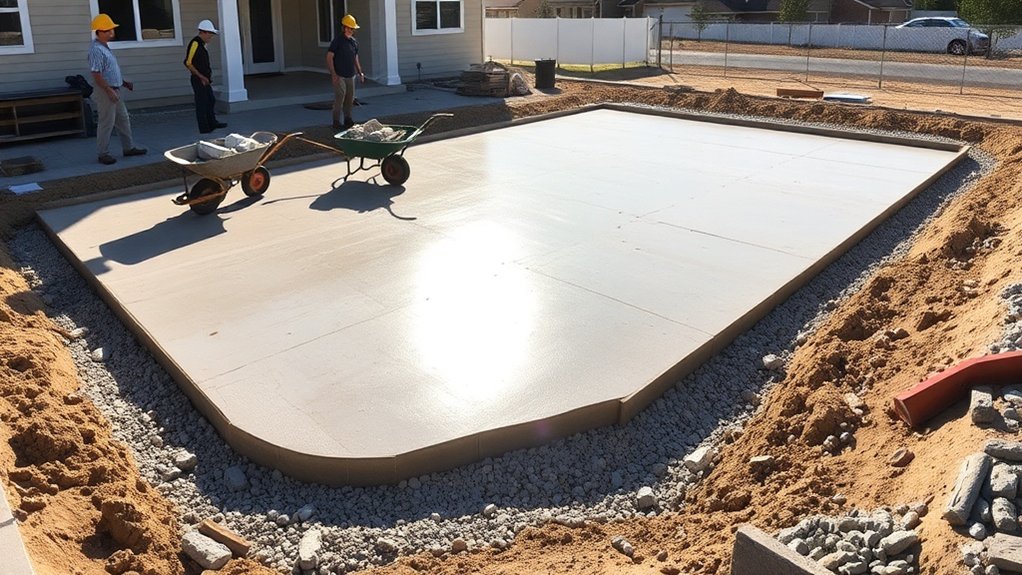
Proper subgrade preparation is crucial for any concrete project as it forms the foundation of the entire structure. A thorough evaluation of the subgrade helps you understand the soil composition and how it retains moisture. This assessment is essential for identifying weak soils that could undermine the load capacity and integrity of your project. Uniformity in subgrade is key to preventing crack development in the concrete slab.
Implementing effective drainage systems is key to minimising moisture build-up, which can lead to erosion and settlement issues. Techniques like chemical stabilisation can enhance soil strength and reduce the risk of expansion. Additionally, using the right compaction methods ensures a stable and uniform base, which is vital for managing moisture. A well-prepared subgrade provides stability that supports the entire structure above.
Compaction Techniques for Stability
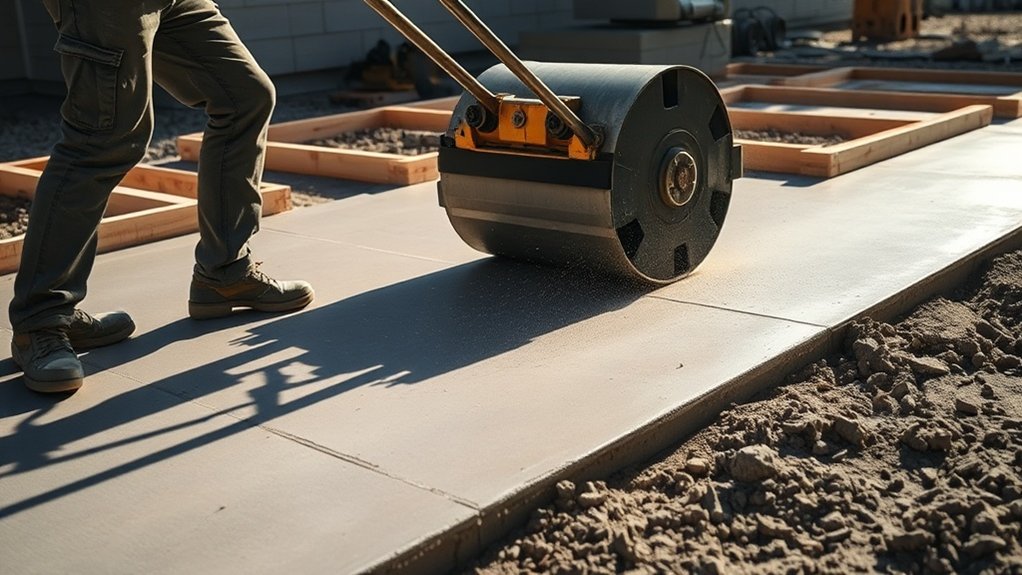
Achieving stability in concrete projects relies on effective compaction techniques. While manual methods like rodding and tamping can work for small areas, they aren’t as efficient as mechanical options. Using immersion and surface vibrators significantly improves compaction quality for larger projects, ensuring a uniform density and reducing air voids. For high-quality precast elements, specialised techniques like spinning compaction and table vibrators are essential. For projects that require minimal vibration, self-compacting concrete (SCC) is a flowable alternative that fills formwork easily. However, it’s vital to control mixing and quality to prevent segregation. Effective compaction methods also lead to increased strength, enhancing the load-bearing capacity of the concrete structure. Proper curing techniques and control joints are vital for maximising reinforcement effectiveness in concrete projects.
Leveling the Subgrade for Uniform Support
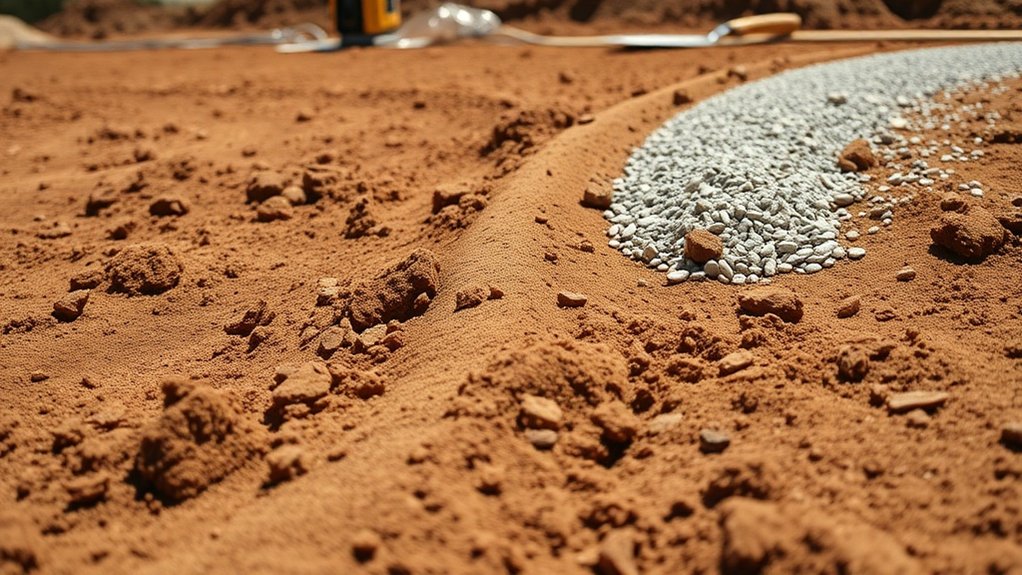
Effective compaction techniques are essential for leveling the subgrade, which provides uniform support for concrete slabs.
Start with a thorough evaluation of the subgrade to ensure a clean, debris-free surface. Here are the key steps to follow:
- Excavate the area to the correct depth, removing all organic material and large stones.
- Grade the subgrade to within ±1.5 inches of the specified height, ensuring it has a slight slope for drainage.
- Lay a 4-inch layer of compacted, free-draining material beneath the slab to improve stability. Proper soil moisture content is also crucial during this process to enhance compaction effectiveness. Additionally, using gravel under concrete can significantly improve drainage and stability.
Once the leveling is complete, check the final grade using a string line and level.
These steps ensure uniform support, reducing the risk of differential settlement and cracking in your concrete projects.
Selecting the Right Concrete Mix Design

Choosing the right concrete mix design is crucial for reducing the risk of cracking in your projects.
It’s important to maintain the correct water-to-cement ratio, use appropriate admixtures and additives, and consider adding fibre reinforcement. Each of these elements is key to achieving the strength, workability, and durability you need.
For example, a lower water-to-cement ratio can enhance strength but may require more effort to mix and place.
Keeping these factors in mind will help ensure a successful outcome for your concrete work.
Water-to-Cement Ratio
To ensure your concrete project is successful, understanding the water-to-cement ratio (w/c) is essential. This ratio significantly affects the strength, durability, and crack resistance of your concrete. Here are some important considerations:
- Optimal Range: For residential projects, aim for a w/c ratio between 0.40 and 0.60. This range strikes a good balance between strength and workability.
- Impact on Strength: Lower ratios (0.40–0.50) enhance compressive strength by reducing porosity and water absorption, which helps minimise the risk of shrinkage.
- Mix Consistency: Ensure your mix has the right workability. Ratios above 0.60 can improve flowability but may compromise durability.
Choosing the appropriate w/c ratio not only enhances your concrete’s performance but also helps prevent cracking and ensures longevity.
Admixtures and Additives
When designing a concrete mix, using the right admixtures and additives can significantly improve performance and durability.
It’s essential to select crack-reducing admixtures for effective shrinkage control, as these help minimise micro-crack formation and internal stresses. Always check compatibility of admixtures with water reducers and accelerators to ensure optimal results.
Supplementary cementitious materials (SCMs) like silica fume can enhance workability and reduce shrinkage.
Air-entraining agents create tiny bubbles that improve resistance to freeze-thaw cycles. Furthermore, shrinkage-reducing and compensating admixtures can help counteract volume loss during curing, which reduces the likelihood of cracking.
Always adjust the dosage and mix composition based on specific project needs to ensure a well-balanced approach to crack prevention in your concrete projects.
Fiber Reinforcement Options
Fiber reinforcement options are crucial for improving the performance and durability of concrete mixes, particularly in residential projects. Here are some key types to consider:
- Steel Fibre: Best for enhancing tensile strength and controlling cracks, especially in high-traffic areas like driveways.
- Synthetic Fibre: Useful for reducing plastic shrinkage cracks during curing, making them suitable for a variety of residential uses, such as patios and floors.
- Natural Fibre: A cost-effective and sustainable option that boosts tensile strength and crack resistance.
Although glass fibre is often used for decorative features, carbon fibre is outstanding for structural repairs.
Each type of fibre offers distinct advantages, so it’s important to assess your project’s specific requirements to choose the most effective reinforcement solution.
Admixtures for Enhanced Workability

To achieve optimal workability in your concrete projects, it’s crucial to understand the different types of admixtures available.
These additives enhance the fluidity of your mix and contribute to the strength and durability of the final product.
For instance, using plasticisers can make your concrete easier to work with without adding extra water, reducing the risk of cracking.
Types of Admixtures
Understanding the different types of workability-enhancing admixtures is crucial for optimal performance in concrete projects. Here are three key categories to consider:
- Water-reducing admixtures (Type A) reduce water content while maintaining workability, which is essential for precise dosage.
- Retarding admixtures (Type B) extend the setting time, making them useful in hot weather to ensure the mixture remains workable.
- Superplasticisers increase fluidity without adding water, significantly improving ease of placement.
When choosing admixtures, it’s important to adjust the dosage based on your mix design and environmental conditions.
Overuse can cause problems like excessive retardation or segregation.
Always check compatibility with other admixtures to maximise performance and achieve the desired workability in your concrete projects.
Benefits of Using Admixtures
Using admixtures in concrete projects offers several notable benefits, especially in improving workability. By selecting the right admixtures, you can enhance fluidity without increasing water content, which simplifies placement in intricate forms or tight spaces.
This improvement reduces the need for mechanical vibration, speeds up construction, and leads to better surface finishes. Enhanced slump and flow characteristics ensure better compaction, which helps prevent issues like honeycombing and segregation.
Moreover, water-reducing admixtures can lower the water-cement ratio, increasing compressive strength and durability, while enabling the effective use of supplementary cementitious materials.
These advantages not only streamline labour and cut costs but also promote environmental sustainability by reducing cement usage. Overall, admixtures are vital in modern concrete practices.
Reinforcement Methods to Increase Strength
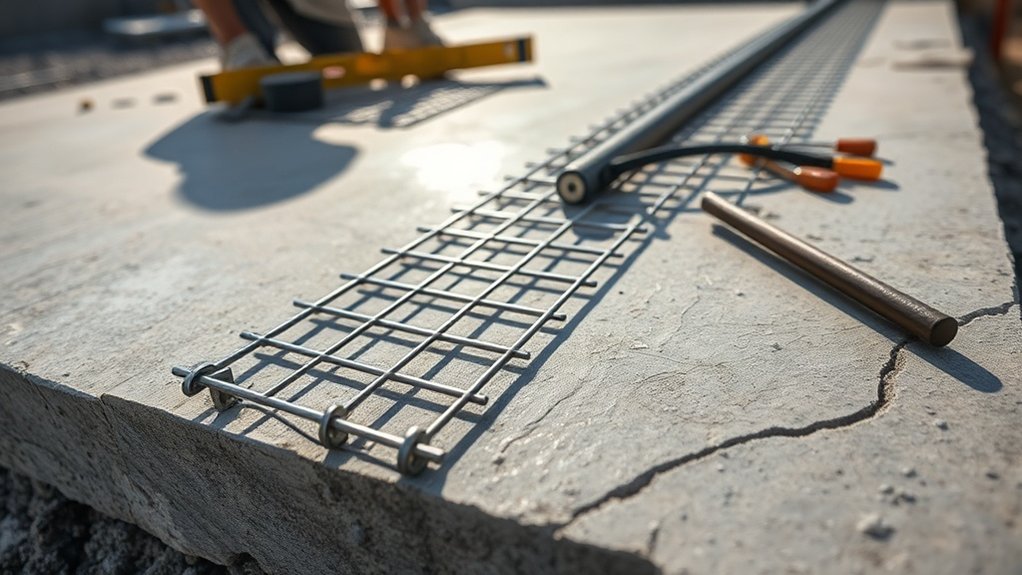
To enhance the strength of concrete, several reinforcement methods are effective. Incorporating steel rebar, wire mesh, fibre, and post-tensioning techniques can significantly improve structural integrity and crack resistance.
Here are some key strategies:
- Steel Rebar: Ensure compliance with rebar specifications to optimise tensile strength and ensure compatibility with concrete’s thermal expansion, reducing the risk of cracks.
- Wire Mesh: Use various mesh types to evenly distribute loads, effectively managing surface cracking and improving installation efficiency.
- Fibre Reinforcement: Select from different fibre types, such as steel or polypropylene, to enhance durability and minimise shrinkage cracks.
Post-tensioning is also beneficial, offering increased load capacity and better control of crack widths, particularly in high-stress situations.
Using corrosion-resistant materials will further extend the lifespan of concrete in damp environments.
Proper Grid Spacing for Reinforcement
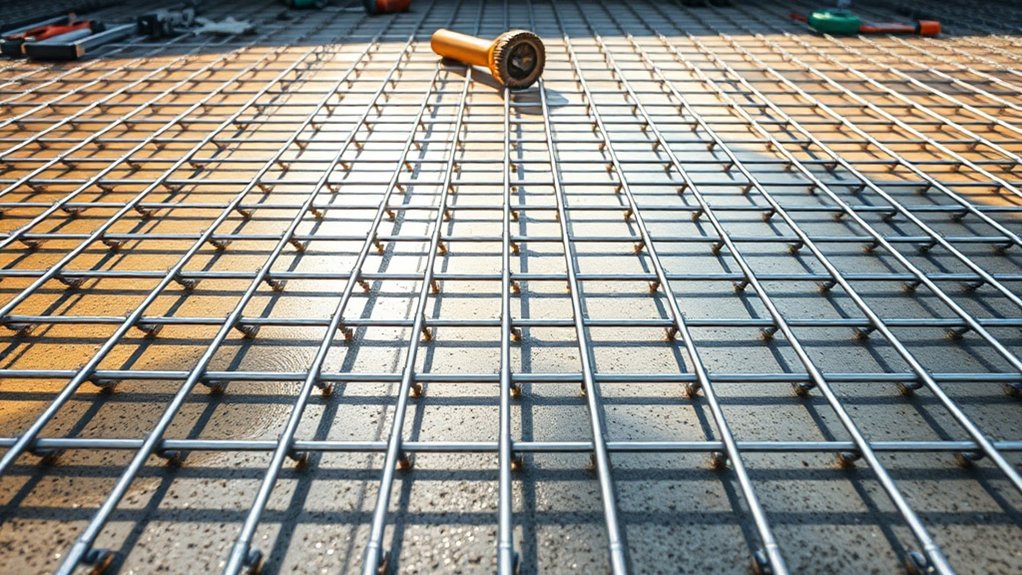
To ensure effective crack control in your concrete projects, it’s crucial to understand the proper grid layout.
Follow the recommended spacing guidelines, which can vary depending on the application and load requirements.
For instance, increasing grid spacing for thicker slabs can significantly boost structural integrity and minimise the risk of cracking.
Importance of Grid Layout
A well-designed grid layout is vital for reinforcing concrete projects, as it directly affects stress distribution and the overall structural integrity.
Proper grid spacing improves efficiency and load management by:
- Distributing loads evenly, which helps prevent localised stress concentrations that can cause cracking.
- Enhancing tensile strength through the composite structure formed by steel bars or mesh, reducing the brittleness of concrete.
- Controlling shrinkage and temperature-induced stresses, which are common causes of cracking.
For instance, think of a concrete slab for a patio. A well-spaced grid ensures that weight from furniture or foot traffic is evenly supported, reducing the risk of cracks appearing over time.
Recommended Spacing Guidelines
Proper grid spacing for reinforcement is crucial for the durability and performance of concrete structures. Following recommended reinforcement spacing ensures better concrete consolidation and reduces the risk of cracking. Here’s a guideline for typical spacing:
| Application | Diameter (mm) | Spacing (mm) |
|---|---|---|
| Light Mesh | 8-10 | 200 |
| Foundation Bars | 12.7 | 305 |
| Walls | 12-16 | 305 |
| Floors | 8-12 | 200 |
For effective reinforcement, ensure the spacing is at least 1.5 times the diameter of the rebar and never less than 10mm in congested areas. Proper spacing facilitates better load distribution and reduces crack formation, contributing to a more robust concrete structure.
Adjustments for Slab Thickness
When designing concrete slabs, it’s crucial to adjust the reinforcement grid spacing according to the slab thickness to ensure structural integrity.
Here are some key points to consider:
- For slabs measuring 100 to 175 millimetres thick, it’s advisable to use #13 bars placed at 300 millimetres apart; this is usually the minimum requirement.
- Slabs thicker than 175 millimetres may require larger bar sizes or closer spacing to ensure strength and prevent cracking.
- Follow the guidelines set out in ACI 318-19, which stipulate that primary flexural reinforcement spacing shouldn’t exceed the lesser of three times the slab thickness or 450 millimetres.
Joint Placement Strategies to Manage Cracking
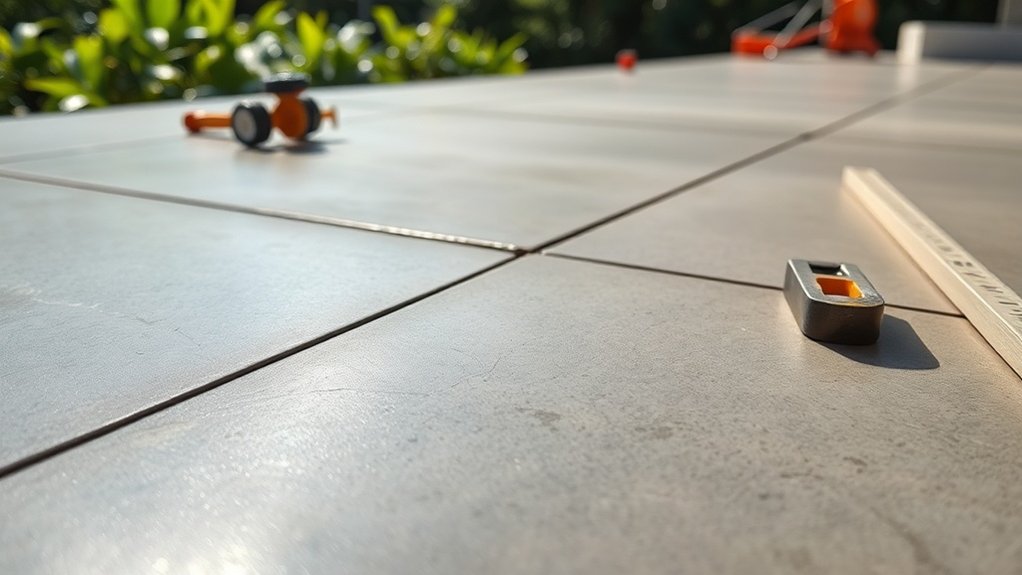
Effective joint placement is crucial for managing cracking in concrete projects. To control cracks, follow the maximum joint spacing guidelines: for a 100mm slab, keep joints 2.4 to 3.0 metres apart, ensuring you never exceed 4.5 metres for external flatwork.
Use contraction joints at re-entrant corners and slab penetrations to prevent random cracking. Aim for square panels with a length-to-width ratio no greater than 1.5:1.
When planning your slab, avoid T-intersections and sharp angles between joints. Align joints with reinforcement to better distribute stresses.
Curing Techniques for Optimal Strength
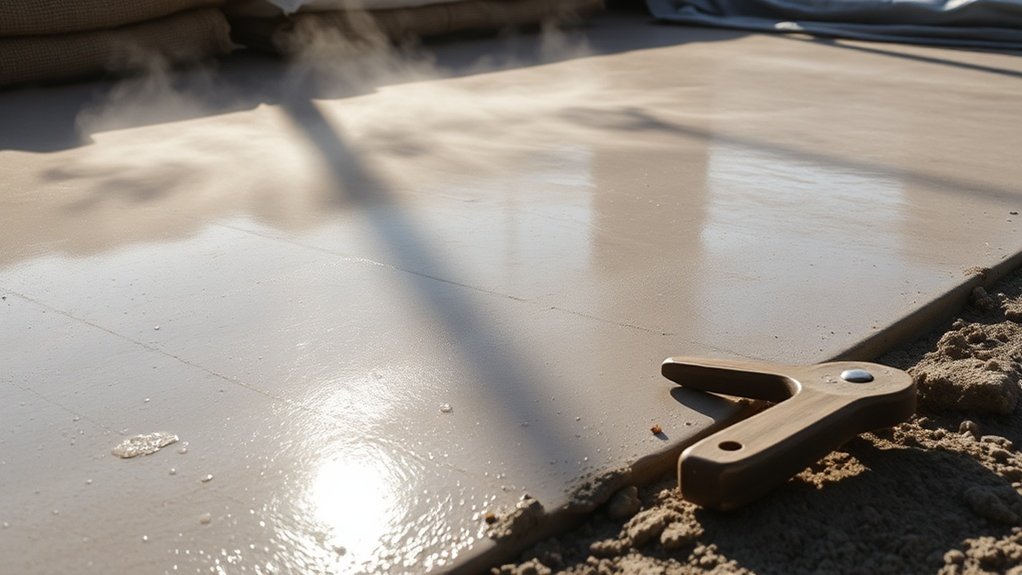
Curing techniques are crucial for achieving optimal strength in concrete projects, as they directly impact hydration and durability.
Here are some effective methods to consider:
- Water Curing: Keep the surface continuously wet to prevent moisture loss, especially in hot or windy conditions.
- Membrane Curing: Use liquid membrane-forming compounds to create a moisture-retaining barrier when water curing isn’t possible.
- Controlled Environment Curing: Regulate temperature and humidity levels to ensure consistent strength development.
These techniques help reduce cracking and enhance the concrete’s overall strength and durability.
It’s vital to start the curing process immediately after placement to ensure the best outcomes.
Effective Surface Protection Measures
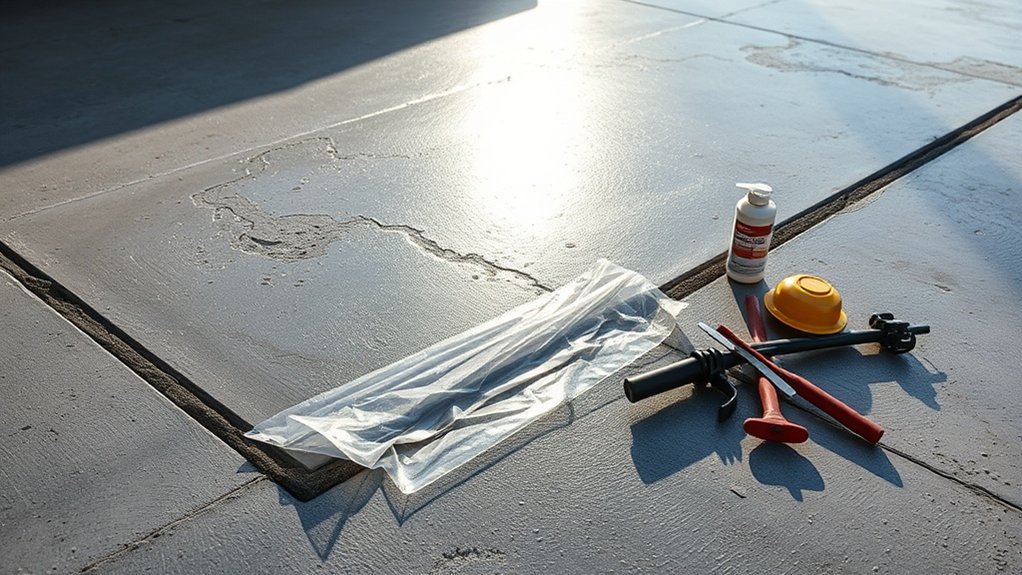
Maintaining the integrity of concrete surfaces after curing is crucial for preventing cracks and ensuring durability. Effective surface treatments, such as hydrophobic impregnation, create an invisible barrier that reduces water absorption and the risk of moisture-related damage. Agents like silanes and siloxanes provide water repellency without altering the appearance of the concrete.
Additionally, applying protective coatings forms thicker film layers that shield against moisture, abrasion, and chemical attacks, enhancing overall durability. For high-traffic areas, polyurea coatings are an excellent choice as they offer fast-curing and weather-resistant protection.
Maintenance Practices to Extend Lifespan
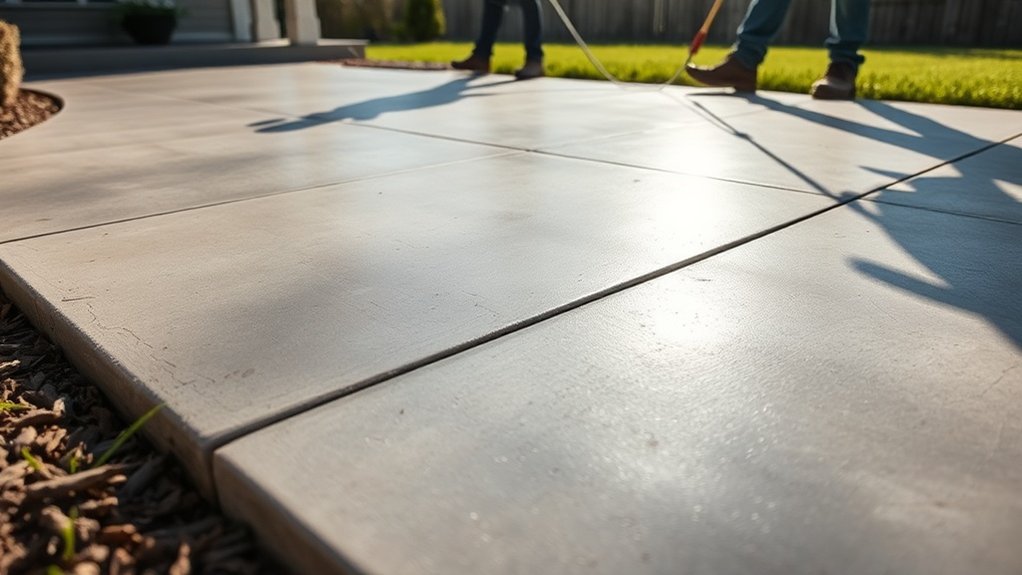
A solid maintenance strategy is crucial for extending the lifespan of concrete structures. Effective practices ensure durability and reduce the risk of cracking.
Here are three key maintenance components:
1. Sealant Application: Apply penetrating sealants within 30 days of curing to prevent moisture ingress. Reseal every 2-3 years to keep them effective.
2. Cleaning Techniques: Clean surfaces annually with mild soap and soft brushes. Avoid using high-pressure washers, as they can damage the surface.
Promptly remove stains to prevent chemical breakdown.
3. Crack Monitoring: Regularly check for cracks and apply flexible caulk immediately to stop water from seeping in.
Ensure proper drainage and manage loads to reduce stress on concrete surfaces. These strategies will help enhance the longevity of your concrete projects.
Regular Inspections and Timely Repairs

Regular inspections may seem laborious, but they’re crucial for spotting potential cracks before they develop into serious problems. Routine visual checks can help you uncover underlying issues, while crack monitoring devices observe changes over time. Early detection means you can carry out timely repairs, maintaining structural integrity.
| Inspection Method | Purpose |
|---|---|
| Visual Inspection | Identify types and patterns of cracks |
| Impact-Echo Testing | Locate internal cracks |
| Ultrasonic Testing | Assess concrete quality |
| Infrared Thermography | Detect subsurface defects |
| Crack Monitoring Devices | Track progression and changes |
Frequently Asked Questions
What Environmental Factors Contribute to Concrete Cracking?
Environmental factors that lead to concrete cracking include varying moisture levels and wind exposure. Excessive moisture can undermine concrete’s strength, while windy conditions hasten evaporation, causing rapid drying. This can result in surface shrinkage and the formation of cracks. For instance, if concrete is poured on a rainy day, it may absorb too much water, leading to instability. Conversely, a breezy day can dry the surface too quickly, increasing the likelihood of fissures appearing.
How Does Temperature Affect Concrete Curing and Cracking?
Temperature changes during curing significantly affect the strength and durability of concrete. Using proper curing methods, such as insulating blankets and regularly checking temperatures, can help reduce the risk of thermal cracking and ensure optimal hydration for your concrete projects. For instance, during colder months, protecting freshly poured concrete from frost is crucial to prevent damage.
Can Landscaping Around Concrete Influence Cracking?
Yes, your landscape design can significantly affect cracking in concrete. By incorporating effective drainage solutions, you can prevent water from pooling. This helps minimise fluctuations in soil moisture and reduces the risk of movement that can lead to cracking over time. For example, ensuring that rainwater drains away from your concrete paths and patios can protect them from damage. It’s important to actively manage your landscape to safeguard your concrete surfaces.
What Is the Impact of Soil Type on Concrete Stability?
Soil type significantly affects concrete stability. For example, clay soils can shrink by as much as 25% when dry. This shrinkage, coupled with poor drainage, can lead to uneven support and increase the risk of cracking, as the soil may not provide adequate stability for the concrete.
How Can I Prevent Cracking in High-Traffic Areas?
To prevent cracking in high-traffic areas, use effective reinforcement methods such as steel rebar to ensure proper load distribution. This helps to reduce stress concentrations and improve durability, allowing the concrete to endure regular use without damage. For instance, in walkways or driveways, proper reinforcement can make a significant difference in longevity.
Conclusion
Neglecting subgrade preparation and curing techniques might seem like a time-saver, but it will only lead to a cracked foundation that will cost you more in the long run. By investing in proper methods now, you’re not just avoiding future problems; you’re ensuring your concrete project lasts. A little effort today can save you from the hassle of fixing tomorrow’s mistakes.

The transformative power of concrete in residential construction reveals ten popular uses that can elevate your home’s functionality and style—discover Read more
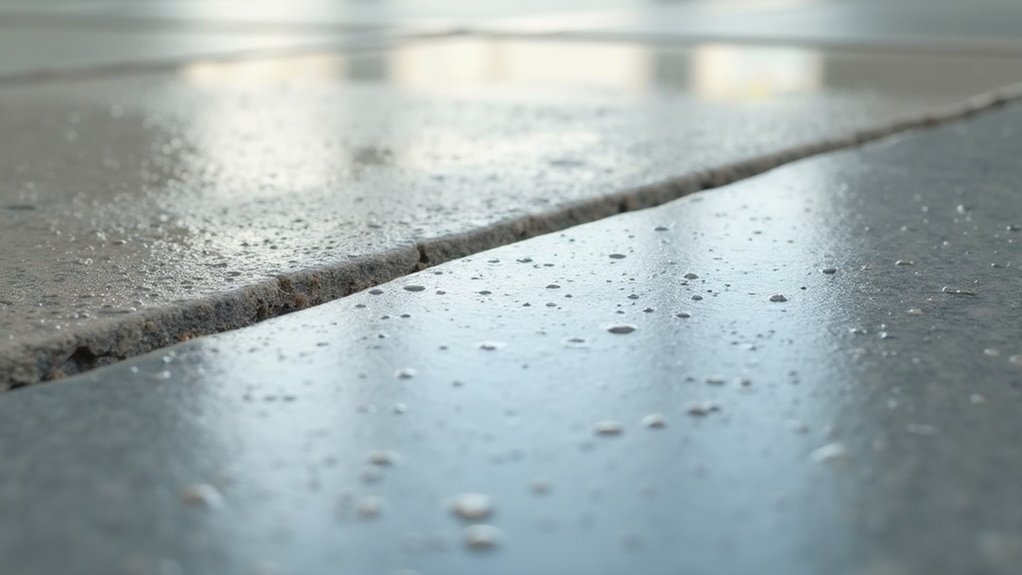
Moisture prevention is crucial for concrete surfaces; discover how sealed finishes can safeguard your structures and enhance durability in surprising Read more

Optimize your concrete's durability in cold climates to prevent scaling; discover essential techniques that could save your surfaces from costly Read more