Concrete reinforcement enhances the tensile strength and durability of structures by incorporating materials like steel bars, meshes, or fibres.
You’ll find it essential for preventing cracks and increasing load-bearing capacity in modern construction. The process involves embedding reinforcement materials within concrete mixtures, creating a composite that withstands complex loads and environmental stresses.
Key types include steel reinforcement (rebar, welded wire mesh, prestressing tendons) and non-steel options (synthetic, natural, and glass fibres).
Methods range from conventional techniques to advanced prestressing and fibre-reinforced concrete. Understanding reinforcement is vital for maximising concrete’s effectiveness in various applications, from buildings to bridges.
Exploring further reveals its pivotal role in addressing construction challenges and environmental concerns.
Key Takeaways
- Concrete reinforcement enhances tensile strength and durability by incorporating materials such as steel bars, meshes or fibres.
- Reinforcement improves crack resistance, load-bearing capacity and overall structural performance in construction projects.
- Steel reinforcement includes rebar, welded wire mesh and prestressing tendons, each serving specific structural purposes.
- Non-steel reinforcement options like synthetic, natural and glass fibres offer alternatives with varying benefits and applications.
- Reinforcement methods include conventional techniques, prestressing and fibre-reinforced concrete, each addressing different structural needs.
Introduction
Concrete reinforcement refers to the strategic incorporation of materials, typically steel, within concrete structures to enhance their tensile strength and overall durability.
You’ll find that this technique dates back to the late 19th century when pioneers like Joseph Monier and François Hennebique developed early reinforced concrete systems.
The use of reinforcement in concrete is essential for preventing cracks and increasing load-bearing capacity, making it a vital element in modern construction.
In modern construction, reinforced concrete has become indispensable, enabling the creation of taller buildings, longer bridges, and more resilient infrastructure capable of withstanding diverse loads and environmental stresses.
Definition of concrete reinforcement
To kick off our exploration of concrete reinforcement, we must first grasp its fundamental definition.
Concrete reinforcement refers to the incorporation of additional materials within concrete structures to enhance their properties. This technique improves structural integrity, material durability and construction safety.
You’ll find that reinforcement techniques typically involve embedding steel bars, meshes or fibres into concrete mixtures, greatly bolstering the material’s tensile strength and overall performance in various construction applications.
Rebar in concrete is essential for reinforcing structures and preventing cracks, whilst also increasing load-bearing capacity and distributing stress evenly.
Brief history and importance in construction
Delving into the history of concrete reinforcement takes us back to ancient times.
You’ll find historical milestones spanning centuries, from Roman innovations to modern engineering breakthroughs. The construction evolution has been marked by material advancements, improving structural integrity and durability.
As you explore this topic, you’ll understand how concrete reinforcement has revolutionised building practices, enhancing safety and enabling more ambitious architectural designs.
The development of reinforced concrete has been essential in addressing climate change challenges associated with traditional cement production, which accounts for over 7% of global CO2 emissions.
Safety regulations have further refined its application in contemporary construction.
The Science Behind Concrete Reinforcement

To comprehend concrete reinforcement, you’ll need to understand the inherent properties of concrete, including its high compressive strength but low tensile strength.
Reinforcement materials, typically steel bars or fibres, compensate for concrete’s weaknesses by enhancing its tensile strength, flexural capacity, and crack resistance.
Proper curing techniques and the use of control joints are essential for maximising the effectiveness of reinforcement and minimising uncontrolled cracking.
The synergy between concrete and reinforcement creates a composite material that combines the best attributes of both components, resulting in structures that can withstand complex loads and environmental stresses.
Properties of concrete
At the core of concrete reinforcement lies a deep understanding of concrete’s fundamental properties. You’ll need to evaluate concrete durability, compressive strength, thermal properties, moisture resistance, and environmental impact. These factors interact to determine concrete’s performance in various applications.
| Property | Impact |
|---|---|
| Durability | Longevity |
| Strength | Load-bearing |
| Thermal | Energy efficiency |
How reinforcement enhances concrete’s capabilities
Whilst concrete excels in compression, it’s relatively weak in tension. Reinforcement enhances concrete’s capabilities by improving its durability, crack resistance, and load distribution.
Steel bars or fibres embedded within the concrete matrix considerably increase its flexural strength, allowing it to withstand greater tensile forces. This combination also improves thermal performance, reducing expansion and contraction-related stresses.
Fibre-reinforced concrete offers additional benefits, such as enhanced pressure resistance and reduced reliance on traditional steel reinforcement, further promoting sustainability in construction.
Reinforced concrete consequently offers superior structural integrity and longevity compared to plain concrete.
Synergy between concrete and reinforcement materials
The science behind concrete reinforcement reveals a fascinating synergy between concrete and reinforcing materials.
This composite synergy enhances structural performance through material compatibility. High-strength concrete, with its superior durability and resistance to cracking, further amplifies this synergistic effect when combined with appropriate reinforcement.
Reinforcement effectiveness is maximised when steel bars or fibres are strategically placed to complement concrete’s compressive strength. The resulting structural flexibility allows for improved load distribution and crack resistance.
This synergistic relationship greatly boosts overall performance enhancement in reinforced concrete structures.
Types of Concrete Reinforcement

When exploring concrete reinforcement types, you’ll encounter two primary categories: steel and non-steel reinforcement.
Steel reinforcement, including rebar and wire mesh, remains the most common due to its strength and compatibility with concrete. Different grades of concrete, such as C20 or C25, may require specific reinforcement strategies to achieve ideal structural integrity.
Non-steel reinforcement options, such as fibre-reinforced polymers and carbon fibre, offer alternatives for specific applications where corrosion resistance or weight reduction is essential.
Steel Reinforcement
When considering steel reinforcement for concrete, you’ll encounter three primary types: rebar, welded wire mesh, and prestressing tendons.
Rebar, or reinforcing bars, are commonly used to enhance concrete’s tensile strength and are available in various sizes and grades.
Welded wire mesh provides distributed reinforcement in slabs and walls, whilst prestressing tendons are utilised to induce compressive stress in concrete elements, improving their load-bearing capacity and crack resistance.
Rebar (reinforcing bars)
Among the various types of concrete reinforcement, rebar stands out as the most widely used and versatile option. You’ll encounter different rebar types, each designed for specific applications. Proper rebar installation and bending are essential for structural integrity. To prevent rebar corrosion, consider protective measures. Adhere to rebar standards for quality assurance.
| Rebar Type | Application | Corrosion Resistance |
|---|---|---|
| Carbon Steel | General Use | Low |
| Epoxy-Coated | Corrosive Environments | High |
| Stainless Steel | Marine Structures | Very High |
Welded wire mesh
How does welded wire mesh compare to rebar in concrete reinforcement?
Welded mesh offers several benefits, including faster installation and reduced labour costs.
It’s typically lighter and easier to handle than rebar.
Material specifications vary, but it’s generally made from cold-drawn steel wire.
Applications include slabs, walls, and pavements.
Installation techniques involve overlapping sheets and securing them with tie wire.
Cost considerations favour welded mesh for large, thin concrete elements.
Prestressing tendons
Prestressing tendons represent a sophisticated approach to concrete reinforcement.
They’re typically made of high-strength steel or advanced composites.
One finds two main prestressing techniques: pre-tensioning and post-tensioning.
Both methods involve stretching tendons before concrete hardens, creating compressive forces.
Proper tendon anchorage guarantees effective load transfer.
This technique optimises stress distribution, enhancing the concrete’s strength and durability whilst allowing for thinner, more efficient structures.
Non-Steel Reinforcement
Non-steel reinforcement offers alternative solutions for enhancing concrete’s structural properties.
You’ll find various fibre reinforcement options, including steel, glass, synthetic and natural fibres, each with unique characteristics and applications.
These fibres can be added to the concrete mix to improve tensile strength, crack resistance and overall durability, providing engineers with versatile reinforcement choices beyond traditional steel.
Fiber reinforcement
Numerous types of fibre reinforcement have emerged as innovative alternatives to traditional steel in concrete structures.
You’ll find various fibre types, including synthetic, natural, and steel fibres, each with distinct performance characteristics.
Application methods vary, affecting the concrete’s strength and durability.
When selecting fibre reinforcement, consider its environmental impact and cost-effectiveness.
Fibre-reinforced concrete offers enhanced crack resistance and improved long-term performance in many applications.
Steel fibers
Despite their name, steel fibres fall under the category of non-steel reinforcement in concrete technology.
Various steel fibre types exist, each offering unique applications and benefits. Manufacturing processes influence fibre properties, whilst performance testing guarantees quality.
Market trends show increased adoption due to enhanced concrete durability and crack resistance.
Steel fibres provide tensile strength, impact resistance, and fatigue endurance, making them valuable in construction projects.
Glass fibers
Glass fibres represent another innovative non-steel reinforcement option for concrete. They offer several advantages, including high tensile strength and corrosion resistance. Consider the following comparisons:
| Property | Steel Fibres | Glass Fibres | Synthetic Fibres |
|---|---|---|---|
| Strength | High | Very High | Moderate |
| Durability | Good | Excellent | Good |
| Corrosion Resistance | Low | High | High |
| Cost | Moderate | High | Low |
| Applications | General | Specialised | General |
Glass fibre applications include high-performance structures and corrosive environments. Their durability and strength justify higher costs in specific projects.
Comparison of Fiber Types in Concrete Reinforcement
Synthetic fibers
Among the various non-steel reinforcement options, synthetic fibres have gained significant traction in the concrete industry.
These fibres offer numerous benefits, including improved durability, crack resistance, and reduced shrinkage.
One will find synthetic fibres in applications ranging from industrial flooring to precast elements.
Common types include polypropylene, nylon, and polyester.
When comparing synthetic fibres to steel reinforcement, one will notice they’re lighter, corrosion-resistant, and provide multidirectional reinforcement.
Natural fibers
Whilst synthetic fibres have gained popularity, natural fibres present an eco-friendly alternative for concrete reinforcement.
Natural fibre types commonly used include:
- Sisal
- Jute
- Hemp
- Coconut coir
These eco-friendly reinforcements offer tensile strength benefits and contribute to sustainability practices.
However, their moisture absorption effects can impact concrete durability.
Ongoing research aims to optimise natural fibres’ performance in concrete, balancing their environmental advantages with structural requirements.
Composite materials (FRP – Fiber Reinforced Polymers)
Fibre Reinforced Polymers (FRPs) represent a significant advancement in non-steel concrete reinforcement technology. You’ll find FRPs in various applications due to their advantages over steel. Consider this comparison:
| Characteristic | FRP | Steel |
|---|---|---|
| Corrosion resistance | High | Low |
| Strength-to-weight ratio | High | Moderate |
| Initial cost | Higher | Lower |
| Long-term cost-effectiveness | Better | Variable |
FRP’s future in concrete reinforcement looks promising, with ongoing research focusing on improving cost-effectiveness and expanding applications.
Methods of Reinforcing Concrete

In concrete reinforcement, you’ll encounter three primary methods: conventional reinforcement, prestressing, and fibre-reinforced concrete.
Conventional reinforcement involves embedding steel bars or mesh within the concrete to enhance its tensile strength.
Prestressing applies compressive forces to the concrete before it’s subjected to external loads, whilst fibre-reinforced concrete incorporates small fibres throughout the mixture to improve its structural properties.
Conventional reinforcement
Conventional reinforcement stands as the most widely used method for strengthening concrete structures. This approach relies on historical techniques and material advancements to enhance concrete’s tensile strength.
Design principles for conventional reinforcement include:
- Steel bar placement
- Ideal spacing calculations
- Concrete cover specifications
- Load distribution considerations
You will find that conventional methods face application challenges, particularly in complex structures.
However, their effectiveness and reliability continue to make them indispensable in modern construction practices.
Prestressing
In prestressing concrete, you’ll encounter two primary methods: pre-tensioning and post-tensioning.
Pre-tensioning involves stretching the reinforcement before the concrete is poured, allowing the stress to transfer to the hardened concrete upon release.
Post-tensioning, conversely, requires you to tension the reinforcement after the concrete has cured, typically by using hydraulic jacks to stretch cables running through ducts within the concrete member.
Pre-tensioning
Pre-tensioning, a pioneering method in prestressed concrete technology, involves applying tension to reinforcing steel before the concrete is cast.
This technique offers several advantages over traditional reinforcement methods:
- Improved crack control
- Enhanced durability
- Reduced material costs
- Increased load-bearing capacity
Pre-tensioning applications are widespread in construction, particularly for precast elements.
It utilises high-strength materials and specialised equipment.
When comparing pre-tensioning vs post-tensioning, pre-tensioning often provides better bond development and immediate prestress transfer upon concrete hardening.
Post-tensioning
Following the development of pre-tensioning, post-tensioning emerged as another innovative method in prestressed concrete technology.
Post-tensioning techniques involve applying tension to steel tendons after the concrete has cured. Benefits of post-tensioning include increased span lengths, reduced structural thickness, and improved crack control.
Post-tensioning applications range from bridges to high-rise buildings. Post-tensioning materials typically include high-strength steel tendons and specialised anchorage systems.
Post-tensioning design requires careful consideration of load distribution and stress management throughout the structure’s lifecycle.
Fiber-reinforced concrete
Among the innovative methods of reinforcing concrete, fibre-reinforced concrete (FRC) stands out as a versatile and effective solution.
FRC incorporates various fibre types to enhance concrete’s performance. When considering FRC, you’ll need to analyse:
- Fibre types: steel, synthetic, glass, or natural
- Performance comparison with traditional reinforcement
- Application techniques for ideal distribution
- Cost implications and long-term benefits
Evaluate FRC’s environmental impact and its suitability for your specific project requirements.
Applications of Reinforced Concrete

Reinforced concrete finds extensive applications across various construction sectors.
One encounters its use in buildings and skyscrapers, where it provides structural integrity and load-bearing capacity, as well as in infrastructure projects like bridges, dams, and tunnels.
This versatile material also plays a vital role in residential construction and specialised structures, such as nuclear power plants and offshore platforms.
Buildings and skyscrapers
Towering skyscrapers and sprawling buildings stand as monuments to the versatility and strength of reinforced concrete.
In high-rise structures, reinforced concrete provides:
- Superior seismic performance
- Enhanced wind resistance
- Flexibility in architectural design
- Improved urban sustainability
Its use in buildings and skyscrapers allows for increased height, reduced structural weight, and improved fire resistance.
Reinforced concrete’s durability and adaptability make it an ideal material for modern urban construction, enabling innovative and efficient architectural solutions.
Infrastructure
When examining major infrastructure projects, you’ll find reinforced concrete at their core.
Bridges spanning vast distances, massive dams controlling water flow, and tunnels burrowing through mountains all rely on this versatile material.
These structures showcase the strength, durability and adaptability of reinforced concrete in withstanding immense loads, pressure and environmental forces.
Bridges
Concrete’s versatility and strength make it an ideal material for bridge construction. In bridge design, reinforced concrete offers superior load distribution and seismic performance.
When considering material selection, you’ll find that reinforced concrete provides:
- Durability in harsh environments
- Cost-effectiveness compared to steel
- Flexibility in design and aesthetics
- Reduced environmental impact due to longevity
Proper reinforcement techniques guarantee maximum structural integrity, enhancing the bridge’s ability to withstand dynamic loads and environmental stressors.
Dams
Reinforced concrete plays an essential role in another critical infrastructure component: dams.
These massive structures require robust construction materials to withstand immense water pressure and guarantee dam safety. Engineers must consider seismic design to protect against earthquakes and incorporate water management systems.
The use of reinforced concrete in dams allows for greater durability and structural integrity whilst minimising environmental impact compared to other materials.
Tunnels
Tunnels’ structural integrity heavily relies on reinforced concrete for both underground and underwater applications.
During tunnel excavation, reinforced concrete provides:
- Structural support against soil and water pressure
- Improved tunnel safety through increased stability
- Enhanced tunnel ventilation capabilities
- Durable tunnel lining resistant to environmental factors
You will find that reinforced concrete’s strength and versatility make it ideal for tunnel construction.
Regular tunnel inspection guarantees the concrete’s continued performance and identifies any necessary maintenance to maintain structural integrity.
Residential construction
Homes across the globe increasingly incorporate reinforced concrete in their construction, offering homeowners durability and structural integrity. In residential applications, reinforced concrete plays a vital role in:
| Application | Function | Benefits |
|---|---|---|
| Foundations | Load distribution | Structural stability |
| Walls | Seismic resistance | Safety in earthquakes |
| Floors | Energy efficiency | Reduced heating costs |
| Exterior elements | Aesthetic finishes | Architectural freedom |
This versatile material enhances your home’s longevity, safety and energy performance whilst providing design flexibility.
Specialised structures
Reinforced concrete plays an essential role in the construction of specialised structures that require exceptional strength and durability.
You’ll find reinforced concrete extensively used in nuclear power plants, where it provides radiation shielding and structural integrity for containment buildings and reactor foundations.
In offshore platforms, reinforced concrete withstands extreme marine conditions, offering corrosion resistance and stability against wave forces and harsh environmental factors.
Nuclear power plants
Constructing nuclear power plants requires exceptional attention to safety and structural integrity, making reinforced concrete an indispensable material in their design.
You’ll find it used extensively in:
- Containment structures
- Radiation shielding barriers
- Spent fuel storage facilities
- Reactor support foundations
Reinforced concrete’s properties align with nuclear safety protocols, providing robust radiation shielding materials and supporting emergency response strategies.
It’s vital for structural integrity assessments and integral to waste management solutions, ensuring long-term stability and containment of radioactive materials.
Offshore platforms
Offshore platforms represent a critical application of reinforced concrete in specialised structures.
In offshore construction, reinforced concrete provides essential structural integrity and corrosion resistance in harsh marine environments.
Design challenges include withstanding extreme wave forces, salt water exposure, and variable loading conditions.
Engineers must carefully consider concrete mix designs, reinforcement configurations, and protective coatings to guarantee long-term durability and safety in these demanding offshore applications.
Design Considerations for Reinforced Concrete

When designing reinforced concrete structures, you’ll need to contemplate several critical factors.
Begin with accurate load calculations and structural analysis to determine the required strength and behaviour of the concrete elements.
Then, focus on optimising the reinforcement ratio and placement, ensuring proper concrete cover for durability, and implementing effective crack control measures to maintain serviceability throughout the structure’s lifespan.
Load calculations and structural analysis
Load calculations and structural analysis form the cornerstone of reinforced concrete design.
You’ll need to conduct:
- Load distribution analysis
- Shear force evaluation
- Moment calculation methods
- Structural integrity assessment
These processes help determine the concrete’s ability to withstand various forces.
You must also consider dynamic loads, which can greatly impact the structure’s performance.
Accurate calculations guarantee ideal reinforcement placement and sizing, enhancing the concrete’s strength and durability under different stress conditions.
Reinforcement ratio and placement
The design considerations for reinforced concrete hinge critically depend on reinforcement ratio and placement.
One must calculate the ideal reinforcement ratio to ensure structural integrity whilst maintaining design efficiency. Proper placement of reinforcement is essential for effective load distribution.
Consider the specific structural requirements, anticipated stresses, and code regulations when determining the amount and positioning of reinforcement within the concrete element.
Concrete cover and durability
Concrete cover plays an essential role in ensuring the durability and longevity of reinforced concrete structures. It protects reinforcement from environmental impacts and corrosion.
When designing concrete cover, consider:
- Exposure conditions
- Structural element type
- Reinforcement bar size
- Design guidelines and codes
Adequate cover enhances durability factors, reducing the frequency of maintenance strategies.
Environmental impact assessment guides cover thickness decisions, balancing structural integrity with material efficiency.
Proper cover implementation is vital for long-term performance.
Crack control and serviceability
Considering the critical nature of structural integrity, crack control and serviceability are paramount in reinforced concrete design.
You’ll need to implement effective crack prevention techniques to maintain serviceability standards. Analyse load distribution effects, account for temperature fluctuations, and apply moisture control measures.
These strategies help minimise cracking, ensuring the structure’s longevity and performance. Proper reinforcement design and placement are essential for managing stress and preventing excessive deformation under service loads.
Installation and Construction Practices

When installing concrete reinforcement, you’ll need to focus on three critical aspects.
First, guarantee proper placement and spacing of reinforcement to achieve the designed structural integrity.
Second, implement appropriate concrete pouring and curing techniques to minimise defects and maximise strength.
Third, maintain rigorous quality control and inspection procedures throughout the construction process to verify compliance with specifications and standards.
Proper placement and spacing of reinforcement
The proper placement and spacing of reinforcement are critical factors in guaranteeing the structural integrity and performance of reinforced concrete elements. One must adhere to installation guidelines and spacing standards to maximise load distribution.
Key considerations include:
- Precise reinforcement alignment
- Correct cover depth
- Proper lap splices
- Accurate bar spacing
Utilise appropriate placement techniques to achieve ideal reinforcement positioning. This guarantees the concrete structure can effectively withstand tensile stresses and maintain its intended load-bearing capacity throughout its service life.
Concrete pouring and curing techniques
Following proper reinforcement placement, concrete pouring and curing techniques play an essential role in ensuring the structural integrity and longevity of reinforced concrete elements.
You’ll need to employ precise mixing techniques and maintain strict temperature control during pouring.
After placement, focus on moisture retention and surface finishing.
Implement appropriate curing methods, such as water curing or membrane curing, to achieve ideal strength development and minimise cracking in the finished concrete structure.
Quality control and inspection
Quality control’s pivotal role in reinforced concrete construction can’t be overstated. One must implement rigorous quality assurance methods throughout the process.
Key aspects include:
- Visual inspection techniques
- Material testing protocols
- Documentation standards
- Compliance audits
These elements guarantee structural integrity and longevity.
Adhere to industry-specific guidelines and regulations when conducting inspections. Regularly review and update your quality control procedures to maintain effectiveness and adapt to evolving construction practices and materials.
Maintenance and Durability of Reinforced Concrete
You’ll find that maintaining reinforced concrete structures requires a multifaceted approach to guarantee long-term durability.
Corrosion protection methods, such as cathodic protection and protective coatings, play a vital role in preserving the structural integrity of reinforced concrete.
Regular inspection and monitoring techniques, coupled with timely repair and rehabilitation strategies, are essential for identifying and addressing potential issues before they escalate into major structural problems.
Corrosion protection methods
Rust-coloured stains on concrete structures serve as telltale signs of reinforcement corrosion, a critical issue in maintaining the durability of reinforced concrete.
To protect against corrosion, you can employ various methods:
- Cathodic protection
- Epoxy coatings
- Corrosion inhibitors
- Galvanised reinforcement
Stainless steel reinforcement offers excellent corrosion resistance but comes at a higher cost.
Each method has its advantages and limitations, requiring careful consideration based on the specific project requirements and environmental conditions.
Inspection and monitoring techniques
Regular inspection and monitoring of reinforced concrete structures are essential for maintaining their integrity and prolonging their service life.
You’ll employ visual inspection techniques to identify surface defects and non-destructive testing methods to assess internal conditions.
Advanced monitoring technologies, such as embedded sensors, continuously evaluate structural health.
Establish an appropriate inspection frequency based on the structure’s age, environmental exposure, and criticality to ensure timely detection of potential issues.
Repair and rehabilitation strategies
When inspection and monitoring reveal structural issues in reinforced concrete, implementing appropriate repair and rehabilitation strategies becomes necessary.
One must contemplate various techniques:
- Crack sealing and epoxy injection for minor defects
- Surface treatments to prevent further deterioration
- Structural overlays to enhance load-bearing capacity
- Load redistribution through additional reinforcement
These methods aim to restore structural integrity, extend service life and improve performance.
Choose the most suitable approach based on the specific damage type, extent and environmental conditions affecting the concrete structure.
Innovations in Concrete Reinforcement
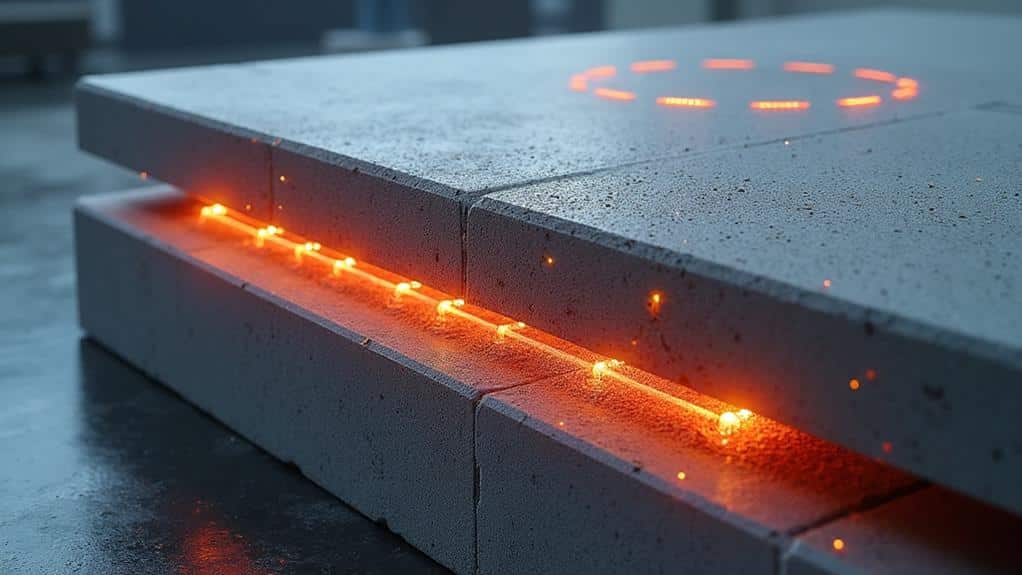
In the realm of concrete reinforcement, one will find cutting-edge innovations that are revolutionising the industry.
Self-healing concrete incorporates materials that can repair cracks autonomously, whilst carbon nanotubes and nanomaterials enhance strength and conductivity at the molecular level.
3D printed reinforcement offers unprecedented design flexibility and precision in creating complex structural elements.
Self-healing concrete
Scientists have developed self-healing concrete as a groundbreaking innovation in concrete reinforcement. This technology incorporates self-healing mechanisms to enhance durability and reduce maintenance costs.
The process involves:
- Embedding healing agents in concrete
- Activating repair upon crack formation
- Sealing microcracks autonomously
- Restoring structural integrity
You will find innovative applications in infrastructure, improving longevity and reducing environmental impact.
Self-healing concrete represents a significant advancement in construction materials, addressing long-standing issues of concrete deterioration.
Carbon nanotubes and nanomaterials
Carbon nanotubes and nanomaterials represent a cutting-edge frontier in concrete reinforcement.
These innovative composites offer significant advantages in enhancing structural integrity and durability.
Carbon nanotube applications include improving tensile strength and crack resistance.
Nanomaterial additions can increase concrete’s compressive strength and reduce permeability.
You’ll find that these microscopic reinforcements create a more resilient and long-lasting concrete matrix, revolutionising construction practices and infrastructure longevity.
3D printed reinforcement
With the advent of 3D printing technology, concrete reinforcement has entered a new era of innovation.
3D printed reinforcement structures offer unprecedented design flexibility and precision in concrete construction. This cutting-edge technique enables:
- Complex geometries for ideal load distribution
- Material optimisation to reduce waste
- Customised reinforcement patterns for specific structural applications
- Rapid prototyping of novel design innovations
3D Printing revolutionises reinforcement techniques, allowing you to create intricate, high-performance structures that were previously impossible with traditional methods.
Environmental and Sustainability Aspects
Environmental and sustainability considerations are essential in modern concrete reinforcement practices.
You’ll find that recycled materials, such as steel fibres from scrap tyres or recycled plastic fibres, are increasingly being incorporated into reinforcement systems to reduce waste and conserve resources.
When selecting reinforcement methods, you must account for the carbon footprint of materials and production processes, whilst also conducting thorough life cycle assessments to evaluate the long-term environmental impact of reinforced concrete structures.
Recycled materials in reinforcement
In recent years, the concrete industry has witnessed a significant shift towards incorporating recycled materials in reinforcement practices. This approach aligns with sustainable practices and circular economy principles.
One will find various eco-friendly materials used in concrete reinforcement, including:
- Recycled aggregates from demolished structures
- Steel fibres from industrial waste
- Recycled plastic fibres
- Glass fibre reinforced polymer (GFRP) from recycled sources
These materials contribute to effective waste management and reduced environmental impact in construction projects.
Carbon footprint considerations
Carbon footprint considerations play a significant role in the assessment of concrete reinforcement practices.
You’ll need to evaluate sustainable practices and eco-friendly materials to reduce the overall carbon impact.
Consider the lifecycle impact of reinforcement materials, focusing on carbon reduction strategies. Incorporate renewable resources when possible, and analyse the long-term environmental effects of your chosen reinforcement methods.
Prioritise options that minimise carbon emissions throughout production, transportation and installation processes.
Life cycle assessment of reinforced concrete structures
Life cycle assessment (LCA) provides a thorough framework for evaluating the environmental impact of reinforced concrete structures throughout their entire lifespan.
When conducting an LCA, you’ll analyse:
- Material production and transportation
- Construction processes
- Operational energy consumption
- Maintenance and repair
- End-of-life demolition and recycling
This extensive approach allows you to identify areas for improvement in sustainability practices, material efficiency, and resource management.
Codes and Standards

Concrete reinforcement practices are governed by various building codes and standards that guarantee structural integrity and safety.
You’ll find that these codes specify minimum requirements for materials, design methods, and construction practices, often referencing standards from organisations like ASTM International and ACI.
To comply with these regulations, you must adhere to specific testing and certification protocols, which may include material strength tests, quality control procedures, and periodic inspections throughout the construction process.
Overview of relevant building codes
When working with concrete reinforcement, you’ll need to adhere to specific building codes and standards.
Two primary sets of guidelines you’ll encounter are those from the American Concrete Institute (ACI) and the Eurocode.
These extensive standards provide detailed specifications for concrete design, construction, and quality control, ensuring structural integrity and safety across various applications.
ACI (American Concrete Institute)
The American Concrete Institute (ACI) plays a pivotal role in establishing and maintaining standards for concrete construction in the United States.
ACI’s influence extends beyond guidelines, offering:
- Thorough certification programmes
- Extensive educational resources
- Specialised design seminars
- Cutting-edge industry standards
You’ll find ACI’s recommendations essential for ensuring structural integrity and safety in concrete reinforcement.
Their publications cover various aspects, from mix design to installation techniques, providing you with authoritative references for your projects.
Eurocode
Whilst ACI standards govern concrete practices in the United States, Eurocode serves as the primary set of structural design standards for European countries. Eurocode guidelines encompass design principles, structural safety, load combinations and material specifications. You will find these key aspects addressed in the Eurocode:
| Aspect | Description | Relevance |
|---|---|---|
| EN 1990 | Basis of structural design | Fundamental principles |
| EN 1991 | Actions on structures | Load combinations |
| EN 1992 | Design of concrete structures | Reinforced concrete |
| EN 1993 | Design of steel structures | Steel reinforcement |
| EN 1998 | Design for earthquake resistance | Seismic considerations |
Testing and certification requirements
Guaranteeing the quality and reliability of concrete reinforcement is paramount in construction.
You’ll need to adhere to rigorous testing methods and certification processes to meet compliance standards.
Quality assurance protocols typically include:
- Tensile strength tests
- Chemical composition analysis
- Dimensional checks
- Bend tests
These evaluations guarantee reinforcement materials meet specified material specifications.
Certification requirements vary by region, but generally involve third-party verification of manufacturing processes and product performance to maintain consistent quality and safety standards.
Conclusion

Future trends in concrete reinforcement will likely focus on enhancing durability, sustainability, and cost-effectiveness.
You’ll see ongoing research into novel materials, such as fibre-reinforced polymers and shape memory alloys, which may revolutionise construction practices.
Continued development in this field is essential for addressing evolving structural challenges and meeting increasingly stringent building standards.
Future trends in concrete reinforcement
Advancements in concrete reinforcement technology continue to shape the future of construction.
You’ll see innovations focusing on:
- Smart materials for self-healing and real-time monitoring
- Digital fabrication techniques enhancing precision
- Sustainable practices reducing environmental impact
- Advanced analytics optimising design and performance
Automated construction methods will revolutionise reinforcement placement, whilst nanotechnology will improve concrete’s strength and durability.
These trends will lead to safer, more efficient, and environmentally responsible structures in the coming years.
Importance of ongoing research and development
As the construction industry evolves, ongoing research and development in concrete reinforcement remain vital.
You’ll see advancements in technology driving innovation, with a focus on sustainability impacting future materials.
The role of innovation can’t be overstated, as it shapes stronger, more durable structures.
Interdisciplinary collaboration between engineers, materials scientists, and sustainability experts will be essential in developing cutting-edge reinforcement solutions for tomorrow’s construction challenges.
Frequently Asked Questions
How Much Does Reinforced Concrete Cost Compared to Regular Concrete?
You’ll find reinforced concrete costs 15-20% more than regular concrete. The cost comparison varies based on material factors, project scale, and geographical location. However, you’ll gain long-term benefits in strength and durability, offsetting initial expenses.
Cost Comparison Between Regular and Reinforced Concrete
Can Reinforced Concrete Be Recycled at the End of Its Lifecycle?
One can recycle reinforced concrete, but it’s complex. Recycling methods impact structural integrity and require lifecycle assessment. Whilst challenging, it offers economic benefits and reduces environmental impact. Consider specialised techniques for best results in your project.
What Are the Safety Considerations When Working With Reinforced Concrete?
You’ll need to implement worksite precautions, wear personal protective equipment, and conduct structural integrity checks. Consider temperature effects and use proper handling techniques. Always prioritise safety when working with reinforced concrete to prevent accidents and injuries.
How Long Does It Take for Reinforced Concrete to Reach Full Strength?
You’ll find that reinforced concrete’s strength development depends on the curing process, hydration effects, and temperature influence. It typically reaches 70% strength in 7 days, but full load-bearing capacity can take up to 28 days.
How Long Does It Take for Reinforced Concrete to Reach Full Strength?
Are There Alternatives to Steel Reinforcement for Concrete Structures?
Imagine a skyscraper built without steel. Indeed, there are alternatives to steel reinforcement. One will find fibre reinforcement, polymer composites, bamboo reinforcement, glass fibres, and natural fibres being used. These options offer unique properties for specific structural applications.
Conclusion
You’ve now gained a solid foundation in concrete reinforcement. As they say, “Knowledge is power,” and this understanding will serve you well in construction projects. Remember, reinforced concrete‘s strength lies in the synergy between concrete and reinforcement materials. Stay up to date on innovations, adhere to codes, and consider sustainability. By applying these principles, you’ll create structures that are not only robust but also environmentally responsible. The future of construction is in your reinforced hands.

Master the basics of ready mix concrete, its diverse types, and widespread availability to enhance your next construction project.

Get the inside scoop on Ordinary Portland Cement Concrete and discover why it's the backbone of modern construction projects—find out Read more

Mastering the art of high-strength concrete reveals the secrets to crafting resilient structures. Discover how this innovation transforms modern construction.