If you’re considering sustainable options for your UK construction projects, you’re in luck! Gone are the days when concrete options were limited and not-so-planet-friendly. Delve into green concrete that not only reduces waste but also cuts down on carbon emissions, thanks to its sustainable aggregates. Ashcrete alternatives step up the game by repurposing fly ash, promoting durability while supporting circular economy principles. Don’t overlook micro silica benefits, enhancing strength and durability, or blast furnace slag for its circular economy benefits. And hey, concrete debris reuse isn’t just about being eco-friendly; it saves money too! Exploring these options, you’ll set out on a journey toward more sustainable construction practices.
Key Takeaways
- Hempcrete offers a lightweight, breathable, and carbon-negative option ideal for UK’s green construction projects.
- Ashcrete alternatives utilize fly ash, supporting circular economy principles and reducing the carbon footprint.
- Recycled plastic waste can be turned into aggregates, offering a sustainable solution that minimizes reliance on virgin materials.
- Grasscrete supports heavy loads while promoting natural vegetation, fitting for UK’s infrastructure and green spaces.
- Self-healing concrete technology introduces bacteria that mend cracks autonomously, reducing maintenance costs and extending the lifespan of structures.
Green Concrete
One increasingly popular solution for making the construction industry more sustainable is the adoption of green concrete, which incorporates waste materials like recycled aggregates or industrial by-products into its production.
You’re probably wondering, ‘What’s the big deal?’ Well, it’s all about hitting two birds with one stone: reducing waste and cutting down on carbon emissions.
By opting for sustainable aggregates, you’re not just building; you’re also contributing to a healthier planet. Think of it as eco-friendly construction on steroids. And let’s not forget about energy-efficient production. Green concrete isn’t just about using innovative materials; it’s also about how these materials are produced. Less energy means fewer emissions, and fewer emissions mean a happier Earth.
Green building solutions are the future, and green concrete is leading the charge. It’s the construction industry’s way of giving Mother Nature a big, warm hug. So, next time you see a building going up, think about what’s holding it together. Is it just concrete, or is it a demonstration of eco-friendly innovation? With green concrete, it’s definitely the latter.
Ashcrete Alternatives

Building on the momentum of green concrete, let’s explore Ashcrete alternatives, a groundbreaking approach that repurposes fly ash for a more sustainable construction landscape. You’ve probably heard about Ashcrete’s durability, but there’s so much more to this eco-friendly solution. By using fly ash, a byproduct of coal combustion, we’re not just making concrete stronger; we’re also reducing the carbon footprint of traditional concrete. That’s a big win for sustainable construction.
Fly ash benefits don’t stop at reducing emissions. This versatile material contributes to the circular economy principles by giving a second life to what would otherwise be waste. It’s all about reusing and recycling to create more sustainable, eco-friendly solutions. So, when you’re thinking about the materials for your next project, remember that incorporating Ashcrete not only supports the planet but also adds unmatched durability to your construction.
This approach isn’t just good for the environment; it’s smart business, aligning with global trends towards sustainability. By choosing Ashcrete, you’re part of a larger movement that values not just the here and now but also the future of our planet.
Micro Silica Benefits

Micro silica, a byproduct of the silicon metal industries, greatly enhances the strength and durability of sustainable concrete by filling the gaps between cement particles. When you’re aiming for sustainable construction, it’s not just about what looks good; it’s about what lasts longer and protects the planet. Micro silica is your eco-friendly option that ticks all these boxes. It’s like the secret sauce in your concrete mix, giving it improved durability and enhanced strength without harming Mother Earth.
Let’s talk numbers for a second. Concrete with micro silica isn’t just stronger; it’s like a superhero version of traditional concrete. It achieves higher compressive strength and has lower porosity, making it less prone to damage from water and chemicals. So, if you’ve ever worried about corrosion or chemical attacks, micro silica in your concrete is like having an invisible shield around your building.
But here’s the kicker: by using micro silica, you’re not just building stronger structures; you’re building a better future. Reduced permeability means less damage over time, fewer repairs, and a longer lifespan for your projects. It’s a win-win for you and the planet. So, when you’re choosing materials for your next project, remember that micro silica is more than just an additive; it’s a step towards more sustainable construction practices.
Blast Furnace Slag
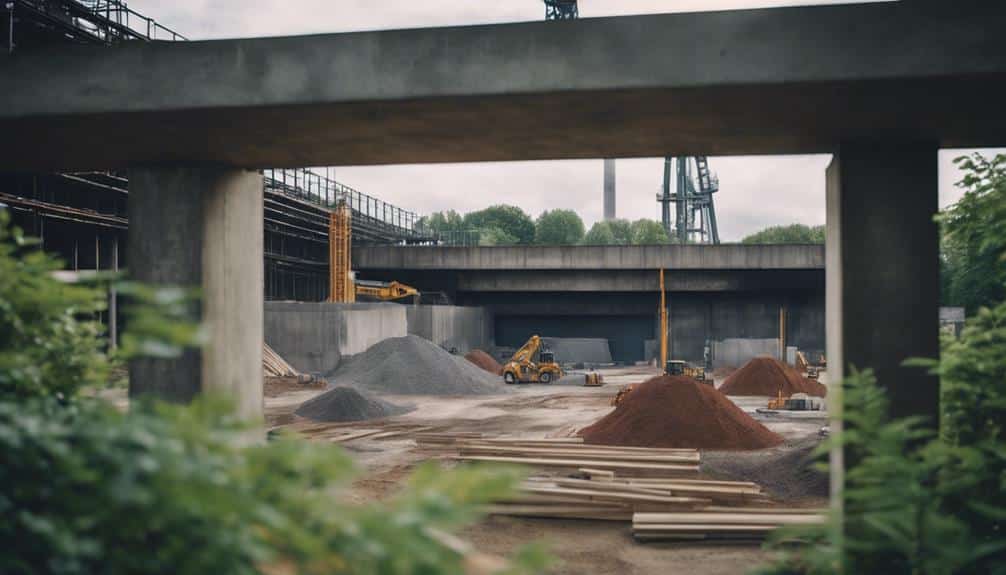
As a byproduct of iron production, blast furnace slag serves as a sustainable alternative for traditional aggregates in concrete, reducing carbon emissions and enhancing durability. When you toss in blast furnace slag into your concrete mix, you’re not just making a stronger material, you’re also cutting down on the environmental impact. That’s right, it’s a win-win!
Slag sustainability isn’t just a pivotal part of today’s construction scene. By using this byproduct, you’re contributing to the circular economy benefits, basically giving waste another life and keeping the cycle going. Plus, concrete durability gets a significant boost, making your structures last longer and withstand more.
But wait, there’s more! The workability advantages of blast furnace slag in concrete are something to talk about. It makes the concrete easier to handle and pour, which is a relief if you’ve ever worked with the stuff. And don’t forget, incorporating slag helps lower the construction project’s overall environmental impact, making it a friendlier choice for our planet.
Concrete Debris Reuse

Following the discussion on the benefits of blast furnace slag, let’s explore how reusing concrete debris from demolition sites offers another pathway to sustainable construction. You’ve probably seen heaps of concrete rubble at demolition sites and wondered if there’s a better ending for them than just taking up space in a landfill. Well, there is!
Concrete recycling methods are a game-changer in the construction world. By crushing and reusing concrete debris as aggregate for new projects, you’re not just saving money; you’re also embracing sustainable construction practices. This approach is a win-win, contributing to waste reduction strategies and lessening the environmental impact of new constructions.
Think of it this way: every piece of recycled concrete is a piece of natural resource you’re conserving, aligning perfectly with resource conservation techniques. Plus, let’s not forget the brownie points projects can earn towards LEED certification and green building standards by incorporating recycled materials.
Grasscrete Applications

Given its ability to support heavy loads while promoting natural vegetation, Grasscrete is revolutionizing the way we approach sustainable paving in construction projects. You might be wondering what makes Grasscrete so special. Well, it’s not just about having a greener driveway. The magic lies in Grasscrete installation techniques that cleverly allow grass to grow through concrete voids, creating a sturdy yet eco-friendly pavement design.
With Grasscrete, you’re not only making a statement with sustainable landscaping benefits, but you’re also opting for permeable surface solutions that tackle common environmental concerns head-on. Imagine a parking lot that doesn’t turn into a mini lake every time it rains. That’s Grasscrete for you, reducing stormwater runoff and promoting natural water infiltration like a champ.
Moreover, Grasscrete plays a significant role in green infrastructure applications, contributing to a cooler, more pleasant urban environment. So, next time you’re considering paving options, remember that Grasscrete offers a path to eco-friendly and visually appealing solutions that keep the planet in mind. Who knew you could combat urban heat islands and support heavy vehicles all at once? Grasscrete did, that’s who.
Recycled Plastic Waste

Recycled plastic waste offers a groundbreaking approach to sustainable concrete production, greatly reducing the reliance on virgin materials. You’re not just tossing your soda bottle into a blue bin and forgetting about it; you’re contributing to a massive wave of sustainable solutions in construction! Imagine that plastic waste benefits aren’t just a pipe dream. By turning your discarded plastic into recycled aggregates, you’re part of the force driving down the need for new, untouched resources.
Here’s the scoop: incorporating this kind of waste not only diverts it from clogging up our landfills and oceans (big win for waste reduction) but also beefs up the concrete’s game. You get a material that’s not only tougher and more flexible but also better at keeping your toes warm in winter thanks to its thermal insulation properties. It’s like hitting the eco-friendly jackpot.
And let’s not forget the bigger picture – the circular economy. Using recycled plastic waste in concrete isn’t just a smart move; it’s a circular economy superstar move. You’re basically telling the world, ‘Hey, we can build awesome, durable stuff without trashing our planet.’ Now that’s a sustainable solution worth talking about.
Mycelium Innovations

How about exploring a groundbreaking innovation in sustainable construction: mycelium, the network of mushroom threads, as a key ingredient in eco-friendly concrete? This isn’t just a whimsical idea; it’s a solid step towards more sustainable building practices. Imagine the mushroom potential not just on your dinner plate but as a cornerstone of green architecture.
- Mycelium-based concrete isn’t only eco-friendly innovation but also a fire-resistant warrior in the battle against climate change.
- Its lightweight nature makes it a dream to work with, reducing transportation emissions to a considerable extent.
- The excellent insulation properties guarantee that your building is cozy in the winter and cool in the summer, cutting energy costs.
- By embracing fungal construction, you’re not just choosing an alternative material; you’re supporting a circular economy that values renewable resources.
This isn’t just about building with mushrooms; it’s about reimagining construction for a more sustainable future. Mycelium innovations are paving the way for a revolution in how we think about materials, offering a blueprint for eco-friendly innovation and sustainable building that aligns with the principles of green architecture.
Hempcrete Advantages
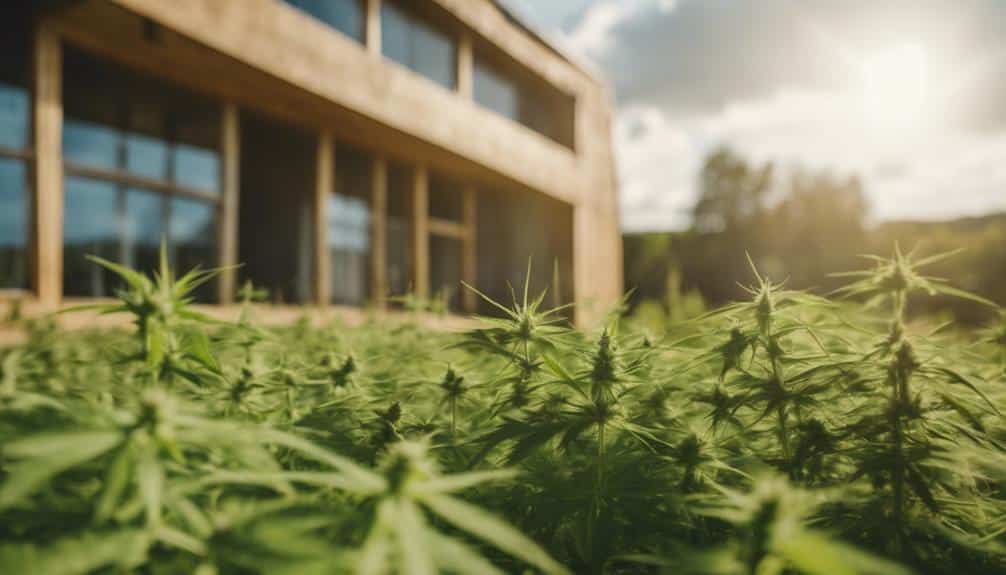
Exploring the domain of sustainable construction further, let’s focus on another innovative material: hempcrete, a game-changer with numerous environmental benefits. You’ve probably heard a lot about sustainability, but hempcrete takes it to another level. Thanks to its makeup—hemp fibers, lime, and water—hempcrete’s sustainability is exceptional. It’s not just about being green; it’s about revolutionizing how we build.
When it comes to hempcrete construction, you’re looking at a material that’s not only lightweight and breathable but also provides excellent insulation benefits. Imagine a building that stays warm in the winter and cool in the summer without a hefty energy bill. That’s the power of hempcrete insulation benefits for you.
But let’s talk about the environmental impact. Hempcrete is a carbon-negative hero. As it grows, it gobbles up CO2, making it a mighty warrior in the fight against climate change. Plus, it’s non-toxic and resists pests and mold, which means healthier indoor air for everyone.
And for those of you in the UK wondering about applications, hempcrete isn’t just a dream. It’s being used right now, proving that hempcrete UK applications are both viable and valuable. So, let’s build a greener future, one hempcrete block at a time.
Self-Healing Concrete
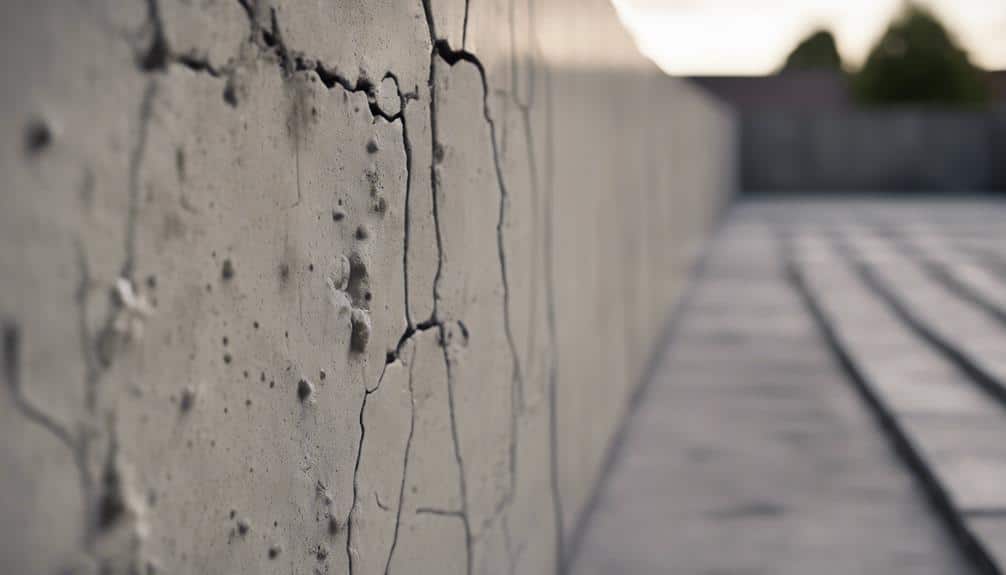
In the domain of sustainable construction, self-healing concrete represents a major advancement by utilizing bacteria to autonomously mend cracks, greatly enhancing a building’s lifespan and sustainability. Imagine concrete structures that can fix themselves without any human intervention. It’s not science fiction; it’s a reality with self-healing concrete.
- *Imagine tiny bacteria waking up from a deep sleep, ready to repair any damage they find in their concrete home.*
- *Think of cracks sealing themselves up, almost as if the concrete is magically knitting itself back together.*
- *Picture a bridge or a skyscraper standing robustly for decades longer than anticipated, thanks to these microscopic construction workers.*
- *Envision saving loads of money and time that would otherwise be spent on maintenance and repairs.*
This technology hinges on bacterial activation, where specialized bacteria within the concrete spring into action upon encountering water, filling in cracks through the production of limestone. This autonomous repair not only boosts the durability of structures but also significantly cuts down on maintenance needs. The sustainability benefits are clear: less material is wasted, and the carbon footprint of new construction projects is reduced. You’re not just building for today; you’re investing in a more resilient and sustainable future.
Bamboo Reinforcement
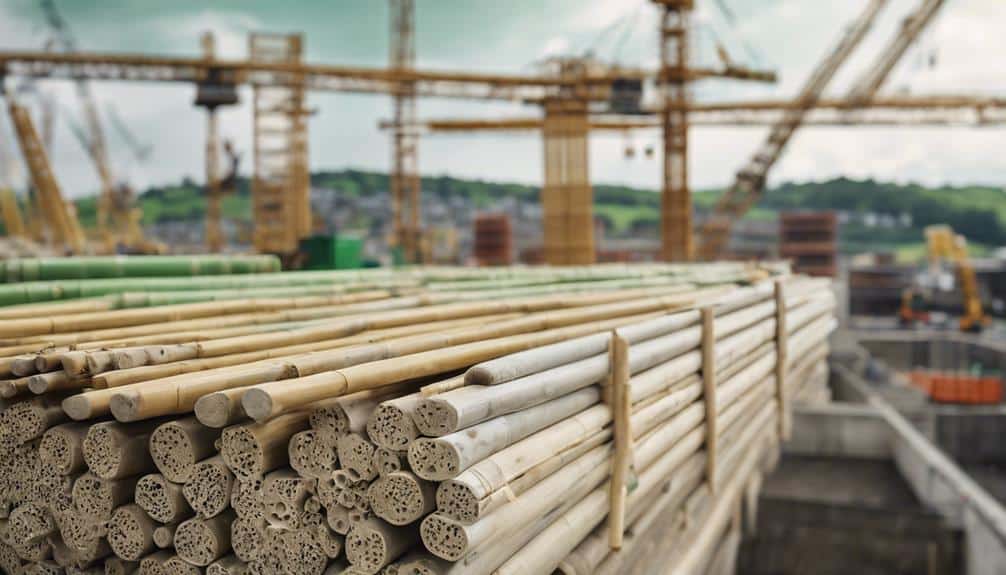
You’ll find bamboo reinforcement revolutionizing concrete construction by offering a sustainable and strong alternative to traditional steel. This eco-friendly reinforcement isn’t just about going green for the sake of it. Bamboo’s durability and sustainable strength make it a serious contender in the construction world. It’s a renewable resource that grows faster than you can say ‘build,’ making it an incredibly efficient choice for projects looking to reduce their carbon footprint.
Not only does bamboo bring construction benefits like flexibility and high tensile strength, but it also aligns with green building practices. By choosing bamboo, you’re opting for an eco-friendly material that doesn’t skimp on performance. Plus, let’s talk affordability – bamboo reinforcement is cost-effective, giving your wallet a break while you do your part for the planet.
Papercrete Usage

Papercrete offers a sustainable and innovative solution for UK construction projects, transforming recycled paper into a building material that’s both eco-friendly and functional. You’re not just building; you’re giving old paper a new lease on life, making a strong statement against waste and for the planet.
Imagine your next project featuring:
- Papercrete durability: It stands the test of time, much like your favorite hardback, but in wall form.
- Sustainable insulation: Keeps warmth in like a snug blanket, slashing energy bills and carbon footprints.
- Lightweight construction: Easy to move and mold, it’s like the Legos of sustainable building materials.
- Mold and fire-resistant properties: It’s like having a superhero shield around your building, protecting against mold and fire.
With papercrete, you’re not just choosing a material that’s durable, lightweight, and resistant to the bad guys like mold and fire. You’re also picking a champion of sustainable insulation, ensuring your project is as green as it’s sturdy. It’s a win-win for you and the environment, proving that innovative solutions can come from the most unexpected places.
Ferrock: A New Option

Diving into the world of sustainable construction, Ferrock emerges as a groundbreaking alternative to traditional concrete, offering both environmental benefits and robust durability. You’ll find Ferrock advantages aren’t just about being eco-friendly; it’s a powerhouse in sustainable construction. Made from recycled materials like steel dust and silica, it not only gives waste a second life but also showcases exceptional strength, outperforming conventional concrete in durability.
What truly sets Ferrock apart in the domain of eco-friendly building is its ability to absorb and mineralize carbon dioxide, a feature making it one of the few carbon-negative materials out there. This means it’s not just reducing the carbon footprint; it’s actually reversing part of the damage. For anyone passionate about green architecture, Ferrock offers a way to construct without the guilt of environmental impact.
Alkali-Activated Materials

Alkali-activated materials offer a groundbreaking shift in reducing the construction industry’s carbon footprint by repurposing industrial by-products. You’re looking at a future where sustainable construction isn’t just a buzzword but a practical reality. Thanks to the alkali activation process, materials that were once considered waste are now powering a greener building sector.
- Imagine towering skyscrapers and cozy homes built with materials that once sat unused in industrial yards.
- Picture roads and bridges with enhanced durability, resisting wear and tear from weather and traffic.
- Envision a construction site, where the air is cleaner because the materials used have a lower environmental impact.
- See the industry adoption trends shifting, as companies big and small embrace these innovative materials for their projects.
You’re not just building structures; you’re constructing a sustainable future. With material properties that rival, and sometimes surpass, conventional concrete, alkali-activated materials are changing the game. The environmental impact? Markedly lessened. It’s a win-win for both the planet and the pocketbook. As industry adoption trends continue to rise, it’s clear that this isn’t a passing fad but the path forward for sustainable construction.
CarbonCure Technology

CarbonCure technology revolutionizes the construction industry by injecting recycled CO2 into concrete, greatly reducing its carbon footprint. This innovative technology not only lowers emissions but also enhances the durability of concrete, making it a win-win for both the planet and construction projects. Imagine having concrete that’s stronger and kinder to the environment – that’s what CarbonCure brings to the table.
By using this technology, you’re part of a sustainable construction movement that values environmental benefits without compromising on quality. The process works by mineralizing CO2 within the concrete itself, which means it’s locked away and can’t contribute to greenhouse gas levels in our atmosphere. Plus, the enhanced strength it provides means less material is needed, further lowering emissions.
CarbonCure’s scalable solution fits perfectly with the construction industry’s push towards sustainability. It’s an example of how innovative technology can lead to significant environmental benefits. By choosing CarbonCure for your projects, you’re not just building for today but also helping secure a greener future. So, let’s embrace this sustainable option and make a positive impact together.
Frequently Asked Questions
What Is the Most Sustainable Type of Concrete?
You’re asking about the most sustainable concrete? Search no more than green cement, recycled aggregates, and innovations like hempcrete. With carbon capture and alkali activation, these options lead the way in sustainability and environmental responsibility.
What Are the Sustainable Practices of Concrete?
Like a phoenix rising from ashes, sustainable concrete practices transform the industry. You’re embracing concrete recycling, using cement substitutes, reducing water, boosting energy efficiency, and seeking green certifications to forge a greener tomorrow.
Is Laing O Rourke Making Switch to Low-Carbon Concrete for UK Projects?
Yes, Laing O’Rourke is making the switch to low-carbon concrete for UK projects. Their innovation and strategic partnerships aim at reducing the carbon footprint, aligning with construction industry trends and emphasizing lifecycle analysis.
Are There Alternatives to Concrete?
Yes, you’re exploring a sea of options beyond traditional concrete. Bamboo reinforcement, Hempcrete construction, recycled brick, timber structures, and mycelium bricks offer innovative, sustainable alternatives that pave the way for greener, more resilient building futures.
Conclusion
Alright, let’s wrap this up.
Embracing sustainable concrete isn’t just jumping on a new trend; it’s like planting trees for the future, but with buildings.
With options like Green Concrete, Ashcrete, and the super cool CarbonCure, you’ve got a toolbox ready to tackle carbon footprints head-on.
It’s a win-win: you get to build awesome structures and give the planet a high-five.
So, let’s roll up our sleeves and make our next projects greener than a well-kept lawn in spring.

For a long-lasting driveway that laughs in the face of the UK's unpredictable weather, the C20 concrete mix is your Read more

In the UK, you've got a a lot of lightweight concrete types to choose from, each with its unique perks. Read more

For your UK basement to withstand the test of time and the notorious British weather, you'll want to pick the Read more