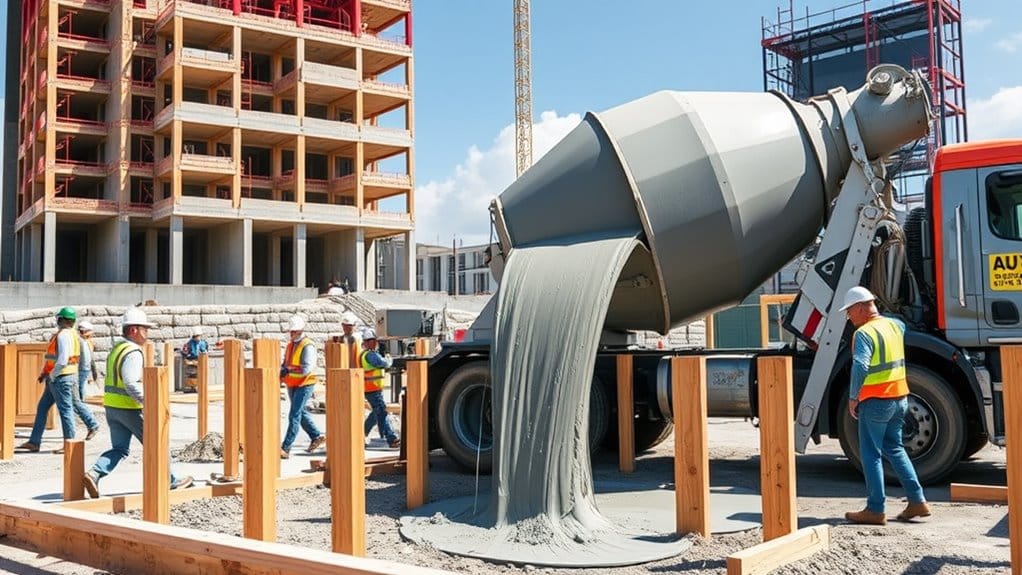
Ready-mix concrete helps reduce labour costs by eliminating the need for on-site mixing, which cuts down on the requirement for skilled workers and reduces training time. This efficient delivery system ensures that concrete arrives exactly when it's needed, minimising downtime and the risk of rework. Automated batching and real-time monitoring streamline production and logistics, making the entire project run more smoothly. By allowing your workforce to focus on specialised tasks, productivity can increase. These advantages can lead to significant savings and improved efficiency in your construction projects.
Key Takeaways
Ready-mix concrete significantly cuts labour costs in construction by eliminating the need for on-site mixing. This reduces the number of workers required and lessens the demand for skilled operators.
By outsourcing the mixing process, quality is consistent, which lowers training costs and minimises reliance on manual labour. Automated delivery systems enhance logistics, reducing delays and enabling teams to concentrate on construction instead of mixing.
Centralised production reduces errors and boosts efficiency, helping to avoid costly rework and unexpected labour expenses. This shift allows workers to focus on specialised roles, thereby improving overall productivity. For instance, instead of mixing concrete, workers can dedicate their skills to tasks like bricklaying or finishing, which adds more value to the project.
Reduced On-Site Mixing Labor
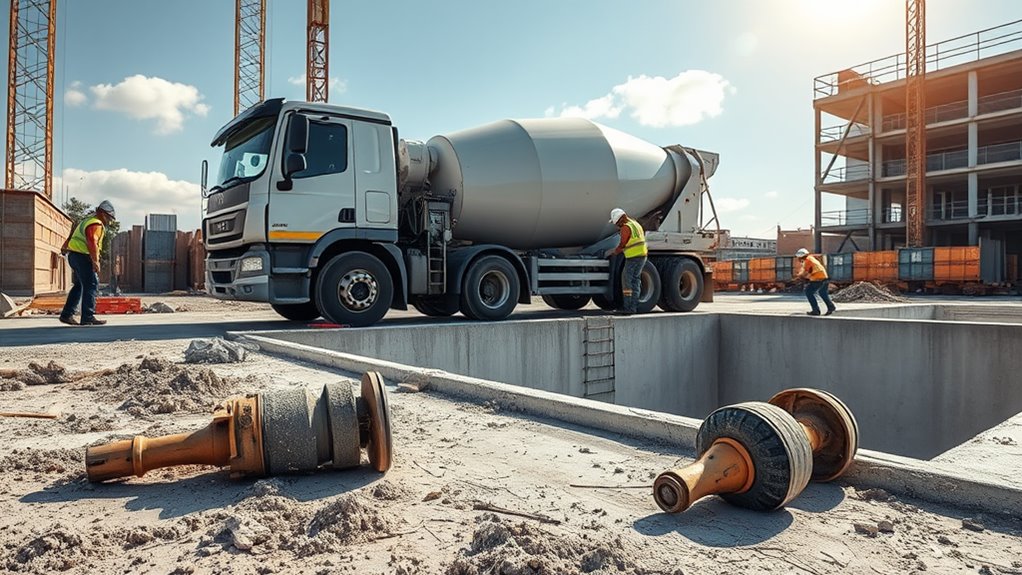
Reducing on-site mixing labour can significantly improve your construction process. By cutting down on manual mixing and batching, you boost on-site efficiency and allow your team to focus on essential tasks. This simplification decreases the need for skilled labour and removes roles related to equipment operation and maintenance, enabling your crew to concentrate on placement and finishing work, which requires more expertise. Furthermore, outsourcing the mixing process to a central facility ensures consistent quality while sparing you from the need to train staff on complex procedures. This method not only reduces labour costs but also lowers the requirement for specialised equipment and support personnel. With fewer machines and workers on-site, you enhance safety and optimise the overall efficiency of your project. Moreover, using ready-mix concrete allows for efficient scheduling and delivery, ensuring that your project stays on track without unnecessary delays. Additionally, the controlled production process guarantees consistent quality that reduces the risk of uneven settling in foundations.
Time-Saving Benefits
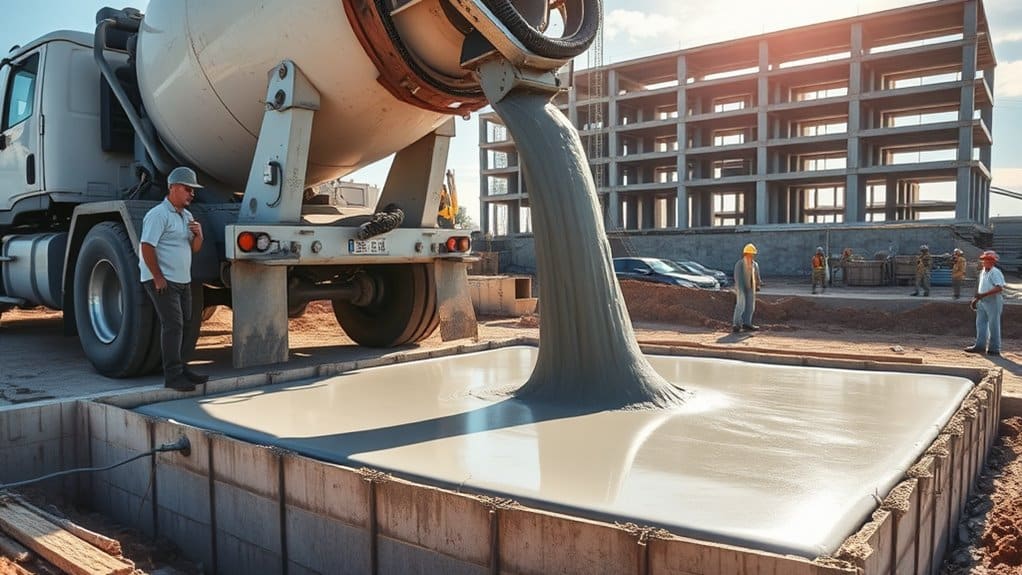
Using ready-mix concrete offers significant time-saving advantages that boost project efficiency. This method ensures that concrete is delivered precisely when needed, which helps avoid downtime. On-demand availability allows contractors to concentrate on building tasks without the distractions of material mixing processes.
Automated delivery routes and real-time tracking streamline transport, reducing delays and keeping work on schedule. By eliminating the need for on-site mixing, concrete can be applied immediately, speeding up construction phases. The controlled production of ready-mix concrete ensures that every batch meets stringent quality standards, further enhancing efficiency.
The consistent quality of ready-mix concrete also reduces the likelihood of errors, helping to maintain high labour productivity. With your team able to focus on essential tasks and reduced idle time, projects can progress smoothly.
Cost Effectiveness Through Reduction of Labor Costs
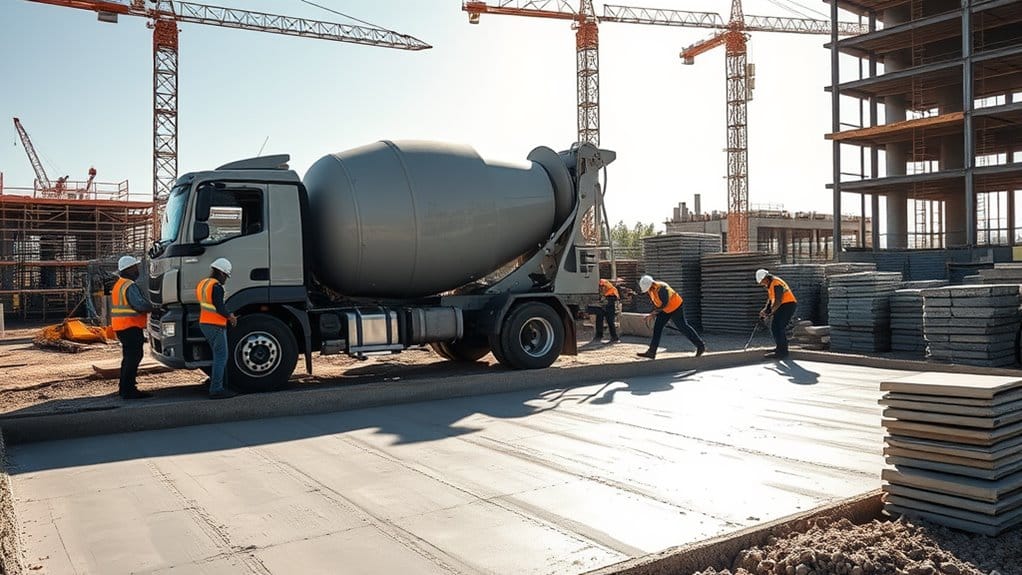
Using ready-mix concrete can significantly reduce labour costs, as it lessens the need for skilled workers on-site. This not only saves money but also cuts down on training requirements, allowing your team to concentrate on specialised tasks. Consequently, you'll boost overall efficiency and maintain better control over your project budget. Moreover, reducing truck times through efficient delivery cycles can further enhance cost-effectiveness in your construction projects. Additionally, streamlined supply chain processes help minimize downtime and improve project management, further contributing to labor cost reductions.
Lower Labor Expenses
Lower labour expenses can be achieved by using ready-mix concrete in construction projects, as it significantly reduces on-site labour activities.
By removing the need for skilled workers to mix concrete, you can streamline your labour budget and direct resources towards higher-priority tasks.
The time saved from batching and mixing allows your team to maintain a steady workflow, boosting productivity.
Moreover, ready-mixed concrete helps avoid manual mixing errors that could lead to expensive rework.
This method not only cuts direct labour costs but also reduces overhead expenses associated with equipment maintenance.
Ultimately, using ready-mix concrete enhances expense management, allowing for more strategic allocation of labour resources and improved project efficiency.
Reduced Training Requirements
Ready-mix concrete not only cuts down on labour costs but also significantly reduces the training needed for workers.
This method allows for:
- Standardised Training: Training becomes more structured, focusing on consistent tasks like placing and finishing.
- Specialised Skills: Workers can concentrate on specific roles, such as quality control, rather than learning the basic mixing processes.
- Simplified Processes: With less on-site preparation required, onboarding is quicker and there's less dependence on highly skilled labour.
Environmental and Quality Advantages
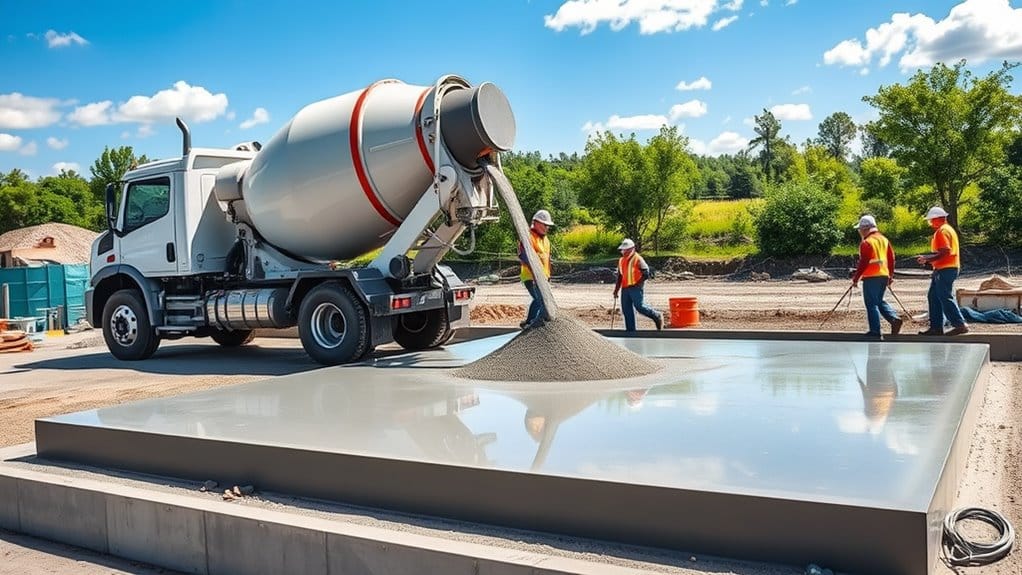
When it comes to construction materials, ready-mix concrete offers significant environmental and quality benefits. Its centralised production process reduces carbon emissions, supporting sustainability efforts and conserving resources. The use of recycled aggregates helps minimise landfill waste, further protecting our natural environment.
Moreover, the precise batching process ensures consistent quality and optimises water usage, contributing to effective water conservation. Ready-mix concrete also boasts energy-efficient properties, enhancing building performance and lowering energy costs in the long run.
With predictable performance and durability, structures made from ready-mix concrete require less maintenance and are less prone to defects, which ultimately saves on project costs.
Streamlined Supply Chain and Delivery
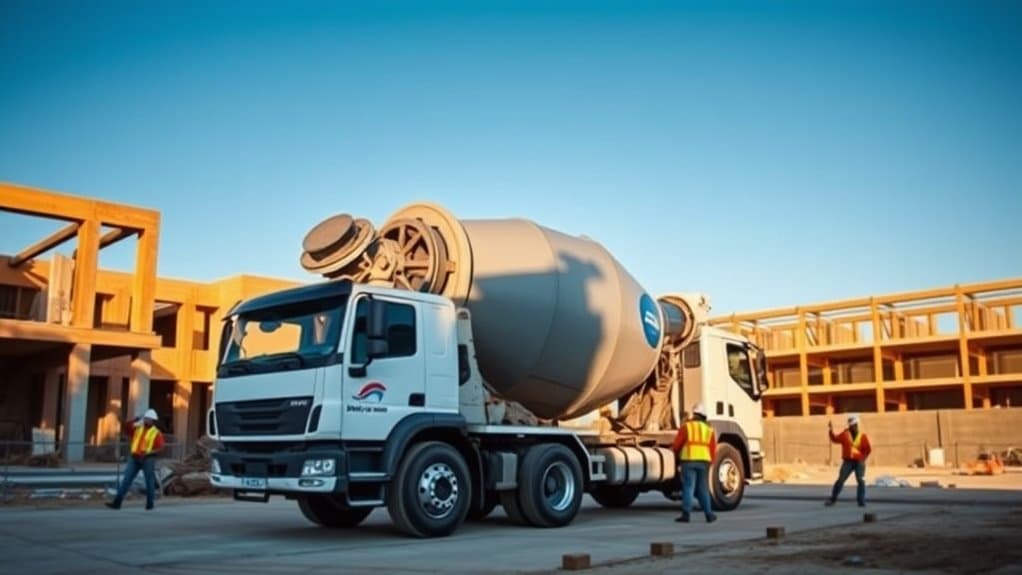
In today's construction sector, timely material delivery and effective logistics management are crucial.
Streamlining your supply chain can be achieved through scheduled delivery planning, ensuring that concrete arrives precisely when required. This approach not only optimises labour use but also boosts overall project efficiency.
For instance, having concrete delivered just in time can prevent delays and reduce downtime, leading to smoother operations on site.
Precise Material Delivery
By implementing precise material delivery, construction projects can significantly reduce material waste and streamline operations. This approach not only improves material sustainability but also ensures quality, providing the exact amount of ready-mix concrete when it's required.
Here are three key benefits:
- Reduced Material Waste: Materials are prepared in precise quantities, cutting down on excess.
- Centralised Production: Controlled environments ensure consistent quality, boosting project reliability.
- Predictable Costs: Centralised production aids in better budgeting, minimising unexpected material expenses.
This method optimises resource usage and simplifies project management, enabling your team to concentrate on essential tasks like application and finishing, which ultimately lowers labour costs and enhances efficiency.
Efficient Logistics Management
Efficient logistics management is crucial for optimising the supply chain and delivery of ready-mix concrete, ensuring projects remain on schedule and within budget.
By addressing logistical challenges through effective supply chain integration, you can streamline raw material procurement and improve real-time information flow among stakeholders. This flexibility enables quick responses to changes such as weather or demand shifts, which can affect operational efficiency.
Prioritising vehicle availability, traffic conditions, and job site locations in your scheduling helps minimise delays and idle time.
For instance, if a job site is located near a busy area, adjusting delivery times to avoid peak traffic can enhance efficiency.
Scheduled Delivery Planning
Effective delivery planning is crucial for optimising the ready-mix concrete supply process. By prioritising delivery efficiency, you can significantly improve project outcomes.
Here are three key benefits of scheduled delivery planning:
- Reduced Delays: Concrete arrives exactly when it's needed, minimising costly disruptions on site.
- Better Resource Management: Efficient allocation of labour and equipment allows teams to prepare in advance, making operations smoother.
- Cost Efficiency: Timely deliveries help cut down on overtime and extra labour costs, keeping your budget on track.
These advantages ensure your construction projects run more smoothly and enhance client satisfaction, making scheduled delivery planning vital for successful operations.
Technological Advancements and Customization
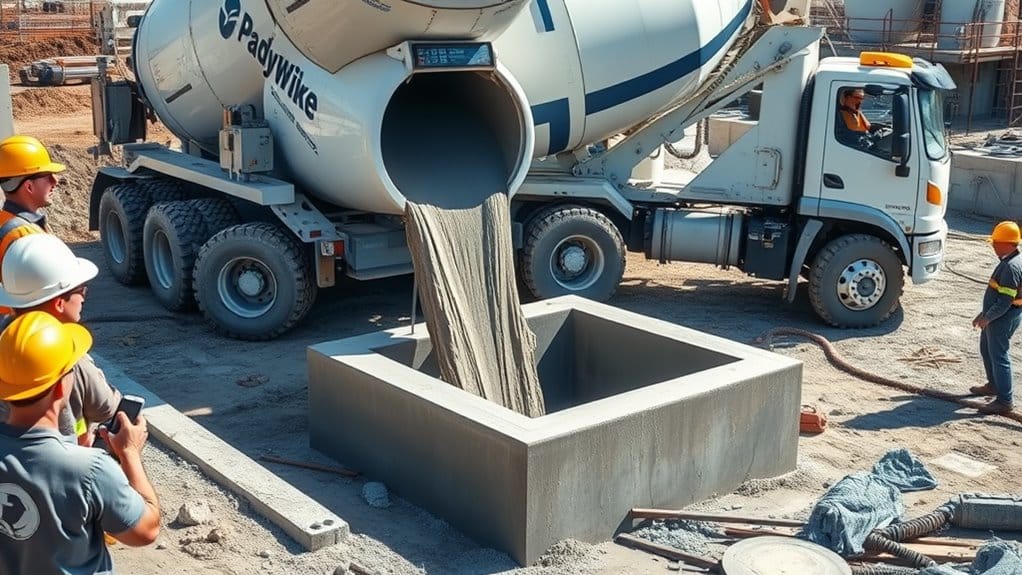
As technology advances, ready-mix concrete production has become more efficient and tailored to specific needs, which significantly reduces labour costs.
Automated batching systems ensure precise material proportions, minimising human error and the need for manual mixing. Real-time monitoring improves logistics management, cutting down on-site labour for delivery coordination.
With custom solutions, concrete mixes can be designed to meet specific project requirements, which reduces waste and the need for rework.
Modern plant technologies accelerate production, while robust quality control measures uphold standards without extensive checks.
By incorporating digital platforms, many tasks can be automated, which further lessens labour demands and enhances operational efficiency.
This strategic application of technology and customisation results in notable reductions in labour costs for construction projects.
Improved Focus on Skilled Labor Tasks
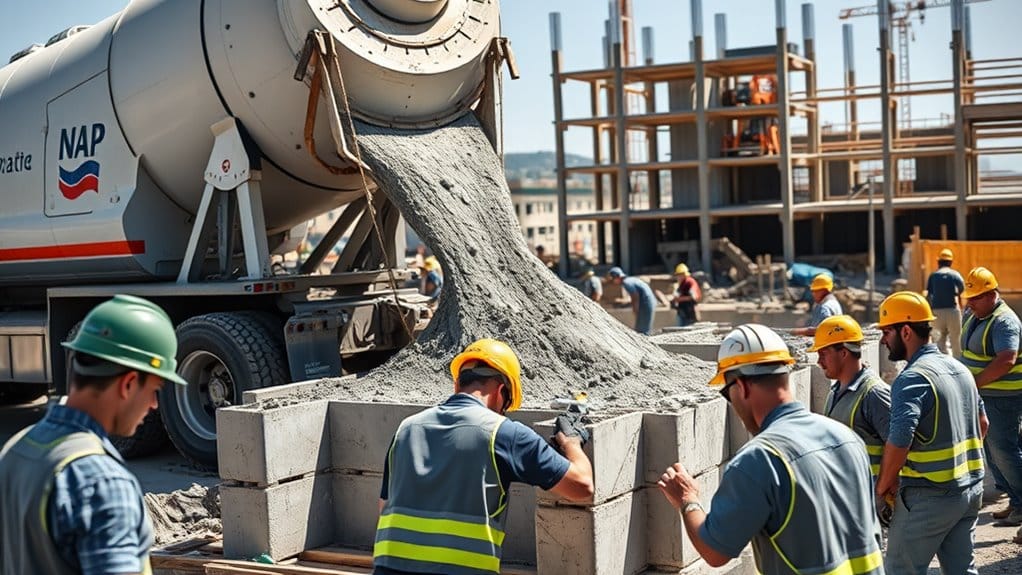
With advancements in ready-mix concrete technology, construction projects are increasingly shifting from labour-intensive mixing tasks to utilising skilled workers for more valuable activities.
This transition boosts productivity through better skilled labour optimisation and effective task prioritisation. Here's how:
- Reduced Mixing Labour: On-site mixing is significantly lessened, allowing workers to focus on specialised roles.
- Consistent Workflow: Timely deliveries ensure that skilled workers remain busy, reducing delays.
- Enhanced Quality: Workers can dedicate their efforts to finishing and formwork, resulting in superior craftsmanship.
Frequently Asked Questions
How Does Ready-Mix Concrete Impact Overall Project Budget Management?
Ready-mix concrete improves cost efficiency by providing accurate material delivery, which is crucial for budget forecasting. For example, knowing exactly how much concrete you need helps prevent over-ordering and reduces waste. This minimises unexpected costs, allowing you to allocate your resources wisely and manage your overall project budget more effectively.
What Are the Safety Benefits of Using Ready-Mix Concrete?
Ever wondered how to improve safety standards on-site? Using ready-mix concrete significantly reduces risks by minimising manual labour, lowering exposure to hazardous materials, and providing a controlled mixing environment. For instance, instead of mixing concrete by hand, which can lead to back injuries, ready-mix allows for precise measurements and consistency, ensuring safer construction practices.
Can Ready-Mix Concrete Be Used for All Construction Types?
Yes, ready-mix concrete can be used for various types of construction, including residential homes, commercial buildings, infrastructure projects, and specialised applications. Its versatility makes it ideal for foundations, floors, bridges, and bespoke architectural features.
How Does Ready-Mix Concrete Affect Worker Training Needs?
Ready-mix concrete simplifies training by reducing the skill level needed for mixing tasks. Workers can concentrate on specialised skills, which boosts productivity and lessens the need for extensive training in manual mixing techniques. This ultimately leads to smoother project execution. For instance, instead of spending weeks learning to mix concrete by hand, workers can quickly adapt to using ready-mix, allowing them to focus on other essential aspects of their roles.
What Are the Delivery Options for Ready-Mix Concrete?
You can opt for pump delivery for difficult-to-access areas or trailer delivery for sites that are easier to reach. Assessing your project's requirements will assist you in choosing the best delivery method for your ready-mix concrete. For instance, if you're working on a construction site with narrow pathways, a pump may be the ideal choice.
Conclusion
Embracing ready-mix concrete not only reduces labour costs but also enhances the efficiency of your construction project. By eliminating the need for on-site mixing, you minimise disruption and allow your skilled workers to concentrate on more complex tasks that truly enhance your project. With streamlined supply chains and tailored solutions, you save both time and resources, transforming your operation into a more efficient process. Ready-mix concrete is a smart choice for achieving construction excellence.

Learn about the diverse types of concrete used in construction and discover which mix can transform your next project.

For a long-lasting driveway that laughs in the face of the UK's unpredictable weather, the C20 concrete mix is your Read more

In the UK, you've got a a lot of lightweight concrete types to choose from, each with its unique perks. Read more