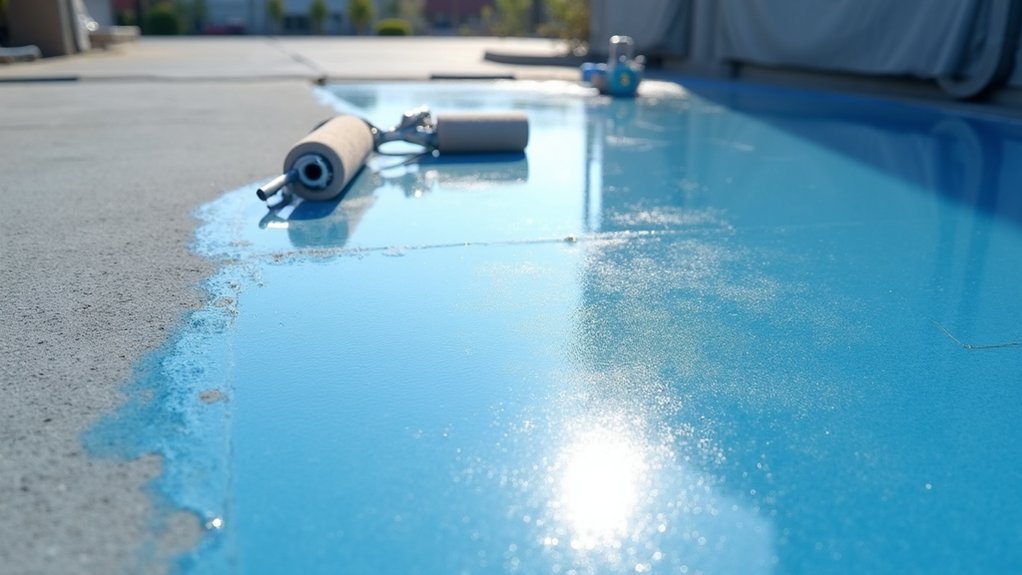
To effectively seal concrete and prevent damage, begin by choosing the right sealer—either a penetrating or film-forming type, depending on your requirements. Clean the surface thoroughly to eliminate any dirt or contaminants, and fix any imperfections. Use a sprayer to apply the sealer evenly, then back-roll to achieve a smooth finish. Avoid pitfalls like sealing over dirt or selecting the wrong product. By following these straightforward steps, you can ensure durability and performance for your concrete surfaces.
Key Takeaways
- Select the appropriate sealer type: utilise penetrating sealers for outdoor surfaces and film-forming sealers for areas needing extra surface protection.
- Prepare and clean the concrete thoroughly to ensure strong adhesion. Remove any contaminants and moisture before applying the sealer.
- Fix any surface imperfections like cracks and chips to create a smooth and even area for effective sealing.
- Use a sprayer for even application of sealers, then back-roll to ensure proper coverage, following the manufacturer’s guidelines closely.
- Always prioritise safety by wearing protective gear and ensuring good ventilation during the application to reduce health risks and environmental impact.
Understanding Different Types of Concrete Sealers

When sealing concrete, it’s crucial to understand the different types of sealers to ensure optimal protection and performance.
There are two main categories: penetrating sealers and film-forming sealers.
Penetrating sealers, such as silane and siloxane, effectively repel water without changing the surface appearance. They’re particularly beneficial for outdoor use, as they help prevent moisture intrusion. Additionally, penetrating sealers create a breathable barrier below the surface, which maintains a natural look without coating the top.
In contrast, film-forming sealers, like acrylics, create a protective layer on the surface. While they enhance the appearance of the concrete, they require careful application as they can wear down over time.
Silicate-based sealers are another option, increasing surface density and making them well-suited for indoor environments.
Each type has its own characteristics, so it’s important to choose based on your concrete’s specific needs to ensure durability and longevity.
Importance of Surface Preparation
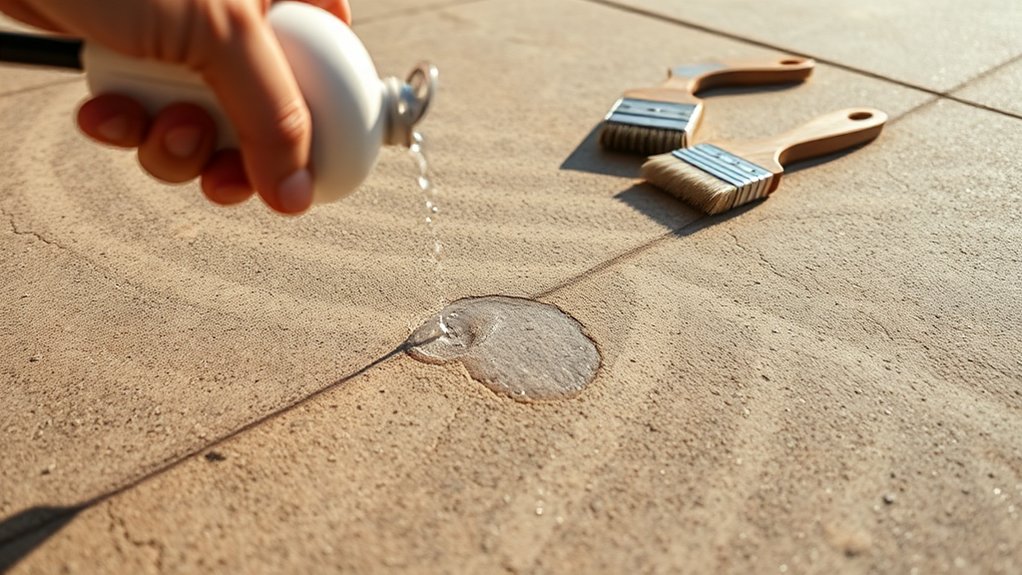
Proper surface preparation is crucial for achieving strong adhesion and durability of concrete sealers. Start by thoroughly cleaning the surface and fixing any imperfections. Ensure the area is completely dry before applying the sealer. This careful approach helps prevent problems like poor bonding and early sealer failure, leading to long-lasting results. For instance, a clean and well-prepped patio will hold its sealer better than one that’s neglected. Additionally, proper preparation reduces damage from stains and weather exposure, enhancing the effectiveness of the sealer. Furthermore, conducting a plastic sheet test for moisture levels can significantly improve the sealing outcome.
Thorough Cleaning Process
A successful concrete sealing project relies heavily on one essential step: thorough cleaning of the surface.
It’s crucial to remove all contaminants, such as oils, greases, and waxes, to avoid the sealers failing to bond. Start with a strong cleaner or a mild, pH-neutral detergent mixed with water. For a deeper clean, consider pressure washing or steam cleaning to eliminate embedded dirt. Mechanical methods like sandblasting or shot blasting can also enhance surface preparation and improve adhesion of the sealer. This is particularly important because proper surface preparation ensures that the sealant effectively adheres to the concrete.
Additionally, moisture infiltration can weaken the surface and compromise the sealing process, making thorough cleaning even more critical. Remember to profile the surface for optimal bonding. Lastly, ensure the concrete is completely dry before sealing, as any moisture can cause bubbling and compromise the sealant.
Repairing Surface Imperfections
Repairing surface imperfections is essential for effective concrete sealing. Start by filling any cracks, chips, or spalls with suitable fillers to restore the surface.
Ensure these repairs are level with the surrounding concrete to avoid sealer pooling and uneven application. Allow the patched areas to cure completely before sealing, as this prevents moisture from being trapped beneath.
Smooth out any rough patches and feather the edges of repairs to create a consistent surface profile. By addressing these imperfections, you enhance the performance of the sealer, reduce the risk of moisture infiltration, and prevent further damage, ultimately extending the life of your concrete surfaces. Additionally, proper curing techniques are crucial to ensure the integrity of the repair before applying the sealer.
Ensuring Dry Conditions
Addressing surface imperfections is crucial before the next step: ensuring dry conditions prior to sealing.
The concrete must be completely dry, as trapped moisture can hinder adhesion and cause damage. Use effective drying techniques, taking into account factors like the weather and the porosity of the concrete, which can impact drying times. This process can take anywhere from several hours to over a day.
Before sealing, conduct moisture tests to ensure the surface is adequately prepared.
Keep an eye on environmental factors such as humidity and temperature, as they significantly influence drying effectiveness. Managing moisture properly is vital for achieving a durable seal that protects your concrete investment.
Effective Cleaning Techniques
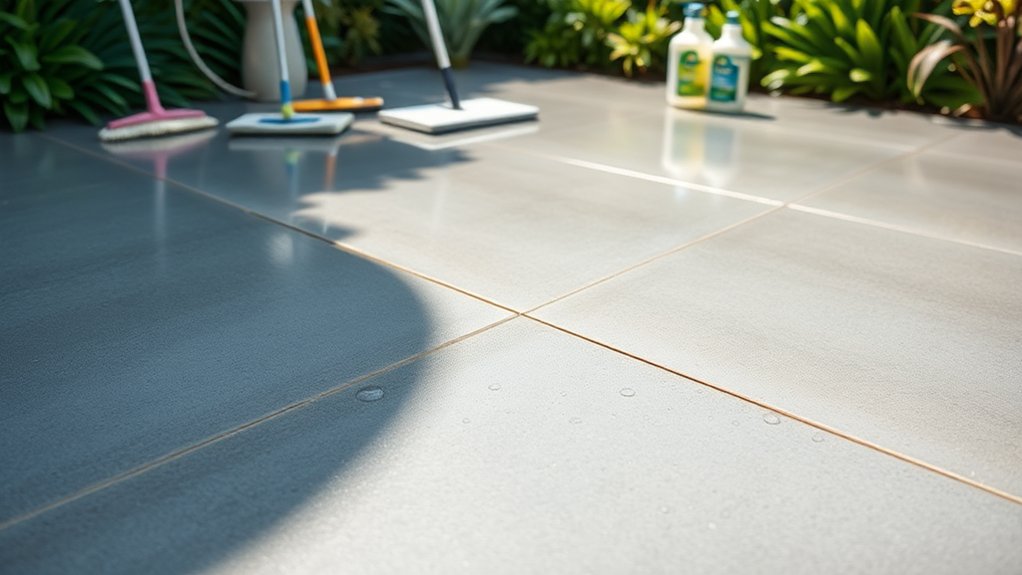
To achieve the best sealing results, effective cleaning techniques are crucial.
Start by assessing the condition of the concrete and choosing the right cleaning method, such as pressure washing, scrubbing, or removing old coatings.
Proper preparation is key; it ensures the surface is ready for sealer adhesion, which boosts durability and performance.
Surface Preparation Importance
Before sealing concrete, thorough surface preparation is crucial for ensuring proper adhesion and effectiveness of the sealer.
Start by sweeping or pressure washing to remove dirt, debris, and any loose contaminants. For stubborn stains, use specialised cleaners and stiff-bristled brushes to scrub the area effectively.
It’s important to remove any existing sealers, as they can prevent the new sealer from bonding properly.
Etching the surface helps to open up the concrete’s pores, allowing for better sealer penetration.
Make sure to control moisture levels to achieve a Saturated Surface Dry (SSD) condition, as this prevents issues with curing.
Don’t forget to inspect for cracks and repair any damage to maintain the integrity of the surface.
Cleaning Methods Overview
Effective cleaning methods are crucial for preserving concrete surfaces and preparing them for sealing. Eco-friendly options include a baking soda and water mix or diluted vinegar, both safe for use near plants.
For tougher stains, try enzymatic cleaners that specifically target organic materials. Mechanical methods, such as pressure washing, can efficiently remove grime, but you may still need to manually scrub oil stains.
When using chemical cleaners, opt for pH neutral or diluted acidic solutions, and apply them carefully to prevent damage. Always wear protective gloves and avoid mixing bleach with other chemicals.
Rinsing thoroughly after cleaning is essential to prevent any residue from interfering with the sealing process.
Removing Old Coatings
When removing old coatings from concrete, it’s important to choose the right techniques for a clean, well-prepared surface.
Chemical strippers can effectively break down coatings, but be aware of their environmental impact. Natural alternatives are safer but take longer to work, while more aggressive strippers can pose health risks.
Mechanical methods, such as grinding and sanding, are also effective but can damage the surface if not used carefully. A combination of chemical and mechanical techniques often yields the best results.
Always prioritise safety by wearing protective gear and ensuring good ventilation.
Plan your project carefully to tackle any removal challenges, protect the substrate, and minimise environmental contamination during disposal.
Repairing Surface Imperfections Before Sealing
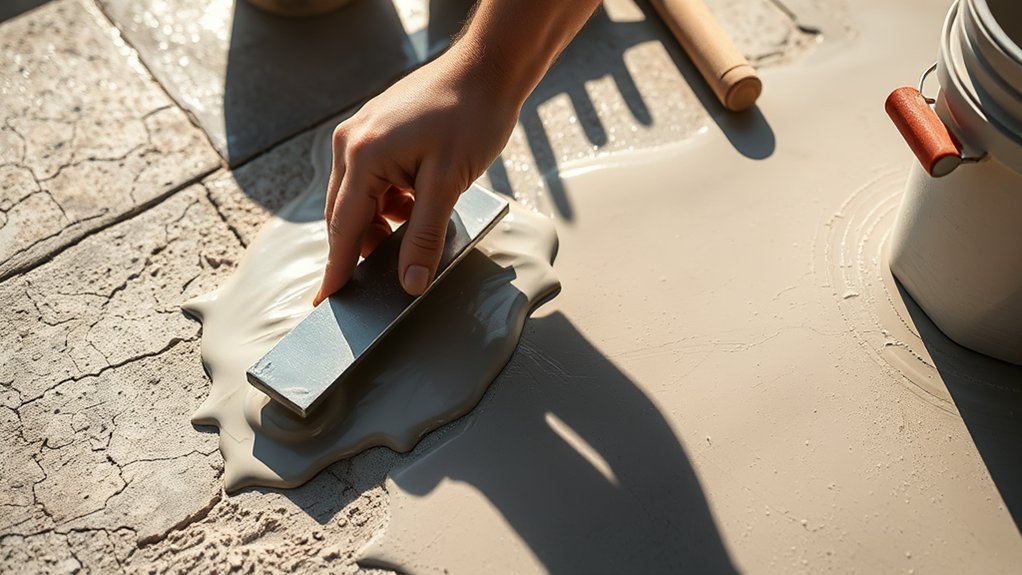
Identifying and repairing surface imperfections in concrete is crucial for a successful sealing process.
Begin by assessing the surface for issues such as cracks, holes, or uneven areas. Addressing these defects promptly can prevent further damage and save costs down the line.
To repair, remove any defective concrete using suitable methods like scarifying or hydrochloric acid, then clean the area to get rid of debris and grime.
If necessary, roughen the surface to improve adhesion for repair materials.
Apply bonding agents to strengthen the connection between old and new concrete.
For patching, use repair compounds mixed according to the manufacturer’s instructions, layering them if needed for deeper imperfections.
Choosing the Right Sealer for Your Needs
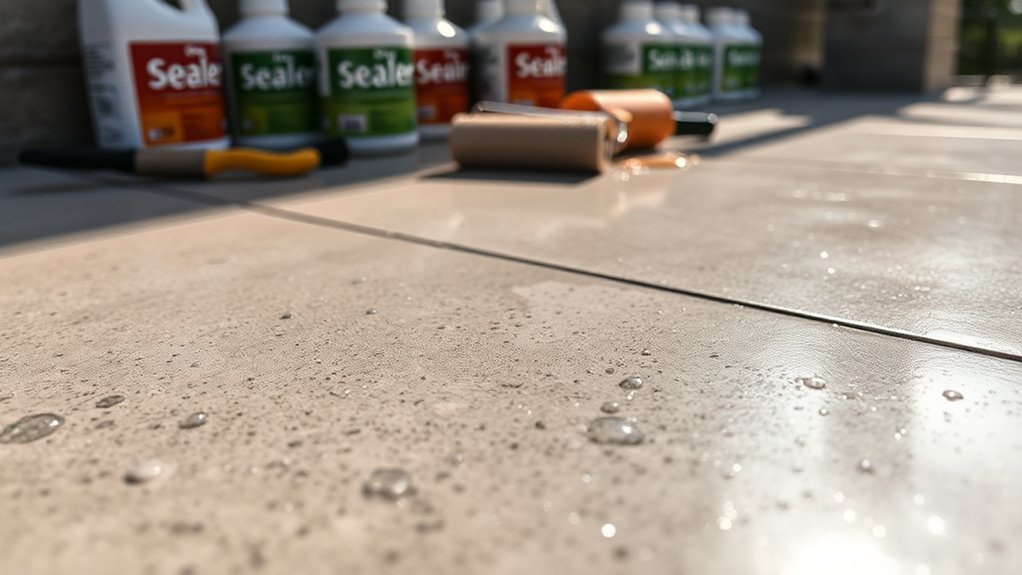
When selecting the right concrete sealer, consider which type meets your needs—options include penetrating, acrylic, or epoxy sealers.
Pay attention to environmental factors, such as VOC levels and moisture conditions, to ensure safe application.
Lastly, choose an application method that complements your selected sealer for optimal performance and longevity. For instance, if you opt for an epoxy sealer, a roller may be best for even coverage.
Sealer Types Overview
Choosing the right concrete sealer is crucial for ensuring the durability and effectiveness of your surfaces. There are several types available, each with distinct characteristics.
Penetrating sealers, such as silane and siloxane, create a chemical barrier against moisture, making them ideal for outdoor applications.
Polyurethane sealers provide a thicker film, offering excellent resistance to abrasion and chemicals, which is perfect for high-traffic areas.
Acrylic sealers are great for enhancing appearance, but they wear out more quickly, so they’re best suited for areas with moderate use.
For specialised environments, epoxy and polyaspartic sealers offer superior hardness and fast curing times, although they aren’t UV resistant, making them unsuitable for outdoor use.
Environmental Considerations
Choosing the right concrete sealer involves understanding the various types available and considering their environmental impact. Eco-friendly options, like low-VOC sealers and those made from renewable materials, significantly reduce harmful emissions during application.
These sealers not only improve indoor and outdoor air quality but also help protect local ecosystems by minimising chemical runoff.
Many eco-friendly sealers are also durable, extending the lifespan of concrete and requiring less frequent reapplication. Look for sealers with certifications from reputable organisations to ensure they meet environmental standards.
Application Method Selection
When choosing a concrete sealer, it’s important to consider the specific application method and environment.
For water-based acrylic sealers, using rollers or sprayers works best. Penetrating sealers, on the other hand, usually require sprayers for effective coverage.
Solvent-based sealers provide a high gloss finish but need careful application techniques and appropriate personal protective equipment (PPE) due to fumes.
If you’re sealing outdoor surfaces that face freeze-thaw cycles, penetrating sealers are the way to go to maintain appearance.
For areas with heavy foot traffic, polyurethane sealers offer durability, but it’s recommended to have them applied by professionals to ensure even coverage and prevent moisture problems.
Understanding your sealing environment and method is key to achieving excellent results and long-lasting protection.
Application Techniques for Maximum Coverage
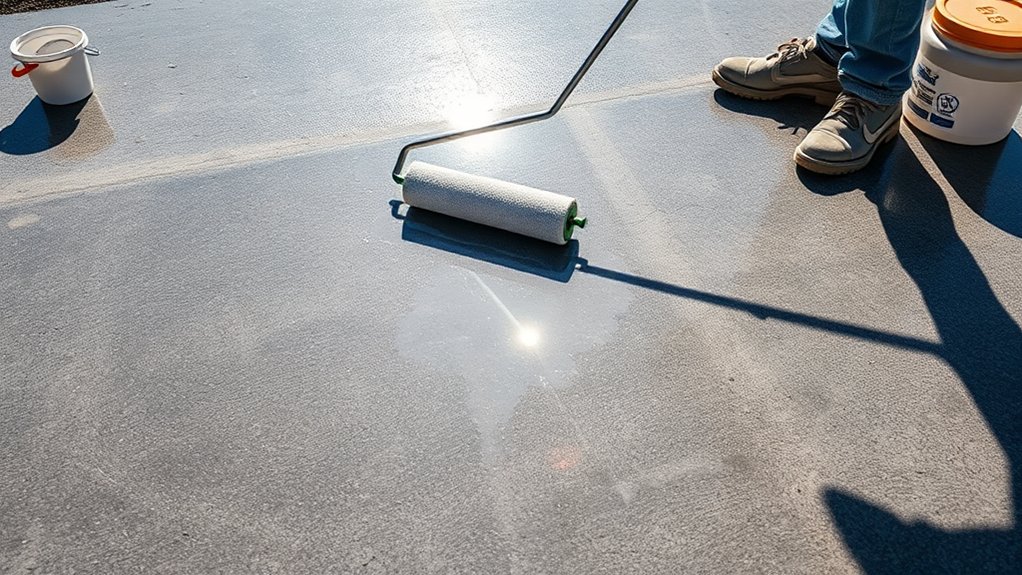
Effective application techniques are crucial for achieving maximum coverage when sealing concrete. For the best results, use a sprayer for quick and even distribution, then follow up with back-rolling to ensure a smooth finish. Applying two thin coats, rather than one heavy coat, improves adhesion and helps avoid issues like cloudiness.
| Application Technique | Key Benefits |
|---|---|
| Spraying | Fast, even coverage |
| Back-Rolling | Smooth, consistent sealer layer |
| Two Thin Coats Strategy | Enhances adhesion and durability |
Proper surface preparation is also essential. Make sure to remove any contaminants and check that the concrete is dry before applying the sealer. Always follow the manufacturer’s instructions for optimal results.
Roller Application for Large Areas
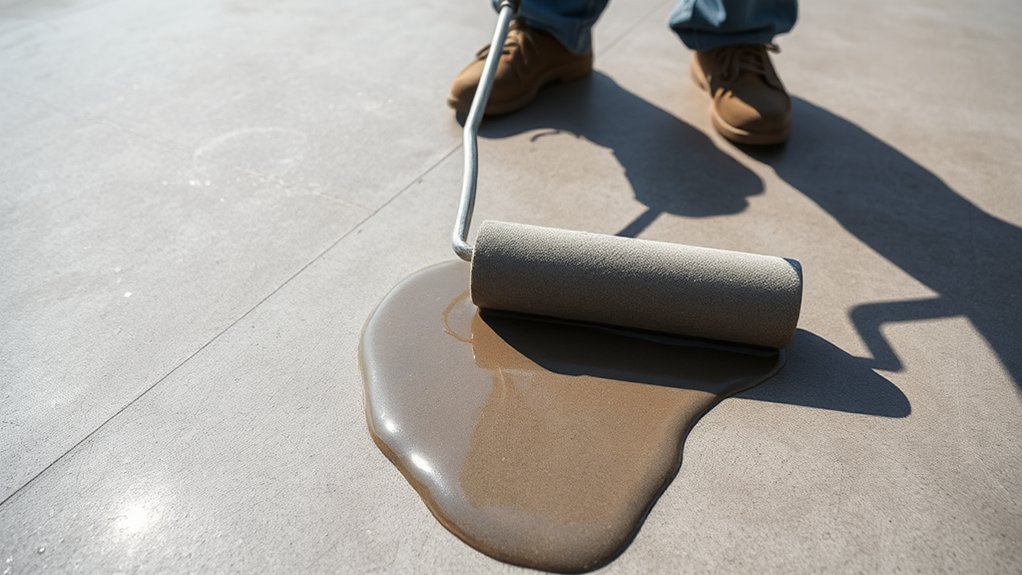
When sealing large concrete areas, using a roller application can significantly improve efficiency and ensure even coverage. Choose synthetic or woven nap rollers with a longer nap to ensure effective material transfer and a uniform finish.
It’s crucial to prepare the concrete by thoroughly cleaning it and allowing it to dry completely. The ideal conditions for sealing occur when temperatures exceed 10°C (50°F) and the weather is dry.
To maintain a wet edge while rolling, reload the roller frequently to avoid uneven distribution. Slightly overlap your passes to blend the sealer seamlessly and prevent lap marks.
Although rolling may take longer than spraying, it allows for greater control over application thickness and reduces overspray, offering enhanced protection and durability for your concrete surfaces.
Sprayer Application for Uniform Coats
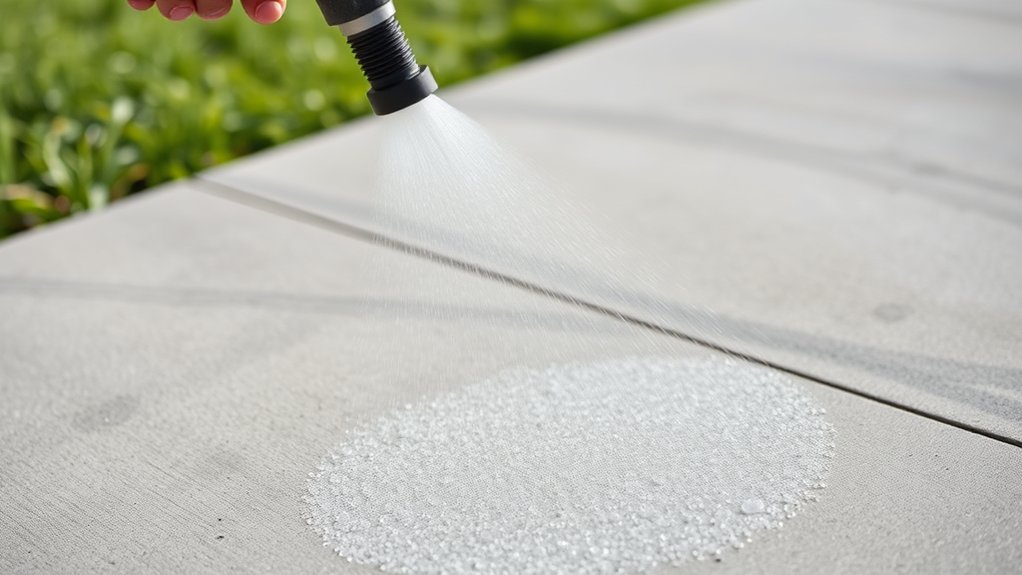
Using a sprayer to apply concrete sealer has distinct benefits, especially for achieving an even finish. When selecting a sprayer, consider models like those from Swissmex, which come with precision tips for consistent coverage.
If you’re using solvent-based sealers, opt for solvent-resistant pump-up sprayers fitted with Viton seals to prevent damage.
To control the thickness of the coat, select the right tip size and pressure; smaller tips and lower pressures will give you lighter, more uniform applications.
It’s best to apply sealers in several thin layers while keeping a steady speed and distance to avoid puddling. Overlap your spray passes by 50% and apply the second coat in the opposite direction to improve uniformity.
Brush Application for Detail Work
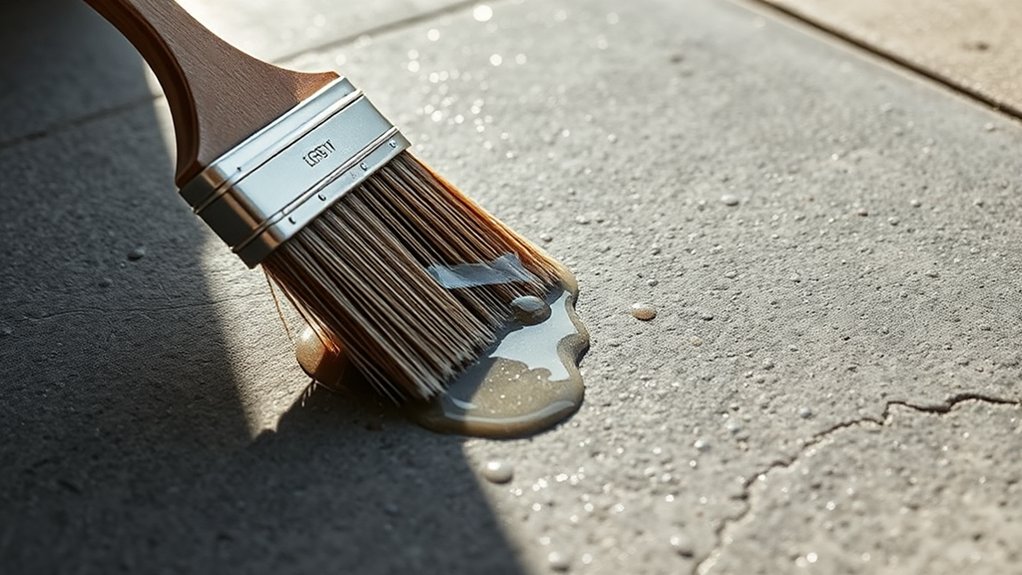
Brush application is crucial for detail work on concrete surfaces, enabling precise coverage in areas where sprayers or rollers may fall short. Choosing the right brushes, like natural-bristle options, helps reduce streaking and ensures smooth sealer application.
Use smaller brushes (1–2 inches) for tight corners and larger ones (3–4 inches) for wider areas. Opt for soft to medium stiffness bristles to prevent damage while ensuring effective sealer penetration.
The benefits of this method include better control over thickness and placement, which helps minimise runs or pooling. You can easily reach tight spaces and touch up any missed spots, ensuring complete coverage.
Common Mistakes to Avoid During Application
Achieving a perfect finish with brush application can be compromised by typical mistakes during the sealing process.
Always ensure the surface is clean and dry before sealing. Applying sealer over dirt or oil can lead to poor adhesion and bubbling. Avoid sealing damp concrete, as this traps moisture and causes white residue.
Confirm you’re using the right type of sealer; mismatched products can reduce durability. Over-application can make surfaces slippery, while not allowing sufficient drying time between coats can result in an uneven finish.
Be mindful of environmental conditions; sealing in direct sunlight or high winds can speed up drying and cause defects.
Steer clear of these common sealing errors for the best results.
Safety Considerations When Sealing Concrete
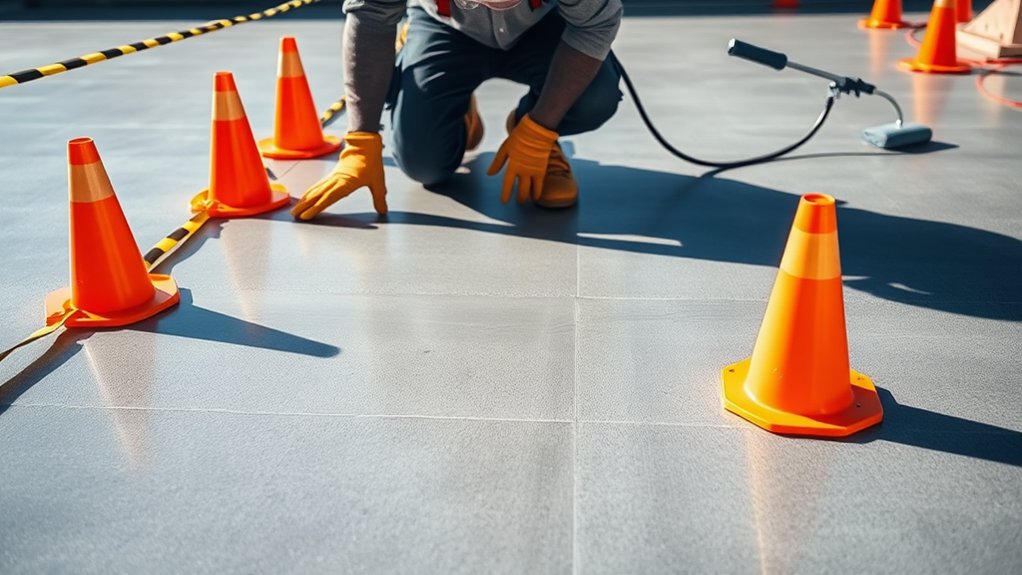
When sealing concrete, it’s vital to prioritise safety for yourself and the environment.
Here are three key considerations:
- Wear Protective Gear: Always use gloves, goggles, and a mask to protect against chemical exposure and inhalation of harmful fumes.
- Ensure Proper Ventilation: Open windows and use fans to reduce VOC exposure, which can help minimise respiratory risks.
- Plan for Emergencies: Keep a first aid kit nearby and have clear emergency procedures in place for any accidents.
Frequently Asked Questions
How Often Should I Reseal My Concrete Surfaces?
You should reseal your concrete surfaces every 2 to 5 years, depending on their exposure and usage. To maintain them properly, regularly check for water absorption. Adjust your sealing frequency based on environmental conditions and the level of foot or vehicle traffic. For example, a driveway that sees heavy use may need resealing more often than a patio that gets occasional footfall.
Can I Use Sealers on Stained or Decorative Concrete?
Yes, you can use sealers on stained concrete and decorative finishes. They improve the look, protect against stains, and enhance durability, ensuring your surfaces remain in good condition while resisting wear and environmental damage. For instance, a sealer can help prevent oil spills from staining a driveway or enhance the vibrancy of a patio’s decorative finish.
What Is the Best Temperature for Applying Sealers?
For the best results, apply sealers when the temperature is between 10°C and 29°C. Temperature can affect the curing process, so it’s important to avoid extremes. This ensures proper adhesion and durability, helping you avoid costly reapplications or defects.
How Can I Tell if My Concrete Needs Sealing?
Did you know that 70% of concrete damage is caused by moisture? Regularly check for cracks and signs of moisture. If you see any cracks, stains, or fading, it’s time to consider sealing your concrete surfaces.
Are There Eco-Friendly Sealers Available on the Market?
Yes, eco-friendly sealers are available in the UK, including biodegradable options and low VOC sealers. These products help reduce environmental impact while effectively protecting your concrete surfaces, supporting sustainable building practices.
Conclusion
Sealing concrete is crucial for durability—it’s not just a case of applying sealer without preparation. To ensure your concrete stands the test of time, invest time in proper surface preparation, select the right type of sealer, and steer clear of common mistakes. By doing so, your concrete will remain in good condition, and you won’t end up with a patio resembling a failed science experiment.

Overcoming common concrete problems is essential for durability; discover effective solutions to ensure your surfaces remain intact and visually appealing.

How can you transform worn concrete into a stunning surface? Discover the essential steps and options for effective concrete resurfacing.

Optimize your concrete's durability in cold climates to prevent scaling; discover essential techniques that could save your surfaces from costly Read more