Concrete finishes offer diverse styles and techniques to enhance your surfaces. You’ll find smooth troweled finishes for sleek indoor applications, textured broom and salt finishes for slip-resistant outdoor areas, and decorative stamped designs mimicking natural materials. Exposed aggregate and stained concrete provide unique aesthetics, while polished concrete offers a high-gloss, durable solution. Epoxy coatings excel in high-traffic zones. Each finish boasts specific benefits, from improved safety to low maintenance and visual appeal. Proper application techniques and regular upkeep are essential for longevity. Understanding these options will help you choose the ideal finish for your project’s needs.
Key Takeaways
- Smooth troweled finishes offer a flat, durable surface ideal for indoor applications but may be slippery when wet.
- Textured finishes like broom and salt finishes enhance slip resistance, making them suitable for outdoor areas.
- Decorative stamped concrete mimics natural materials, providing cost-effective alternatives with low maintenance requirements.
- Stained and colored concrete offers aesthetic versatility at an affordable price point compared to traditional flooring options.
- Polished concrete techniques create a high-gloss, stain-resistant finish suitable for high-traffic commercial spaces.
Smooth Troweled Concrete Finishes
Many concrete professionals consider smooth troweled finishes the pinnacle of concrete surface treatments. This durable finish is achieved through meticulous troweling techniques that create a flat, even surface ideal for indoor applications like floors and countertops.
You’ll find that smooth concrete finishes are highly resistant to weathering, abrasion, and chemical attack, ensuring longevity in various environments. Modern aesthetic is enhanced with this type of finish, making it particularly suitable for contemporary home designs.
To create this finish, you’ll need to level the concrete using screeds and finishing tools. This process not only enhances the overall aesthetic appeal of a space but also provides a surface that’s easy to clean and maintain. You’ll only need to sweep regularly and occasionally mop with all-purpose soap to keep it in top condition.
While smooth troweled concrete finishes offer a sleek appearance, you should be aware that they can be slippery when wet. This characteristic makes them less suitable for outdoor applications unless additional texturing is applied for traction.
When choosing concrete finishes, consider the specific needs of your project to determine if a smooth troweled finish is the right choice for your application.
Textured Broom Finish Applications

Textured broom finishes stand out among concrete applications for their practical and aesthetic versatility. You’ll find this technique particularly useful for outdoor areas like driveways, patios, and pool surroundings.
The process involves dragging a broom across freshly poured concrete, creating a textured surface that greatly enhances slip resistance. This method aligns with the slip resistance benefits of polished concrete, offering 20-50% higher slip resistance than national standards.
When you’re working on areas prone to moisture, such as walkways or pool decks, a broom finish provides a non-slip surface that reduces the risk of accidents. You can customize the texture by varying the broom’s bristle type and dragging technique, allowing you to achieve different levels of roughness and visual appeal.
One of the key advantages you’ll notice is the cost-effectiveness of this method. It requires minimal materials and labor compared to more intricate decorative purposes.
However, don’t overlook the importance of maintenance. You’ll need to clean the surface periodically to prevent dirt accumulation in the grooves, ensuring the finish retains its functionality and appearance over time.
Decorative Stamped Concrete Designs

Over the past decade, decorative stamped concrete designs have revolutionized the concrete finishing industry. This versatile finish mimics the appearance of natural materials like brick, stone, and wood, offering you a wide range of aesthetic options for both outdoor and indoor spaces.
The stamping process involves pressing molds into freshly poured concrete, allowing for endless patterns and textures that you can apply to patios, walkways, and driveways. Stamped concrete can also enhance visual depth and texture, similar to exposed aggregate floors, providing a modern speckled appearance that adds character to your space.
To enhance the visual appeal of your stamped concrete, you’ll often use color hardeners. These provide vibrant hues that can be integrated with different patterns, creating a truly customized look.
The decorative stamped concrete finish isn’t just about aesthetics; it’s also a durable and low-maintenance option. You’ll find it’s a cost-effective alternative to traditional materials while still offering aesthetic flexibility.
When you properly seal and maintain your stamped concrete, it can withstand weathering and heavy traffic. This extends its lifespan and helps retain its beauty for years to come.
Exposed Aggregate Finishes
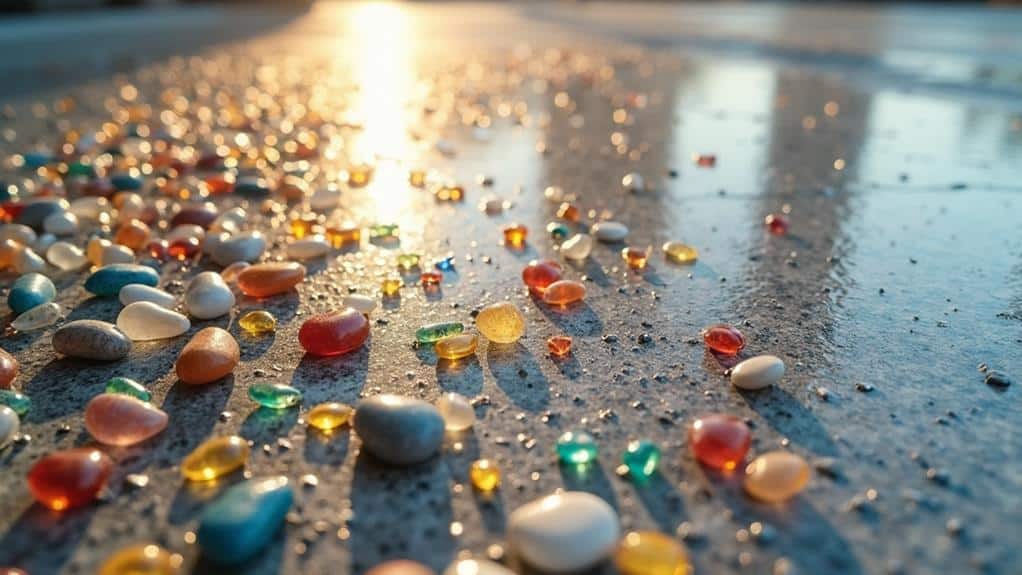
When creating exposed aggregate finishes, you’ll remove the top layer of cement to reveal decorative coarse aggregates, resulting in a textured, visually appealing surface.
You can choose from various materials like granite, quartz, or limestone, which offer both aesthetic enhancement and functional benefits such as slip resistance and durability.
For projects in colder regions, air-entrained concrete can be used to enhance freeze-thaw resistance and overall durability during harsh winters.
These finishes are commonly applied to outdoor surfaces like driveways, patios, and pool decks, where their low maintenance requirements and longevity make them particularly advantageous.
Creation and Application Methods
Exposed aggregate’s creation and application methods involve a multi-step process that begins with the careful selection of decorative aggregates. You’ll need to choose materials like granite, quartz, or recycled glass to achieve your desired aesthetic. Once you’ve selected your aggregates, mix them into the concrete and pour it into the designated area.
After pouring, allow the concrete to set for a short period. The timing is vital, as you’ll need to wash away the surface paste while the concrete is still workable. You can use water or mechanical methods to expose the aggregates underneath.
Here’s a breakdown of the process:
| Step | Method | Timing |
|---|---|---|
| 1. Mix | Incorporate aggregates | Before pouring |
| 2. Pour | Place concrete | Immediately |
| 3. Set | Allow initial curing | 1-4 hours |
| 4. Expose | Wash or brush surface | When surface is firm |
Once you’ve exposed the aggregates, you’ll need to let the concrete fully cure. After curing, apply a sealer to protect the surface from wear and weathering. This final step is essential for maintaining the visual appeal and longevity of your exposed aggregate finish.
Visual and Textural Characteristics
The visual and textural characteristics of exposed aggregate finishes set them apart from other concrete surfaces. When you choose this option, you’ll reveal the coarse aggregates within the concrete by removing the top layer of cement. This process creates a textured surface that’s both visually appealing and functional.
Similar to polished concrete flooring innovations by Lazenby, exposed aggregate finishes offer durability and a timeless aesthetic that appeals to architects and designers.
You’ll find that exposed aggregate finishes offer a wide range of aesthetic possibilities. Common aggregates used include granite, quartz, and limestone, but you can also incorporate recycled materials like glass or seashells for a unique look. The finish’s appearance can vary considerably depending on the aggregates selected and the exposure technique used.
The textured nature of exposed aggregate finishes provides slip-resistant properties, making them ideal for outdoor applications such as driveways, patios, and walkways. You’ll appreciate the enhanced safety this offers, especially in wet conditions.
To achieve the desired look, you can employ various techniques such as water washing, acid etching, or mechanical removal. Each method exposes the aggregate differently, allowing you to customize the final appearance to your preferences.
Remember that periodic sealing is necessary to maintain the finish’s appearance and protect it from wear in high-traffic areas.
Common Uses and Durability
Concrete artisans and homeowners alike gravitate towards exposed aggregate finishes for their versatility and endurance. This technique, which reveals decorative coarse aggregates within concrete, is particularly well-suited for outdoor applications.
You’ll find exposed aggregate commonly used in:
- Driveways
- Patios and walkways
- Pool decks
The durability of exposed aggregate finishes makes them ideal for these high-traffic areas. The textured surface provides excellent slip resistance, enhancing safety in wet conditions. Aggregates like granite, quartz, and limestone contribute to the finish’s robustness, while the option to incorporate recycled materials such as glass or seashells adds unique visual interest.
These finishes align with the growing trend of sustainable flooring solutions, as they often utilize eco-friendly materials and offer long-lasting performance, reducing the need for frequent replacements.
Maintenance of exposed aggregate surfaces is relatively low-effort, requiring regular cleaning and periodic resealing to protect the surface and maintain its appearance.
Sealing is essential for extending the lifespan of your exposed aggregate finish, as it prevents water infiltration and mitigates damage from freeze-thaw cycles. With proper care, these finishes can withstand years of use and exposure to the elements, making them a cost-effective and aesthetically pleasing choice for your outdoor concrete surfaces.
Stained and Colored Concrete
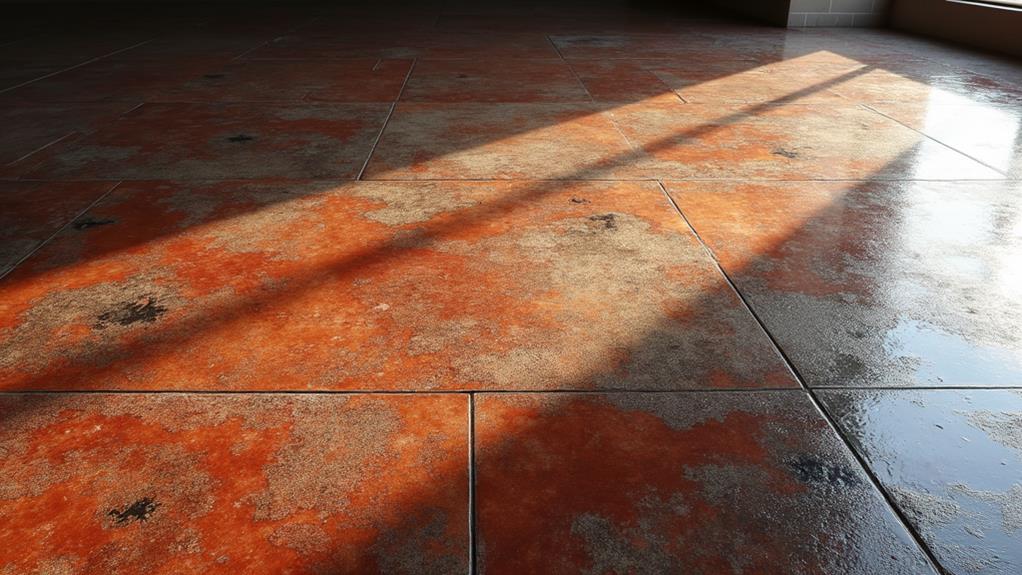
In recent years, stained and colored concrete finishes have gained popularity as versatile options for enhancing the aesthetic appeal of both interior and exterior surfaces. These techniques offer you the ability to customize your concrete, mimicking natural materials like marble or wood while maintaining durability.
Average stained concrete costs range from $2 to $14.50 per square foot, making it a cost-effective alternative to more expensive flooring options like tile or hardwood.
Stained concrete utilizes either water-based or acid-based dyes to achieve a variety of colors and effects. The process involves surface preparation, stain application, drying, and sealing to protect the color. Acid-based stains chemically react with the concrete, creating permanent, variegated patterns, while water-based stains offer a broader color range and easier application.
Colored finishes incorporate integral pigments mixed into the concrete before pouring, ensuring uniform color throughout the slab. Color hardeners can also be applied to the surface for additional customization.
Both stained and colored concrete finishes are low-maintenance options that greatly enhance the aesthetic appeal of spaces while offering long-lasting durability.
These techniques allow you to transform ordinary concrete into a visually striking surface. Whether you’re looking for a subtle, natural look or bold, vibrant hues, stained and colored concrete finishes provide endless possibilities for customization while maintaining the inherent strength and longevity of concrete.
Polished Concrete Techniques
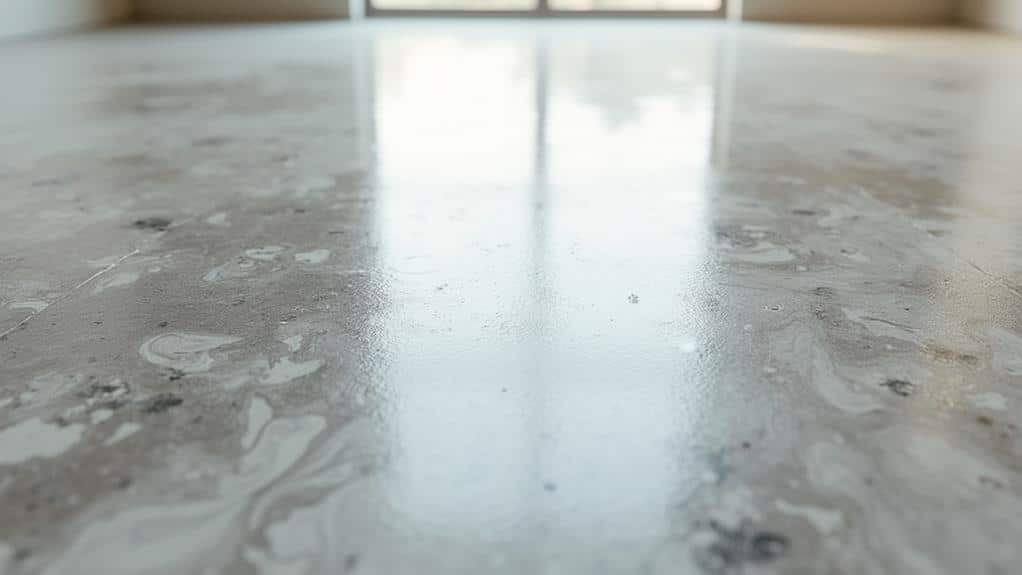
While stained and colored concrete offer aesthetic customization, polished concrete techniques elevate the material’s inherent beauty to new heights.
You’ll find that polished concrete involves a meticulous multi-step process using diamond abrasives to grind and hone the surface. This method progresses through increasingly finer grits to achieve a high-gloss finish that’s both visually striking and highly functional.
Proper curing practices are essential before polishing to guarantee ideal results and prevent surface defects that could compromise the final finish.
The polishing process typically includes:
- Initial diamond grinding to remove imperfections
- Honing with progressively finer pads for smoothness
- Application of a concrete densifier to enhance durability and shine
You’ll appreciate that polished concrete isn’t just about aesthetics. It’s highly resistant to stains, making it ideal for high-traffic commercial spaces.
Furthermore, the polished finish can greatly improve slip resistance, especially when combined with appropriate surface treatments.
To maintain your polished concrete’s appearance and durability, you’ll need to implement regular maintenance. This includes routine dust mopping and occasional re-polishing.
With proper care, you’ll find that polished concrete provides a long-lasting, low-maintenance flooring solution that combines visual appeal with practical benefits for various commercial and residential applications.
Salt Finish for Slip Resistance

You’ll achieve a salt finish by broadcasting rock salt over fresh concrete and pressing it into the surface, creating a textured, slip-resistant result.
This method involves washing away the salt after the concrete sets, leaving small pits that enhance traction, particularly in wet conditions.
While offering cost-effective slip resistance for pool decks and walkways, you’ll need to evaluate regular maintenance and sealing to preserve the finish’s functionality and extend its lifespan.
Similar to innovative pumping techniques that enhance efficiency, salt finishing is an effective method for improving concrete surface properties.
The textured surface not only increases safety but also adds a unique aesthetic appeal to outdoor spaces.
Application and Texture
For slip-resistant concrete surfaces, the salt finish technique offers an effective and aesthetically pleasing solution. This method involves pressing salt crystals into fresh concrete, creating a textured surface with small pits after washing away the salt. The resulting finish provides excellent slip-resistant properties, making it ideal for pool decks and outdoor areas prone to moisture.
As concrete’s durability is a key factor in sustainable construction, this technique aligns well with the industry’s goal of reducing environmental impact through longer-lasting materials.
The application process for a salt finish is straightforward and cost-effective:
- Pour and level the concrete
- Press salt crystals into the surface while it’s still wet
- Allow concrete to cure, then wash away the salt
The texture produced by this technique enhances the concrete’s durability by creating a surface that can better withstand weather elements. It’s particularly effective in reducing slip hazards in wet environments, an essential factor for safety in outdoor spaces.
To maintain the salt finish’s appearance and protect against staining and moisture infiltration, it’s recommended to apply a proper sealer after the application process. This step will help preserve the textured concrete’s unique aesthetic and functional properties, ensuring long-lasting performance in various applications.
Advantages and Considerations
Today, salt finishes stand out as a top choice for slip-resistant concrete surfaces due to their numerous advantages. You’ll find this technique particularly beneficial for areas prone to moisture, such as pool decks and walkways. By embedding rock salt crystals into freshly poured concrete, you create a textured surface that enhances traction and prevents slipping, ensuring safety in outdoor spaces.
Salt finishes offer more than just functional benefits. You’ll appreciate their unique, decorative texture that adds aesthetic appeal to your project, complementing various architectural styles. As a cost-effective option, you can achieve both safety and design without straining your budget.
When considering salt finishes, keep in mind that regular maintenance is essential for preserving their durability and appearance. You’ll need to seal the surface periodically to protect the exposed aggregate from collecting dirt and debris.
While this requires some ongoing attention, the long-term benefits of a slip-resistant, visually appealing concrete surface outweigh the maintenance efforts.
Epoxy Resin Coating Options

Within the domain of concrete finishes, epoxy resin coatings stand out as a versatile and robust option. These coatings offer exceptional durability, making them ideal for high-traffic areas such as garages, warehouses, and retail spaces.
Epoxy resin coatings provide a seamless, long-lasting surface that resists chemicals, stains, and wear, while requiring minimal maintenance.
The application process involves multiple steps:
- Surface preparation
- Primer application
- Mixing of epoxy resin with hardeners
This meticulous process results in a tough, resilient finish that can withstand heavy foot traffic and industrial use.
Epoxy resin coatings can be customized with various pigments and decorative chips, allowing for a wide range of aesthetic options to enhance the visual appeal of both commercial and residential floors.
One of the key advantages of epoxy resin coatings is their low maintenance requirements.
These finishes are easy to clean and maintain, saving time and resources in the long run. Additionally, epoxy coatings can be applied to both new and existing concrete surfaces, making them an effective solution for rejuvenating worn-out floors while simultaneously improving their appearance and functionality.
Maintenance of Concrete Finishes
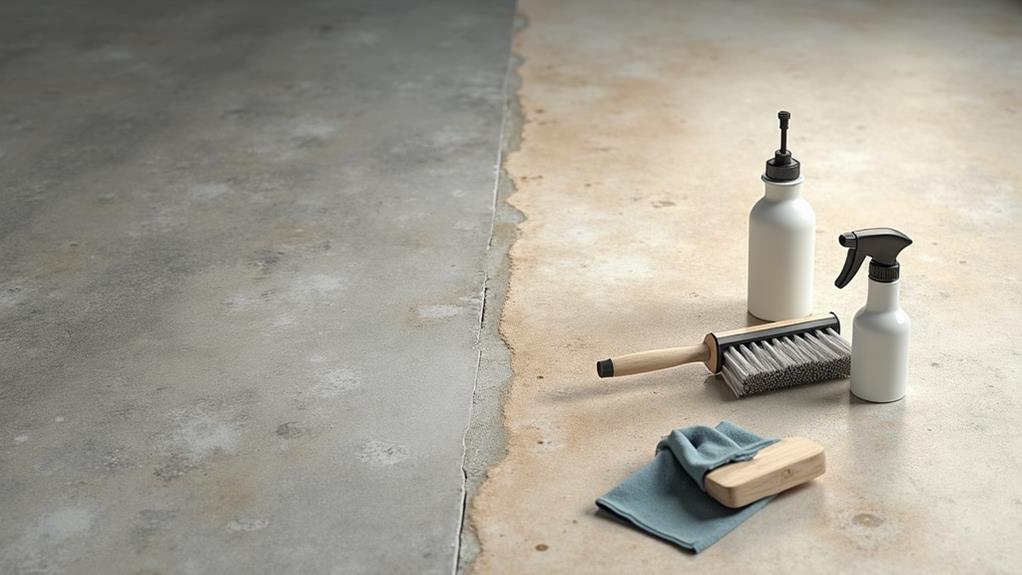
To maintain the longevity and aesthetic appeal of concrete finishes, regular upkeep is essential. You’ll need to implement a daily routine of dust mopping polished surfaces, followed by cleaning with water and all-purpose soap. This practice preserves the appearance and durability of your concrete finish.
For polished concrete, periodic re-polishing is vital. It maintains the surface’s shine and prevents wear over time. You should also understand the causes of cracking, such as improper curing and excess water in the mix, to take preventive measures and reduce maintenance issues.
If you have exposed aggregate or colored finishes, adequate sealing is required to protect against wear and fading, extending their lifespan. When cleaning, avoid harsh chemicals like bleach, as they can damage the finish and increase maintenance needs.
The maintenance of concrete finishes varies depending on the specific type and application. By following these guidelines and tailoring your approach to your particular finish, you’ll guarantee your concrete surfaces remain in ideal condition for years to come.
Regular attention to these maintenance practices will greatly reduce long-term costs and preserve the quality of your concrete finishes.
Frequently Asked Questions
What Is the Most Popular Concrete Finish?
Like a chameleon adapting to its environment, the most popular concrete finish varies. You’ll find broom finishes dominate outdoor spaces, while polished concrete, decorative overlays, and stamped patterns reign supreme in commercial and residential interiors, offering versatility and aesthetics.
What Are Four 4 Types of Concrete Surface Finishes?
You’ll find four common concrete surface finishes: broom, polished concrete, stamped concrete, and exposed aggregate. Each offers unique characteristics, from the textured broom finish to the smooth, reflective polished surface, and decorative stamped or exposed aggregate options.
What Is the Most Durable Concrete Floor Finish?
You’ll find polished concrete to be the most durable concrete floor finish. It outperforms epoxy coatings and stamped designs in longevity and wear resistance. Its densified surface withstands heavy traffic, resists stains, and maintains a high-gloss appearance for decades.
What Is the Difference Between Topcast and Broom Finish?
You’ll find Topcast offers more decorative options, exposing aggregates for a sophisticated look. It’s easier to maintain but requires complex sustainability practices. Broom finish provides a simple, textured surface that’s cost-effective but needs regular maintenance to prevent dirt accumulation.
Conclusion
You’ve explored an array of concrete finishes, each with its unique aesthetics and functions. Ironically, while concrete’s durability is renowned, you’ll find that these finishes require meticulous maintenance to preserve their appearance. Despite the promise of longevity, you’ll need to implement regular cleaning, sealing, and repair protocols. Your choice of finish will dictate specific care requirements, potentially demanding more attention than initially anticipated. Remember, the “low-maintenance” concrete surface you’ve selected may become your most high-maintenance asset.
Related Articles

Master the basics of ready mix concrete, its diverse types, and widespread availability to enhance your next construction project.

Get the inside scoop on Ordinary Portland Cement Concrete and discover why it's the backbone of modern construction projects—find out Read more

Mastering the art of high-strength concrete reveals the secrets to crafting resilient structures. Discover how this innovation transforms modern construction.