
Walking on concrete just 4 hours after pouring isn’t recommended. It’s still in its initial setting phase and can easily crack or get damaged. Even though it might seem firm, concrete needs more time to gain strength and durability. Typically, it’s best to wait at least 24 hours before walking on it, and a full 28 days for it to reach maximum strength. Premature foot traffic can ruin all the hard work you put into laying it. Ensuring proper curing time is essential for the best results. Stick around to find out more tips for great concrete care!
Key Takeaways
- Walking on fresh concrete within 4 hours risks causing damage and cracks.
- Concrete in the initial setting phase is still soft and pliable.
- Full concrete strength is achieved in 28 days, not 4 hours.
- Early foot traffic can compromise the surface’s long-term durability.
- Proper curing methods prevent premature walking and ensure maximum strength.
Introduction
Imagine you’ve just poured fresh concrete, and you’re wondering when it’s safe to walk on it.
In this article, you’ll get expert advice to determine if four hours is enough time.
Let’s explore the factors that influence the concrete’s readiness and make certain you don’t ruin your hard work.
Scenario: Needing to know when it’s safe to walk on fresh concrete
When you’ve just poured a fresh concrete slab, it’s important to know when it’s safe to walk on it without causing damage. You might be keen to step on it to admire your work, but patience is vital. Understanding the concrete’s setting time and the conditions surrounding it can save you from costly repairs.
Concrete sealing, surface finishing, joint placement, curing blankets, and fiber reinforcement all play roles in how quickly your concrete sets. Each of these factors can influence the overall durability and readiness of the concrete for foot traffic. Here’s a quick table to help you understand how these elements affect your concrete:
| Factor | Influence on Setting Time | Impact on Durability |
|---|---|---|
| Concrete Sealing | Slows evaporation | Increases longevity |
| Surface Finishing | Can be done 1-2 hours after | Enhances appearance and strength |
| Joint Placement | Prevents cracking | Ensures structural integrity |
| Curing Blankets | Retains moisture | Promotes even curing |
| Fiber Reinforcement | Adds tensile strength | Reduces cracking and wear |
Thesis: Providing a comprehensive answer based on expert advice
Experts agree that understanding the concrete curing process is essential for determining when it’s safe to walk on it. It’s not just a matter of waiting a few hours; several factors can influence the readiness of your concrete.
Here’s what you need to know.
Concrete maintenance is vital right from the start. Proper surface preparation guarantees that the concrete sets evenly and gains strength. The weather impact plays a big role too. Warm, dry conditions can accelerate the curing process, while cold, wet weather may slow it down. Pay attention to your local forecast.
Foot traffic can greatly impact fresh concrete. Walking on it too soon can cause cracks or surface damage that mightn’t be fixable without major repairs. Generally, after four hours, the concrete might seem hard, but it’s still vulnerable.
Concrete sealing is another step you shouldn’t overlook. Sealing your concrete helps protect it from moisture and stains, and it’s typically done after the concrete has fully cured.
Key points to take into account:
- Proper surface preparation
- Impact of weather conditions
- Risks of early foot traffic
- Importance of concrete sealing
- Overall concrete maintenance
Understanding Concrete Curing

Understanding concrete curing is key to knowing why you can’t walk on it right away.
Curing isn’t just about drying; it’s a chemical process that helps the concrete gain strength over time.
Factors like temperature, humidity, and mix components all affect how long this process takes.
Difference between setting, drying, and curing
Grasping the differences between setting, drying, and curing is essential for anyone working with concrete. Understanding these terms guarantees you don’t rush the process and compromise the quality of your project.
When you pour concrete, the setting time is the phase where it begins to harden and gain enough strength to hold its shape. This happens relatively quickly and is influenced by factors like concrete density and the hydration process. During this stage, initial hardening occurs, but it’s far from being ready for any weight.
Next, you’ll encounter the drying stage, which isn’t about concrete becoming solid but rather about the evaporation of excess water. This is important for preventing issues like cracking.
Finally, curing is the long-term process that enhances the concrete’s strength and durability. Proper curing involves maintaining the right moisture and temperature levels, allowing the concrete to reach its full potential over time. It goes through several curing stages, each essential for achieving top performance.
Here’s a quick rundown of the key points:
- Setting time: Initial hardening phase
- Drying: Evaporation of excess water
- Curing stages: Long-term strength development
- Concrete density: Influences setting and curing
- Hydration process: Essential for all stages
Chemical process of curing and why it takes time
To truly appreciate the curing process, it’s important to grasp the chemical reactions that occur over time, transforming the concrete from a pliable mixture to a solid, durable structure.
When you mix cement with water, a series of chemical reactions called the hydration process begins. This process is vital for the strength and durability of the concrete.
During hydration, the water reacts with cement compounds, specifically calcium silicate, to form new chemical bonds. These bonds gradually build a network within the mixture, giving the concrete its rigidity.
The hydration reaction continues as long as there’s moisture available, and this is why keeping the concrete moist during the curing period is essential.
These reactions aren’t instant; they unfold over days, weeks, and sometimes even months. The initial set happens within a few hours, but the curing process extends far beyond that.
As the calcium silicate hydrates, the concrete gains more strength and becomes less susceptible to cracking and other issues.
Factors affecting curing time
When it comes to how quickly concrete cures, you need to take into account the mix ratio, temperature, and humidity.
The mix ratio determines the strength and drying time, while temperature and humidity can speed up or slow down the process.
Understanding these factors will help you know when it’s safe to walk on your new concrete.
Mix ratio
The mix ratio of your concrete greatly influences its curing time and overall strength. Different factors play a role in this process:
- Additive types you use can speed up or slow down curing.
- Mix proportions affect the consistency and durability.
- Aggregate size determines the texture.
- Water content influences hardening speed.
- Cement grade impacts final strength.
Keep these in mind for best results!
Temperature
Amid various factors, temperature plays a crucial role in determining how quickly your concrete will cure. Seasonal temperature changes, temperature fluctuations, and temperature extremes can all impact curing time.
Effective temperature control and temperature monitoring are essential. If it’s too hot, concrete sets too quickly; if it’s too cold, it cures too slowly.
Always consider the temperature when planning your project.
Humidity
Maintaining ideal humidity levels is essential for ensuring your concrete cures properly. Too much or too little humidity can ruin your project, so you need to monitor it closely.
Here are some key points to keep in mind:
- Humidity levels: Aim for 50-70% relative humidity.
- Humidity control: Use curing blankets or plastic sheets.
- Relative humidity: Check using a hygrometer.
- Humidity impact: Avoid rapid drying.
- Humidity monitoring: Regularly check conditions.
Timeline for Walking on New Concrete

When it comes to walking on new concrete, timing is essential to avoid damage. At 4 hours, the concrete is still very fresh and walking on it can cause serious harm.
Waiting at least 24 hours for light foot traffic and 48 hours to prevent marks is ideal, with heavy foot traffic needing a full 7 days, and the concrete reaching its full strength in 28 days.
4 hours: Concrete still fresh, walking causes damage
Stepping onto fresh concrete within the first four hours will result in noticeable damage and uneven surfaces. When concrete is that new, it’s still in its initial setting phase, which means it’s very soft and pliable. Any foot traffic at this stage can cause permanent imperfections and weaken the overall structure.
To guarantee your concrete cures properly and maintains its strength, you should follow these steps:
- Concrete sealing: Apply a sealer to the surface to protect it from moisture and contaminants.
- Surface treatments: Use appropriate treatments to enhance durability and appearance.
- Curing blankets: Cover the concrete with curing blankets to retain heat and moisture, promoting even curing.
- Strength testing: Conduct tests to measure the concrete’s strength before allowing any foot traffic.
- Reinforcement techniques: Implement techniques like rebar or wire mesh to provide additional support.
Taking these precautions helps you avoid the costly mistake of damaging your new concrete. Remember, patience is key to ensuring your concrete reaches its full potential, so resist the urge to step on it too soon.
24 hours: Minimum wait time for light foot traffic
After the initial four hours, you should wait at least 24 to 48 hours before allowing light foot traffic on the concrete. This waiting period helps guarantee that the surface hardness is adequate to withstand light pressure without causing any damage.
Although concrete might seem dry on the surface after four hours, it’s still undergoing a curing process that strengthens it over time. Allowing foot traffic too soon can interfere with this process and lead to surface imperfections. Even though the concrete might appear to be quick drying, it’s important to be patient.
By giving it at least a full day or two, you allow the material to gain enough strength to handle light foot traffic safely. During this curing period, the concrete is transforming from a pliable mixture into a solid, durable surface. Rushing this process can result in weaker concrete, making it prone to cracks and other issues later on.
48 hours: Ideal wait time to prevent marks or damage
To prevent marks or damage on new concrete, you should ideally wait at least 48 hours before stepping on it. This wait time guarantees the concrete has enough strength to handle your weight without leaving unsightly marks or causing structural damage.
Here are some important factors to take into account:
- Surface Preparation: Proper surface preparation before pouring the concrete guarantees it sets evenly and reduces the risk of future damage.
- Concrete Reinforcement: Using materials like rebar or wire mesh adds strength to the concrete, making it more durable and less prone to cracking.
- Finishing Techniques: Techniques such as troweling and edging help create a smooth, even surface, decreasing the likelihood of marks when you start walking on it.
- Curing Compounds: Applying curing compounds can help the concrete retain moisture, allowing it to cure properly and gain strength.
- Weather Considerations: Weather conditions like temperature and humidity can impact the curing process. In hot weather, concrete may dry too quickly, while in cold weather, it may take longer to set.
Waiting the full 48 hours gives the concrete adequate time to harden, making sure it’s ready to support light foot traffic without any issues. So, be patient; your concrete will thank you!
7 days: Required before heavy foot traffic
For heavy foot traffic, you should wait at least 7 days to make sure the concrete has gained sufficient strength. During these 7 days, the concrete continues to cure and harden. To help this process, you might use curing blankets to keep the surface protected from extreme temperatures, which can impact the curing process.
It’s important to avoid any heavy machinery on the concrete during this time, as it can cause cracks or other damage. Concrete sealing can also play a significant role in surface protection. After the initial setting period, sealing the concrete helps protect it from environmental factors like water and stains. This makes the surface more durable and ready for heavy foot traffic.
It’s also wise to keep an eye on the weather. If it’s too hot, too cold, or too wet, curing blankets can help maintain a consistent environment for the concrete to set properly. Just remember, rushing this process could lead to weak spots in the concrete, which mightn’t be visible right away but could cause problems down the line.
Patience really pays off when you’re aiming for a strong and durable concrete surface.
28 days: Concrete reaches full strength after a month
Concrete typically reaches its full strength about a month after it’s poured, allowing you to walk on it with confidence. This curing duration is important because concrete needs time to mature and achieve its maximum potential. During this period, the strength development process is ongoing, and hitting various curing milestones is vital to guarantee the concrete’s durability and stability.
While the concrete may appear solid after a few days, it’s still in the early stages of its curing journey. Achieving full strength takes time, and patience is key.
Here are some important points to keep in mind:
- Initial Setting: Within the first 24-48 hours, the concrete sets and begins to harden.
- Early Strength: By the end of the first week, it reaches about 70% of its final strength.
- Partial Maturity: After two weeks, the concrete continues to gain strength but isn’t yet fully mature.
- Final Curing: Around the 28-day mark, the concrete reaches its full strength, achieving complete maturity.
- Ongoing Strength Development: Even after a month, the concrete can continue to strengthen slightly over time.
Risks of Walking on Concrete Too Soon
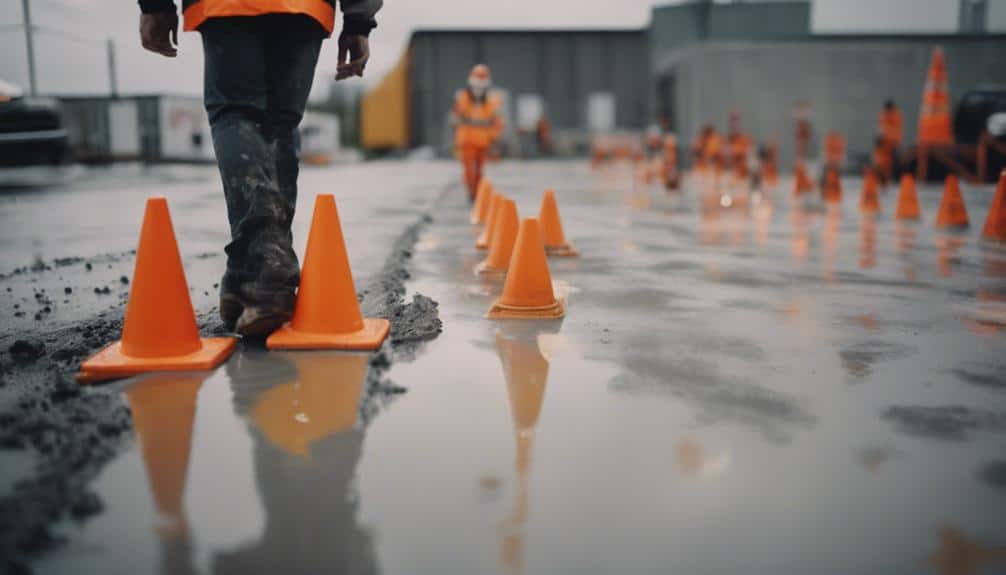
Walking on concrete too soon can lead to several issues you’ll want to avoid. You might leave permanent indentations or footprints, and weaken the surface, which reduces its lifespan.
Not only that, but it can cause cracks or structural damage, and mess up any decorative finishes, leaving your new concrete looking less than perfect.
Leaving permanent indentations or footprints
Stepping on concrete that’s not fully cured can leave unsightly indentations and footprints, compromising its finish. Imagine walking on freshly laid concrete and leaving behind permanent marks. Not only does it affect the look, but it can also lead to long-term issues. To avoid this, let’s look at some ways to protect your new concrete surface.
- Concrete sealants: Applying a sealant can add a layer of protection, making the surface more resistant to damage.
- Surface protection: Cover the concrete with materials like tarps or plastic sheeting to shield it from any accidental steps.
- Footwear choices: If you must walk on it, wear soft-soled shoes to help distribute your weight more evenly.
- Weight distribution: Try to walk lightly, as putting too much pressure in one spot can lead to deeper indentations.
- Temporary barriers: Set up barriers around the area to keep people and pets away until the concrete has fully cured.
Weakening the surface and reducing lifespan
Prematurely stepping on newly laid concrete can greatly weaken the surface, leading to a reduced lifespan. When you walk on concrete before it has fully cured, you expose it to premature traffic, causing surface erosion. This erosion makes the concrete less durable over time, which means it won’t hold up as well under regular use. Imagine the concrete as a sponge that hasn’t fully dried; stepping on it squishes it out of shape, leading to curing damage.
Durability concerns are a big deal when it comes to new concrete. If the surface gets compromised early on, the entire structure suffers. Think of it like a cake that’s been taken out of the oven too soon—it might look okay on the outside, but it’s still gooey in the middle. This gooey middle in concrete terms means it hasn’t reached its full strength, causing a significant lifespan reduction.
To avoid these issues, it’s best to keep off the new concrete for at least 24 to 48 hours. This waiting period allows it to harden properly, ensuring it remains strong and durable for years to come. So, resist the urge to test it early—your patience will pay off in the long run!
Causing cracks or structural damage
Exposing new concrete to foot traffic too early can lead to cracks and structural damage. When you walk on fresh concrete before it has set properly, you risk creating weaknesses that compromise its integrity. Even if it looks solid on the surface, the inside might still be soft and vulnerable.
Wearing proper footwear can help, but it’s not a guarantee against damage. Heavy machinery and even animal tracks can also leave their mark, making the concrete fragile. Applying a concrete sealant too soon can trap moisture inside, leading to future cracks as the trapped water tries to escape.
Weather conditions play a significant role too. If it’s too cold or too hot, the concrete mightn’t set correctly, making it more susceptible to damage when walked on. Here are some common risks:
- Improper footwear: Can leave indentations and weaken the structure.
- Heavy machinery: Adds excessive pressure, causing fractures.
- Animal tracks: Small paws can create tiny cracks that grow over time.
- Concrete sealant: Trapping moisture can lead to internal damage.
- Weather conditions: Extreme temperatures can prevent proper curing.
Be patient and let the concrete set fully to avoid these issues.
Compromising appearance of decorative finishes
Walking on concrete too soon can mar the appearance of decorative finishes, leaving unsightly marks and imperfections. When you step on freshly poured concrete, you risk creating surface scratches that ruin the smooth look you were hoping for. Imagine working hard to get a beautiful finish, only to see it disrupted by careless footsteps.
It’s not just scratches you need to worry about; walking on concrete too early can lead to color fading. The pressure from your foot can cause uneven curing, resulting in dull spots and inconsistent hues. Pattern disruption is another issue. If you’ve added decorative patterns or stamps to your concrete, stepping on it too soon can mess up the design, creating areas that don’t match the intended look.
Texture inconsistencies are also a common problem, as the weight and pressure from walking can alter the surface, making some parts rougher or smoother than others. These aesthetic imperfections can be frustrating, especially after all the effort you’ve put into making your concrete look great.
Tips for Ensuring Proper Curing
To make sure your concrete cures properly, you’ve got to pay attention to a few key steps.
Mix the concrete with the right amount of water, protect it from extreme weather, and keep the surface moist using plastic or a curing compound.
Avoid using quick-dry additives, and always test the surface hardness before allowing anyone to walk on it.
Using correct water-to-cement ratio for the mix
Guaranteeing the accurate water-to-cement ratio in your mix is crucial for proper curing and achieving peak concrete strength. Too much water can weaken the concrete, while too little can make it hard to work with. You’ll want to get the balance just right.
When mixing concrete, pay attention to the following tips:
- Aggregate size: Use the correct size of aggregates. Too large or too small can affect the mix’s consistency.
- Cement quality: Make sure you’re using high-quality cement. Poor quality can lead to weak concrete.
- Water reducers: Consider using water-reducing admixtures. They help maintain workability without adding extra water.
- Curing compound: Apply a curing compound to the surface. It helps retain moisture in the concrete, promoting better curing.
- Curing blankets: Use curing blankets if needed. They maintain the right temperature and moisture levels during the curing process.
Protecting concrete from extreme temperatures and rain
Protect your concrete project against extreme temperatures and rain to guarantee it cures properly and reaches its full strength. One effective method is using insulating blankets to keep the concrete warm during cold weather. These blankets help maintain a steady temperature, which is important for proper curing.
When it comes to rain, you should set up rain barriers. Waterproof covers work well to shield your project from unexpected showers, which can wash away the surface cement and weaken the concrete.
In snowy conditions, snow protection becomes essential. Insulating blankets can also be used here, providing a dual purpose. Not only do they keep the concrete warm, but they also prevent snow from accumulating on the surface.
Controlling the temperature around your concrete is another important step. Make sure you monitor the weather and take necessary actions to keep the environment stable.
Additionally, using waterproof covers can safeguard the concrete from getting too wet, which could disrupt the curing process. By taking these steps, you make sure that your concrete will be strong and durable.
Keeping surface moist with plastic or curing compound
Cover the concrete surface with plastic sheets or a curing compound to keep it moist and guarantee proper curing. This step is essential to make sure your concrete hardens correctly and lasts a long time. By using these materials, you help maintain the necessary moisture levels for the concrete to cure effectively.
Plastic sheeting and curing blankets are excellent at moisture retention. They prevent the surface water from evaporating too quickly, which is vital for hydration maintenance. When concrete loses moisture too fast, it can crack and weaken, making your hard work go to waste.
Here are some tips to help you keep the concrete surface moist:
- Use plastic sheeting: Lay it directly on the concrete for effective moisture retention.
- Opt for curing blankets: These provide an additional layer of protection against evaporation.
- Spray curing compounds: These create a seal that locks in moisture.
- Water frequently: Lightly spray the surface to add extra hydration if needed.
- Check regularly: Ensure the covering remains in place and the concrete stays moist.
Following these steps helps prevent premature drying and ensures your concrete achieves the strength and durability you need.
Avoiding additives that accelerate drying time
Avoid additives that speed up drying, as they can compromise the concrete’s strength and longevity. Using curing accelerators, quick setting concrete, or rapid hardeners might seem like a good idea, but these concrete admixtures often lead to a weaker final product. Opt for alternative additives that promote a gradual curing process to guarantee your concrete remains strong and durable over time.
To help you navigate, here’s a quick comparison:
| Additive Type | Impact on Concrete |
|---|---|
| Curing Accelerators | Speeds up drying, reduces final strength |
| Quick Setting Concrete | Fast setting, but can lead to cracking |
| Rapid Hardeners | Quick hardness, may compromise durability |
| Standard Admixtures | Balanced setting time, maintains strength |
| Alternative Additives | Promotes strong, consistent curing process |
When you choose the right additives, you give your concrete the best chance to cure properly. It’s tempting to want a quick fix, but patience pays off. Remember, concrete is a long-term investment, and proper curing is key. So, stick with standard or alternative additives and avoid the rush—your future self will thank you!
Testing surface hardness before allowing foot traffic
Before allowing any foot traffic, it’s important to test the surface hardness to verify that your concrete has cured properly. You wouldn’t want to ruin all that hard work by stepping on it too soon! So, how do you guarantee it’s ready without guessing?
Surface testing is key. Using a hardness gauge can help you measure the concrete’s pressure sensitivity. This handy tool will let you know if the surface is strong enough to handle foot traffic. Keep an eye on curing indicators, which are signs that the concrete is setting as it should. Proper moisture control is also essential, as too much or too little moisture can affect curing.
Here are some tips to ensure proper curing:
- Use a hardness gauge to measure surface strength.
- Check for pressure sensitivity to see if the concrete can handle weight.
- Look for curing indicators like color changes or reduced tackiness.
- Maintain proper moisture control to avoid cracks and weak spots.
- Wait for the recommended curing time before testing the surface.
Taking these steps will help you make sure the concrete is ready and prevent any mishaps from premature foot traffic.
When to Seek Professional Help
When you’re working on large or complex concrete projects, it’s smart to call in the pros. If you’re unsure about the curing process or timeline, getting expert advice can save you headaches later.
For structural or load-bearing concrete, professional assistance guarantees safety and durability.
Large or complex concrete projects
For large or complex concrete projects, it’s essential to enlist professional help to guarantee the job is done correctly and safely. Professionals have the skills and tools to handle the intricacies of these projects. They know how to use concrete sealers, surface treatments, and curing accelerants to achieve the best results. Plus, they can adequately apply moisture barriers and curing blankets to make certain your concrete sets properly.
Here are some reasons to seek professional help:
- Expertise: They understand the right combination of materials and techniques.
- Efficiency: Professionals can complete the project quicker and more effectively.
- Safety: They follow safety protocols to prevent accidents and ensure structural integrity.
- Quality: Professionals deliver a high-quality finish that lasts longer.
- Equipment: They’ve specialized equipment that you likely don’t own.
When you face a large driveway, a complex patio, or any substantial concrete project, professionals can manage the process from start to finish. They’ll handle everything, from the initial pouring to the final curing stages. This way, you can rest assured knowing your concrete will be durable and look fantastic.
Don’t skimp on professional help when it comes to significant concrete work—it’s an investment in the longevity and appearance of your project.
Uncertainty about curing process or timeline
Understanding the curing process or timeline for concrete can be challenging, making it wise to seek professional help when in doubt. Concrete isn’t a one-size-fits-all material; it varies based on factors like weather impact and the use of concrete additives. If you’re uncertain about when your concrete will be ready for foot traffic, it’s best to consult an expert. They can help dispel common curing myths and prevent costly DIY mistakes.
You might think it’s safe to walk on concrete after just four hours, but that’s not always the case. Weather conditions, such as high humidity or extreme temperatures, can affect curing time. Professionals can provide tailored advice based on these conditions. They can also suggest alternative surfaces if immediate access is necessary, or if your project faces unique challenges.
Using the wrong additives or not understanding their effects can lead to problems down the line. An expert can make sure you’re using the right mix for your specific needs. While DIY projects can be fun and rewarding, sometimes the details are best left to those with more experience.
Dealing with structural or load-bearing concrete
If your project involves structural or load-bearing concrete, seeking professional help guarantees safety and longevity. Structural concrete is a different beast compared to regular concrete. It’s not just about walking on it; it’s about ensuring that your structure can handle the weight and stress it will face over time.
Professionals bring expertise in concrete reinforcement, ensuring your concrete has the necessary strength. They know the right concrete additives to use, which can enhance the load bearing capacity and structural integrity of your project. Additionally, they understand the importance of curing agents, which help the concrete set properly and reach its full strength.
Here are some key reasons to hire a professional:
- Concrete reinforcement: Experts ensure the appropriate reinforcement techniques.
- Load bearing capacity: Professionals calculate and optimize this critical factor.
- Structural integrity: They make sure your structure is safe and sound.
- Concrete additives: Specialists know which additives will best suit your needs.
- Curing agents: Pros make certain the concrete cures correctly for maximum strength.
Don’t take risks with structural concrete. A professional’s guidance can save you from future headaches and ensure your project stands the test of time.
Conclusion
To sum up, you’ve learned that concrete needs time to cure properly before it’s safe to walk on, typically more than 4 hours. Giving it enough time guarantees both your safety and the durability of the surface.
When in doubt, it’s always better to be cautious and ask a professional for advice.
Recap of key points about curing and walking timelines
To wrap things up, remember that while you can walk on concrete after 4 hours, full curing takes much longer to guarantee durability. Walking on it too soon can lead to cracks and other issues, which compromise the concrete’s strength. Understanding the right timelines helps you avoid problems and secure the best results for your project.
Here are some key points to keep in mind:
- Safety concerns: Walking on concrete too soon can cause injuries from slips and falls due to the surface still being wet and uneven.
- Foot traffic: Light foot traffic is usually safe after 24-48 hours, but heavy foot traffic should wait at least a week.
- Concrete durability: Allowing proper curing time increases the longevity and strength of your concrete.
- Waiting period: A general rule is to wait at least 7 days for most activities and 28 days for full curing to ensure maximum strength.
- Expert advice: Always consult with a professional for specific recommendations based on your particular project and environmental conditions.
Importance of allowing enough curing time for safety and durability
Guaranteeing you allow enough curing time is crucial for both the safety and durability of your concrete project. Cutting corners on curing time can lead to various issues, compromising pedestrian safety and overall structural integrity.
Safety protocols exist for a reason, and following them helps prevent common curing mistakes that could cost you time and money down the road.
You might’ve heard curing myths suggesting shortcuts, but don’t be tempted. Innovations in curing methods have enhanced the process, making it more efficient without sacrificing quality. However, these methods still require you to adhere to recommended curing times to ensure the concrete hardens properly.
Walking on concrete too soon can cause cracks and weaken its surface, which mightn’t be visible immediately but can lead to long-term damage.
Encouragement to err on the side of caution and consult professionals if needed
When in doubt, it’s always better to err on the side of caution and consult a professional to guarantee that your concrete project stands the test of time. Professional consultation can provide peace of mind and make sure you’re making informed decisions. Experts can offer valuable safety precautions and expert recommendations tailored to your specific project needs.
Rushing the curing process can lead to problems down the line, so taking preventative measures now can save you from costly repairs later. By seeking expert advice, you’re not just safeguarding your investment but also ensuring the safety and durability of your concrete surface.
Here are some key points to think about:
- Professional consultation: Get advice from experienced contractors to make sure of proper curing.
- Safety precautions: Follow guidelines to avoid accidents and structural issues.
- Expert recommendations: Benefit from tailored advice specific to your project.
- Preventative measures: Avoid potential problems by addressing concerns early on.
- Informed decisions: Make choices based on solid advice, not just guesswork.
Frequently Asked Questions
How Does Weather Affect Concrete Curing Time?
Weather greatly affects concrete curing time. High humidity levels, temperature fluctuations, and rainfall impact slow down curing. Wind effects and sunlight exposure can speed it up. Always consider these factors when planning your concrete projects.
Can Pets Walk on Freshly Poured Concrete?
You shouldn’t let pets walk on freshly poured concrete. Pet footprints can cause concrete damage. For pet safety, avoid risking animal paws and potential pet injuries. Keep pets away until the concrete fully cures.
Does Using a Curing Compound Speed up the Process?
Jumping the gun with curing compounds can speed up the concrete’s chemical reactions and hydration process. Proper application techniques and concrete additives enhance the results, but always adhere to guidelines to guarantee durability and strength.
How Can I Test if Concrete Is Ready for Walking?
To test if concrete is ready for walking, check surface hardness and moisture content. Perform a scratch test and an indentation test. Observe the concrete color; it should be uniform and lighter when it’s ready.
What Footwear Is Best to Use on New Concrete?
For new concrete, wear flat shoes with rubber soles or lightweight sneakers. To guarantee footwear protection, consider using shoe covers. These options minimize damage and help keep the surface intact during the curing process.
Conclusion
So, can you walk on concrete after 4 hours? Not really, it’s like trying to walk on a cake that’s still baking. You risk messing up the surface and causing long-term issues.
Patience is key here. Give it at least 24 hours for light foot traffic and longer for heavier use. If you’re unsure, it’s always a good idea to consult a professional.
Proper curing guarantees your concrete stays strong and durable, saving you headaches down the road.
Related Articles
Looking to order fresh ready-mix concrete? Barrow Mix batches it fresh on-site across Greater Manchester & Cheshire — you only pay for what you use.
Get a free quote →Need concrete mixed & delivered?
Barrow Mix delivers volumetric ready-mix concrete across Greater Manchester & Cheshire — mixed fresh on site, barrowed or pumped to the pour, from as little as ½m³. You only pay for what you use.
Ordering concrete in Greater Manchester or Cheshire? Pouring a floor or slab? See our ready-mix for floors, and use the concrete calculator to get your volume before you order.

Learn about the diverse types of concrete used in construction and discover which mix can transform your next project.

For a long-lasting driveway that laughs in the face of the UK's unpredictable weather, the C20 concrete mix is your Read more

In the UK, you've got a a lot of lightweight concrete types to choose from, each with its unique perks. Read more