Precast concrete beams are structural components made in controlled environments, combining concrete with reinforcing steel for added durability. Common types include T-beams and double tees, each designed for specific spans and load requirements. These beams are particularly suitable for multi-storey buildings, bridges, and sound barrier walls, thanks to their quick installation. Their design prioritises safety and stability. If you’re interested in their production processes and future developments, there’s plenty to learn.
Key Takeaways
Precast concrete beams are factory-produced structural elements known for their strength and quick installation, making them ideal for various construction projects.
The main types include T-beams, double tees, and solid slabs, each tailored to meet specific load demands and uses. These beams are commonly found in multi-storey buildings, bridges, and specialised structures like sound barrier walls.
Their manufacturing involves careful batching, curing, and quality checks to ensure they meet safety standards and minimise defects.
Looking ahead, there’s a growing trend towards using low-carbon materials, integrating IoT technologies, and exploring 3D printing methods to improve efficiency and sustainability in the production of precast beams.
Definition and Basic Characteristics of Precast Concrete Beams

Precast concrete beams are structural components manufactured in a controlled factory setting, ensuring precision and consistency in their shape and size. Made primarily from concrete and reinforcing steel, these beams offer several advantages, including improved durability. By using reusable moulds, manufacturers create uniform shapes tailored to specific load requirements, which can include prestressing for enhanced tensile strength. This factory process results in high-quality products with fewer defects, such as voids or inadequate reinforcement. With their carefully designed mix, precast concrete beams are resistant to cracking and bending, making them suitable for a range of applications. Additionally, their quick installation helps to accelerate project completion, highlighting the efficiency of precast technology. Precast prestressed beams exhibit superior resistance to both compression and tension, which enhances their overall performance.
Manufacturing Process of Precast Concrete Beams

The manufacturing process of precast concrete beams starts with careful design and preparation to ensure all specifications are met. The mould design is crucial; robust steel or fibreglass moulds are customised to the beam’s requirements. A precise batching process follows, mixing materials to achieve consistency. After the concrete is poured into the moulds, consolidation techniques, such as vibration, are used to remove air bubbles. The curing of the concrete then takes place in a controlled environment, promoting effective hydration and enhancing strength, which contributes to the controlled environment that enhances quality and consistency.
| Step | Description | Importance |
|---|---|---|
| Design and Mould Prep | Customised moulds for specifications | Ensures accurate dimensions |
| Concrete Curing | Controlled hydration process | Develops strength |
| Quality Assessment | Inspection for defects | Maintains structural integrity |
Common Types of Precast Concrete Beams

When looking at precast concrete beams, you’ll find T-beams, double tees, and solid slabs, each designed for specific structural requirements. T-beams are effective for distributing loads, while double tees are ideal for spanning large spaces with less material. Solid slabs are straightforward and robust, making them versatile for both commercial and residential projects. Additionally, these beams offer thermal insulation benefits, enhancing the energy efficiency of the structures they support. Precast concrete can also be recycled after its lifespan, contributing to sustainable building practices.
T-Beams Overview
T-beams are a vital element in precast concrete construction, known for their structural efficiency and versatility across various applications. Their T-shape combines the compressive strength of slabs with the tension-bearing ability of the stem, leading to advantages such as improved load distribution and longer spans.
Typically spaced 1.2 to 3.6 metres apart, T-beams are well-suited for medium to long spans in building and bridge construction.
However, T-beams do have some limitations. The lack of a bottom flange reduces tensile strength and overall flexibility. Additionally, the vertical stem can hinder utility installations, requiring careful planning.
Variants like prestressed T-beams enhance performance, achieving concrete strengths of up to 1,034 psi for demanding structural needs.
Double Tee Characteristics
Double tees are an advanced solution in precast concrete beams, offering structural integrity and versatility. Their flexible design suits a variety of applications, effectively optimising load capacity in different settings. Made from prestressed concrete, double tees are particularly suitable for flooring, roofing, and parking structures. The use of supplementary cementitious materials in their production can enhance durability and strength, making them even more reliable for various constructions.
| Characteristic | Measurement | Application |
|---|---|---|
| Flange Width | Up to 4.6 metres (15 feet) | Structural systems |
| Web Depth | Up to 1.5 metres (5 feet) | High-load environments |
| Span Length | Up to 24 metres (80 feet) or more | Long-span structures |
The efficient manufacturing process ensures consistent quality, and their lightweight design facilitates quick installation, making them a popular choice for modern construction projects.
Solid Slab Benefits
Solid slabs offer a strong solution in precast concrete beam technology, providing several benefits for modern construction.
One major advantage is their durability; they resist wear and tear, maintaining structural integrity over time. The manufacturing process includes high tensile strength prestressed strands, which improve crack resistance and load-bearing capacity.
Installation is another benefit; solid slabs enable quick setups, cutting down construction time and labour costs.
Their consistent cross-sectional shape ensures better load distribution, making them suitable for heavy-duty applications. Furthermore, they can easily fit into various designs, making solid slabs a versatile option for both residential and commercial projects. Additionally, the use of pre-stressing techniques enhances their overall performance and strength in structural applications.
Advantages of Precast Concrete Beams Over Cast-in-Place
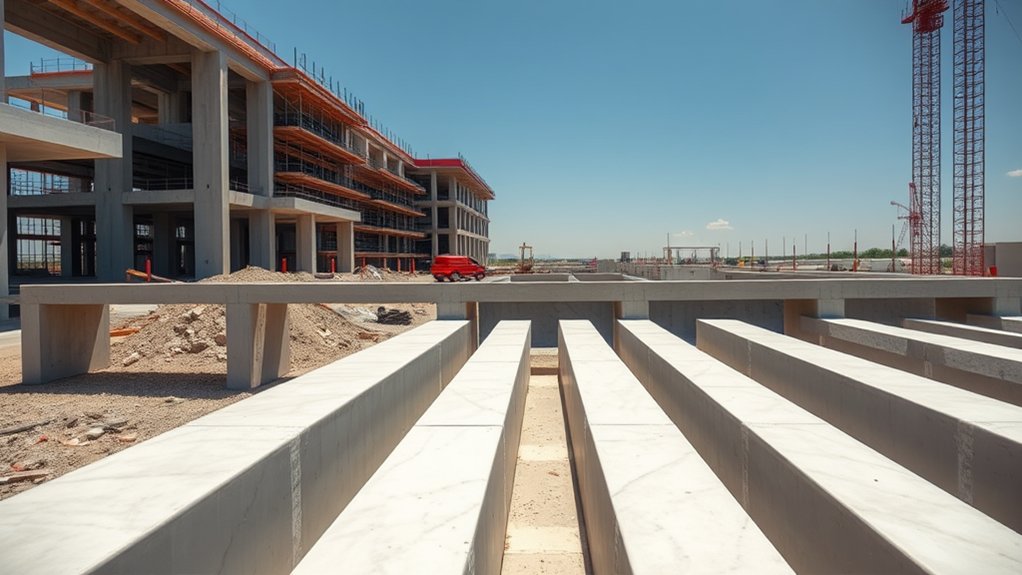
Precast concrete beams significantly boost construction efficiency and quality control. They allow for quicker assembly on-site, helping to streamline your project timeline.
Because these beams are produced in a controlled environment, they offer consistent quality, which leads to better structural integrity and a more dependable end product.
For instance, using precast beams can reduce the time spent on site, allowing other trades to start work sooner, ultimately saving both time and costs.
Faster Construction Timeline
While traditional cast-in-situ methods can extend construction timelines, precast concrete beams offer significant advantages that streamline the building process.
By utilising design innovations and sustainable practices, you can achieve a quicker construction timeline through the following benefits:
- Speed of Installation: As they’re manufactured off-site, site preparation can take place concurrently.
- Efficient Scheduling: This reduces the time required for structural erection.
- Reduced On-Site Labour: This minimises labour costs associated with longer construction periods.
- Concurrent Production: Beams are produced while site preparation occurs, further accelerating the process.
- Minimal Disruption: Quick installation lowers on-site assembly time, resulting in less disruption.
With these advantages, precast concrete significantly boosts your project’s efficiency and overall timeline.
Enhanced Quality Control
Precast concrete beams speed up construction and enhance quality control. Made in controlled environments, these beams ensure consistent production, which improves quality assurance.
Rigorous checks throughout the manufacturing process make sure each beam meets strict standards. High-quality raw materials, like thoroughly inspected aggregates and cement, bolster the beams’ integrity.
Standardised moulds ensure uniform size and shape, minimising defects often seen with site-cast methods. Comprehensive testing, including compressive strength assessments, verifies compliance with project specifications, ensuring durability and reliability.
This careful approach to quality control makes precast concrete beams an excellent choice for construction projects.
Key Applications of Precast Concrete Beams

Precast concrete beams are widely used in various construction sectors due to their versatility and efficiency.
Here are some key applications that highlight their importance:
- Structural Support in Buildings: These beams provide essential support in multi-storey buildings, facilitating open floor plans.
- Highway and Road Bridges: Utilised as main girders, they enable quick installation, reducing road closures.
- Railway Infrastructure: They bear heavy loads in railway bridges and underpasses.
- Commercial and Industrial Buildings: Precast beams enhance the structural integrity of warehouses and industrial facilities.
- Specialised Infrastructure Projects: They’re also employed in sound barrier walls and utility structures, offering durability at a lower cost.
Using precast concrete beams streamlines the construction process and improves overall structural performance.
Design Considerations for Precast Concrete Beams

Designing precast concrete beams requires careful thought to ensure structural integrity and performance. Key aspects to consider include connection detailing to ensure effective load transfer and resilience against various loads. Factors such as dead loads, live loads, and dynamic loads all play a significant role in the design process.
Here’s a summary of the main considerations:
| Consideration | Importance |
|---|---|
| Fail-safe connections | Prevents progressive collapse |
| Reinforcement congestion | Avoids problems during concrete placement |
| Embedded plates and inserts | Ensures proper alignment for load transfer |
| Temporary restraints | Maintains stability during construction |
| Durability and maintenance | Supports long-term performance and ease of repair |
Performance Characteristics of Precast Concrete Beams

When assessing the performance characteristics of precast concrete beams, you’ll notice that their high strength and load-carrying capacity result from controlled manufacturing processes and advanced reinforcement methods.
Here are some key considerations:
- High load capacity is achieved through factory-controlled curing and rigorous quality checks.
- Durability is enhanced by using advanced materials, such as graphite nanomaterials.
- They exhibit reduced cracking and an improved lifespan compared to traditional reinforced concrete beams.
- Prestressing effectively counters tensile stresses, delaying the onset of cracks.
- Factory casting facilitates quicker installation, which can significantly shorten project timelines.
These attributes make precast concrete beams an excellent choice, ensuring long-term dependability and low maintenance while providing outstanding structural integrity.
Integration With Other Precast Elements

Precast concrete beams work well with other precast elements, creating a solid structural framework that improves stability and performance.
Their compatibility with columns, walls, and flooring systems ensures a robust structure. Secure connections between components can be achieved through methods like rebar sleeve grouting.
Additionally, hybrid systems that mix precast elements with materials such as steel or cast-in-place concrete enhance structural integrity.
This flexibility in design allows for unique architectural features while keeping the efficiency of precast installation.
Future Trends in Precast Concrete Beam Technology

The integration of precast concrete beams with other structural elements is paving the way for significant advancements in beam technology.
Sustainable innovations and smart technology are at the forefront of these changes, leading to improved performance and efficiency.
- Using low-carbon materials helps to lower the carbon footprint.
- IoT sensors enable real-time monitoring for predictive maintenance.
- 3D printing techniques speed up production and minimise waste.
- Advanced mix designs enhance durability while meeting green standards.
- Automation in manufacturing boosts quality control and production speed.
As these trends progress, precast concrete beams will become more eco-friendly, durable, and efficient, ultimately transforming infrastructure development and maintenance for the better.
Frequently Asked Questions
How Do Precast Concrete Beams Compare to Steel Beams?
When comparing precast concrete beams to steel beams, concrete often comes out on top in terms of strength, durability, and fire resistance. Additionally, a cost analysis typically shows that concrete is more economical overall, thanks to lower labour and maintenance costs. For example, precast concrete beams require less on-site assembly, which can significantly cut down on time and expenses.
What Is the Lifespan of Precast Concrete Beams?
Have you thought about how durability affects the lifespan of precast concrete beams? Generally, these beams can last between 50 to 100 years. However, regular maintenance is essential to maximise their longevity and withstand environmental factors, ensuring they remain structurally sound over time.
Can Precast Concrete Beams Be Recycled?
Yes, precast concrete beams can be recycled. Recycling them helps reduce waste and the need for new materials, which in turn lowers the carbon footprint of construction projects. For instance, instead of sending old beams to landfill, they can be crushed and repurposed as aggregate for new concrete, making the process both eco-friendly and cost-effective.
How Do Weather Conditions Affect Precast Concrete Beam Installation?
Weather conditions can pose significant challenges during the installation of precast concrete beams, especially due to temperature variations. For instance, extreme heat can cause the concrete to expand, leading to mechanical strains and uneven stress distribution. Conversely, cold weather can slow down the curing process, delaying installation. These factors can affect both the efficiency and timing of the project, making it crucial to plan installations around favourable weather conditions.
What Certifications Should Precast Concrete Beams Have?
Precast concrete beams should have PCI certifications to ensure they meet quality standards and industry regulations. Certifications such as B1, B2, and B4 confirm their suitability for specific uses, ensuring consistent quality in the manufacturing process. For instance, a B1 certification might be required for beams used in bridges, while B2 could be for residential buildings. These certifications help guarantee that the beams will perform reliably in their intended applications.
Conclusion
In summary, precast concrete beams are essential in modern construction, much like a reliable engine powering a vehicle. Their efficiency and strength not only simplify the building process but also improve structural integrity. With ongoing advancements in technology and design, these beams continue to evolve, offering enhanced capabilities. When planning your next project, consider that investing in precast concrete beams is not just about choosing materials; it’s about creating a robust and durable future.

Just dive into the world of ready-mix concrete and uncover its benefits, uses, and potential challenges waiting for your next Read more

You'll discover the precise steps behind ready-mix concrete manufacturing, but what secrets lie in each stage that ensure its superior Read more

Navigate the diverse world of ready-mix concrete types and discover which one could elevate your construction project—your perfect mix awaits!