Ready-mix concrete is a pre-mixed building material that is delivered straight to your construction site. It consists of a precise blend of cement, aggregates, water, and additives, all produced in controlled conditions to ensure consistent quality and performance. There are different types available, such as general-purpose and high-strength concrete, allowing you to choose the right option for your project.
One of the main advantages of ready-mix concrete is its cost efficiency. By reducing the need for on-site mixing, it cuts down on labour and material waste, making it suitable for both large construction projects and smaller residential jobs. Understanding its key components and benefits is crucial for successful use, and you'll also want to be aware of its potential challenges.
Key Takeaways
Ready-mix concrete is a pre-mixed combination of cement, aggregates, water, and additives, delivered to construction sites for immediate use. It is produced in controlled conditions to ensure quality and consistency, and can incorporate sustainable materials such as fly ash.
Typical uses include residential foundations, commercial flooring, and infrastructure projects like roads and bridges, appreciated for their strength and flexibility. The manufacturing process saves time and money by removing the need for on-site mixing, which also cuts down on labour costs and material waste.
Effective site preparation and timely delivery are key to achieving the best results and ensuring the quality of the concrete during application.
Definition of Ready-Mix Concrete
Ready-Mix Concrete (RMC) is a precise mixture of cement, aggregates, water, and additives, created in a controlled environment at a central batching plant. This allows for specific performance characteristics suited to your project needs.
RMC often includes sustainable materials like fly ash and silica fume, which improve durability and lessen environmental impact. The production process ensures consistent quality through accurate measurements and advanced concrete technologies, providing tailored mixes. As a result, RMC is increasingly recognized for its cost efficiency(reducing on-site labor and ensuring consistent quality), making it a preferred option among builders.
With modern batching equipment, you can rely on uniformity in every batch. The U.S. consumed(109 million metric tons) of cement in 2021 for concrete production, highlighting the material's widespread use and importance in construction. These innovations not only enhance construction efficiency but also promote environmentally friendly building practices, making RMC a popular choice in contemporary construction.
Key Components

The key components of Ready-Mix Concrete (RMC) are essential for ensuring the strength and durability needed in construction projects. Here's a breakdown of these components:
| Component | Description | Importance |
|---|---|---|
| Cement | Binds the mix, influencing strength | Vital for durability |
| Aggregates | Sand and gravel, making up 60%-75% of the volume | Affects cohesion |
| Water | Triggers the chemical reaction with cement | Necessary for a workable mix |
Cement quality significantly impacts the strength of RMC, typically constituting 10%-15% of the overall mix. The aggregates, both fine and coarse, must be well-graded to optimise performance. Moreover, maintaining the correct water-cement ratio is critical for achieving the desired outcomes in your project. Regular testing of raw materials ensures compliance with standards and enhances the overall quality of the concrete mix. Additionally, the use of supplementary cementitious materials can further improve durability and strength, making the mix more sustainable.
Manufacturing Process
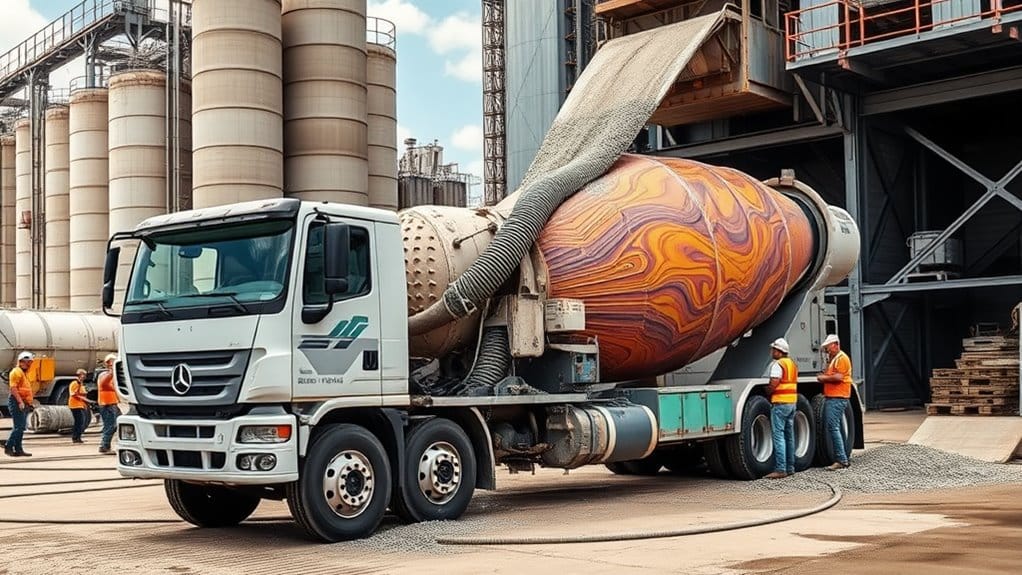
In the manufacturing process of ready-mix concrete, batching plant operations are crucial for accurate material proportions. Advanced mixing techniques are used to ensure a uniform mixture that meets set standards. For instance, using precise measurements of sand, gravel, cement, and water allows for the production of high-quality concrete efficiently. The importance of consistency in batching cannot be overstated, as it directly impacts the overall concrete quality. Understanding these processes is key for anyone involved in construction. Additionally, having a credit account can facilitate smoother purchasing and project financing for contractors and builders.
Batching Plant Operations
In managing batching plant operations, the process starts with the careful receipt and storage of raw materials, such as cement, aggregates, water, and admixtures.
Cement is stored in silos with capacities ranging from 30 to 100 tonnes, while aggregates are kept in bins that can hold between 40 and 700 tonnes. This separation ensures quality control.
Automation systems play a crucial role in controlling batching techniques, allowing for precise measurements of each material.
The control room calculates the exact amounts needed and sends commands to sub-stations. Aggregates are weighed in bins before being conveyed to the mixing station, and cement is weighed directly from the silos.
This meticulous operation ensures that the batching process is accurate and efficient, laying the groundwork for high-quality ready-mix concrete.
Mixing Techniques Explained
Once proper batching operations are in place, mixing techniques play a crucial role in producing high-quality ready-mix concrete.
In a batching plant, the dry ingredients are blended uniformly with water and any required admixtures to achieve the right consistency and workability.
On the other hand, hand mixing involves preparing the mix in a mortar tub or wheelbarrow.
Start by making a depression in the dry mix, then carefully add water in measured amounts. Gradually incorporate the water until the mixture resembles thick porridge.
Be cautious not to add too much water, as this can weaken the concrete.
Using tools like rakes or hoes during hand mixing ensures an even blend, which is vital for the concrete's strength and durability.
Proper mixing is essential for optimal performance in construction tasks.
Types of Ready-Mix Concrete
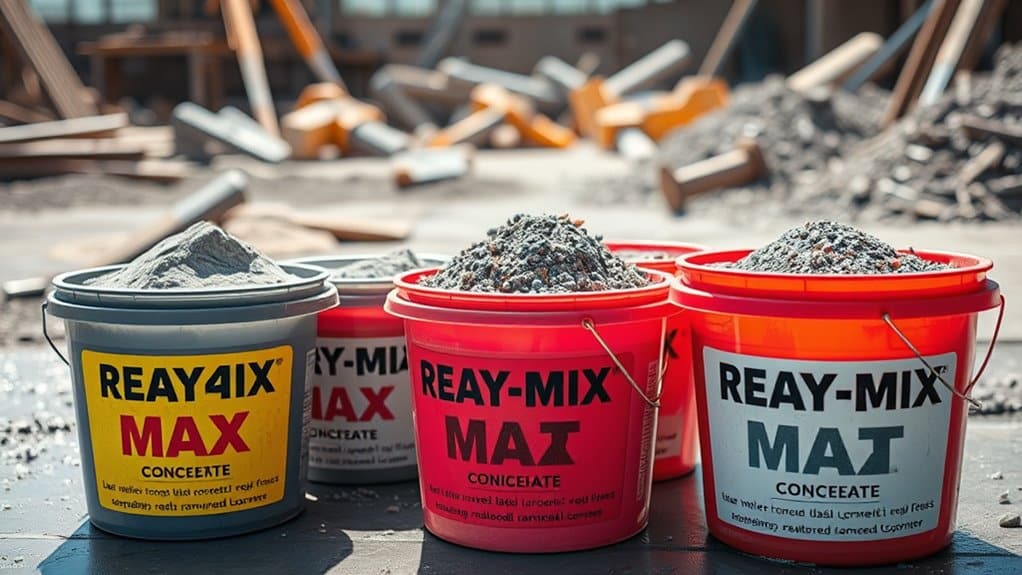
Ready-mix concrete is available in various types, each designed to meet specific project needs. Knowing these types will help you select the right concrete based on its properties and intended use.
| Type | Application | Properties |
|---|---|---|
| General Purpose Concrete | Foundations, floors | Versatile and durable |
| High-Strength Concrete | Bridges, tall buildings | Exceptional load-bearing |
| Lightweight Concrete | Load-bearing walls | Reduced weight |
| Self-Compacting Concrete | Complex designs | Flows easily |
These categories allow you to identify the most appropriate ready-mix concrete for your project. Whether you need something structurally sound or visually appealing, there's a specific type to meet your concrete needs effectively.
Advantages of Ready-Mix Concrete

Choosing the right ready-mix concrete is just the start; grasping its benefits can significantly influence your project's outcome.
Ready-mix concrete guarantees quality through a controlled manufacturing process, ensuring consistent composition and less variability. This leads to durable concrete that maintains its structural integrity.
You'll save time, as it eliminates the need for on-site mixing, enabling quicker project completion and smoother operations.
It's also cost-effective, cutting down on labour costs and material waste, while avoiding storage fees.
Moreover, ready-mix concrete has a positive environmental impact, with efficient delivery systems and recycling options for any leftover material.
Production Process

The production process of ready-mix concrete consists of several key stages to ensure a high-quality product.
First, raw materials such as sand, cement, water, and aggregates are sourced and stored in separate bins. Next, these materials are weighed using hoppers and conveyors for accuracy.
In the mixing stage, the weighed components are combined in a mixer, with water and additives added as needed to enhance strength and durability. Throughout this process, advanced technologies control material flow, helping to minimise waste through sustainable practices.
Once mixed thoroughly, the concrete is discharged into transit mixers for transportation.
Regular calibration checks and quality testing are carried out to maintain standards and ensure the final product meets all specifications before it's delivered to the site.
Common Applications

Ready-mix concrete is a key material in construction, valued for its versatility and strength.
In residential projects, it's essential for creating durable foundations, load-bearing walls, and stylish driveways, with options for custom finishes to enhance the overall look.
In commercial construction, it supports high-rise buildings and robust industrial facilities, providing long-lasting floors and columns that can handle heavy use.
Moreover, ready-mix concrete is perfect for infrastructure projects such as roads, bridges, and tunnels, where materials must endure significant loads and stress.
Challenges and Limitations

While ready-mix concrete has many benefits, it also poses several challenges that can affect construction projects:
- Off-site mixing can result in inconsistent ingredient ratios.
- Delays in transport can compromise the quality of the concrete.
- Limited customisation can restrict how well the mix adapts to specific site conditions.
- Higher costs may strain budgets, particularly for smaller projects.
- The inability to make on-site adjustments can hinder last-minute changes.
These issues underscore the importance of quality assurance throughout the process.
Variability in production and delivery can lead to uneven concrete properties.
Additionally, depending on suppliers can introduce uncertainty, complicating logistics.
Recognising these challenges is crucial for effective planning and execution in your construction projects, helping you to manage the risks associated with ready-mix concrete.
Tips for Using Ready-Mix Concrete

To achieve the best results with ready-mix concrete, start with proper site preparation.
Clear the area of any debris and ensure the subgrade is well-reinforced to handle the concrete's weight.
Also, it's crucial to schedule the delivery carefully; aim for the mix to arrive just before you're ready to pour to keep its quality intact.
Proper Site Preparation
Proper site preparation is crucial for the effective application of ready-mix concrete.
Before you begin pouring, it's important to carry out a comprehensive site assessment and apply ground stabilisation techniques.
Here are the key steps to follow:
- Remove any debris and unwanted materials from the site.
- Level the ground and compact the subgrade to create a solid foundation.
- Excavate to the required depth if necessary.
- Add a layer of gravel or sand for stabilisation on wet or uneven ground.
- Install secure and properly aligned forms.
Timely Delivery Scheduling
After laying a solid foundation through proper site preparation, the next crucial step is ensuring timely delivery scheduling for ready-mix concrete.
Efficient logistics are vital; plan deliveries strategically to minimise travel time and maintain the concrete's freshness. Keep an eye on the weather, as adverse conditions can disrupt your timeline and be prepared to adjust schedules accordingly.
Conduct a pre-delivery assessment to identify any site accessibility issues to ensure a smooth delivery process. Confirm the delivery details the day before to avoid any misunderstandings.
It's advisable to schedule deliveries during off-peak hours to dodge traffic delays. Use real-time updates to coordinate effectively with suppliers and on-site teams, which will help optimise delivery.
Always have contingency plans ready to handle unexpected delays, keeping your project on track and within budget.
Frequently Asked Questions
How Is Ready-Mix Concrete Different From Traditional Concrete?
Think of ready-mix concrete like a well-prepared meal; it's mixed in a plant for consistency, while traditional concrete is mixed manually on-site, which can impact delivery and efficiency.
What Is the Average Cost of Ready-Mix Concrete?
When looking at average costs for ready-mix concrete in the UK, prices typically range from £90 to £130 per cubic metre. Several factors can affect pricing, such as local demand, the cost of raw materials, and the distance for delivery. It's important to compare costs to ensure you budget effectively for your project.
How Long Does Ready-Mix Concrete Take to Cure?
Just as a seed needs time to grow, ready-mix concrete requires a curing period of 28 days to reach its full strength. Maintaining proper moisture levels during this time is essential for optimal hydration and strength development.
Can I Order Small Quantities of Ready-Mix Concrete?
Yes, you can order small quantities of ready-mix concrete in the UK. Many suppliers offer small batch services, ensuring you receive just the right amount for your project without any waste. This approach not only saves you money but also makes your project more efficient. For example, if you're doing a small DIY patio or a garden path, ordering a smaller quantity means you won't be left with excess concrete to deal with.
What Factors Affect the Strength of Ready-Mix Concrete?
Have you ever considered what affects the strength of ready-mix concrete? The water-cement ratio and aggregate size play crucial roles in its durability. A lower water-cement ratio results in a stronger mix, while selecting the right aggregate size ensures both workability and structural integrity. For instance, using larger aggregates can improve stability, but they must be balanced with sufficient smaller particles to fill gaps. Understanding these factors can make a significant difference in the quality of your concrete.
Conclusion
In summary, ready-mix concrete is a dependable choice for a variety of construction projects, offering both convenience and quality. By grasping its components and how it's produced, you can make informed choices for your builds. Although it has some challenges, the advantages typically outweigh the downsides, enabling you to construct with confidence. Remember, in construction, it's essential to "measure twice, pour once" to ensure durable results.

Learn about the diverse types of concrete used in construction and discover which mix can transform your next project.

For a long-lasting driveway that laughs in the face of the UK's unpredictable weather, the C20 concrete mix is your Read more

In the UK, you've got a a lot of lightweight concrete types to choose from, each with its unique perks. Read more