The ready-mix concrete process consists of several key stages that ensure the efficient delivery of high-quality material. It all begins at a production plant, where materials are precisely weighed and mixed using automated systems. This level of accuracy ensures consistency and meets strict quality standards.
Once mixed, the concrete is transported in truck mixers that keep it in optimal condition until it's time to pour. Local production helps reduce transport costs and lowers carbon emissions, benefiting both your project and the environment.
By understanding this streamlined process, you gain insights into how innovations are shaping the future of concrete solutions. Explore further to discover more details.
Key Takeaways
- Ready-mix concrete is manufactured in a plant, where cement, aggregates, and water are combined in precise proportions to achieve the right consistency and strength.
- The batching process employs weight batching for accuracy, with computerised systems overseeing mixing times and batch sizes efficiently.
- Quality control measures, such as regular testing and monitoring, ensure that each batch meets the necessary performance standards before delivery.
- Transportation is done using truck mixers or volumetric trucks, which keep the mix consistent and allow for real-time adjustments on-site.
- Local production and prompt deliveries help reduce carbon emissions and transport costs, improving project efficiency and benefiting local communities.
Overview of Ready-Mix Concrete
Ready-mix concrete has transformed construction by providing a reliable, high-quality material suitable for various uses. There are several types available, including transit mixed, which is mixed directly in the truck, and shrink mixed, which is partially mixed at the plant. Central mixed concrete is fully mixed before delivery, ensuring minimal agitation during transit. Automated batching plants play a crucial role in ensuring precise mixing to meet project specifications.
For demanding applications, high-strength concrete offers exceptional durability, while specialised options like fibre-reinforced and self-compacting concrete address specific needs.
A major benefit of ready-mix concrete is its ability to be customised. You can adjust the mix to meet your project's structural requirements, optimising the proportions of cement, aggregates, water, and additives. This tailored approach enhances performance characteristics such as workability and strength, allowing you to meet precise specifications for your construction projects. Additionally, the U.S. consumed 109 million metric tons of cement in 2021 for concrete production, highlighting its widespread usage.
With efficient delivery and rigorous quality control, ready-mix concrete helps ensure timely project completion, guaranteeing that the material meets all necessary standards. Its versatility makes it an ideal choice for residential, commercial, and infrastructure projects.
Plant Operations Explained
In modern concrete production, efficient plant operations are essential for delivering high-quality ready-mix concrete. Here are some key areas to focus on to ensure efficiency and tackle operational challenges:
- Material Storage and Handling: Store aggregates outdoors and use silos for cement and powders. Employ hoppers or screw conveyors for effective transport of materials.
- Batching Process: Use weight batching for accuracy. Automated systems should measure precise quantities of materials to ensure consistency in each batch. Implementing credit accounts for customers can streamline purchasing and enhance financial management for large projects.
- Mixing and Loading: High-speed mixers should combine dry and wet ingredients to achieve the right consistency in 30 to 90 seconds. Keep a close eye on the discharge process to maintain uniformity during transport.
Regular quality control checks, such as slump and compressive strength tests, are vital to ensuring the final product meets specifications.
Additionally, routine maintenance of machinery and equipment helps prevent breakdowns, supporting continuous operations.
Control Room Functions

In the control room, your role involves implementing precise measurement techniques to ensure accurate ingredient ratios. You must also communicate effectively with batching systems to ensure smooth operations. This coordination is crucial for quality control and significantly influences the consistency and performance of the final product. For example, if you mismeasure an ingredient, it can lead to an inferior product that doesn't meet standards. Therefore, your attention to detail is vital. Additionally, the control room serves as a central hub for operational oversight, enabling you to manage the entire process efficiently. Proper mix design and understanding component interactions are essential for achieving specific performance standards in the concrete mix.
Measurement Precision Techniques
Effective measurement precision techniques are crucial for optimising control room functions in ready-mix concrete production. By ensuring accurate data acquisition and distribution, you can guarantee that every concrete mix meets the stringent quality standards required in construction projects.
Here are some key practices to consider:
- Regular Calibration of Weighing Tools: Ensure all weighing equipment is calibrated regularly to avoid deviations that could affect mix consistency.
- Sourcing Quality Aggregates: Obtain aggregates from reputable suppliers to ensure uniformity in quality and size, which directly impacts the final product.
- Weight-Based Measurements: Prefer weight measurements over volume for greater accuracy, as weight is less affected by moisture content and compaction. Additionally, verifying aggregates' size, shape, and cleanliness is essential for maintaining the consistency and reliability of your concrete mix.
Incorporating advanced sensor technologies into your control systems can significantly enhance real-time monitoring. This allows you to track critical parameters like temperature and moisture content, enabling immediate adjustments to maintain mix consistency.
Communication With Batching Systems
Precision in measurement techniques is crucial for effective communication with batching systems in the control room. Modern batching systems typically use centralised control, with server-based solutions that facilitate smooth communication and process integration. This setup allows you to monitor batch progress in real-time, giving you clear visibility over material loading operations. Additionally, understanding the composition and ingredients of ready mix concrete can enhance the accuracy of your measurements.
With bin and hopper widgets, you can accurately adjust material quantities as needed. Automated processes simplify tasks like generating reports and directing dispatches, which reduces the need for manual input and boosts efficiency. The CB-3 Concrete Batching System enhances operational efficiency by allowing operators to queue batches and generate reports simultaneously.
The ability to manage multiple windows is also important; it enables you to queue future batches while the current one is processing, significantly cutting down on downtime.
Cloud connectivity further improves operations by offering real-time data access and remote monitoring, ensuring you remain in control. Additionally, integration with quality control systems helps maintain compliance with mix design specifications, vital for consistent production.
Role in Quality Control
The control room plays a crucial role in quality control, ensuring every batch of ready-mix concrete meets stringent specifications. By implementing strong Quality Assurance measures and thorough Testing Protocols, you verify the product's reliability and performance.
Here are three key functions that illustrate this important role:
- Raw Material Verification: Regular testing of raw materials ensures they meet required standards, preventing inferior ingredients from contaminating the mix.
- Production Monitoring: Continuous oversight of factors like water-cement ratios and mixing durations allows for real-time adjustments, ensuring optimal consistency and workability. This is vital for achieving precise mix ratios tailored to various construction needs.
- Record Keeping: Detailed production records provide a clear audit trail, making it easier to trace any quality issues that may arise.
Utilising automated batching systems enhances measurement accuracy, significantly reducing human error.
Material Storage Systems
Material storage systems are vital for the efficiency and effectiveness of ready-mix concrete production. They ensure optimal storage utilisation and material flexibility, enabling the handling of various aggregates and additives without contamination. Additionally, the incorporation of advanced control systems ensures precise material handling, further enhancing operational performance.
| Storage Type | Key Features | Benefits |
|---|---|---|
| Concrete Domes | Airtight, watertight, high thermal mass | Temperature stability, 96% reclaim rate, minimal waste |
| Slip-Form Structures | Flexible design, accommodates multiple aggregates | High volume production, reduces material handling |
| Aggregate Bins | Multiple compartments, varying capacities | Accurate batching, reduces operational costs |
These systems are designed to prevent contamination and maintain consistent quality. For example, concrete domes keep temperatures stable, which is crucial for preserving material integrity. Slip-form structures offer flexibility, allowing for simultaneous storage and batching. Aggregate bins, equipped with direct load cell weighing systems, ensure precise measurements, leading to improved reclaim rates and lower operational costs. By integrating these systems into batching processes, you can enhance the efficiency of concrete production. Choosing the right storage solutions helps you meet quality standards and boost overall production efficiency.
Cement Silos Role

The efficiency of ready-mix concrete production relies heavily on the effective use of cement silos, which are crucial for storing and managing bulk materials. Silos streamline operations by reducing manual handling and waste, ensuring a well-organised inventory that supports high-quality concrete production.
Key functions of cement silos include:
- Material Segregation: Various materials can be stored in separate silos, enabling accurate mixing ratios and preventing contamination.
- Environmental Protection: Silos protect bulk materials from moisture and contaminants, which is essential for maintaining material quality.
- Automated Operations: Modern silos are often equipped with electronic control systems, making loading and unloading processes more efficient.
Proper maintenance of silos is vital for their longevity and optimal performance. Regular inspections and prompt attention to potential issues, such as over-pressurisation, help ensure safety and reliability.
Water and Additives Usage
Cement silos are crucial for maintaining material quality, but the choice of water and additives is equally important in the ready-mix concrete process. When selecting water sources, adhere to the guidelines set by ASTM C1602, which includes both potable and non-potable options.
It's essential to control water content strictly; exceeding the maximum limit can weaken the concrete and increase the risk of cracking. For example, adding just one gallon of water can raise the slump of a cubic yard of concrete by around an inch, so be cautious with adjustments.
Admixtures also significantly affect the outcome. They can improve workability, alter setting times, and enhance strength. Choose admixtures based on your project's specific requirements. For instance, water-reducing admixtures or superplasticisers can help achieve the desired slump without significantly changing the concrete's properties.
Consider the environmental impact too; using non-potable water and recycling production water can lessen the demand for fresh supplies.
Keep a record of all water additions during mixing to ensure consistency, and always turn the mixer drum an additional 30 revolutions after adding water to ensure uniformity.
Batching Process Fundamentals

In the batching process, precise measurement of materials is crucial for achieving the desired properties of concrete.
Weight batching is generally preferred over volume batching because it offers greater accuracy, particularly in modern automated systems.
Material Measurement Techniques
Accurate material measurement is crucial in the ready-mix concrete process, as it directly affects the quality and strength of the finished product. Batching software plays a key role in this, ensuring measurement standards are consistently met through advanced automation and control technologies.
Important techniques in material measurement include:
- High-precision load cells and sensors: These devices reduce errors by providing precise measurements of materials.
- Computerised control panels: They enable operators to efficiently manage batch sizes and mixing times from a central location.
- Regular calibration and maintenance: This ensures all equipment remains accurate and reliable over time.
#
Weight vs. Volume Batching
Understanding the difference between weight batching and volume batching is crucial for optimising the concrete mixing process.
Weight batching measures concrete ingredients by their weight, using specialised machines for accuracy. This method ensures uniformity in both fresh and hardened concrete, leading to better compressive strength across various water-cement ratios and curing ages.
In contrast, volume batching measures ingredients by volume, typically using gauge boxes or gamellas. While this method may be more economical for smaller projects, it can introduce inaccuracies due to variations in container sizes and material compaction. As a result, volume batching may cause inconsistencies in mix proportions and lower compressive strength compared to weight batching.
Weight batching is preferred in modern batching plants for its precision, consistency, efficiency, and improved quality control. By opting for weight batching, you ensure uniform quality in your concrete, reducing the risk of errors that could affect structural integrity.
Volume batching may work for less critical applications, but it often sacrifices quality for convenience. Understanding these differences can help you make informed decisions in the batching process.
Automated Batching Benefits
Automated batching systems significantly improve the efficiency and productivity of concrete mixing. By adopting automation, you'll benefit in several important ways:
- Consistent Quality: Automation reduces human error, ensuring that each mix has a uniform quality.
- Increased Speed: These systems allow for quicker batching, helping you complete projects faster and boost productivity.
- Optimised Resource Use: Accurate measurements minimise waste, making the most of your resources and lowering costs.
With automation, you gain enhanced batching efficiency through precise material measurements and real-time monitoring.
Advanced control systems offer diagnostics and error detection, ensuring consistent mixtures and compliance with industry regulations. The ability to operate around the clock increases your production capacity, while remote monitoring improves operational control.
Built-in safety features protect your workforce and help you meet environmental standards set by the Environment Agency.
Incorporating automated batching not only streamlines your processes but also ensures compliance and quality assurance, leading to a more efficient and cost-effective operation.
## Weight vs. Volume Batching
When selecting a batching method for ready-mix concrete, the decision often comes down to weight versus volume batching. In terms of accuracy, weight batching is superior. By measuring materials by weight, it eliminates errors caused by the voids found in granular materials.
Using weigh batchers or electronic scales ensures precise measurements within defined tolerances, reducing the likelihood of mistakes. Weight batching also allows for accurate adjustments for moisture content in aggregates, leading to improved consistency, higher compressive strength, and better control of slump.
This method maintains a uniform water-cement ratio, which is crucial for achieving the desired concrete strength. In contrast, volume batching typically uses gauge boxes for measurement, which can introduce variability due to changes in material volume. This often results in lower compressive strength and inconsistent slump values.
While volume batching may require less skill and enable quicker setups, it lacks the accuracy and reliability that many prefer in modern concrete production. Ultimately, the choice of batching method significantly impacts the quality and performance of your ready-mix concrete.
Mixing Process Details

The mixing process in ready-mix concrete production is vital for producing a uniform and high-quality product. Here's a straightforward breakdown of the essential steps involved:
- Material Transfer: Ingredients are measured and transferred to the mixing drum or mixer.
- Addition of Water and Admixtures: Water and any necessary additives are added to create a wet mix.
- Mixing Action: The mixer operates to ensure a consistent and homogeneous mixture.
In central mixing plants, stationary mixers are used, while truck mixers perform the mixing process within the vehicle itself.
Many modern batching plants utilise automated systems, which enhance precision and consistency, and can even allow for remote operation to improve efficiency.
Quality control during mixing is crucial. Regular material analyses and adherence to strict quality standards ensure that the final product meets the necessary durability and strength requirements.
Importance of Mixing Time
Mixing time is crucial for ready-mix concrete, directly affecting its workability and strength. Longer mixing times can enhance compressive strength by promoting better homogeneity and hydration. However, be wary of mixing for too long, as this can reduce workability, leading to lower slump values that complicate placement.
Ideally, avoid mixing beyond 90 minutes, as this can create significant discrepancies in strength and workability.
While high mixing speeds might appear beneficial, they can negatively affect slump flow, particularly during long-distance deliveries. To mitigate these issues, opt for lower mixing speeds to help maintain workability over time.
Keep in mind that most regions impose a delivery limit of 60 minutes after water is added, with standards like ASTM C94 allowing up to 90 minutes.
Managing mixing time effectively is essential. Choose the right mixing speed and dosage of chemical admixtures tailored to your project's needs. This ensures that the ready-mix concrete retains its intended properties upon arrival, optimising performance while meeting legal requirements.
Quality Control Measures
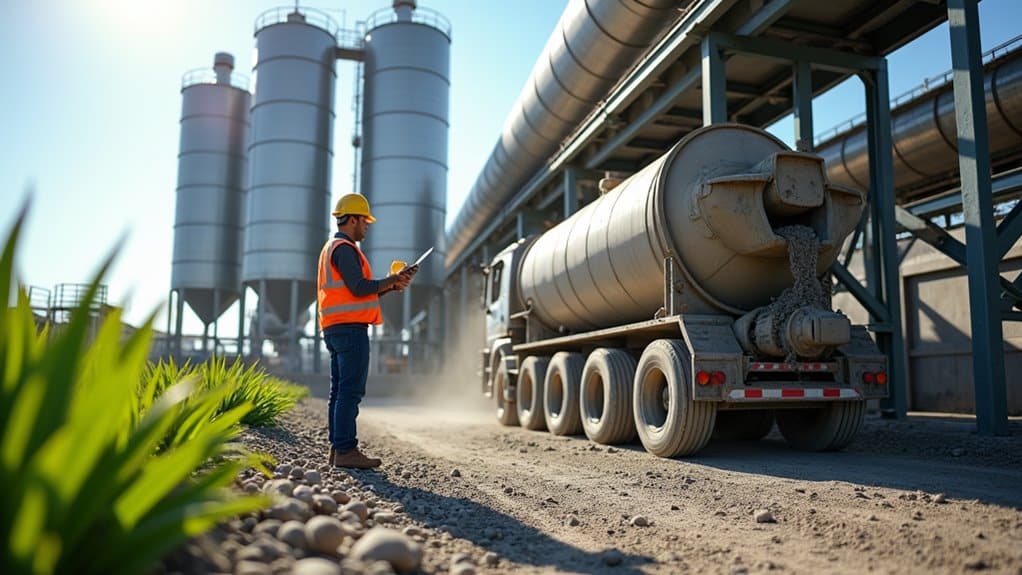
Ensuring quality control in ready-mix concrete is crucial for achieving optimal performance and meeting project specifications. To maintain high standards, implement the following quality control measures:
- Batching Plant Inspection: Regularly check facilities, equipment, and material storage to ensure compliance with standards. Conduct thorough material tests for cement, aggregates, and admixtures prior to use.
- On-Site Quality Control: Verify delivery tickets and inspect the concrete for consistency upon arrival. Monitor the addition of water, admixtures, and fibre reinforcement to ensure compliance with project specifications.
- Testing Procedures: Carry out essential tests such as slump, air content, and compressive strength in line with British Standards. These tests confirm that the concrete meets the required performance criteria.
Transportation and Delivery Methods
When transporting ready-mix concrete, choosing the right delivery method is crucial to preserving the material's quality and performance. Your selection affects both transport efficiency and delivery logistics, ensuring the concrete arrives in optimal condition.
Here are some common methods:
| Method | Description |
|---|---|
| Truck Mixers | Trucks with revolving drums mix concrete en route. |
| Central Mix Plants | Concrete is blended before being loaded into trucks. |
| Volumetric Trucks | These mix concrete on-site, allowing for adjustments. |
| Concrete Pumps | Ideal for placing concrete in hard-to-reach locations. |
Using truck mixers and agitators helps keep the mix consistent during transit. The rotating drum prevents premature setting, while advanced controls enable on-site adjustments. For larger projects, concrete pumps and belt conveyors offer flexibility in placement.
Non-agitating haul units can also improve short-distance deliveries. By mastering these transport methods, you ensure the concrete remains workable, enhancing your project's success. Efficient logistics streamline the process and contribute to a better final outcome, helping you stay on schedule.
Sustainability Practices

To achieve sustainable construction, prioritising carbon footprint reduction and resource efficiency is crucial.
Implementing practices such as recycling materials and streamlining production processes can significantly reduce environmental impacts.
For instance, using recycled aggregates in concrete not only conserves natural resources but also improves the durability of your structures.
These strategies aren't just good for the planet; they also enhance the longevity of your buildings.
Carbon Footprint Reduction
The ready-mix concrete industry has a significant opportunity to cut its carbon footprint through innovative sustainability practices. By implementing advanced techniques such as carbon capture and using alternative materials, you can reduce emissions while ensuring product quality.
Here are three practical strategies you can adopt:
- Reduce Cement Content: Using CarbonCure Ready Mix allows you to reduce cement content by 3-5%, which helps lower carbon emissions without sacrificing performance.
- Adopt Carbon Removal Technologies: Technologies like CarbonCure enable the injection of CO2 into the mix, transforming it into a mineral form and boosting compressive strength.
- Utilise Alternative Cements: Incorporating options like LC3, which combines calcined clay and limestone, can decrease carbon emissions by 30-40% compared to traditional cements.
Moreover, centralised production facilities can enhance efficiency and reduce transportation emissions.
By embracing these practices, you can lead the industry in sustainability and unlock potential revenue through carbon removal credits.
Ongoing research and development will be crucial for continuous improvements in reducing carbon footprints.
Resource Efficiency Strategies
Implementing resource efficiency strategies in the ready-mix concrete industry boosts sustainability and enhances operational performance. By using waste minimisation techniques, you can significantly cut down on excess material usage. Accurate batching and automated mixing systems ensure precise material proportions, preventing overproduction and reducing the need for rework. This means you'll have just what you need on-site, minimising waste.
Recycling initiatives are vital to these resource optimisation strategies. By incorporating recycled materials such as fly ash and recycled aggregates, you conserve virgin resources and reduce landfill waste. Advanced sorting technologies ensure the quality of these recycled materials, supporting a circular economy and lessening the environmental impact of raw material extraction.
Additionally, implementing effective water management practices, like closed-loop water recycling, helps conserve this essential resource and reduces operational costs.
Efficient material usage leads to improved performance with minimal waste, as accurate delivery amounts eliminate the risk of excess. By prioritising these resource efficiency strategies, you enhance sustainability and improve the overall efficiency of your ready-mix concrete operations.
Local Production Benefits
Local production of ready-mix concrete brings significant benefits, particularly in environmental sustainability, economic growth, and operational efficiency. By opting for local sourcing, you can positively impact both the environment and your community.
- Reduced Carbon Emissions: By minimising transportation distances, local production significantly lowers carbon emissions and helps combat climate change.
- Economic Advantages: Supporting local suppliers creates jobs and strengthens the local economy, which in turn fosters community development.
- Improved Quality Control: Local batching ensures consistent quality, resulting in reliable performance for construction projects.
Additionally, local producers often adopt water conservation practices and use recycled materials, conserving natural resources and reducing waste.
This approach not only benefits the environment but also cuts costs by lowering transportation expenses.
Timely deliveries from local suppliers enhance project efficiency, ensuring you receive high-quality concrete when you need it.
Future of Ready-Mix Concrete

The future of ready-mix concrete is set for significant changes, driven by sustainability and technological advancements.
Expect to see low-carbon concrete options, using alternative binders like fly ash and geopolymers, which will greatly reduce the carbon footprint of construction projects. Additionally, recycling in concrete production is becoming common, with the integration of recycled materials to minimise waste.
Lightweight ready-mix concrete is likely to gain traction, allowing for lower structural loads without compromising strength. Decorative and coloured concrete will also become more popular, enhancing the visual appeal of buildings.
The use of renewable energy in production plants, such as solar and wind power, will further support sustainability efforts.
Market innovations are reshaping the industry, with automation and robotics enhancing production efficiency. Digital advancements will improve quality control, while energy-efficient mixing equipment optimises resource use.
The global market is projected to grow to £1.49 trillion by 2033, driven by a construction boom that prioritises cost-effectiveness and eco-friendly solutions.
As infrastructure investments rise, embracing these innovations will be crucial for a sustainable future in ready-mix concrete.
Frequently Asked Questions
How Is Ready-Mix Concrete Different From Traditional Concrete?
Ready-mix concrete differs from traditional concrete mainly in how it's mixed and delivered. Ready-mix is produced in a controlled environment, ensuring consistent quality and uniformity. In contrast, traditional concrete is mixed on-site, which can lead to inconsistencies and delays. For example, if you're constructing a patio, using ready-mix can save time and guarantee that the mix has the right properties, compared to mixing it yourself where variations can occur.
What Are Common Applications for Ready-Mix Concrete?
Ready-mix concrete is a key component in many construction projects, providing a solid foundation for residential homes, commercial buildings, and infrastructure such as roads and bridges. Its adaptability also allows for decorative finishes, making it a popular choice for patios and driveways. Whether you're building a new house or renovating an outdoor space, ready-mix concrete is an essential material that meets a wide range of construction needs.
How Long Does Ready-Mix Concrete Take to Cure?
Curing time for ready-mix concrete generally takes 28 days. However, temperature plays a significant role in this process; hot weather can speed up curing, while cold conditions may slow it down, leading to potential cracking and compromised strength in your concrete. For instance, if you're laying a driveway in winter, be mindful that it might take longer to reach full strength.
Can Ready-Mix Concrete Be Customized?
Yes, ready-mix concrete can be customised with different mixes and a wide range of colour options. This flexibility allows you to adjust the strength, texture, and appearance to meet the specific needs of your project, improving both functionality and aesthetics. For example, if you're building a patio, you might choose a decorative finish and a specific colour to match your garden.
What Factors Affect the Cost of Ready-Mix Concrete?
When calculating the cost of ready-mix concrete, it's important to consider the quality of materials, delivery logistics, and transport efficiency. Prices for cement and aggregates can fluctuate, which affects overall costs. Additionally, factors like site accessibility can significantly impact your project's expenses. For instance, if your site is difficult to reach, you may incur higher transport fees.
Conclusion
In a world driven by innovation, it's interesting to note that something as old as concrete remains fundamental to modern construction. Ready-mix concrete combines efficiency with sustainability, showing that tradition and technology can coexist. This seemingly simple mixture travels a complex path from plant to pour, ensuring your buildings are both robust and environmentally friendly. Who would have thought that the key to progress lies in a blend of sand, gravel, and a touch of irony?

Learn about the diverse types of concrete used in construction and discover which mix can transform your next project.

For a long-lasting driveway that laughs in the face of the UK's unpredictable weather, the C20 concrete mix is your Read more

In the UK, you've got a a lot of lightweight concrete types to choose from, each with its unique perks. Read more