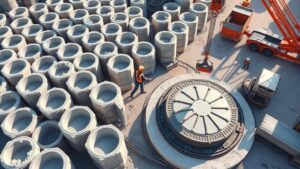
Ready-mix concrete comes in various types designed for specific construction needs. You'll encounter standard grades like M10 and M30, as well as high-strength options such as K-225 and M60, which are ideal for structural applications. There are also specialty mixes like early strength concrete, fibre-reinforced concrete, and self-compacting concrete, each offering distinct advantages. For instance, fibre-reinforced concrete enhances durability, while self-compacting concrete improves workability. Selecting the right mix is crucial for the success of your project. If you're keen to learn how these mixes can specifically benefit your construction plans, there's much more to discover.
Key Takeaways
- Ordinary Grade Concrete includes M10 for non-structural uses and M30 for roadways, catering to general construction needs.
- High-Strength Options like K-225 and K-300 are designed for structural applications, with M60 or higher suitable for high-rise buildings.
- Specialty mixes include Early Strength Development Concrete, ideal for quick construction and formwork removal due to its rapid strength gain.
- Fibre-Reinforced Concrete boosts durability and crack resistance through the inclusion of various fibres, making it ideal for demanding applications.
- Self-Compacting Concrete flows effortlessly into intricate shapes without the need for vibration, ensuring smooth finishes and reducing labour costs.
Types of Ready-Mix Concrete
When exploring the different types of ready-mix concrete, it's important to grasp their specific categories and uses.
Ordinary grade concrete includes options like M10 for non-structural elements and M30 for use in roadways. Non-structural choices, such as K-B0, offer reinforcement, while K-225 and K-300 cater to high-strength structural requirements. Understanding the minimum compressive strength of each grade is essential to ensure they meet the demands of your construction project. Additionally, knowing the automated batching plants used in the production process can help you appreciate the precision involved in creating these mixes.
Specialty mixes, like fibre-reinforced or pervious concrete, improve durability and enhance sustainability by reducing water runoff.
These various ready-mix options provide tailored solutions for specific projects and help streamline construction timelines.
Choosing the right type can optimise performance and support environmental sustainability and long-lasting durability.
Understanding these categories is crucial for the success of your project.
Key Properties of RMC
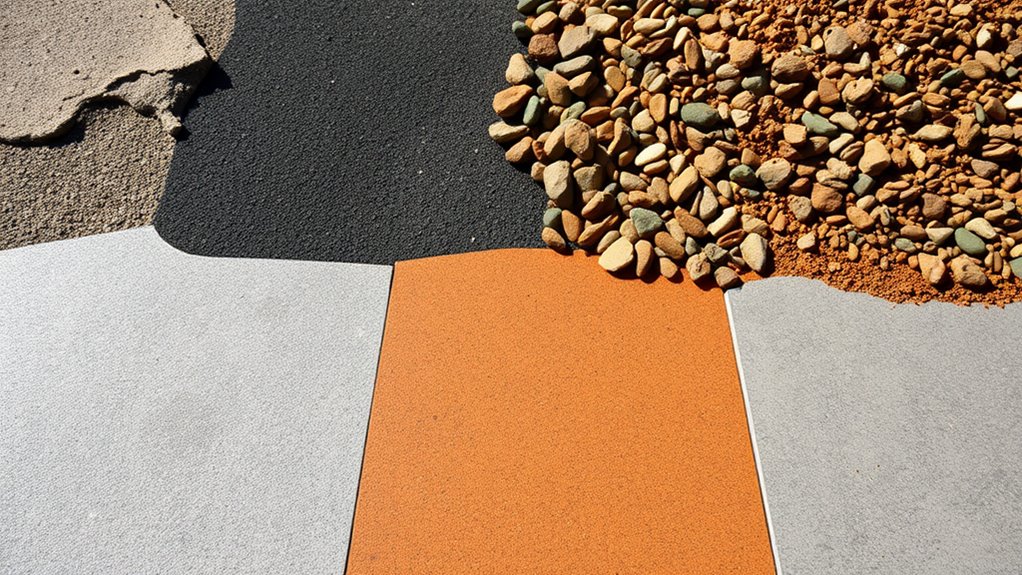
Understanding the key properties of ready-mix concrete (RMC) is crucial for selecting the right mix for your construction projects. RMC provides consistency and quality due to controlled production, which ensures uniform mixtures and predictable properties. Its durability and strength come from high-quality materials, enhancing performance and resistance to environmental factors. RMC is designed to withstand freeze-thaw cycles, making it ideal for regions with extreme weather conditions and is also formulated to meet performance standards that ensure long-lasting results.
The workability and adaptability of RMC allow you to customise the mix for ease of use, making it suitable for complex designs. You can incorporate various mixing techniques and additives to meet specific needs. Furthermore, RMC offers technical and economic benefits that support sustainability practices by reducing waste and labour costs.
Advantages of Ready-Mix Concrete
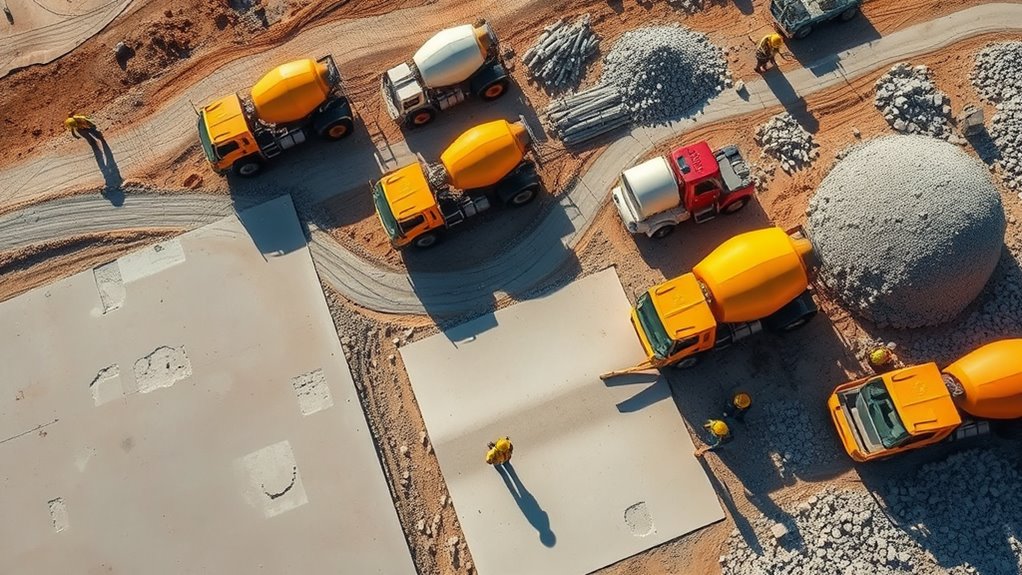
Ready-mix concrete (RMC) comes with several benefits that streamline construction projects. By using RMC, on-site mixing is eliminated, which saves time and reduces labour costs, leading to quicker project completion. Additionally, controlled manufacturing processes ensure that the quality of RMC remains consistent throughout various batches. This consistency is crucial for achieving durable structures that withstand the test of time.
With controlled production methods, RMC ensures consistent quality that meets industry standards. Precise batching at plants guarantees uniformity, enhancing the strength and durability of structures.
Moreover, RMC generates minimal waste due to accurate mixing, making it more environmentally friendly and cost-effective. The ability to customise mixes allows you to adapt the concrete to specific project requirements, ensuring versatility.
RMC's durability also means lower maintenance costs over time, contributing to safer work conditions for everyone involved. These advantages make RMC a popular choice in contemporary construction.
Common Applications of RMC

Ready-mix concrete (RMC) is essential in various construction sectors, such as residential, commercial, and infrastructure projects.
Its uses include building robust foundations and walls in homes, as well as supporting heavy traffic on roads and bridges.
Recognising these common applications highlights the versatility and dependability of RMC in contemporary construction.
Residential Construction Uses
When planning residential construction projects, ready-mix concrete (RMC) is crucial for various applications. It forms stable foundations and footings, ensuring the structural integrity of your home.
RMC is especially effective for slab foundations, crawl spaces, and full basements, providing durability and strength. It also simplifies foundation repairs and extensions, making it a dependable choice for renovations.
Beyond structural applications, RMC is great for decorative uses, enhancing your property's curb appeal. It's perfect for patios, driveways, and garden pathways, offering both resilience and aesthetic appeal.
With its versatility, RMC meets a wide range of residential needs, making it an essential material in construction.
Commercial Structure Applications
In commercial construction, selecting the right type of concrete is essential for maintaining structural integrity and performance in various applications.
Innovations in ready-mix concrete offer options like standard concrete for foundations, high-strength concrete for tall buildings, and lightweight concrete for structures where weight is a concern.
Self-compacting concrete is perfect for decorative uses, while fibre-reinforced concrete boosts durability in pavements and car parks.
These concrete types not only meet specific project requirements but also promote sustainability by minimising waste and enhancing longevity.
With advantages such as fire and corrosion resistance, design flexibility, and straightforward installation, ready-mix concrete is a dependable choice for commercial buildings, ensuring they endure over time and through use.
Infrastructure Project Requirements
Choosing the right type of concrete for infrastructure projects is crucial for ensuring durability and performance in various conditions.
Following infrastructure standards and project specifications ensures that materials used are fit for purpose.
Here are some common applications of Ready-Mix Concrete (RMC):
- Bridges: High-strength concrete ensures stability and safety.
- Roads: Durable surfaces are essential for handling heavy traffic.
- Tunnels: Resilient linings are needed to withstand earth and water pressure.
- Airports: Concrete must provide safety and longevity in construction.
Selecting the appropriate concrete type helps meet the demands of each specific application.
Comparison With Site-Mixed Concrete

Both ready-mix concrete and site-mixed concrete play vital roles in construction, but they differ significantly in their features and uses.
Ready-mix concrete is known for its consistent quality, efficiency, and minimal waste, making it perfect for large projects with strict standards, like high-rise buildings. However, it tends to be more expensive due to transport costs and the need for specialised equipment.
On the other hand, site-mixed concrete offers benefits such as scheduling flexibility and potentially lower costs for smaller projects, like domestic extensions.
Yet, it can suffer from inconsistent quality, demands more manual labour, and produces more waste.
Therefore, when choosing between the two, consider the project's size, quality needs, and site accessibility to find the most appropriate type of concrete for your construction requirements.
Specialty Ready-Mix Concrete Types
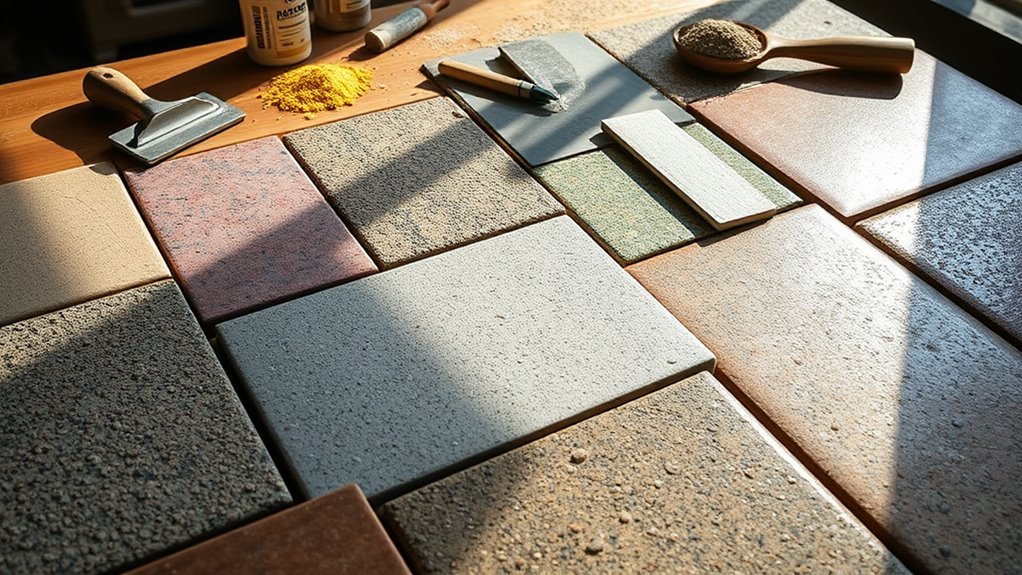
When choosing specialty ready-mix concrete, consider options like Early Strength Development Concrete, which speeds up curing for quicker project completion.
Fibre-Reinforced Concrete improves durability and minimises shrinkage, making it ideal for rigorous applications.
Self-Compacting Concrete is perfect for complex forms, ensuring a smooth finish without the need for vibration.
Early Strength Development Concrete
Early Strength Development Concrete is a specialised type of ready-mix concrete designed to achieve high strength during the early curing stages.
This concrete offers several key advantages, making it suitable for specific applications:
- Faster construction times
- Enhanced durability
- Lower material usage
- Increased site productivity
Its ability to gain strength quickly allows for prompt removal of formwork and speeds up construction processes.
By using a higher cement content, Type III Portland cement, and a low water-to-cement ratio, you can optimise strength development.
This concrete is especially useful in cold weather, ensuring reliable performance on site.
These benefits make it a popular choice for projects that demand quick turnaround times.
Fiber-Reinforced Concrete
Fibre-Reinforced Concrete (FRC) marks a notable improvement in ready-mix concrete technology, boosting structural strength and longevity through the addition of various types of fibres.
Steel fibres are particularly suitable for industrial flooring due to their excellent tensile strength, while glass fibres are preferred for architectural uses, as they offer both aesthetic qualities and resistance to degradation.
Synthetic fibres, including macro and micro varieties, enhance ductility and help reduce plastic shrinkage cracking.
Natural fibres provide eco-friendly reinforcement options for non-commercial projects.
By choosing the right fibres, you can achieve specific benefits such as improved crack resistance, increased durability, and less early-age shrinkage.
This adaptability makes FRC a smart choice for a wide range of construction projects.
Self-Compacting Concrete
Self-Compacting Concrete (SCC) marks a notable advancement in ready-mix concrete technology, designed to flow smoothly into complex shapes without the need for mechanical vibration.
This innovative concrete offers several benefits, including:
- High fluidity for straightforward placement
- Non-segregating properties for consistent strength
- Quick placement to speed up construction
- Enhanced durability with lower permeability
SCC is particularly suitable for various applications, such as raft and pile foundations, retrofitting, and intricate reinforcement structures.
Its ability to maintain stability and achieve high-quality finishes makes it a popular choice in contemporary construction.
Choosing the Right RMC
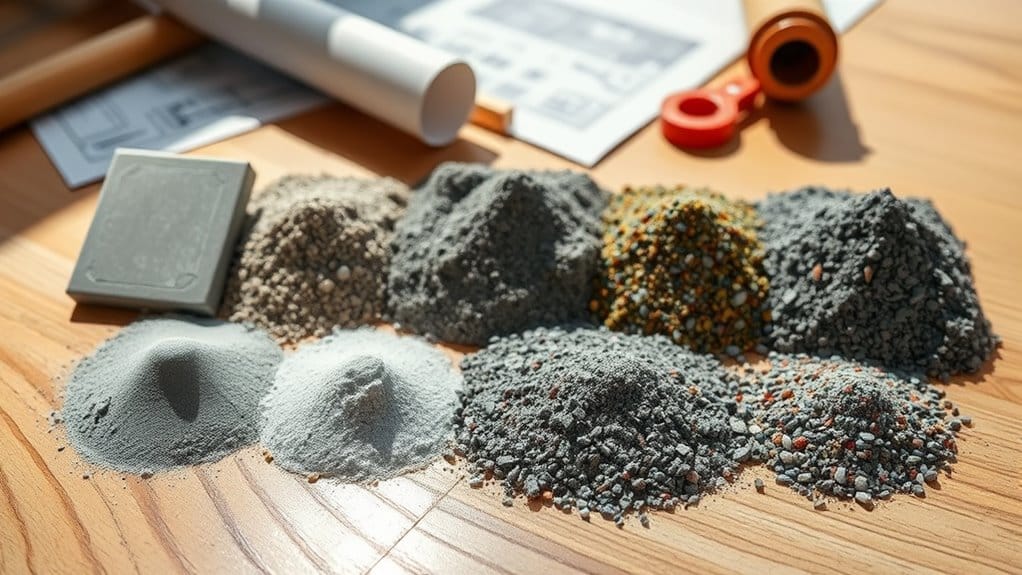
How can you ensure you select the right ready-mix concrete (RMC) for your project?
Start by assessing your RMC selection criteria, which should include project specifications, load-bearing capacity, and environmental factors.
For example, high-rise buildings require high-strength concrete, such as M60 or higher, while a typical residential driveway might only need M15 or M20.
Check the consistency of materials by controlling the ratios of cement, water, and aggregates.
Keep durability and budget in mind, as well as any special requirements for decorative or architectural features.
Frequently Asked Questions
How Is Ready-Mix Concrete Transported to Construction Sites?
Ready-mix concrete is transported using methods such as transit mixers and concrete pumps. It's essential to consider delivery logistics and site access to ensure timely and quality delivery. This helps avoid premature setting during transport, which can affect the final product. For instance, if a site is difficult to reach, it may delay delivery and compromise the concrete's performance.
What Factors Affect the Cost of Ready-Mix Concrete?
When looking at the cost of ready-mix concrete, several factors come into play, such as the quality of materials, transport costs, order size, and local market conditions. For instance, higher-grade cement will typically cost more, while ordering in bulk can often reduce the price per cubic metre. Additionally, if your site is in a remote location, transport charges can be significantly higher, impacting your overall budget. Understanding these elements can help you manage your expenses more effectively for your project.
How Long Does Ready-Mix Concrete Take to Cure?
Think of ready-mix concrete curing like a seed sprouting. It generally takes about 28 days to reach optimal strength. However, just as weather can affect a plant's growth, environmental factors can speed up or slow down the curing process. It's crucial to monitor these conditions to ensure the best results.
Can Ready-Mix Concrete Be Recycled?
Yes, ready-mix concrete can be recycled through several methods. This not only helps reduce landfill waste but also conserves resources, making it a more sustainable choice for construction. For example, crushed concrete can be reused as aggregate in new concrete mixes or as a base material for roads. Embracing these recycling practices supports both environmental efficiency and cost-effective building solutions.
What Environmental Considerations Are There for Ready-Mix Concrete?
When considering ready-mix concrete, prioritise sustainable practices that help reduce your carbon footprint. Focus on low emissions, minimising waste, and promoting recyclability. For example, using recycled materials in your mix can significantly lower environmental impact. By adopting these practices, you not only protect the environment but also improve the efficiency of your construction projects.
Conclusion
In conclusion, choosing the right type of ready-mix concrete is crucial for the success of your project, much like selecting the proper tool for a specific task. With various options available, understanding their characteristics and uses will help you make an informed choice. By considering the benefits of ready-mix concrete over site-mixed alternatives, you can improve efficiency and quality in your construction work. Remember, the right mix not only reinforces your structure but also ensures long-lasting durability.

Learn about the diverse types of concrete used in construction and discover which mix can transform your next project.

For a long-lasting driveway that laughs in the face of the UK's unpredictable weather, the C20 concrete mix is your Read more

In the UK, you've got a a lot of lightweight concrete types to choose from, each with its unique perks. Read more