To manufacture ready-mix concrete, the process begins with careful selection and storage of materials to ensure quality. Next, aggregates, cement, and water are measured accurately using either weight or volume batching. These components are then mixed using central or transit methods to achieve a uniform consistency. Once mixed, the concrete is transported in ready-mix trucks or pumps for precise placement at the construction site. Vibration techniques are employed to remove air pockets, which increases the strength of the concrete. Finally, curing methods, such as using water or steam, are applied to keep the concrete moist. Each step is crucial for optimal performance, and as you delve deeper, you'll discover more about the benefits and intricacies of the process.
Key Takeaways
- Quality materials are carefully sourced and stored to ensure top-grade components for the concrete mix.
- Accurate batching techniques, mainly weight batching, are used to measure materials, maintaining the ideal water-cement ratio.
- Mixing takes place in central or transit mixers, achieving a consistent blend within 30 to 90 seconds while controlling the mix's consistency.
- Transport methods, such as ready-mix trucks or concrete pumps, preserve the quality of the mix and allow for precise placement on site.
- Curing methods, including water and membrane techniques, are employed after pouring to guarantee optimal hydration and structural integrity.
Material Selection and Storage
In the production of ready-mix concrete, careful selection and storage of materials are vital to ensure the quality of the final product.
It's important to source materials that meet strict quality standards. Cement acts as the binder, while aggregates, which comprise 60-75% of the mix, provide strength and bulk. The water-cement ratio is crucial for durability, so using clean, high-quality water is essential. Proper mixing ensures a homogeneous mixture, which is crucial for quality control. Additionally, using automated batching plants during production enhances precision in mix design, ensuring compliance with BSI Kitemark Scheme.
Proper storage practices are also key. For instance, keeping cement in silos prevents moisture absorption, and segregating aggregates helps maintain their integrity.
Admixtures should be stored in dedicated containers to preserve their effectiveness. By following these practices, you can enhance the concrete's properties and ensure it meets the specific requirements of your project.
Batching Techniques

When deciding between weight and volume batching, accuracy is crucial for achieving the desired quality of concrete. Weight batching generally provides more precision, as it takes into account variations in material density and moisture content. For instance, if you're mixing a concrete batch for a driveway, using weight batching can help ensure that the mixture has the right strength and consistency to withstand heavy vehicles. Understanding these differences can significantly affect the compressive strength and overall reliability of your final product. Additionally, moisture content is considered in weigh batching, which further enhances the accuracy of the mix. Proper mixing ratios are essential to ensure the final concrete achieves the desired durability and strength.
Weight vs. Volume Batching
In the ready-mix concrete industry, weight and volume batching are two common methods, each with distinct levels of accuracy and suitability.
- Weight Batching: This method measures materials by weight, ensuring precise proportions. It employs weigh batchers, which can be either mechanical or electronic, and can even compensate for moisture content. The use of weigh batching provides higher uniformity in concrete properties, making it essential for consistent quality. Additionally, mix design plays a crucial role in determining the optimal proportions of materials for different applications.
- Volume Batching: This approach measures materials by volume, typically using gauge boxes. However, it's less accurate due to variations in bulk density.
- Project Suitability: For large-scale projects demanding high quality, weight batching is the preferred choice. In contrast, volume batching is more practical for smaller jobs.
Importance of Accuracy
Accuracy in batching techniques significantly affects the quality and performance of ready-mix concrete. The importance of accuracy cannot be underestimated; it ensures consistency, minimises errors, and contributes to overall project success. Here's a brief overview of key factors influencing batching precision:
| Factor | Impact on Accuracy |
|---|---|
| Tolerances | Strict adherence helps maintain quality standards. |
| Equipment Type | Automated systems offer greater precision. |
| Moisture Content | Necessary adjustments ensure accurate mixes. |
Mixing Process

The mixing process in ready-mix concrete manufacturing is vital for producing a high-quality, uniform product.
There are two main mixing methods:
- Central Mixing: Ingredients are combined at the batching plant before being loaded onto trucks.
- Transit Mixing: Dry components are loaded into trucks, with water added during transport, allowing mixing as the drum rotates.
- High-Speed Mixers: These ensure uniformity within a mixing time of 30 to 90 seconds.
However, mixing can pose challenges. Under-mixing results in an uneven mix, while over-mixing can negatively affect workability.
Therefore, maintaining precise control during this stage is crucial for consistent outcomes.
Quality Control Measures

Effective quality control measures are crucial in the manufacturing of ready-mix concrete to ensure the final product meets strict industry standards and project specifications.
Start with the careful selection of raw materials. Store bulk cement in silos to keep it dry, and separate aggregates in dedicated stockpiles. Implement thorough checks on incoming materials and ensure water purity is maintained.
During production, keep an eye on important factors like batch size and mixing time, and carry out slump tests to assess workability. Regular maintenance of equipment is vital for smooth operations.
Finally, conduct comprehensive testing, including assessments of compressive strength and air content, to confirm that the concrete meets specifications and is durable for its intended use.
Transportation Methods

Transportation methods are crucial in the ready-mix concrete manufacturing process, directly impacting the quality and workability of the concrete at the job site.
To enhance delivery efficiency and ensure reliable concrete supply, consider the following methods:
- Ready-Mix Concrete Trucks: These vehicles keep the concrete consistent with rotating drums, ensuring it remains workable during transit.
- Volumetric Concrete Trucks: These mix the concrete on-site, allowing for adjustments to the mix as needed, making them ideal for projects with changing requirements.
- Concrete Pumps: Perfect for large or complex sites, concrete pumps enable precise placement, improving overall project efficiency.
Selecting the appropriate transportation method reduces risks such as segregation and helps maintain quality, ensuring your concrete arrives ready for pouring.
Discharging Concrete

When discharging concrete, consider the unloading methods that best fit your project needs. This involves deciding between front or rear discharge trucks and understanding how curing techniques affect the concrete's performance after discharge.
Managing these factors effectively ensures optimal results and adherence to industry standards. For instance, if you're working on a site with limited access, a rear discharge truck might be more suitable.
Unloading Techniques
Discharging concrete involves several important steps to ensure the process runs smoothly and safely.
Here's how to manage unloading effectively:
- Preparation: Ensure the construction site is level and that there's enough space for the lorry to reverse within 3 metres.
- Controlled Discharge: Rotate the drum at a steady speed, using chutes to direct the flow and prevent over-discharge.
- Quality Control: Regularly check the consistency of the concrete, adding water if needed, and ensure even distribution to avoid segregation.
Curing Methods
After successfully unloading concrete, the next step is to implement effective curing methods to ensure the material reaches its intended strength and durability.
Moisture management is crucial, as concrete needs adequate hydration for proper curing. In hot or dry conditions, consider using water curing methods like sprinkling or ponding to keep moisture levels up.
Alternatively, membrane curing can be employed by applying curing compounds or impermeable sheets to retain moisture.
Be aware of environmental factors; protect fresh concrete from extreme temperatures by erecting shelters or using damp coverings.
Start curing immediately after finishing to prevent cracking, and maintain a consistent approach to promote uniform hydration.
This careful strategy will help achieve maximum strength and durability for your concrete.
Pouring Techniques

Efficiently pouring concrete is crucial for the integrity and durability of your project. The right pouring technique can significantly affect workability, setting time, and overall strength.
Here are three common methods to consider:
- Tailgating Techniques: This method involves pouring directly from the truck's tailgate into the form. It's ideal for small projects with easy access, like a garden path or a small patio.
- Buggying Methods: Motorised buggies transport concrete from the truck to the form, making this method cost-effective for medium-sized jobs, such as driveways or extensions.
- Pumping: For larger or more complex projects, pumps can efficiently deliver concrete to hard-to-reach areas, like high-rise buildings or sites with restricted access.
Choosing the right method not only ensures smooth operations but also reduces risks of poor bonding and cracking, which are essential for the longevity of your project.
Vibration and Compaction

When pouring concrete, it's vital to understand the role of vibration and compaction in achieving optimal strength and durability. Proper vibration techniques help eliminate trapped air, potentially increasing compressive strength by 3% to 5% for each percent of air removed. There are various types of vibrators available, each designed for specific uses:
| Vibrator Type | Application |
|---|---|
| Internal Vibrators | Used within the concrete for thorough compaction |
| Surface Vibrators | Ideal for compacting thin concrete slabs |
| Formwork Vibrators | Attached to external surfaces to aid compaction |
Effective compaction methods, such as manual rodding or mechanical techniques, ensure maximum density and reduce voids, resulting in a higher quality finish.
Curing Procedures

When considering curing procedures, choosing the right method is crucial for moisture retention and optimal hydration.
Techniques such as water curing, membrane curing, and covering methods significantly impact the durability and performance of concrete.
The timing and duration of these processes are vital, especially during the first week after placement, which is key to achieving the desired strength and longevity.
Curing Techniques Overview
Curing techniques are crucial for the durability and strength of ready-mix concrete, as they directly affect the hydration process and the overall quality of the final product.
Effective curing methods focus on retaining moisture and preventing rapid evaporation, which can compromise the integrity of the concrete.
Here are three common curing techniques:
- Water Curing: This includes methods like sprinkling and ponding, which help maintain surface moisture.
- Membrane Techniques: Using plastic sheeting or wet burlap can trap moisture and reduce evaporation.
- Steam and Heat Curing: Techniques such as steam curing and insulation create ideal temperature conditions for hydration.
These methods are essential for achieving a strong and durable concrete structure.
Importance of Moisture Retention
Moisture retention is crucial for effective curing of ready-mix concrete. Keeping the concrete adequately moist prevents premature drying, which can cause cracking and compromise structural integrity.
Water curing techniques like ponding or sprinkling can help maintain a wet surface. Additionally, using moisture-retaining covers, such as plastic sheeting or wet burlap, helps seal in moisture and protect against rapid evaporation.
Curing compounds can also be applied to the surface to create a barrier that prevents moisture loss.
Duration and Timing Factors
Effective curing of ready-mix concrete relies on understanding the key factors that affect the curing process.
To ensure optimal curing duration, consider the following elements:
- Temperature Control: Keep the curing temperature between 10-24°C (50-75°F) to promote proper hydration.
- Humidity Levels: Ensure sufficient moisture; dry conditions can significantly prolong curing time.
- Cement Variation: Different types of cement cure at different rates. For instance, Type I typically requires around 7 days, whereas Type II may take up to 10 days.
Surface Finishing
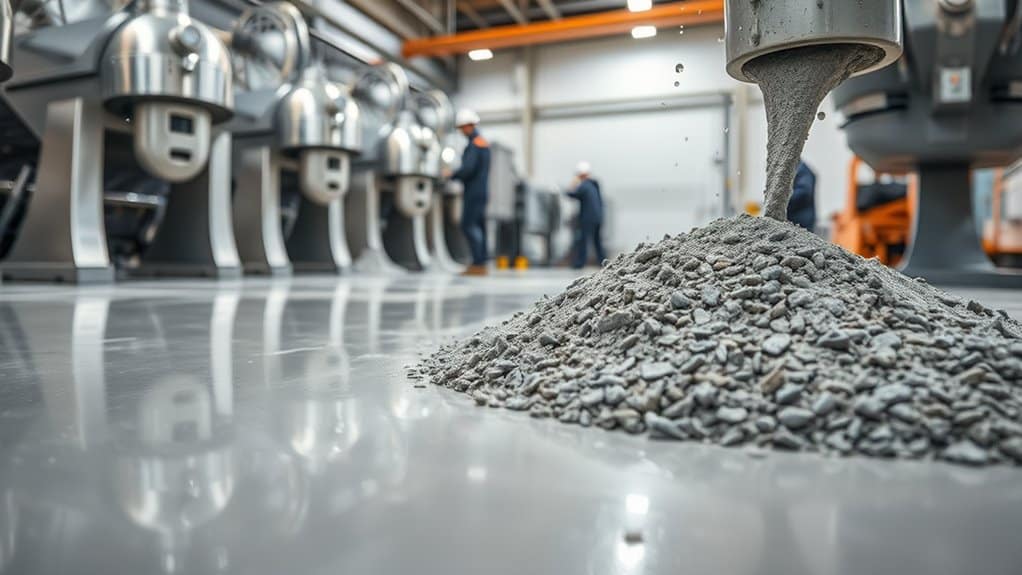
Surface finishing is crucial for the durability and appearance of concrete structures. It involves techniques that refine the surface after pouring.
First, you'll need to use a screed to level the concrete and fill any voids. Next, apply floating to smooth the surface and bring the cement paste to the top.
Depending on the finish you want, you can then use troweling for a sleek surface or broom finishing to improve grip. For a decorative touch, consider exposed aggregate to showcase the materials beneath.
Timing is key; begin finishing only after the surface water has evaporated to ensure the concrete's integrity.
Each technique plays a vital role in enhancing the quality and look of your concrete project.
Environmental Considerations

As the construction industry increasingly prioritises sustainability, ready-mix concrete manufacturing offers notable environmental advantages.
Here's how ready-mix concrete supports sustainable practices:
- Reduced Carbon Footprint: Efficient equipment and streamlined production processes significantly lower emissions. The use of alternative eco-friendly materials further boosts sustainability.
- Minimised Waste: Tailored production means less leftover material, reducing waste. This approach ensures precise measurements, which cuts down on excess concrete.
- Lower Water Usage: Dedicated facilities closely monitor and optimise water consumption, resulting in significantly less waste compared to traditional on-site mixing methods.
Frequently Asked Questions
What Are the Benefits of Using Ready-Mix Concrete?
Using ready-mix concrete boosts construction efficiency by cutting down on labour costs and reducing project timelines. For instance, with pre-mixed concrete delivered to site, workers can focus on laying rather than mixing, saving valuable time. Additionally, it promotes sustainability by minimising waste and employing eco-friendly practices, resulting in durable, high-quality structures that need less maintenance over the years.
How Long Does Ready-Mix Concrete Last?
Durability determines how long ready-mix concrete lasts. Typically, it remains workable for 90 minutes to 2 hours after mixing. Factors such as storage conditions and the use of additives can significantly affect its lifespan, so it's crucial to handle it properly for optimal performance and strength.
Can Ready-Mix Concrete Be Recycled?
Yes, ready-mix concrete can be recycled through various methods. This not only lessens environmental impact but also conserves resources by turning waste into recycled aggregates for new building projects. For instance, crushed concrete can be used as a base for roads or as a substitute for gravel in new concrete mixes, supporting sustainability in the construction sector.
What Is the Cost Difference Between Ready-Mix and Site-Mixed Concrete?
When comparing the costs of ready-mix and site-mixed concrete, it's essential to consider factors like transport, labour, and material efficiency. Generally, ready-mix concrete tends to be pricier due to delivery charges, while site-mixed concrete can offer savings, especially for smaller projects. For instance, if you're working on a domestic patio, mixing on-site may be more cost-effective than ordering ready-mix.
How Do Weather Conditions Affect Ready-Mix Concrete?
Weather can significantly impact your ready-mix concrete. High temperatures can cause it to set too quickly, while cold conditions can lead to freezing, both of which can compromise quality. Humidity levels also play a role; too much can slow drying, increasing the risk of cracking. For instance, if you're pouring concrete on a hot summer day, you might need to add retarders to slow down the setting time. Planning ahead is crucial to maintain the structural integrity of your work.
Conclusion
In construction, ready-mix concrete offers precision in stark contrast to the often chaotic job site. By grasping the steps involved—from selecting materials to curing—you'll recognise the blend of science and skill that this process entails. The strength of the final product comes from careful mixing, but the real challenge lies in maintaining consistency despite unpredictable conditions. Understanding these complexities not only improves your projects but also enhances the overall construction experience.

Learn about the diverse types of concrete used in construction and discover which mix can transform your next project.

For a long-lasting driveway that laughs in the face of the UK's unpredictable weather, the C20 concrete mix is your Read more

In the UK, you've got a a lot of lightweight concrete types to choose from, each with its unique perks. Read more