To build a strong concrete foundation, start with thorough planning and site preparation. Assess the soil conditions and ensure proper grading and drainage. Gather the necessary tools and high-quality materials, then set up forms with reinforcement. Mix and pour the concrete accurately, applying finishing techniques for a smooth surface. Curing is vital for strength; keep the surface moist for at least seven days. Regular inspections and proactive maintenance will help ensure longevity. For detailed steps in each phase, the following information will be helpful.
Key Takeaways
- Carry out a thorough soil assessment to identify the right type of foundation and ensure soil stability before commencing construction.
- Use quality materials such as concrete, rebar, and sturdy forms, making sure everything is aligned and reinforced for structural strength.
- Mix and pour concrete carefully, using effective finishing techniques to improve durability and surface quality.
- Apply proper curing methods right after pouring to keep moisture levels consistent and reach maximum strength over a minimum of seven days.
- Regularly check the foundation for cracks and moisture issues, and seek professional advice for significant problems to ensure long-term stability.
Planning Your Foundation

When planning your concrete foundation, it’s crucial to evaluate the soil type, moisture levels, and load-bearing capacity of the site, as these factors affect the foundation’s design and longevity.
Start with a comprehensive soil assessment to identify the suitable foundation types for your project. Common options include slab, crawl space, and basement, each tailored to various soil conditions and moisture levels.
For instance, if your site has expansive clay or loose sand, you may require a deeper foundation or specific reinforcement methods. Understanding the soil characteristics ensures your foundation can adequately support the intended load and minimize the risk of settlement or shifting. Additionally, ensure that the subgrade is well-drained and dry to enhance the overall stability and performance of the concrete foundation.
Gathering Necessary Tools and Materials

Once you’ve assessed your site and chosen the right type of foundation, the next step is to gather the necessary tools and materials.
Selecting the right tools is essential; you’ll need basics like a concrete mixer, trowels, levelling tools, and appropriate safety gear. Make sure you have reliable measuring devices for accuracy.
When sourcing materials, prioritise high-quality concrete, rebar, and forms. Visit local suppliers to compare prices and check availability. Additionally, ensure that the concrete meets specific project needs to ensure it performs reliably under intended conditions.
Also, ensure you’re aware of any permits or regulations regarding material use in your area.
Excavation and Site Preparation

Excavating and preparing your site is crucial for a successful concrete foundation. Start by assessing the area to check soil stability; this ensures your foundation can support the structure.
Clear away debris, vegetation, and topsoil, then dig to the depth specified in your foundation plans.
Pay attention to drainage; proper grading directs water away from your foundation, helping to avoid future problems. If necessary, install drainage systems to manage water flow effectively.
Compact the soil to improve stability and reduce the risk of settling over time. Additionally, maintaining a correct water-to-cement ratio during the concrete mix is essential for achieving desired strength.
Always check local building regulations for excavation requirements; these can affect your project.
Proper excavation and site preparation are key to a strong and reliable concrete foundation.
Setting Up Forms and Reinforcement

With the site prepared and the soil compacted, the next step is to set up forms and reinforcement for your concrete foundation. Choose durable form materials, such as plywood or steel, that can support the weight of wet concrete. Secure the forms in place, checking they’re level and aligned to ensure accurate dimensions.
Next, add reinforcement to improve structural integrity. Common options include rebar and wire mesh, which offer tensile strength and help prevent cracking.
Position the rebar according to the recommended spacing, ensuring it’s properly supported within the forms to avoid settling. Once the forms and reinforcements are in place, you’ll have a solid base, ready for the next stage of your concrete foundation project.
Mixing and Pouring Concrete

Mixing and pouring concrete requires careful attention to mix ratios and techniques to ensure optimal strength and durability.
It’s important to measure your materials accurately and use the correct pouring methods to sidestep common mistakes. For instance, using too much water can weaken the mix, while not mixing thoroughly can lead to inconsistencies.
Understanding these elements is crucial for achieving a sturdy foundation.
Concrete Mix Ratios
Understanding the correct concrete mix ratios is crucial for achieving a strong and durable foundation. The consistency of the mix directly affects its strength and longevity, so it’s important to select the right proportions of cement, sand, gravel, and water. Additionally, concrete additives can improve specific properties, such as workability and curing time.
Here’s a straightforward guide to common concrete mix ratios:
| Component | Ratio |
|---|---|
| Cement | 1 part |
| Sand | 2 parts |
| Gravel | 3 parts |
| Water | 0.5 part (adjust as necessary) |
| Additives | Follow the manufacturer’s instructions |
For example, if you’re mixing a small batch, using 1 bag of cement, 2 bags of sand, and 3 bags of gravel will set you on the right path. Always consider the specific needs of your project to ensure optimal results.
Pouring Techniques Tips
When pouring concrete, it’s crucial to master the right techniques to ensure a level and durable foundation. Here are some essential tips to improve your pouring process:
- Use a consistent mix to maintain uniformity throughout.
- Pour in layers to manage weight and enhance control.
- Use a screed board to level the surface after pouring.
- Work swiftly to prevent the concrete from setting too early.
- Avoid overworking the surface to prevent segregation of materials.
Finishing the Surface

Once the concrete has been poured and allowed to set, finishing the surface is crucial for durability and aesthetics. Choosing the right finishing techniques helps achieve the desired surface textures. Here are some common methods:
| Technique | Description |
|---|---|
| Trowelling | Smooths the surface for a polished finish. |
| Broom Finishing | Creates a textured surface for better grip. |
| Stamping | Imprints patterns for decorative effects. |
Each technique serves a specific purpose, whether for functionality or appearance. Timing is key; finishing too early or too late can compromise the result. By selecting the appropriate method, you enhance both the longevity and visual appeal of your concrete surface.
Curing the Concrete
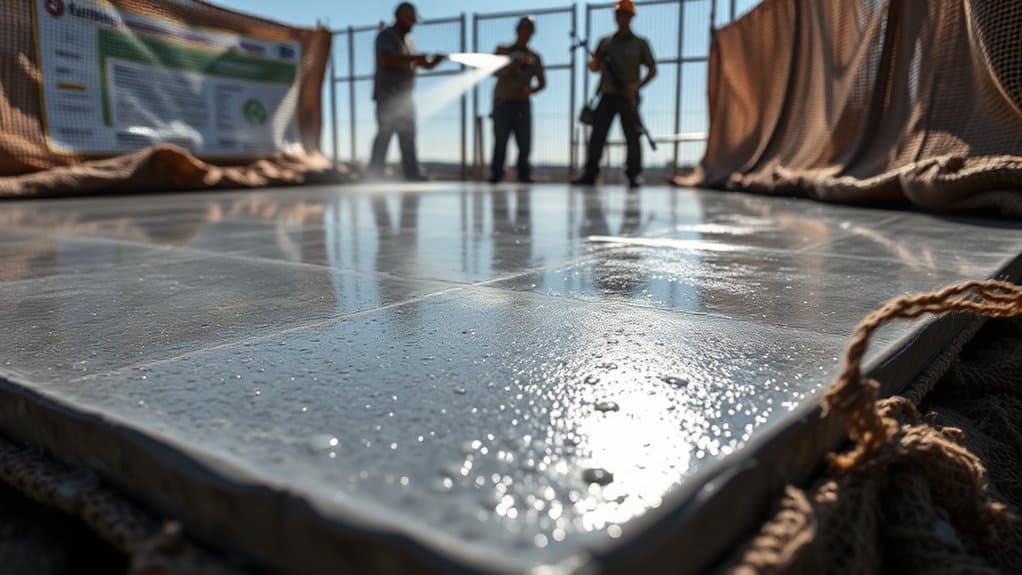
Curing concrete is crucial for achieving optimal strength and durability in your foundation.
It’s important to be familiar with different curing methods and the timing necessary for proper setting. Effective curing not only improves the concrete’s properties but also helps prevent issues such as cracking and surface damage.
For example, covering freshly laid concrete with damp hessian or plastic sheeting can maintain moisture levels and enhance the curing process.
Importance of Curing
Understanding the importance of curing concrete is crucial for ensuring its strength and longevity. Effective curing techniques significantly improve the performance of your foundation by promoting hydration and reducing the risk of cracking.
The advantages of curing are clear:
- Increases compressive strength
- Reduces permeability
- Minimises shrinkage and cracking
- Enhances durability against weathering
- Improves overall surface quality
For instance, without proper curing, a concrete slab might develop unsightly cracks or weaken over time, leading to costly repairs.
Therefore, investing time in the curing process is essential for a resilient and lasting structure.
Curing Methods Explained
Effective curing methods are crucial for ensuring the integrity of your concrete foundation. It’s important to use various techniques to maintain ideal moisture levels, which are key for achieving the strength and durability you need.
One common approach is using wet burlap or fabric, which keeps the surface moist and prevents quick evaporation.
Alternatively, applying curing compounds forms a film that locks in moisture and helps minimise surface cracking. You might also consider covering the concrete with plastic sheeting to shield it from air and sunlight.
Whichever method you choose, consistent monitoring is vital to ensure moisture levels are adequate for proper curing.
This ultimately enhances the longevity of your foundation.
Timing for Curing
When it comes to concrete, timing is crucial for effective curing. Pay close attention to both the temperature and duration of the curing process to ensure optimal strength and durability. Ideally, curing should start immediately after placement, preferably within 30 minutes.
Here are some key factors to consider:
- Curing Temperature: Keep the temperature between 10°C and 32°C for best results.
- Curing Duration: Aim for at least 7 days of curing to achieve maximum strength.
- Moisture Levels: Ensure the surface remains moist to avoid cracking.
- Weather Conditions: Be mindful of extreme heat or cold, as these can affect curing times.
- Type of Concrete: Tailor your curing method based on the specific mix you’re using.
Inspecting and Maintaining Your Foundation

A solid foundation needs regular inspection and maintenance to ensure its longevity and stability. Aim to inspect your foundation every six months. Look for cracks, signs of moisture, and any indications of settling. Use a moisture meter to identify hidden dampness that could undermine structural integrity.
Set up a maintenance schedule that includes sealing any visible cracks and ensuring proper drainage away from the foundation. Regularly check gutters and downspouts for blockages to prevent water pooling around your foundation.
If you spot significant issues during your inspections, consult a structural engineer. Taking proactive steps can save you from costly repairs and help keep your foundation strong for years to come.
Frequently Asked Questions
What Is the Ideal Time of Year to Pour Concrete?
The ideal times to pour concrete in the UK are spring and autumn, when temperatures are generally mild. It’s best to steer clear of extreme heat or cold, as these conditions can significantly impact the curing time and strength of the concrete. For instance, pouring concrete during a chilly winter night can lead to cracks, while intense summer heat may cause it to dry too quickly, compromising its durability.
How Do Weather Conditions Affect Concrete Curing?
Weather conditions significantly impact concrete curing. High humidity can delay the drying process, while fluctuating temperatures may lead to cracking. For instance, if you pour concrete on a chilly night, it might not set properly, potentially compromising its strength. It’s essential to monitor these factors closely to ensure your concrete achieves the desired durability.
Can I Build a Foundation on Sloped Land?
Building a foundation on sloped land isn’t just a fanciful idea; it demands careful thought regarding foundation types and the specifics of the slope. It’s essential to ensure proper drainage and stability, or you risk having a structure that sinks or becomes unstable. For example, if you’re planning to build on a hill, consider using a stepped foundation to distribute weight evenly and prevent erosion. Always consult with a professional to assess the site and ensure a safe, sound structure.
What Are the Signs of a Failing Concrete Foundation?
Look out for cracks, uneven floors, and doors that are difficult to open or close. A foundation inspection can highlight these problems, which may indicate a loss of structural integrity. Addressing these signs promptly can save you from expensive repairs and help keep your home stable.
How Can I Prevent Cracks in My Foundation?
Want to keep your foundation in good shape? Regular maintenance is key. Ensure proper drainage around your home and keep an eye on soil stability to avoid moisture problems that can cause cracks. Taking these steps now can save you a lot of trouble later on.
Conclusion
Building a strong concrete foundation isn’t just about pouring concrete; it’s about establishing a reliable base for your entire project. By following each step carefully, from planning to curing, you ensure your foundation will endure. A solid foundation supports everything above it, so it’s crucial not to cut corners. With proper preparation and attention to detail, you’ll create a sturdy base that will last for years. You can do this!
Looking to order concrete for foundations and footings? Barrow Mix batches it to BS 8500 and pumps or barrows it into the trenches across Greater Manchester & Cheshire.
Get a free quote →
Concrete ordering made easy: discover essential steps, tips, and strategies to ensure your project is a success—don't miss out on Read more

To determine the right quantity of ready-mix concrete for your project, follow these essential steps and uncover expert tips that Read more

Just follow these essential steps to pour ready-mix concrete and achieve flawless slabs and foundations, but there's more to uncover Read more