To calculate the quantity of ready-mix concrete you need, begin by measuring the area you require. Use the formula Length x Width x Depth, ensuring all dimensions are in the same units—preferably cubic metres. Once you've worked out the volume, add an extra 10% to cover spillage and waste.
Take into account specific details of your project, like slab thickness and site conditions, as these can influence your requirements. You can also use online concrete calculators for precise measurements. Always double-check your calculations with your suppliers for accuracy.
Key Takeaways
- Measure the area requiring concrete in cubic metres, making sure all dimensions are in the same unit for accuracy.
- Use the formula Volume = Length x Width x Depth to work out the amount of concrete needed.
- Add an extra 10% to account for spillage, waste, and any overages.
- Consider using online concrete calculators to make volume calculations easier and minimise errors.
- Double-check your final volume with suppliers and ensure you schedule concrete delivery properly.
Understanding Measurements
When calculating the quantity of ready-mix concrete, understanding measurements is vital for accuracy in your project. You'll usually work with cubic metres, cubic feet, and kilograms.
Cubic metres are the standard unit in construction, with one cubic metre equalling 35.3 cubic feet. For precise volume estimation, measure the length, width, and depth, ensuring all dimensions are in the same unit, ideally in metres. Accurate measurements are crucial to avoid over- or under-ordering concrete, which can lead to costly delays and waste. It's wise to add an extra 10% to cover spillages and waste. Additionally, proper site preparation and scheduling play a significant role in ensuring accurate estimates, as weather conditions can also impact the setting and curing of concrete.
Consistent and precise measurements are the foundation of successful concrete calculations, ensuring you order the right amount every time.
Calculating Concrete Volume

To calculate the volume of concrete, use specific formulas that depend on the shape of the structure, ensuring all measurements are in the same units. Don't forget to include a waste factor in your calculations to account for spillage or compaction, which helps prevent shortages. For instance, if you're pouring a slab, measure its length, width, and depth in metres, then calculate the volume in cubic metres. Accurate volume estimation not only reduces costs but also keeps your project on track. Additionally, understanding how to calculate concrete volumes for different shapes can further enhance your accuracy in estimating the required amount of concrete. It's also crucial to overestimate concrete needs to ensure you have enough material for your project.
Basic Calculation Formula
Calculating the volume of concrete is a straightforward yet crucial task for any construction project. To find the volume, use the simple formula: Length x Width x Depth. Ensure your measurement units are consistent; for example, convert depths in inches to metres before calculating. Proper planning and accurate calculations can enhance your project's efficiency and help avoid cost overruns.
If you're working with a slab that's 10 feet long, 5 feet wide, and 4 inches deep, your calculation would be: 10 x 5 x 0.1, giving you 5 cubic metres. For metric measurements, stick with Length x Width x Height to determine the volume in cubic metres. Different shapes, such as cylindrical or trapezoidal footings, may need specific measurement methods, so precision is key for accurate results. The RMC Calculator can assist in calculating required quantities of Ready-Mix Concrete based on your input dimensions.
Accounting for Overages
Accurate accounting for overages in concrete volume is crucial for any construction project. Consider factors like surface unevenness, slab thickness, and potential voids to ensure you order enough material.
Typically, adding 5-10% extra to your total calculated volume helps manage waste and spillage. Keep an eye on formwork gaps and weather conditions that may increase losses.
To improve waste management, use online concrete calculators for accurate measurements, especially for more complex projects.
It's generally safer to overestimate your concrete needs than to underestimate, as this avoids shortages on site. Implementing quality control measures can also reduce variability, leading to a more sustainable approach to your concrete requirements.
Accounting for Waste
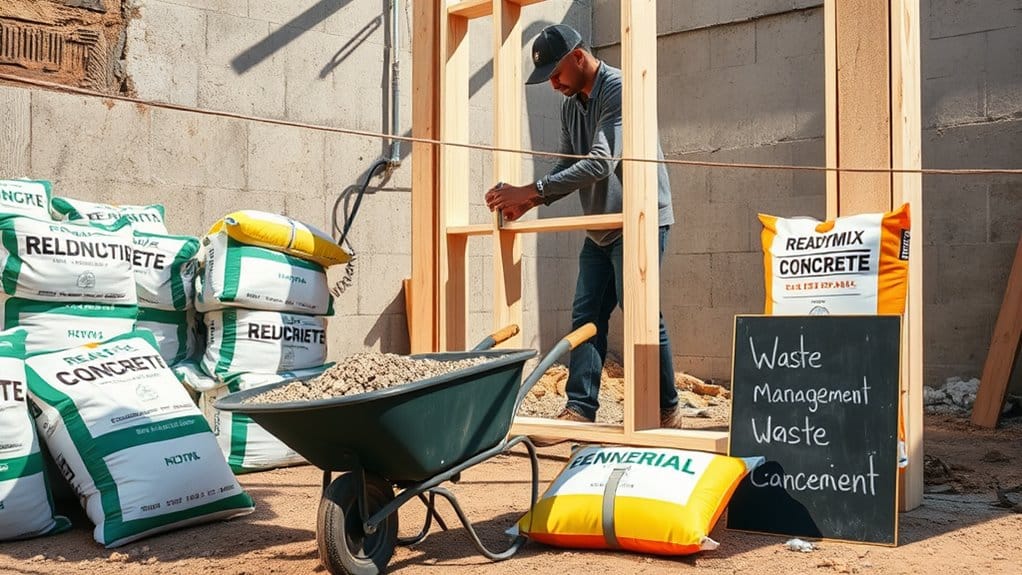
Waste in ready-mix concrete can arise from various factors, so it's vital to account for these to manage projects effectively.
To improve concrete efficiency, pay attention to the timing of production and delivery; mismatches can lead to considerable material waste. A good practice is to calculate an additional 10% to cover spillage and other losses during production and transport.
Inaccurate material procurement and handling can increase waste, so consider automated mixing systems and just-in-time delivery to reduce excess materials on-site.
Properly estimating your concrete requirements helps avoid delays and prevents both shortages and surpluses, leading to a more sustainable project overall.
Using Concrete Calculators

Concrete calculators make it easy to work out volumes, helping you quickly determine how much concrete you'll need for your project.
With options to choose different shapes, these tools provide precise calculations tailored to your specific measurements. This efficiency reduces the chance of mistakes, allowing you to concentrate on other important aspects of your building task.
For instance, whether you're laying a patio or constructing a foundation, a concrete calculator can save you time and ensure you order the right amount of material.
Easy Volume Calculations
Concrete calculators make it easy to work out the volume of concrete needed for your project. Simply enter the length, width, and depth of the area, and you'll get the volume without the hassle of manual calculations.
Ensure all measurements are in the same units to prevent mistakes. These calculators convert cubic feet to cubic yards automatically, ensuring you order the right amount of concrete. Remember to factor in an extra 10% for spillage and waste.
Understanding how to mix concrete is also important. Choosing the right mix ratio will ensure your project meets structural standards while keeping costs down.
Utilise these tools to streamline your planning process effectively.
Shape Selection Options
Choosing the right shape for your concrete project is crucial for accurate volume calculations. Knowing the specifications of different shapes enables you to input precise dimensions, ensuring you order the correct amount of ready-mix concrete.
Here are three common shape options to consider:
- Slabs: Calculate areas for rectangular, square, or circular slabs.
- Columns: For round or square columns, specify the diameter or width along with the height.
- Steps and Stairs: Assess volumes for individual steps or entire staircases.
Combining shapes in your calculations can give you a comprehensive volume estimate for more complex projects.
Many concrete calculators cater to various shapes and can automatically determine the required volume, streamlining your planning process.
Project Complexity Considerations

When working on a project involving complex shapes, it's important to break the design down into smaller, manageable sections to ensure accurate volume calculations. This method improves your volume estimation, especially for irregular areas, slopes, and cylindrical shapes.
| Shape Type | Calculation Method | Notes |
|---|---|---|
| Rectangular Slabs | Length × Width × Height | Straightforward volume estimation |
| Cylindrical Columns | π × Radius² × Height | Ideal for poles and columns |
| Irregular Shapes | Sum of volumes of smaller sections | Account for complexity |
| Sloped Structures | Adjust for curves and slopes | Ensure accuracy in pours |
For example, when calculating the volume of a garden bed with an irregular shape, it's more effective to divide it into smaller rectangles and triangles, calculate each volume, and then sum them up. This approach helps avoid errors and provides a clearer picture of your material needs.
Concrete Grade Selection

Choosing the right concrete grade is essential for ensuring your project's performance and durability. Here are some key factors to consider:
- Type of Building: The purpose and structure of your building will influence the required concrete grade. For example, residential homes may need a different grade compared to commercial buildings.
- Loading Conditions: Consider both static loads (like the weight of the structure) and dynamic loads (such as wind or seismic activity) when selecting your concrete grade.
- Durability Requirements: Think about how long you want the building to last and the environmental conditions it will face, such as frost, rain, or chemical exposure.
Using the right concrete grade can provide greater strength for heavy-duty applications and better resistance to environmental factors.
Material Cost Awareness
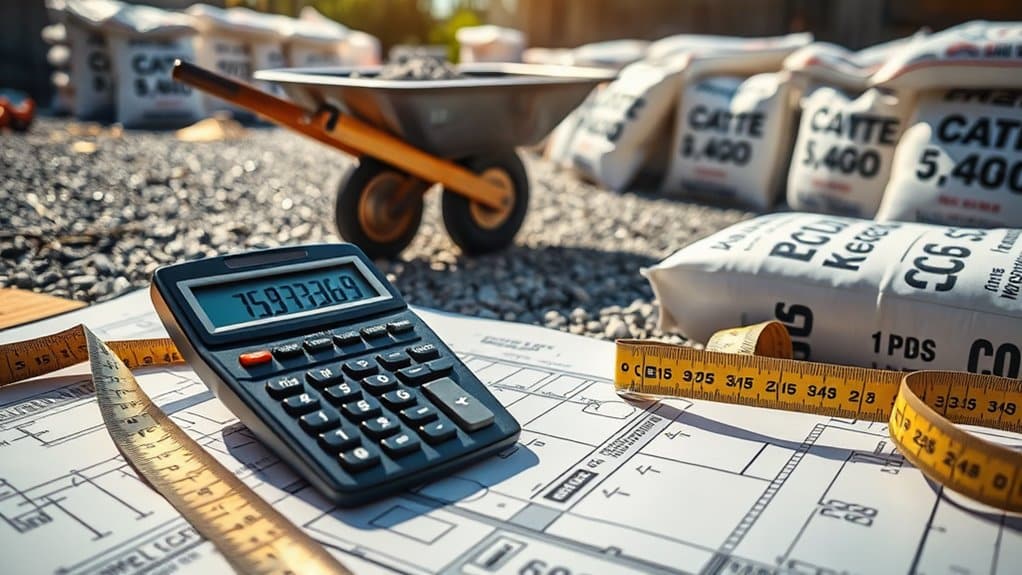
Awareness of material costs is crucial for effectively managing your project's budget. Understanding the factors influencing costs, such as sourcing materials and price fluctuations, enables you to make informed decisions. Pay attention to aggregate prices, cement costs, and potential seasonal demand spikes.
| Material Factor | Impact on Cost | Notes |
|---|---|---|
| Cement Prices | High fluctuations | Monitor market trends |
| Aggregate Costs | Varies with demand | Key for concrete mix |
| Additives | Additional costs | Customise as required |
| Transportation | Affects overall pricing | Distance plays a role |
| Raw Material Supply | Limited availability | Can drive up prices |
Including Contingencies

Including contingencies in your concrete volume calculations is crucial for project success, as unexpected issues can arise during construction.
Proper contingency planning and risk assessment can help minimise delays and cost overruns. Here are three important factors to consider:
- Account for Waste: Always add 5-10% to your volume calculations to account for spillage and uneven surfaces, such as when working on a sloped site.
- Consider Weather Impacts: Poor weather can delay curing times, which may require additional resources or adjustments to your schedule.
- Evaluate Site Conditions: Factors like soil stability can affect the amount of concrete needed. For instance, if the ground is unstable, you may need more concrete to ensure a solid foundation.
Confirming Orders

After calculating the concrete volume, confirm the final figures with your supplier to ensure accuracy.
Timing for placement is crucial, as it impacts both the project's schedule and the concrete's performance.
Planning delivery logistics in advance will help you avoid delays and ensure a smooth operation on site.
Final Volume Verification
To ensure a smooth concrete order, it's vital to verify the final volume before confirming your purchase. This step guarantees accuracy and helps prevent costly errors.
Here are three key points to consider:
- Measurement Check: Make sure to double-check the dimensions of the area. For instance, if you're paving a driveway, ensure you've measured the length and width accurately.
- Details Confirmation: Verify the concrete type, quantity, and any specific additives required for your project. For example, if you need quick-setting concrete for a garden path, confirm this with your supplier.
- Payment Security: Opt for a trustworthy payment method to complete your order smoothly. Using a credit card or a reputable online payment service can provide added security.
Placement Timing Coordination
Once you've determined the concrete volume required for your project, the next step is to coordinate the timing of your order.
It's essential to give sufficient notice for your concrete delivery, including specifying the delivery time and any necessary spacing between trucks.
Considerations for timing include avoiding concrete pouring during the heat of the day and confirming your order the day before delivery.
Ensure you double-check all details, such as the concrete grade and any special requirements.
Use a reliable payment method and discuss your order with customer support if you have any queries.
Finally, confirm that the supplier can meet your specific mix requirements and delivery schedule to align with your project's needs.
Delivery Logistics Planning
When planning your delivery logistics, confirming orders is crucial to ensure that all specifications are accurately communicated to your supplier. This step significantly improves delivery efficiency and helps avoid potential logistical issues.
Here are three key elements to concentrate on:
- Verification Needed: Always double-check specifications to avoid discrepancies when the order arrives.
- Clear Instructions: Give precise delivery timings and spacing instructions to keep operations running smoothly.
- Customer Support: Ensure you have strong support available for any necessary changes or concerns.
Volume and Weight Insights

Understanding the volume and weight of ready-mix concrete is crucial for any construction project, as it directly affects material costs and structural stability.
To calculate volume, use the formula: Volume = Length × Width × Depth, ensuring you use consistent measurement units. For weight, the formula is Weight = Volume × Density.
Keep in mind that different types of concrete have varying densities—plain cement concrete typically averages 2400 kg/m³, whereas reinforced concrete is around 2500 kg/m³.
When converting volume to weight, consider the size of your bags; for example, a 40 kg bag requires careful calculations.
It's also wise to factor in waste by adding an extra 5-10% to your estimates.
Having accurate volume and weight information helps streamline orders and reduces delays, ensuring efficient resource management in your construction projects.
Quality Assurance in Delivery
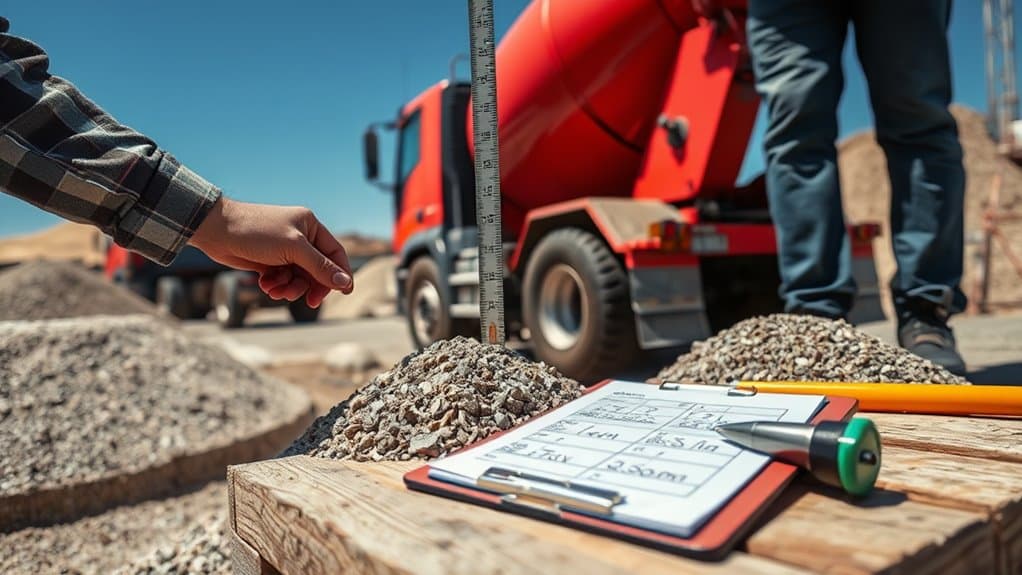
Ensuring quality assurance in the delivery of ready-mix concrete is vital for the integrity and performance of your project. Adhering to strict inspection standards is crucial.
Here are three key areas to concentrate on:
- Batching Plant Inspection: Conduct regular checks of facilities and equipment to ensure they comply with project requirements and industry standards, such as BS 8500.
- Delivery Ticket Verification: Carefully examine delivery tickets to ensure the concrete mixture aligns with specifications, paying attention to essential details like batch numbers and quantities.
- On-Site Monitoring: Continuously inspect the delivered concrete for consistency, keeping an eye on water and admixture additions to meet specifications.
Frequently Asked Questions
How Do I Choose the Right Type of Concrete for My Project?
To choose the right type of concrete, start by assessing your project needs. Think about factors such as strength, durability, and exposure to the elements. For instance, if you're building a driveway, you might opt for reinforced concrete to handle vehicle weight. For a patio, plain concrete could suffice. By selecting the appropriate type—be it plain, reinforced, or a specialised mix—you'll ensure optimal performance and longevity for your project.
What Tools Do I Need for Measuring Concrete Areas?
When measuring concrete areas, it's essential to use precise tools such as tape measures or laser distance measurers. These tools ensure your measurements are accurate, reducing the chance of errors. For instance, a tape measure is great for smaller areas, while a laser measurer can quickly cover larger spaces. Using the right tool makes your project more efficient and hassle-free.
Can I Mix Different Concrete Grades on the Same Project?
You can mix different concrete grades on the same project, but it's essential to ensure they're compatible through proper mixing techniques. Mixing grades can lead to inconsistent quality, so it's crucial to maintain strict quality control. For instance, using a higher grade for load-bearing elements and a lower grade for non-structural aspects can work, but consult with experts to avoid any structural issues.
How Should I Prepare the Site Before Pouring Concrete?
Before pouring concrete, consider it as laying the groundwork for a lasting project. Start by ensuring the site is level for an even surface. Effective drainage is crucial; for instance, installing a simple trench drain can help redirect water away, preventing future issues. This preparation is key to achieving a strong, durable structure.
What Weather Conditions Affect Concrete Pouring and Curing?
When pouring concrete, it's essential to consider how temperature affects hydration and strength. Low to moderate humidity can influence curing efficiency. Avoid extreme weather conditions, as they can impact the durability and longevity of your concrete. For example, in hot weather, you might need to dampen the surface to prevent rapid drying, whereas in cold conditions, using insulating blankets can help maintain the right temperature for curing.
Conclusion
Calculating the right amount of ready-mix concrete may seem daunting, but it's crucial for a successful project. Even minor adjustments can lead to savings in both time and money. By following the steps provided and utilising concrete calculators, you'll ensure you order the correct quantity. Don't let uncertainty stop you; with proper planning, you'll lay a solid foundation for your building needs.
Looking to order volumetric ready-mix concrete? Barrow Mix batches it fresh on-site across Greater Manchester & Cheshire — you only pay for what you use.
Get a free quote →Ordering concrete in Greater Manchester or Cheshire? Let the tool do it — our concrete calculator works out the ready-mix quantity you need for a fixed quote.

Learn about the diverse types of concrete used in construction and discover which mix can transform your next project.

For a long-lasting driveway that laughs in the face of the UK's unpredictable weather, the C20 concrete mix is your Read more

In the UK, you've got a a lot of lightweight concrete types to choose from, each with its unique perks. Read more