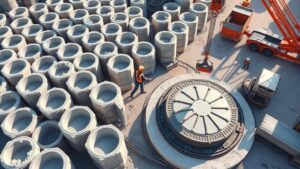
Sustainable concrete practices are transforming the construction industry. One can incorporate alternative materials like fly ash or recycled aggregates to reduce cement use by up to 30%.
Optimising mix designs with supplementary cementitious materials cuts CO2 emissions considerably. Energy-efficient manufacturing techniques, including optimised kiln operations, can lower energy consumption by 30%.
Recycling concrete diverts millions of tonnes from landfills annually. Innovative methods like 3D printing and self-healing concrete minimise waste and extend lifespans.
Precast and prefabrication techniques reduce material waste by 30% and slash construction time by half. Carbon capture technologies are emerging as game-changers in concrete sustainability.
Exploring these practices reveals a wealth of opportunities for greener construction.
Key Takeaways
- Utilise alternative materials like fly ash, slag cement, and recycled aggregates to reduce Portland cement content by up to 30%.
- Optimise mix design with supplementary cementitious materials and superplasticisers to improve strength and reduce environmental impact.
- Implement energy-efficient manufacturing techniques, including kiln optimisation and renewable energy sources, to lower carbon emissions.
- Recycle concrete waste and incorporate crushed concrete aggregate in new mixes to support a circular economy.
- Employ innovative construction methods like 3D printing and prefabrication to minimise waste and improve efficiency.
Alternative Materials for Concrete Production
The construction industry is embracing a paradigm shift towards sustainability with the adoption of alternative materials for concrete production. One will find that incorporating materials like fly ash, slag cement, and silica fume can replace up to 30% of Portland cement in concrete mixes, considerably reducing carbon emissions.
These alternatives not only decrease the environmental impact but also maintain or even enhance concrete performance. CarbonCure Technologies is pioneering innovative methods to inject CO2 into concrete, further reducing emissions and enhancing strength.
To further promote sustainability, one can utilise recycled aggregates, such as crushed concrete, which can reduce the need for virgin materials by up to 30%. This approach supports a circular economy in construction.
Green concrete, made from waste materials like glass or plastic, offers comparable strength and durability to traditional concrete whilst diverting waste from landfills.
For enhanced workability and reduced water-to-cement ratios, consider using ashcrete, which incorporates fly ash from coal combustion. Additionally, bio-based aggregates like mycelium composites or hempcrete provide innovative alternatives with lower embodied carbon and improved insulation properties.
When implementing these alternatives, conduct thorough performance evaluations to verify they meet one’s project’s specific requirements and sustainability goals.
Optimising Mix Design
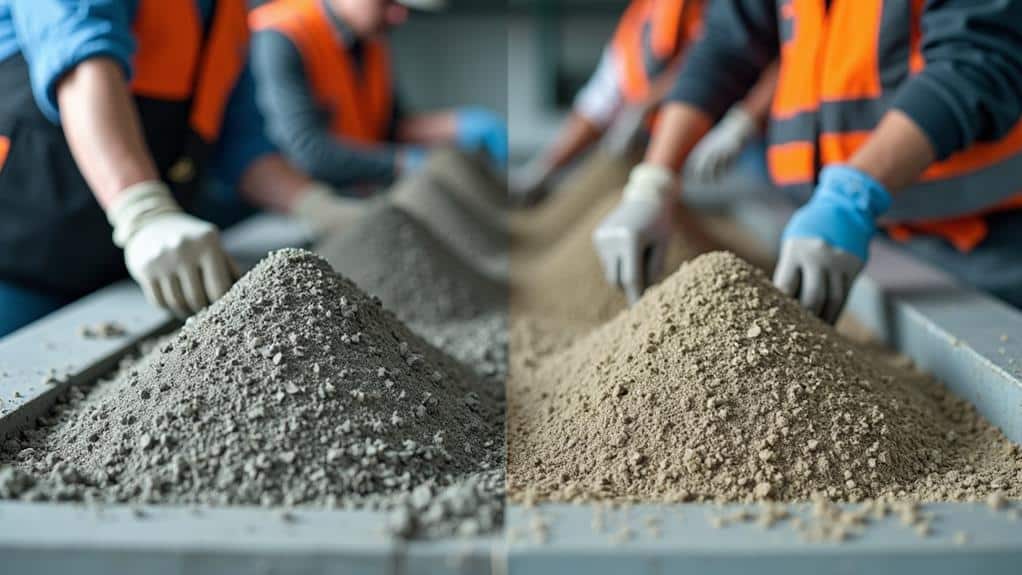
Concrete mix optimisation plays a vital role in achieving sustainable construction practices. By making strategic mix adjustments, you can greatly reduce the environmental impact of concrete production whilst enhancing its performance.
One key strategy is incorporating supplementary cementitious materials (SCMs) like fly ash or slag cement, which can replace up to 30% of Portland cement, drastically cutting CO2 emissions. This approach aligns with the global climate goals and addresses the urgency of reducing concrete’s carbon footprint, which currently contributes over 7% of global greenhouse gas emissions annually.
Lowering the water-to-cement ratio is another important approach. This technique can boost compressive strength by up to 20% whilst improving durability.
To maintain workability in low-water mixes, you’ll need to incorporate superplasticisers. These admixtures enable the production of high-strength concrete without compromising ease of placement.
Aggregate optimisation is essential for creating sustainable mixes. By experimenting with gradation, you can enhance packing density, resulting in:
- Increased concrete strength
- Reduced material volume requirements
- Improved overall sustainability
Energy-Efficient Manufacturing Techniques
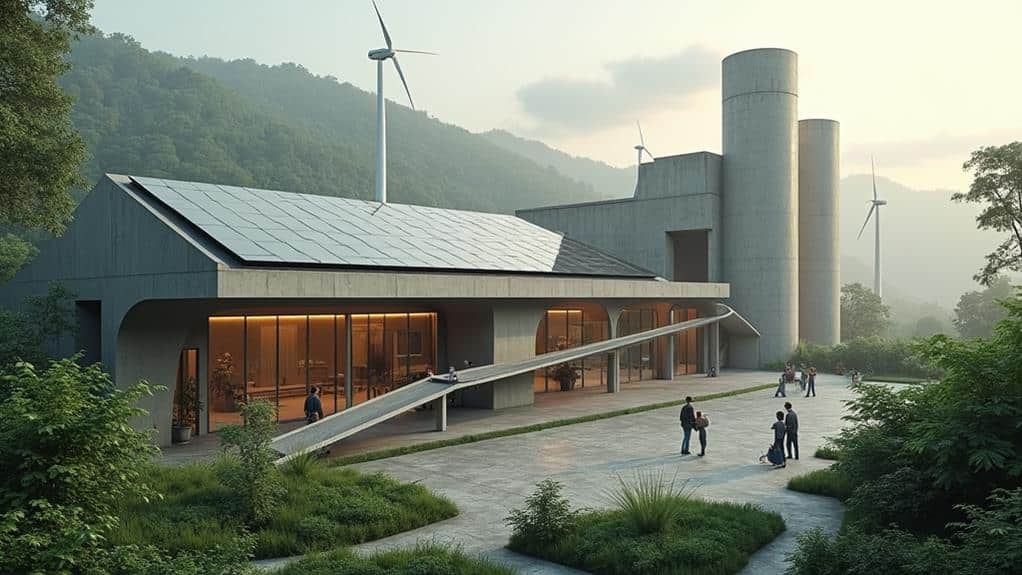
Numerous energy-efficient manufacturing techniques are revolutionising concrete production, offering substantial reductions in energy consumption and carbon emissions. By implementing optimised kiln operations and modern technologies, you can reduce energy consumption by up to 30%. This notable improvement is achieved through kiln optimisation, which enhances the efficiency of the cement production process.
Innovative electrochemistry methods, like those developed by Sublime Systems, are pushing the boundaries of energy-efficient cement production, potentially eliminating the need for traditional high-temperature kilns.
To further decrease your reliance on fossil fuels, consider implementing alternative fuels in kilns, such as biomass or waste-derived fuels. This approach not only reduces greenhouse gas emissions but also supports a circular economy.
Regular energy audits and equipment maintenance are essential for maximising plant efficiency. These practices allow for more precise mixing and reduced energy usage, contributing to your overall sustainability goals.
You’ll also benefit from advanced batching processes that minimise material waste during mixing. By ensuring the right quantities are used, you’ll improve efficiency and reduce excess energy expenditure.
Additionally, incorporating renewable energy sources like solar or wind power into your production facilities can greatly lower your carbon footprint. This shift to sustainable practices demonstrates your commitment to environmentally responsible concrete manufacturing.
Recycling and Waste Reduction
Complementing energy-efficient manufacturing techniques, recycling and waste reduction strategies play a pivotal role in sustainable concrete practices. You can greatly reduce waste through concrete recycling, with an estimated 70% of concrete being recyclable. This approach diverts millions of tonnes from landfills annually, promoting waste diversion on a massive scale.
By utilising crushed concrete aggregate (RCA) as a substitute for virgin materials, you’re not only conserving natural resources but also reducing the carbon footprint associated with extracting and processing new materials. Incorporating 30% RCA in new concrete mixes can decrease CO2 emissions by up to 20%, demonstrating the considerable environmental benefits of this practice.
To maximise the potential of recycling and waste reduction in concrete production, consider:
- Implementing deconstruction techniques instead of demolition
- Optimising batching processes to minimise waste
- Reusing production waste in new concrete mixes
These strategies contribute to a circular economy in the construction sector, reducing overall material consumption and associated emissions.
Innovative Construction Methods
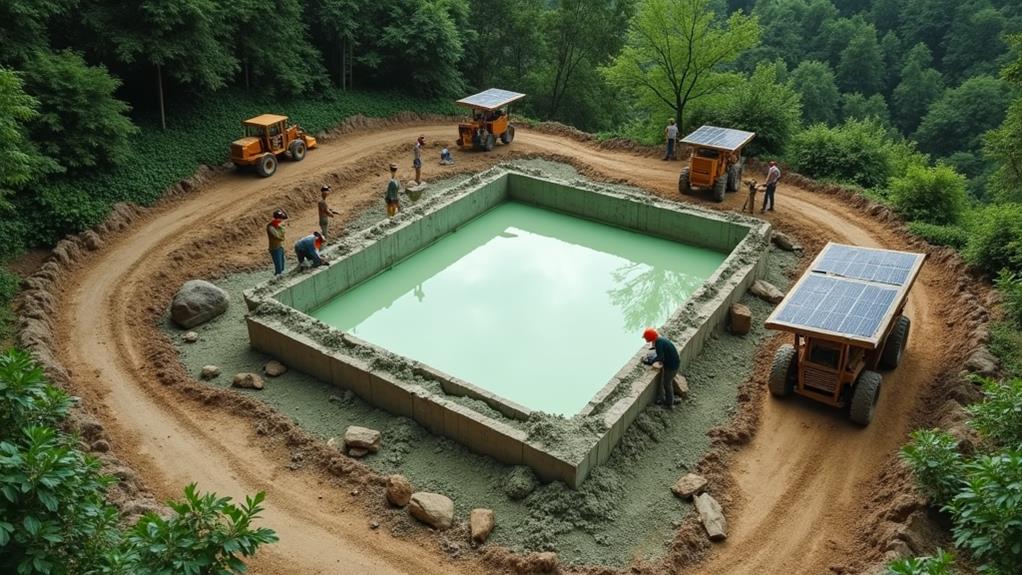
Pushing the boundaries of traditional concrete construction, innovative methods are revolutionising the industry’s approach to sustainability.
You’ll find that 3D printing technology is at the forefront of these construction innovations, allowing for unprecedented precision in design and material usage. This method not only reduces waste but also enables the creation of complex structures that were previously impossible to build.
Prefabrication techniques have also advanced considerably. By producing concrete elements in controlled environments, you’re ensuring consistent quality whilst minimising on-site construction time and waste.
Self-healing concrete represents another leap forward, incorporating bacteria that autonomously repair cracks, thereby extending the lifespan of structures and reducing maintenance needs.
Geopolymer concrete is a game-changer in reducing carbon emissions. By utilising industrial by-products like fly ash and slag, you can achieve up to 80% reduction in carbon emissions compared to traditional Portland cement.
Additionally, the integration of smart sensors in concrete structures allows for real-time monitoring of structural health, enabling proactive maintenance and enhancing safety.
These innovative construction methods are transforming the concrete industry, offering solutions that are more sustainable, efficient, and technologically advanced than ever before.
Lifecycle Assessment of Concrete

You’ll find that lifecycle assessment (LCA) of concrete is essential for understanding and reducing its carbon footprint.
By analysing the entire lifecycle, from raw material extraction to end-of-life disposal, you can identify critical stages where emissions can be minimised.
LCA also highlights the importance of durability in concrete structures, as longer-lasting designs lead to fewer repairs and replacements, ultimately decreasing the overall environmental impact.
Carbon Footprint Analysis
A thorough lifecycle assessment (LCA) of concrete reveals the considerable environmental impact of this ubiquitous building material. From raw material extraction to demolition, each phase contributes notably to carbon emissions. The production of cement alone accounts for 7% of global CO2 emissions, underscoring the urgent need for sustainable alternatives and innovative practices.
You can reduce concrete’s carbon footprint through various strategies:
- Incorporate supplementary cementitious materials (SCMs) like fly ash and slag
- Implement sustainable sourcing practices for raw materials
- Recycle concrete at the end of its lifecycle for use as aggregate in new mixes
By utilising SCMs, you can decrease the carbon footprint by up to 30%. Recycling concrete can further lower emissions by up to 50% when reused as aggregate. These practices not only reduce the demand for virgin materials but also support circular economy initiatives.
To effectively implement carbon offsetting strategies, you must conduct a thorough LCA. This analysis allows you to identify emission hotspots throughout the concrete lifecycle, enabling targeted interventions and fostering more sustainable practices industry-wide.
Durability and Longevity
The durability and longevity of concrete structures play an essential role in their overall sustainability. By designing for durability, you can extend a structure’s lifespan by up to 50%, considerably reducing the need for repairs and replacements. This approach minimises resource consumption over time and improves the structure’s environmental performance.
Lifecycle assessments reveal that up to 80% of a concrete structure’s carbon footprint comes from embodied carbon, primarily from cement production. To address this, you should focus on enhancing weather resistance and reducing environmental stressors. Utilising high-performance concrete mixes with supplementary cementitious materials can result in structures lasting 50 years or more with minimal maintenance.
Implementing innovative curing techniques and proper sealing improves concrete’s durability, reducing permeability and increasing resistance to freeze-thaw cycles. These strategies can lead to a 20% reduction in lifecycle costs.
Regular monitoring and proactive maintenance strategies can further extend service life by 30%, supporting sustainability goals in construction.
To optimise concrete’s longevity, you should employ durability testing and performance metrics throughout the structure’s lifecycle. By focusing on these aspects, you’ll achieve considerable lifecycle extensions and reduce the overall environmental impact of concrete structures.
Precast and Prefabrication Benefits

Whilst traditional on-site concrete casting has been the norm for decades, precast and prefabrication methods are revolutionising sustainable construction practices.
These techniques offer significant advantages regarding design flexibility and construction speed. By manufacturing concrete elements in controlled environments, you’ll achieve precise quality control and reduce material waste by up to 30%. This approach can slash construction time by as much as 50%, leading to faster project completion and reduced labour costs.
Precast concrete components enhance durability and longevity, potentially exceeding a 50-year lifespan. This minimises the need for repairs and replacements, contributing to long-term sustainability.
You can further improve energy efficiency in precast production by utilising renewable energy sources, lowering the carbon footprint associated with manufacturing.
Prefabrication allows for the incorporation of:
- Complex designs that push architectural boundaries
- Sustainable features integrated directly into concrete elements
- Energy-efficient systems that boost overall building performance
Sustainable Reinforcement Options
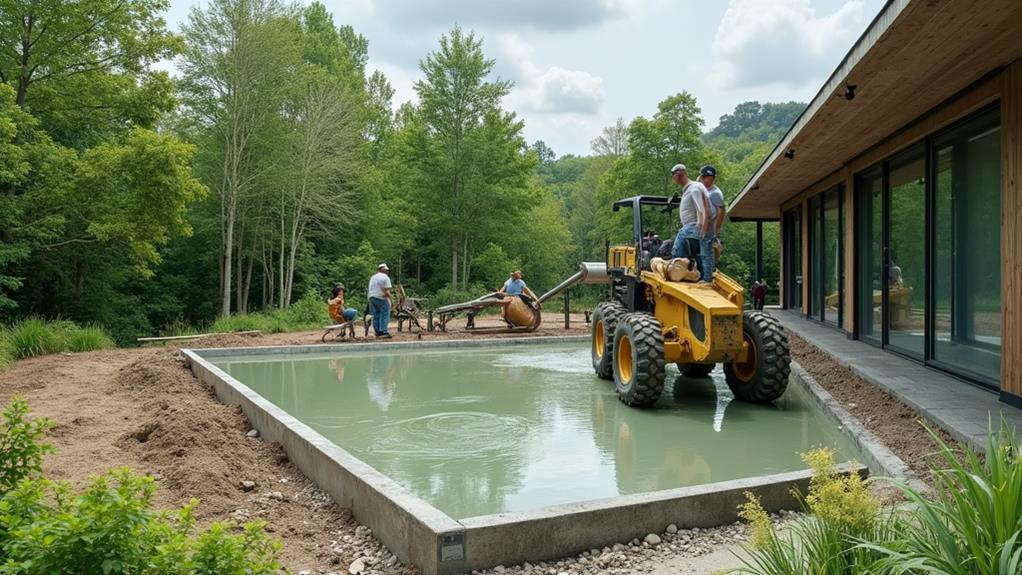
Three key sustainable reinforcement options are revolutionising concrete construction practices.
First, steel recycling offers a significant reduction in carbon footprint compared to traditional steel production. By utilising recycled materials, you’re embracing a more eco-friendly approach to concrete reinforcement.
Second, fibre alternatives provide enhanced tensile strength and durability. Natural fibres like jute, hemp, or sisal offer environmental benefits over synthetic options. Additionally, glass and plastic fibres improve impact resistance whilst reducing the need for conventional steel reinforcement.
Third, geopolymer benefits extend beyond traditional concrete. By incorporating industrial by-products such as fly ash or slag as binders, you’re decreasing reliance on Portland cement and enhancing overall sustainability.
Furthermore, self-healing techniques are emerging as innovative solutions. Concrete embedded with bacteria or healing agents can autonomously repair cracks, prolonging the lifespan of reinforced structures and reducing maintenance requirements.
Carbon Capture in Concrete
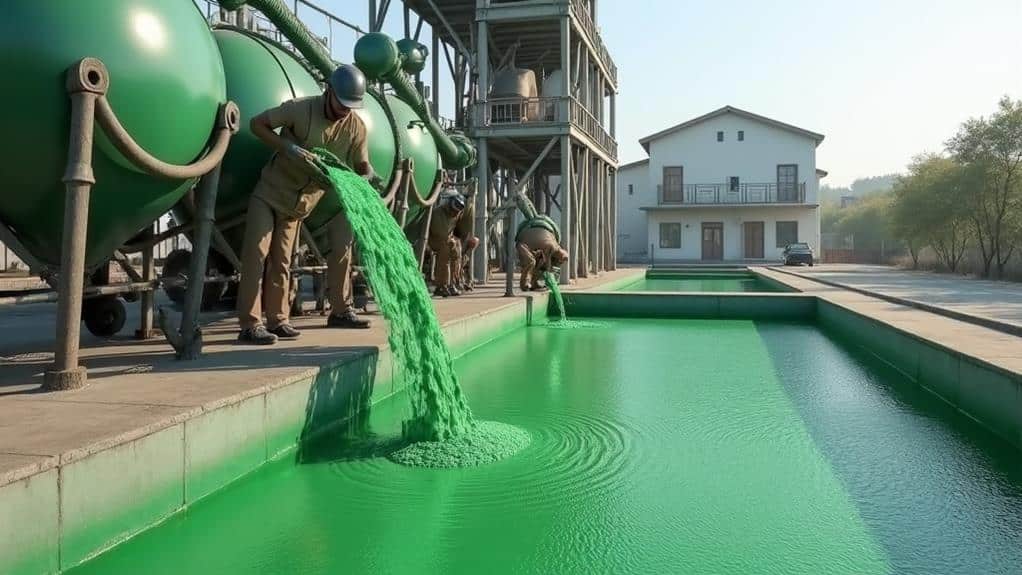
You’ll find that carbon capture in concrete offers promising solutions for reducing the industry’s carbon footprint.
Carbonation during concrete curing naturally sequesters CO2, whilst innovative CO2 injection technologies actively introduce carbon dioxide into the mixing process.
Mineral sequestration methods, such as using CO2-reactive aggregates, further enhance concrete’s ability to trap and store carbon dioxide throughout its lifecycle.
Carbonation During Concrete Curing
In the domain of sustainable construction, carbonation during concrete curing has emerged as a promising technique for reducing the carbon footprint of concrete structures. This natural process occurs when atmospheric CO2 reacts with calcium hydroxide in concrete, forming calcium carbonate. The carbonation process can sequester approximately 50% of the CO2 emissions produced during cement manufacturing over the concrete’s lifespan, offering significant environmental benefits.
One will find that optimising carbonation rates depends on factors like humidity, temperature, and water-to-cement ratio. By fine-tuning these conditions, one can enhance CO2 uptake and improve concrete durability. Incorporating supplementary cementitious materials (SCMs) such as fly ash and slag can further maximise carbonation potential.
The benefits of carbonation extend beyond carbon capture:
- It reduces concrete permeability
- It enhances resistance to chemical attacks
- It prolongs the lifespan of structures
To leverage carbonation effectively, one will need to take into account the interplay between environmental conditions and concrete composition.
CO2 Injection Technologies
Whilst carbonation during curing offers passive CO2 sequestration, CO2 injection technologies present an active approach to carbon capture in concrete production.
You’ll find that these technologies involve capturing CO2 emissions from industrial sources and injecting them into concrete during mixing. The CO2 reacts with calcium ions, forming stable calcium carbonate and effectively sequestering the carbon dioxide.
Implementing this method can potentially reduce concrete’s carbon footprint by up to 50%, greatly mitigating the industry’s environmental impact.
Research shows that CO2-injected concrete achieves increased compressive strength, enhancing durability and potentially leading to longer-lasting structures.
The economic feasibility of CO2 injection is promising, as it can be integrated into existing production processes. This offers a practical solution for reducing emissions in the established industry.
As of 2023, several pilot projects and commercial-scale implementations are underway, demonstrating the viability of this approach.
Mineral Sequestration Methods
Mineral sequestration methods represent a promising frontier in carbon capture for concrete production. You’ll find that these techniques can markedly reduce greenhouse gas emissions whilst enhancing concrete’s properties.
By incorporating CO2 into the cement matrix, you’re effectively creating stable carbonates through mineral carbonation processes.
The potential impact is substantial:
- Up to 90% of CO2 emissions from cement plants can be captured
- 0.5 to 1.0 tonnes of CO2 can be sequestered per tonne of cement
- Carbon-negative concrete could transform the construction industry into a net CO2 absorber
You will see innovative approaches emerging, such as using alkaline industrial by-products like steel slag to facilitate mineral sequestration.
These biomimetic approaches mimic natural processes, creating an ideal chemical environment for CO2 to react and form stable carbonate minerals.
Industry Collaboration for Sustainability
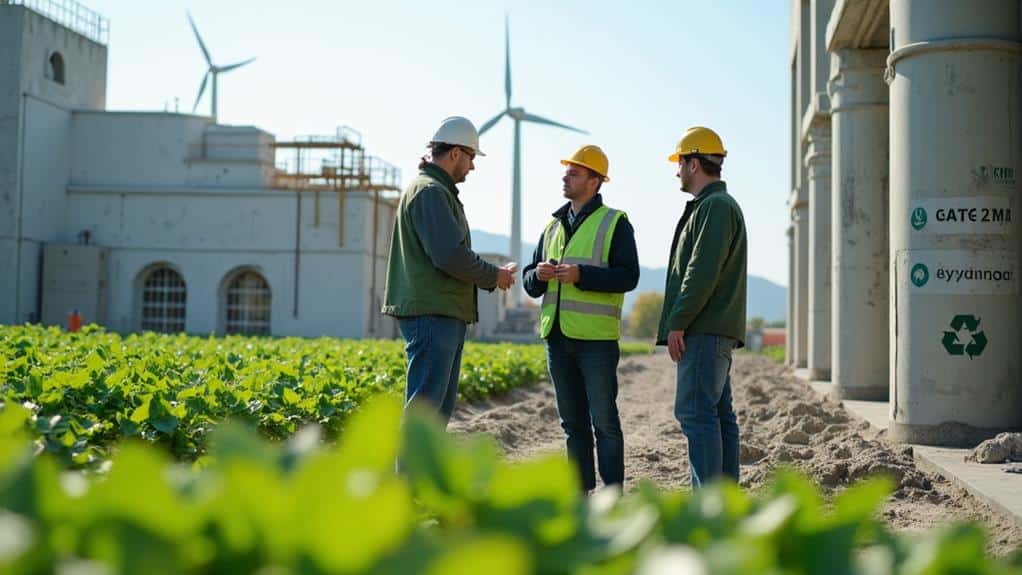
Industry collaboration stands as a cornerstone for advancing sustainable concrete practices. You’ll find that stakeholder engagement plays a vital role in developing and promoting best practices for sustainable concrete production.
By fostering knowledge sharing among producers, architects, engineers and policymakers, you’re creating an environment that drives innovation and efficiency. This collaborative approach helps standardise sustainability metrics and guarantees regulatory compliance with local and international environmental regulations.
You can leverage innovation partnerships to explore emerging technologies like carbon capture and utilisation, considerably reducing concrete’s carbon footprint.
By engaging in joint initiatives such as workshops and training programmes, you’re fostering a shared understanding of sustainable practices among industry professionals, enhancing overall commitment to environmental stewardship.
Industry standards benefit from research collaboration with institutions, allowing you to stay at the forefront of sustainable construction methods and materials.
Alliances like the Concrete Sustainability Hub exemplify how industry-wide efforts can focus on advancing sustainable practices, ultimately reducing the concrete industry’s contribution to global emissions.
Through these collaborative efforts, you’re actively shaping a more sustainable future for concrete production and use.
Frequently Asked Questions
What Are the Sustainable Practices of Concrete?
You can implement sustainable concrete practices by using recycled aggregates, incorporating alternative materials, optimising production techniques, and employing carbon capture technologies. These methods reduce environmental impact, conserve resources, and enhance the overall sustainability of your concrete projects.
Is There a Way to Make Concrete Sustainable?
Picture a greener future: You can make concrete sustainable by using recycled aggregates and low-carbon alternatives. Incorporate fly ash, slag cement, and geopolymers. Implement precast methods, adopt energy-efficient techniques, and conduct lifecycle assessments to minimise environmental impact.
What Is a Sustainable Form of Concrete?
You can create sustainable concrete by incorporating recycled aggregates and carbon capture technologies. This approach reduces virgin material consumption and CO2 emissions. Additionally, you’ll enhance durability and minimise environmental impact whilst maintaining structural integrity in your construction projects.
What Is the Most Environmentally Friendly Concrete?
Like a green phoenix rising, the most environmentally friendly concrete incorporates recycled aggregates and carbon capture technology. You’ll find it maximises sustainability by utilising industrial by-products, reducing CO2 emissions, and enhancing durability through innovative self-healing properties.
Conclusion
You’ve explored various sustainable concrete practices that can greatly reduce the industry’s environmental impact. By implementing these strategies, you’ll contribute to a more eco-friendly construction sector. Notably, studies show that using alternative cementitious materials can reduce CO2 emissions by up to 40% compared to traditional Portland cement. To drive change, focus on optimising mix designs, adopting energy-efficient manufacturing, and embracing innovative construction methods. Collaborate with industry partners to accelerate the adoption of sustainable concrete solutions.

Master the basics of ready mix concrete, its diverse types, and widespread availability to enhance your next construction project.

Get the inside scoop on Ordinary Portland Cement Concrete and discover why it's the backbone of modern construction projects—find out Read more

Mastering the art of high-strength concrete reveals the secrets to crafting resilient structures. Discover how this innovation transforms modern construction.