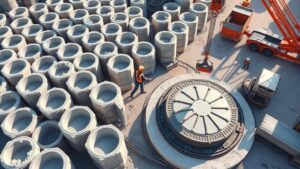
High-performance concrete (HPC) truly takes construction to the next level, blending superior strength and durability. You’ll find types like ultra-high performance, self-consolidating, and fiber-reinforced concrete in many modern projects. These amazing materials often use special ingredients like fly ash, silica fume, and nanomaterials to boost performance. HPC is celebrated for its excellent compressive and tensile strength, making it great for everything from skyscrapers to bridges. It doesn’t just stop there—it’s also more durable and less maintenance-prone, handling harsh weather and chemicals like a champ. Curious to discover how HPC can revolutionize construction even further? Keep going to explore the details!
Key Takeaways
- High-performance concrete achieves superior strength through optimized mix design using advanced materials like silica fume, fly ash, and nanomaterials.
- Durability is enhanced by reducing permeability and increasing resistance to chemical attacks and extreme weather conditions.
- Fiber reinforcement techniques in high-performance concrete improve tensile strength, ductility, and crack resistance.
- Specialized types such as ultra-high performance and self-consolidating concrete ensure better performance and longevity in critical infrastructure projects.
- Advanced additives and nanomaterials, like graphene oxide and nano silica, enhance mechanical properties and long-term durability.
Introduction
High-performance concrete (HPC) is a special type of concrete known for its superior strength and durability.
You’ll see why it’s so essential in modern construction, where builders need materials that can withstand extreme conditions and last longer.
Understanding HPC can help you appreciate how it’s changing the way we build structures today.
What is high-performance concrete (HPC)
In the field of modern construction, high-performance concrete (HPC) stands out for its exceptional strength and longevity. You might wonder how HPC came to be such a game-changer. Well, its historical evolution traces back to the need for materials that can withstand greater stresses and environmental conditions. From ancient Roman concrete to today’s advanced blends, concrete has always been essential for building structures.
But HPC isn’t just about strength; it also caters to architectural aesthetics, allowing for sleek and innovative designs that conventional concrete can’t support. Imagine those stunning skyscrapers and elegant bridges—they’re often made possible by HPC.
Now, let’s talk about cost implications. You might think that a high-performance material like this would be super expensive. Surprisingly, while HPC can be pricier upfront, its durability often leads to lower long-term maintenance costs. Regulatory standards also play a big role in its adoption, ensuring that structures built with HPC meet strict safety and quality guidelines.
Lastly, consider construction logistics. HPC can be a bit trickier to work with due to its specific mixing and curing requirements. But with the right expertise, it offers unmatched benefits, making it a cornerstone of modern construction.
Importance and relevance of HPC in modern construction
Modern construction projects increasingly rely on HPC for its unparalleled strength and durability. By choosing high-performance concrete, you guarantee that buildings and structures can withstand extreme weather, heavy loads, and the test of time. It’s not just about building stronger; it’s about building smarter. Let’s explore why HPC is so important and relevant today.
- Cost Analysis: While HPC might initially seem expensive, it saves you money in the long run. Its durability reduces maintenance costs, and its strength means you need less material for the same job, lowering overall expenses.
- Safety Considerations: Safety is an important factor in construction. HPC enhances the structural integrity of buildings, making them safer for everyone inside. It’s especially critical in areas prone to natural disasters like earthquakes and hurricanes.
- Aesthetic Benefits: Who says strong can’t be beautiful? HPC allows for sleeker, more modern designs. Architects love it for creating stunning, durable facades that stand out.
Additionally, the labor requirements for HPC can be more efficient, aligning well with global trends favoring sustainable and innovative building practices.
Classification and Types of High-Performance Concrete

When you look at high-performance concrete, you’ll find several types, each with unique benefits and uses.
Ultra-high performance concrete (UHPC) offers exceptional strength, while self-consolidating high-performance concrete (SCHPC) flows easily into forms without needing vibration.
There’s also fiber-reinforced high-performance concrete (FRHPC) for added durability and high-strength concrete (HSC) that can handle heavy loads, along with other specialized types designed for specific applications.
Ultra-high performance concrete (UHPC)
Ultra-high performance concrete (UHPC) stands out for its exceptional strength and durability, making it a game-changer in the construction industry. You’ll find UHPC in projects that require outstanding performance and longevity.
But what makes UHPC so special? Let’s break it down:
- Cost Analysis: UHPC isn’t cheap. The initial cost is higher compared to traditional concrete. But, when you consider the long-term benefits, like reduced maintenance and longer lifespan, it can actually save you money in the long run.
- Environmental Impact: UHPC uses fewer raw materials due to its high strength, meaning you need less of it. This can reduce your environmental footprint, even though producing it requires more energy upfront. Plus, its durability means fewer replacements, which is good for the planet.
- Market Trends and Regional Usage: UHPC is gaining popularity worldwide, but it’s especially in demand in regions looking to modernize infrastructure. Europe and North America are leading the way, setting industry standards that others follow.
Self-consolidating high-performance concrete (SCHPC)
Self-consolidating high-performance concrete (SCHPC) offers a unique blend of ease of use and exceptional performance that sets it apart from traditional concrete. Imagine pouring concrete that flows into place without needing to be vibrated—SCHPC does just that. You don’t have to worry about workability issues because it’s designed to be super fluid yet stable.
Rheology control plays an important role in SCHPC. By tweaking the mix, you can guarantee the concrete flows smoothly and fills every nook and cranny of the mold. However, pumping challenges can arise since its fluid nature might cause blockages in the pipes if not handled correctly.
Now, let’s talk about cost implications. SCHPC can be more expensive upfront due to the special additives needed to maintain its properties. But, don’t let that scare you; the long-term benefits often outweigh the initial costs by reducing labor and time.
Quality variability can be a concern, though. You need to ensure consistent mixing and proper ingredient ratios to avoid any weak spots. Despite these challenges, SCHPC’s outstanding performance makes it a go-to choice for many high-stakes projects.
Fiber-reinforced high-performance concrete (FRHPC)
Fiber-reinforced high-performance concrete (FRHPC) combines the strength of concrete with the added durability of embedded fibers to create a versatile and robust building material. You’ll find that these fibers, whether steel, glass, or synthetic, offer numerous benefits that make FRHPC a popular choice in construction.
- Reinforcement benefits: The embedded fibers enhance the concrete’s tensile strength, making it much tougher in handling loads and reducing the risk of cracking.
- Load distribution: Due to the fiber orientation within the concrete, loads are more evenly distributed. This helps prevent localized failures and prolongs the structure’s life.
- Shrinkage reduction: One of the standout features is its ability to minimize shrinkage. The fibers act as internal reinforcement, reducing the amount of shrinkage cracks that typically form as concrete dries and cures.
High-strength concrete (HSC)
High-strength concrete (HSC) stands out due to its exceptional compressive strength, making it ideal for projects that demand superior load-bearing capabilities. You’re probably wondering how we determine if concrete qualifies as HSC. Well, testing methods, like compressive strength tests, are essential. Engineers crush small samples in a machine to see how much pressure they can withstand.
When it comes to mixing techniques, precise ratios of cement, water, and aggregate are important. You might even find special additives in the mix to boost performance.
HSC’s application scope is vast. You’ll see it in skyscrapers, bridges, and even heavy-duty industrial floors. Because of its strength, it allows for thinner, lighter structures, which is a big win in modern architecture.
But what about the cost analysis? High-strength concrete can be more expensive than regular concrete due to the quality of materials and the precision required in mixing. However, its long-term benefits often outweigh the initial costs, especially considering its durability.
In terms of performance benchmarks, HSC excels. It meets and often exceeds the highest standards in the industry. So, if you’re looking for concrete that delivers excellent performance, HSC is a solid choice.
Other specialized HPC types
Among the various forms of high-performance concrete (HPC), certain specialized types offer unique benefits tailored to specific construction needs. These forms of HPC can help you tackle specific challenges in your projects, whether you’re aiming for environmental benefits, strength, or permeability.
- Photocatalytic concrete: This type of concrete has a special ingredient that helps reduce pollution. When sunlight hits the surface, it triggers a chemical reaction that breaks down harmful pollutants in the air. It’s perfect for places with heavy traffic or industrial areas.
- Pervious concrete: If you’re dealing with water drainage issues, pervious concrete is your go-to. It allows water to pass through easily, reducing runoff and helping replenish groundwater. Ideal for parking lots and pavements, it helps prevent flooding and erosion.
- Lightweight concrete: Need to reduce the weight of your structure without sacrificing strength? Lightweight concrete uses materials like expanded clay or shale to create a lighter mix. It’s great for buildings where weight is a concern, like high-rises.
Other notable mentions include Geopolymer concrete, which is eco-friendly and highly resistant to heat and chemicals, and Reactive powder concrete, known for its exceptional compressive strength and durability.
Materials and Mix Design Optimization

When optimizing high-performance concrete, you need to take into account the right mix of materials and their proportions.
Choosing the best cement type and content, along with supplementary materials like silica fume, fly ash, and slag, will enhance strength and durability.
Don’t overlook the aggregate selection, water-to-cement ratio, and using superplasticizers and fibers to achieve the perfect balance.
Cement types and content
Choosing the appropriate cement type and fine-tuning its content can greatly enhance the strength and durability of your concrete mix. Understanding cement chemistry is essential. Different cement types, like Portland cement, have specific properties that influence the concrete’s performance.
For high-performance concrete, you might want to explore alternative binders that can improve cement hydration and reduce the environmental impact of clinker production.
Here are three key points to keep in mind:
- Cement Chemistry: Knowing the chemical composition of your cement helps you control the hydration process. This can lead to stronger and more durable concrete.
- Alternative Binders: Materials like limestone, calcined clay, or other pozzolans can replace some of the traditional cement. They’re not only effective but also more sustainable, reducing the carbon footprint of your mix.
- Cement Sustainability: Reducing clinker content is important. Clinker production is energy-intensive and produces a lot of CO2. By using alternative binders, you can make your concrete mix more eco-friendly without sacrificing performance.
Supplementary cementitious materials (silica fume, fly ash, slag)
Incorporating supplementary cementitious materials like silica fume, fly ash, and slag can greatly enhance the performance and sustainability of your concrete mix. By adding these materials, you’re not just boosting the strength and durability of the concrete but also notably reducing its carbon footprint. These materials take part in pozzolanic reactions, which improve the concrete’s long-term strength and durability.
Silica fume is particularly effective in increasing strength and reducing alkali-silica reactivity. Fly ash improves the workability and extends the hydration kinetics, leading to a more gradual hardening process. Slag, on the other hand, enhances material compatibility and reduces heat generation during curing.
Here’s a quick comparison of these materials:
| Material | Key Benefits |
|---|---|
| Silica Fume | Increases strength, reduces alkali-silica reactivity |
| Fly Ash | Improves workability, extends hydration kinetics |
| Slag | Enhances material compatibility, reduces heat during curing |
| Combined Use | Optimizes overall performance, reduces carbon footprint |
Aggregate selection and gradation
After enhancing your concrete mix with supplementary cementitious materials, the next step is to focus on selecting and grading the right aggregates to optimize material performance. Choosing the right aggregate source and guaranteeing proper gradation can dramatically affect your concrete’s strength and durability.
Here’s a quick guide on what to look for:
- Particle Size and Gradation Curve: The size of your aggregates matters! A well-distributed gradation curve, which shows the range of particle sizes, guarantees better packing and fewer voids in the concrete. This leads to stronger, more durable concrete.
- Surface Texture: Aggregates with rough surface textures improve the bond between the cement paste and aggregates. This means your concrete will be tougher and less likely to crack under stress. So, don’t overlook the texture!
- Aggregate Cleanliness: Dirty aggregates can weaken the bond between the cement paste and aggregates. Make sure your aggregates are clean and free from contaminants like clay, silt, or organic matter. Clean aggregates mean a stronger, more reliable mix.
Water-to-cement ratio and superplasticizers
To achieve high-performance concrete, you’ll need to carefully manage the water-to-cement ratio and consider the use of superplasticizers. Getting this balance right is like baking a perfect cake—you want just enough water to guarantee good hydration kinetics without flooding the mix.
A lower water-to-cement ratio improves strength and durability but makes the concrete harder to work with. That’s where superplasticizers come in handy. These chemical admixtures help you achieve rheology control, making the concrete flow more easily without adding extra water.
But, don’t just grab any superplasticizer off the shelf. Admixture compatibility is key. You’ll want to make sure the superplasticizers work well with other ingredients in your mix. Superplasticizers affect how fast the concrete sets and how it behaves while it’s still wet. This is critical for ensuring the pozzolanic reaction happens correctly, which contributes to the concrete’s long-term strength and durability.
In short, the right water-to-cement ratio combined with effective superplasticizers can make your concrete come out stronger and last longer. So, plan your mix carefully, and you’ll be well on your way to creating high-performance concrete that stands the test of time.
Fiber reinforcement (types, dosages, and orientation)
Fiber reinforcement can greatly enhance the strength and durability of high-performance concrete by addressing its tensile weakness. You might wonder, what types of fibers are best for this purpose? Let’s break it down.
- Hybrid fibers: Combining different types of fibers can optimize performance. For instance, using a mix of steel and synthetic fibers can improve both toughness and crack resistance.
- Fiber blends: Blending fibers of various sizes, such as micro fibers and macro fibers, helps distribute stresses more evenly throughout the concrete. This approach can prevent micro-cracks from turning into larger cracks.
- Synthetic fibers: These include materials like polypropylene and glass fibers. They’re lightweight, non-corrosive, and add flexibility to the concrete mix. Plus, they’re easy to mix in various fiber dosages, depending on your project’s needs.
When you’re considering fiber dosage, it’s important to strike the right balance. Too little, and you won’t see the benefits; too much, and you could make the mix difficult to work with. Also, pay attention to fiber orientation. Ensuring fibers are well-distributed in all directions within the concrete will maximize their reinforcing potential.
Nanomaterials and other advanced additives
Incorporating nanomaterials and advanced additives into high-performance concrete can greatly enhance its strength and durability. Imagine your concrete structure containing tiny, powerful ingredients like Graphene Oxide and Carbon Nanotubes. These materials are superheroes in the concrete world, making your buildings stronger and longer-lasting.
Graphene Oxide, for example, can increase the tensile strength of concrete, helping it resist cracking. Carbon Nanotubes work similarly, boosting the concrete’s durability and making it tough as nails.
Then, you’ve got Nano Silica Particles, which fill in the tiny gaps in the concrete mix, making it denser and more resistant to water and chemicals.
But wait, there’s more! Photocatalytic Additives can be added to concrete to break down pollutants, keeping your environment cleaner.
And let’s not forget about Quantum Dots, which might sound like science fiction, but they can actually improve the material’s overall performance.
Mix design optimization techniques and software
Harnessing the power of nanomaterials is just the beginning; optimizing your concrete mix design with advanced techniques and software takes performance to the next level. Imagine leveraging cutting-edge tools to get the perfect blend of strength and durability in your concrete.
Here’s how you can do it:
- AI Integration: Artificial Intelligence can analyze vast amounts of data to identify the best mix combinations. AI integration helps predict performance and enhance consistency, saving you time and resources.
- Genetic Algorithms: These are inspired by natural selection processes. Genetic algorithms let you explore numerous mix design possibilities and evolve the best solutions. It’s like having nature itself fine-tune your concrete mix.
- Expert Systems and Machine Learning: These technologies learn from past data to make intelligent decisions. Expert systems can offer recommendations based on years of research, while machine learning adapts and improves as more data is fed into the system.
Incorporating these advanced techniques ensures that your concrete mix isn’t only optimal but also adaptable. Data analytics plays a critical role, providing insights and guiding the decision-making process.
Mechanical Properties and Performance
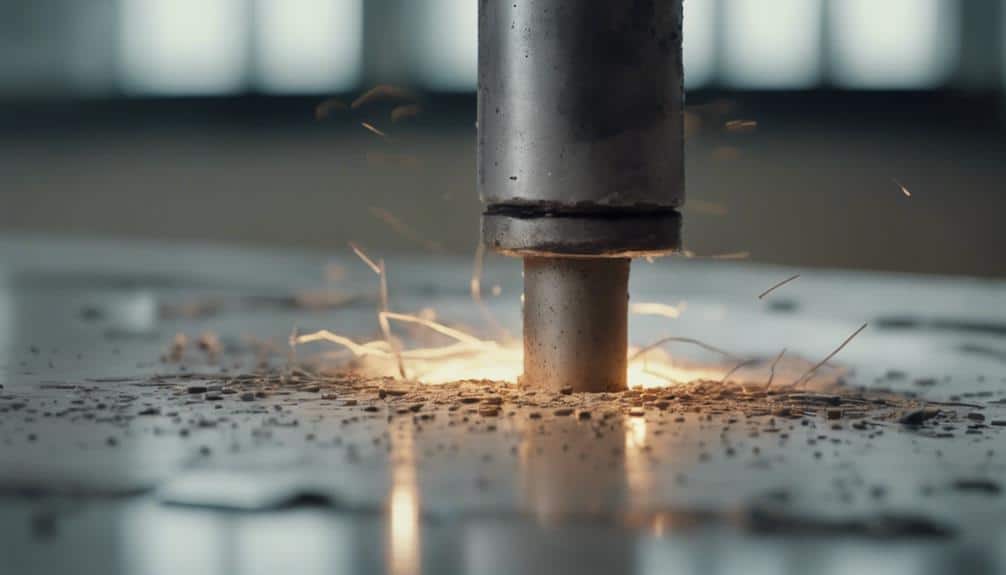
Now, let’s talk about the mechanical properties that make high-performance concrete stand out.
You’ll find it has impressive compressive strength, good tensile strength, and ductility, and strong flexural strength.
It also shows low shrinkage and creep behavior, along with a high elastic modulus, making it a top choice for demanding construction projects.
Compressive strength
When it comes to high-performance concrete, compressive strength is a key indicator of its mechanical properties and overall performance. You might wonder why compressive strength is so important. Well, it tells you how well the concrete can withstand loads without breaking. Understanding this helps guarantee the structures you build are safe and durable.
To get a clearer picture, let’s break it down:
- Microstructural analysis: This examines the concrete’s internal structure to understand how different materials contribute to its strength. Think of it as a microscope looking into the concrete’s ‘DNA’.
- Compressive testing: This is where the concrete is put under pressure until it breaks. These tests help in strength benchmarking, setting a standard for what high-performance concrete should withstand.
- Stress-strain relationship: This tells you how the concrete behaves under different loads. By understanding this relationship, you can predict how the concrete will perform in real-life situations.
To sum it up, compressive strength is like the backbone of concrete. By focusing on it, you guarantee your structures can bear the load without crumbling.
Tensile strength and ductility
While compressive strength highlights a concrete’s ability to withstand loads, tensile strength and ductility reveal how well it performs under tension and flexural stresses.
When you think about tensile strength, imagine how concrete reacts when it’s being pulled apart. This is vital for structures that experience stress from various directions.
Steel reinforcement is often used to enhance concrete’s tensile strength. Steel bars or mesh are embedded within the concrete, creating a composite material that’s much stronger than concrete alone. Additionally, polymer inclusion can improve ductility, making the concrete more flexible and less likely to crack under pressure.
Tensile testing helps engineers figure out how much tension concrete can handle before it breaks. This testing is important for ensuring the concrete’s performance in real-world conditions. Composite materials like fiber-reinforced concrete also enhance tensile strength and ductility, providing a balanced combination of stiffness and flexibility.
Moreover, the thermal properties of high-performance concrete can be fine-tuned to resist temperature changes, preventing cracks caused by expansion and contraction.
Flexural strength
Understanding flexural strength is essential for evaluating how well concrete can withstand bending stresses in structural applications. You might be wondering what flexural strength actually tells us. Simply put, it measures the ability of concrete to resist deformation under load. To get a clear picture, imagine concrete beams in a bridge. They need to be strong enough to handle cars and trucks driving over them without cracking.
Let’s break it down into three key points:
- Testing methods: These are the procedures used to determine flexural strength. Common tests include the three-point and four-point bending tests. You place a concrete beam on supports and apply force until it breaks. The goal is to see how much load the beam can take before failing.
- Loading scenarios: These are different ways the concrete might be stressed in real-world applications. For example, beams in a building might experience different types of loads compared to those in a bridge. Understanding these scenarios helps in designing concrete structures that can handle various stresses.
- Failure modes: These are the ways in which concrete can fail under stress. Flexural failure usually involves cracks that start at the surface and move inward. Knowing the failure modes helps engineers create better design guidelines and improve safety.
Elastic modulus
After grasping flexural strength, let’s explore the elastic modulus to understand how concrete deforms under stress. Think of the elastic modulus as a measure of how ‘bouncy’ or stiff the concrete is. When you apply a load, the concrete’s ability to deform and then return to its original shape is vital.
Stress concentration happens when loads aren’t evenly distributed, causing certain areas to bear more stress. This can affect load transfer, which is how the force moves through the concrete. Strain compatibility makes sure that different materials within the concrete structure deform together without causing cracks or separations.
You’ve probably heard of Poisson’s ratio—it’s the relationship between how much a material stretches in one direction and contracts in another when under stress. High-performance concrete usually has a lower Poisson’s ratio, meaning it’s less likely to experience significant lateral expansion.
But, beware of modulus degradation. Over time, repeated stress can reduce the concrete’s elastic modulus, making it less effective. This degradation can impact the overall durability and performance of the structure.
Understanding these factors helps in creating concrete that stands the test of time, maintaining strength and durability.
Shrinkage and creep behavior
Concrete’s shrinkage and creep behavior greatly influence its long-term mechanical performance and durability. When you’re dealing with high-performance concrete, understanding these behaviors is essential for ensuring the material performs well over time.
Shrinkage can happen in various forms, such as autogenous shrinkage, which occurs when the concrete dries internally, and thermal shrinkage, which happens due to temperature changes. Both types can cause cracking if not properly managed.
Creep, on the other hand, refers to the gradual deformation of concrete under sustained load. Over time, this creep deformation can lead to structural issues, but thankfully, there’s something called creep recovery, where the concrete partially regains its shape once the load is removed.
To help you grasp these concepts better, here are three key points:
- Autogenous Shrinkage: This type of shrinkage occurs without moisture loss to the environment, mainly due to the chemical reactions within the concrete.
- Thermal Shrinkage: Changes in temperature cause the concrete to expand or contract, leading to potential cracks.
- Shrinkage Mitigation: Using certain admixtures, you can reduce these shrinkage effects, ensuring longer-lasting and more durable concrete structures.
Fracture mechanics and crack propagation
While managing shrinkage and creep is essential, you must also pay close attention to fracture mechanics and crack propagation to safeguard the overall structural integrity of high-performance concrete. Understanding how cracks form and spread is vital for ensuring your concrete remains strong and durable over time.
Crack initiation often begins at points of high stress intensity, such as places with poor bonding or where microcrack formation has started. These tiny cracks can grow over time, leading to more significant issues. It’s important to understand fracture toughness, which is the ability of the concrete to resist crack propagation.
Aggregate fracture plays a significant role in this process. The type and quality of aggregates you use can either enhance or weaken the concrete’s ability to withstand cracking. Strong aggregates help in distributing stress more evenly, reducing the chances of crack initiation.
Fatigue resistance
How does high-performance concrete stand up to the repeated stresses and strains that come with daily use? It’s all about its impressive fatigue resistance.
When you think about concrete enduring countless stress cycles, it’s important to understand how it handles this pressure.
- Load transfer: High-performance concrete is designed to manage load transfer efficiently. This means it distributes stress evenly across its structure, reducing the chance of weak points.
- Microcrack formation: Even though microcracks can form under repetitive loading, high-performance concrete minimizes their growth. This control helps maintain the concrete’s integrity over time.
- Fatigue limit: Every material has a fatigue limit, which is the maximum stress it can endure for a large number of cycles without failing. High-performance concrete has a higher fatigue limit compared to regular concrete, making it more durable under repetitive loads.
Impact and blast resistance
High-performance concrete excels in impact and blast resistance, making it a top choice for structures needing exceptional durability against sudden forces. When a powerful force hits the concrete, you want it to stand strong. This is where wave dynamics come into play. The concrete can absorb and redistribute the energy from the impact, preventing significant material deformation.
Think about it like a superhero absorbing a punch. High-performance concrete handles energy dissipation efficiently, meaning it spreads out the energy from a blast or impact, reducing the chance of damage.
Engineers use blast modeling to predict how the concrete will behave under such extreme conditions. This helps them design structures that maintain their structural integrity, even under the most challenging situations.
Picture a building or a bridge that needs to resist blasts or impacts. High-performance concrete ensures that these structures don’t crumble, but instead stay safe and intact. It’s like giving them a superpower shield!
Durability and Service Life

Now, let’s discuss the distinctive features that set high-performance concrete apart in terms of durability and service life.
You’ll find that its low permeability and resistance to chemical attacks from chlorides, sulfates, and acids make it incredibly resilient. Plus, it’s designed to withstand freeze-thaw cycles, prevent abrasion and erosion, and protect against corrosion of embedded reinforcement.
Permeability and diffusion properties
Permeability and diffusion properties play a pivotal role in determining the durability and service life of high-performance concrete. These properties influence how elements like water and ions move through the concrete, affecting its overall performance.
Let’s break it down:
- Pore structure: The tiny pores in concrete control its permeability. A well-designed pore structure limits moisture transport, reducing the risk of damage from freeze-thaw cycles or other environmental factors.
- Moisture transport and ion migration: Water and ions move through concrete via its pores. Restricting moisture transport and ion migration can greatly enhance the material’s durability, as it prevents harmful substances from penetrating and causing deterioration.
- Permeability testing and diffusion coefficients: To ensure high performance, engineers often conduct permeability testing and calculate diffusion coefficients. These tests measure how easily substances can pass through the concrete, providing essential data for improving its structure.
Understanding these factors can make a big difference in the lifespan of your concrete structures. By focusing on optimizing permeability and diffusion properties, you’re ensuring that your high-performance concrete remains robust and durable for years to come.
Resistance to chemical attack (chlorides, sulfates, acids)
To further enhance the durability and service life of concrete, it’s important to focus on its resistance to chemical attacks from chlorides, sulfates, and acids. These chemicals can cause serious damage over time, but you can take steps to protect your concrete.
First, consider the impact of environmental factors. Concrete exposed to harsh conditions, like coastal areas or industrial zones, faces more chemical interactions. Adding protective coatings can help shield it from these harmful elements. These coatings act like a raincoat, keeping the nasties out and the strength in.
Next, biological growth can also play a role. Algae and other organisms love to latch onto concrete, leading to further deterioration. By enhancing the durability of your concrete with special additives, you can make it less inviting for these unwanted guests.
Moreover, choosing the right materials can greatly improve resistance. High-performance concrete often includes supplementary cementitious materials that react with chemicals in beneficial ways, leading to durability enhancement. This means fewer repairs and a longer lifespan for your structures.
In the end, a mix of good materials, protective coatings, and awareness of environmental factors will keep your concrete strong and long-lasting, standing up to chemical attacks with ease.
Freeze-thaw resistance
Protecting concrete from freeze-thaw cycles is essential for enhancing its durability and extending its service life. When water gets into the concrete and freezes, it expands, causing internal pressure. This can lead to surface scaling, cracks, and even structural damage.
To combat these issues, you can use air entrainment, which involves adding tiny air bubbles into the mix. These air pockets give the freezing water space to expand, reducing the risk of damage.
You might be wondering, what else can you do to protect your concrete? Here are three key strategies:
- Air entrainment: By introducing small air bubbles, you can make the concrete more flexible and less prone to cracking during freezing cycles.
- Surface treatments: Applying sealers or coatings can help prevent water and deicing salts from penetrating the surface, reducing the risk of frost heave and surface scaling.
- Proper mix design: Using the right materials and proportions in your concrete mix can enhance its natural resistance to freeze-thaw cycles.
Abrasion and erosion resistance
Ensuring high abrasion and erosion resistance in concrete is essential for maintaining its durability and extending its service life. You want your concrete structures to stand the test of time, right? Well, surface wear and particle impact can greatly reduce the longevity of concrete if not properly addressed.
Abrasion testing is a key method to evaluate how well concrete can withstand these challenges. By understanding erosion patterns, you can predict which areas might wear down faster and take steps to reinforce them. This kind of durability assessment helps in making smarter choices about materials and construction techniques, ensuring that your concrete remains strong and reliable.
Let’s look at some key factors in a handy table:
| Factor | Impact on Concrete | Mitigation Strategy |
|---|---|---|
| Surface Wear | Reduces lifespan | Use harder aggregates |
| Particle Impact | Causes micro-damage | Apply protective coatings |
| Abrasion Testing | Measures resilience | Regular maintenance checks |
| Erosion Patterns | Identifies weak spots | Design adjustments |
| Durability Assessment | Overall performance | Thorough planning |
Corrosion protection of embedded reinforcement
Corrosion of embedded reinforcement is a major threat to the durability and service life of concrete structures. When steel reinforcement corrodes, it expands, causing the concrete to crack and deteriorate. But don’t worry—there are effective methods to protect against this.
- Cathodic protection: This technique involves making the steel reinforcement the cathode of an electrochemical cell. By using a small, external current, you can prevent the steel from corroding.
- Galvanic anodes: These are sacrificial anodes made of metal, like zinc, that corrode instead of the steel reinforcement. They’re a great way to extend the life of your structure without constantly worrying about corrosion.
- Coatings and inhibitors: Applying zinc coatings or epoxy coatings to the steel can create a barrier against moisture and chlorides. Additionally, adding corrosion inhibitors to the concrete mix can chemically protect the steel by slowing down the corrosion process.
Service life prediction models and techniques
Understanding how long high-performance concrete structures will last requires robust service life prediction models and techniques. These models help you anticipate how concrete will degrade over time. Using degradation modeling, you can predict how factors like weather, load, and chemical exposure will impact the concrete. This means you don’t have to guess; you can plan ahead.
Serviceability assessment is another key tool. It lets you evaluate whether a structure will remain functional and safe throughout its life span. By using predictive algorithms, you can analyze data to forecast future performance. These algorithms consider a variety of factors, giving you a more accurate picture of what’s to come.
Reliability analysis is essential for understanding the likelihood of different failure scenarios. This helps you focus on the most critical areas, ensuring the structure stays reliable for as long as possible.
Maintenance optimization then comes into play, allowing you to schedule repairs and upkeep efficiently. This means fewer surprises and lower costs over time.
Structural Applications and Case Studies

When you look around at bridges, skyscrapers, and even marine structures, you’re seeing high-performance concrete (HPC) in action. This amazing material isn’t just for show; it’s used in everything from highway pavements to nuclear containment structures because of its superior strength and durability.
Let’s explore some real-world examples to see how HPC makes a difference in these vital areas.
Bridges and highway pavements
Bridges and highway pavements constructed with high-performance concrete demonstrate remarkable resilience and longevity, even under heavy traffic and harsh environmental conditions. This advanced material tackles common issues like thermal expansion and load distribution, ensuring that your structures remain strong and dependable.
When you use high-performance concrete for bridges and pavements, you get several benefits:
- Improved Bridge Maintenance: High-performance concrete reduces the frequency of repairs and maintenance, saving both time and money. You’ll notice fewer cracks and less wear and tear, even with constant traffic load.
- Extended Pavement Lifespan: The durability of high-performance concrete means pavements last longer. This material can withstand extreme temperatures and heavy use, reducing the need for frequent repaving.
- Better Load Distribution: High-performance concrete evenly distributes weight, making it ideal for bridges that support heavy vehicles. This helps in handling thermal expansion and contraction, preventing damage over time.
High-rise buildings and skyscrapers
High-performance concrete isn’t just for bridges and pavements; it’s also revolutionizing the construction of high-rise buildings and skyscrapers. Imagine towering skyscrapers that can withstand powerful seismic events. This concrete’s advanced formulation enhances seismic considerations, making these buildings safer during earthquakes.
You’ve also got wind resistance to think about. With high-performance concrete, skyscrapers can better resist strong winds, ensuring they stand tall and firm.
But that’s not all. Vertical transportation is essential in tall buildings, and this concrete’s superior strength supports the heavy loads of elevators and escalators, ensuring smooth and reliable operation.
What about fire safety? High-performance concrete offers exceptional fire resistance, providing vital time for occupants to evacuate and for firefighters to respond. It’s like an invisible shield, keeping everyone inside safer.
Load distribution is another key factor. This concrete evenly distributes the immense loads that high-rise buildings carry, preventing structural failures and extending the building’s lifespan.
With these benefits, high-performance concrete becomes an essential component in modern skyscraper construction, offering enhanced safety, durability, and efficiency. So, next time you marvel at a skyscraper, remember the incredible material that’s holding it all together!
Marine structures and offshore platforms
Think of marine structures and offshore platforms braving the harshest conditions, all while relying on the unmatched strength and durability of high-performance concrete. You might wonder why this material is the go-to choice for such demanding environments. Here’s why:
- Corrosion resistance: With salty sea water constantly attacking these structures, high-performance concrete offers superior corrosion resistance. This means longer-lasting platforms and fewer maintenance headaches.
- Seismic performance: Offshore platforms and marine structures need to withstand not just waves but also the occasional tremor. High-performance concrete’s excellent seismic performance guarantees that these structures remain safe and stable, even during earthquakes.
- Design flexibility: High-performance concrete isn’t just strong; it’s also flexible in design. Engineers can create intricate shapes and forms, making it easier to meet specific project needs without compromising on strength or durability.
Of course, there are some installation challenges. Working in marine environments is tough, and material costs can add up quickly. However, the benefits often outweigh these hurdles.
High-performance concrete delivers unmatched durability and adaptability, making it the ideal choice for marine structures and offshore platforms.
Industrial floors and pavements
When you’re constructing industrial floors and pavements, the essential properties of high-performance concrete can make all the difference. This type of concrete provides superior load-bearing capacity, ensuring your floors can support heavy machinery and constant traffic. You won’t have to worry about frequent repairs or replacements, saving both time and money.
A smooth surface finish is another key advantage. It not only looks good but also makes cleaning and maintenance a breeze. High-performance concrete offers better control over joint spacing, reducing the chances of cracks and extending the lifespan of your floors. Less frequent joints mean fewer weak spots, which is vital in industrial settings.
Temperature control and moisture resistance are also critical benefits. High-performance concrete can withstand extreme temperatures and resist moisture, preventing damage and deterioration over time. This makes it perfect for environments where temperature changes or moisture exposure are common.
Nuclear and containment structures
In addition to industrial floors, the robust properties of high-performance concrete are invaluable for constructing nuclear and containment structures. You’ll find that this type of concrete excels in demanding environments where ordinary materials would fail. Here’s why it’s so effective:
- Seismic resistance: High-performance concrete can withstand earthquakes and other seismic activities, ensuring the safety and stability of nuclear facilities.
- Thermal properties: This concrete manages heat better than conventional types, vital for maintaining the temperature stability of containment structures.
- Radiation shielding: The dense composition of high-performance concrete provides excellent protection against radiation, keeping harmful emissions contained.
These properties contribute to the containment integrity, which is essential for preventing leaks and ensuring the safe operation of nuclear plants.
You can trust that high-performance concrete will deliver long-term performance, standing up to the test of time and harsh conditions. Its ability to maintain structural integrity under extreme conditions makes it the go-to choice for these critical applications.
Retrofit and rehabilitation of existing structures
High-performance concrete offers an unparalleled solution for retrofitting and rehabilitating existing structures, ensuring enhanced strength and longevity. When you’re dealing with older buildings, you’ll find that damage assessment is vital. This helps you identify areas that need the most attention.
High-performance concrete excels at seismic retrofitting, providing stability in earthquake-prone areas. By redistributing loads more efficiently, it minimizes stress on weakened parts of the structure.
Structural stabilization is another key benefit. When you use high-performance concrete, you can fortify the integrity of a building, making it safer and more durable. This is especially useful for structures that have seen better days but still hold historical or functional value.
Lifecycle extension is another advantage. By incorporating high-performance concrete, you give structures a new lease on life, reducing the need for frequent repairs and maintenance. Think of it as giving an old building a superpower, making it stronger and more resilient.
You’ll be amazed at how effective high-performance concrete can be in transforming aging structures. It’s not just about fixing what’s broken; it’s about making them better than ever before.
Architectural and decorative applications
Architects and designers increasingly turn to high-performance concrete for its versatility in creating visually striking and structurally sound buildings. You can use this material to achieve various creative effects that elevate both the appearance and durability of structures.
Here’s how:
- Colored Finishes: Why stick with the traditional gray when you can choose from a palette of colors? High-performance concrete allows for vibrant and consistent colored finishes, adding a unique touch to any building.
- Textured Surfaces: Texture can bring a whole new dimension to your designs. By manipulating the surface texture, you can create visually interesting and tactile experiences, whether it’s a smooth, polished look or a rugged, natural feel.
- Patterned Inlays: For those looking to add intricate details, patterned inlays are a great option. High-performance concrete can be customized with artistic designs and patterns, making each project truly one-of-a-kind.
Beyond these elements, you can also explore sculptural forms, pushing the boundaries of what concrete can do. Imagine creating fluid, organic shapes that are as strong as they’re beautiful. This material supports your creativity, allowing you to bring your boldest architectural visions to life.
Construction Practices and Quality Control
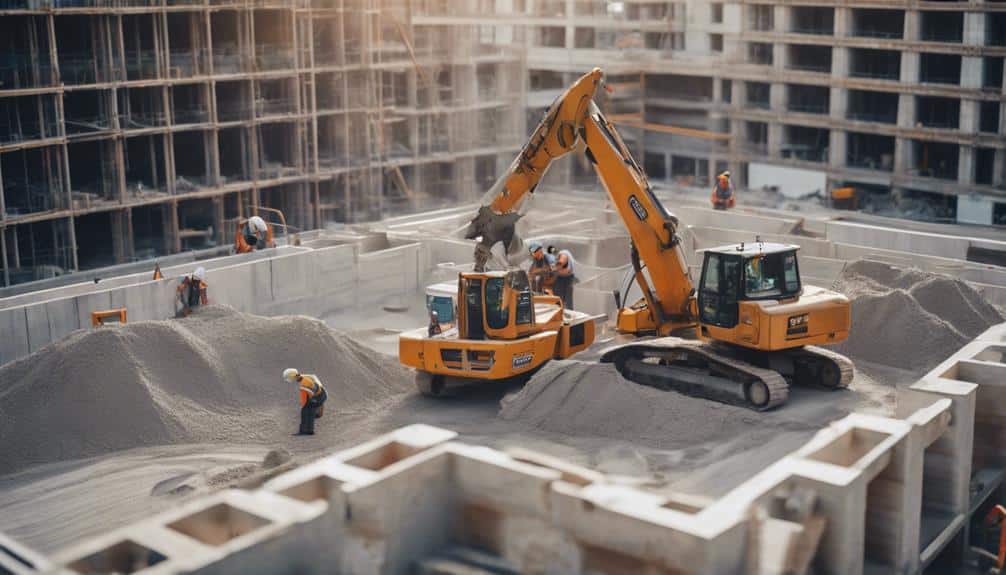
When working with high-performance concrete, you’ll want to focus on proper batching, mixing, and transportation to guarantee the best results.
Pay attention to placement, consolidation, and finishing techniques to make sure the concrete is both strong and durable.
Don’t forget about curing methods and durations, formwork design, and quality control testing to keep everything on track.
Batching, mixing, and transportation
Why is precise batching, thorough mixing, and efficient transportation essential for guaranteeing the quality and performance of high-performance concrete? You need to nail these steps to get the best results. Here’s why:
- Batching Accuracy: Accurate batching ensures that the right proportions of cement, water, aggregates, and additives are mixed. If you get this wrong, your concrete could be too weak or too brittle.
- Mixing Efficiency: Thorough mixing is essential for uniformity. Properly mixed concrete has consistent strength and durability. If the mix isn’t even, some parts of the concrete might be stronger than others, leading to weak spots.
- Transportation Logistics: Efficient transportation keeps the concrete at the right temperature and consistency. If it takes too long to get to the site, the concrete could start setting too early. Plus, temperature control during transit is crucial to prevent premature setting or cracking.
Equipment maintenance is another key factor. Well-maintained batching plants and mixers ensure you get consistent results every time. And don’t forget, poorly maintained equipment can lead to breakdowns, causing delays and extra costs.
Placement, consolidation, and finishing techniques
Proper placement, consolidation, and finishing techniques are essential to achieving the intended strength and longevity of high-performance concrete. When you’re working with this type of concrete, controlling the slump is key. Slump control guarantees that the concrete is neither too wet nor too dry, which affects how it flows and settles. You’ll want to pay close attention to this to avoid any weak spots in your structure.
Speed matters too. Placement speed should be consistent to prevent the concrete from setting before you’re done. If you rush, you might end up with air pockets; go too slow, and the concrete could start to harden. Vibration techniques help here. By vibrating the concrete, you can remove trapped air, making the concrete denser and stronger.
Once the concrete is in place, it’s time for leveling and finishing. Concrete leveling ensures a flat, even surface, which is important for both appearance and function. After leveling, surface treatments can be applied to protect the concrete from wear and tear.
You might use a trowel for a smooth finish or a broom for a textured one. Proper finishing techniques will guarantee your high-performance concrete stands the test of time.
Curing methods and durations
After finishing, you’ll need to focus on curing to make sure your high-performance concrete reaches its full strength and durability. Curing is essential because it helps the concrete hydrate properly, reducing cracks and increasing longevity.
Let’s break down some common methods:
- Water curing: This involves keeping the concrete surface wet for a prolonged period. You can achieve this by spraying water, using wet coverings, or immersing the concrete in water. It’s straightforward but very effective.
- Membrane curing: Here, you apply a curing compound that forms a membrane, locking in moisture. This method is handy when water isn’t readily available or when you want to avoid constant water application.
- Steam curing: Ideal for precast concrete, steam curing involves exposing the concrete to steam, speeding up the curing process. This method is often combined with accelerated curing, providing rapid strength gain.
Other techniques include moist curing, where you keep the concrete in a humid environment, and accelerated curing, which uses higher temperatures to speed up the process. Each method has its perks, so the choice depends on your project’s specific needs.
Formwork and mold design considerations
Designing formwork and molds meticulously guarantees that your high-performance concrete achieves the desired shape, strength, and surface finish. When you’re setting up, it’s important to take into account several factors to secure the best results.
First, focus on form stability. Your forms need to be sturdy enough to hold the concrete in place without bending or breaking. You don’t want any surprises during the pour! Next, think about load distribution. Evenly distributing the weight of the concrete helps prevent any weak spots during setting.
Thermal effects also play a role. Concrete generates heat as it cures, so you need to consider expansion and contraction. This is where your forms need to stay flexible yet strong. To achieve a smooth surface finish, use quality release agents. They prevent the concrete from sticking to the forms, making removal easier and cleaner.
Here’s a quick reference guide:
| Consideration | Importance |
|---|---|
| Form stability | Prevents bending/breaking |
| Load distribution | Ensures even strength |
| Thermal effects | Manages expansion/contraction |
| Release agents | Achieves smooth surface finish |
Quality control and assurance testing
Guaranteeing the quality of high-performance concrete involves rigorous testing and meticulous control measures throughout the construction process. You need to adopt a series of steps to maintain the integrity and durability of the concrete.
- Sampling methods: Consistently take samples of concrete mixtures at various stages. This guarantees that the concrete meets the required specifications before it’s used in construction.
- Testing standards: Follow recognized testing standards like ASTM or ISO. These standards guide you on how to conduct tests such as compressive strength, slump tests, and air content to ensure the concrete meets the quality benchmarks.
- Inspection protocols: Regularly inspect the concrete during mixing, placing, and curing. Inspection protocols include visual checks and using tools to measure consistency and performance.
Quality benchmarks are essential to compare the actual performance of the concrete against expected results. Use statistical analysis to interpret test data, helping you spot trends and anomalies. This way, you can quickly address any issues before they become significant problems.
In-situ and non-destructive evaluation techniques
Evaluating high-performance concrete in its final setting requires in-situ and non-destructive techniques to guarantee its strength and durability without causing damage. You don’t want to crack or ruin your concrete just to see if it’s holding up, right?
Luckily, several methods let you check things out without any fuss. Acoustic emission monitoring is like listening to the concrete talk. Any cracks or stress changes make noise, which this method picks up. Surface resistivity tests check how well your concrete resists electrical currents, showing its durability against things like water and chloride penetration.
Impact echo is another cool technique. It’s like using sonar in the ocean, but for concrete. You tap the surface, and the sound waves bounce back, revealing any internal flaws. Ground penetrating radar works similarly but uses radar waves to see through the concrete. It’s like X-ray vision for your structure.
Lastly, ultrasonic pulse velocity measures how fast sound waves travel through the concrete. If they move quickly, your concrete is solid. If they slow down, there might be issues.
These in-situ and non-destructive methods make sure you get the best performance out of your concrete without breaking it apart.
Sustainability and Environmental Aspects
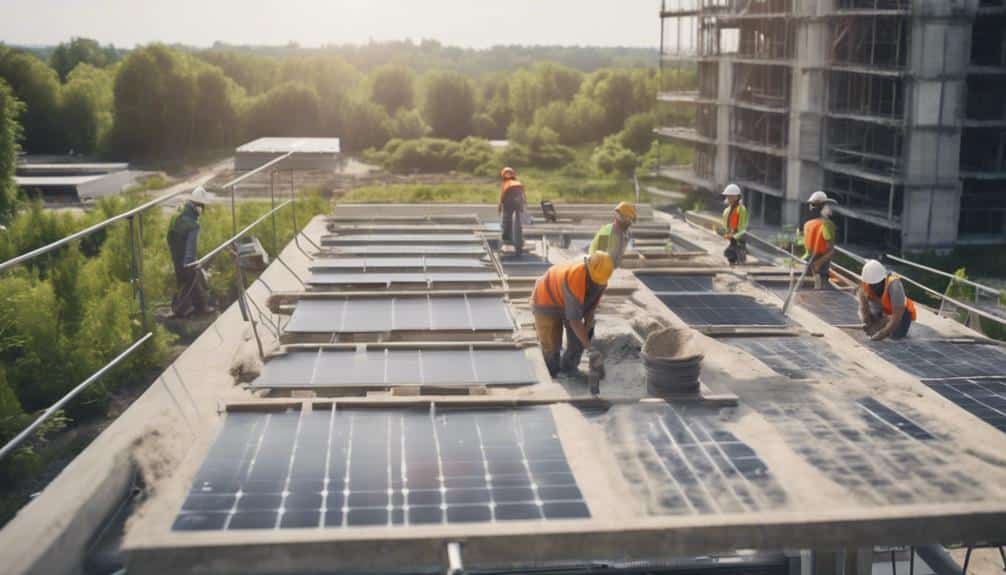
When contemplating high-performance concrete (HPC), it’s essential to ponder its impact on the environment.
HPC can reduce its carbon footprint and embodied energy by using recycled and waste materials.
Plus, its durability and extended service life can earn you credits in green building rating systems.
Life cycle assessment (LCA) of HPC
Understanding the life cycle assessment (LCA) of high-performance concrete (HPC) is essential for evaluating its sustainability and environmental impact. You need to know how HPC stacks up regarding environmental impact, cost analysis, and resource efficiency throughout its entire lifecycle. Here’s a breakdown to help you grasp the essentials:
- Environmental Impact: By examining the complete lifecycle of HPC—from raw material extraction to disposal—you can better understand its overall environmental footprint. This includes the emissions generated and resources consumed at each stage.
- Cost Analysis: It’s not just about the initial expense. Lifecycle costs consider the long-term financial implications, including maintenance and durability. HPC often results in lower lifecycle costs due to its superior durability and reduced need for repairs.
- Resource Efficiency: HPC’s high strength and durability mean you can use less material to achieve the same performance metrics as traditional concrete. This not only saves resources but also reduces waste.
Carbon footprint and embodied energy
How does high-performance concrete (HPC) measure up when considering its carbon footprint and embodied energy? You’ll be pleased to know that HPC aims to reduce its environmental impact in several ways.
First, let’s talk about energy consumption. Producing HPC does use energy, but its superior strength means you need less of it for the same job, making it more significant in terms of resource efficiency.
Now, onto carbon sequestration. While concrete production is notorious for releasing CO2, some types of HPC can actually trap carbon dioxide, helping reduce overall lifecycle emissions. This means that over its lifespan, HPC can potentially offset some of the CO2 produced during its manufacturing.
Resource efficiency is another critical factor. HPC’s extended durability means fewer repairs and replacements, cutting down on the energy and resources needed over time. This not only saves money but also lowers the material’s embodied energy.
Lastly, consider carbon credits. By using HPC, you might qualify for carbon credits, which are like rewards for lowering your carbon emissions. These credits can be traded, adding an economic incentive to the environmental benefits.
In short, HPC is designed to be a more sustainable option, balancing strength and environmental responsibility.
Use of recycled and waste materials in HPC
Building on the environmental benefits of high-performance concrete, incorporating recycled and waste materials offers another layer of sustainability.
You might be surprised to learn that many everyday waste materials can enhance the performance of high-performance concrete (HPC). By reusing what would otherwise end up in landfills, you’re not just helping the planet but also improving the concrete itself.
Here are three key recycled and waste materials you can use in HPC:
- Recycled aggregates: These come from crushed demolition debris. They replace natural aggregates, conserving natural resources and reducing waste.
- Waste glass: When ground into fine powder, waste glass can be used as a partial replacement for cement, enhancing the concrete’s durability and reducing greenhouse gas emissions.
- Rubber tires and plastic fibers: These materials can be added to concrete to improve its flexibility and crack resistance. Plus, it’s a great way to repurpose non-biodegradable waste.
Durability and extended service life benefits
High-performance concrete (HPC) offers remarkable durability and extends the service life of structures, greatly contributing to sustainability and reducing environmental impact. You’ll find that HPC stands out because it’s highly resistant to weather, which means your buildings can withstand extreme conditions like heavy rain, snow, and even high temperatures. This weather resistance reduces the need for frequent repairs and replacements, which lowers lifecycle costs.
When you think about maintenance strategies, HPC is a game-changer. Its robust nature means you’ll spend less time and money on upkeep. Plus, HPC’s excellent thermal properties help in maintaining consistent indoor temperatures, reducing the need for extensive heating or cooling systems. This translates to energy savings and a smaller carbon footprint.
Another benefit is the use of surface treatments on HPC, which enhances its durability even further. These treatments protect the concrete from moisture and chemical attacks, making it last longer.
Green building rating systems and credits
Incorporating high-performance concrete into your projects can earn significant credits in green building rating systems like LEED and BREEAM, reflecting its sustainability and environmental benefits. This type of concrete is considered a green material because it helps reduce the overall environmental impact of construction.
By using high-performance concrete, you’re not just boosting the durability of your buildings, but also supporting sustainable practices.
Here’s how you can benefit:
- Energy Efficiency: High-performance concrete improves a building’s thermal mass, which means it can better regulate indoor temperatures. This leads to lower energy consumption for heating and cooling, earning you valuable LEED certifications.
- Water Conservation: Some high-performance concretes use recycled water and materials in their production processes. This reduces the strain on freshwater resources and can help you nab those water conservation credits.
- Material Durability: Its extended lifespan means fewer repairs and replacements over time, reducing the demand for new materials. This longevity is a big plus in green building ratings, showing your commitment to sustainable practices.
Research and Future Trends

As we look at the future of high-performance concrete (HPC), you’ll find some exciting research developments on the horizon. Emerging materials and technologies like nanotechnology and smart materials are transforming the field, while 3D printing is making construction more innovative than ever.
Imagine self-healing concrete that repairs its own cracks and integrates with systems to monitor the health of structures, ensuring safety and durability for years to come.
Emerging materials and technologies
Innovative materials and cutting-edge technologies are driving the next generation of high-performance concrete, offering unprecedented strength and durability. You’re probably wondering what these new advancements are all about. Here’s a quick dive into some of the coolest, most promising materials and technologies shaping the future of concrete.
- Biodegradable Polymers and Recycled Plastics: Imagine concrete that’s not only strong but also eco-friendly. By incorporating biodegradable polymers and recycled plastics, we’re reducing waste and creating a more sustainable building material.
- Transparent Composites: Yes, you heard that right! Transparent composites are making it possible to create concrete that lets light pass through. This isn’t just a neat trick; it can reduce the need for artificial lighting, saving energy in the process.
- Phase Change Materials and Aerogel Insulation: These materials are game-changers when it comes to temperature regulation. Phase change materials help absorb and release heat, keeping buildings cooler or warmer as needed. Meanwhile, aerogel insulation offers incredible thermal resistance without adding much weight.
Nanotechnology and smart materials
Nanotechnology and smart materials are revolutionizing high-performance concrete by enhancing its strength, durability, and adaptability. Imagine concrete that not only stands the test of time but also heals itself! By incorporating material innovation, you’re taking concrete to the next level. Nanotechnology introduces ultra-fine particles to the mix, improving particle dispersion and resulting in a stronger, more durable concrete.
One exciting aspect is the use of nano coatings. These coatings add an extra layer of protection, making concrete resistant to water and chemicals. Smart aggregates, another breakthrough, can actually “sense” changes in the concrete’s condition and alert you before any significant damage occurs. Functional additives like carbon nanotubes can further enhance the mechanical properties, making the concrete even more robust.
Here’s a quick look at some key benefits:
| Innovation | Benefit | Emotion |
|---|---|---|
| Nano coatings | Increased resistance | 🌟 Security |
| Smart aggregates | Early damage detection | 🚨 Peace of Mind |
| Functional additives | Enhanced mechanical properties | 💪 Confidence |
With these advancements, you’re not just building structures; you’re creating masterpieces designed to last and adapt to their environment. The future of high-performance concrete is here, and it’s smarter and stronger than ever!
3D printing and additive manufacturing with HPC
3D printing and additive manufacturing are transforming high-performance concrete (HPC) into a versatile and highly customizable building material. You can now create complex shapes and structures with ease, thanks to advancements in material deposition and layer consistency. These innovations guarantee that each layer of concrete is precisely placed, maintaining strength and durability.
When working with HPC, you need to take into account several key factors to achieve the best results:
- Printing resolution: This determines the level of detail and accuracy in your designs. Higher resolution means smoother surfaces and more intricate details.
- Thermal management: Proper temperature control during the printing process guarantees the concrete sets correctly, preventing cracks and weaknesses.
- Surface finish: Achieving a smooth surface is essential for both aesthetics and structural integrity. Proper finishing techniques can enhance the concrete’s appearance and longevity.
Researchers are continually exploring new ways to improve these aspects, making HPC even more reliable and efficient. With ongoing advancements, you’re not just building structures; you’re crafting masterpieces that stand the test of time.
Embrace the future of construction with 3D printing and additive manufacturing, and watch as your projects reach new heights.
Self-healing and self-monitoring HPC
With emerging research, self-healing and self-monitoring high-performance concrete (HPC) promise to revolutionize construction by greatly enhancing durability and reducing maintenance needs. Imagine concrete that can fix itself—sounds like science fiction, right? Well, it’s becoming a reality thanks to microcrack healing and smart concrete technologies. Microcrack healing works by incorporating special materials into the concrete that activate when cracks form, effectively sealing them up and preventing further damage.
But that’s not all. Autonomous sensors and embedded diagnostics are turning concrete into a ‘smart’ material. These sensors can monitor the health of the structure in real-time, alerting you to any issues before they become major problems. Think of it as a fitness tracker for buildings. Self-repair mechanisms are also being developed, which means the concrete can’t only detect but also repair damage on its own.
This kind of smart concrete could drastically cut down on the need for expensive repairs and extend the lifespan of buildings and infrastructure.
Integration with structural health monitoring systems
Structural health monitoring systems are increasingly being integrated with high-performance concrete to create smarter, more resilient infrastructure. Imagine bridges and buildings that can actually ‘talk’ to you, providing real-time updates about their condition. This is now possible thanks to advanced technologies like wireless sensors and data analytics.
By embedding wireless sensors into high-performance concrete, you can monitor the structural health in real time. These sensors collect data on various parameters like strain, temperature, and humidity, which are then analyzed using sophisticated data analytics tools. With this information at your fingertips, you can take prompt action to guarantee the safety and longevity of your structures.
Here’s how this integration benefits you:
- Real-time monitoring: You can receive instant updates about the health of your structure, allowing you to detect issues before they become serious problems.
- Predictive maintenance: Instead of waiting for something to break, you can anticipate when maintenance is needed, saving time and money.
- System integration: Combining these monitoring systems with high-performance concrete results in a cohesive, smart infrastructure that can adapt and respond to changing conditions.
Challenges and opportunities for widespread adoption
Adopting high-performance concrete on a widespread scale faces several challenges but also presents numerous opportunities for innovation and advancement in the construction industry. First, let’s talk about cost analysis. High-performance concrete can be expensive, and you’ll need to weigh the benefits against the costs. Regulatory standards also play a big role. Meeting these standards can be tricky, requiring rigorous testing and certification.
Market demand is another factor. If there’s not enough demand for high-performance concrete, it may be hard to justify the investment. On the flip side, increased demand can drive innovations and cost reductions. Workforce training is essential too. Workers need to be well-trained to handle and work with this advanced material. Finally, the supply chain must be reliable and efficient to make sure that all necessary components are available when needed.
Here’s a table summarizing these points:
| Challenges | Opportunities | Key Factors |
|---|---|---|
| High costs | Innovation in materials | Cost analysis |
| Meeting regulatory standards | Better durability | Regulatory standards |
| Low market demand | Potential for growth | Market demand |
| Need for workforce training | Skill development | Workforce training |
| Supply chain issues | Streamlined logistics | Supply chain |
Understanding these challenges and opportunities will help you navigate the path to adopting high-performance concrete more effectively.
Conclusion

To wrap up, you’ve learned how high-performance concrete (HPC) offers incredible strength and durability, making it a game-changer for construction.
HPC doesn’t just make buildings stronger; it also boosts sustainability efforts.
To keep reaping these benefits, we must continue researching and developing this amazing technology.
Recap of the key aspects and benefits of high-performance concrete
High-performance concrete offers unparalleled strength and durability, making it a superior choice for modern construction projects. If you’re considering using high-performance concrete (HPC), you’ll find it has numerous advantages.
Let’s recap some key aspects and benefits:
- Strength and Durability:
HPC is known for its exceptional strength and longevity. This makes it perfect for projects that require a sturdy and long-lasting material, like bridges and high-rise buildings.
- Cost Implications and Market Demand:
While HPC might be a bit pricier upfront, its durability can save you money in the long run by reducing maintenance costs. Plus, there’s a growing market demand for such reliable materials, ensuring your investment is worthwhile.
- Safety Protocols and Skill Requirements:
Using HPC means adhering to strict safety protocols, ensuring a secure construction environment. It also requires skilled labor, so make sure your team is up to date with industry standards and certifications.
Importance of HPC in advancing construction capabilities and sustainability
Modern construction projects not only demand robust materials but also emphasize sustainability, making high-performance concrete an invaluable asset. Using HPC, you’re not just building stronger structures; you’re also contributing to energy efficiency and resource conservation. HPC’s superior thermal performance means buildings stay cooler in the summer and warmer in the winter, reducing energy consumption.
Additionally, HPC plays a crucial role in carbon sequestration. The concrete absorbs CO2 over its lifetime, helping to reduce greenhouse gases. You’ll also appreciate the benefits in waste management, as HPC often incorporates recycled materials. This means less waste ends up in landfills, making your construction projects more environmentally friendly.
Here’s a quick look at how HPC impacts key areas:
| Aspect | Benefit | Impact |
|---|---|---|
| Energy Efficiency | Reduced energy consumption | Lower utility bills, less pollution |
| Resource Conservation | Use of recycled materials | Less strain on natural resources |
| Thermal Performance | Better insulation | Comfortable indoor climates |
| Carbon Sequestration | CO2 absorption | Reduced greenhouse gases |
Call for further research, development, and implementation of HPC technology
To harness the full potential of HPC, we need to invest in continuous research, development, and widespread implementation. By doing so, not only will you strengthen our construction capabilities, but you’ll also contribute to more sustainable infrastructure.
Here are three key areas to focus on:
- Government policies: Advocate for policies that support HPC innovation. Governments can create incentives for using HPC in public projects, making it more appealing for private sectors to follow suit.
- Funding opportunities: Secure funding for HPC research and development. Grants and subsidies can help universities and companies explore new HPC applications, leading to better materials and methods.
- Industry partnerships: Foster collaborations between industry leaders and academic institutions. These partnerships can drive practical advancements, ensuring that HPC technologies are implemented effectively.
Additionally, it’s essential to promote education outreach and public awareness. By educating future engineers and the public about HPC benefits, you create a knowledgeable community that values and demands high-performance solutions.
Frequently Asked Questions
How Does High-Performance Concrete Compare Cost-Wise to Traditional Concrete?
Think of high-performance concrete like a luxury car; initial material costs and labor expenses are higher. However, the cost benefit over time, considering lifecycle analysis and fewer price fluctuations, often makes it a smarter investment.
What Are the Common Challenges in Producing High-Performance Concrete?
You’ll face challenges in material sourcing, determining precise mix proportions, and selecting effective curing methods. Additionally, managing the environmental impact and maintaining strict quality control standards can complicate the production of high-performance concrete.
Can High-Performance Concrete Be Used in Residential Construction?
Absolutely, you can use high-performance concrete in residential construction. It offers unparalleled energy efficiency, immense load capacity, stunning aesthetic appeal, significant noise reduction, and a minimal environmental impact, making your home a fortress of modern living.
Are There Specific Maintenance Requirements for High-Performance Concrete Structures?
Yes, for high-performance concrete structures, you need to concentrate on surface sealing, crack prevention, and regular inspections. Guarantee a proper curing process and maintain moisture control to extend the lifespan and durability of the concrete.
How Does High-Performance Concrete Impact Construction Project Timelines?
High-performance concrete impacts construction project timelines by reducing curing time and allowing accelerated setting. With optimized mix design and construction sequencing, you can remove formwork earlier, speeding up the entire process considerably.
Conclusion
In wrapping up, high-performance concrete really stands out with some impressive stats — did you know it can last over 100 years? That’s almost like building something for your great-great-grandchildren!
By blending the right materials and following best practices, you’ll create structures that are both incredibly strong and durable.
And let’s not forget, it’s good for the environment too.
So, next time you think of concrete, remember the long-lasting benefits of high-performance options!
Related Articles
- Understanding Ready Mix Concrete
- 15 Sustainable Concrete Options
- Innovative Concrete Construction Methods

Master the basics of ready mix concrete, its diverse types, and widespread availability to enhance your next construction project.

Get the inside scoop on Ordinary Portland Cement Concrete and discover why it's the backbone of modern construction projects—find out Read more

Mastering the art of high-strength concrete reveals the secrets to crafting resilient structures. Discover how this innovation transforms modern construction.