When considering the cost of ready-mix concrete, several important factors come into play. Prices can vary based on market demand, often peaking during construction booms and the summer months. The quality of raw materials and specific mix designs can also significantly affect costs. On average, in 2024, you can expect to pay between £100 and £125 per cubic metre; however, regional differences and delivery charges may apply. It's advisable to negotiate with suppliers and compare quotes to keep expenses in check. By understanding these factors, you can budget effectively and make informed decisions for your project.
Key Takeaways
The average cost of ready-mix concrete in the UK falls between £100 and £125 per cubic metre, depending on your location and demand.
Delivery fees can add to the total, as these costs vary with distance and scheduling; urban areas often face higher charges.
Prices for raw materials like cement and aggregates can change with market conditions, which in turn affects the overall pricing and quality of concrete.
To keep costs down and avoid waste, it's crucial to estimate your volume accurately and compare quotes from different suppliers.
Be aware that demand can spike during construction booms, leading to higher prices, so it's a good idea to keep an eye on local market trends.
Key Factors Affecting Prices
When considering the cost of ready-mix concrete, it's important to grasp the key factors that affect prices. Market demand is a major influence; when demand increases, prices tend to rise. For instance, during a construction boom, expect costs to go up. Seasonal variations also play a role; peak construction periods often see higher prices. Furthermore, the location of your project is crucial—urban areas generally face steeper prices compared to rural ones due to higher transport and material costs. Additionally, the quality of raw materials used in the mix can significantly impact the final price and performance of the concrete. The use of automated batching plants ensures precise mixing, contributing to the overall quality and consistency, which can justify higher costs.
Components Influencing Costs

When calculating the cost of ready-mix concrete, raw material prices and mix design specifications are vital.
Cement, aggregates, and additives are the main components of your expenses, and the unique requirements of your mix can affect the total price. Additionally, raw material costs can fluctuate based on demand, which may further impact your overall budget. The volume calculation formula ensures you order the right amount of RMC, preventing unnecessary expenses and delays.
Raw Material Prices
To understand the cost of ready-mix concrete, it's essential to look closely at the raw materials involved, as they significantly affect pricing.
Cement is usually the largest expense, with its price varying due to energy costs, transport, and market demand. Higher-grade cements offer better strength but come at a higher cost. Moreover, the choice between mixing your own concrete or opting for ready-mix delivery can have significant cost implications.
Aggregates also play a role in overall expenses; sourcing them close to quarries can reduce transport fees, while limited local supplies can increase prices. Additionally, the cost of material availability can fluctuate based on the location and the number of local suppliers.
Additives can add further variability to costs, particularly with specialised admixtures.
By sourcing raw materials effectively and negotiating prices with suppliers, you can help manage these costs. Staying informed about market trends and regional price fluctuations will also aid in controlling expenses for your concrete projects.
Mix Design Specifications
Mix design specifications are crucial in determining the cost of ready-mix concrete, as each component affects both performance and pricing.
The amount of cement used is vital; while higher quantities improve strength, they also raise costs. It's important to consider the water/cement ratio; lower ratios enhance strength but can compromise workability.
The specifications for aggregates, such as their size and type, also play a significant role in both strength and cost-effectiveness.
Adjusting water content, often with chemical admixtures like superplasticisers, is key to achieving the desired concrete strength without losing workability.
Additionally, factors like transportation and production methods can impact overall costs.
Therefore, it's essential to evaluate your mix design carefully to strike a balance between quality and budget.
Average Cost Overview

In 2024, the average cost of ready-mix concrete in the UK ranges from £100 to £125 per cubic metre. Several factors influence these prices, making it essential to budget effectively.
- Market Demand: Prices can rise during busy construction periods.
- Volume Discounts: Ordering larger quantities often results in lower prices.
- Regional Variability: Local market conditions and transport costs can impact pricing.
To navigate these fluctuations, consider competitive pricing strategies and conduct market research.
Remember that the costs of raw materials, mix specifications, and your location are crucial in determining the final price.
Always check with local suppliers for the most accurate and current pricing.
Delivery and Transportation Fees
Delivery and transportation fees significantly influence the overall cost of ready-mix concrete, so it's important to factor these into your budget.
Scheduling deliveries during standard working hours can help you avoid extra charges, such as the £8 per cubic yard fee for weekend or holiday deliveries.
Distance also affects costs; most companies charge around £9.50 to £9.75 per mile for deliveries beyond a 20-mile radius.
Additionally, short load fees apply to orders under 10 cubic yards, which can drive up costs.
Calculating Total Project Costs

When planning your project, accurately calculating total project costs is crucial for staying within budget. Start with precise cost estimation by considering the fluctuating prices of raw materials like cement, aggregates, and additives.
Don't forget to include transportation costs and seasonal demand variations.
To streamline your budgeting, keep these points in mind:
- Obtain quotes from various suppliers to ensure competitive pricing.
- Factor in additional expenses such as site preparation and compliance.
- Allow for a 5% waste volume to account for spillage.
Volume Considerations
To ensure you order the right amount of ready-mix concrete, it's essential to understand volume calculations.
Start by estimating the volume by multiplying the dimensions: length, width, and slab thickness. This will give you the volume in cubic feet or cubic metres, with 1 cubic metre equating to approximately 35.3 cubic feet.
Be precise with your depth measurements, as even minor differences in thickness can significantly affect the total volume. For instance, a slab measuring 3 m x 2 m x 0.1 m requires about 0.6 cubic metres of concrete.
Remember to factor in voids, embedded structural elements, and any slopes to ensure your calculations are accurate.
Getting your estimates right reduces waste and ensures you have enough concrete for your project.
Seasonal Price Fluctuations

Accurate volume calculations for ready-mix concrete are essential for understanding how seasonal price fluctuations can impact your project budget. Prices often rise during peak construction months due to increased demand, higher operational costs, and limited availability.
To manage your budget effectively, consider these tips:
- Keep an eye on local supply and demand to predict price changes.
- Take weather conditions into account, as they can affect production and timelines.
- Schedule your projects during off-peak seasons to help reduce costs.
Using price forecasting techniques can assist you in navigating these fluctuations, enabling you to make informed decisions and maximise your investment in ready-mix concrete.
Comparing Supplier Quotes

When comparing supplier quotes for ready-mix concrete, it's crucial to gather several quotes to find the best value.
Be mindful of delivery charges, as these can significantly impact your total cost.
Also, check the mix specifications to ensure you're receiving the quality required for your project.
For example, if you need a specific strength for a foundation, make sure the quotes reflect that.
Obtaining Multiple Quotes
Obtaining multiple quotes for ready-mix concrete is crucial for securing the best deal for your project. By thoroughly evaluating quotes, you can gauge the reliability and competitiveness of each supplier.
Consider these key factors:
- Volume-Based Pricing: Larger orders typically attract better rates. For instance, ordering 10 cubic metres may be cheaper per cubic metre than ordering just 2.
- Supplier Credentials: Check each supplier's reputation. Look for reviews or ask for recommendations to ensure they're trustworthy.
- Hidden Costs: Be mindful of extra charges, such as delivery fees and equipment costs, which can significantly affect your overall expenditure.
By comparing these aspects, you not only find competitive prices but also prompt suppliers to present their best offers.
Ensure you provide detailed project specifications to get accurate quotes, helping you make informed decisions that fit your budget and project requirements.
Evaluating Delivery Charges
After obtaining several quotes, it's crucial to assess delivery charges to determine the overall cost of ready-mix concrete for your project.
Start by considering how delivery distance affects fees. Suppliers often provide free delivery within a specified radius, but if your location exceeds that, you might face an extra charge of £7.50 to £8 per mile.
Location also plays a significant role; urban areas generally incur higher costs due to increased demand and transport expenses, typically ranging from £150 to £220.
Conversely, delivery to suburban and rural areas may be more affordable.
Always compare the base delivery fees, which can vary between £55 and £110, and remember to account for any additional charges that may apply to your order.
Analyzing Mix Specifications
A thorough comparison of supplier quotes is crucial for selecting the right ready-mix concrete to meet your project's specific needs.
Pay attention to mix performance and material sourcing to ensure you're making a wise investment.
Here are key factors to consider when comparing quotes:
- Price per cubic metre: Assess the cost-effectiveness of each supplier.
- Raw material costs: Review the composition of their mixes, including cement and aggregates.
- Supplier reputation: Look at reviews and reliability to avoid potential issues down the line.
Understanding Mix Design
Mix design is crucial for the performance and durability of ready-mix concrete, as it involves balancing various components to meet specific project needs.
Understanding the principles of mix design is vital to achieve the desired strength, workability, and durability.
For instance, the water-cement ratio is a key factor that directly affects both strength and workability.
Selecting the right aggregates, both coarse and fine, is essential for optimising workability while ensuring structural integrity.
Additionally, using chemical admixtures can improve the concrete's properties.
Regular testing and quality control during the mix design process are important for maintaining consistency and performance, ensuring your project meets its specifications without incurring unexpected costs.
Best Practices for Cost Management
To effectively manage costs in ready-mix concrete projects, it's vital to adopt best practices that address various factors influencing expenses. Implementing cost-saving techniques can significantly improve your project budget.
Begin by selecting a supplier close to your site to reduce transportation costs. Accurate volume estimation is crucial; it minimises waste and ensures you order the correct amount of concrete. Additionally, comparing multiple suppliers can help you secure competitive pricing.
- Schedule deliveries efficiently to prevent delays.
- Negotiate long-term contracts for better rates.
- Maintain quality control to minimise rework costs.
Impact of Raw Material Prices
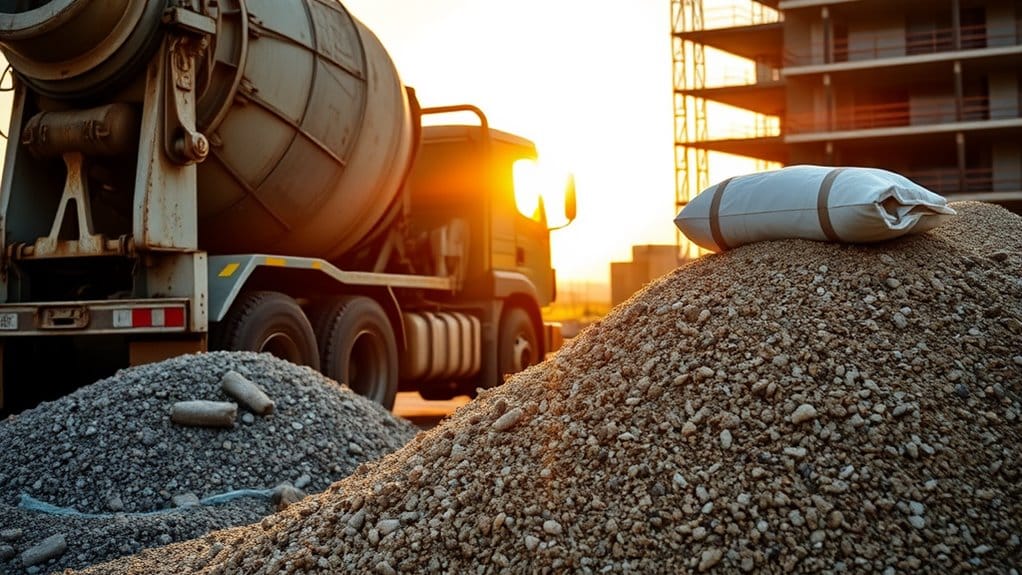
When considering the cost of ready-mix concrete, raw material prices are crucial.
The trends in cement prices, variations in aggregate costs, and the expenses of admixtures can significantly impact your project's budget.
For instance, if cement prices rise sharply, it can lead to a noticeable increase in the overall cost of your concrete mix.
Being aware of these factors enables you to anticipate price changes and manage your costs more effectively.
Cement Price Trends
Cement prices are heavily influenced by fluctuations in key raw materials such as limestone, clay, and gypsum. These changes can have a direct impact on pricing structures within the cement market, making it essential to understand these dynamics for effective cost management.
- Sudden shortages can drive up production costs.
- Energy prices play a significant role in overall cement pricing.
- Global trends can lead to local price adjustments.
Employing price forecasting techniques can help you anticipate changes in cement pricing, allowing you to manage your budget more effectively.
Keep an eye on supply and demand, as these factors will directly affect your costs.
Aggregate Cost Variations
Aggregate costs can vary significantly due to several factors, making it essential to understand their influence on the overall price of ready-mix concrete for effective budgeting.
The quality of aggregates plays a crucial role; premium materials often come with higher costs. Moreover, the type of aggregate selected can impact pricing, as different types carry different price tags.
Sourcing materials locally can help you avoid high transportation fees if aggregates are readily available in your area. Generally, larger, coarser aggregates tend to be more cost-effective than finer ones.
Keep an eye on local supply and demand trends, as these can increase costs during busy construction periods. By optimising your aggregate choices, you can better manage expenses while ensuring your project meets performance standards.
Admixture Expense Influence
Understanding the impact of admixture expenses on the cost of ready-mix concrete is crucial for effective project budgeting.
The type and amount of admixtures you select can significantly influence your overall costs, particularly when it comes to enhancing performance.
Here are some key considerations:
- Different types of admixtures can lead to varying costs, particularly in high-strength mixes.
- Tailored mixtures often necessitate specific additives, which can drive up expenses.
- Transport costs for raw materials can also affect your final pricing.
Strategies for Budgeting and Planning
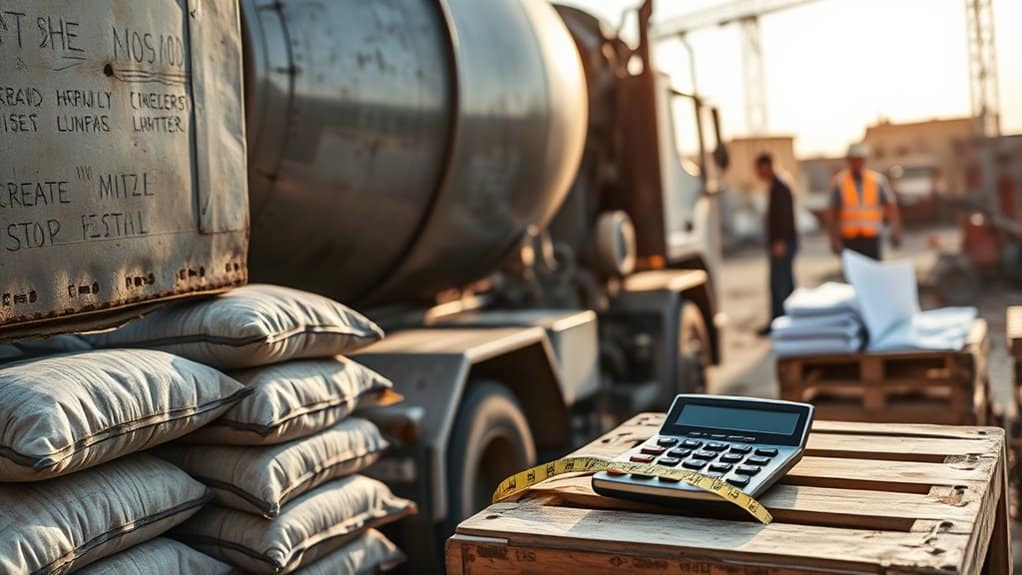
Effective budgeting and planning for ready-mix concrete projects relies on precise calculations and strategic engagement with suppliers.
Begin with accurate volume calculations, including a margin for potential wastage to prevent unforeseen costs. Use concrete calculators from suppliers to refine your estimates and create detailed sketches for any irregular shapes.
To manage your budget effectively, obtain quotes from several suppliers to compare prices and secure the best deal.
Consider planning ahead by placing orders early to lock in prices and take advantage of off-peak discounts. It's also wise to negotiate based on competing quotes and prioritise local suppliers to reduce transportation costs.
Additionally, consolidating smaller orders into a bulk purchase can lead to significant savings while ensuring consistent quality in your concrete supply.
Frequently Asked Questions
How Do Weather Conditions Affect Ready-Mix Concrete Pricing?
Weather conditions significantly affect ready-mix concrete pricing. For instance, high temperatures can increase evaporation rates and prolong curing times, while high humidity can change the consistency of the mix. These variations often result in higher material costs and adjustments in labour during challenging weather. For example, if it's particularly hot, contractors may need to use additives to slow down curing, which can add to the overall cost.
What Are the Environmental Impacts of Ready-Mix Concrete Production?
Did you know that ready-mix concrete can cut carbon emissions by as much as 30%? By reducing resource depletion and using recycled materials, it significantly lowers its environmental impact. This approach not only promotes sustainability but also ensures consistent quality and durability in construction projects.
Can I Use Recycled Materials in My Concrete Mix?
Yes, you can use recycled aggregates in your concrete mix. This practice improves sustainability, conserves natural resources, and can lower costs. For example, using crushed bricks or reclaimed concrete not only helps reduce landfill waste but also supports eco-friendly building methods.
What Certifications Should a Ready-Mix Supplier Have?
When choosing a ready-mix supplier, it's essential to ensure they have the necessary certifications to meet high standards. Look for NRMCA Quality Certification, Green-Star certifications, and relevant employee qualifications. These credentials demonstrate their commitment to quality and sustainability.
How Long Does Ready-Mix Concrete Typically Last?
Ready-mix concrete generally lasts three to six months when stored correctly. Factors such as moisture, temperature, and proper sealing play a significant role in its durability. For instance, if you store it in a damp area, it may set prematurely. Always check the storage conditions to ensure it performs at its best when you need it.
Conclusion
Navigating the costs of ready-mix concrete can be challenging, but making informed choices can help keep your project on track. Understanding the key factors that affect pricing is essential for creating a budget that works. Pay attention to the prices of raw materials and delivery charges, as these can significantly impact your overall costs. For example, if you're building a driveway, the price may vary depending on the distance from the supplier and the type of concrete mix you choose. By planning strategically and managing costs effectively, you can avoid common financial pitfalls and lay a strong foundation for your project.
Looking to order a ready-mix concrete quote? Barrow Mix batches it fresh on-site across Greater Manchester & Cheshire — you only pay for what you use.
Get a free quote →Need concrete mixed & delivered?
Barrow Mix delivers volumetric ready-mix concrete across Greater Manchester & Cheshire — mixed fresh on site, barrowed or pumped to the pour, from as little as ½m³. You only pay for what you use.
Ordering concrete in Greater Manchester or Cheshire? Want a real price? Our concrete calculator gives your volume, then call us for a fixed ready-mix quote across Greater Manchester & Cheshire.

Learn about the diverse types of concrete used in construction and discover which mix can transform your next project.

For a long-lasting driveway that laughs in the face of the UK's unpredictable weather, the C20 concrete mix is your Read more

In the UK, you've got a a lot of lightweight concrete types to choose from, each with its unique perks. Read more