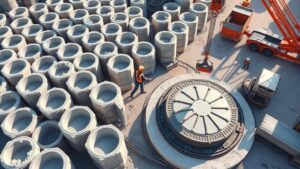
To minimise wastage with ready-mix concrete, ensure precise batching techniques to achieve accurate material ratios. Schedule deliveries wisely, steering clear of extreme weather, and allow buffer times for any unforeseen delays. Adopt sustainable practices by using recycled aggregates and supplementary cementitious materials to lessen environmental impact. Optimise logistics with GPS and route planning to reduce fuel consumption. Lastly, monitor and control quality through regular inspections and automated systems to ensure consistency. There's always more to learn about improving your concrete practices.
Key Takeaways
- Use precise batching techniques to ensure accurate ratios of raw materials, which helps to minimise excess and waste in concrete production. For example, calculating exact quantities for each mix can prevent over-ordering.
- Schedule deliveries efficiently by coordinating pour times with delivery slots and including buffer periods to accommodate any unexpected delays.
- Incorporate supplementary cementitious materials and recycled aggregates to cut down on waste and lessen reliance on virgin resources. For instance, using ground granulated blast-furnace slag can enhance concrete properties while reducing cement use.
- Implement effective water management systems to optimise water usage and decrease reliance on fresh water in the mixing process.
- Regularly monitor and control quality through automated systems and inspections to ensure compliance with specifications, which ultimately reduces material waste.
Understanding Precise Batching Techniques
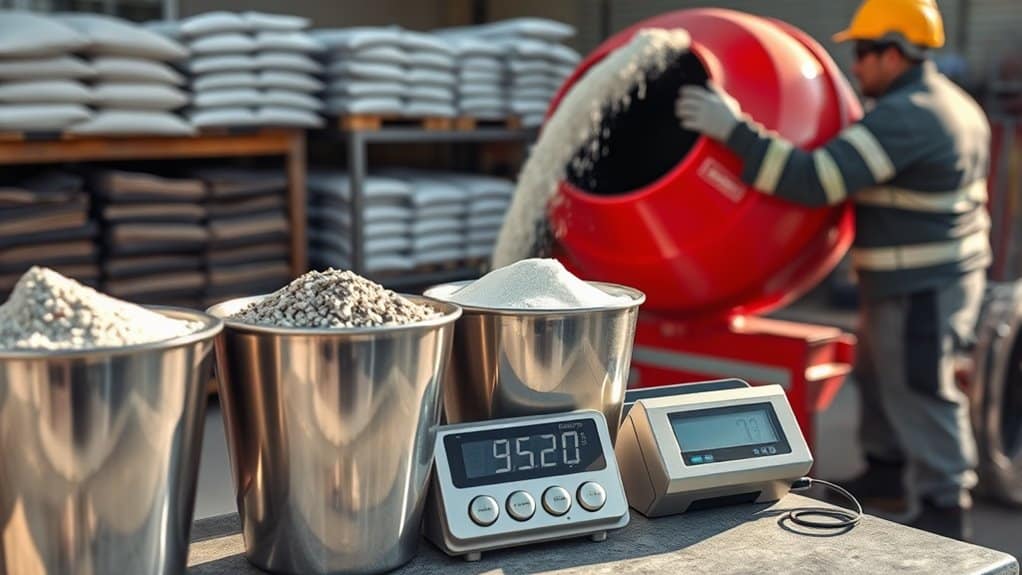
To minimise waste in concrete production, mastering precise batching techniques is crucial. Weight measurement is key, as it ensures accurate proportions of raw materials such as cement, aggregates, and water. Using electronic and mechanical weigh batchers improves batch consistency and reduces errors, which in turn limits the need for rework. Fully automatic systems can also account for moisture content, optimising material use. This automation streamlines operations and ensures each batch complies with project specifications. By prioritising weight batching over volume batching, you improve material efficiency, leading to less waste and stronger final products. Additionally, regular calibration of batching equipment is essential for maintaining accuracy and further reducing material wastage. Implementing these techniques is vital for effective concrete production, as accurate weight batching directly contributes to the ideal water-cement ratio.
Scheduling Deliveries Effectively
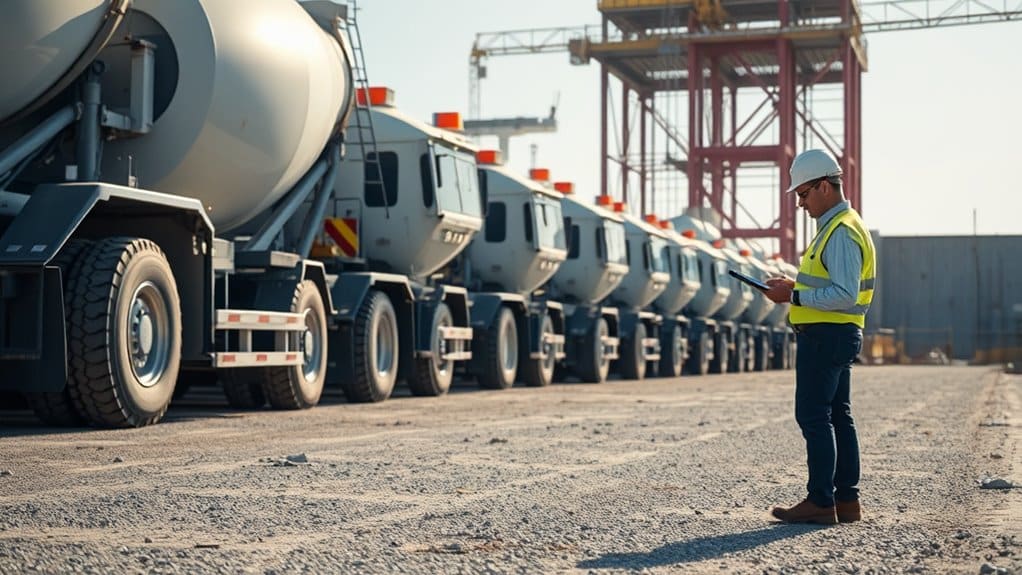
Effective scheduling of concrete deliveries is crucial for keeping projects on track and minimising waste. Here are some key elements for effective logistical coordination:
- Project Timeline Development: Draft a detailed schedule that aligns specific concrete pour times with delivery windows. This ensures that the delivery fees are minimized by reducing the number of trips required.
- Supplier Agreements: Work with dependable suppliers to set clear delivery times and outline penalties for delays.
- Weather Considerations: Avoid scheduling deliveries during extreme weather conditions to ensure optimal curing. Immediate pouring is critical to maintain quality and should be prioritized in the scheduling process.
Incorporating buffer times can help manage unexpected delays without impacting your project timeline.
Leverage technology for real-time adjustments and maintain open communication among all stakeholders.
This proactive approach not only boosts efficiency but also significantly reduces waste from poorly managed deliveries.
Implementing Sustainable Practices
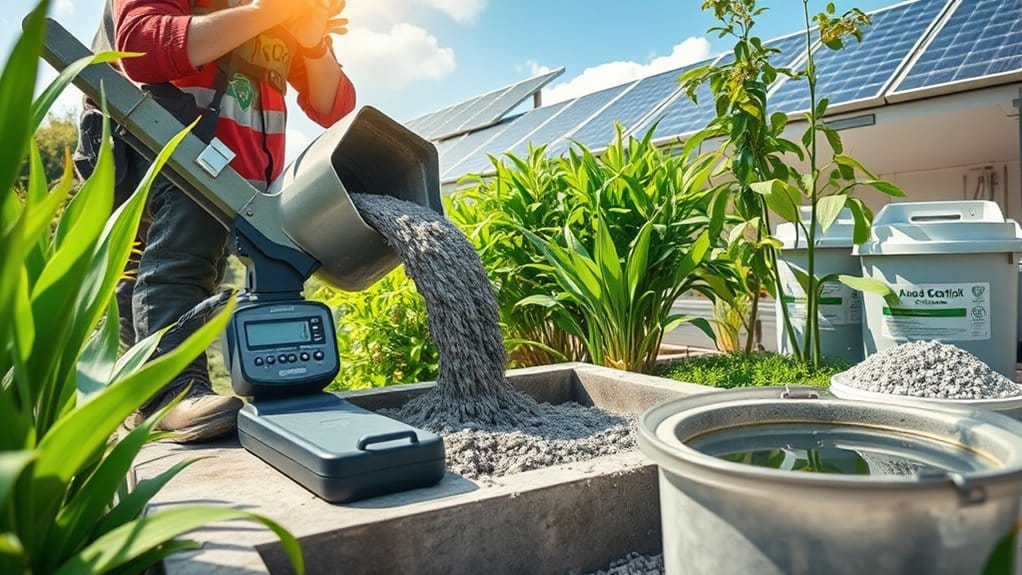
Implementing sustainable practices in ready-mix concrete not only addresses environmental issues but also boosts project efficiency. By using sustainable materials such as supplementary cementitious materials (SCMs) and recycled aggregates, you can significantly lower the carbon footprint and reduce waste. Advanced water management systems that recycle water further enhance sustainability. Additionally, the cement industry accounts for approximately 8% of global CO₂ emissions, highlighting the importance of reducing cement usage in concrete production. The incorporation of sustainable concrete materials can further minimize the environmental impact of construction projects.
| Sustainable Practices | Benefits |
|---|---|
| Use of SCMs | Reduces carbon footprint |
| Incorporation of Recycled Aggregates | Reduces the need for virgin materials |
| Advanced Water Management | Lowers freshwater consumption |
| Recycling Initiatives | Promotes a circular economy |
| Reducing Cement Usage | Improves durability and cuts emissions |
Optimizing Logistics and Transportation
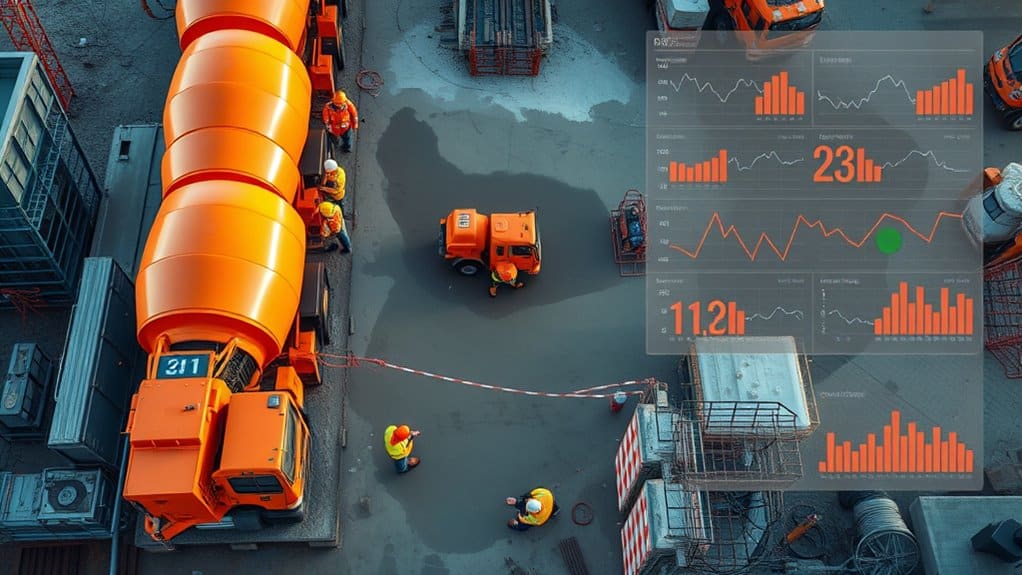
Sustainable practices in ready-mix concrete can significantly enhance logistics and transportation, improving project efficiency.
Here's how to optimise these processes:
- GPS Tracking: Implement GPS technology to monitor truck locations, which helps streamline dispatching and reduce delivery times.
- Route Optimisation: Use route planning software to minimise travel distances and lower fuel usage, ensuring more efficient journeys.
- Just-in-Time Deliveries: Embrace Just-in-Time (JIT) systems to ensure materials arrive precisely when needed, reducing the risk of stockpiling and waste.
Monitoring and Controlling Quality
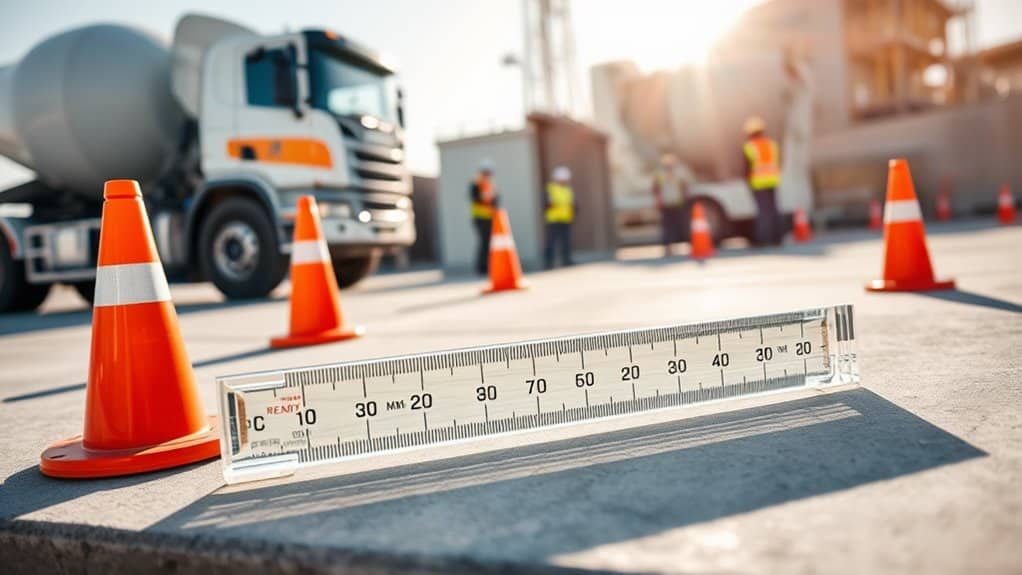
Quality control in ready-mix concrete is crucial for ensuring structural integrity and performance. Accurate batching is vital; automated systems with real-time data analytics help minimise human error and improve mix consistency.
Regularly calibrating equipment ensures compliance with specifications. Conduct routine inspections and check delivery tickets against project requirements.
Testing concrete samples for slump, air content, and temperature is essential to meet standards like ACI 318/318R.
Optimising processes is key to quality assurance; invest in training to improve material management skills.
Employ advanced technologies for continuous monitoring and feedback, promoting a culture of ongoing improvement.
Implement systematic quality assurance strategies to refine production processes and reduce waste effectively.
Frequently Asked Questions
What Types of Projects Benefit Most From Ready-Mix Concrete?
Ready-mix concrete is especially beneficial for residential and commercial construction projects. Its consistent quality ensures durability and efficiency, making it perfect for high-rise buildings, shopping centres, and urban developments where timing and reliability are crucial.
How Do Weather Conditions Affect Ready-Mix Concrete Quality?
Weather conditions significantly affect the quality of ready-mix concrete. High temperatures can speed up the hydration process, potentially leading to weaker concrete if not managed properly. Conversely, high humidity can help retain moisture, which is beneficial during curing. For instance, on a hot day, you might need to use retarders to slow down the setting time, while in humid conditions, you may not need to water the mix as frequently. Being aware of these factors allows you to make informed adjustments, ensuring your concrete achieves optimal strength and durability as it cures.
Can Surplus Concrete Be Reused on Future Projects?
Yes, surplus concrete can be reused in future projects. By planning effectively and utilising surplus materials, you can improve resource efficiency, cut costs, and support sustainable practices. For instance, leftover concrete can be crushed and repurposed as aggregate for new builds or landscaping. This not only ensures quality through proper processing but also reduces waste, making it a practical choice for construction.
What Are the Best Practices for On-Site Concrete Storage?
For effective on-site concrete storage, prioritise safety by using reliable storage solutions. Ensure moisture control, temperature management, and cleanliness to maintain mix quality and prevent contamination. Organise the layout for easy access and handling. For example, store aggregates and cement in separate, covered areas to keep them dry and free from debris. This approach helps to ensure your concrete remains in top condition for use.
How Does Ready-Mix Concrete Compare to Traditional Concrete Mixing Methods?
When comparing ready-mix concrete to traditional mixing methods, you'll notice improved cost-effectiveness and greater mixing accuracy. Ready-mix provides consistent quality and simplifies labour requirements, making it a better option for large construction projects. For example, using ready-mix can save time and reduce the need for on-site labour, allowing for quicker project completion.
Conclusion
To minimise wastage when working with ready-mix concrete, it's essential to use accurate batching methods, plan deliveries effectively, and streamline logistics. Research indicates that effective planning can cut concrete waste by as much as 30%. By monitoring quality throughout the process and adopting sustainable practices, you can improve efficiency while supporting a greener construction sector. These adjustments not only lead to significant cost savings but also help reduce your environmental impact.

Learn about the diverse types of concrete used in construction and discover which mix can transform your next project.

For a long-lasting driveway that laughs in the face of the UK's unpredictable weather, the C20 concrete mix is your Read more

In the UK, you've got a a lot of lightweight concrete types to choose from, each with its unique perks. Read more