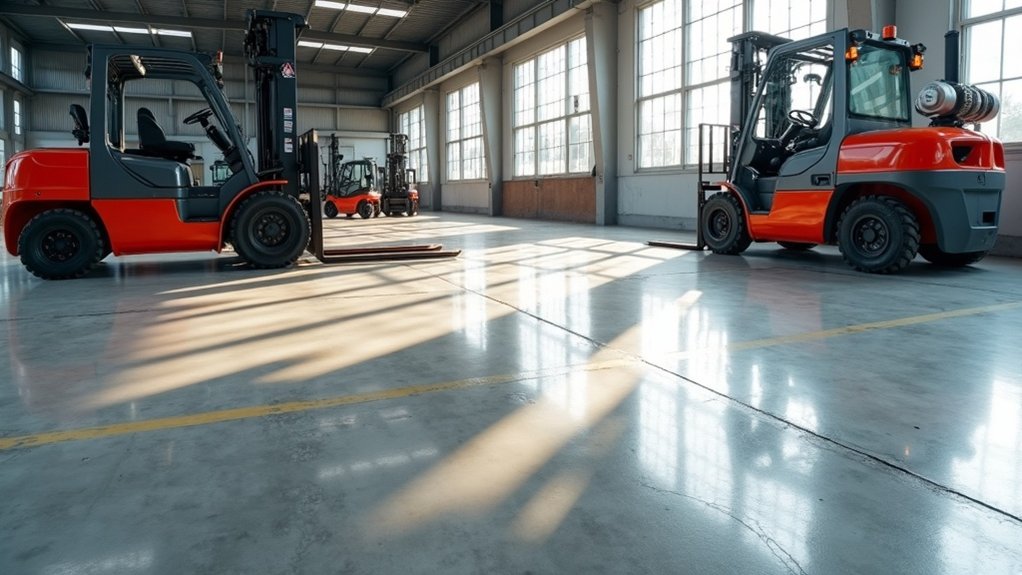
When designing concrete slabs for heavy machinery in factories, begin with a thorough analysis of the soil and subgrade to assess load-bearing capacity. It’s essential to evaluate both static and dynamic loads to determine the appropriate slab thickness, which is typically at least 150mm for heavy loads. Use high-strength concrete mixes and ensure proper reinforcement to reduce the risk of cracking. Effective joint design is crucial for managing potential cracks. Additionally, applying protective coatings can significantly enhance durability. Regular maintenance and specific design strategies are also important for ensuring long-lasting performance.
Key Takeaways
- Evaluate the soil type and its load-bearing capacity to ensure the foundation can adequately support heavy machinery.
- Calculate both static and dynamic loads to determine the required slab thickness and reinforcement for durability.
- Utilise high-strength concrete mixes and supplementary materials to enhance load-bearing capacity and extend lifespan.
- Implement effective joint design and crack control measures to mitigate damage from stress concentrations.
- Set up regular maintenance and cleaning routines to extend the lifespan of the slab and maintain its surface integrity.
Understanding Soil and Subgrade Analysis

When designing concrete slabs for heavy machinery, understanding soil and subgrade analysis is crucial, as it directly affects the slab’s performance and lifespan. You need to assess soil behaviour, particularly its load-bearing capacity and compressibility, to ensure a stable foundation. Different soil types—such as clay, silt, sand, and gravel—react differently under load, which will influence your design choices. The modulus of subgrade reaction (k-value) is vital for evaluating how the soil will respond elastically and distribute stress. Soil analysis is essential for determining how various soil types will interact with the concrete, ensuring the foundation is robust against potential failures. Soil stiffness also plays a significant role in how loads are transferred. It’s equally important to monitor moisture content and groundwater levels, as these factors can impact soil strength.
Load Considerations for Heavy Machinery

Understanding soil and subgrade analysis is crucial when considering load factors for concrete slabs designed for heavy machinery. You need to assess both static and dynamic loads, as these impact the slab’s structural integrity. Evaluating load distribution is key; concentrated loads from machinery feet often require specific reinforcement to prevent cracking. Additionally, impact resistance is vital, particularly in areas where sudden forces, such as dropped tools, may occur. Consider the movement patterns and types of equipment used, as these affect the slab’s wear and stress points. Always take into account axle loads and wheel spacing, as these determine the necessary slab strength. A detailed analysis ensures your concrete slab can effectively support the demands of heavy machinery, and understanding soil type is essential for determining the slab’s load-bearing capacity. Furthermore, pile foundations can provide additional stability in challenging soil conditions, ensuring the slab’s long-term performance under heavy machinery loads.
Determining Concrete Slab Thickness and Reinforcement

To ensure your concrete slab can handle the demands of heavy machinery, it’s crucial to determine the right thickness and reinforcement. Here are the key points to consider:
- Minimum thickness: Aim for at least 150mm (6 inches) for heavy loads and 300mm (12 inches) for extreme conditions.
- Load distribution analysis: Assess concentrated loads and spacing to avoid cracking.
- Slab reinforcement methods: Incorporate rebar and wire mesh to boost strength and limit deflection. The modulus of elasticity of the concrete plays a significant role in determining its load-bearing capacity. Using rebar can enhance the strength and durability of the concrete structure, ensuring it withstands heavy machinery demands.
Evaluating the soil’s load-bearing capacity and traffic patterns is vital for your design. Thicker slabs enhance durability and safety, while proper reinforcement placement helps minimise crack sizes.
With these factors in mind, you can ensure your slab meets operational needs and lasts longer. Always consult relevant British Standards for specific reinforcement and design guidelines tailored to your project.
Selecting the Right Concrete Mix and Finishing Techniques

When choosing a concrete mix for heavy machinery slabs, prioritise the necessary performance characteristics, such as compressive strength and durability. The surface finishing options are crucial for boosting the slab’s resistance to wear and environmental factors. For instance, a polished finish can enhance durability, while a textured surface can improve grip. It’s important to understand how mix design and finishing techniques work together to optimise the performance of your concrete slab. Additionally, selecting a high-strength mix like C40 concrete can provide enhanced load-bearing capacity essential for heavy-duty applications.
Performance Concrete Characteristics
Choosing the right concrete mix and finishing techniques is crucial for ensuring that slabs can endure the heavy demands of machinery.
To achieve optimal performance, consider the following:
- Mix Ratios: Aim for a mix ratio of 1:1:2 for high-strength concrete (25 MPa) to boost durability.
- Supplementary Cementitious Materials: Add materials like fly ash (15–35%) to enhance longevity and lower permeability.
- Aggregate Quality: Opt for durable aggregates that can withstand abrasion and deformation under substantial loads.
Surface Finishing Options
Concrete slabs intended for heavy machinery require not only robust performance but also effective surface finishing options to boost durability and functionality.
Choosing the right concrete mix is crucial; it should be high-strength and incorporate well-graded aggregates to reduce voids and enhance surface texture. Techniques such as trowelling or power trowelling create a smooth, hard surface suitable for heavy equipment use.
For additional slip resistance, broom finishing is worth considering, while exposed aggregate offers both visual appeal and durability. Polished concrete, achieved through grinding and the use of densifiers, provides excellent wear resistance.
Timing is key in the finishing process—ensure you act before the concrete sets to maintain surface integrity and performance under heavy loads. The choice of techniques and materials significantly affects the longevity and effectiveness of the slab.
Effective Joint Design and Crack Control Strategies

When designing joints for concrete slabs that will support heavy machinery, careful placement of control joints is crucial for managing cracking effectively.
Consider using joint sealing techniques that not only protect the edges but also allow for movement, which is vital for the slab’s durability.
Control Joint Placement
Effective control joint placement is crucial for managing cracking in concrete slabs, particularly when heavy machinery is involved.
Here are some key points to consider:
- Keep joint spacing at 2 to 2.5 times the thickness of the slab to effectively manage crack development.
- Position joints at regular intervals close to structural walls or areas of stress concentration for improved durability.
- Consider using localised reinforcement or thickening the slab where there are variations in subgrade stiffness under the joints.
Joint Sealing Techniques
The design and placement of joints are crucial for concrete slabs supporting heavy machinery, but the sealing techniques used can significantly affect their durability.
Consider using advanced sealant materials such as improved rubberised asphalt or high-modulus elastomeric options for added flexibility and longevity.
It’s vital to apply these sealants correctly. Ensure thorough surface preparation to enhance adhesion, and use a backer rod to maintain the right sealant depth.
Fill joints completely to avoid air pockets and smooth the surface before the sealant begins to skin over.
Implementing Protective Coatings and Maintenance Practices
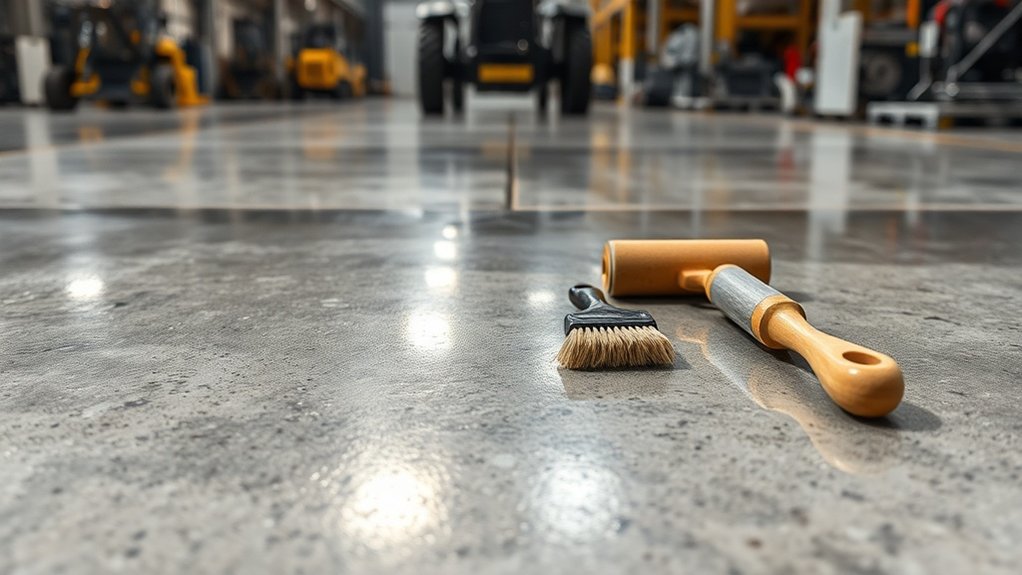
To ensure the longevity and performance of concrete slabs in environments with heavy machinery, it’s crucial to implement protective coatings and proactive maintenance practices.
The right types of coatings can protect against wear and chemical damage, while regular maintenance helps extend their lifespan.
- Select suitable coatings such as epoxy or urethane cement for durability and resistance to chemicals.
- Set up cleaning schedules to avoid the accumulation of harmful substances and arrange inspections to identify damage early on.
- Reapply coatings as necessary, based on wear rates, to prolong the life of your floors.
Frequently Asked Questions
What Are the Signs of Slab Failure in Factory Settings?
Signs of slab failure in factory settings include irregular crack patterns, uneven load distribution, and surface damage. Keep an eye out for delamination, spalling, or issues with moisture, as these may signal structural weaknesses that could compromise safety and functionality. For example, if you notice cracks forming around heavy machinery or pooling water on the floor, it’s time to investigate further.
How Often Should Concrete Slabs Be Inspected?
Concrete slabs in high-traffic areas should be inspected monthly, while those in moderate-use zones should be checked quarterly. For low-use areas, a biannual inspection is sufficient. This regular monitoring helps ensure safety and extends the lifespan of your concrete surfaces.
Can Environmental Factors Affect Slab Performance?
Yes, environmental factors do affect slab performance. For example, temperature changes and high humidity can lead to cracks in concrete, which compromises its strength. Regular monitoring is essential to address these issues and ensure slabs remain functional in various conditions.
What Is the Lifespan of a Concrete Slab Under Heavy Machinery?
A concrete slab supporting heavy machinery generally lasts between 30 to 100 years, influenced by its strength and the weight it bears. With proper design, regular maintenance, and consideration of environmental factors, this lifespan can be extended, potentially reaching over 200 years in optimal conditions. For instance, a well-maintained slab in a stable environment could serve a busy warehouse or industrial site for generations.
How Can I Prevent Moisture Issues in My Concrete Slab?
“An ounce of prevention is worth a pound of cure.” To prevent moisture problems in your concrete slab, it’s essential to install effective moisture barriers and ensure proper drainage systems. This helps direct water away and reduces saturation in the ground underneath. For example, using a damp-proof membrane can effectively protect against rising moisture, while proper guttering and downpipes can prevent water pooling around your property.
Conclusion
When designing concrete slabs for heavy machinery, think of it as building a strong foundation similar to the Colosseum—capable of enduring pressure and time. Start by thoroughly analysing the soil, calculating load requirements, and selecting the right thickness and reinforcement to ensure durability and stability. Incorporate effective joint designs and protective coatings to enhance your investment. Just like any lasting structure, regular maintenance is crucial to maintain your slab’s integrity against the demands of industrial use.

A strong concrete foundation requires careful planning and execution; discover the essential steps to ensure your structure's durability and longevity.

Optimize your concrete foundation's durability by learning essential waterproofing techniques that safeguard against moisture damage and ensure long-lasting protection. Discover Read more

How does concrete transform skyscraper foundations into engineering marvels capable of withstanding nature's forces? Discover the secrets behind their strength Read more