To use fibre-reinforced concrete in foundation construction, mix your chosen fibres—like steel or synthetic—with the concrete to improve durability and reduce cracking. Ensure you optimise the water-cement ratio to keep the mix workable and prevent clumping. Regularly check the consistency and follow testing standards for compressive and flexural strength. Proper anchorage of the fibres is crucial for optimal performance. Consider experimenting with different fibre combinations in your mix design to create tailored solutions that meet specific site requirements.
Key Takeaways
- Choose suitable fibre types, like steel or synthetic fibres, to improve tensile strength and crack resistance in the foundation mix.
- Optimise the fibre volume fraction to between 0.1% and 3% for the desired performance while ensuring workability is not compromised.
- Use hooked or crimped fibres for better anchorage, which enhances mechanical bonding and load capacity.
- Conduct trial mixes to find the best water-cement ratio, using superplasticisers to maintain workability without adding excess water.
- Ensure compliance with testing standards for compressive strength and durability to confirm the foundation meets design specifications.
Understanding Fiber-Reinforced Concrete Composition

Fiber-reinforced concrete (FRC) is a composite material that improves the mechanical properties of standard concrete by incorporating fibres. Understanding the properties of these fibres and their composition ratios is key to optimising FRC performance. For example, steel fibres significantly enhance tensile strength, whereas polypropylene fibres increase plasticity and minimise shrinkage cracking. The inclusion of various types of fibers addresses the low tensile and flexural strength of pure concrete, helping to reduce issues like cracking and exfoliation after application. Additionally, the incorporation of fibre reinforcement can greatly enhance durability against environmental factors, ensuring long-lasting performance of the structure.
Typically, the volume fraction of fibres ranges from 0.1% to 3%, and the aspect ratio of the fibres influences flexural strength and toughness. It’s crucial to select the right fibre dosage to achieve the desired mechanical properties. Following proper mixing procedures ensures even distribution of fibres, which prevents clumping and maximises the advantages of your chosen fibre composition.
Benefits of Fiber-Reinforced Concrete in Foundations
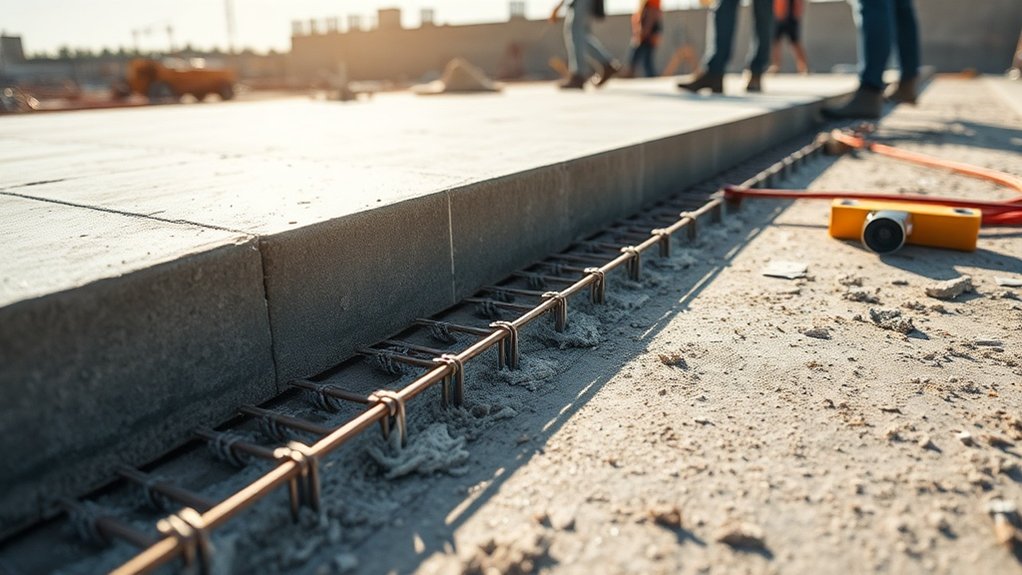
When building foundations, incorporating fibre reinforcement brings numerous advantages that significantly improve performance. First and foremost, it enhances durability and crack control; the fibres help bridge cracks, preventing them from spreading and extending the life of the concrete. This means lower maintenance costs in the long run. Additionally, FRC’s superior flexural strength allows foundations to support heavier loads without compromising structural integrity.
Fibre-reinforced concrete also offers better resistance to impact and fatigue, making it more resilient under changing loads. On top of that, it supports sustainability efforts by reducing the need for steel reinforcement, which helps lower the carbon footprint. Additionally, the use of fibers improves tensile strength, further contributing to the overall performance of the foundation.
Moreover, it minimises the penetration of water and chemicals, providing extra protection against environmental factors.
In essence, these benefits lead to longer-lasting foundations with superior structural integrity, resulting in both cost savings and greater environmental responsibility.
Types of Fibers and Their Roles in Concrete

In fibre-reinforced concrete (FRC), the type of fibre used significantly influences performance and application. It’s important to grasp how various fibres—like steel, glass, synthetic, and natural—function to optimise anchorage mechanisms and enhance structural integrity. Each fibre type offers distinct benefits, improving toughness, controlling cracks, and boosting the overall durability of the concrete mix. For example, steel fibres are excellent for increasing tensile strength, while synthetic fibres can help with flexibility. Additionally, the incorporation of different types of fibres can lead to improved performance aspects such as crack resistance and impact resistance, thereby enhancing structural integrity. Understanding these roles is key to making informed choices in construction, as fiber reinforcement can also reduce cracking and increase energy absorption, thereby enhancing structural integrity.
Fiber Types Overview
Different types of fibres play crucial roles in enhancing the mechanical properties and durability of concrete.
When comparing fibre properties, consider steel fibres, which improve toughness and impact resistance but don’t significantly increase flexural strength.
Glass fibres enhance aesthetics and help control microcracking, although they’re less effective structurally.
Synthetic fibres, like polypropylene, improve crack resistance and workability without boosting bending strength.
Natural fibres are eco-friendly but require careful mix adjustments due to their water absorption and susceptibility to degradation.
Lastly, hybrid fibres combine various types for synergistic effects, optimising both toughness and crack control.
Understanding these durability factors will help you choose the right fibres for specific foundation applications, ensuring the desired performance outcomes.
Anchorage Mechanisms Explained
Understanding anchorage mechanisms in fibre-reinforced concrete (FRC) is crucial for optimising foundation performance. Various fibre types, such as hooked and crimped fibres, enhance mechanical bonding by improving interlocking with the concrete matrix.
Hooked fibres are particularly effective at resisting pullout, while crimped fibres boost friction, facilitating better load transfer. Fibrillated fibres, with their rough surfaces, strengthen this bond even further.
Well-anchored fibres can bridge cracks, providing ductility and load-carrying capacity, which helps to prevent premature debonding.
To optimise reinforcement, it’s important to consider fibre length and distribution—these factors should balance mixing ease with effective embedment.
Ultimately, grasping these mechanisms can significantly enhance the durability and performance of your FRC foundation.
Mix Design Considerations for Workability
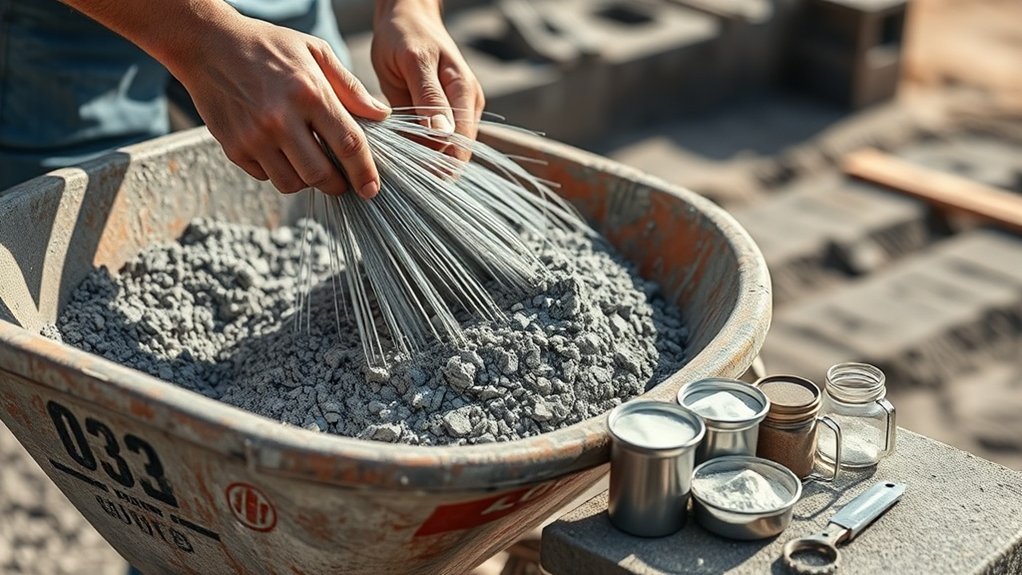
When designing your fibre-reinforced concrete mix, choosing the right type of fibre is crucial for optimal workability.
Adjusting the water content significantly impacts the mix’s consistency and performance. For instance, too much water can lead to a weak structure, while too little can make the mix difficult to handle.
Additionally, using proper mixing techniques ensures that fibres are evenly distributed, which is vital for maintaining workability during placement.
Fiber Type Selection
Choosing the right type of fibre is crucial for optimising the workability of fibre-reinforced concrete (FRC) mixes. Different fibre types affect workability in various ways, impacting overall performance.
For instance, steel fibres generally cause less slump reduction compared to polymeric fibres, which can reduce slump by as much as 1 inch for every 2–3 lbs added.
It’s important to consider dosage; higher amounts of fibre increase stiffness but can diminish workability. The shape of the fibres also matters—longer fibres are more likely to tangle, further complicating workability.
To achieve an effective mix, follow project specifications and manufacturer guidelines closely. Conduct tests to evaluate the fresh properties of your mix, ensuring it maintains adequate flow and avoids issues like fibre clumping.
Adjusting Water Content
Achieving the right water content is crucial for maintaining workability in fibre-reinforced concrete (FRC) mixes, particularly when considering the type and dosage of fibres used.
When adjusting the water content, remember that a higher fibre dosage increases the surface area, which in turn raises the water demand. A typical water-cement ratio (w/c) of 0.4 to 0.6 ensures there’s enough paste to coat the fibres while still maintaining strength.
Too much water can weaken the mix and lead to durability problems.
To effectively adjust the water, consider using superplasticisers. These additives improve workability without increasing the water content.
It’s wise to conduct trial mixes to determine the optimal w/c ratio, ensuring that the mix meets both workability and performance standards for your foundation application.
Mixing Techniques Importance
Mixing techniques are vital for the workability of fibre-reinforced concrete (FRC) mixes, directly impacting the performance and durability of foundations.
When working with macrosynthetic and steel fibres, you may encounter challenges as they can significantly reduce the slump. To address this, use effective dispersion methods, such as dry-mixing the fibres with aggregates before adding water. This approach helps minimise balling and ensures uniform distribution.
For longer or thinner fibres, high shear mixing or extended mixing times can prevent clumping. Additionally, incorporating superplasticisers can maintain workability without the need for excessive water.
Always conduct trial batches to refine your mixing processes, ensuring optimal fibre dispersion and consistent material properties throughout your project.
Applications of Fiber-Reinforced Concrete in Foundation Construction

Fiber-reinforced concrete (FRC) is essential in contemporary foundation construction, enhancing structural strength and durability.
In shotcrete applications, FRC offers improved adhesion and toughness, making it ideal for complex shapes and hard-to-reach areas, which in turn boosts construction efficiency.
When used in precast components, FRC enhances crack resistance and reduces the need for steel reinforcement, resulting in notable cost savings. Its resilience against environmental factors, such as freeze-thaw cycles and chemical exposure, ensures long-lasting structural integrity.
FRC also provides design flexibility, allowing for the optimisation of fibre types and dosages tailored to specific project needs.
This means thinner, lighter foundation elements can be achieved without sacrificing strength.
Ultimately, the durability of fibre-reinforced concrete supports more sustainable and efficient building practices.
Compliance With Testing Standards and Performance Metrics

When constructing foundations with fibre-reinforced concrete (FRC), complying with established testing standards is essential for ensuring optimal performance and safety.
Following strict testing protocols ensures that your FRC meets vital performance criteria. Focus on these key areas:
- Compressive Strength: Ensure the FRC meets or surpasses design specifications for foundation safety.
- Residual Flexural Strength: Confirm the material’s performance after cracking to minimise damage and improve toughness.
- Workability Metrics: Keep an eye on slump to maintain quality during placement, and adjust mixes as needed.
- Durability Parameters: Evaluate resistance to environmental factors such as shrinkage and freeze-thaw cycles.
Implementing robust quality assurance practices throughout these testing processes is crucial for achieving reliable results and maximising foundation performance.
Best Practices for Implementation in Field Projects
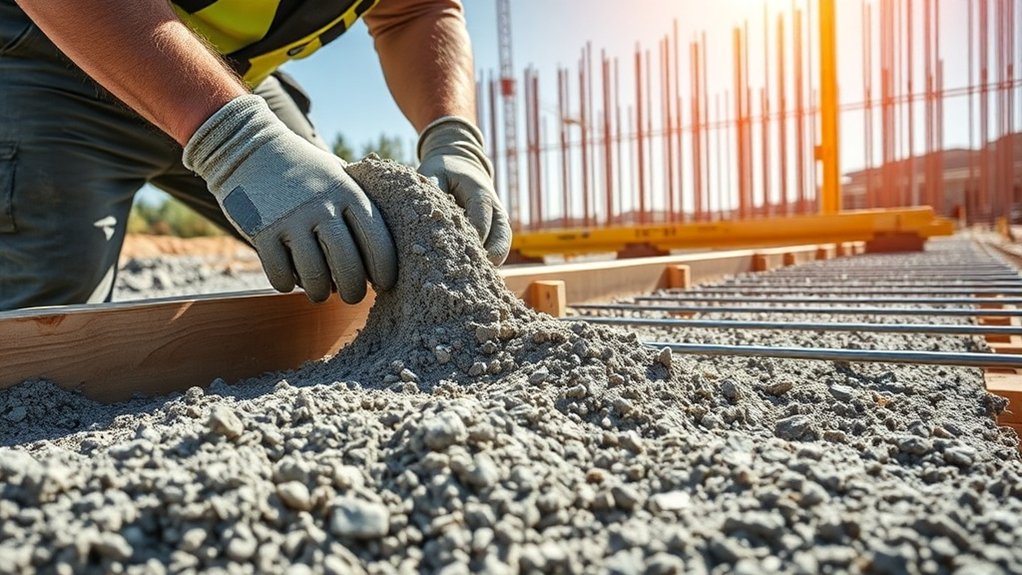
To achieve optimal performance in field projects using fibre-reinforced concrete, it’s crucial to adopt best practices for consistent and effective application. Tackling field challenges demands careful attention to fibre mixing, placement, and finishing techniques.
| Best Practices | Implementation Strategies | Benefits |
|---|---|---|
| Uniform fibre mixing | Pre-mix fibres with dry materials | Prevents clumping |
| Optimise mix design | Use superplasticisers as necessary | Maintains workability |
| Ensure fibre anchorage | Select appropriate fibre types | Enhances mechanical performance |
| Monitor fresh concrete | Check slump and temperature | Ensures quality |
| Conduct trial batches | Validate mixing and finishing techniques | Reduces risk of errors |
Frequently Asked Questions
Can Fiber-Reinforced Concrete Be Used in Extreme Weather Conditions?
Yes, fibre-reinforced concrete performs well in extreme weather conditions, improving durability and resistance to the elements. Its capacity to endure impact and environmental stress makes it an excellent choice for harsh climates, such as areas prone to heavy rainfall or freezing temperatures. For instance, it’s often used in roadways and bridges where resilience is crucial.
What Is the Cost Difference Between Fiber-Reinforced and Traditional Concrete?
Fiber-reinforced concrete often leads to lower material costs compared to traditional concrete, offering notable financial benefits. Although the initial investment may be higher, the long-term savings generally make it worthwhile. For instance, its enhanced durability can reduce maintenance and repair costs over time, making it a smart choice for many projects.
How Long Does Fiber-Reinforced Concrete Take to Cure?
Fiber-reinforced concrete typically cures over a period of 28 days. You can expect around 20-30% strength development within the first 24 hours, which increases to 60-70% by day seven. To achieve maximum strength, it’s essential to apply proper curing techniques throughout the entire duration.
Are There Any Specific Environmental Impacts of Using Fiber-Reinforced Concrete?
Using fibre-reinforced concrete provides sustainability advantages, such as lower carbon emissions and resource conservation. For example, incorporating recycled fibres not only reduces waste but also supports a circular economy in construction. This approach helps create more environmentally friendly building materials while promoting responsible resource use.
How Does Fiber-Reinforced Concrete Affect Construction Timelines?
Fiber-reinforced concrete boosts construction efficiency by minimising early-age cracking, which leads to quicker strength gain and fewer delays. This allows for more flexible project scheduling, enabling faster transitions between phases and reducing the need for labour-intensive repairs. For instance, if a construction team can move on to the next stage sooner due to fewer cracks, they can save time and costs, ultimately leading to a smoother project flow.
Conclusion
Incorporating fibre-reinforced concrete into your foundation projects can significantly improve durability and performance. By understanding its composition and choosing the appropriate fibres, you can create a strong and reliable structure. It’s important to remember that it’s not just about mixing materials; it’s about embedding strength into your foundations. With careful attention to design and adherence to regulations, you can ensure your foundations endure over time, much like a well-made garment that withstands the elements.

Offering enhanced durability and crack resistance, fiber-reinforced ready-mix concrete products are revolutionizing construction—discover their manufacturing process and future potential.

A strong concrete foundation requires careful planning and execution; discover the essential steps to ensure your structure's durability and longevity.

Optimize your concrete foundation's durability by learning essential waterproofing techniques that safeguard against moisture damage and ensure long-lasting protection. Discover Read more