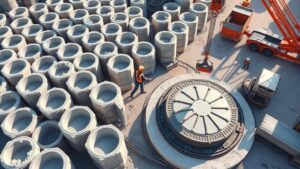
When deciding between concrete slab and pier foundations, start by evaluating your site conditions, including soil type and drainage. Slab foundations are ideal for flat, stable ground, while pier foundations are better suited for uneven or shifting soil.
Think about your budget and future maintenance. Slab foundations may be cheaper initially, but they could lead to higher repair costs down the line. On the other hand, pier foundations provide greater flexibility for future modifications and easier access for repairs.
By considering these factors, you can make a more informed choice.
Key Takeaways
- Assess the site conditions, such as soil type and drainage, to identify the most appropriate foundation type for your property.
- Consider long-term durability; while slab foundations can crack over time, pier foundations allow for easier repairs and modifications.
- Evaluate installation costs and future maintenance; slab foundations may lead to higher repair expenses over time.
- Think about accessibility for repairs; pier foundations provide easier access to utilities and allow for modifications, unlike concrete slabs.
- Weigh aesthetic preferences against environmental factors; pier foundations offer more design flexibility, whereas slab foundations tend to be quicker to install.
Understanding Foundation Types

When selecting a foundation for your home, it’s crucial to understand the key differences between concrete slab and pier and beam foundations.
Concrete slab foundations consist of a single, solid layer of concrete poured directly onto the ground. They’re ideal for flat, stable, and well-drained soil, providing durability and requiring minimal upkeep. In warmer climates like Texas, homes often lack basements due to a shallow frost line, making slab foundations a common choice. Additionally, ground preparation is essential to ensure the stability and longevity of slab foundations.
In contrast, pier and beam foundations raise the structure using piers and beams, creating a crawl space underneath. This design is better suited for uneven or shifting ground, making it more adaptable to various soil conditions.
While slab foundations tend to be cheaper upfront, pier and beam foundations allow easier access for repairs and adjustments, particularly in areas at risk of moisture or pest issues.
Installation Process and Timeline

Before starting the installation of your foundation, it’s crucial to understand the process and timeline involved.
The project begins with site preparation, which includes assessing the soil and clearing the area for a stable base. Next, excavation takes place, where trenches for footings are dug; this usually takes 1-3 weeks. This timeline can be influenced by project size and complexity. Proper soil assessment during this phase is essential for determining the foundation type needed.
After that, formwork is set up and reinforcement is added, ensuring compliance with local regulations. Plumbing and utilities are installed before the concrete is poured, which is essential for slab foundations.
The actual pouring of concrete generally takes a day and involves careful spreading and smoothing. Finally, curing starts, lasting 24-48 hours before the forms are removed.
Coordinating these phases effectively is key to ensuring a solid foundation and keeping your project on schedule.
Cost Comparison
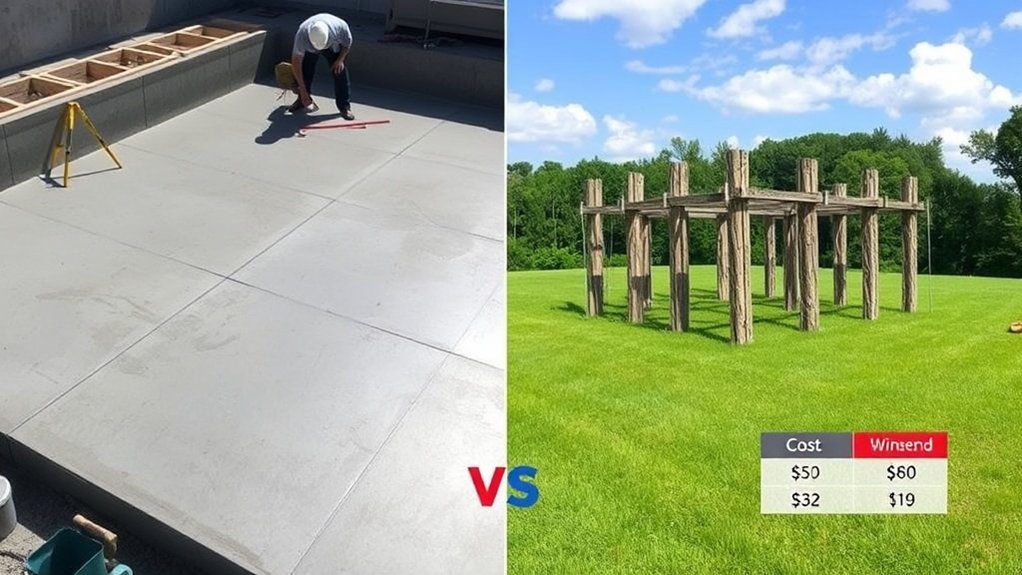
Cost considerations are crucial when choosing between concrete slab and pier foundations. Generally, slab foundations are cheaper to install due to their simpler design and fewer materials, costing between £3,000 and £10,500 for a 93 sq. m home. In contrast, pier and beam foundations range from £5,000 to £12,500 for the same size, largely due to their complexity and higher labour costs. While slab foundations may save you money initially, they can lead to greater repair costs over time because they’re prone to cracking. On the other hand, pier and beam systems, despite their higher upfront costs, often result in lower long-term maintenance expenses thanks to easier access for repairs. Additionally, pier and beam foundations provide better moisture control and protection against flooding and pests, which can save costs related to water damage in the long run. Consider these cost factors carefully to fit your budget and long-term investment plans. It’s also important to note that proper maintenance of concrete surfaces can significantly extend their lifespan and reduce unexpected repair costs.
Evaluating Site Conditions

Choosing the right type of foundation depends largely on your site’s specific conditions. A detailed soil analysis and drainage assessment are essential. Take into account factors such as soil type, stability, and topography. Here’s a brief overview:
| Factor | Impact on Slab Foundations | Impact on Pier Foundations |
|---|---|---|
| Soil Type | Clay can lead to cracking; sandy soil offers less support | Avoids unstable surface soils |
| Topography | Flat areas are preferable; uneven ground complicates matters | Accommodates height variations |
| Climate | Freeze-thaw cycles can compromise slab integrity | Elevated structures help prevent flooding |
| Bedrock Depth | Shallow bedrock limits slab viability | Deep piers can reach stable substrata |
Understanding these factors will help you choose the most suitable foundation for your site conditions.
Maintenance and Repair Considerations
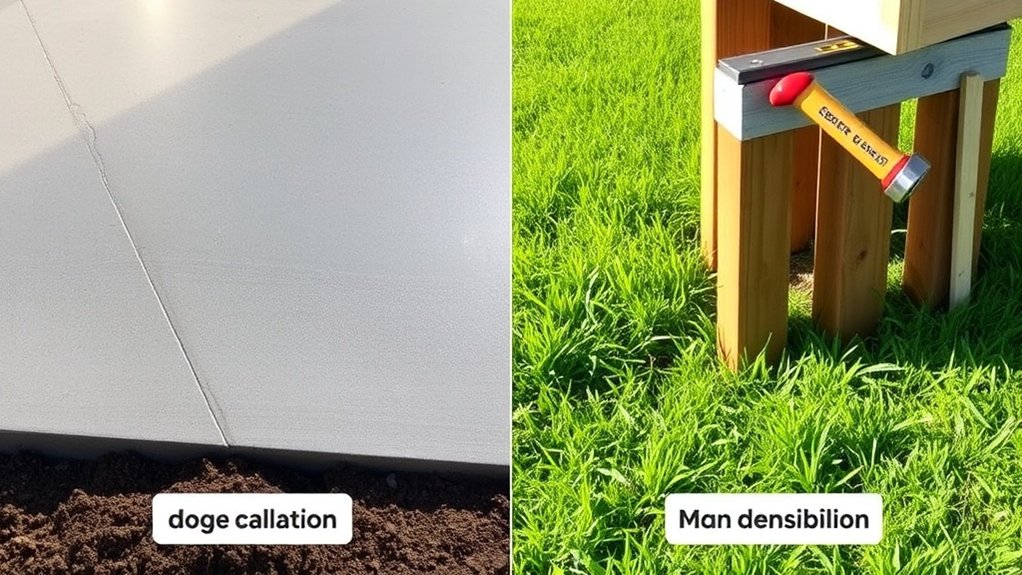
When considering maintenance and repair for your foundation, access for repairs is crucial, particularly for pier foundations that may need more frequent attention.
You should also consider the long-term maintenance requirements of each type, as concrete slabs typically require less upkeep than pier systems.
Understanding these factors will help you make informed choices about your foundation’s durability and stability.
Access for Repairs
Accessing repairs for concrete slab and pier foundations can pose specific challenges that significantly impact maintenance strategies.
For concrete slabs, you may need to cut or drill through the slab, which complicates repair methods and can raise labour costs. Larger cracks often require multiple solutions, and careful monitoring is essential to avoid uneven lifting during repairs.
On the other hand, pier foundations typically involve excavation, which can be hindered by soil conditions and weather. While steel piers allow for less invasive repairs, segmental piers may extend access time due to curing requirements.
Each approach presents its own set of access challenges, affecting the speed and ease of repairs. Understanding these factors is crucial for planning effective maintenance strategies for either type of foundation.
Long-term Maintenance Needs
Understanding the long-term maintenance needs of concrete slab and pier foundations is crucial for their durability and structural integrity.
Both types require effective water management to reduce maintenance frequency and repair costs. Installing gutters and downpipes, along with proper grading, helps direct water away, preventing erosion and moisture damage.
Regular inspections for cracks are essential; slab foundations should have hairline cracks sealed promptly, while pier foundations need monitoring around the piers.
Soil maintenance, including moisture management and pest inspections, is also vital for stability. Documenting any signs of settlement can lead to early intervention, helping to avoid costly repairs.
Longevity and Structural Integrity
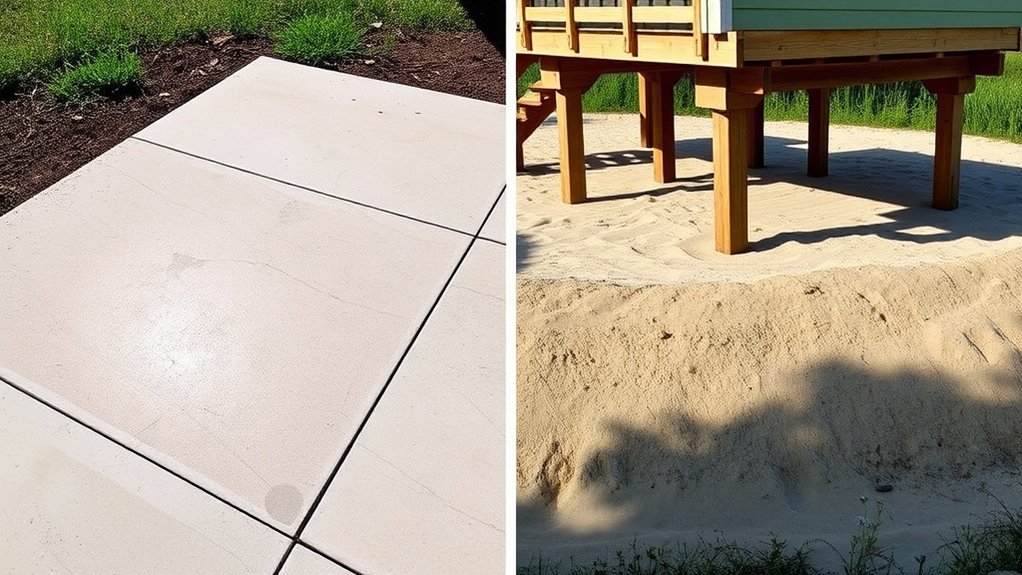
Both concrete slab and pier foundations have their pros and cons when it comes to longevity and structural integrity, but their effectiveness depends on factors like environmental conditions and the quality of construction.
Concrete slabs generally last between 50 to 100 years with little maintenance. They provide even load distribution, which helps reduce the risk of cracking. However, they can be affected by unstable soil, which may compromise their structural performance.
On the other hand, pier foundations, especially helical piles, can last up to 150 years if installed correctly and under suitable soil conditions. They’re good at handling soil movement and allow for easier inspections.
However, their longevity relies on proper moisture management and prevention of corrosion.
Ultimately, the best choice will depend on your specific site conditions and your long-term durability goals.
Adaptability for Future Changes

When considering adaptability for future changes, pier foundations have clear advantages over concrete slabs.
Their design allows for easier access to utilities, making renovations and updates much simpler. Unlike slabs, which can limit modifications and often require extensive repairs for changes, piers can be selectively reinforced or replaced. They can also be designed to accommodate soil shifts, enhancing their reliability.
This flexibility supports phased construction, allowing for expansions without the need for complete foundational rebuilds.
While concrete slabs may seem cheaper at first, their rigidity can lead to costly and disruptive changes down the line. Choosing a pier foundation is a more adaptable option for the long term.
Making the Final Decision
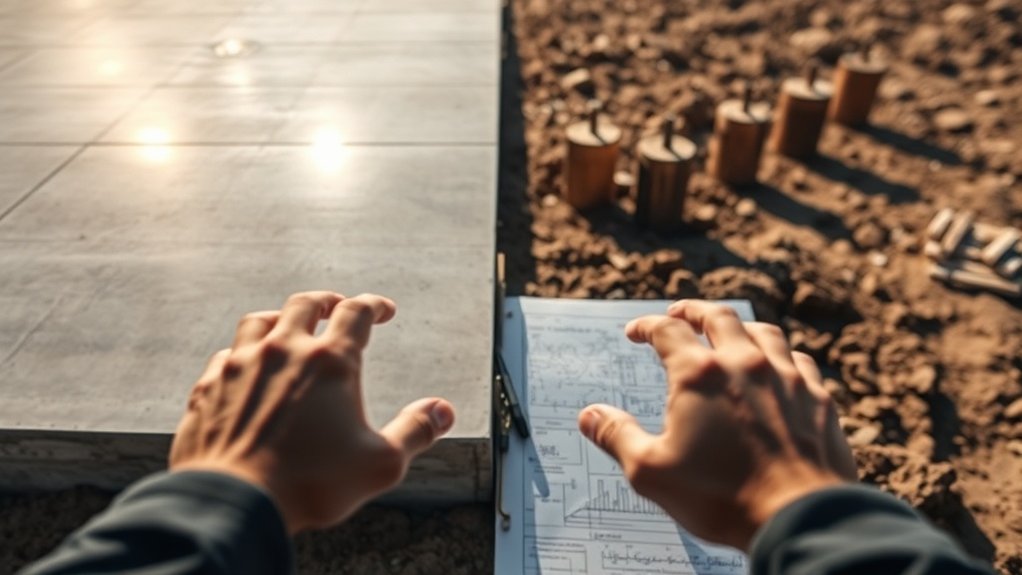
Selecting the right type of foundation is crucial for the long-term success and durability of your project.
It’s important to balance aesthetics with environmental considerations. Slab foundations are typically more affordable and quicker to install, making them an attractive option for stable sites. However, they can be expensive to repair and may not perform well in areas prone to flooding or severe freeze-thaw cycles.
On the other hand, pier and beam foundations provide greater flexibility and easier access for repairs, which can be beneficial in difficult terrains.
When making your decision, consider your local climate, soil conditions, and any future requirements you might have.
Ultimately, choose a foundation that suits your budget, maintenance capacity, and the structural needs of your project to ensure long-lasting durability and value.
Frequently Asked Questions
What Local Building Codes Affect Foundation Type Selection?
Local building codes influence your choice of foundation type by setting regulations and zoning laws. These dictate aspects like soil bearing capacity, footing dimensions, and reinforcement requirements, as well as climate-related standards. For instance, in areas prone to flooding, you may need a higher foundation to prevent water damage. Adhering to these codes ensures the stability and structural integrity of your project.
How Do Climate Conditions Influence Foundation Performance?
Climate conditions play a crucial role in how well foundations perform. Changes in frost depths and moisture levels can affect stability. For instance, excessive water or freeze-thaw cycles may weaken structures, so it’s essential to consider the local climate when choosing appropriate foundations.
Can I Switch Foundation Types During Construction?
Yes, you can change foundation types during construction, but you must consider a few factors. First, assess the soil conditions to ensure they support the new foundation. You’ll also need to redesign your plans and obtain any necessary approvals from local authorities. Be aware that this change may lead to delays, increased costs, and coordination issues with your construction team. For instance, switching from a shallow to a deep foundation may require additional excavation work, which can disrupt your timeline.
What Are the Environmental Impacts of Each Foundation Type?
Concrete slabs can lead to considerable land disturbance and high carbon emissions. In contrast, pier foundations are less impactful but can still disrupt local ecosystems. Selecting sustainable materials is crucial to reduce these environmental effects in both scenarios.
How Do Local Soil Types Affect Foundation Choice?
Local soil types play a significant role in choosing the right foundation. The soil’s composition affects its load-bearing capacity, while its drainage properties influence how moisture is managed. For example, clay soils retain water, which can lead to foundation movement, making a pier foundation more suitable. In contrast, sandy soils drain well, often allowing for a slab foundation. Evaluating these factors is essential for effective foundation selection.
Conclusion
The choice between a concrete slab and pier foundation depends on several key factors specific to your project. Consider installation times, costs, and site conditions carefully. Remember, the long-term effects of your decision will become apparent over time. What appears beneficial now may present challenges later. Before you decide, think about the future of your building—will it remain sturdy, or could it struggle under unexpected pressures? Make your choice wisely.

Discover the crucial applications of ready-mix concrete in construction that can transform your projects; you'll be surprised by its versatility Read more
Mysterious yet essential, lightweight ready-mix concrete offers unique benefits for construction; discover how it can transform your building projects today.

Astonishingly versatile, concrete is essential in commercial construction; discover ten innovative ways it transforms projects and boosts efficiency. Explore the Read more