To use lightweight aggregates (LWAs) in reinforced concrete construction, begin by selecting suitable LWAs based on their density and mechanical properties. Adjust your mix design to accommodate increased water absorption, ensuring the aggregates are properly conditioned. Specify the required equilibrium density for your structural needs and maintain consistency throughout sourcing and production. By using LWAs, you can achieve reduced dead loads and enhanced thermal insulation. Explore the benefits and best practices to optimise results for your projects.
Key Takeaways
- Choose suitable lightweight aggregates (LWAs) based on the required density and strength for your concrete mix.
- Adjust the water-to-cement ratio to improve workability and ensure the concrete’s durability.
- Perform comprehensive testing on materials to guarantee the LWAs’ consistency and reliability in your mix.
- Keep an eye on the moisture content of LWAs and consider presoaking them to achieve stability before mixing.
- Take into account the insulation properties of LWAs, as they can enhance energy efficiency and help lower heating and cooling costs in the finished structure.
Understanding Lightweight Aggregates and Their Properties

Lightweight aggregates (LWAs) are crucial in modern reinforced concrete construction, offering distinct advantages over traditional aggregates. These materials, which include expanded clay, shale, and industrial by-products like fly ash, are known for their reduced weight. During production, raw materials are heated to form a porous structure, resulting in a density between 400 and 2000 kg/m³—significantly lighter than standard aggregates. LWAs possess low specific gravity, high porosity, and excellent workability, making them suitable for a variety of applications. Their mechanical properties, such as compressive strength and bond enhancement with cement paste, depend on their source, allowing for customised solutions in both structural and non-structural settings. Additionally, using LWAs supports sustainable construction practices, making them an attractive option for builders in the UK. Furthermore, lightweight concrete with a density of less than 17 N/mm² is classified as LWC, showcasing its importance in construction applications.
Benefits of Lightweight Aggregates in Structural Applications
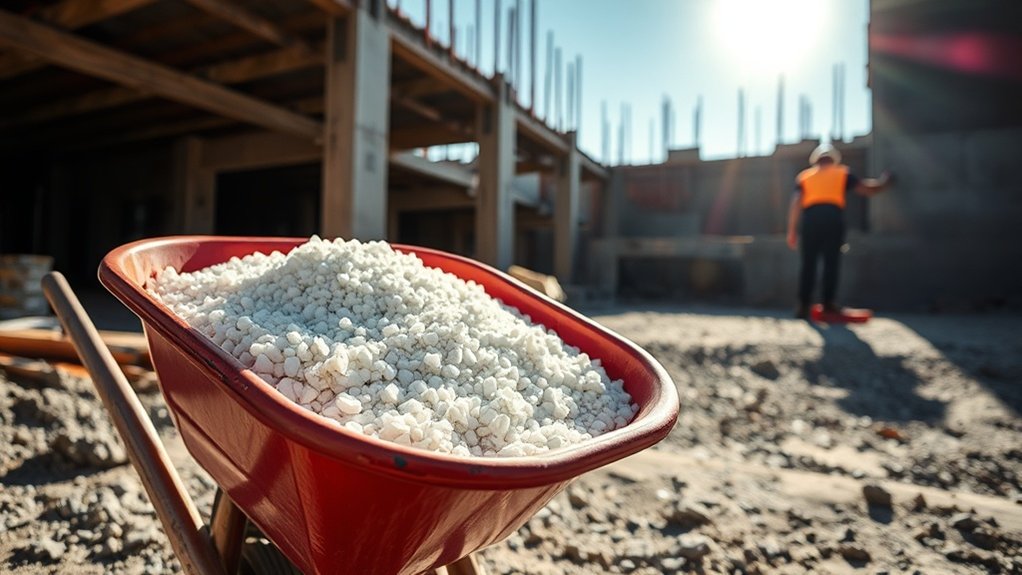
Lightweight aggregates (LWAs) offer significant advantages in structural applications, especially in reinforced concrete. By reducing concrete density by 20-30%, LWAs lower dead loads, which enhances structural efficiency and permits the use of smaller members and foundations.
This reduction in weight improves seismic performance and speeds up construction by making handling and transportation easier. Additionally, LWAs can achieve necessary compressive strength for normal construction, ensuring that structural integrity is maintained.
Moreover, LWAs boost durability, providing better fire resistance and lowering maintenance costs, which aligns with sustainability goals. Their thermal and acoustic insulation properties also enhance energy efficiency and occupant comfort, supporting green building practices.
In essence, using LWAs in your projects can make construction processes more efficient while promoting a sustainable and cost-effective approach to structural design.
Design Considerations for Lightweight Aggregate Concrete
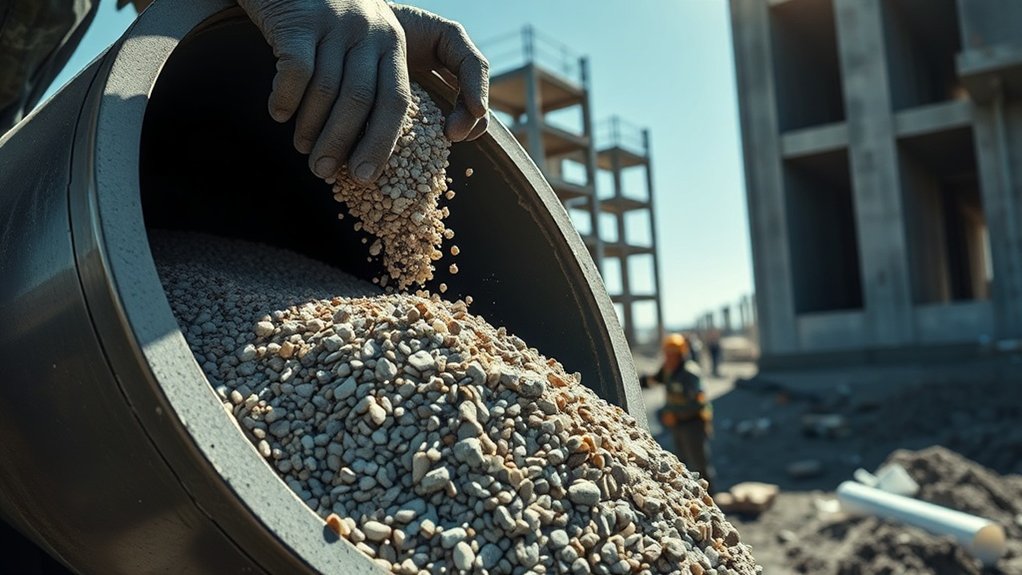
When designing with lightweight aggregate concrete (LWAC), it’s crucial to pay attention to mixture proportioning and density control.
Here are some key points to consider:
- Be aware that lightweight aggregates tend to absorb more water.
- Specify the equilibrium density in line with ASTM C567 to inform your structural design.
- Adjust the water-to-cementitious material ratio to achieve the right balance of workability and strength.
- Ensure aggregates are properly moisture-conditioned to maintain quality. Additionally, consider the excellent insulation properties of lightweight concrete, which can further enhance energy efficiency in building designs.
Geotechnical Applications of Lightweight Aggregates
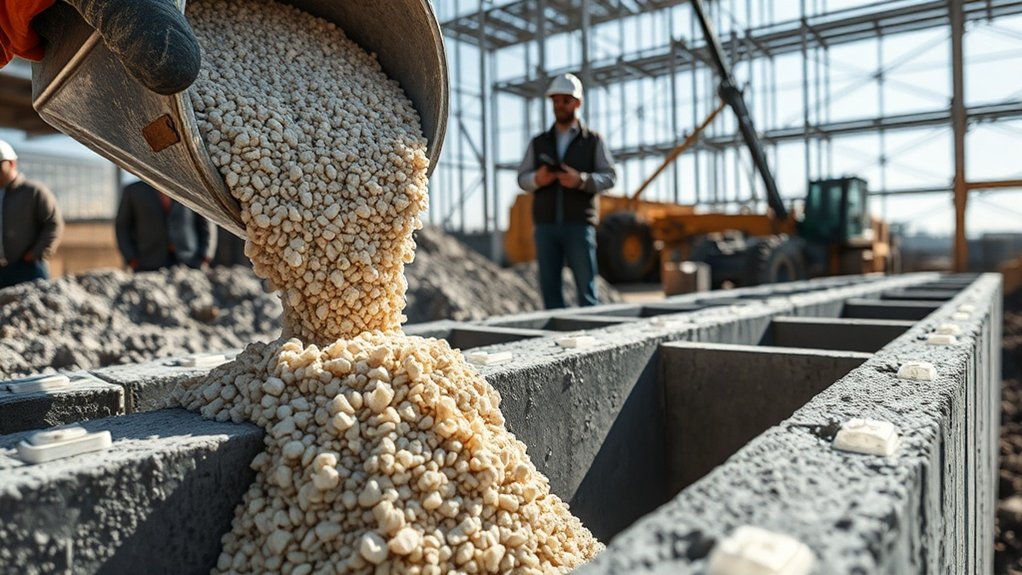
The use of lightweight aggregate concrete (LWAC) in geotechnical applications provides notable benefits for construction on weak or problematic soils.
Employing lightweight fill reduces the load on these soils, which helps minimise settlement and deformation. LWAC has a high shear strength, with an internal friction angle of around 40 degrees, which enhances slope stability and lateral support. Additionally, the use of Norlite Lightweight Aggregate aids in land reclamation for otherwise unused areas, further enhancing its utility in construction. The incorporation of lightweight aggregates also promotes resource conservation by optimizing material efficiency.
Its excellent permeability facilitates effective drainage, reducing hydrostatic pressures that could threaten structures. Moreover, LWAC offers thermal resistance, safeguarding buried utilities from freeze-thaw cycles.
It can be easily placed with standard equipment, leading to more efficient construction schedules. Overall, LWAC enhances stability and optimises land use, making it a valuable option for contemporary geotechnical projects.
Economic Advantages of Using Lightweight Aggregates

Incorporating lightweight aggregates (LWA) into concrete construction significantly boosts economic efficiency.
Here are some key advantages that lead to cost savings and improved energy use:
- Reduced dead load means smaller structural elements can be used, resulting in lower material and labour costs.
- Lower transportation weight cuts freight costs and streamlines logistics.
- Improved thermal insulation properties of LWA help reduce energy bills for heating and cooling.
- Durability of lightweight concrete leads to less frequent maintenance, which lowers overall lifecycle costs.
Additionally, the use of lightweight aggregates can enhance seismic performance, providing further benefits in areas prone to earthquakes.
Challenges and Solutions in Lightweight Aggregate Use
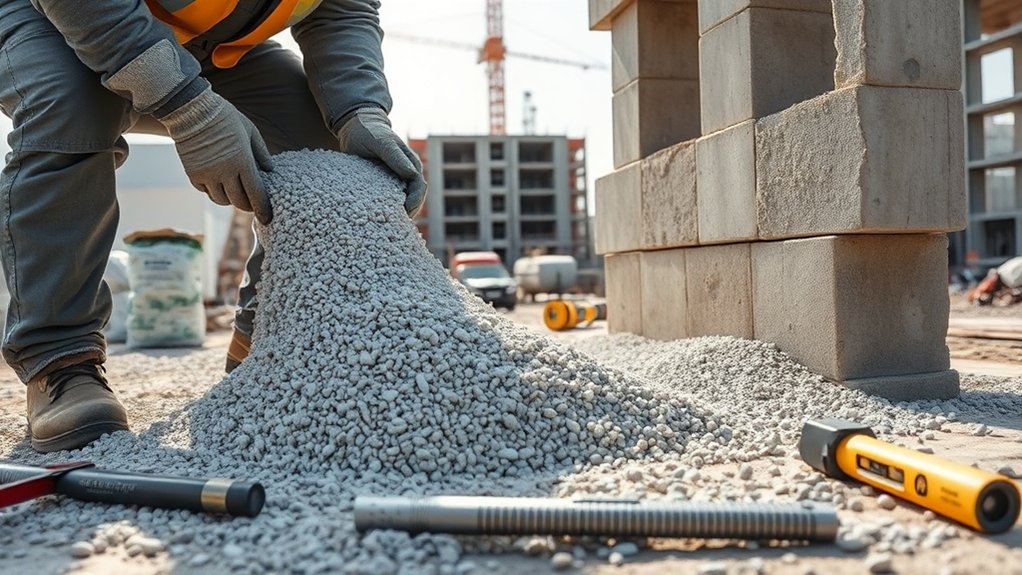
Using lightweight aggregates presents challenges such as moisture management, strength capacity, and sourcing consistency.
It’s essential to address water absorption to maintain workability in your projects. For instance, ensuring your mix design is well-optimised can help achieve the necessary strength.
Moreover, establishing dependable supply chains can improve material availability and make performance more predictable.
Moisture Management Techniques
Moisture management in lightweight aggregate (LWA) concrete presents specific challenges due to the material’s higher absorption rates.
To effectively tackle moisture absorption and ensure optimal hydration, consider the following techniques:
- Pre-wet LWAs before mixing to maintain workability and minimise slump loss.
- Use internal curing methods to make the most of absorbed water for prolonged hydration.
- Regularly test the moisture content of aggregates and fresh concrete to ensure quality control.
- Adjust the mix design based on moisture readings to avoid excess water and potential durability issues.
These strategies will help achieve better performance and longevity in your concrete projects.
Strength Capacity Considerations
Lightweight aggregates (LWAs) provide advantages like reduced weight and better thermal properties, but they also pose challenges in terms of strength capacity for reinforced concrete.
When replacing traditional aggregates, you may face strength trade-offs. For example, substituting up to 50% with pumice can decrease density by 15%, but this often leads to a reduction in compressive strength.
However, using a 25% substitution can maintain strength levels similar to normal-weight concrete.
It’s crucial to understand these performance metrics; LWAC typically exhibits higher initial crack resistance and different failure modes, which require careful design to ensure sufficient ductility and toughness.
Ultimately, finding the right balance between reducing density and retaining strength is vital for successful LWAC applications.
Consistency in Aggregate Sourcing
When using lightweight aggregates (LWAs) in concrete construction, you may face challenges with sourcing consistency. Ensuring material consistency is crucial for dependable performance.
Here are some common issues:
- Limited natural clay deposits can create geographic shortages.
- Variability in raw material properties affects uniformity.
- Different production methods may impact aggregate quality.
- Imported LWAs can introduce inconsistencies due to transportation.
To tackle these challenges, consider artificial LWAs made from waste materials. These can be engineered for specific properties, and advanced processing can improve uniformity.
Additionally, presoaking methods can help stabilise moisture content, contributing to consistent performance. By addressing these issues, you can enhance the reliability of LWAs in your concrete mixes.
Frequently Asked Questions
How Do Lightweight Aggregates Affect Concrete Curing Times?
Lightweight aggregates improve moisture retention, which can lead to quicker curing times when optimal curing methods are used. By reducing shrinkage and enhancing hydration, they significantly boost concrete performance, lowering the risk of issues like prolonged drying and early-age cracking. For instance, in warm weather, using lightweight aggregates can help keep the concrete moist, resulting in a stronger final product.
Can Lightweight Aggregates Be Used in Cold-Weather Construction?
Can lightweight aggregates withstand cold weather? Yes, they do! They improve performance in cold conditions and offer excellent thermal insulation, making them suitable for construction in harsh climates while retaining strength and durability during freeze-thaw cycles.
What Is the Lifespan of Lightweight Aggregate Concrete?
Lightweight aggregate concrete can last over 100 years due to its durability. Its resistance to environmental factors like corrosion and frost significantly boosts its lifespan, making it an excellent option for structures that need to endure the test of time. For example, it’s ideal for buildings in areas with harsh weather conditions.
Are There Specific Certifications for Lightweight Aggregate Suppliers?
Yes, lightweight aggregate suppliers in the UK must adhere to specific certifications to ensure they meet quality standards. This includes regular testing and proper documentation to confirm that their materials consistently fulfil performance and safety requirements for construction projects. For instance, suppliers often comply with British Standards (BS) to demonstrate their commitment to quality.
How Do I Choose the Right Lightweight Aggregate for My Project?
To select the right lightweight aggregate for your project, assess different types against your specific requirements, such as compressive strength, density, and environmental exposure. For instance, if you’re working on a construction project in a coastal area, consider aggregates that can withstand saltwater corrosion. Ensure consistency in properties and prioritise local availability to maximise performance and reduce costs.
Conclusion
In a construction landscape often dominated by heavy materials, using lightweight aggregates may seem unusual. However, these materials not only reduce weight but also improve structural integrity and cost efficiency. It’s interesting how choosing lighter options can lead to significant advantages in construction. When planning your projects, keep in mind that sometimes, less truly is more. Embracing innovative solutions can lead to better outcomes, so don’t hesitate to explore alternatives that challenge traditional methods.

Just dive into the world of ready-mix concrete and uncover its benefits, uses, and potential challenges waiting for your next Read more

You'll discover the precise steps behind ready-mix concrete manufacturing, but what secrets lie in each stage that ensure its superior Read more

Navigate the diverse world of ready-mix concrete types and discover which one could elevate your construction project—your perfect mix awaits!