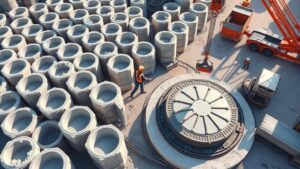
Lightweight concrete presents notable environmental advantages, reducing density by up to 40% compared to traditional concrete. This reduction means less material is required, which in turn minimises resource extraction. It can also lead to energy savings for heating and cooling of up to 25%. With improved structural performance, lightweight concrete enables longer spans and diminishes seismic forces. Its lighter weight enhances transportation efficiency, further cutting greenhouse gas emissions. Discover how the features of lightweight concrete contribute to more sustainable construction practices.
Key Takeaways
- Lightweight concrete minimises material extraction by incorporating up to 100% lightweight aggregates, aiding resource conservation and reducing environmental impact.
- Its lower thermal conductivity can decrease heating and cooling energy usage by up to 25%, leading to lower utility bills and a smaller carbon footprint.
- With a reduced dead load, lightweight concrete enhances structural performance, allowing for longer spans and better resistance against seismic forces and natural disasters.
- By cutting load weights by up to 40%, lightweight concrete optimises transport logistics, resulting in lower fuel consumption and reduced greenhouse gas emissions.
- The inclusion of recycled materials in lightweight concrete supports sustainable construction methods, contributing to waste reduction and a diminished overall carbon footprint.
Material Efficiency and Resource Conservation
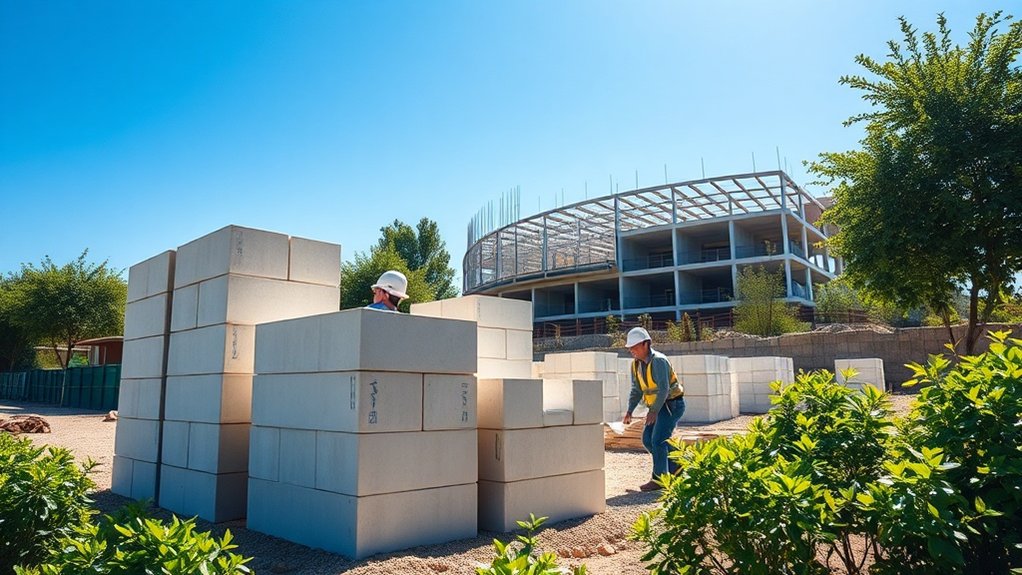
As you consider the benefits of lightweight concrete, you’ll find it offers notable material efficiency and resource conservation. By replacing traditional heavy aggregates with lighter alternatives such as expanded shale or clay, you can significantly optimise material use. This change can lower the density of structural lightweight concrete to around 40% less than standard concrete, reducing the overall volume needed for similar structures. Using up to 100% lightweight aggregates not only cuts down on raw material extraction but also enhances resource conservation. Moreover, utilising prewetted lightweight fine aggregates reduces the need for additional fine aggregates, ensuring workability while optimising material usage. Additionally, the use of manufactured lightweight aggregates contributes to reducing dead load on existing structures, further enhancing material efficiency. This reduction in weight also leads to lower transportation emissions, promoting a more sustainable construction practice.
Energy Savings and Carbon Footprint Reduction
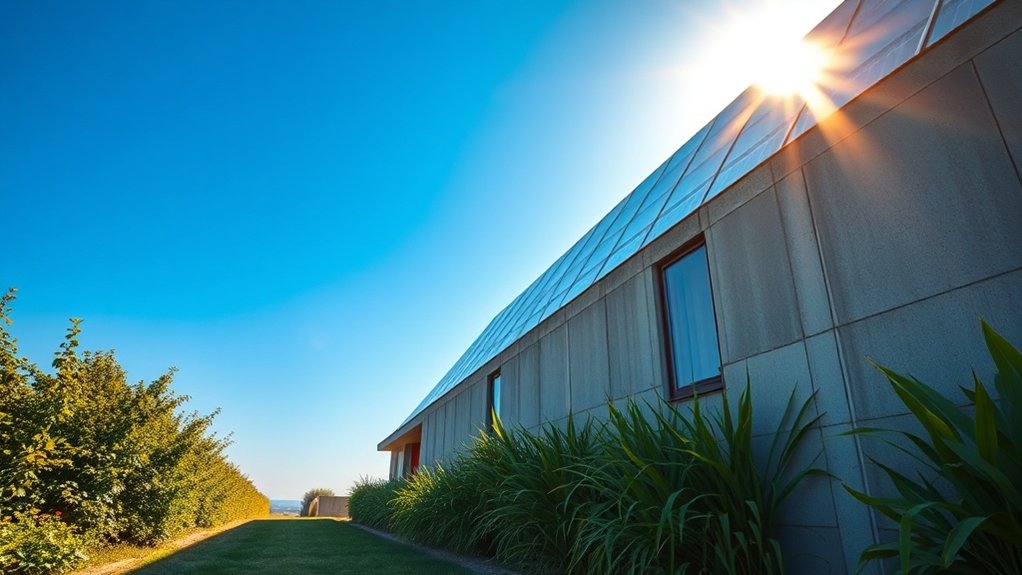
Traditional concrete structures can be energy-intensive, particularly for heating and cooling. In contrast, lightweight concrete (LWC) presents significant energy savings and a smaller carbon footprint. By improving energy efficiency, LWC can reduce heating and cooling energy consumption by up to 25%, which in turn lowers carbon emissions from energy production.
Here are the key benefits:
- Enhanced Insulation: LWC has lower thermal conductivity, which can cut cooling requirements by up to 74% and heating demands by 24%. Recent studies have shown that the thermal conductivity coefficients of LWC are 37–45% lower than those of normal weight concrete, making it an ideal choice for high-rise applications.
- Cost Savings: Optimised LWC mixtures can lead to a reduction in life cycle costs by around 4%, thanks to lower utility bills.
- Reduced Embodied Carbon: LWC’s lighter weight allows for more efficient transport, resulting in fewer emissions.
Choosing LWC not only aligns with sustainability goals but also significantly diminishes the environmental impact of your buildings.
Structural Performance and Durability Benefits
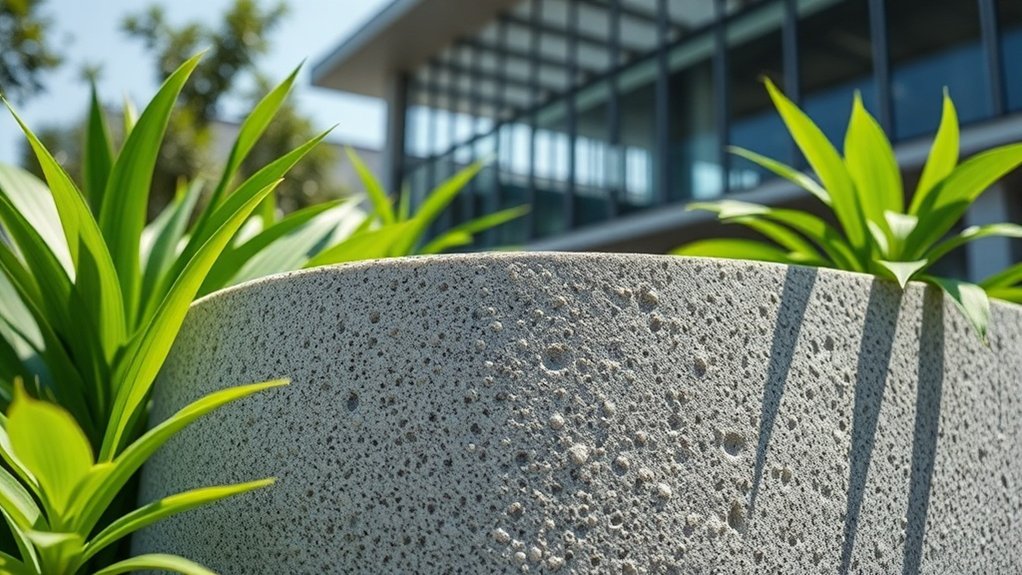
Lightweight concrete (LWC) not only boosts energy efficiency but also significantly enhances structural performance and durability. Its impressive strength-to-weight ratio allows for longer spans with less concrete, optimising strength and reducing dead loads on foundations. This reduction in weight diminishes seismic forces, improving resilience against natural events. Additionally, lightweight concrete facilitates innovative building designs that can adapt to various architectural needs.
Furthermore, LWC offers remarkable durability, with increased resistance to water permeability and aggressive substances. This is largely due to prewetted lightweight aggregates that facilitate internal curing, which helps reduce shrinkage and cracking, thus extending the lifespan of the structure. SLC’s lower density contributes to lighter structures that experience less seismic inertia, enhancing their overall resilience.
Additionally, LWC’s excellent freeze-thaw resistance further minimises the risk of cracking, ensuring lasting structural integrity.
Incorporating LWC into your projects not only improves performance but also provides significant long-term benefits.
Transportation and Workforce Ergonomics
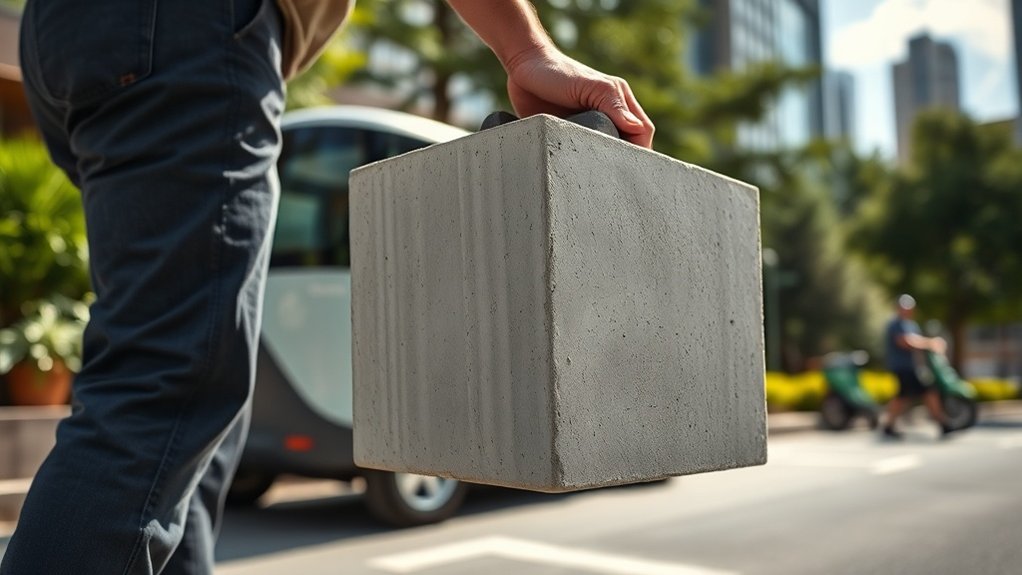
When evaluating the efficiency of construction operations, using lightweight concrete (LWC) presents notable benefits in terms of transportation and workforce ergonomics. By cutting load weights by up to 40%, LWC improves transport logistics, leading to lower fuel consumption and reduced greenhouse gas emissions.
This efficiency results in:
- Increased worker safety, as it reduces physical strain and the risk of musculoskeletal injuries.
- Enhanced productivity on site, with lighter materials speeding up loading times and enabling quicker task completion.
- Better use of ergonomic tools, which help reduce fatigue and promote good posture during concrete handling.
Adopting LWC not only optimises logistics but also creates a safer and more efficient working environment, benefiting both the workforce and project timelines.
Contribution to Sustainable Construction Practices
As the construction industry in the UK increasingly focuses on sustainability, the use of lightweight concrete (LWC) is becoming essential for eco-friendly practices. By incorporating LWC into your projects, you significantly support sustainable innovation. Its lower carbon footprint arises from reduced Portland cement usage and the use of recycled materials, which minimises environmental impact and optimises resource use.
| Benefit | Lightweight Concrete (LWC) | Traditional Concrete |
|---|---|---|
| Carbon Emissions | Lower due to less cement usage | Higher because of cement production |
| Energy Efficiency | Excellent thermal insulation | Moderate insulation properties |
| Material Usage | More efficient use of structural elements | Requires more raw materials |
| Waste Reduction | Promotes recycling and prefabrication | Generates more construction waste |
Frequently Asked Questions
How Does Lightweight Concrete Compare in Cost to Traditional Concrete?
In cost terms, lightweight concrete typically comes with a higher unit price than traditional concrete. However, it’s important to factor in long-term savings, such as reduced structural demands and increased efficiency in multi-storey buildings. For instance, if you’re constructing a tall building, using lightweight concrete can lessen the load on foundations and allow for smaller structural supports, ultimately saving costs in the overall project.
What Are the Limitations of Using Lightweight Concrete?
Lightweight concrete has its drawbacks, including reduced durability and structural integrity. It typically has lower compressive strength, which can limit its use in demanding applications like high-rise buildings or heavy pavements. Additionally, it can absorb moisture more easily and is more prone to freeze-thaw damage, which can affect its lifespan. These factors can impact the overall effectiveness and longevity of designs using this material.
Can Lightweight Concrete Be Recycled After Its Lifespan?
Yes, lightweight concrete can indeed be recycled at the end of its lifespan using recognised recycling methods. By embracing sustainable practices, we can significantly cut down on landfill waste and conserve valuable resources, thus promoting a more circular economy in construction. For instance, recycled lightweight concrete can be repurposed as aggregate for new concrete, reducing the need for virgin materials.
What Are the Aesthetic Options Available With Lightweight Concrete?
Lightweight concrete offers a wide range of colour options and textures. You can choose from smooth finishes for a sleek look or textured surfaces for added character. Each panel showcases unique artistry, making it a great choice for enhancing spaces in line with your design preferences.
How Does Weather Affect the Curing of Lightweight Concrete?
Weather has a significant impact on the curing of lightweight concrete. Temperature plays a crucial role in hydration rates, so it’s vital to use suitable curing methods. For instance, during chilly weather, insulating blankets can help maintain warmth, while in hot conditions, techniques to retain moisture are essential. These measures ensure optimal results for your concrete work.
Conclusion
In summary, lightweight concrete is revolutionising the construction industry. By improving material efficiency and cutting energy consumption, it effectively reduces carbon footprints and supports sustainability. Its excellent structural performance ensures durability, while its lighter weight simplifies transportation and handling. Adopting lightweight concrete aligns with eco-friendly practices and positions you favourably in sustainable construction. Sometimes, less really is more.
Mysterious yet essential, lightweight ready-mix concrete offers unique benefits for construction; discover how it can transform your building projects today.

Leveraging cutting-edge technologies and sustainability trends, the future of ready-mix concrete promises groundbreaking innovations that could transform the industry forever. Read more

Streamline your construction projects with lightweight concrete's benefits, but what challenges and innovations lie ahead in its evolving landscape?