To create a marble effect on concrete surfaces, begin by mixing a white or grey concrete base with pigmented powders for colour. Prepare your workspace and fix any uneven areas. Pour a base layer and allow it to partially set before applying colour with brushes using various techniques. Cure the concrete for at least 24 hours, then polish for a smooth finish. Consider detailed design options and maintenance tips to enhance your results, ensuring a classic marble appearance.
Key Takeaways
- Clean the concrete surface thoroughly and repair any cracks to ensure stains and finishes adhere properly.
- Combine pigmented powders with your concrete or acid stains, layering lighter and darker shades for a realistic depth.
- Use brushes and trowels to apply the pigmented mixtures, employing swirling techniques to mimic a natural marble effect.
- Polish the surface using wet polishing methods for a smooth finish, which reduces dust and enhances the vibrancy of colours.
- Seal the finished concrete every 6 to 12 months to protect the marble effect and keep it looking fresh over time.
Materials and Tools Needed for Marble Effect

To create a striking marble effect on concrete surfaces, it’s essential to choose the right materials and tools. Start with a white or grey concrete mix as your base for a good contrast.
For colour mixing, select pigmented powders like charcoal, blue, or metallic pigments, which can be swirled into the concrete. Use separate mixing bowls to keep the colours distinct before combining them. Additionally, using white and gray concrete as your base can enhance the overall marbling effect.
You’ll need trowels and mixing utensils to blend the pigments without overmixing, which helps maintain the marble veins. To apply the pigment-infused mixture, use brushes and apply pressure for better embedding.
If you want a metallic finish, opt for specific metallic pigments to achieve a reflective look. Additionally, consider adding concrete fibre to improve mix consistency and prevent cracking while preserving your desired marble pattern.
Preparation and Mixing Techniques for Concrete

To achieve a marble effect on concrete surfaces, careful preparation and precise mixing are essential.
Begin by clearing your workspace and thoroughly cleaning the concrete. Repair any cracks or uneven areas, and consider applying a self-levelling underlayment for a smooth surface. Using ready-mix concrete can enhance the durability of your marble finish.
For mixing, opt for Glass Fibre Reinforced Concrete (GFRC) or standard concrete, following the manufacturer’s specified mixing ratios closely. Faux marble can mimic the appearance of real marble effectively, making it a popular choice for DIY projects.
Pour a base layer and allow it to partially set before adding additional colours, gently stirring to create natural vein patterns. Keep an eye on your water content to ensure fluidity while preserving colour definition.
Allow the concrete to cure for at least 24 hours, ensuring the temperature and humidity are suitable to avoid defects that could ruin your marble finish.
Application and Coloring Methods for Marble Effect
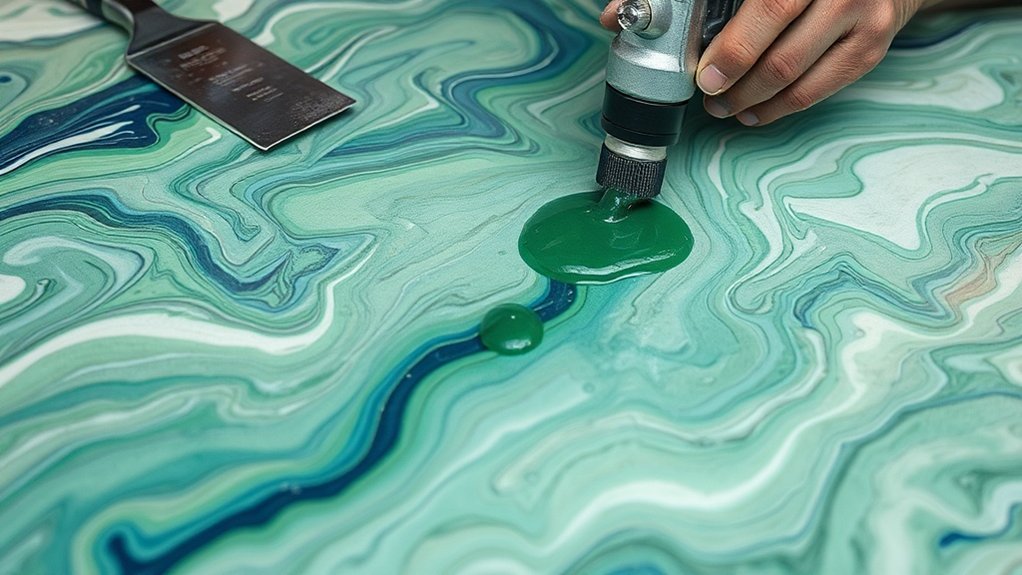
To create a marble effect on concrete surfaces, focus on mastering acid staining techniques and swirling concrete mixes. Layer multiple acid stain colours to add depth, and try different application methods to achieve unique veining patterns. Additionally, artisan techniques using concrete can enhance the overall aesthetic of your project.
Acid Staining Techniques
By using acid staining techniques, you can turn standard concrete surfaces into beautiful marble-like finishes with careful application and colour selection.
Here are four essential steps to achieve this effect:
- Surface Preparation: Ensure the concrete is clean, fully cured, and free from sealers to allow for effective acid stain application.
- Choose Your Colours: Pick complementary acid stains, keeping in mind their metallic salts for the desired shades and depth.
- Application Techniques: Apply using a wet-on-wet method for smooth blending or wet-on-dry for sharper veins, using brushes or sponges for manipulation.
- Colour Blending: Start with lighter colours as a base, then add darker shades for veins to enhance the realism of the marble effect. Additionally, ensure you follow proper surface preparation techniques to guarantee a strong bond for durability.
Swirling Concrete Mixes
Building on the acid staining techniques discussed earlier, swirling concrete mixes provide an exciting way to achieve beautiful marble effects on concrete surfaces. Start by preparing a fluid GFRC mix with varying pigment concentrations to allow for effective layering. Pour your base colour, then add contrasting pigmented concrete in puddles. Use gentle swirling methods to create distinct patterns while ensuring some separation between the colours. Here’s a quick reference table for your swirling process:
| Step | Action | Tip |
|---|---|---|
| Mix Preparation | Use a lower fibre dosage | Helps to prevent clumping |
| Pigment Selection | Choose high-contrast pigments | Enhances visual depth |
| Pouring Technique | Add colours in puddles | Maintains separation |
| Swirling Method | Blend gently with tools or hands | Preserves a natural look |
| Curing | Allow 24-48 hours before demoulding | Ensures colour stability |
Incorporating ready-mix concrete ensures a consistent quality that contributes to the overall aesthetic appeal of the marble effect.
Surface Finishing and Polishing Techniques

To achieve a polished marble effect on your concrete surfaces, you should use wet polishing and slurry filling techniques.
Wet polishing employs water to reduce dust and improve the finish, while slurry filling addresses any imperfections, resulting in a smooth surface.
Mastering these methods will enhance both the appearance and durability of your concrete marble finish.
Wet Polishing Process
The wet polishing process is an effective method for achieving a polished finish on concrete surfaces, using water to enhance the overall performance.
Here are some key benefits of wet polishing:
- Reduced Friction: Water lubricates the surface, preventing overheating and pad glazing.
- Dust Control: It captures dust, reducing airborne particles and improving safety on site.
- Surface Quality: This method delivers a smoother finish with fewer fine scratches, enhancing the visual appeal.
- Durability: Wet polishing fortifies the concrete, resulting in a long-lasting surface.
Slurry Filling Techniques
To achieve a marble effect on concrete surfaces, using proper slurry filling techniques is essential for strong adhesion and a pleasing finish.
Begin by thoroughly cleaning and pre-wetting your concrete surface to ensure good bonding.
For the right slurry consistency, mix cement and sand in a 2:1 ratio, adding water and colour pigments for a smooth texture.
Apply the slurry promptly using brushing, pouring, or painting methods before it sets to avoid delamination.
Monitor the thickness of the slurry layer to prevent cracking or inadequate coverage.
To improve the finish, employ vibration techniques to remove air bubbles.
Following these steps will ensure a durable and attractive marble effect on your concrete surfaces.
Design Options and Styles for Marble Concrete

Creating a marble effect on concrete surfaces provides various design options that can enhance any space.
Here are some inspirations and colour variations to consider:
- Classic Combinations: Opt for white and grey tones to mimic Carrara marble, or choose black and white for a striking contrast.
- Warm Tones: Use soft beige and cream to replicate warmer marbles like Crema Marfil.
- Exotic Hues: Deep greens or blues can emulate bold marble varieties, adding visual appeal.
- Subtle Pastels: Gentle pastel shades can replicate rare marble colours, offering a unique touch.
These options allow for versatile design while ensuring a sophisticated finish.
Safety Precautions and Best Practices
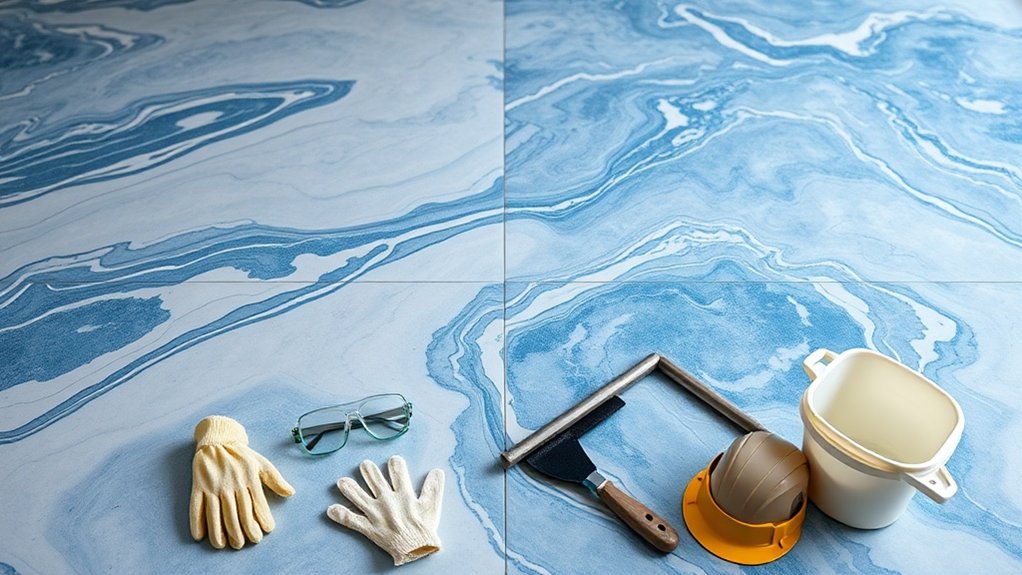
To achieve a stunning marble effect on concrete surfaces, it’s essential to follow safety precautions and best practices. Always wear suitable safety gear, including NIOSH-approved respirators, sturdy gloves, and chemical splash goggles. Work in well-ventilated areas to reduce inhalation risks, and remember to wash your hands thoroughly after handling materials.
| Safety Measure | Description | Importance |
|---|---|---|
| PPE Requirements | Wear gloves, goggles, and respirators during mixing. | Protects against skin, eye, and respiratory hazards. |
| Ventilation | Work outdoors or use exhaust systems in enclosed spaces. | Minimises inhalation of harmful dust. |
| Hygiene Practices | Clean tools and wash hands after use. | Reduces contamination and exposure risk. |
Common Mistakes to Avoid When Marbling Concrete

When marbling concrete, it’s crucial to avoid common mistakes for a professional finish. Here are four pitfalls to steer clear of:
- Inadequate Surface Preparation: Ensure the surface is clean and free of contaminants to help the stain adhere properly.
- Incorrect Stain Selection: Choose the right type of stain for your project and always follow the manufacturer’s instructions for application.
- Poor Technique: Apply stains evenly and allow adequate drying time between applications to ensure clarity and consistency.
- Neglecting Imperfections: Fix any control joints, cracks, or inconsistencies beforehand. Ignoring these issues can lead to unpredictable marbling effects.
Maintenance Tips for Preserved Marble Look

To keep your concrete surfaces looking like exquisite marble, regular maintenance is crucial for both appearance and longevity. Adopting proper sealing and cleaning methods will help preserve your marble finish.
| Maintenance Task | Frequency | Recommended Products |
|---|---|---|
| Seal surfaces | Every 6-12 months | High-quality PU sealants |
| Clean spills | Immediately | Soft damp cloth |
| Dust or dry mop | Weekly | Microfibre dust mop |
| Deep clean | As needed | pH-neutral stone cleaners |
| Repair chips/cracks | Promptly | Concrete repair compounds |
Frequently Asked Questions
Can I Use Regular Concrete for Marbling Effects?
Yes, you can use regular concrete for marbling effects. By adjusting the concrete mix and using techniques like acid staining or pigment swirling, you can create attractive patterns that mimic natural marble. For example, adding colour pigments and swirling them together can result in a unique design perfect for driveways or patios.
How Long Does the Marbling Process Take?
The marbling process typically takes around 2 to 3 days, factoring in drying and curing times. Using proper marbling techniques ensures your concrete reaches optimal hardness, which allows for further treatment without damaging the surface.
What Is the Best Climate for Marbling Concrete?
For optimal marbling in concrete, aim for temperatures between 10°C and 21°C, with humidity levels of 40% to 60%. This combination ensures proper curing, reducing the risk of cracks and allowing for beautifully polished patterns in your concrete.
Can I Add Glitter or Metallics to the Concrete?
Yes, you can add glitter or metallic finishes to concrete. You can either embed glitter in sealers or mix metallic pigments during the batching process. Just ensure that the additives are compatible with your concrete mix to maintain proper adhesion and avoid weakening the surface.
Is Marbled Concrete Suitable for Outdoor Use?
Yes, marbled concrete is suitable for outdoor use, as long as it is properly sealed and installed. Its durability against moisture and temperature changes makes it a dependable option for various weather conditions, provided it is well maintained.
Conclusion
Creating a marble effect on concrete surfaces can completely transform your space, similar to how an artist adds depth to a painting. By using the right techniques and quality materials, you can achieve a stunning finish that mimics natural stone. Always prioritise safety and be mindful of common mistakes to ensure a successful outcome. With the right care, your marbled concrete can maintain its beauty for years. Enjoy the process!

Perfect for enhancing outdoor spaces, stamped concrete offers durability and style—discover how it can transform your patios and pathways today!

Find out how polished concrete floors can elevate your commercial interiors, enhancing style and durability in ways you never imagined. Read more

Breathe new life into your interiors with concrete overlays, but discover the secrets to achieving stunning results that will leave Read more