Using stamped concrete for your patios and pathways offers exceptional durability and a stylish finish. It replicates high-end materials like stone and brick, boosting your property’s appeal while being budget-friendly. With a range of colours and patterns available, you can personalise it to suit your taste. Maintenance is straightforward, needing just occasional cleaning and resealing. Additionally, having professionals handle the installation ensures it lasts and performs well. Explore the benefits and considerations for installation to see how stamped concrete can enhance your outdoor spaces.
Key Takeaways
- Stamped concrete provides a robust and long-lasting surface, boasting a lifespan of up to 25 years with proper upkeep.
- Homeowners can choose from a variety of colours and patterns, allowing for personalised patios and pathways that enhance their outdoor spaces.
- It mimics high-end materials like stone and brick, which can boost property value and attract potential buyers.
- Stamped concrete is low-maintenance, making it a practical alternative to traditional options like wood or paving stones.
- Its cost-effective installation and reduced long-term maintenance costs offer great value for homeowners.
Durability and Longevity of Stamped Concrete

Choosing stamped concrete for your patios and pathways means opting for a surface that offers remarkable durability and longevity.
It’s essential to ensure proper installation with quality materials and best practices to achieve a strong surface that can last around 25 years. The textured finish is resistant to wear, making it suitable for busy areas. Additionally, the use of a sealer can enhance durability, which further protects the surface from environmental factors. The incorporation of high-strength concrete in the mixture can significantly improve the longevity of the stamped surface.
Regular sealing is crucial to maintain its appearance and extend its lifespan, as it protects against weathering and fading.
While repairs can be tricky, routine inspections and cleaning can help prevent major issues.
Cost and Affordability Compared to Other Materials
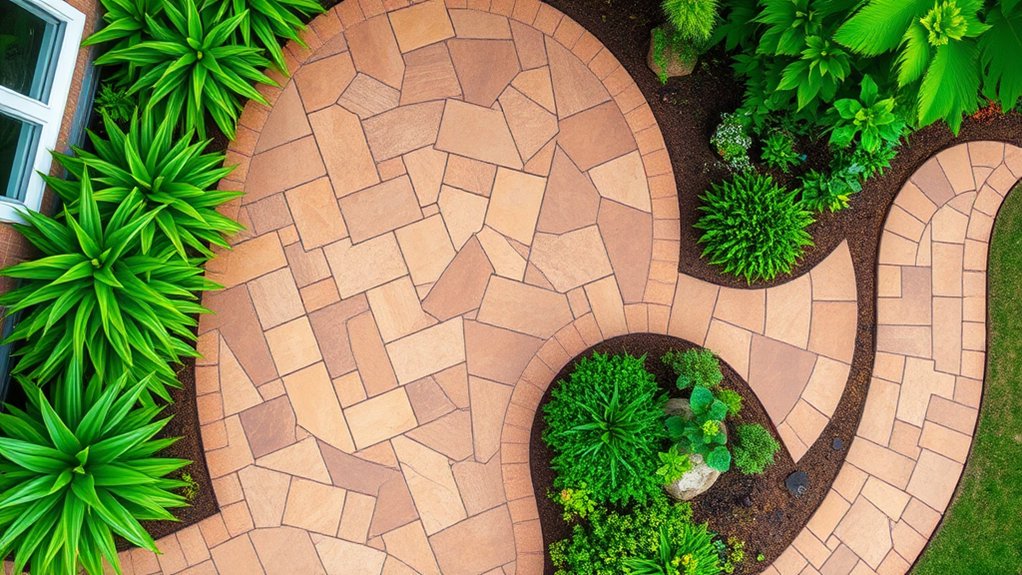
Choosing stamped concrete for your patios and pathways can be a cost-effective option, typically costing between £10 and £20 per square metre. Here’s a straightforward cost breakdown for comparison:
| Material | Cost per Square Metre |
|---|---|
| Stamped Concrete | £10 – £20 |
| Regular Concrete | £7 – £17 |
| Stamped Concrete Walkways | £10 – £21 |
| Bare Concrete Slabs | £9.05 – £11.06 |
| High-End Decorative Options | Over £20 |
When factoring in installation and maintenance, stamped concrete provides durability and visual appeal at a competitive price. Its lower long-term maintenance costs compared to natural stone or pavers further enhance its value, making it a smart investment for your outdoor areas. Additionally, stamped concrete may exceed the costs of plain concrete but remains competitive with other materials like natural stone or pavers. The durability of proper maintenance can significantly extend the lifespan of your stamped concrete surfaces, ensuring they remain attractive for many years.
Customization Options for Unique Designs

When it comes to personalising your stamped concrete, the options are nearly endless. You can select from a wide range of colours to enhance your design, ensuring it fits perfectly with your outdoor area. Furthermore, the flexibility in pattern design allows you to create distinct textures and shapes that showcase your individual style. This stamped concrete versatility makes it an ideal choice for both residential and commercial landscaping projects.
Color Variety Selection
When choosing colours for your stamped concrete patio or pathway, consider the variety of options available. Earth tones, such as greys and browns, provide a subtle look, while vibrant reds and blues can create striking focal points. Your colour selection affects not only the overall aesthetic but also keeps in line with current trends, ensuring your design feels timeless.
Layering different base colours can mimic the natural variations of stone, adding depth and realism. Additionally, accent colours can emphasise certain features, allowing for a range of effects from soft highlights to bold contrasts.
Pattern Design Flexibility
The vibrant colours you’ve chosen for your stamped concrete patio or pathway can be beautifully enhanced by a variety of pattern designs. With an impressive selection available, you can unleash your creativity to achieve the ideal look.
| Pattern Type | Description |
|---|---|
| Brick Patterns | Mimics classic brickwork styles |
| Stone Textures | Replicates natural stones like slate |
| Wood Plank Designs | Provides the warmth of wood with added durability |
Aesthetic Appeal and Home Value Enhancement
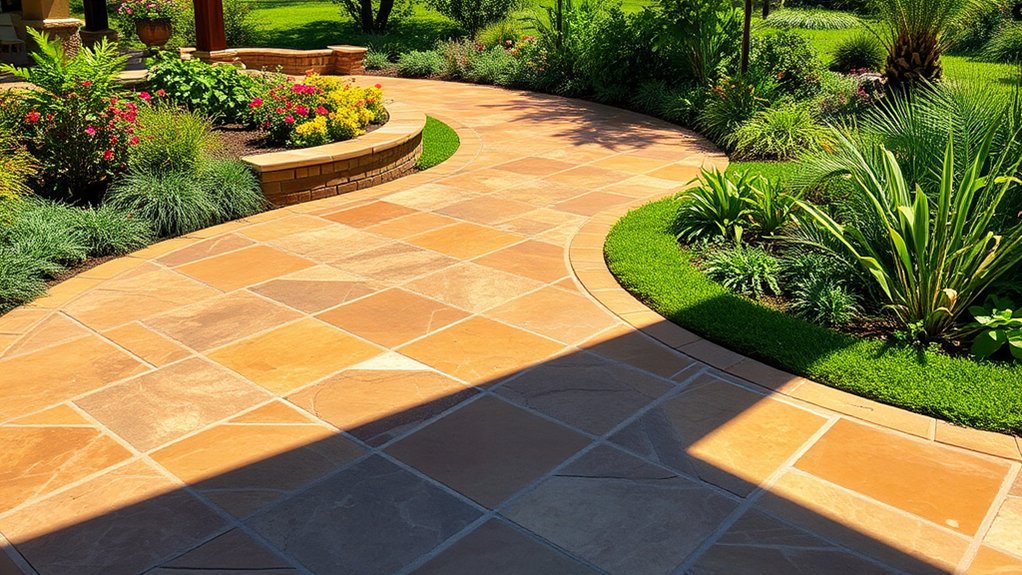
Many homeowners look for ways to improve their outdoor areas, and stamped concrete stands out as a top choice for both aesthetic appeal and value enhancement.
This adaptable material imitates premium finishes like stone and brick, fitting well with modern design trends. With a wide variety of colours and patterns available, you can create a patio or pathway that reflects your style and complements your home’s exterior.
As stamped concrete becomes more popular, its ability to boost property appeal is clear, making it attractive to potential buyers and increasing resale value.
Well-designed surfaces offer a luxurious appearance without the high maintenance associated with natural materials. By investing in stamped concrete, you’re not only enhancing your outdoor space but also making a smart decision that improves your home’s marketability. Additionally, stamped concrete can be customized with integral colouring to achieve vibrant and unique designs that further enhance visual appeal.
Ease of Maintenance for Busy Homeowners
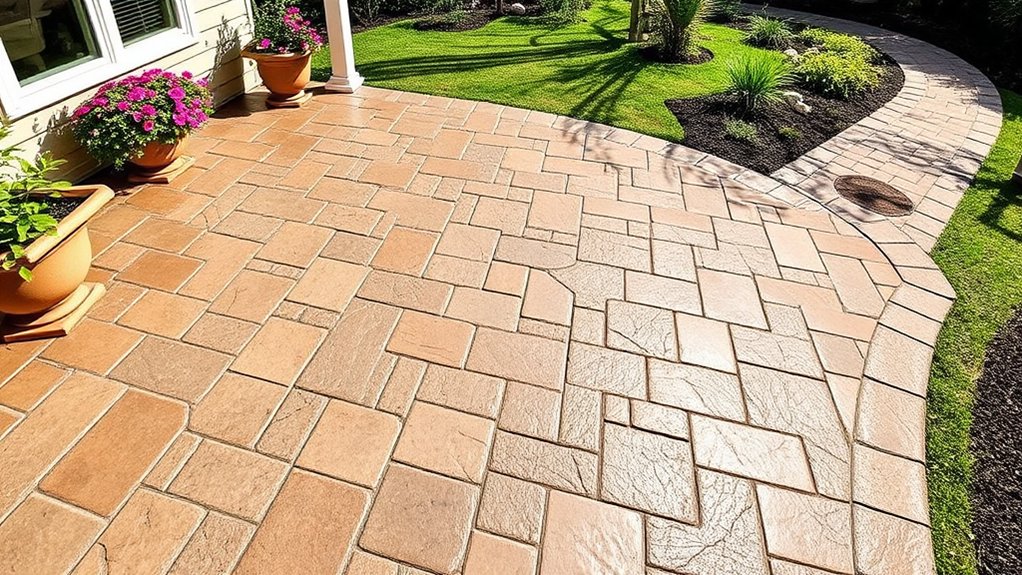
Opting for stamped concrete in your outdoor spaces is a practical choice for busy homeowners. It requires much less upkeep than traditional options like wooden decks or paving stones.
A simple sweep and an occasional wash with mild detergent are usually all that’s needed to keep your surfaces tidy. Resealing every few years will help maintain durability and appearance, so you can enjoy your patio or pathway without constant fuss.
Stamped concrete not only mimics the look of natural materials, but it also offers significant savings over time. Its robustness means fewer repairs, letting you enjoy your outdoor area without the stress of overwhelming maintenance.
Durability Compared to Pavers and Other Surfaces
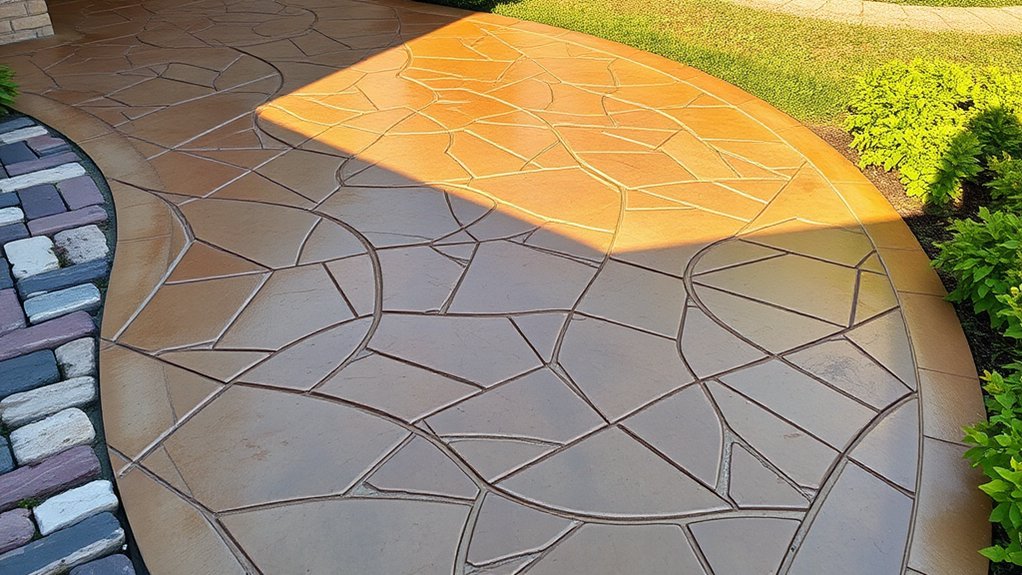
When it comes to durability, stamped concrete has its pros and cons when compared to pavers and other surfaces. It can last up to 25 years with proper maintenance, but pavers can last over 50 years, making them the more durable option. Stamped concrete is prone to cracking due to environmental factors and requires periodic resealing, which can be a drawback. On the other hand, pavers are easier to repair and better withstand freeze-thaw cycles. Here’s a quick comparison to help with your decision:
| Surface Type | Lifespan |
|---|---|
| Stamped Concrete | Up to 25 years |
| Pavers | 50+ years |
| Asphalt | Less than 20 years |
| Wood Decking | 10–20 years |
Limitations and Challenges of Stamped Concrete
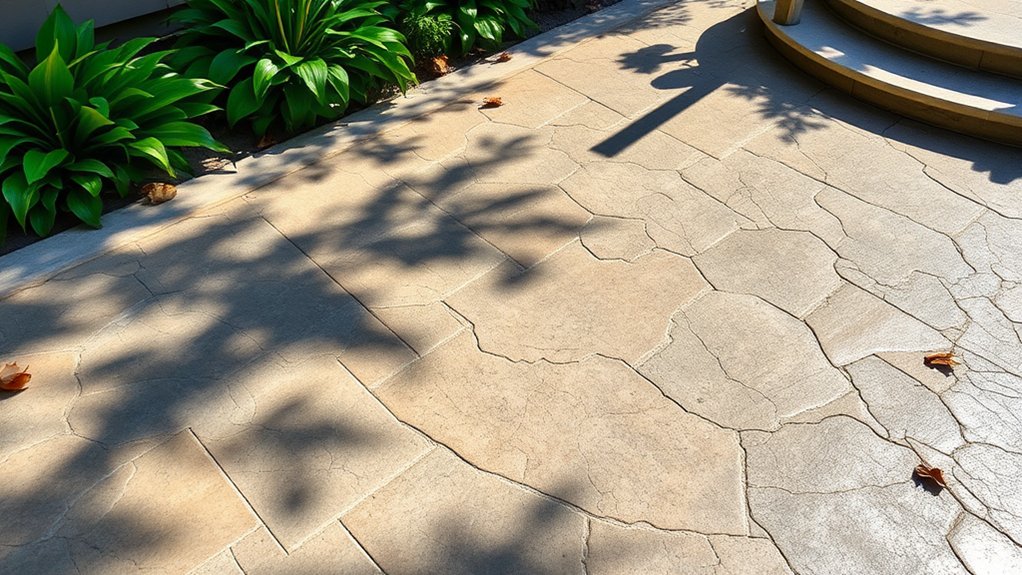
While stamped concrete is visually appealing and versatile, it has its limitations and challenges that should be taken into account before installation. One major issue is the difficulty of installation; achieving a flawless finish requires specialised skills that can be hard to source.
Weather can also pose challenges, as rain or extreme temperatures may interfere with the process.
After installation, stamped concrete can be tricky to repair; fixing cracks or chips can be expensive and complicated, often requiring precise matches for colour and texture.
Regular maintenance is crucial to prevent discolouration and efflorescence, which adds to your long-term responsibilities. These factors can ultimately affect both your budget and the longevity of your patio or pathway.
Weather Resistance and Performance
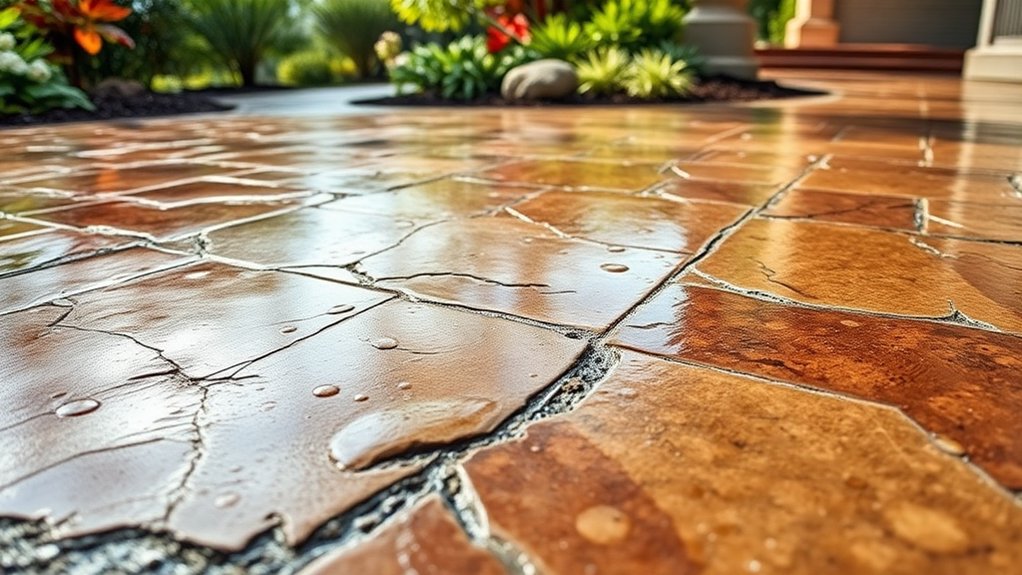
Choosing stamped concrete for your patios and pathways means investing in outstanding weather resistance.
This durable option can last over 25 years, even in harsh conditions. Plus, it’s low maintenance, so you can spend your weekends enjoying your outdoor spaces rather than worrying about upkeep.
With proper sealing, stamped concrete resists cracking and moisture, keeping it looking great and functional throughout the year.
Exceptional Weather Durability
If you’re worried about how outdoor surfaces stand up to the weather, stamped concrete is an excellent choice for patios and paths.
It’s built to withstand a range of conditions, from heavy rain to freeze-thaw cycles, especially when installed correctly. Using effective sealing methods keeps moisture out and protects against UV damage, which can extend its lifespan.
Stamped concrete can also handle seasonal changes without losing its look. Regular maintenance, like resealing when needed, helps prevent cracks and keeps your outdoor space intact.
With proper care, your stamped concrete can last up to 25 years.
Low Maintenance Requirements
Low maintenance requirements make stamped concrete a popular choice for patios and pathways. Keeping your concrete surface looking good is simple; regular sweeping or hosing off will do the trick.
For tougher stains, diluted cleaners work well. While power washing is an option for outdoor surfaces, a garden hose usually suffices. Resealing isn’t needed too often; just keep an eye on usage and the weather.
Periodic sealing can boost moisture resistance and protect your investment. Seasonal checks can help catch any potential issues early.
With the right care, your stamped concrete will remain durable and attractive, leading to less damage and cost savings in the long run. Follow these maintenance tips to effortlessly enjoy your beautiful outdoor space!
Installation Process and Professional Considerations
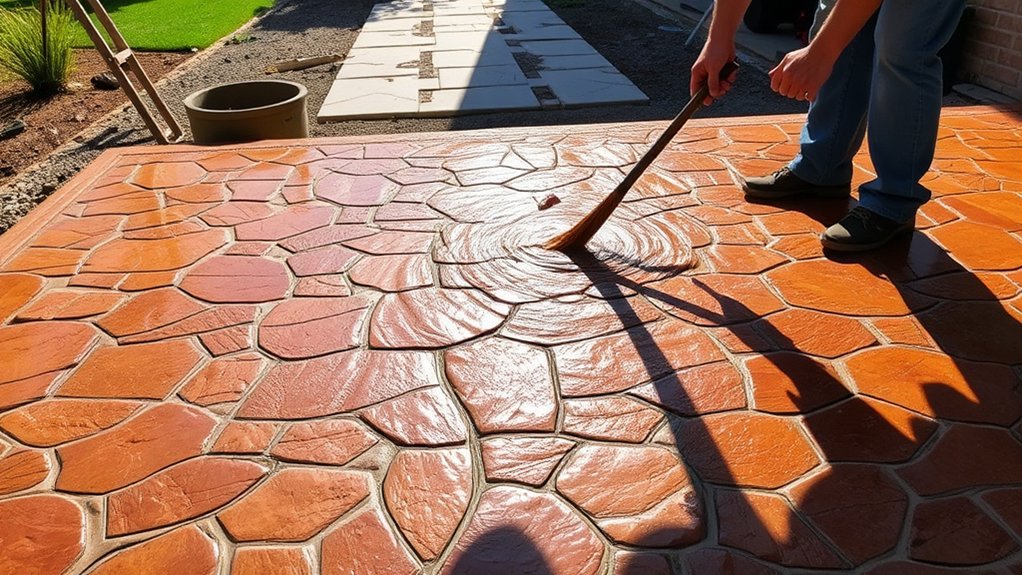
For a successful stamped concrete installation on patios and pathways, it’s crucial to pay close attention to each step.
Start with careful project planning, ensuring the subgrade is properly prepared by excavating and compacting the soil. Lay down and compact base material, such as gravel, for added support. Use wooden forms to contain the wet concrete, making sure everything is square.
When pouring, mix the concrete to the specified strength and finish it promptly. Apply a release agent before stamping in a precise order to avoid unsightly seams. Incorporate control joints every six feet to help manage cracking.
For the best results, consider bringing in a professional, especially for installation techniques and weather considerations.
Finally, sealing the concrete after curing will enhance its durability and keep your design looking its best.
Frequently Asked Questions
Can Stamped Concrete Be Used for Driveways?
Yes, stamped concrete can be used for driveways. It is durable and comes in a range of designs, providing both strength and visual appeal. This means your driveway can handle heavy traffic while looking stylish and unique. For instance, you might choose a pattern that mimics brick or stone, enhancing your home’s exterior without the hassle of traditional materials.
How Does Stamped Concrete Handle Heavy Foot Traffic?
Stamped concrete is well-suited for heavy foot traffic thanks to its strong durability, including high compression strength and excellent abrasion resistance. To keep it in top condition, it’s essential to regularly clean and seal the surface. For example, a simple wash with mild detergent can help maintain its appearance, while sealing every few years can protect it from wear and tear. By following these maintenance tips, you can ensure your stamped concrete remains both functional and attractive for years to come.
Is Stamped Concrete Slippery When Wet?
Yes, stamped concrete can be slippery when wet, particularly if it doesn’t have the right textured finishes. To improve safety, opt for higher textures and consider using penetrating sealers or non-slip additives to enhance traction.
What Colors Are Available for Stamped Concrete?
You’ll be surprised by the wide range of colour options available for stamped concrete! With techniques such as integral colours and acid stains, you can achieve beautiful shades that enhance your outdoor areas, showcasing your personal style.
How Long Does the Installation Process Take?
The installation process typically takes 7 to 14 days for light use, depending on the conditions. Allow 28 days for complete curing before placing heavy furniture or using the surface extensively.
Conclusion
Incorporating stamped concrete into your outdoor spaces is an effective way to enhance your home’s appeal. It offers durability, a range of designs, and requires minimal upkeep. Stamped concrete can transform patios and pathways into attractive features that can increase your property’s value. Although there are some drawbacks, the advantages make it a worthwhile investment. Embrace the beauty and strength of stamped concrete, and watch your outdoor area thrive.

Wonder how concrete can transform your landscape? Discover ten creative uses that will elevate your outdoor space in unexpected ways.

Find out how polished concrete floors can elevate your commercial interiors, enhancing style and durability in ways you never imagined. Read more

Transform your outdoor space with unique concrete ideas that will inspire your next landscaping project—discover the endless possibilities today!