Concrete overlays can transform your average floors into stunning features. Begin by thoroughly cleaning the surface and addressing any imperfections to ensure a smooth base. Select the appropriate primer and base coat, then apply the overlay mix to achieve your desired texture. Finish with a protective sealant to enhance durability and aesthetics. With choices ranging from glossy finishes to more natural looks, you have plenty of room for creativity. Explore additional techniques and tips to further enhance your interior space.
Key Takeaways
- Begin by thoroughly cleaning and preparing the existing concrete surface to ensure a strong bond with the overlay material.
- Select an appropriate primer and overlay mix that aligns with your desired texture and aesthetic for the interior floors.
- Apply the concrete overlay evenly, using tools such as hand trowels and smoothing paddles for a polished finish.
- Seal the overlay with a suitable sealer to enhance durability and preserve the appearance of your floors.
- Keep your floors looking great by regularly cleaning with pH-neutral products and swiftly addressing any spills or stains.
Understanding Concrete Overlays
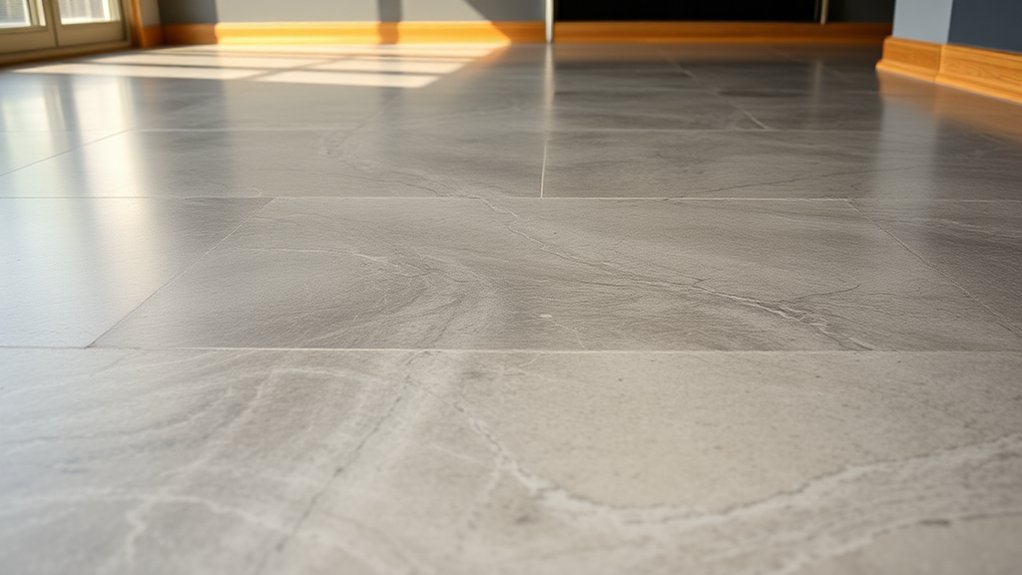
Concrete overlays are an excellent solution for revitalising tired, worn floors into attractive, durable surfaces. These thin layers of cement-based material, often blended with polymers and aggregates, are available in various styles, from decorative to functional. You can create a range of finishes using techniques like colouring, texturing, and stamping, allowing for personal expression. Concrete overlays provide a durable and stylish option for flooring, enhancing the overall appearance and functionality of existing concrete surfaces. Additionally, they can be tailored using decorative concrete techniques, ensuring each project reflects the owner’s unique taste.
Before applying an overlay, ensure the surface is properly cleaned and any defects are repaired. Using the right application techniques is crucial; whether you choose a feather finish or a thicker layer, professional installation will ensure durability. Overlays can also be applied over tiles or compressed sheeting, giving you more renovation options while enhancing the overall look of your space.
Benefits of Concrete Overlays for Interior Floors
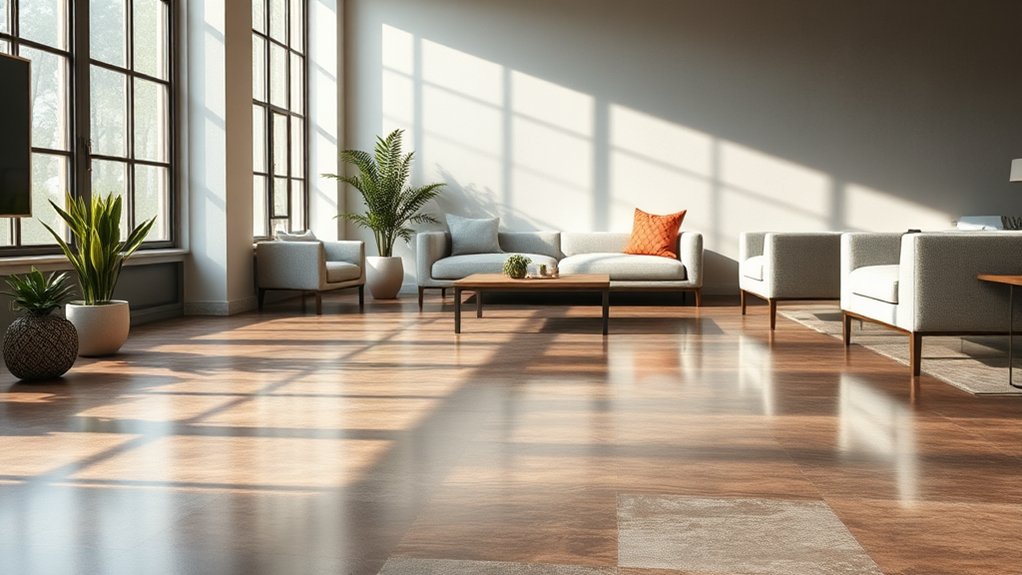
If you’re looking to improve your interior floors, concrete overlays offer numerous benefits that balance practicality and style. Their durability ensures they can handle high foot traffic and spills, making them suitable for any area of your home. Overlays can replicate the appearance of luxury materials like stone or wood, fitting well with modern design trends. By reusing existing concrete slabs, you’re also making an environmentally friendly choice, helping to conserve resources and reduce waste. These overlays are a cost-effective option, saving you money on replacements while giving your space a refreshed look. With minimal maintenance and quick installation, they enhance your interiors effortlessly—perfect for those who appreciate both aesthetics and functionality. Additionally, decorative concrete overlays are customizable, allowing you to create unique patterns and colors that match your personal style. Furthermore, they provide low maintenance compared to carpets or vinyl, simplifying cleaning and enhancing hygiene in your living spaces.
Surface Preparation: The Key to Success
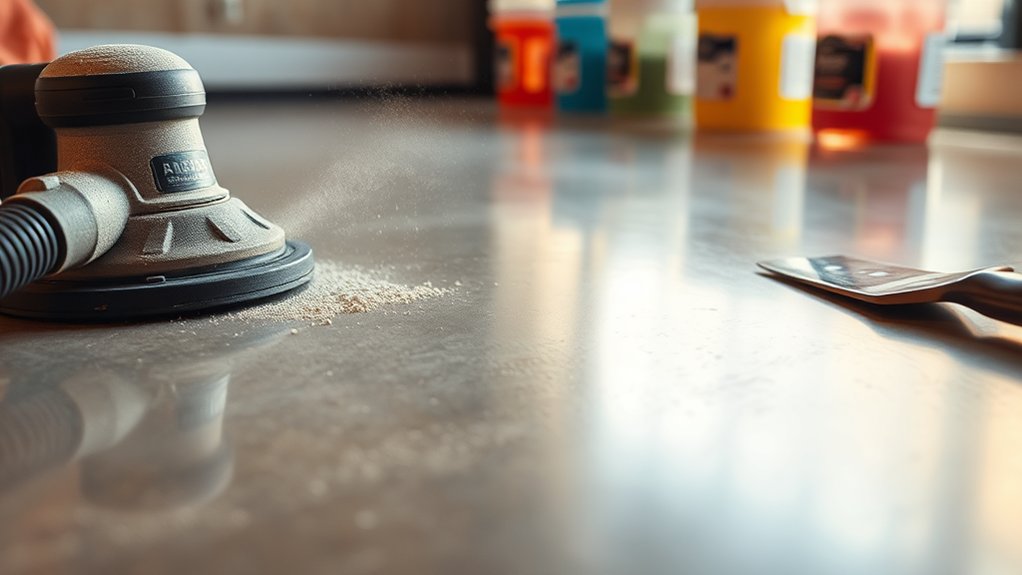
When it comes to concrete overlays, surface preparation is crucial for success. Start by thoroughly cleaning the surface and addressing any imperfections. Then, use mechanical profiling methods to ensure a strong bond. Surface must be cleaned before applying the overlay to achieve a durable and attractive floor. Master these techniques, and you’ll achieve a durable and attractive floor.
Proper Cleaning Techniques
To achieve a flawless concrete overlay, start with proper cleaning techniques. Regularly remove dust using a microfiber mop or vacuum, as these prevent scratches on the surface.
For deeper cleaning, use a pH-neutral cleaner with a damp microfiber mop, taking care to avoid excess moisture that could damage the concrete. Mop in sections and rinse frequently to avoid residue, drying the area promptly to prevent water spots.
Address spills immediately to minimise staining. Regular cleaning not only improves appearance but also prolongs the life of your overlay by keeping dirt at bay. Additionally, regular inspections of your concrete surfaces can help detect potential issues early on, enhancing the longevity of your overlay.
Adjust your methods based on whether your surface is sealed or unsealed for the best results.
Repairing Surface Imperfections
Before applying a concrete overlay, it’s crucial to tackle any surface imperfections that could affect the outcome.
Start by assessing any cracks—identify and categorise them to inform your repair approach. Use appropriate materials for sealing cracks, selecting options that match the colour and texture of your existing concrete; choosing the right materials is essential.
For larger holes, employ surface patching materials to create a smooth base. Don’t forget to check the structural integrity of the concrete before moving forward.
Lastly, prime the surface to improve adhesion and prevent delamination, ensuring a smooth finish. Each step you take prepares you for stunning interior floors!
Mechanical Profiling Methods
Many people underestimate the significance of surface preparation, but mastering mechanical profiling methods is crucial for achieving beautiful interior floors.
These techniques create the ideal surface texture for overlays, ensuring a strong bond and lasting appeal. Here are some essential methods to consider:
- Grinding and scarifying to create a rough surface that’s ready for bonding
- Shot blasting for a uniformly roughened concrete finish
- Diamond grinding for bespoke textures
- Hand grinders for those hard-to-reach edges and corners
Choosing the Right Primer and Base Coat
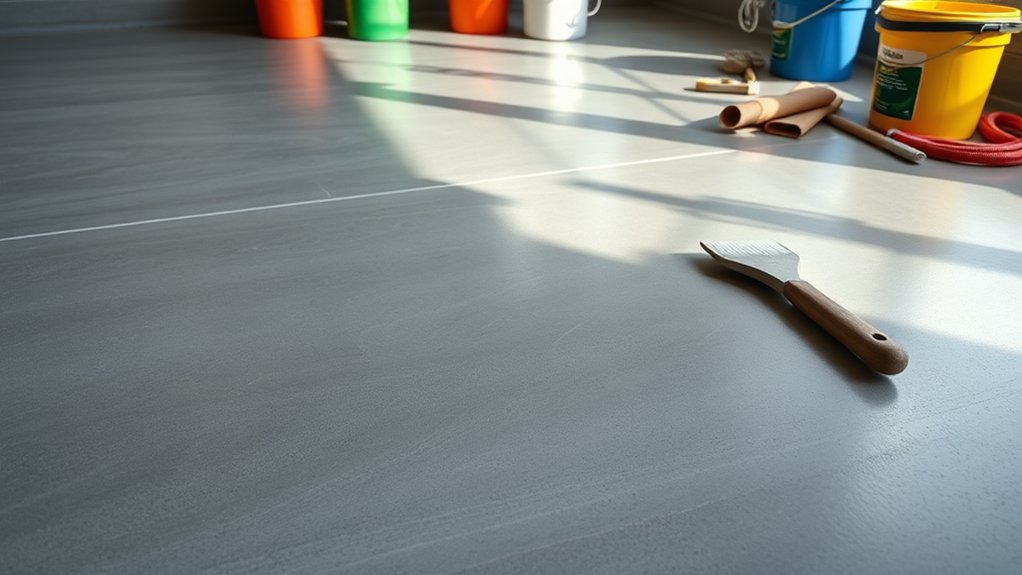
Choosing the right primer and base coat is crucial for a successful concrete overlay, as these layers significantly affect the durability and performance of your flooring.
Start by selecting from primer types such as alkyd/oil-based, acrylic/latex, or tinted shellac, each suited for specific purposes. Ensure proper surface preparation by cleaning and repairing the concrete to enhance adhesion.
When selecting a base coat, check its compatibility with your existing concrete and the overlay material. Customisation options can create a seamless look, boosting aesthetic appeal.
Remember to apply your primer and base coat evenly and allow sufficient drying time to achieve a stunning, long-lasting finish.
Step-by-Step Application of Concrete Overlays

When you’re ready to enhance your interior floors with a concrete overlay, it’s essential to follow a clear step-by-step process for a perfect finish.
- Begin with a clean surface: Clear away dirt and fix any imperfections to ensure a smooth base.
- Apply a primer: Use a bonding agent to ensure strong adhesion between the layers.
- Prepare the mix: Choose a specialised overlay mix that suits your desired texture and application method.
- Spread and seal: Pour and evenly distribute the overlay, then apply a protective sealant for durability and aesthetic appeal.
Exploring Decorative Treatments and Finishes
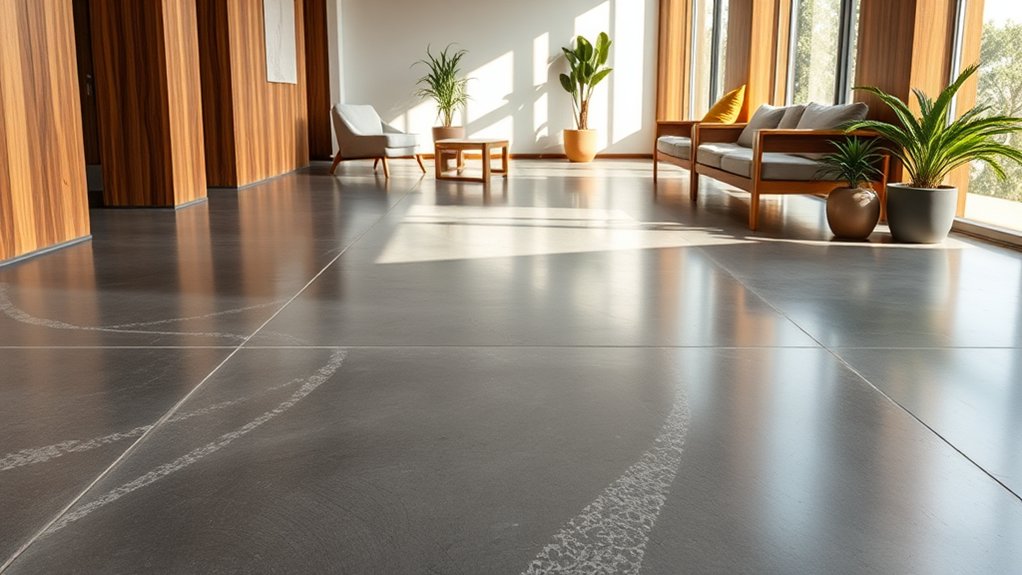
When you’re ready to enhance your concrete overlay, consider using colour stains and pigments to unlock a range of vibrant options.
The right sealers and topcoats can’t only boost the aesthetic appeal but also protect your floors from everyday wear and tear.
These decorative treatments can truly transform your space into a stylish retreat.
Color Stains and Pigments
Colour stains and pigments can turn your concrete overlays into striking focal points that reflect your personal style.
With various types of colour stains available, you can customise your floors to perfectly match your décor. Here are some interesting options:
- Earthy tones from reactive stains for a rustic, natural feel.
- Vibrant pastels with water-based stains to brighten up any space.
- Marbled effects that display unique patterns and depth.
- Integral pigments for consistent colour throughout your concrete.
The characteristics of pigments vary greatly, allowing you to choose the ideal hue.
Sealers and Topcoats
Sealers and topcoats are vital for enhancing the appearance and durability of your concrete overlays. They ensure your floors not only look great but also endure over time. Knowing the right types of sealers and finishes is crucial for achieving your desired effect.
| Sealer Type | Best Uses |
|---|---|
| Acrylic | Decorative outdoor areas, patios |
| Polyurethane | Indoor floors, high-traffic areas |
| Epoxy | Industrial and commercial spaces |
| Polyaspartic | Polished concrete finishes indoors |
Film-forming sealers offer finishes ranging from matte to glossy, impacting stain resistance and UV protection. In contrast, penetrating sealers keep a natural appearance while protecting against moisture and contaminants. Make informed choices to boost your concrete floor’s beauty and longevity!
Essential Tools and Materials for Overlay Installation
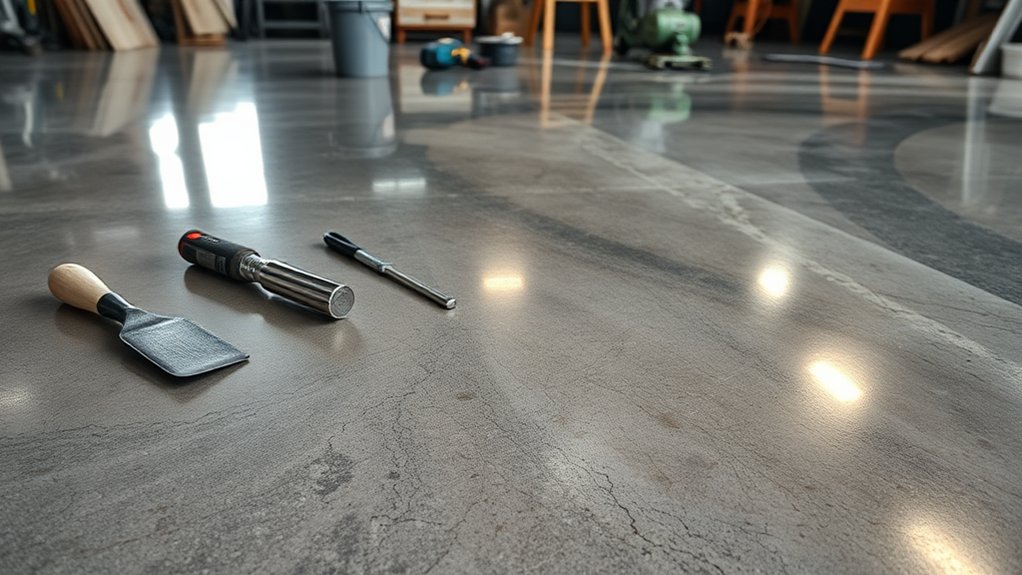
Installing a concrete overlay requires the right tools to ensure a smooth and effective application. The tools you choose can significantly influence the outcome.
Here’s a list of essentials:
- Paddle mixer for combining overlay materials to achieve a consistent mixture.
- Hand trowels in different shapes for precise smoothing and texturing of the surface.
- Smoothing paddles to perfect the finish after spreading the overlay.
- Concrete levelers to prepare the substrate and ensure proper adhesion.
With these tools, you’ll be set to create impressive interior floors that are both stylish and durable.
Common Mistakes to Avoid
Even with the right tools and materials, mistakes during the installation of concrete overlays can lead to disappointing results. Steering clear of common pitfalls is essential for achieving impressive floors. Here are some critical mistakes to avoid:
| Mistake | Impact |
|---|---|
| Inadequate Surface Preparation | Results in poor adhesion and uneven finishes |
| Ignoring Moisture Issues | Leads to darkening, bubbling, and peeling |
| Incorrect Overlay Thickness | Increases the risk of cracking and weak spots |
| Poor Colour and Finish Selection | Yields unattractive, inconsistent floors |
| Inadequate Polishing Practices | Can produce scratches or overly slippery surfaces |
Timeline for Your Concrete Overlay Project
When planning your concrete overlay project, timing is crucial. You need to consider the preparation phase, the installation period, and the essential curing and drying times to achieve a top-notch finish.
For instance, if you allow ample time for the surface to prepare and cure, you’re less likely to face issues later on. By grasping how long each step takes, you can keep your project on schedule and prevent unnecessary setbacks.
Preparation Phase Duration
Before starting your concrete overlay project, it’s important to grasp how long the preparation phase will take to ensure a successful finish.
Managing this timeline effectively is crucial for achieving your desired floor. Here’s what you need to consider:
- Start by thoroughly cleaning the surface to remove any dirt, grime, or debris.
- Fill in any spalls, cracks, or holes to create a smooth base.
- Apply a primer and allow it to cure properly for a strong bond.
- Check moisture levels and factor in any necessary drying times.
Installation Timeframes Explained
Understanding the installation timeframes for your concrete overlay project is essential to avoid any unexpected delays. The complexity of the project, size of the surface, and experience of the crew can all impact installation time.
For instance, simple overlays might be completed in just a few days, whereas decorative options with intricate finishes could take much longer.
Temperature and humidity are also crucial factors; spring and autumn typically provide the best conditions for installation. If your project is outdoors, be mindful of potential weather disruptions.
Larger areas will naturally require more preparation and application time as well. Additionally, the materials you choose can affect both the speed of installation and the final look.
Curing and Drying Times
Curing and drying times are crucial for your concrete overlay project, ensuring the surface reaches its full strength and durability.
Here are some key points to consider during this important phase:
- 24 to 48 hours: This is the ideal curing window to achieve optimal strength.
- Moisture retention: Use plastic sheeting or misting to keep the surface damp.
- Temperature stability: Ensure consistent conditions for effective curing.
- Delay heavy traffic: Wait up to 7 days for full curing, depending on the thickness of the overlay.
Structural Considerations for Overlay Installation
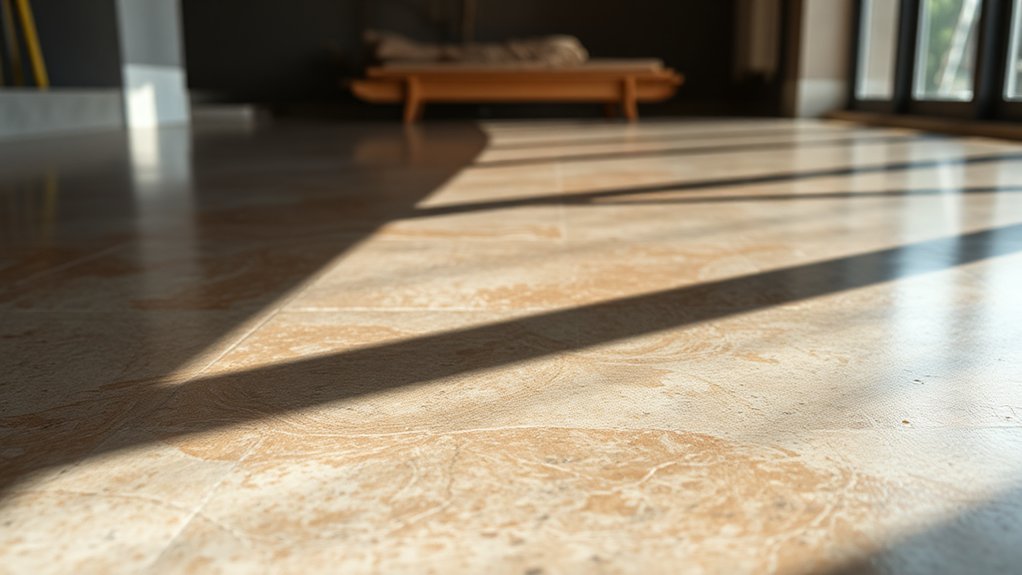
Before starting the installation of a concrete overlay, it’s crucial to assess the structural integrity of your existing floor. Look for any cracks or spalling, as these issues must be resolved first.
Ensure your floor can support the additional weight of the overlay, particularly if it’s on an upper level; consulting a structural engineer for load calculations is advisable to avoid future complications.
Consider installing moisture barriers to shield against dampness, especially if your floor is in contact with untreated wood. Good ventilation and drainage can also help manage moisture and prolong the life of your new floor.
Taking these steps now will pave the way for a successful transformation!
Maintenance Tips for Longevity

Proper installation is just the beginning for your concrete overlay; regular maintenance is essential to keep it looking great for years.
Here are some straightforward tips to maintain your floors:
- Sweep or mop daily to remove dirt and grit, which can scratch the surface.
- Use pH-neutral cleaners weekly to clean without causing harm.
- Apply sealant-protecting cleaners monthly to boost stain resistance and add shine.
- Wipe up spills immediately with a damp cloth to prevent staining.
Adjust your cleaning routine based on foot traffic, and always choose gentle products.
Transforming Your Space With Custom Designs
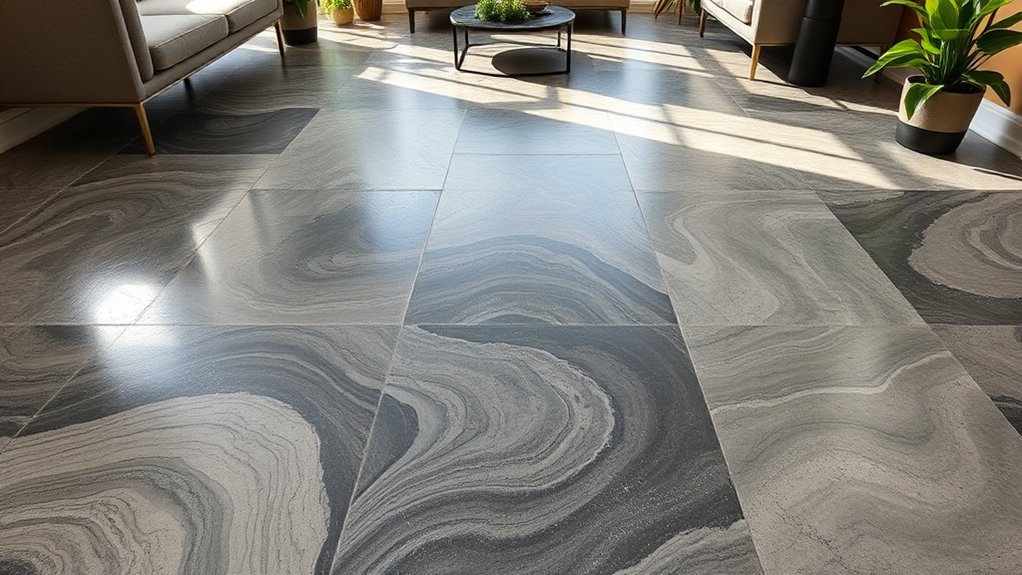
Concrete overlays can genuinely enhance your interior spaces, providing a versatile canvas for design.
With current trends favouring personalised touches, you can explore a variety of customisation options for a distinctive look. Picture transforming your existing floors with vibrant colours or detailed patterns that replicate wood or stone.
Techniques such as stamping and acid etching allow you to showcase your creativity, turning your floors into eye-catching features. Additionally, microtopping offers a sleek finish for high-traffic areas, ensuring durability without compromising on style.
Whether you favour a modern, industrial aesthetic or something more traditional, concrete overlays can align with your vision, delivering an economical solution that beautifully redefines your space.
Frequently Asked Questions
How Long Do Concrete Overlays Typically Last?
Concrete overlays generally last between 10 to 15 years. However, with proper maintenance, you could extend their lifespan to around 25 years. Opt for high-quality materials and ensure regular sealing to enhance both durability and appearance.
Can I Install a Concrete Overlay Over Existing Tile?
Did you know that properly prepared surfaces can enhance bonding by up to 50%? You can install a concrete overlay over existing tiles, but it’s essential to ensure thorough preparation of the tiles and effective bonding of the overlay for durable results.
What Temperature Is Ideal for Applying Concrete Overlays?
For applying concrete overlays, aim for ambient temperatures between 10°C and 29°C. Maintaining the right temperature is crucial for ensuring proper adhesion and curing, helping to prevent issues like cracking or discolouration. It’s also important to consider timing—choose the right moments for the best results!
Are There Eco-Friendly Options for Concrete Overlays?
Imagine enhancing your space while being kind to the environment. Eco-friendly concrete overlays, made from sustainable materials, significantly lower your carbon footprint. They offer a stylish alternative for your flooring needs and are a responsible choice for those looking to make a greener impact.
How Do I Clean and Maintain My Concrete Overlay Floor?
To clean and maintain your concrete overlay, sweep daily and mop weekly. Regular inspections and occasional deep cleaning will help keep it looking its best. This straightforward approach ensures your floor remains attractive and durable.
Conclusion
Incorporating concrete overlays into your interior design can significantly enhance your space, providing a sleek, modern look without the high cost of traditional materials. Many homeowners who opt for concrete overlays report high satisfaction with their results. By following the right preparation and application steps, you can achieve stunning and durable floors that showcase your personal style. Embrace this trend, unleash your creativity, and watch your interiors transform!

Looking to elevate your interiors with polished concrete finishes? Discover the styles, benefits, and secrets that can transform your space Read more

Perfect for enhancing outdoor spaces, stamped concrete offers durability and style—discover how it can transform your patios and pathways today!
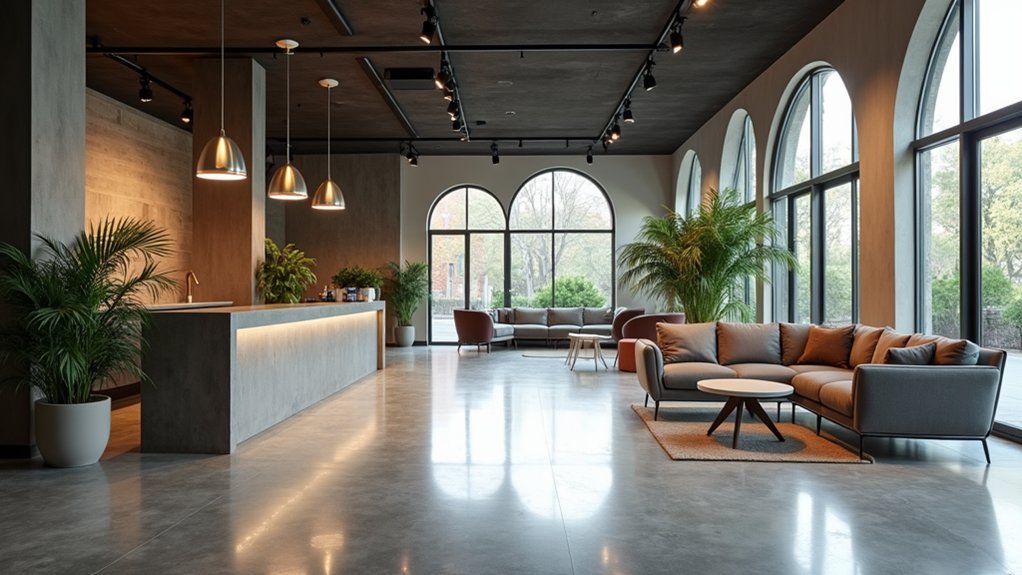
Find out how polished concrete floors can elevate your commercial interiors, enhancing style and durability in ways you never imagined. Read more