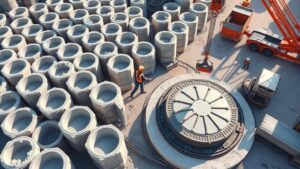
When using ready-mix concrete for retaining walls and landscaping, start by ensuring your tools are clean. Measure out your aggregates and add them to the mixing container. Gradually mix in the cement while continuously stirring. It's crucial to maintain the correct water-cement ratio for optimal strength, which is typically around 1:2:3. To check the consistency, perform a slump test to ensure it's workable. Ready-mix concrete is not only durable but also offers design flexibility, making it a great choice for various projects.
Key Takeaways
- Use ready-mix concrete for retaining walls to ensure durability and resistance to the UK's weather, enhancing long-term structural integrity.
- Customise the concrete mix ratio, typically 1:2:3, for optimal strength in retaining wall applications.
- Formwork is crucial; create robust moulds to shape the concrete while allowing for proper curing and support.
- Incorporate landscaping features, like curves and textures, to visually complement the concrete walls.
- Regular maintenance checks are essential to address cracks and erosion, helping to prolong the lifespan of both walls and landscaping.
Benefits of Using Ready-Mix Concrete for Retaining Walls

When choosing materials for retaining walls, ready-mix concrete is a top contender due to its exceptional durability and versatility. It boasts a lifespan of 50 to 100 years, effectively resisting weather conditions and fire. This strength allows it to support heavy loads, reducing maintenance and ensuring long-term structural integrity. Additionally, concrete retaining walls are essential for preventing soil erosion, especially on slopes. The controlled production of ready-mix concrete ensures consistent quality, which is crucial for structural performance.
Cost savings are another key benefit; ready-mix concrete typically lowers labour costs and reduces waste, making it a more economical option. Its design flexibility also offers unique aesthetics, which can enhance the value of your property. Additionally, ready-mix concrete adapts well to various landscapes, meeting the needs of both residential and commercial projects. Overall, it proves to be an efficient and sustainable choice for constructing retaining walls.
Understanding the Mixing Process for Retaining Walls

Understanding the mixing process for retaining walls is crucial, as it affects the strength and durability of your structure.
Begin with clean equipment to avoid contamination. Measure out your aggregates and add them to the mixing container. Gradually incorporate cement while continuously mixing to ensure a uniform blend.
Slowly add water, being mindful not to exceed the correct concrete proportions, as too much water can weaken the mixture. Adjusting proportions based on project requirements will also enhance the quality of your mix. Additionally, maintaining the proper water-cement ratio is essential for achieving optimal strength and durability. Mix thoroughly until the concrete is smooth and lump-free, similar to a thick paste.
Paying attention to this mixing process will improve the overall quality of your ready-mix concrete, ensuring that your retaining wall is strong and capable of withstanding environmental pressures over time.
Key Proportions for Strong Concrete Mixes

To achieve strong concrete mixes, understanding the key proportions is vital for durability and performance. For residential projects, a typical mix ratio is 1:2:3 (cement, sand, and aggregate). In road construction, you might see ratios like 1:2:4 or 1:3:6 for added strength. For high-strength applications, ratios such as 1:1:2 or 1:1.5:3 are often used. An important factor is the water-cement ratio; using less water usually leads to stronger concrete. Additionally, maintaining a proper water-to-cement ratio is crucial as it significantly impacts the strength and durability of the final concrete product. It's also crucial to consider the type of cement and aggregate; higher cement content enhances tensile strength, while coarser aggregates improve compressive strength. Furthermore, achieving a compressive strength of 3000 PSI is essential for ensuring that the concrete can withstand significant loads in various construction applications.
Preparing Materials for Mixing Concrete

To prepare for mixing concrete, start by selecting the right materials according to your project's needs.
Choose suitable types of cement and quality aggregates.
It's also crucial to set up your mixing equipment properly; accurate batching and dependable mixers will ensure your concrete mix is consistent and of high quality.
Good preparation in material selection and equipment setup is key to achieving the best results.
Material Selection Guidelines
When selecting materials for mixing concrete, consider several key factors that affect the performance and durability of the final product.
Start with quality assurance by opting for high-strength cement for structures like retaining walls, and standard cement for projects such as landscaping.
Ensure your aggregates—like sand and gravel—are clean and properly sized, as this influences both workability and strength.
Pay close attention to the quality of water; it should be free from impurities.
You might also want to use admixtures, such as retarders or air-entrainers, to improve the characteristics of the mix.
If your project will bear heavy loads, reinforcing with rebar is essential.
Finally, try to source materials locally. This not only helps reduce costs but also supports local suppliers.
Every decision you make plays a significant role in the success of your concrete application.
Mixing Equipment Setup
Choosing the right materials is just one part of the process; setting up your mixing equipment correctly is vital for optimal concrete performance.
Start by measuring the water accurately with marked buckets. Pour approximately three-quarters of the water into your mixer as head water to kick off the mixing. Consistency is key—aim for a mixing time of about three minutes for the best results.
Ensure your mixer is clean and slightly damp to prevent sticking, and carry out regular maintenance to keep your equipment in top shape. For larger projects, consider using additional mixing stations to boost output.
Always wear appropriate safety gear and manage dust with coverings or lids to maintain a safe working environment.
Achieving the Right Consistency in Concrete

Achieving the right consistency in concrete depends on accurate water ratios and effective mixing techniques.
It's essential to test the mix to ensure it maintains shape without slumping, which indicates proper hydration and blending.
By mastering these factors, you can improve the strength and durability of your concrete.
For instance, if the mix is too dry, it won't bond properly; if it's too wet, it can weaken the structure.
Importance of Water Ratio
Understanding the water-cement ratio is essential for achieving the right consistency in concrete. This ratio is determined by dividing the weight of water by the weight of cement and directly affects hydration, strength, and durability.
Generally, a lower water-cement ratio leads to stronger concrete, whereas a higher ratio improves workability but may compromise strength. It's crucial to find a balance, particularly for structures like retaining walls and landscaping, where durability is vital.
Moreover, the quality of water used is important; impurities can negatively impact the mix's consistency and overall performance.
Always measure water precisely, consider the moisture in aggregates, and conduct regular tests to ensure you maintain the ideal water-cement ratio for your project's needs.
Mixing Techniques Overview
Proper mixing techniques are essential for achieving the right consistency in concrete, which directly affects its performance and durability.
Choose suitable mixing tools, such as buckets or electric mixers, depending on your project's scale. Manage your batches effectively; aim for maximum batch sizes to avoid overloading the mixer and ensure thorough mixing.
Start by adding dry ingredients, then gradually mix in water to improve consistency. The desired texture should resemble thick pancake batter or peanut butter.
Be cautious of overmixing, as it can weaken the mixture; keep mixing times short. Prioritise safety by wearing gloves and a mask, and maintain a tidy mixing area to prevent contamination for the best results.
Testing Consistency Effectively
Testing consistency in concrete is crucial for ensuring your mix meets performance standards. Effective methods, like the slump test, help assess workability by measuring how well the mix holds together.
Compressive strength tests and air content tests also assess consistency, determining the material's structural integrity and durability under different conditions.
Regular quality tests and real-time monitoring can identify potential issues, allowing for timely adjustments.
When mixing, add water gradually to achieve the right consistency without compromising the mix's integrity.
Keeping precise measurements and monitoring environmental factors will help maintain your concrete's consistency over time, ensuring optimal performance for projects like retaining walls and landscaping.
Innovative Techniques for Constructing Retaining Walls
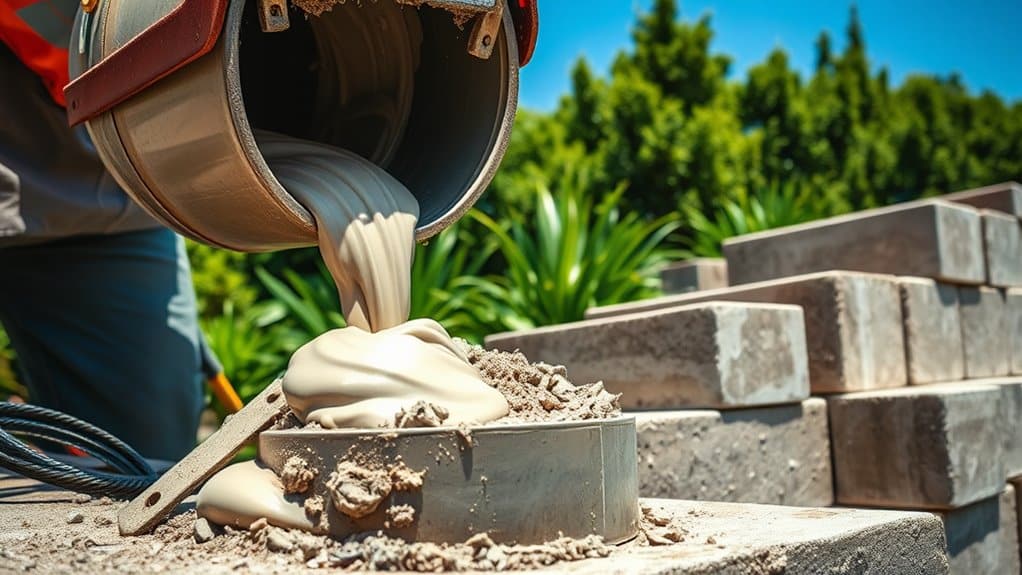
When building retaining walls, using innovative techniques can significantly improve both strength and efficiency.
Combining soldier piles with lagging offers excellent stability and minimises disruption to nearby structures. Advanced ground improvement methods, such as jet grouting and soil nailing, enhance soil stability and lower the risk of excavation issues.
Geosynthetic reinforcements, like HDPE geogrids, enable the use of less-than-ideal fill materials, making the most of available resources.
Modular block systems and precast concrete panels simplify the installation process, reducing construction time while ensuring quality.
Additionally, utilising self-healing materials and nanotechnology coatings can prolong the lifespan of your walls.
Design Flexibility With Concrete Retaining Walls

When designing concrete retaining walls, the flexibility in materials and structural options is significant. You can easily adapt your design to meet modern aesthetics and functionality.
Here are some important aspects to consider:
- Material Options: Choose from poured concrete, blocks, or prefabricated panels for different appearances.
- Curved Designs: Segmental walls can easily accommodate unique shapes and contours.
- Colour and Texture Choices: Personalise the look with various sizes, shapes, and finishes.
- Modular Systems: Consider systems like Redi-Rock for versatile designs around slopes.
This flexibility enables you to create retaining walls that are both functional and visually appealing, seamlessly integrating into your landscape.
Maintenance and Care for Concrete Structures
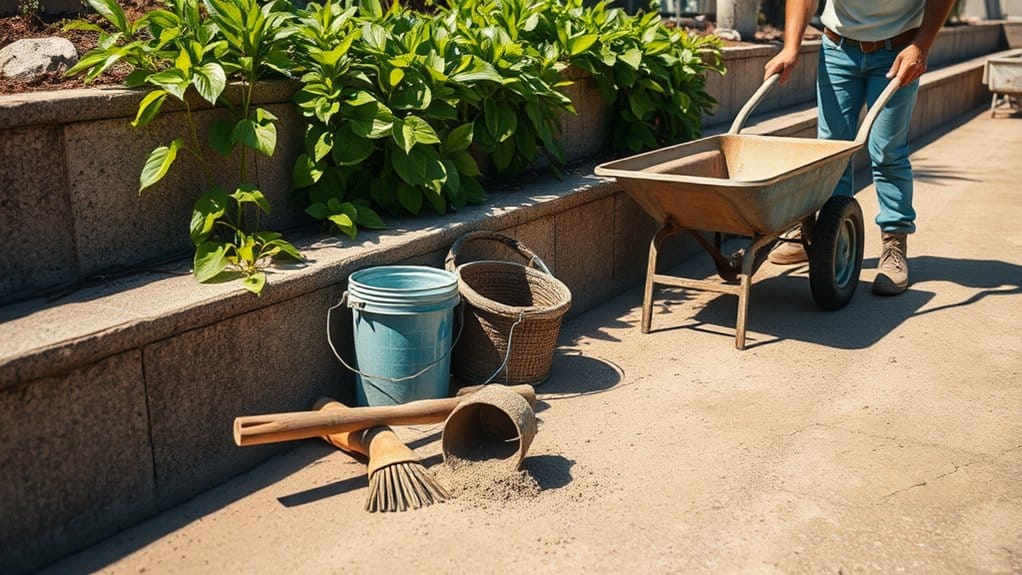
To ensure the longevity and structural integrity of concrete structures, regular maintenance is crucial. Taking preventive measures can significantly enhance durability and minimise repair costs. Prioritise long-term strategies such as routine inspections, surface cleaning, and waterproofing to guard against moisture damage and freeze-thaw cycles.
| Maintenance Task | Purpose | Frequency |
|---|---|---|
| Crack Repair | Prevents further deterioration | As needed |
| Surface Cleaning | Stops staining and buildup | Monthly |
| Waterproofing | Increases resistance to water damage | Annually |
| Structural Assessment | Ensures safety and functionality | Biannually |
Environmental Impact of Ready-Mix Concrete
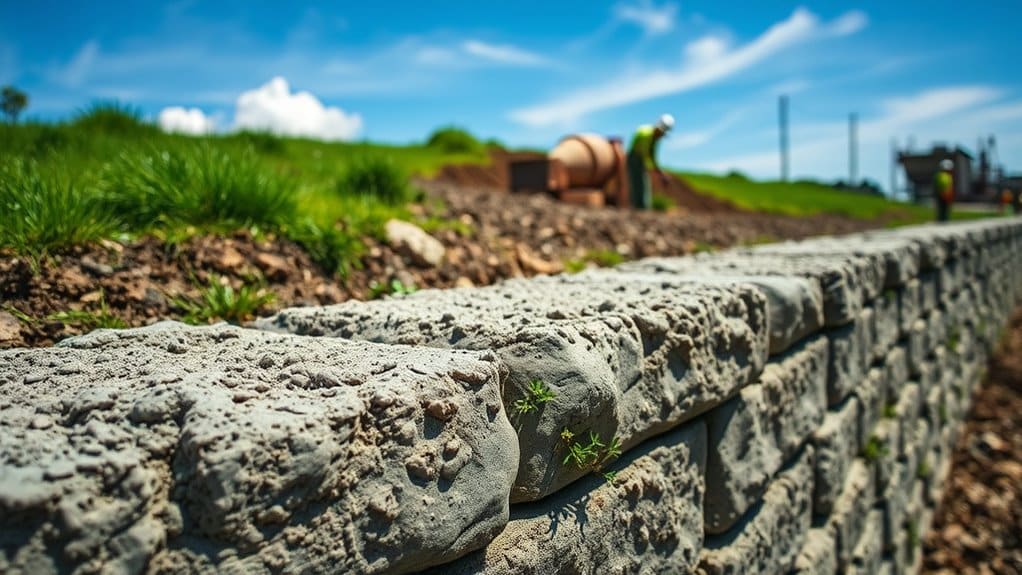
Understanding the environmental impact of ready-mix concrete is crucial for sustainable building practices. Opting for ready-mix helps reduce carbon emissions and conserve resources.
Here are the main benefits:
- Lower Carbon Emissions: Centralised production cuts down transport emissions.
- Less Waste: Customised production reduces surplus materials and waste.
- Water Efficiency: Streamlined processes require less water than traditional on-site mixing.
- Reduced Dust: Central mixing diminishes airborne dust at construction sites.
These eco-friendly practices not only improve construction efficiency but also enhance durability, leading to lower maintenance needs and resource conservation.
Practical Applications of Ready-Mix Concrete
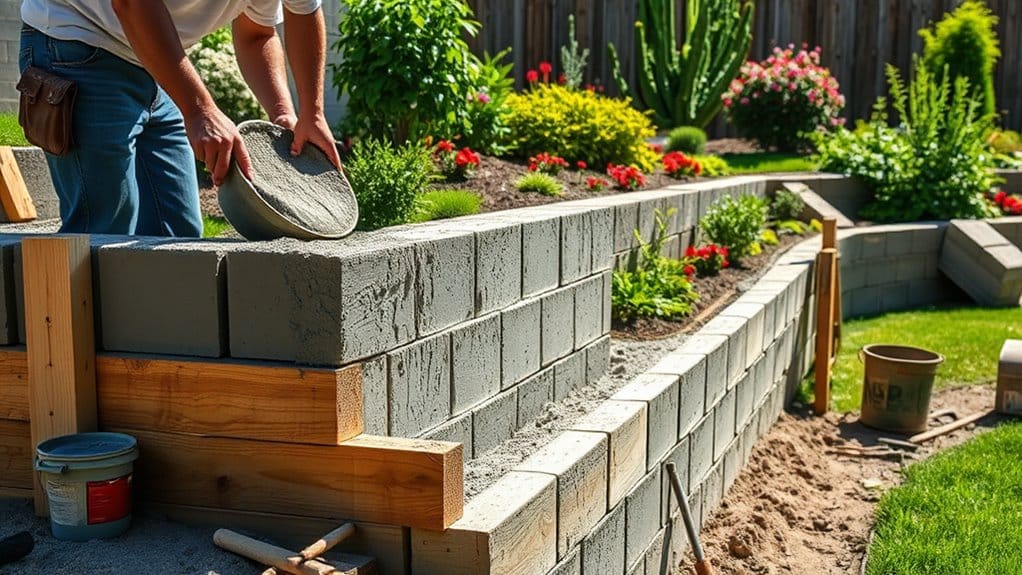
Ready-mix concrete is a versatile choice for various construction projects in the UK, thanks to its strength and adaptability. For instance, in the construction of retaining walls, its high compressive strength and water-resistant properties effectively support soil and manage drainage, ensuring long-term stability.
In landscaping, ready-mix concrete offers durability for decorative pathways, garden walls, and custom planters, enhancing outdoor spaces while maintaining structural integrity. Its ability to incorporate finishes such as exposed aggregate or polished surfaces adds design flexibility.
From driveways to commercial flooring, ready-mix concrete meets the requirements of diverse projects, making it a dependable option for both residential and commercial constructions.
Incorporating Aesthetic Options in Retaining Walls

When considering the aesthetic potential of retaining walls, it's important to explore various materials and design elements that enhance both their function and visual appeal.
Here are some options to consider:
- Concrete Blocks: Available in different shapes and colours, they provide a sleek, modern look.
- Natural Stone: Materials like granite or limestone offer a classic and enduring appearance.
- Stamped Concrete: Textured finishes can replicate the look of stone or brick at a lower cost.
- Tiered Walls: These not only make the most of sloped areas but also add visual interest.
Troubleshooting Common Issues With Retaining Walls

When managing retaining walls, it's vital to address cracking and settling issues promptly to ensure their structural integrity.
For instance, if you notice any signs of movement, it's best to take action quickly.
Additionally, effective water drainage is crucial to prevent pressure build-up that could damage the wall.
Regular maintenance and timely repairs will help extend the lifespan and effectiveness of your retaining walls.
Cracking and Settlement Issues
Cracking and settlement issues in retaining walls can compromise their stability and appearance, making early detection and intervention vital.
Here's what you should consider:
- Identify Cracking Types: Look for stair-step and vertical cracks to determine the nature of the problem.
- Monitor Settlement Symptoms: Check for vertical cracks that are wider at the top, which may suggest settling.
- Evaluate Soil Compaction: Ensure the soil is adequately compacted to avoid uneven settling.
- Inspect Vegetation Effects: Nearby tree roots can worsen cracking and settlement issues.
Regular inspections will help you catch problems before they worsen, maintaining the functionality and look of your retaining walls.
If you notice serious concerns, it's wise to seek professional advice.
Water Drainage Solutions
Effective water drainage solutions are vital for preserving the integrity and lifespan of retaining walls, as trapped water can cause significant structural problems.
Consider installing weep holes to allow water to escape or using drainage aggregate to facilitate water movement. Perforated pipe systems, such as French drains, efficiently channel water away, while geocomposite panels improve flow capacity.
Assessing site-specific conditions, like soil type and climate, is crucial for choosing the right water management strategy. Regular inspections of these systems can help prevent issues like hydrostatic pressure and soil erosion.
Maintenance and Repair Tips
To maintain the structural integrity of retaining walls, regular inspections and prompt repairs are crucial. Here are some straightforward tips for effective maintenance and repair:
- Inspect for Damage: Check for cracks, bulges, or any signs of erosion. Early detection can save you a lot of hassle later on.
- Clear Debris: Regularly remove leaves and other debris to ensure your drainage systems work properly.
- Manage Vegetation: Keep an eye on plant growth around the wall. Overgrown roots can cause erosion and compromise the wall's stability.
- Perform Seasonal Checks: Look out for weather-related issues, particularly freeze-thaw cycles, which can lead to significant damage if not addressed.
Staying proactive will help you keep your retaining walls in good shape for years to come.
Frequently Asked Questions
How Do Weather Conditions Affect Concrete Curing Times?
Weather conditions significantly influence concrete curing times. For instance, cold weather can slow down the hydration process, leading to longer curing times, while hot weather tends to speed it up. It's crucial to manage these factors to ensure your concrete achieves the desired strength and durability. For example, during a chilly winter day, you might need to use insulation or heating blankets to maintain optimal curing conditions. Conversely, in the heat of summer, you might need to wet the surface to prevent it from drying too quickly. Understanding these impacts will help you achieve better results in your concrete projects.
What Is the Lifespan of a Concrete Retaining Wall?
A concrete retaining wall is built to last, with a lifespan of 50 to 100 years. To ensure it stands the test of time, carry out regular inspections and maintain proper drainage. This helps to protect its structure from environmental wear and tear.
Can I Add Pigments to Ready-Mix Concrete?
Yes, you can add pigments directly to ready-mix concrete during the mixing process. To ensure a uniform colour, calculate the pigment dosage based on the weight of the cement. This will help maintain consistency across different batches, achieving the desired aesthetic result. For example, if you're aiming for a specific shade for a garden path, precise pigment measurements will ensure that all sections match perfectly.
What Tools Are Necessary for Installing Retaining Walls?
Installing retaining walls requires a few essential tools. You'll need shovels for digging, levels to ensure everything is straight, and a tamper for compacting the soil. Using these tools correctly will help ensure your wall is strong and durable against the elements.
Are There Specific Regulations for Building Retaining Walls?
Yes, when constructing retaining walls in the UK, it's essential to comply with local building regulations. These regulations specify aspects such as wall design, height, and required setbacks to ensure safety and structural integrity. For instance, if you're building a wall over a certain height, you may need to submit plans for approval. Always check with your local council before starting your project.
Conclusion
Using ready-mix concrete for retaining walls and landscaping can significantly enhance your outdoor space. By understanding the mixing process and maintaining the right proportions, you can create a robust foundation that lasts. Think of it like building a solid wall; every detail matters to achieve strength and aesthetic appeal. Embrace ready-mix concrete and watch your garden become a true reflection of your creativity and skill.

Learn about the diverse types of concrete used in construction and discover which mix can transform your next project.

For a long-lasting driveway that laughs in the face of the UK's unpredictable weather, the C20 concrete mix is your Read more

In the UK, you've got a a lot of lightweight concrete types to choose from, each with its unique perks. Read more