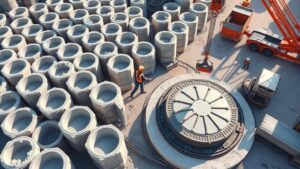
Reinforced concrete plays a crucial role in high-rise construction thanks to its impressive compressive and tensile strength, durability, and design flexibility. It effectively supports heavy loads, withstands environmental stresses, and improves resistance to fire and moisture. Modern construction techniques and specific material standards enhance its application for safety and aesthetics. Additionally, the use of cutting-edge technology ensures that skyscrapers are not only efficient but also long-lasting. These innovations are shaping the future of tall buildings in urban landscapes.
Key Takeaways
- Reinforced concrete effectively combines the compressive strength of concrete with the tensile strength of steel, making it an excellent choice for supporting heavy loads in high-rise buildings.
- Its durability, along with its resistance to cracking, weathering, and fire, significantly enhances the longevity and safety of tall structures.
- The seismic resistance of reinforced concrete allows buildings to absorb energy during earthquakes, ensuring stability and adherence to modern design regulations.
- The material’s versatility supports innovative architectural designs and open floor plans, optimising the usable space in high-rise constructions.
- As sustainability becomes increasingly important in construction, the shift towards low-carbon concrete and energy-efficient designs is shaping the future of high-rise buildings.
Structural Advantages of Reinforced Concrete

In high-rise construction, the structural benefits of reinforced concrete are crucial for the strength and longevity of skyscrapers. By combining the compressive strength of concrete with the tensile strength of steel, it can support substantial loads while achieving an ideal strength-to-weight ratio. This flexibility ensures compliance with safety and performance standards. Reinforced concrete is highly durable, resisting cracking, weathering, and environmental stress, which contributes to sustainable building practices. Its fire resistance and ability to manage vibrations enhance both safety and comfort for occupants, making it a dependable choice for tall buildings. Additionally, its natural resistance to moisture ensures that structures remain intact and functional over time, further solidifying reinforced concrete’s status as a favoured material in contemporary architecture. The use of pre-stressed reinforced concrete in high-rise designs allows for longer spans and reduced material usage, enhancing overall efficiency.
Economic and Material Efficiency
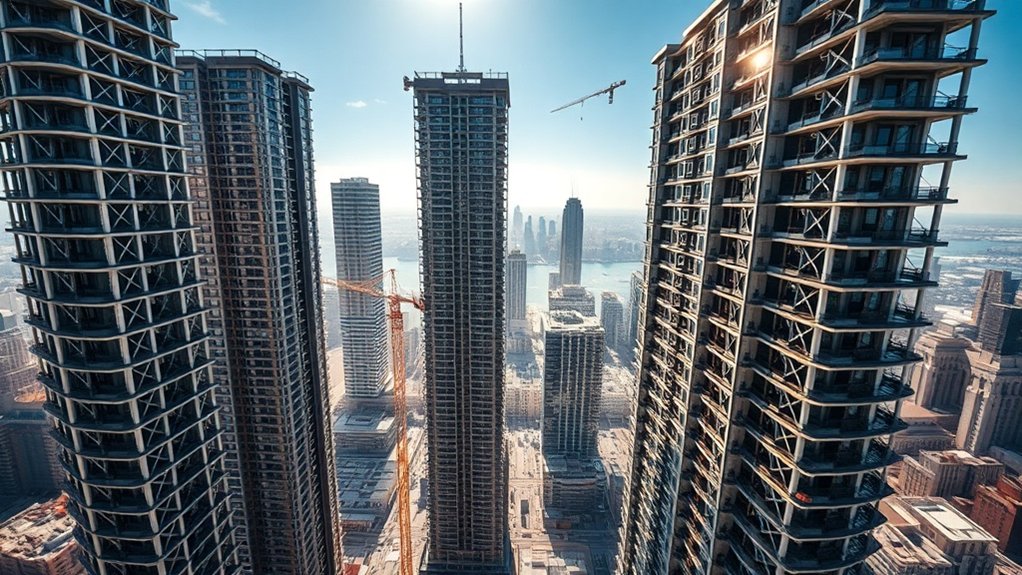
High-rise construction comes with its own set of challenges, but the use of reinforced concrete can greatly improve both economic and material efficiency.
By opting for high-strength concrete, you can optimise materials, which reduces the amount of concrete needed for structural elements. This not only cuts down on carbon emissions but also prolongs the building’s lifespan, leading to lower maintenance costs. Moreover, high-strength concrete is known for its enhanced impermeability, further contributing to the durability of structures. Additionally, pre-tensioned concrete offers superior tensile strength and allows for longer spans, thereby improving overall structural performance.
Reinforced concrete is cost-effective due to its widespread availability and the industry’s familiarity with it.
Moreover, using efficient designs like flat plate systems can speed up construction, enhancing overall economic viability.
Seismic Resistance and Energy Dissipation
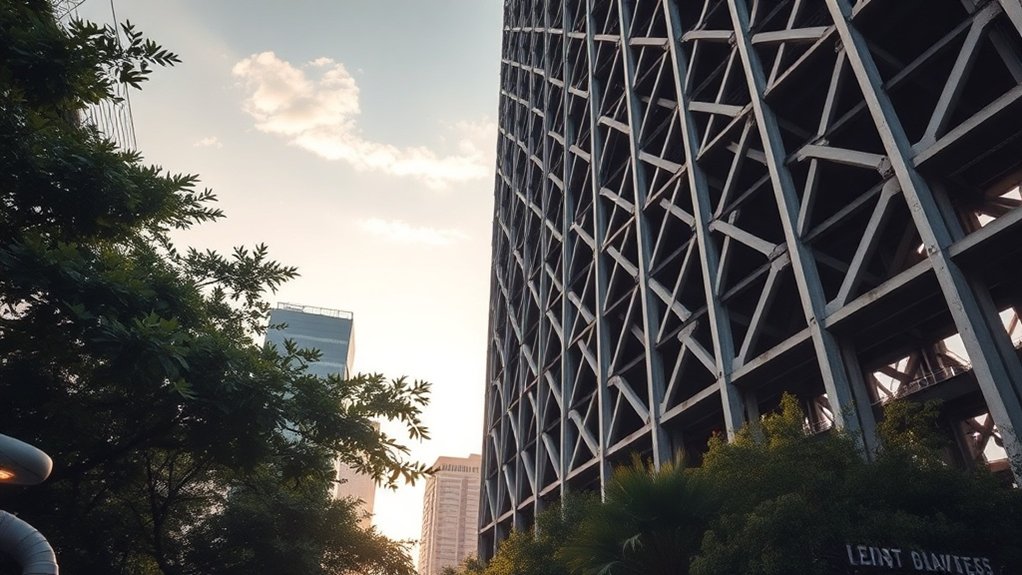
Seismic events pose significant risks to high-rise buildings, making the use of reinforced concrete crucial for improving energy dissipation and seismic resistance. This material effectively combines the compressive strength of concrete with the tensile strength of steel, allowing for substantial energy absorption during earthquakes.
The ductility of steel reinforcement enables structures to flex, distributing seismic forces evenly and helping to avoid catastrophic failure.
Additionally, specially designed reinforced concrete shear walls and moment-resisting frames provide essential stiffness and strength to withstand lateral forces. These systems comply with contemporary seismic design codes, ensuring better preparedness for earthquakes.
Research shows that dual systems, which integrate shear walls and moment-resisting frames, can effectively adapt to various seismic hazard levels, thereby enhancing safety and resilience.
Construction Techniques and Challenges
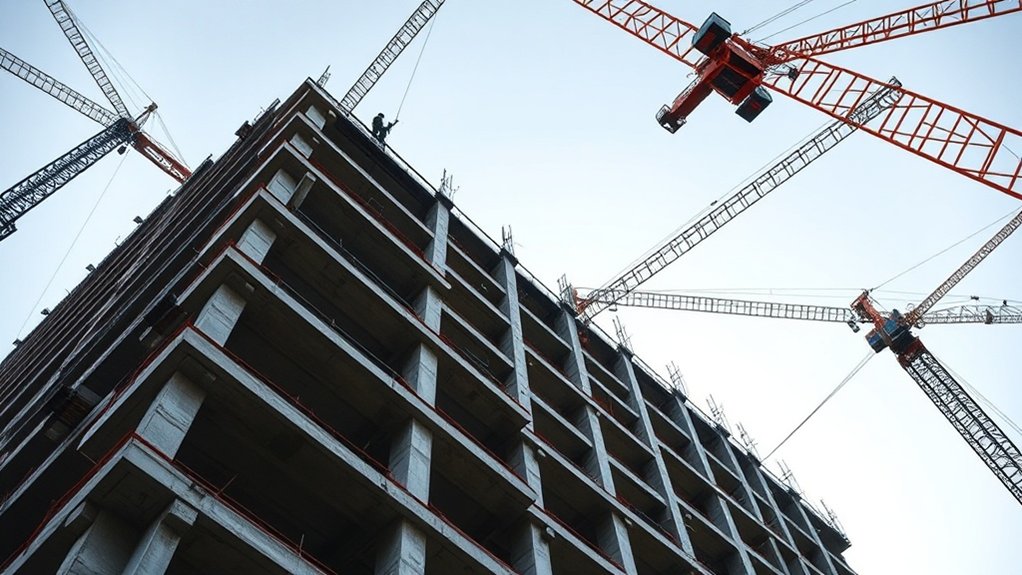
The strong seismic resistance offered by reinforced concrete sets the stage for effective construction techniques in high-rise buildings.
However, several challenges must be navigated during the process, including:
- Formwork Systems: It’s crucial to design efficient formwork that allows for consistency across multiple floors, boosting productivity.
- Concrete Mix Design: Striking the right balance between strength, workability, and pumpability is vital, particularly as building heights increase.
- Construction Scheduling: Proper coordination of material deliveries and timing of concrete pours is essential to ensure a smooth workflow and avoid cold joints. Additionally, understanding load calculations is critical for accurate structural analysis and ensuring the integrity of the building as it rises.
Durability and Maintenance
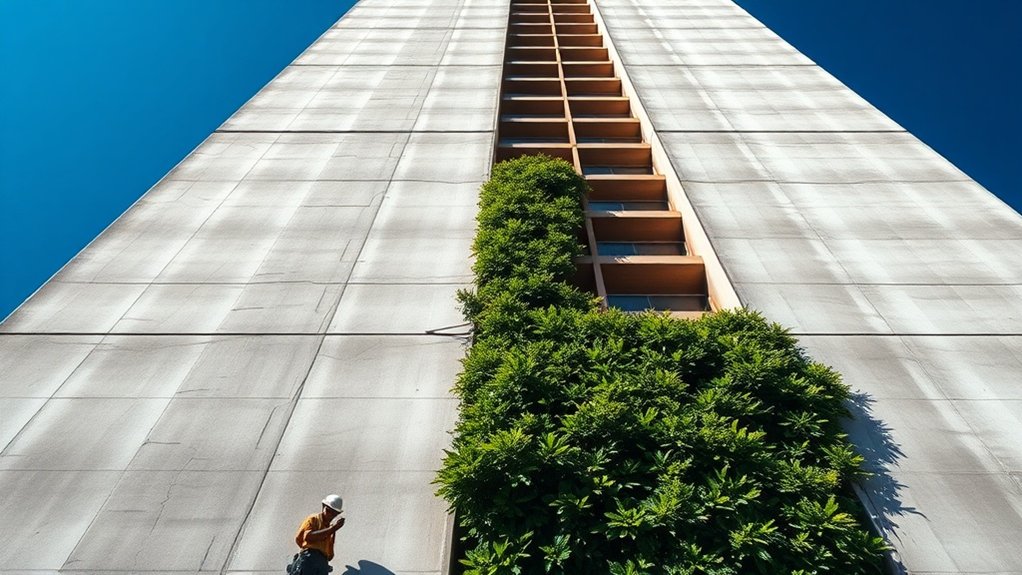
In high-rise construction, it’s vital to understand the benefits of fire resistance and implement strategies for corrosion protection to ensure durability.
Regular inspections can help spot issues like surface cracks and corrosion early, allowing for timely repairs that prolong the lifespan of reinforced concrete structures.
Fire Resistance Benefits
Fire resistance is crucial for safety and also boosts the durability and upkeep of high-rise reinforced concrete structures.
Here are three key benefits to consider:
- Improved Fire Performance: Concrete is non-combustible and its dense structure helps resist ignition and limit heat penetration, which protects the building’s integrity during a fire.
- Enhanced Thermal Stability: Incorporating supplementary cementitious materials (SCMs) like fly ash improves thermal stability, which reduces microcracking and overall wear from temperature changes.
- Reduced Maintenance Needs: Fire-resistant features help minimise damage, leading to fewer repairs and lower costs after fire incidents, making post-fire inspections easier.
These benefits contribute to a more resilient building, helping ensure that high-rise structures remain functional and safe over time.
Corrosion Protection Strategies
Corrosion poses a significant risk to the durability of high-rise reinforced concrete structures. However, employing effective corrosion protection strategies can enhance their longevity and reduce maintenance costs.
One approach is to use advanced coatings, such as FLUOROSEAL® PVDF, which effectively block moisture and chlorides, creating a robust barrier.
Additionally, incorporating corrosion inhibitors into the concrete mix can help chemically prevent oxidation reactions.
Using high-strength, corrosion-resistant reinforcing steel, like ASTM A1035, can significantly improve resistance to chlorides.
You might also consider electrochemical treatments such as cathodic protection, which actively mitigates corrosion by applying a current to the steel.
These strategies not only bolster structural integrity but also decrease the likelihood of future repairs, making them a cost-effective solution for maintaining high-rise buildings against corrosion.
Inspection and Repair Importance
Regular inspections and prompt repairs are vital for the longevity of high-rise reinforced concrete structures. Effective inspection methods and sound repair techniques are crucial for maintaining structural integrity.
Here are three important points to consider:
- Visual Inspections: These help identify surface problems such as cracks and spalling early on, enabling proactive maintenance before issues escalate.
- Non-Destructive Testing (NDT): Techniques like ground-penetrating radar can reveal internal defects without causing damage, allowing prioritisation of repairs based on condition.
- Strength Evaluations: Analytical assessments determine the existing strength of the structure, guiding decisions on whether to repair or replace elements, ensuring continued safety.
Implementing these practices not only prevents deterioration but also prolongs the life of your high-rise building, protecting your investment and enhancing safety for all occupants.
Design Flexibility and Architectural Impact
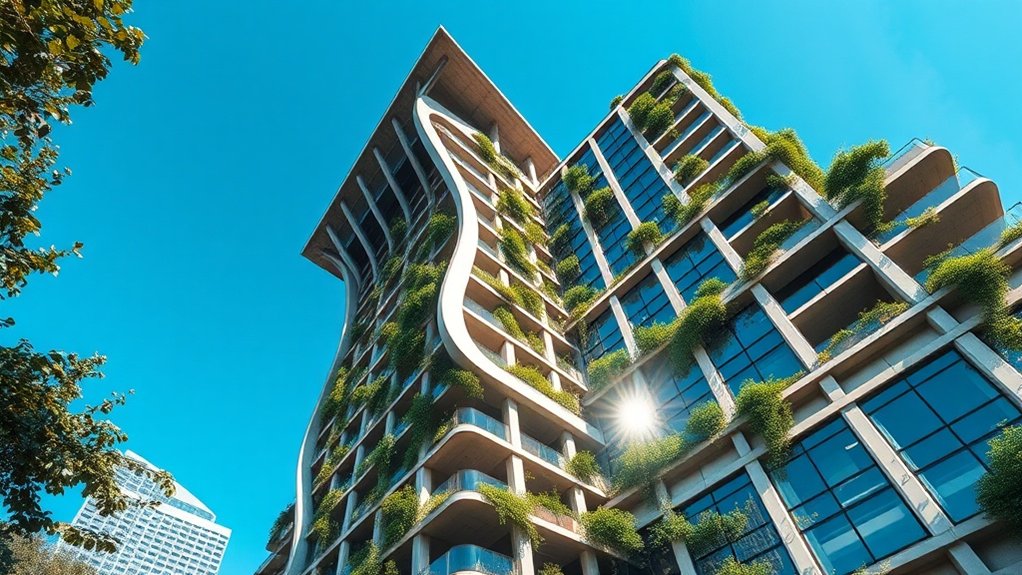
Reinforced concrete significantly improves design flexibility, enabling architects to experiment with innovative shapes and configurations that were previously deemed impractical.
This material aligns with modern design trends, allowing for the creation of complex forms such as curves and domes, as well as open floor plans thanks to long slab spans.
Smaller, high-strength columns maximise usable space, providing unobstructed interiors that can adapt to various layouts.
Additionally, reinforced concrete can accommodate variations in slab thickness and the use of pre-cast components, which speeds up construction without sacrificing aesthetic appeal.
The combination of concrete and steel also allows for effective management of structural stresses, enabling ambitious architectural designs while ensuring stability.
Ultimately, this versatility contributes to the creation of iconic structures that define contemporary city skylines.
Fire Resistance and Safety Features
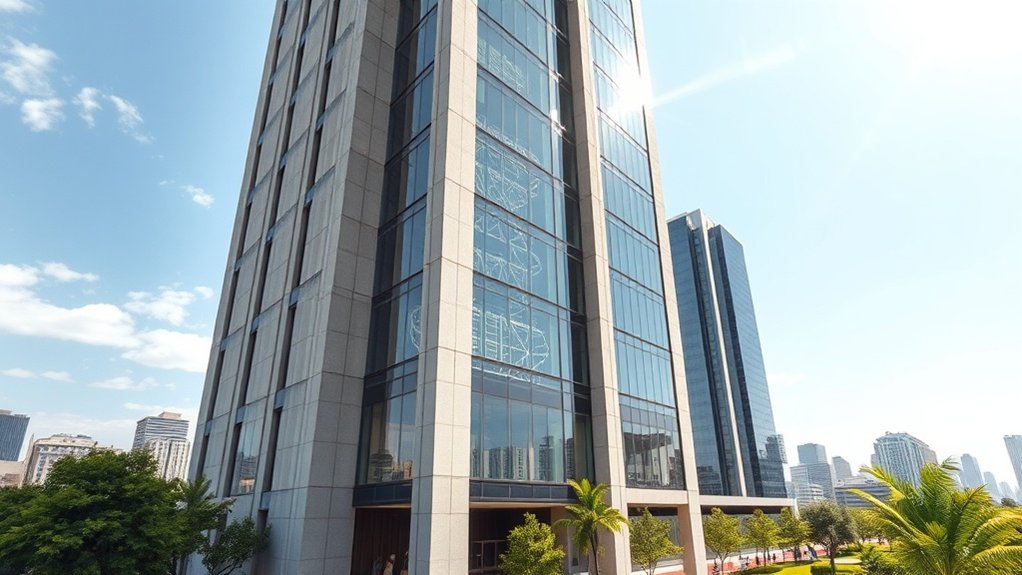
As high-rise buildings become taller and more complex, understanding fire resistance and safety features is crucial. The performance of concrete in fire situations is guided by strict fire safety regulations, ensuring structures can endure severe conditions.
Key points include:
- Fire Resistance Ratings: Cement-based concrete can achieve fire resistance ratings of 2 to 4 hours, safeguarding load-bearing elements.
- Non-Combustibility: Concrete is inherently non-combustible, which prevents ignition and slows fire spread, improving overall safety.
- Core Isolation: Concrete cores protect vital infrastructure, such as emergency staircases and firefighting lifts, from fire exposure.
These characteristics not only help maintain structural stability during a fire but also support safer evacuation routes and adhere to contemporary fire safety standards, reinforcing the importance of concrete in high-rise construction.
Material Specifications and Standards

When selecting materials for high-rise construction, attention to concrete mix design and rebar standards is crucial for ensuring structural integrity.
The concrete must meet specific strength requirements, often necessitating the use of high-performance admixtures to achieve the needed properties while maintaining workability.
Moreover, rebar specifications are vital for load distribution and overall stability, so it’s important to follow established industry standards.
Concrete Mix Design
Concrete mix design is crucial in high-rise construction, making sure the material meets specific strength and durability standards.
To achieve optimal performance, consider the following:
- Material Selection: Opt for high-quality aggregates and supplementary cementitious materials, such as fly ash or silica fume, to boost strength and longevity.
- Mix Optimisation: Fine-tune water-to-cementitious ratios (0.23 to 0.35) to enhance compressive strength while keeping the mix workable.
- Trial Mixes: Carry out tests to confirm that your mix designs comply with project specifications, ensuring the average compressive strength exceeds the required target.
Rebar Specifications Standards
Understanding rebar specifications standards is crucial for maintaining structural integrity in high-rise construction.
It’s important to focus on selecting the right rebar grade and size, as these factors significantly influence performance. For residential and general building projects, grades like Grade 40 and Grade 60 are typically adequate. However, for high-rise buildings and areas prone to seismic activity, Grade 75 and above is essential.
Standards such as ASTM A615 and A706 regulate these grades to ensure they achieve the necessary yield strengths.
Rebar size is equally important; sizes ranging from #8 to #18 provide the strength required for demanding applications. Each size corresponds to a specific cross-sectional area, directly affecting its tensile capacity.
Innovations in Reinforced Concrete Technology
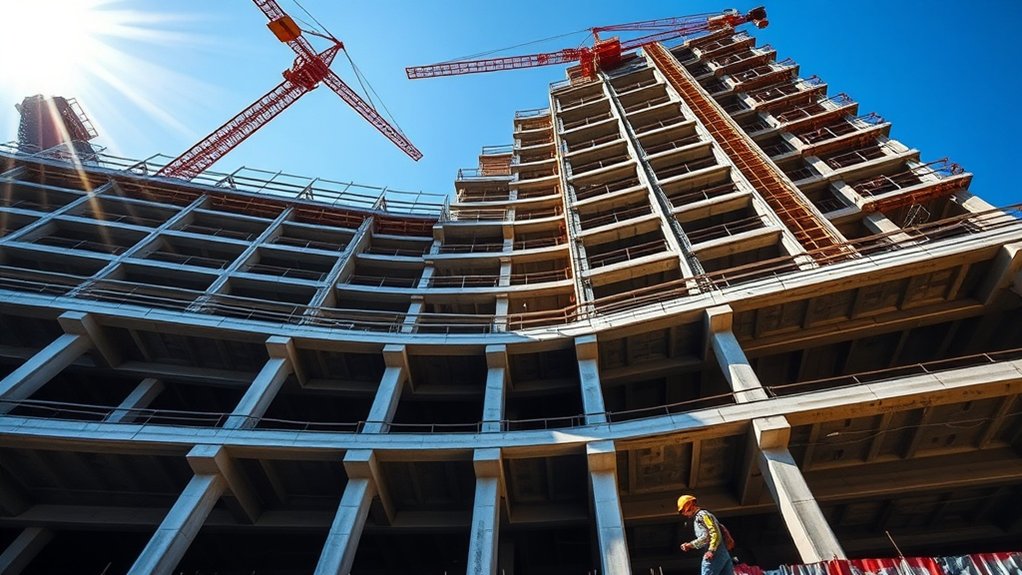
As the demand for high-rise buildings increases, innovations in reinforced concrete technology are transforming the industry. Here are three significant advancements:
- Embedded Sensors: By incorporating IoT sensors, we can monitor structural integrity in real time. This enhances predictive maintenance and helps extend the lifespan of tall buildings.
- 3D Printing: This method allows for intricate designs, minimises material waste, and speeds up construction timelines, leading to more sustainable building practices.
- Robotic Automation: Using automated machinery improves safety and efficiency during concrete placement. Additionally, digital platforms can enhance project execution with predictive analytics.
These innovations, including smart concrete and advanced admixtures, are paving the way for the future of high-rise construction, ensuring that buildings aren’t only durable and sustainable but also easier to manage.
Case Studies of Successful High-Rise Projects
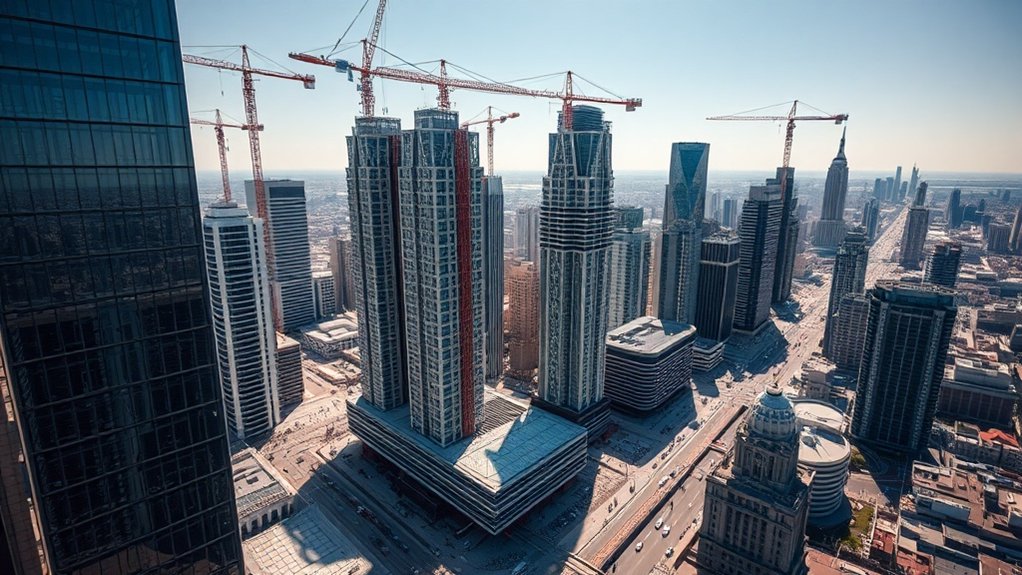
When examining case studies of successful high-rise projects, it’s clear that iconic reinforced concrete skyscrapers have employed innovative design techniques to improve structural performance.
These examples highlight not only advancements in seismic resilience but also the ability of reinforced concrete to produce visually striking and functional buildings.
A closer look at these projects demonstrates the significant influence of reinforced concrete on contemporary architecture and urban design.
Iconic Reinforced Concrete Skyscrapers
Reinforced concrete has transformed high-rise construction, leading to iconic skyscrapers that combine innovative design with robust structural integrity.
Here are three key examples:
- Marina City: Completed in 1967, these cylindrical towers highlight the versatility of reinforced concrete, enabling distinctive shapes and cantilevered balconies.
- Willis Tower: Once the tallest building in the world, its hybrid concrete-steel system established new benchmarks for supertall structures, providing enhanced stability against strong winds.
- Ingalls Building: As the first reinforced concrete skyscraper, it proved concrete’s suitability for high-rise buildings, featuring innovative twisted bars for added strength.
Furthermore, Place Victoria and Fallingwater demonstrate concrete’s adaptability in both urban and natural environments, reinforcing its significance in contemporary architecture.
Innovative Design Techniques
Traditional construction methods often fall short in addressing the demands of modern high-rise architecture, but innovative design techniques are changing the landscape.
Advanced high-strength concrete (HSC) allows for reduced material usage while boosting structural reliability, promoting sustainability through more efficient use of raw materials. For example, fibre-reinforced concrete (FRC) enhances ductility and stability; this was evident in the Lincoln Square Expansion, where it improved earthquake resistance in two 450-foot towers.
Similarly, carbon fibre reinforced polymers (CFRP) provide lightweight, high-tensile strength solutions for retrofitting, thus extending a building’s lifespan.
Moreover, modular design and repetitive floor plans streamline construction logistics, increasing efficiency.
Seismic Resilience Examples
Innovative design techniques have led to the creation of high-rise buildings that are both visually appealing and resilient to seismic activity. Here are some notable examples:
- Yokohama Landmark Tower: Utilising flexible materials and tuned mass dampers, this tower effectively absorbs seismic energy, improving its structural stability against lateral loads.
- Burj Khalifa: With its reinforced concrete core, this skyscraper offers exceptional strength. Advanced systems are in place to manage dynamic forces from earthquakes and high winds.
- Transamerica Pyramid: This building employs base isolation technology, which separates it from ground motion. It also features energy dissipation devices to ensure stability during seismic events.
These examples illustrate how effective seismic resilience strategies can significantly enhance a building’s performance during earthquakes, safeguarding both safety and structural integrity.
Future Trends in High-Rise Construction

The future of high-rise construction in the UK is being shaped by several key trends focused on sustainability, advanced engineering, and digital technology.
There’s a noticeable shift towards sustainable practices, including the use of low-carbon concrete and renewable energy solutions aimed at improving energy efficiency. Stricter regulations are encouraging the integration of green roofs and natural ventilation systems in new buildings.
Innovations in engineering, such as spiralling building designs and ultra-high-performance concrete, are enhancing structural stability and resilience.
Meanwhile, digital transformation is changing construction methods; for example, IoT devices are being used to optimise energy consumption and maintenance, significantly boosting operational efficiency.
As smart city initiatives gain momentum, we can expect increased connectivity and data analytics to play crucial roles in future high-rise developments, ensuring they meet modern demands for sustainability and performance.
Frequently Asked Questions
How Does Reinforced Concrete Compare to Traditional Masonry in High-Rise Design?
Reinforced concrete has distinct advantages in high-rise design, offering greater strength and versatility than traditional masonry, which struggles with tensile resistance and design flexibility. For example, reinforced concrete allows for taller structures with larger open spaces, making it ideal for modern skyscrapers. Its efficiency and structural performance make it a preferred choice for architects and engineers alike.
What Are the Environmental Impacts of Using Reinforced Concrete in Construction?
Using reinforced concrete in construction has notable environmental impacts, including carbon emissions and resource depletion. Conducting a lifecycle analysis can help identify sustainable alternatives, allowing you to lessen your ecological footprint and enhance efficiency in your projects. For instance, incorporating recycled materials or exploring timber alternatives can significantly reduce environmental harm while maintaining structural integrity.
How Does Weather Affect the Curing Process of Reinforced Concrete?
Weather significantly influences the curing process of reinforced concrete. Variations in temperature and humidity can change hydration rates, which in turn affects the strength of the concrete. For instance, high temperatures can cause the surface to dry too quickly, leading to cracking, while too much humidity can slow down the curing process. It’s essential to keep a close eye on these conditions to ensure optimal curing and avoid defects in the final structure.
What Are Common Myths About Reinforced Concrete in High-Rise Buildings?
Common myths about reinforced concrete in high-rise buildings often stem from misunderstandings regarding its brittleness, difficulty of modification, aesthetics, and perceived exclusivity. Clarifying these myths highlights reinforced concrete’s versatility, durability, and wide-ranging applicability in contemporary construction. For instance, contrary to popular belief, reinforced concrete can be aesthetically pleasing and is often used in innovative designs.
How Is the Quality of Reinforced Concrete Tested During Construction?
How can you ensure the safety of your structure? Testing the quality of concrete is essential. This includes methods like the slump test to assess workability and compressive strength tests to confirm that the concrete meets required standards for durability and performance during construction.
Conclusion
In a city where skyscrapers rise like mushrooms after rain, it’s important to recognise the unsung hero: reinforced concrete. This robust material provides the essential support that keeps these towering structures stable. While enjoying a coffee in a high-rise café, consider this—without reinforced concrete, that stunning view could easily turn into a disaster. So, the next time you admire the skyline, remember to appreciate reinforced concrete, the steadfast foundation of urban architecture.

Powerful steel reinforcement transforms concrete construction, enhancing strength and durability—discover the remarkable advantages that await in modern applications.
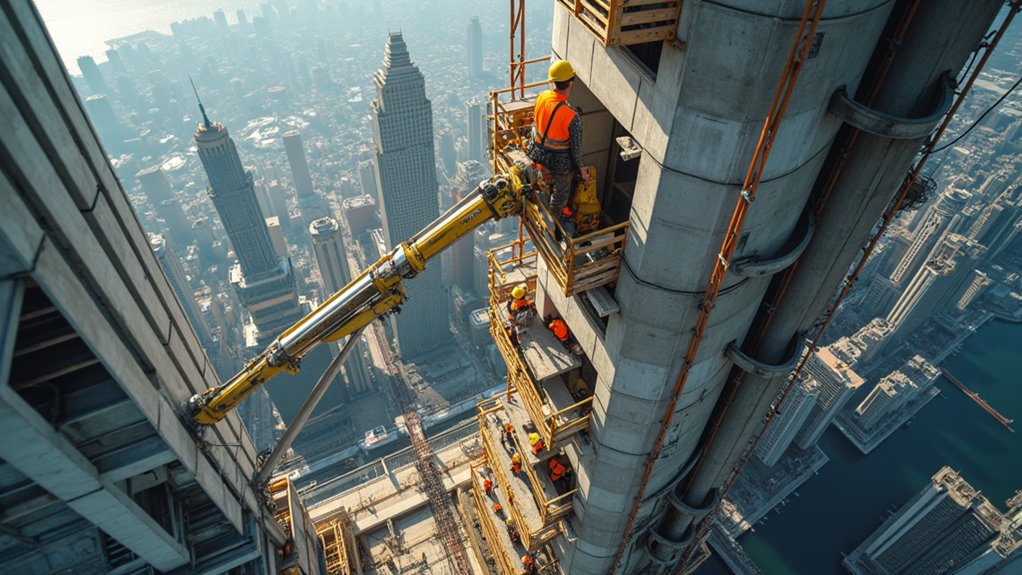
Discover how concrete pumps revolutionize high-rise construction projects, enhancing efficiency and safety while raising questions about their future impact on Read more

Pre-tensioned reinforced concrete offers unparalleled strength and efficiency, but what are its key benefits and applications in modern construction? Discover Read more