Reinforcement in concrete foundations, using rebar and mesh, significantly boosts strength and durability. Rebar, available in various grades and diameters, enhances tensile strength and reduces the risk of cracking. Welded wire mesh ensures even force distribution, particularly in slabs. Correct placement and spacing of these materials are crucial for structural integrity, while methods like post-tensioning help prevent failures. It’s also important to consider environmental factors that can lead to corrosion. Understanding these elements can help you maximise the performance and lifespan of your structures.
Key Takeaways
- Reinforcement, such as rebar and mesh, improves concrete’s tensile strength, reducing the risk of cracking and structural failures.
- Correct placement and spacing of rebar are crucial for even force distribution, enhancing overall stability in foundations.
- Welded wire mesh offers consistent tensile strength, making it suitable for slabs and thin concrete sections.
- Environmental factors, like moisture and chemicals, can corrode reinforcement, highlighting the importance of protective coatings.
- It’s essential to conduct regular inspections of rebar and mesh placement before pouring concrete to ensure structural integrity.
Understanding Concrete Reinforcement

Understanding concrete reinforcement is crucial as it addresses the material’s weaknesses. Concrete has low tensile strength, making it prone to cracking when subjected to tension. To counter this, we use reinforcement such as rebar or mesh, which effectively resists these tensile forces and improves structural integrity.
The bond between the reinforcement and concrete is important; the surface deformations on rebar create a strong interlock, ensuring stability in various environmental conditions. Good bond to concrete is essential for the effectiveness of the reinforcement in resisting tensile stresses. Additionally, proper placement and spacing of reinforcement is vital to ensure effective force distribution and prevent structural failures.
Techniques like post-tensioning can further enhance tensile capacity. By strategically placing reinforcement, we create a balance between the compression in the concrete and the tension in the steel, preventing sudden failures and ensuring the structure’s durability and safety over time.
Types of Reinforcing Materials

Reinforcing materials are essential for improving the structural integrity of concrete foundations. Here’s a quick overview of the main types available, each with distinct properties for various uses:
| Reinforcing Material | Key Features | Common Applications |
|---|---|---|
| Steel Reinforcing Bars | Available in various grades and diameters | General concrete foundations |
| Welded Wire Mesh | Different mesh sizes for consistent tensile strength | Slabs and thin sections |
| Fibre-Reinforced Concrete | Includes steel, glass, and synthetic fibres | Floors, driveways, shotcrete |
| Pre-Stressed Steel | Increases load-bearing capacity | Beams, slabs, bridges |
| Composite Materials | Corrosion-resistant and lightweight | Specialised applications |
Choosing the right reinforcement is crucial for the success of your concrete projects. This is especially true for reinforced concrete, which combines the compressive strength of concrete with the tensile strength of embedded steel to resist external forces. The use of steel reinforcement enhances tensile strength, leading to improved load distribution and minimizing stress points, which is vital for maintaining structural integrity.
Importance of Reinforcement in Structural Integrity

Many people underestimate the importance of reinforcement in concrete structures, yet it plays a vital role in ensuring structural integrity. Reinforcement, such as rebar and mesh, helps distribute loads effectively, preventing localized failures and bolstering the overall strength of the structure. Here’s why you should prioritize reinforcement:
- Provides tensile strength, minimizing the risk of cracking
- Aids in preventing failures under external loads
- Enhances overall safety and reliability
- Supports buildings in withstanding earthquakes and other natural disasters
- Facilitates preventive maintenance through regular inspections
Additionally, safety indices indicate that properly reinforced structures can sustain accidental loads significantly higher than the designed limits, further ensuring their resilience. The incorporation of steel reinforcement significantly enhances the tensile strength of concrete, making it more durable and versatile in various applications.
Environmental Factors Affecting Reinforcement

Environmental factors significantly affect the durability and lifespan of reinforcement in concrete foundations. Changes in climate, such as temperature swings and humidity levels, can lead to thermal stress and moisture uptake, which promote corrosion.
Rainfall can worsen freeze-thaw cycles that damage the concrete, while high water permeability allows harmful substances to seep in, increasing the risk of corrosion. Chemical attacks, like those from chlorides and sulfates, can also weaken the protective layers surrounding steel reinforcements.
To combat corrosion, using epoxy-coated rebar and increasing the thickness of concrete cover can be effective solutions. Additionally, a proper mix design and protective coatings can help minimise the impact of environmental factors, keeping your concrete foundations structurally sound over time.
Regular maintenance is crucial for spotting potential problems early on.
Best Practices for Installation and Design
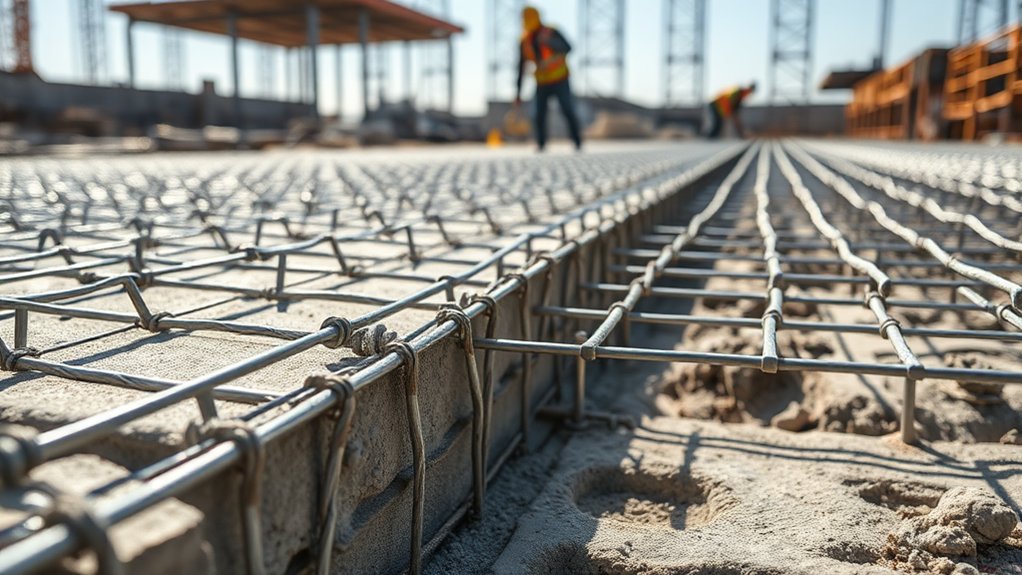
To ensure the durability and strength of concrete foundations, it’s crucial to follow best practices for installation and design. Here are some key points to consider for effective reinforcement:
- Check the exact spacing requirements for rebar; even slight deviations can significantly weaken the structure.
- Employ proper installation techniques, such as using bar chairs or mesh spacers, to keep the rebar at the correct height and avoid sagging.
- When using welded wire mesh, overlap the sheets by at least 350mm to maximise strength.
- Regularly inspect the placement of rebar or mesh to ensure it meets design specifications before pouring the concrete.
- Select the right sizes and types of rebar based on structural needs, and confirm they’re compatible with the concrete mix.
Frequently Asked Questions
How Do I Determine the Amount of Reinforcement Needed?
To determine the amount of reinforcement needed, start by calculating the loads according to structural specifications. Next, evaluate the types of reinforcement based on their strength requirements and relevant design codes. This ensures compliance with safety standards and effective load distribution in your foundation. For instance, if you’re building a new home, consider the weight of the structure and any additional loads, such as furniture or appliances, to guide your reinforcement choices.
Can I Use Recycled Materials for Reinforcement?
You can use recycled materials for reinforcement, such as recycled rebar. This not only supports structural integrity but also provides considerable environmental benefits. It’s a great way to reduce waste while ensuring your projects perform well.
What Are the Signs of Failing Reinforcement?
Signs of failing reinforcement can be identified by specific cracking patterns, such as horizontal and diagonal cracks. You may also notice rust, which suggests internal pressure and deterioration, jeopardising the structural integrity of your concrete.
How Does Temperature Affect Concrete Curing With Reinforcement?
Temperature fluctuations during the curing process can be a double-edged sword for architects; they can speed up strength development or lead to cracking. It’s crucial to manage these temperatures to ensure durable concrete that properly protects its reinforcement. For instance, high temperatures can cause rapid moisture loss, which may result in surface cracking. Conversely, low temperatures can slow down curing, delaying strength gain. Therefore, maintaining a stable curing environment is essential for optimal concrete performance.
Is There a Difference in Cost Between Rebar and Mesh?
Yes, there is a cost difference. Rebar offers excellent tensile strength, making it suitable for high-demand applications like bridges or high-rise buildings. On the other hand, mesh is often quicker to install and can reduce labour costs, making it a practical choice for less critical projects like driveways or garden paths.
Conclusion
In concrete foundations, reinforcement is crucial for maintaining structural integrity and extending lifespan. As the saying goes, “an ounce of prevention is worth a pound of cure.” By familiarising yourself with different types of reinforcing materials and the environmental factors involved, you can significantly improve durability. Implementing best practices during installation and design not only protects your investment but also enhances safety. Prioritising reinforcement today means fewer issues down the line, ensuring your structure can withstand unexpected challenges.

Just dive into the world of ready-mix concrete and uncover its benefits, uses, and potential challenges waiting for your next Read more

You'll discover the precise steps behind ready-mix concrete manufacturing, but what secrets lie in each stage that ensure its superior Read more

Navigate the diverse world of ready-mix concrete types and discover which one could elevate your construction project—your perfect mix awaits!