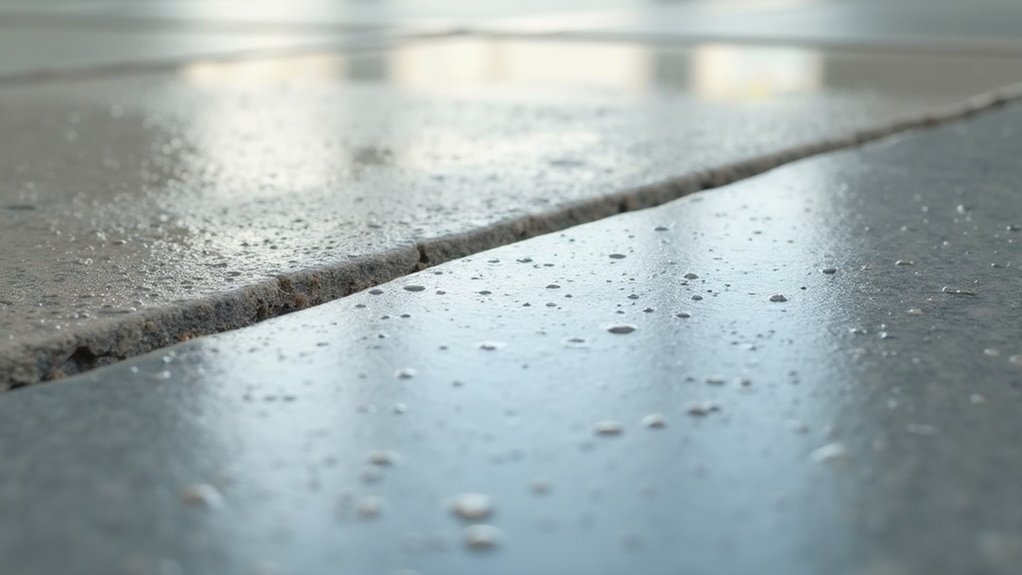
Sealed concrete finishes are vital for preventing moisture issues, reducing water absorption by as much as 77.6%. This helps protect the structure of your surfaces, preventing damage and enhancing durability. By applying effective sealers, you create a barrier that stops moisture from penetrating and reduces the risk of mould growth. Regular upkeep is essential to maintain these protective features. There’s much to learn about the various sealing techniques and their uses.
Key Takeaways
Sealed concrete finishes provide a protective barrier that prevents moisture from seeping in, thereby safeguarding the structural integrity of your surfaces. To keep moisture at bay and ensure the durability of the finish, it’s essential to reseal every 2 to 3 years.
Using sealers helps reduce water absorption, which significantly cuts down the risk of mould growth and associated health issues. There are various types of sealers available, such as penetrating and film-forming options, allowing you to choose the right one based on your specific needs.
Proper moisture management through sealed finishes not only enhances the longevity of concrete installations but also helps save on maintenance costs in the long run.
Understanding Moisture Barrier Properties of Sealed Concrete
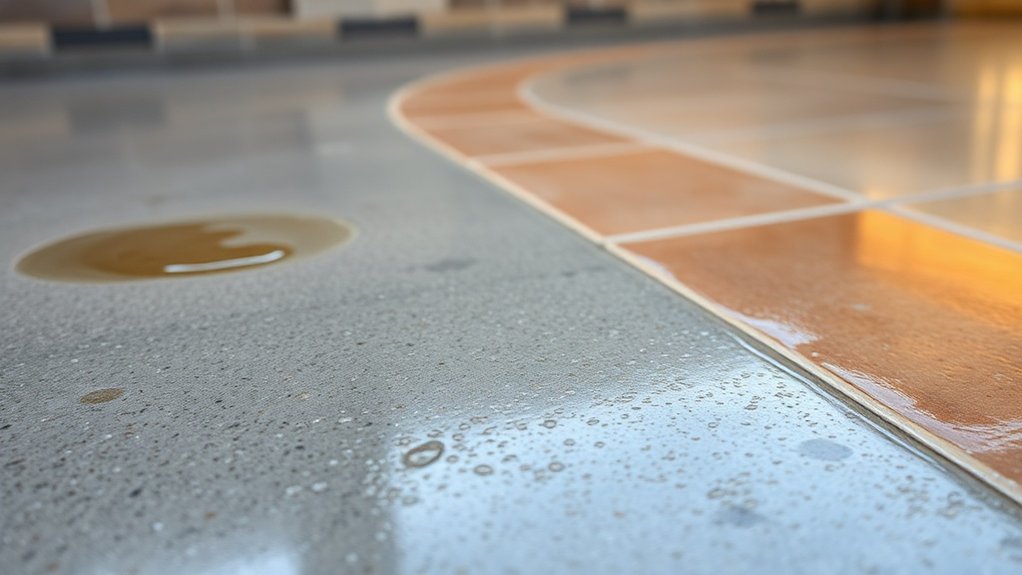
When choosing sealed concrete for moisture prevention, it’s vital to understand its barrier properties. High-quality moisture barriers effectively block moisture diffusion, stopping water and vapour from the ground. Ensure your selected vapour barrier meets British standards, with a minimum thickness of 250 microns (10 mils) for optimal puncture resistance. Penetrating crystalline sealers create permanent internal seals that improve vapour retention while allowing the surface to breathe. Traditional polyethylene vapour barriers may not perform well due to their permeability and lower puncture resistance. Proper installation is crucial; confirm overlaps of at least 150mm and seal according to the manufacturer’s guidelines to maintain effectiveness. This safeguards your concrete from moisture-related issues and helps preserve indoor air quality. Additionally, proper installation and curing are essential for moisture management to ensure long-lasting protection against infiltration.
Enhancing Durability and Preventing Cracks
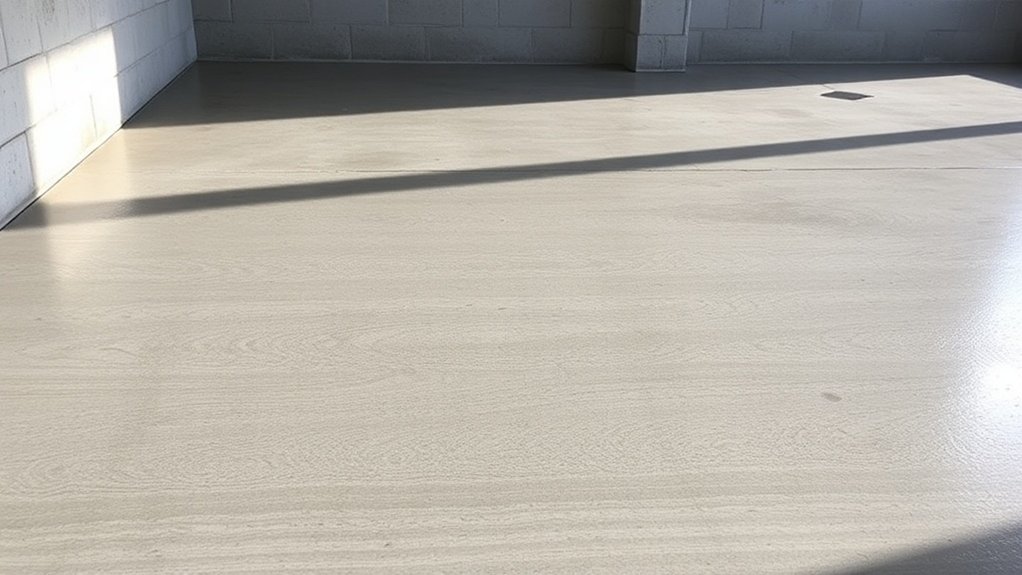
To enhance the durability of your sealed concrete, concentrate on creating a strong protective layer. This layer defends against wear and chemical damage while also preventing moisture from seeping in, which helps to minimise cracking. Regular maintenance and reapplication can extend lifespan beyond initial years, ensuring your concrete remains resilient against the elements. Proper damp-proofing methods are essential for maximizing the effectiveness of your sealed finishes.
Protective Layer Formation
The formation of a protective layer is crucial for the durability of concrete and helps prevent cracks. Effective sealing techniques enhance these protective qualities, allowing coatings to bridge existing cracks while preserving their integrity. Polymer-cement coatings are particularly effective due to their elasticity, which ensures durability even under mechanical stress. In contrast, epoxy resins and acrylic coatings have lower elasticity, making them suitable only for sound, crack-free surfaces. Additionally, latex paint and stains provide a short-term solution and require regular maintenance to achieve optimal performance. Implementing a sealing process is essential to maximize the lifespan of painted concrete surfaces.
Moisture Entry Prevention
Preventing moisture entry is crucial for the longevity of concrete finishes and reducing the risk of cracking. By grasping moisture dynamics and managing vapour pressure, you can significantly enhance the lifespan of your concrete surfaces.
- Sealants interrupt capillary action, stopping water from wicking.
- Vapour barriers beneath slabs guard against moisture rising from the ground.
- Breathable sealers permit vapour diffusion, preventing moisture from getting trapped.
- Proper surface preparation ensures that moisture barriers adhere effectively.
- Sealed finishes help minimise freeze-thaw damage and cracking.
- Regular resealing frequency is essential to maintain moisture protection and ensure the durability of your concrete surfaces.
Types of Sealers and Their Applications
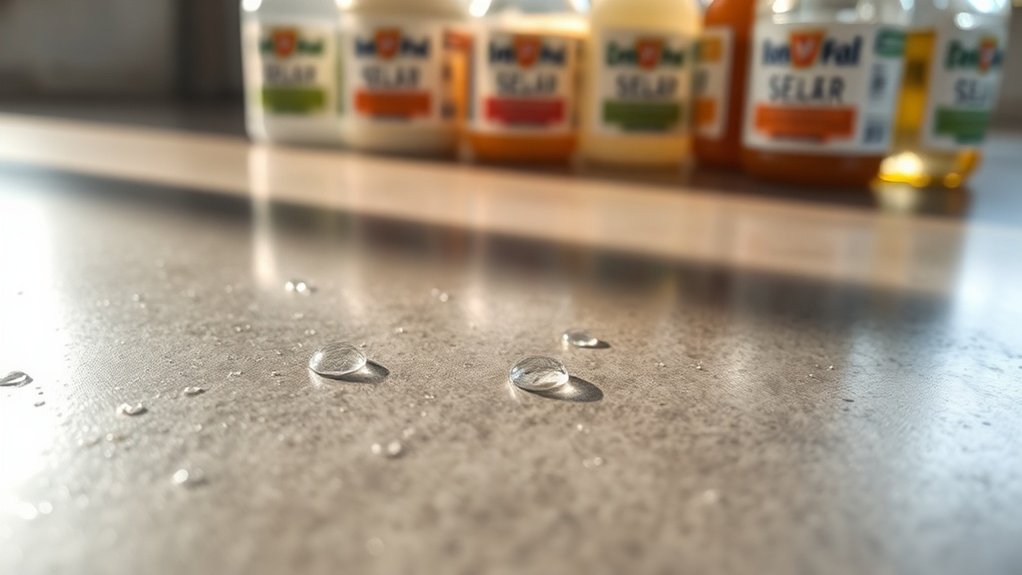
Understanding the different types of concrete sealers is crucial for selecting the right one for your needs.
Penetrating sealers, such as silane and siloxane, seep into the concrete, forming a chemical barrier while keeping the surface looking natural.
Acrylic sealers create a protective film, making them suitable for low-traffic areas, though they do require frequent reapplication.
For robust interior applications, epoxy sealers provide excellent chemical resistance but may trap moisture if not used correctly.
Polyurethane sealers offer superior protection for high-traffic areas and are available in various finishes, including UV-resistant options.
Hybrid sealers combine the benefits of penetrating and film-forming properties for added durability, while specialty sealers, like fluorinated options, excel in stain resistance.
Knowing these differences will help you select the best sealer for your project.
Aesthetic Benefits of Sealing Concrete
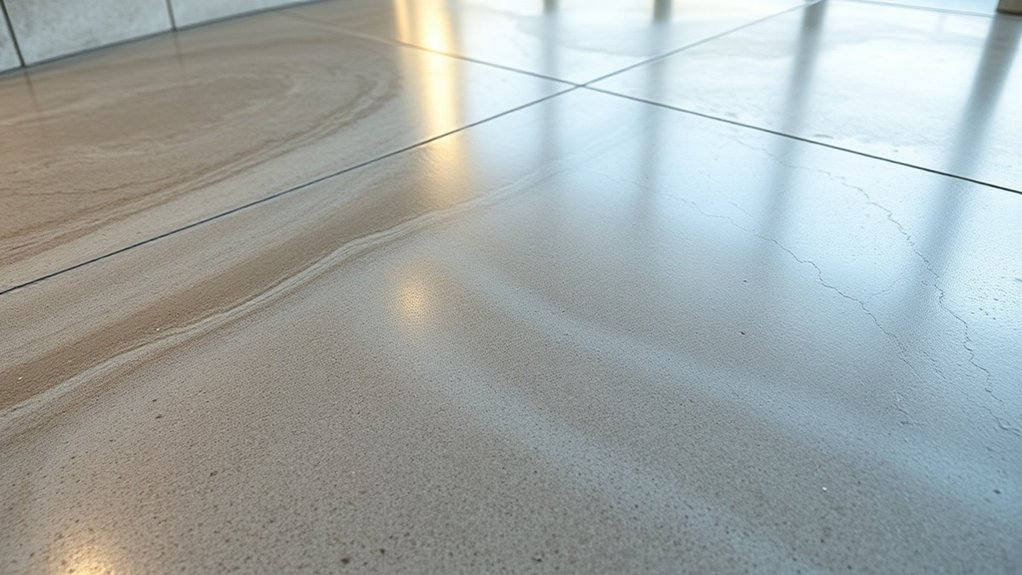
Sealing concrete not only protects it from moisture and stains but also significantly enhances its aesthetic appeal. A sealed surface offers notable colour enhancement and design versatility, transforming your spaces.
Here are the key benefits:
- Creates a uniform appearance, masking underlying variations
- Delivers a vibrant, glossy finish that adds visual depth
- Allows for customisation with colour stains and patterns
- Provides UV protection to prevent fading and discolouration
- Resists stains and chemicals, ensuring long-lasting beauty
Maintenance and Resealing for Long-Lasting Protection
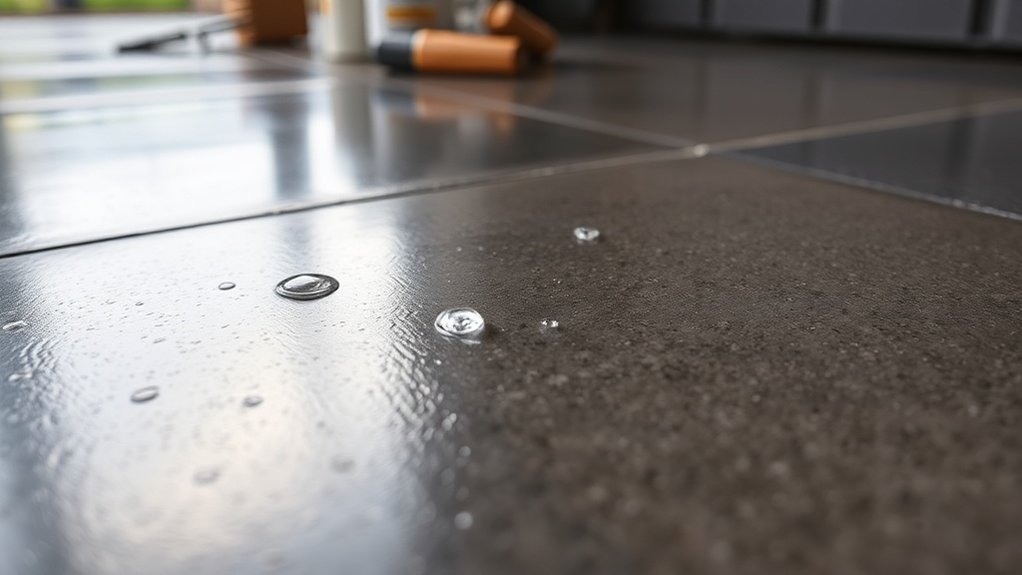
To ensure your sealed concrete stays protected, regular resealing is crucial.
Look out for signs such as discolouration, flaking, or water penetration, which may indicate that your sealer is deteriorating.
Timely maintenance not only safeguards the surface but also prolongs its lifespan, helping you avoid expensive repairs in the future.
Importance of Regular Resealing
Regular maintenance may seem like an unnecessary cost, but it’s crucial for the longevity and performance of sealed concrete surfaces.
Resealing every 2 to 3 years is essential for effective moisture protection and maintaining surface integrity. This preventive maintenance not only keeps your surfaces looking good but also helps avoid costly repairs down the line.
- Stops water from seeping in and reduces damage from freezing and thawing
- Prevents expensive structural issues by addressing weaknesses early
- Maintains the quality of the surface finish and prevents discolouration
- Minimises damage from oils and salts
- Prolongs the life of your concrete, contributing to sustainable infrastructure
Signs Your Sealer Fails
Regular resealing is essential for keeping your concrete surfaces in good condition, but it’s just as important to recognise when that sealer has failed.
Look out for visible damage such as small cracks, chips, or flaking, which indicate that the sealer isn’t performing as it should. If you notice that water no longer beads on the surface, it’s a clear sign that you need to act quickly.
Discolouration or a white haze can also occur, often due to poor application methods or moisture getting trapped under the sealer. Bubbling or peeling suggests a weak bond, which can expose your concrete to moisture and lead to further damage.
Spotting these signs early allows you to carry out necessary maintenance, helping to keep your concrete durable and extend its lifespan.
Comparison of Sealed and Polished Concrete
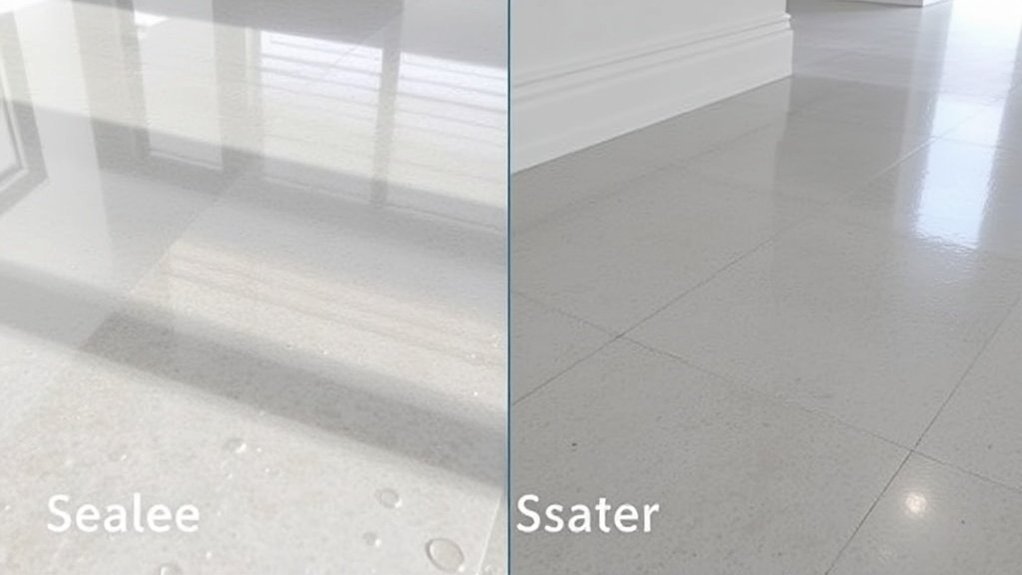
When comparing sealed and polished concrete, it’s important to grasp the key differences in their processes and results.
- Installation: Polished concrete requires several grinding stages for a glossy finish, while sealed concrete is simpler, involving a topical sealer.
- Appearance: Polished concrete has a sleek, high-gloss look, whereas sealed concrete can have varied finishes but may not seem as refined.
- Durability: Polished concrete is more robust and resistant to stains and moisture, while sealed concrete typically needs reapplication every 1-3 years.
- Maintenance: Polished concrete demands less frequent professional upkeep compared to the regular maintenance of sealed concrete.
- Cost: Sealed concrete generally has a lower installation cost due to its easier application than polished concrete.
Understanding these distinctions helps you choose the right finish for your project.
Industrial and Commercial Use of Sealed Concrete
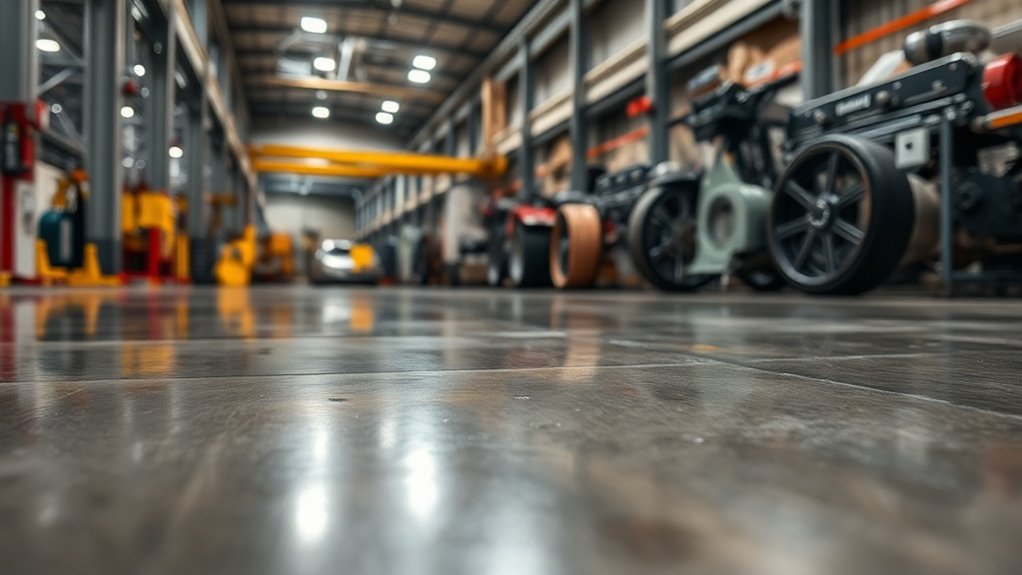
Sealed concrete is vital in industrial and commercial settings, where durability and moisture control are crucial. In industrial use, it offers waterproofing to prevent moisture infiltration, which can cause structural damage and promote mould growth.
Its resistance to chemicals like acids and oils enhances floor longevity, making it suitable for heavy foot and vehicle traffic.
For businesses, sealed concrete brings commercial advantages, such as lower maintenance costs and improved workplace safety by reducing slip hazards.
Various sealers, including penetrating, acrylic, epoxy, and polyurethane, meet different requirements, ensuring optimal performance.
Ultimately, sealed concrete not only extends the lifespan of floors but also maintains their aesthetic appeal, making it a wise investment for any facility.
The Importance of Moisture Resistance in High-Moisture Environments
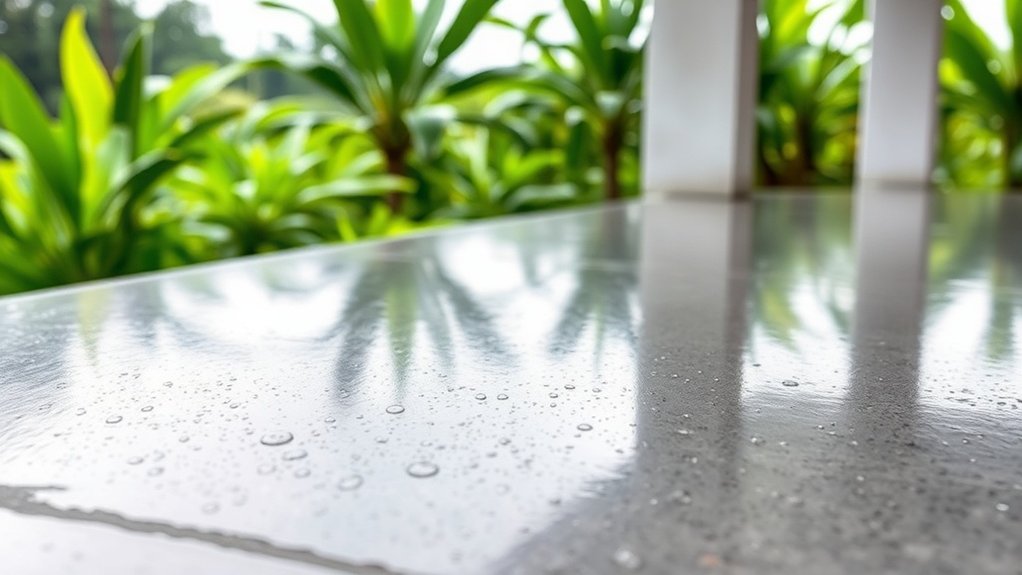
Moisture resistance is crucial in high-moisture environments, as it affects the performance and lifespan of concrete installations. Excess moisture can lead to moisture retention, which diminishes strength and durability.
Here are some key points to consider:
- A higher water-cement ratio weakens compressive strength.
- If trapped air content falls below 10%, strength can drop by as much as 40%.
- Increased humidity can encourage biological growth, further weakening the concrete.
- Effective drying and moisture management are vital for maintaining mechanical integrity.
- Moisture barriers can reduce vapour transmission, safeguarding surface treatments.
Techniques for Effective Application of Sealers
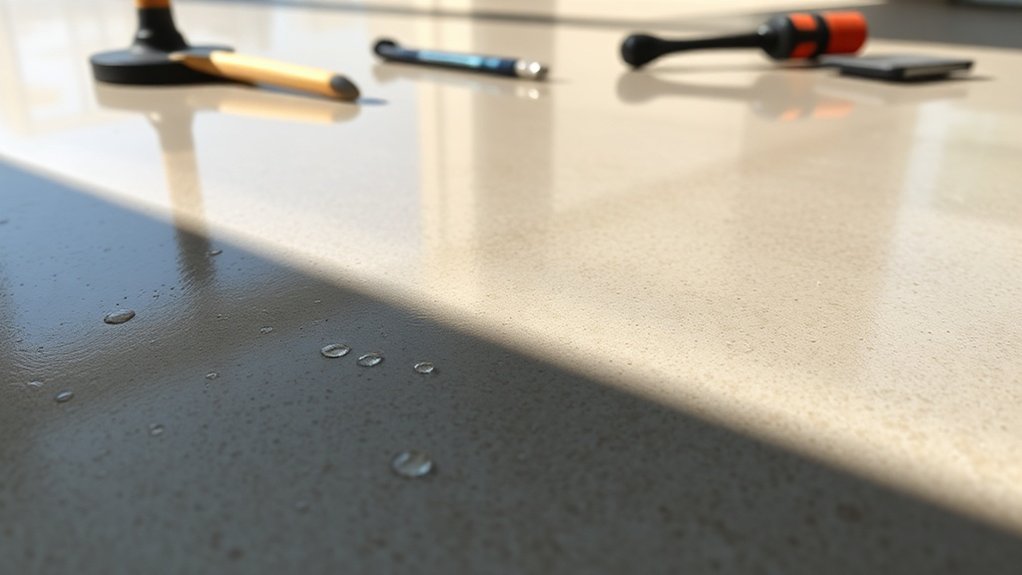
To achieve the best results when sealing concrete surfaces, it’s essential to use effective application techniques that enhance adhesion and durability.
Begin by thoroughly cleaning the surface to remove any oil, grease, or dust, as this ensures the sealer adheres properly. You may want to use an etching solution to open the concrete’s pores for better penetration.
Select the appropriate type of sealer—acrylic, water-based, or solvent-based—depending on your specific project requirements.
Apply the sealer when temperatures are between 7°C and 29°C, avoiding direct sunlight and high humidity for optimal results.
For application, use a specialist sprayer to achieve thin, even coats, and consider back rolling to prevent any pooling.
It’s advisable to apply multiple thin coats in alternating directions to ensure thorough coverage.
Keep an eye on drying times and avoid foot traffic until the sealant has fully cured.
The Impact of Sealers on Mold Growth Prevention
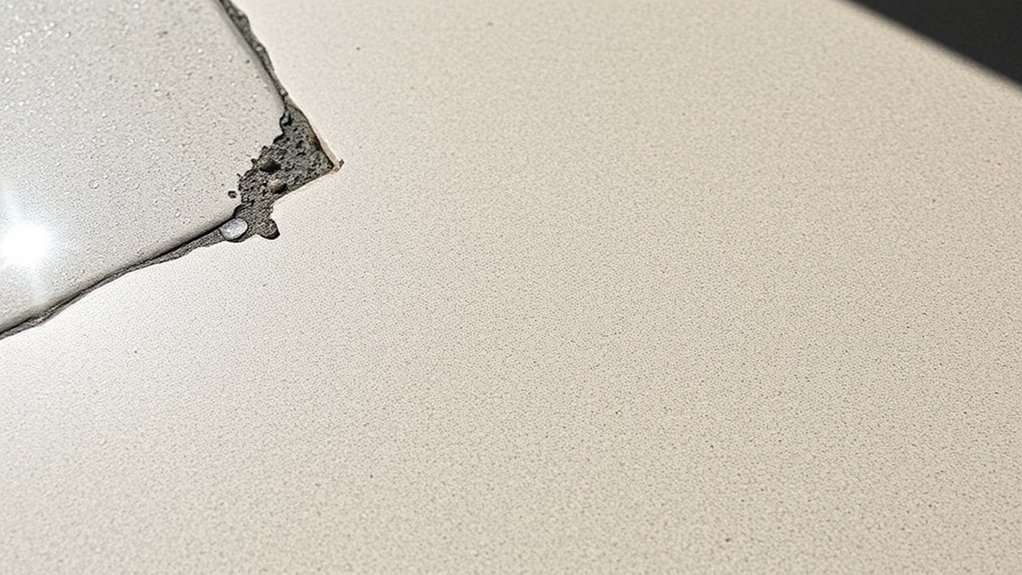
Applying sealers to concrete significantly reduces moisture absorption, making it less likely for mould to thrive.
These coatings not only prevent surface mould by blocking moisture but also limit the accumulation of organic materials that encourage mould growth.
Understanding how these sealers work is key to effectively preventing mould on your concrete surfaces.
Moisture Absorption Reduction
Concrete is naturally porous, but using sealers significantly reduces moisture absorption, which is crucial for preventing mould growth.
By limiting moisture retention, sealers create an environment that discourages mould proliferation.
Here are the key benefits of sealers:
- Extend the time to critical saturation by up to eight times
- Enhance hydrophobicity, boosting water repellency (contact angle > 90°)
- Achieve a reduction in water absorption of up to 77.6%
- Nearly eliminate chloride ion penetration by 99%
- Ensure longevity of the sealer with proper application
These advantages help delay moisture-related issues, ultimately lowering the risk of mould on concrete surfaces.
Effective moisture control not only safeguards the surface but also addresses potential hidden mould growth in porous concrete.
Surface Mold Inhibition
Sealers are crucial for preventing surface mould growth by creating a barrier against moisture. Effective mould resistance techniques enhance their sealing capabilities.
For example, penetrating sealers stop water from entering while allowing trapped moisture to escape, significantly lowering mould risk. Acrylic sealers create a water-resistant film that makes cleaning easier and reduces organic build-up.
In areas with heavy moisture, epoxy and polyurethane sealers offer strong protection against mould. Additionally, smooth, sealed surfaces are simpler to maintain, which helps minimise dirt that can encourage mould.
Regular reapplication of sealers ensures ongoing protection, prolonging the life of the surface and its mould-resistant qualities. Investing in quality sealers is essential for maintaining a mould-free environment in concrete areas.
Frequently Asked Questions
How Long Does a Concrete Sealer Typically Last?
A concrete sealer usually lasts between 1 to 10 years, depending on the type used and how well it’s maintained. For example, a high-quality acrylic sealer applied correctly can last longer compared to a lower-grade option. Regular maintenance, like cleaning and reapplying when needed, can significantly extend its lifespan, providing reliable protection against wear and weather conditions.
Can Sealed Concrete Be Used Outdoors?
Yes, sealed concrete is well-suited for outdoor use. When properly sealed, it can last over a decade, offering excellent durability and resistance to UV rays, temperature fluctuations, and moisture. For instance, a sealed concrete patio can withstand the British weather, ensuring it remains intact and visually appealing for years.
What Are the Signs of a Failing Concrete Sealer?
Signs of a failing concrete sealer include discolouration, surface peeling, and flaking. Look out for cracks, bubbles, or uneven patches, as these suggest the barrier is compromised, making it more vulnerable to moisture penetration.
Is DIY Sealing Effective, or Should I Hire a Professional?
DIY sealing can save you around 50% in costs, but without the right preparation and technique, its effectiveness may suffer. For instance, if you skip essential steps like proper cleaning or drying, the sealant might not adhere well, leading to issues down the line. If you’re uncertain, hiring a professional ensures long-lasting results and optimal moisture protection for your concrete surfaces.
How Does Temperature Affect the Application of Sealers?
The temperature at which sealers are applied significantly affects their performance. Using sealers outside the recommended temperature range can result in poor adhesion, longer drying times, and an increased chance of bubbles or peeling. For instance, applying a sealer on a cold day may lead to it not bonding properly, while hot conditions can cause it to dry too quickly, both of which undermine the sealer’s effectiveness and durability.
Conclusion
In summary, sealed concrete finishes offer strong protection against moisture, improve durability, and enhance appearance. By preventing cracks and mould growth, these finishes create a lasting surface suitable for both industrial and residential spaces. Regular maintenance and resealing ensure your concrete remains in top condition, protecting your investment and promoting a healthier environment. Embrace sealing to strengthen your concrete against the elements.

Looking to elevate your interiors with polished concrete finishes? Discover the styles, benefits, and secrets that can transform your space Read more

Step into the world of textured concrete finishes for slip-resistant surfaces, and discover essential techniques that ensure safety and durability.

Optimize your concrete's durability in cold climates to prevent scaling; discover essential techniques that could save your surfaces from costly Read more