Delivery fees can significantly impact your overall concrete costs. These charges often make up a large part of the budget, particularly for smaller projects. Factors such as the distance from the supplier, local pricing, and the weight of the load all play a crucial role in determining these fees. Additionally, getting to grips with the supplier’s pricing structure can reveal hidden costs. By implementing smart strategies for managing expenses, you can reduce your concrete delivery costs and gain useful insights on keeping your budget in check.
Key Takeaways
Delivery fees can greatly inflate the total cost of concrete projects, often exceeding the price per cubic metre. The distance from the supplier plays a crucial role; longer distances typically result in higher transportation charges. In urban areas, delivery fees are usually lower due to easier access, whereas rural locations often face steeper costs.
One effective way to cut down on delivery expenses is to team up with local contractors to combine orders, which can significantly lower individual costs. Additionally, careful planning and negotiating delivery terms can help you save money and avoid unexpected charges related to weight and volume limits.
Understanding Concrete Pricing: Beyond the Cubic Yard
When considering the cost of concrete, it’s important to look beyond just the price per cubic metre. The quality of concrete significantly affects its value; higher quality often means greater durability and performance, which can save you money in the long run. Transparency in pricing is crucial, ensuring you know exactly what you’re paying for, including any additives or treatments. Good customer service can clarify these details, helping you choose the best options for your project. Furthermore, buying in bulk can result in discounts, making it a more economical choice for larger jobs. By taking these factors into account, you can make a more informed decision that goes beyond the initial price. Additionally, understanding delivery and transportation fees is essential for accurately calculating your total concrete costs.
Factors Influencing Delivery Fees

When it comes to delivery fees for concrete, several important factors come into play.
The distance from the supplier significantly affects the costs, as longer journeys typically incur higher charges.
The type of concrete being delivered also matters. For instance, specialised mixes may come with additional fees.
Moreover, if you need your order delivered within a tight timeframe, expect to pay more due to the urgency involved. Additionally, the choice of pump size selection can impact delivery logistics and overall costs.
Distance From Supplier
The distance from your concrete supplier significantly affects delivery charges, which can be a crucial factor in your overall project budget.
When considering the proximity of suppliers, keep these points in mind:
- Delivery Radius: A larger delivery radius usually results in higher fees due to increased transportation costs.
- Travel Time: Greater distances require longer travel times, potentially adding extra labour costs for drivers.
- Fuel Costs: Longer journeys lead to higher fuel consumption, which will directly impact the final delivery fee. Moreover, timely transportation is essential for maintaining the structural integrity of concrete.
Type of Concrete
Different types of concrete can significantly affect delivery charges. The specific variations you choose—such as standard, high-strength, or decorative concrete—will impact your overall costs.
For example, specialised concrete grades often require unique raw materials and mixing techniques, which can drive up expenses. Furthermore, if your project needs specific types, suppliers may encounter logistical challenges that lead to higher delivery fees.
Being aware of how these variations and concrete grades influence delivery costs will help you budget more accurately. This knowledge allows you to make informed decisions, ensuring your project stays within budget while achieving the necessary quality.
Delivery Timeframe Constraints
Concrete delivery fees can be affected by the timeframe constraints of your project. If you have tight deadlines, be prepared for potential extra costs due to expedited services.
Here are some factors to consider:
- Urgency of Delivery: If you need concrete delivered immediately, suppliers may charge a premium to meet your schedule.
- Scheduling Conflicts: Delays caused by other trades can lead to rescheduling fees for concrete placement.
- Availability of Resources: During busy periods, high demand might limit availability, prompting suppliers to increase fees for last-minute requests.
Being aware of these factors can help you manage your expenses more effectively.
Distance and Its Role in Delivery Costs
When considering delivery fees for concrete, it’s important to recognise how distance affects these costs. Longer distances significantly influence delivery logistics, leading to higher fuel expenses and increased travel time.
For instance, a truck covering 50 miles will use more fuel and take longer than one covering just 10 miles. This not only raises transportation costs but can also increase labour expenses, as drivers spend more time on the road.
Moreover, concrete has a limited timeframe for use once mixed. If the delivery is delayed due to distance, it could compromise the quality of the mix.
Therefore, when estimating total concrete costs, it’s crucial to factor in distance for an accurate quote.
Location-Specific Considerations
When assessing delivery charges, it’s essential to consider location-specific factors that can significantly influence costs. Here’s what to keep in mind:
- Regional Pricing: Costs can vary widely depending on where you’re in the UK. For example, delivery fees in London may be higher due to increased demand compared to rural areas.
- Market Competition: The number of delivery services available in your area plays a crucial role in pricing. In places with many options, like city centres, fees tend to be lower. Conversely, if you live in a less populated area with few providers, you might face higher charges.
- Accessibility: The geographical characteristics of your location affect delivery logistics. Urban areas typically offer easier access for drivers, which can lead to lower fees. In contrast, rural locations may incur extra costs due to longer travel times and less direct routes.
Supplier Variability and Pricing Structures

When evaluating concrete suppliers, it’s crucial to understand their pricing models.
Suppliers often utilise different pricing structures, influenced by factors such as delivery distance, order size, and service quality.
For instance, a local supplier might charge less for shorter distances, while a larger order could result in bulk discounts.
Pricing Models Explained
Understanding pricing models in the concrete supply industry is crucial for both suppliers and customers. Several factors influence total costs:
- Bulk Pricing: Buying larger quantities typically reduces the cost per unit, which can be advantageous for both parties.
- Delivery Charges: These can differ based on distance and supplier practices, impacting the overall price you pay.
- Fee Transparency: Clear communication about all charges ensures you know what you’re paying for, preventing unexpected costs.
Being aware of these models helps you make informed decisions, optimising your concrete procurement strategy and minimising unforeseen expenses.
A solid understanding of pricing structures can lead to better negotiations and improved project budgeting.
Supplier Comparison Factors
When evaluating suppliers in the concrete industry, it’s essential to consider several key factors, such as pricing and reliability of service.
Supplier reliability is crucial, as it affects project timelines and the consistency of material delivery. Look for suppliers with a strong reputation for on-time deliveries and clear communication.
Material quality is equally important. Ensure that the concrete meets industry standards and your specific project requirements. Request samples and certifications to confirm their quality claims.
Additionally, scrutinise pricing structures for any hidden fees related to delivery or bulk orders. By carefully balancing these factors, you can make informed decisions that enhance both cost-effectiveness and quality, ultimately benefiting your project.
Weight and Volume: How They Affect Delivery Fees

When considering the costs of concrete delivery, it’s crucial to understand how weight and volume influence these charges. Here are three key points to keep in mind:
1. Weight Distribution: Heavier loads typically result in higher delivery fees due to increased fuel consumption and potential wear on the vehicle.
For instance, a full load of concrete will cost more to deliver than a half-load.
2. Volume Calculations: Larger volumes can sometimes qualify for bulk delivery discounts, but they also require careful planning to ensure efficient transport.
For example, if you order enough concrete for multiple jobs, you might save on delivery costs.
3. Load Limits: Exceeding legal weight limits can lead to fines and extra charges, affecting your overall budget.
Always check the weight restrictions for the delivery vehicles to avoid unexpected expenses.
Strategies for Minimizing Delivery Costs
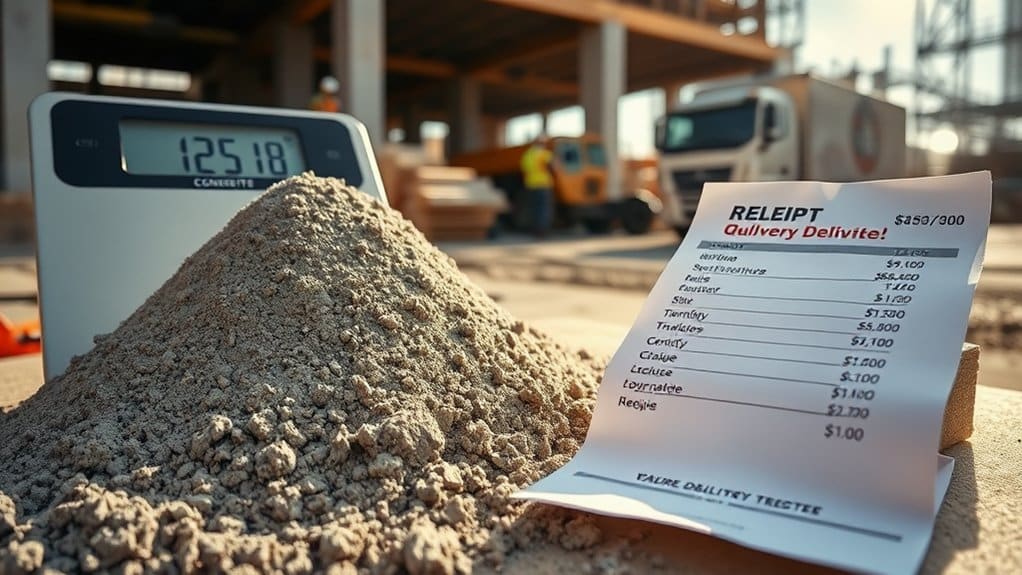
To effectively manage concrete delivery costs, consider employing strategies to minimise expenses. One practical approach is to share costs by coordinating with local contractors or businesses. By combining orders, you can lower individual delivery fees and benefit from shared transport expenses.
Additionally, take advantage of bulk order discounts, as suppliers often offer reduced rates for larger quantities. Plan your projects to make the most of these savings.
Furthermore, negotiate delivery terms in advance and remain flexible with delivery schedules to further cut costs. By using these strategies, you can enhance your budget and ensure smoother project execution without the weight of high delivery fees.
Comparing Delivery Fees From Different Suppliers

How can you ensure you’re getting the best deal on delivery fees for concrete? It’s crucial to compare delivery charges from different suppliers.
Here are three important factors to consider:
- Supplier Reputation: Choose suppliers with good reviews and a reliable history. A trusted supplier is likely to have efficient delivery processes.
- Fee Structure: Understand how the delivery fees are calculated. Some suppliers may have a flat rate, while others might charge based on distance or the size of your order.
- Additional Costs: Be aware of any hidden charges, like fuel surcharges or fees for waiting times, as these can significantly add to your total cost.
Taking these steps will help you secure the best deal for your concrete delivery.
Case Studies: Real-World Examples of Delivery Fee Impact

Delivery fees can significantly influence the total cost of concrete projects, and real-world case studies highlight the variations between suppliers. For instance, one contractor found that Supplier A charged a £100 delivery fee, whereas Supplier B’s fee was £300. This difference can have a considerable impact on the overall project cost, particularly for smaller jobs.
Moreover, delivery fee trends show that urban areas tend to have higher fees due to logistical challenges, while rural suppliers often offer flat rates to attract customers.
Frequently Asked Questions
How Do Seasonal Factors Affect Concrete Delivery Fees?
Seasonal factors significantly impact concrete delivery fees. During busy periods, such as spring and summer, prices tend to rise due to higher demand. For instance, more construction projects in these months lead to increased orders and consequently, elevated costs. Additionally, weather conditions can affect delivery; adverse weather like heavy rain or snow can disrupt schedules and drive up expenses.
Are There Hidden Fees in the Delivery Cost?
Yes, there can be hidden charges in delivery costs. It’s important to check your invoices carefully, as extra fees may come from fuel surcharges, handling fees, or minimum order requirements, which aren’t always clearly stated. For instance, you might think you’ve paid the full delivery price, only to find an extra fee added later. Always read the fine print to avoid surprises.
Can I Negotiate Delivery Fees With Suppliers?
Imagine yourself at a lively market, negotiating delivery fees. Yes, you can negotiate with suppliers; fostering strong relationships often results in better terms. When discussing delivery costs, be clear and confident to ensure you get the best deal. For instance, if you regularly order from a supplier, you could ask for a discount on delivery fees as a loyal customer.
What Happens if the Concrete Delivery Is Delayed?
If there are delays in concrete delivery, you could face increased costs, such as longer project timelines and higher labour expenses. For example, if the team is waiting for materials, they may be unable to proceed with their work, resulting in extra charges. Additionally, you might incur penalties or miss out on new opportunities, which can affect your overall budget and project efficiency. It’s wise to plan ahead to mitigate these risks.
Are There Minimum Order Requirements for Delivery?
Yes, many suppliers in the UK do have minimum order requirements for delivery. These rules help to make the delivery process more efficient and cost-effective. For instance, a supplier might require you to order at least £50 worth of goods to qualify for delivery. It’s always a good idea to check with your supplier to find out their specific minimum order policies.
Conclusion
In conclusion, grasping how delivery fees affect your overall concrete costs can significantly impact the success of your project and your budget. Factors like distance, supplier variations, and weight all play a crucial role. You may wonder if that additional fee is justified or if it’s worth exploring other options for potential savings. The decisions you make now could either help you manage your costs effectively or leave you in a tight spot later on. What options will you consider?

Planning your budget for concrete slab construction involves crucial steps and hidden costs that could surprise you—discover what you need Read more
Beneath the surface of concrete formwork lies a maze of hidden costs that could surprise your budget; discover what you Read more