For ready-mix concrete, timely transportation is crucial. It's essential to deliver the concrete within 90 minutes of mixing to ensure its quality. When choosing transportation methods, consider factors like the size of the project, its location, and the availability of equipment. Common options include truck mixers and volumetric mixers.
To prevent issues like segregation or spillage, it's important to use proper techniques on-site. By understanding these requirements, you can reduce delays and costs, and effectively optimise your transportation methods.
Key Takeaways
Ready-mix concrete must be delivered within 90 minutes of mixing to ensure its quality and structural integrity. The transportation method you choose will depend on factors like location, project size, and environmental conditions.
For general deliveries, truck mixers are the standard option. However, if you need to make adjustments on-site, volumetric mixers are a great choice. Effective transportation is crucial as it helps minimise delays, reduces waste, and complies with British Standards for concrete quality.
Proper planning and selecting the right equipment are essential to prevent mishandling and to ensure efficient delivery.
Importance of Timely Transportation

Timely transportation of ready-mix concrete is crucial for its structural integrity. Concrete should be poured within 90 minutes of mixing to ensure quality. Any delays can disrupt projects, increase costs, and lead to inefficiencies, affecting the consistency of the final product. Efficient delivery is key; quick transport reduces waste by avoiding hardened, unusable concrete. It also keeps projects on schedule, improving overall productivity. Moreover, timely logistics not only streamline operations but also lessen environmental impact and enhance customer satisfaction. The transportation of concrete is essential as it directly influences the project's success and the material's performance. Additionally, adhering to British Standards helps ensure that concrete is poured within the required timeframe, maintaining its essential properties.
Factors Influencing Transportation Methods
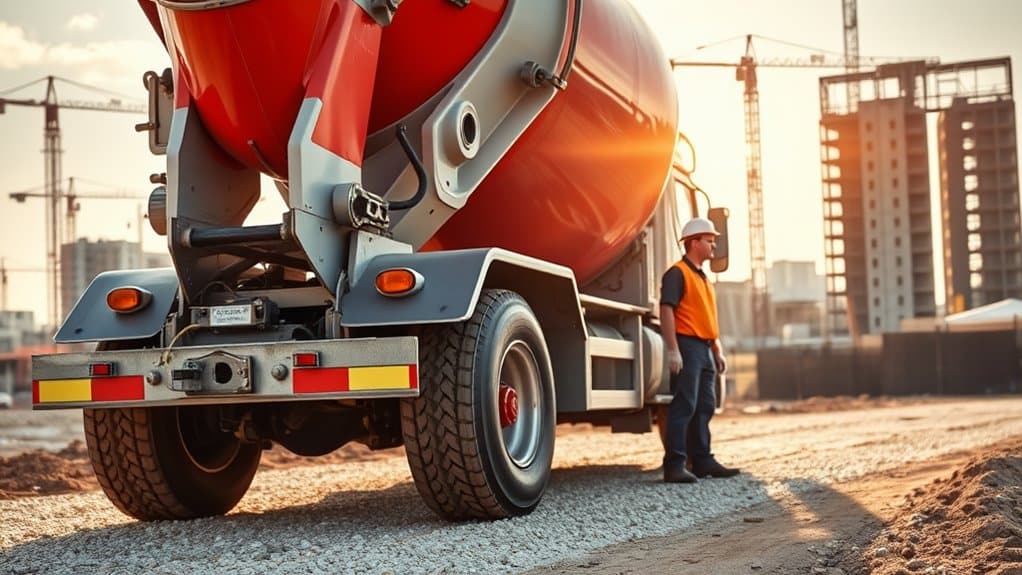
Timely transportation is crucial for delivering ready-mix concrete. Several key factors influence your logistics:
- Location and Accessibility: If your site is in a remote area, you may need smaller vehicles or specialised trucks to navigate limited access.
- Project Size: For large projects, high-capacity mixers are often necessary to keep up with demand. Concrete drum mixers are commonly used for transporting large volumes of concrete efficiently.
- Environmental Impact: Weather can significantly affect your concrete mix. In extreme temperatures, you might require additives to ensure quality.
- Equipment Availability: The types of trucks at your disposal can determine whether you opt for ready-mix or volumetric mixers, as truck capacity plays a vital role.
Common Transportation Methods for Ready-Mix Concrete

When delivering ready-mix concrete, choosing the right transportation method is crucial for project efficiency. Here are some common options that enhance concrete delivery while ensuring effective transportation.
| Method | Best Use Case | Capacity |
|---|---|---|
| Truck Mixers | General site delivery | 4 to 7 cubic metres |
| Volumetric Mixers | On-site adjustments | Variable |
| Belt Conveyors | Long-distance transport | Continuous flow |
| Pneumatic Placers | Hard-to-reach areas | Precise placement |
Selecting the appropriate method guarantees quality and minimises delays. Proper planning is essential to prevent issues like segregation and cold joints, which can negatively impact concrete quality during transportation. Additionally, understanding the correct water-cement ratio is vital for achieving desired concrete strength. Familiarising yourself with these transportation methods can significantly improve your project's workflow and overall success.
In-Site Transportation Techniques
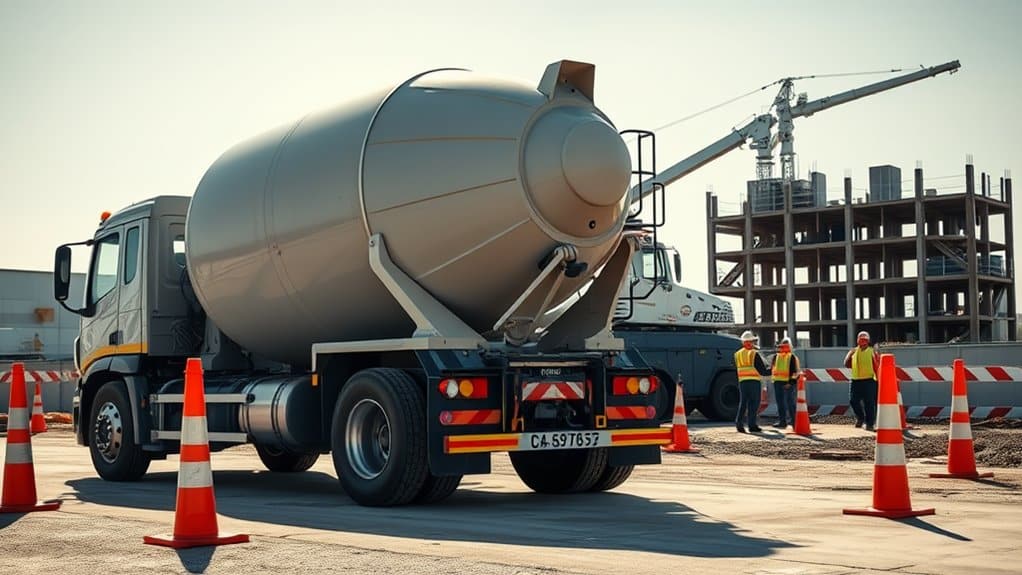
Efficient in-site transportation techniques are essential for moving ready-mix concrete on a construction site, as they significantly affect workflow and quality.
The right method depends on factors like terrain and accessibility. Here are key techniques to consider:
- Wheelbarrows: Perfect for short distances and flat surfaces, providing a budget-friendly option.
- Pumps: Offer rapid delivery and can reach high or difficult areas effectively.
- Chutes: Help prevent segregation during below-ground pours, preserving the concrete's quality.
- Belt Conveyors: Ideal for continuous transport in tight spaces, improving efficiency.
Using these techniques ensures timely concrete placement and maintains its workability, which is crucial for project success. Additionally, utilizing specialized equipment for concrete pumping can enhance the efficiency and precision of the transportation process.
Consequences of Improper Transportation

Improper transportation of ready-mix concrete (RMC) can lead to serious quality issues that affect project outcomes. For example, mishandling RMC can cause the separation of aggregates, cement, and water, resulting in compromised quality.
Additionally, failing to maintain a consistent temperature during transit can interfere with setting times. Long transit times can reduce workability, while incorrect mixing methods can produce uneven concrete, impacting durability.
Operational issues like equipment breakdowns or traffic delays can further hinder delivery efficiency, leading to project delays and increased costs. Moreover, spillage from poorly sealed drums wastes material and adds to financial losses.
Ultimately, these problems can jeopardise your project's success and sustainability objectives.
Frequently Asked Questions
What Are the Ideal Temperatures for Transporting Ready-Mix Concrete?
The ideal temperature range for transporting ready-mix concrete is between 10°C and 30°C. To maintain this range, use insulation methods to counteract temperature variations. This helps prevent premature setting or freezing while in transit. For instance, using insulated covers or transporting during cooler parts of the day can make a significant difference.
How Can I Ensure Concrete Remains Workable During Transport?
To ensure concrete stays workable during transport, concentrate on proper mixing techniques and maintain strict temperature control. For example, using a reliable mixer can help prevent the mix from setting too soon. Additionally, keeping the concrete cool—perhaps by shading it or using ice in the mix—can effectively delay hardening. These practices help ensure your concrete remains consistent and manageable until it arrives at the job site.
What Certifications Should Concrete Transport Vehicles Have?
Concrete transport vehicles must meet specific certification standards and undergo inspections every two years. Routine maintenance is crucial for compliance, as it helps avoid problems that could affect the quality of the concrete during delivery. For instance, ensuring that the mixing drum is in good condition can prevent contamination that might compromise the concrete's strength.
How Does Concrete Type Affect Transportation Logistics?
Concrete types significantly impact transportation logistics. Different mix designs require tailored transportation methods. For instance, high workability mixes may need special handling to prevent segregation, while faster-setting mixes require rapid delivery to ensure they are poured before they harden.
When managing various mixes, logistics must adapt to these requirements. For example, a concrete mix with additives to enhance strength may need temperature control during transport to maintain its properties. Overall, understanding how concrete types influence logistics is crucial for successful project execution.
What Are the Best Practices for Cleaning Concrete Transport Equipment?
To ensure proper maintenance of your equipment, it's essential to use effective cleaning methods, such as pressure washing. Regularly cleaning surfaces helps prevent residue build-up, which can improve mix consistency and enhance the overall efficiency and safety of your transport equipment. For instance, a quick wash after each use can save time and hassle later on, ensuring your equipment remains in top condition.
Conclusion
In summary, understanding the transportation requirements for ready-mix concrete is crucial for maintaining quality and meeting project timelines. For example, a construction site faced delays in transport, which resulted in a compromised mix and expensive repairs. By prioritising prompt and efficient transportation methods, such issues can be avoided, ensuring that the concrete remains workable upon arrival. Effective planning not only saves time but also resources, contributing to the overall success of your construction projects.

Learn about the diverse types of concrete used in construction and discover which mix can transform your next project.

For a long-lasting driveway that laughs in the face of the UK's unpredictable weather, the C20 concrete mix is your Read more

In the UK, you've got a a lot of lightweight concrete types to choose from, each with its unique perks. Read more