To create the ideal concrete mix, begin by familiarising yourself with the essential components: cement, water, sand, and aggregates. A common mix ratio is 1:2:3, but feel free to adjust it depending on your project’s needs. Accurate measurements are vital, as even minor variations can impact strength and ease of use. For consistency, use a concrete mixer, and ensure proper curing with methods such as water curing. Pay attention to environmental conditions during application to improve durability. There are plenty of additional techniques and tips to explore as you refine your mix.
Key Takeaways
- Begin with a standard mix ratio of 1:2:3 (cement:sand:aggregate) and adjust it based on your project’s strength requirements.
- Ensure the correct water-to-cement ratio for optimal hydration, as too much water can weaken the concrete.
- Use precise measuring tools to maintain accurate ingredient proportions, preventing any quality issues in your mix.
- Always test small batches of your concrete mix before large pours to confirm workability and performance.
- Employ proper curing techniques to boost strength and durability, keeping the concrete moist for at least 7 days after pouring.
Understanding the Components of Concrete

Concrete is a composite material made up of several essential components that combine to form a strong and durable product. The main ingredients are cement, water, and aggregates, which are categorised into fine and coarse types.
Fine aggregates, like sand, fill the spaces between larger particles to create a compact mix, while coarse aggregates, such as gravel or crushed stone, provide structural support.
Additionally, concrete additives are important for modifying properties, improving workability, and enhancing durability. For instance, chemical admixtures can be used to speed up curing or reduce water content, allowing you to optimise your mix for specific conditions. Understanding the water-cement ratio is critical for achieving higher strength and durability in your concrete mix.
Determining the Right Proportions

Once you understand the components of concrete, the next step is to determine the correct proportions for your mix. Achieving the desired strength and durability relies on accurate measurements of cement, water, sand, and aggregates.
Start with a standard ratio, such as 1:2:3 (cement:sand:aggregate), and adjust according to your specific project requirements. For example, if you need a stronger mix, you might reduce the water content or increase the cement.
Be mindful that even small changes can significantly affect workability and curing. Always test your mix variations on a small scale first to ensure the best results. Maintaining the optimal water-to-cement ratio is critical for hydration and sustaining concrete strength.
This careful approach lays the groundwork for a successful concrete project.
Tools and Equipment Needed for Mixing
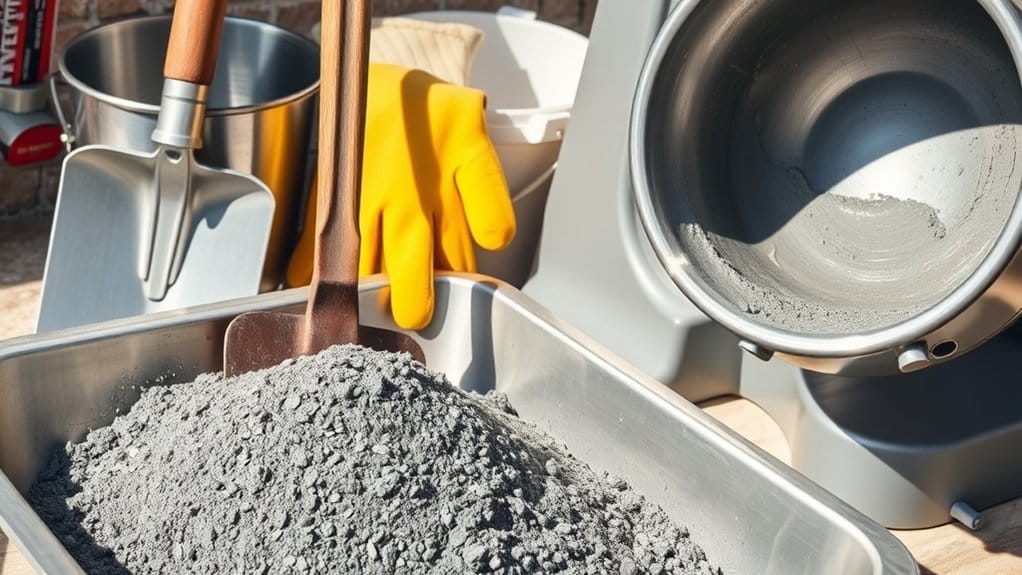
To achieve a well-mixed concrete batch, you’ll need some essential tools and equipment. A concrete mixer, whether portable or stationary, is key for effective mixing and ensuring consistency in your mix.
A shovel is useful for manual mixing, while a wheelbarrow helps you transport the mix easily. Measuring tools, like a bucket or scale, are important for maintaining the correct proportions of ingredients.
Remember to wear safety gear, such as gloves and goggles, to protect yourself during the mixing process. Regular maintenance of your equipment is vital; clean your mixer after each use to avoid residue build-up and ensure optimal performance. Additionally, ensuring proper mixing ratios will contribute to the overall strength and durability of your concrete.
Having the right tools and keeping them in good condition will set you up for success in your concrete projects.
Step-by-Step Guide to Mixing Concrete

Before you begin mixing, ensure you have all your materials and tools ready for a smooth process.
Follow these steps to create an effective concrete mix using proper techniques and additives:
- Measure Ingredients: Weigh the aggregates, cement, and water accurately to ensure you have the correct proportions.
- Mix Dry Ingredients: Combine the cement and aggregates in a dry mixer, ensuring they’re evenly distributed.
- Add Water: Gradually add water while mixing. This allows you to control the consistency more effectively.
- Incorporate Additives: If necessary, mix in any concrete additives, such as accelerators or retarders, to improve performance.
Tips for Achieving the Ideal Consistency

Achieving the ideal consistency in your concrete mix is crucial for strength and durability. Start by accurately measuring your ingredients. A balanced ratio of water, cement, and aggregates is vital; too much water can weaken the mix, while too little may make it difficult to work with.
If you’re using colour additives, incorporate them during mixing to ensure even distribution and avoid clumping. Consider using reinforcement options like steel fibres or mesh to enhance the concrete’s integrity.
Keep an eye on the texture—aim for a consistency similar to peanut butter. If necessary, adjust with small amounts of water or dry ingredients to achieve that perfect blend.
Common Mistakes to Avoid

When mixing concrete, pay close attention to the water-to-cement ratio; getting this wrong can weaken the mix.
Also, don’t skip testing aggregates, as this can lead to unexpected problems that affect the final product.
Avoiding these common mistakes is crucial for achieving the best results.
Incorrect Water-to-Cement Ratio
One of the most important factors in creating a durable concrete mix is maintaining the correct water-to-cement ratio. An incorrect ratio can lead to serious structural issues, as it can hinder cement hydration and increase water absorption, reducing strength and durability.
To avoid these problems, follow these guidelines:
- Accurately measure water and cement to achieve the desired ratio.
- Aim for a water-to-cement ratio typically between 0.4 and 0.6 for optimal strength.
- Adjust the water content based on environmental conditions, such as humidity and temperature.
- Test small batches before large pours to ensure the mix meets your project’s requirements.
Skipping Aggregates Testing
Skipping aggregates testing can compromise the quality of your concrete mix, leading to uncertain outcomes. Different types of aggregates can significantly influence the strength, workability, and durability of the mix.
Without proper testing, issues like grading inconsistencies or contamination may go unnoticed, jeopardising the final product. Conducting tests such as sieve analysis and specific gravity checks helps you choose the right aggregates for your project.
Neglecting this step can result in poor bonding, shrinkage, or cracking, which can ultimately threaten structural integrity. Make aggregates testing a priority to gather essential insights for your mix design, ensuring it meets performance standards and can withstand environmental challenges.
Don’t underestimate this vital step; it’s crucial for achieving the best results.
Curing and Finishing Your Concrete Project

Curing and finishing your concrete project are vital steps that significantly affect its strength and durability.
It’s important to select suitable curing techniques and ensure that the necessary conditions for curing are maintained. For instance, covering the concrete with damp burlap or plastic sheeting can help retain moisture.
Additionally, consider different finishing options, like smoothing the surface for a polished look or adding texture for grip, to achieve both the aesthetic and functional qualities you desire.
Curing Techniques and Methods
To ensure your concrete project achieves optimal strength and durability, effective curing methods are crucial. Proper curing helps the concrete reach its full potential by maintaining the right temperature and duration.
Here are four key methods to consider:
- Water Curing: Regularly wet the surface to keep it hydrated.
- Plastic Sheeting: Cover the concrete with plastic sheeting to retain moisture and reduce evaporation.
- Curing Compounds: Use chemical curing agents that create a membrane, helping to minimise moisture loss.
- Mist Spraying: Implement misting systems to keep humidity levels up, particularly in warm conditions.
Surface Finishing Options
Achieving a polished and visually appealing finish on your concrete surface is as crucial as the curing process. To enhance the aesthetics of your project, consider using various staining techniques. Acid stains provide rich, translucent colours, while water-based stains offer a broader range of shades and are easier to apply.
After staining, choosing the right sealant is essential for protecting the surface. Penetrating sealers repel moisture and prevent damage, whereas topical sealers create a glossy finish that enhances colour.
Always ensure the concrete is fully cured before applying any finishing treatments. By selecting and applying these options carefully, you can achieve a durable and attractive finish that complements your concrete project.
Essential Curing Conditions
While you work on your concrete project, it’s vital to ensure the right curing conditions for optimal strength and durability.
Here are the key factors to consider:
- Curing Temperature: Keep the temperature between 10°C and 32°C for the best hydration.
- Humidity Levels: Aim for humidity above 40% to minimise evaporation and enhance curing.
- Curing Duration: Allow at least 7 days for proper curing, extending this in extreme weather.
- Protection from Elements: Cover the surface from direct sunlight, wind, and rain to prevent rapid moisture loss.
Frequently Asked Questions
Can I Use Recycled Materials in My Concrete Mix?
Yes, you can use recycled materials in your concrete mix. This approach supports sustainable building practices and helps reduce waste without compromising strength and durability. For example, crushed concrete or recycled aggregates can be effectively incorporated. Just ensure that the materials are compatible with your mix.
How Long Does Concrete Take to Cure Fully?
Concrete generally takes around 28 days to cure fully, reaching its maximum strength. However, the initial set happens much quicker. Knowing the curing time is crucial to ensure your project is durable and performs well in different conditions. For example, if you’re laying a driveway, it’s vital to avoid heavy traffic until the concrete has properly cured to prevent damage.
What Additives Can Enhance Concrete Strength?
To enhance concrete strength, use water-reducing agents that improve workability while lowering water content. Adding fibre reinforcement is also beneficial, as it boosts tensile strength, crack resistance, and overall durability. This results in a sturdier final product that can withstand various stresses.
Is There a Best Time of Year to Pour Concrete?
You might think pouring concrete in winter is straightforward, but spring is actually the best time. If you have to pour in winter, take precautions to stop it from freezing. Cold weather can weaken the mix and disrupt the curing process.
How Do Weather Conditions Affect Concrete Mixing?
Weather conditions significantly impact concrete mixing. Temperature can speed up or slow down the curing process, while humidity affects water content. For instance, in hot weather, you might need to add more water to the mix to prevent it from drying too quickly. Conversely, in cold conditions, you may need to reduce water to avoid freezing. Adjusting your mix proportions according to these factors is essential for achieving the best results in your project.
Conclusion
Mastering concrete mixing is essential for success in any project. Think of your concrete mix as the core of your work—each ingredient contributes to its strength and durability. Using the right proportions and techniques ensures a blend that will endure. A well-prepared mix can mean the difference between a solid structure and one that fails. So, get ready to create, and let your ideas flow like freshly poured concrete!

Concrete ordering made easy: discover essential steps, tips, and strategies to ensure your project is a success—don't miss out on Read more

To determine the right quantity of ready-mix concrete for your project, follow these essential steps and uncover expert tips that Read more

Just follow these essential steps to pour ready-mix concrete and achieve flawless slabs and foundations, but there's more to uncover Read more