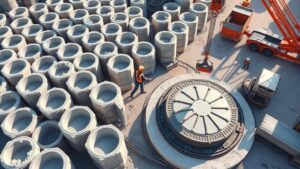
The future of concrete relies on innovations in zero-emission construction materials that significantly reduce carbon footprints and enhance sustainability. Expect to see advancements in low-carbon concrete options, such as geopolymer and blended cement technologies, which incorporate industrial by-products and alternative binders. Additionally, innovations like carbon capture processes and fibre-reinforced concrete are transforming the industry. As market demand increases and regulations become stricter, staying informed about these developments will be crucial for navigating the changing landscape. Keep an eye on what’s coming next.
Key Takeaways
- Geopolymer concrete can cut CO₂ emissions by up to 90%, making it a promising low-carbon option for construction.
- Developments such as carbon capture technologies and seawater-based concrete are leading to carbon-negative building materials.
- Blended cement, which incorporates supplementary materials, can reduce carbon emissions by as much as 25%, enhancing both sustainability and performance.
- The market for low-carbon construction materials is expected to hit £590.18 billion by 2034, fuelled by the demand for eco-friendly solutions and regulatory pressures.
- Collaboration among all stakeholders is crucial to tackle challenges in supply chains and regulations for producing zero-emission concrete.
The Necessity of Low-Carbon Concrete
As the construction industry faces mounting pressure to reduce its carbon footprint, the need for low-carbon concrete is clear.
The benefits of low-carbon concrete go beyond just cutting emissions; they include conserving resources and improving durability. By incorporating industrial by-products like fly ash and slag, we can reduce raw material use and enhance the concrete’s resistance to environmental factors. Low carbon concrete partially or completely substitutes traditional cement with alternative binders to minimize greenhouse gas emissions. Furthermore, the incorporation of supplementary cementitious materials not only reduces reliance on virgin resources but also contributes to greater sustainability in construction.
Innovations such as advanced mix designs and carbon capture technologies help further lower carbon emissions without compromising structural integrity. These improvements ensure that buildings not only meet green standards but also last longer, reducing maintenance costs in the long run.
Embracing low-carbon concrete is crucial for a sustainable future, balancing economic viability with environmental responsibility.
Understanding Carbon Footprint in Concrete Production
When considering the carbon footprint of concrete production, it’s vital to recognise that cement is a major contributor, responsible for around 8% of global CO2 emissions. With rising demand for concrete, the push for low carbon options and sustainable alternatives is more urgent than ever. Understanding these factors can drive innovations that significantly cut emissions in the construction industry. The cement production process itself is the primary contributor to carbon emissions in the concrete industry. By utilizing geopolymer concrete, which can reduce CO₂ emissions by up to 90%, the construction sector can take significant steps towards achieving sustainability.
Cement Emissions Overview
Cement plays a crucial role in construction, but its production significantly contributes to global carbon emissions, primarily through cement itself. In 2022, cement manufacturing was responsible for around 8% of global CO2 emissions, which translates to approximately 1.56 to 1.6 billion metric tonnes each year.
This is startling, considering that emissions from this sector exceed those of the entire aviation industry, highlighting its serious environmental impact.
A major source of CO2 emissions comes from the calcination process during clinker production, which releases carbon regardless of fossil fuel usage. To address this issue, cutting the clinker through the use of supplementary cementitious materials can significantly reduce emissions during production. Implementing energy-efficient production techniques can further lower emissions and enhance sustainability in concrete manufacturing.
As urbanisation continues to drive demand for concrete, these emissions could potentially rise to 3.8 billion tonnes annually by the middle of this century.
Cement ranks as one of the largest CO2 emitters, presenting a significant challenge for sustainable construction practices in the future.
Low Carbon Ratings
Understanding the carbon footprint of concrete production is crucial for promoting sustainable practices in the construction sector. Low carbon ratings are key in selecting materials that reduce environmental impact. These ratings, derived from standardised Environmental Product Declarations (EPDs), facilitate effective procurement strategies.
| Rating | Carbon Footprint (ECO₂e) | Implication |
|---|---|---|
| AA | Near Zero | Excellent Choice |
| A | Low | Sustainable Option |
| B | Moderate | Acceptable |
| C | High | Needs Improvement |
| G | Very High | Avoid |
For instance, choosing concrete with an AA or A rating not only supports the environment but also enhances the overall sustainability of your projects.
Sustainable Alternatives Development
The construction industry is increasingly shifting towards sustainable methods, especially in concrete production, where carbon emissions are a significant concern.
To address this, focus on sourcing materials sustainably and using innovative aggregates that reduce the carbon footprint. By lowering clinker content and blending with supplementary cementitious materials (SCMs) such as fly ash and slag, emissions can be significantly reduced.
Additionally, alternative cements like LC3 and low-carbon options such as Holcim’s ECOPlanet are proving effective. Recycling concrete as aggregate not only conserves resources but also decreases indirect emissions.
Emphasising these sustainable practices is crucial to meeting the rising global demand for concrete while minimising its environmental impact.
Advances in Blended Cement Technologies
As you look into advances in blended cement technologies, you’ll see their crucial role in boosting sustainability and performance in construction.
By using supplementary cementitious materials, these innovations help lower carbon emissions and enhance the strength of concrete.
Future trends in blending technologies are set to bring even more environmental advantages and performance improvements, steering the industry towards a more sustainable future.
Environmental Benefits of Blending
Traditional cement production is well-known for its significant carbon footprint and high energy demands. However, advancements in blended cement technologies are reshaping sustainable construction. By incorporating supplementary cementitious materials (SCMs), we can greatly minimise the environmental impact of cement. The advantages of blended cements include reduced CO2 emissions, lower energy consumption, and the effective reuse of industrial waste.
| Benefit | Impact |
|---|---|
| Reduction in CO2 Emissions | Up to 25% lower greenhouse gas emissions |
| Energy Conservation | Decreased thermal energy requirements |
| Utilisation of Waste Materials | Supports the principles of a circular economy |
| Reduced Water Usage | Less water required for mixing |
| Enhanced Durability | Prolongs the service life of concrete |
Embracing blended cements is a crucial step towards a more sustainable future.
Performance Enhancements in Blended Cement
Blended cements not only promote sustainability but also significantly enhance performance, setting new standards for construction materials. Innovations such as Master X-Seed and CHRYSO®AMA 100 EL improve mechanical strength while allowing for a higher use of supplementary cementitious materials (SCMs). This results in better durability and a longer lifespan, which can reduce long-term maintenance costs.
The Delta Ducon SmartBlend system optimises blending efficiency, ensuring accurate material proportions and consistent quality, all while supporting sustainability goals.
Future Trends in Blended Technologies
The construction industry is increasingly focused on sustainability, and the future of blended cement technologies is set for significant advancements in line with global decarbonisation efforts.
We can expect a rise in innovations using supplementary cementitious materials (SCMs), such as calcined clays and industrial by-products, which improve material synergy and substantially lower carbon emissions.
With stricter regulations on sustainability, sourcing eco-friendly materials will be crucial, prompting manufacturers to invest in research and development for low-carbon blends.
Additionally, the integration of digital technologies and AI will streamline operations, while strategic partnerships will help companies navigate regulatory challenges.
As these trends develop, they’ll transform cement production and contribute to greener, more resilient infrastructure across the UK and beyond.
The Role of Fiber-Reinforced Concrete
As construction methods advance, fibre-reinforced concrete (FRC) stands out as a game-changer, enhancing the mechanical properties and durability of traditional concrete structures.
By adding fibre reinforcement—like steel or synthetic materials—FRC distributes loads more effectively, significantly improving tensile strength and crack resistance. This approach helps reduce crack formation during curing and ensures structural integrity under stress.
Moreover, FRC offers better fatigue resistance and lower permeability, making it more durable against environmental factors such as freeze-thaw cycles and corrosion.
Using FRC can also streamline construction, cut labour costs, and extend the service life of structures, making it a smart choice for modern projects focused on sustainability and performance.
Carbon-Negative Materials: A New Frontier
Welcome to a new era of building with carbon-negative materials that utilise seawater and innovative synthesis techniques.
By capturing CO2 during concrete production, we can significantly lower the environmental impact of construction while improving material performance.
This method not only champions sustainability but also establishes a new benchmark for construction practices that actively address climate change.
Seawater-Based Concrete Innovations
Traditional concrete production is a significant source of global carbon emissions, but innovations in seawater-based concrete are changing the game for sustainable construction.
By using seawater and CO2 in electrochemical reactions, we can create carbon-negative materials such as calcium carbonate and magnesium hydroxide.
This process allows us to customise the material’s properties—like shape, size, and porosity—by adjusting factors such as voltage, flow rate, and reaction time. It mimics how marine organisms naturally mineralise, effectively sequestering CO2 for the long term while producing hydrogen gas as a clean fuel.
Moreover, seawater-based concrete can replace traditional mined aggregates, helping to reduce environmental degradation and tackle resource shortages.
With continuous improvements in electrochemical efficiency, this innovative approach offers a scalable solution that aligns with our decarbonisation goals in construction.
Sustainable Mineral Synthesis Techniques
Sustainable mineral synthesis techniques mark an important development in the search for carbon-negative building materials. By using waste and renewable resources, these methods create high-performance alternatives to traditional concrete.
For example, incorporating recycled concrete aggregates and biomass ashes can significantly lessen environmental impact. Bottom ashes from biomass power generation, when refined through mechanical micronization, function effectively as supplementary cementitious materials.
Furthermore, microbial biomineralisation processes provide eco-friendly ways to create biocements by converting waste CO2 into durable materials.
Electrochemical mineral synthesis also reduces reliance on fossil fuels by using renewable energy for mineral production. Together, these innovations not only cut CO2 emissions but also support a circular economy, paving the way for more sustainable construction practices.
Captured CO2 Utilization Methods
Captured CO2 utilisation methods mark a significant step towards carbon-negative construction materials, converting greenhouse gases into useful resources. By injecting CO2 during the curing and mixing of concrete, we can enhance carbonation, cut emissions, and boost mechanical strength. Furthermore, carbonate aggregates created from captured CO2 act as eco-friendly fillers, effectively storing CO2 within the concrete.
| Method | Benefits | Impact on Sustainability |
|---|---|---|
| CO2 Injection | Speeds up curing, reduces cement usage | Lowers carbon footprint |
| Carbonate Aggregates | Increases strength, stores CO2 | Improves durability, reduces waste |
| Industrial CCUS | Captures CO2 before it’s emitted | Promotes low-carbon construction |
| Carbon-Negative Concrete | Uses waste CO2 in production | Directly addresses climate change |
Embracing these innovations lays the foundation for more sustainable construction practices in the future.
Innovations in Alternative Feedstocks
The construction industry is undergoing a significant change with the emergence of innovative alternative feedstocks that could transform cement production. By incorporating bio-based materials and new sourcing methods, the sector can significantly cut emissions.
Here are some key advancements:
- Brimstone’s calcium silicate rock eliminates CO₂ emissions during production.
- Supplementary Cementitious Materials (SCMs) from recycled materials enhance sustainability.
- Alternative fuels, such as biomass and plastic waste, reduce dependence on fossil fuels.
- Electrochemical methods bypass traditional decarbonation processes.
- Integrated production of SCMs and cement from the same feedstock increases efficiency.
These innovations not only promote sustainability but also help build a more resilient construction industry committed to achieving zero-emission targets.
Ensuring Performance and Durability of Sustainable Concrete
Transitioning to sustainable concrete solutions offers several benefits, but ensuring their performance and durability is crucial for widespread use.
For example, innovative mixes that include marine shell waste can achieve impressive results, such as a compressive strength of 32.4 MPa, which is 26.5% higher than traditional options.
However, it’s important to maintain durability; factors like porosity and the use of admixtures can significantly influence long-term performance.
While some sustainable mixes may exhibit increased voids and water absorption, effective curing methods can help address these challenges.
Market Trends in Low-Carbon Construction
How are market trends shaping the future of low-carbon construction? The rapid growth of the low-carbon construction materials market indicates a significant shift towards sustainable building practices and carbon neutrality.
Several key trends are driving this change:
- Increasing global demand for eco-friendly solutions
- Corporate commitments to environmental, social, and governance (ESG) standards and government pledges for net-zero emissions
- Buy Clean policies that favour materials with low embodied carbon
- Greater environmental awareness among consumers and policymakers
- Innovations in materials such as low-clinker cements and engineered timber
These trends underline the urgent need for sustainable practices and present opportunities for businesses to lead the way in transforming the construction industry.
With the market expected to grow to nearly £590.18 billion by 2034, the momentum for low-carbon construction is clear.
Industry Adoption and Regulatory Drivers
As regulatory frameworks evolve, the adoption of zero-emission construction materials is on the rise in the UK, driven by strict standards and innovative practices.
The UK government’s commitment to reducing emissions by 90% by 2029, along with similar EU regulations, provides strong incentives for the industry. These rules encourage the use of low-carbon materials and foster collaboration among stakeholders to ensure compliance.
By incorporating renewable energy systems and improving energy efficiency, the construction sector can achieve significant benefits, including long-term savings for taxpayers.
Initiatives like the Environment Agency’s efforts to improve transparency in carbon reporting further support this transition.
Together, these measures are paving the way for a sustainable future in construction, aligning both economic and environmental objectives.
Future Directions for Sustainable Concrete Technologies
The future of sustainable concrete technologies relies on innovative advancements that significantly reduce environmental impact while improving performance.
Key developments to watch for include:
- Geopolymers that use industrial by-products instead of traditional cement, potentially lowering carbon emissions by up to 90%.
- Self-healing technologies that incorporate microcapsules or bacteria to repair cracks, thereby extending the lifespan of structures.
- Cement-free concrete formulations that utilise lignin-based additives to reduce energy-intensive production processes.
- Incorporation of wind turbine blade waste to enhance thermal and acoustic properties.
- Use of IoT sensors for real-time monitoring, which can improve safety and maintenance predictions.
These innovations could transform concrete’s role in sustainable construction, leading us towards a greener future.
Overcoming Challenges in Zero-Emission Concrete Production
As the construction industry moves towards zero-emission concrete production, various technical, economic, and regulatory challenges arise. A key issue is the transformation of the supply chain; alternative materials, such as calcium silicates, need to be as cost-effective and readily available as traditional limestone.
Electrifying high-temperature kilns presents another hurdle, demanding significant innovation and investment.
Moreover, regulatory frameworks are often outdated, based on conventional cement chemistry, which complicates the approval of new cements. The lack of cohesive policies and carbon pricing also means that the economic burden of green premiums can deter market uptake.
To navigate these challenges, collaboration is essential. Aligning international regulations and promoting innovation will be crucial for ensuring that zero-emission solutions can be scaled and accepted within the construction sector.
Frequently Asked Questions
What Are the Costs Associated With Low-Carbon Concrete Compared to Traditional Options?
When comparing costs, low-carbon concrete can be between 1% and 75% more expensive than traditional options. However, its long-lasting durability can lead to savings over time, making it a sensible choice in the long run. For instance, while the initial outlay might be higher, the reduced maintenance and replacement costs can offset this difference, making it an economically viable option for many projects.
How Do Low-Carbon Concrete Technologies Impact the Construction Timeline?
Low-carbon concrete technologies improve sustainability but can affect construction timelines. Longer setting times may delay projects, but solutions like accelerators and real-time monitoring can keep things on track. For instance, using accelerators can speed up curing, helping you meet deadlines while still achieving environmental targets.
Are There Specific Certifications for Low-Carbon Concrete Products?
Yes, there are specific certification standards for low-carbon concrete products that focus on their environmental impact. Notable among these are Environmental Product Declarations (EPDs), which provide clear data on emissions. These certifications promote transparency and help meet new low-carbon construction standards. For example, a concrete product with an EPD can show builders how its carbon footprint compares to traditional options, making it easier to make informed choices.
What Local Resources Are Available for Sourcing Sustainable Concrete Materials?
Sourcing concrete locally can reduce transportation emissions by as much as 30%. By using sustainable aggregates from nearby suppliers, you not only support local businesses but also promote eco-friendly practices and lessen your environmental impact. For instance, you can look for suppliers who offer recycled materials or those that adhere to sustainable sourcing methods.
How Can Consumers Advocate for Low-Carbon Concrete in Their Communities?
You can advocate for low-carbon concrete by getting involved in local community initiatives, promoting awareness among consumers, and collaborating with builders to highlight sustainable options. Attend workshops and support policies that prioritise eco-friendly materials. For instance, you might join a local environmental group that campaigns for greener building practices or encourage your local council to adopt low-carbon materials in public projects.
Conclusion
As you look to the future of concrete, consider how zero-emission materials could transform the construction industry. By adopting innovative technologies and carbon-negative alternatives, you can significantly lower the carbon footprint of your projects. However, it’s crucial to tackle the challenges of production and market adoption. With tightening regulations and changing consumer demands, engaging proactively with low-carbon practices could not only be advantageous but may well shape the future of sustainable construction in the UK.

Leveraging cutting-edge technologies and sustainability trends, the future of ready-mix concrete promises groundbreaking innovations that could transform the industry forever. Read more

Streamline your construction projects with lightweight concrete's benefits, but what challenges and innovations lie ahead in its evolving landscape?

Journey through the fascinating evolution of concrete, from ancient Roman innovations to modern sustainable practices, and discover what lies ahead Read more