Roller-Compacted Concrete (RCC) is revolutionising pavement design thanks to its exceptional strength, efficiency, and durability. With a low water-cement ratio, RCC produces sturdy surfaces that can endure heavy loads and harsh conditions. Its quick installation significantly shortens project timelines, making it a cost-effective choice over time. Unlike traditional materials, RCC demands less maintenance, which enhances its appeal for various uses, such as roads, car parks, and industrial sites. Advances in technology are also improving its performance. Explore the benefits and future trends of RCC in pavement engineering to see how it’s shaping the industry.
Key Takeaways
- RCC allows for quick installation and lower labour costs, significantly improving project timelines and efficiency in pavement design.
- Its exceptional strength and durability make RCC suitable for busy areas, enhancing long-term performance and cutting down on maintenance.
- Innovative mixes and faster curing times boost load-bearing capacity and speed up project completion, changing how we approach construction.
- Sustainability is a key focus with RCC, using eco-friendly materials and smart systems to reduce carbon footprints and improve lifecycle management.
- RCC’s advanced features support robust infrastructure, addressing the evolving needs of modern pavement engineering and environmental goals.
The Basics of Roller-Compacted Concrete

Roller-Compacted Concrete (RCC) is a strong and efficient paving material suitable for a variety of uses. With its low water-cement ratio and high density, RCC creates a durable surface that can handle heavy loads and tough weather conditions.
Common applications include industrial pavements and motorways, where durability and longevity are crucial.
One of the key advantages of RCC is its rapid installation, which can significantly reduce time and labour costs for contractors.
Furthermore, its resistance to cracking and low maintenance requirements make it a popular choice in the paving sector.
Understanding these properties and applications of RCC can help you choose the right paving solution for your specific project needs.
Key Benefits of RCC in Pavement Design

When it comes to pavement design, Roller-Compacted Concrete (RCC) offers considerable benefits that enhance its durability and lifespan.
Its strong composition provides a resilient surface that can endure heavy traffic and challenging weather conditions.
Moreover, RCC is a cost-effective option for construction, helping to lower both material and labour costs over time.
For instance, roads built with RCC can require less frequent maintenance, saving money in the long run.
Enhanced Durability and Longevity
When considering pavement design, the enhanced durability and longevity of Roller-Compacted Concrete (RCC) are clear advantages.
RCC offers excellent long-term performance due to its low permeability and resistance to weathering, making it ideal for high-traffic areas. This durability means fewer repairs are needed, streamlining maintenance.
RCC pavements can endure harsh conditions, including freeze-thaw cycles and chemical exposure, which extends their service life.
Choosing RCC is a solid investment in a pavement solution that meets immediate needs while ensuring long-lasting performance, ultimately reducing overall lifecycle costs and improving operational efficiency.
Cost-Effective Construction Solution
Cost-effectiveness is key in pavement design, and Roller-Compacted Concrete (RCC) is an excellent choice.
By using sustainable materials, RCC helps lower construction costs while maintaining high performance. Its quick placement process significantly reduces project timelines, allowing for more efficient completion.
The reduced need for finishing and curing also cuts down on labour costs and equipment use.
Moreover, RCC’s durability and minimal maintenance lead to long-term savings, making it even more cost-effective. Additionally, Ready-Mix Concrete innovations like automated batching systems ensure high-quality production and further enhance the efficiency of construction projects.
Choosing RCC means investing in a sturdy pavement solution that also supports sustainable building practices, making it a smart option for modern infrastructure projects.
Comparing RCC to Traditional Pavement Materials

When comparing roller-compacted concrete (RCC) to traditional pavement materials, there are notable differences in strength and durability.
RCC generally excels under heavy loads, which can result in a longer lifespan.
Furthermore, it can be more cost-effective; while the initial outlay for RCC may be higher, it often leads to reduced maintenance costs in the long run.
Strength and Durability
While traditional pavement materials like asphalt and concrete have been reliable for years, Roller-Compacted Concrete (RCC) stands out as a strong alternative, particularly in terms of strength and durability.
RCC offers superior compressive strength, enabling it to handle heavy loads and resist deformation better than conventional materials. This is crucial for busy areas, ensuring a longer lifespan and reduced maintenance.
Moreover, RCC has impressive tensile strength, which helps prevent cracking and structural failure under stress. Its unique composition and compacting process make it highly durable, less affected by weather and environmental conditions. Additionally, the use of supplementary cementitious materials in RCC contributes to its enhanced durability and sustainability.
When considering pavement options, the strength and durability of RCC make it a dependable choice for modern infrastructure needs.
Cost Efficiency Comparison
Roller-Compacted Concrete (RCC) stands out for its strength and durability, making it a cost-effective alternative to traditional pavement materials.
When you assess its sustainability and conduct a lifecycle analysis, you’ll discover that RCC can lead to significant savings over time.
- Lower maintenance costs thanks to its resilience
- Quicker construction times, reducing labour expenses
- More economical material usage
- Longer lifespan, resulting in fewer replacements
Considering these factors, RCC is a smart financial choice.
Its robust design reduces the frequency of repairs and replacements, making it both an economical and environmentally friendly option for pavement.
The initial investment in RCC pays dividends in the long run, aligning well with contemporary sustainability objectives.
Applications of Roller-Compacted Concrete

Roller-Compacted Concrete (RCC) is highly effective in pavement design, offering durability and efficiency for various applications. Its adaptability makes it ideal for settings like heavy-duty industrial pavements, car parks, and low-volume roads.
RCC excels in areas with heavy loads due to its high compressive strength, which helps prevent deformation and cracking.
Moreover, RCC is suitable for both temporary and permanent surfaces, making it a solid choice for construction sites and military facilities. Its quick placement and curing processes minimise downtime, making it perfect for projects that need a fast turnaround.
Choosing RCC means investing in a pavement solution that balances longevity with flexibility, tailored to meet specific operational needs. Additionally, its high compressive strength ensures that it can withstand the rigors of heavy loads and environmental conditions.
Construction Techniques for RCC

When constructing with Roller-Compacted Concrete (RCC), it’s crucial to follow specific techniques to ensure optimal performance and longevity.
Proper management of RCC mixtures and the right construction equipment are key to achieving the best results.
- Use high-capacity mixers to ensure a consistent RCC mixture.
- Employ vibratory rollers for effective compaction and density.
- Utilise laser-guided screeds for accurate levelling and finishing.
- Keep an eye on moisture levels throughout the process to avoid cracking.
Environmental Impact of RCC
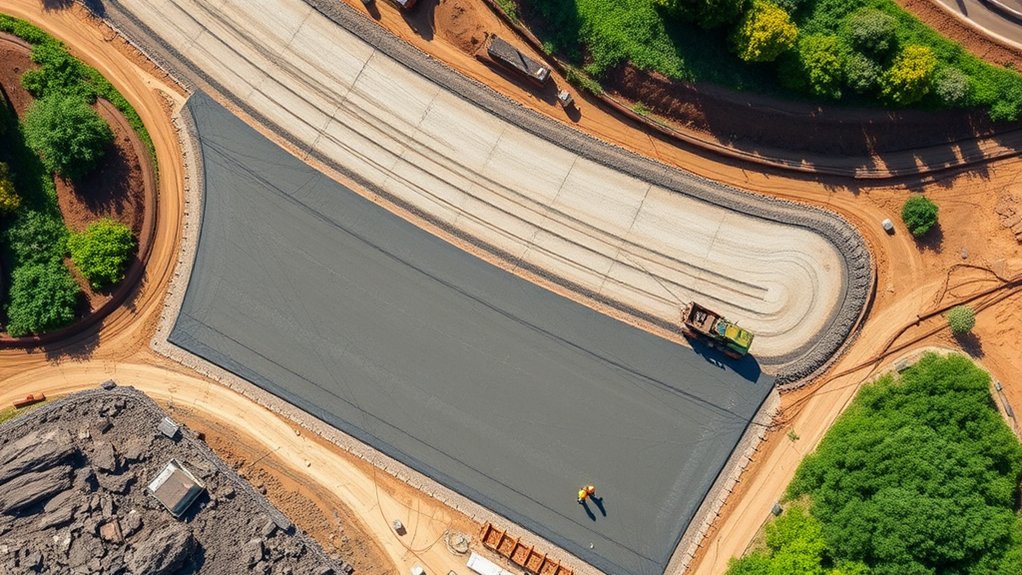
Understanding the environmental impact of Roller Compacted Concrete (RCC) is vital for sustainable construction. RCC has a significantly lower carbon footprint than traditional concrete, mainly due to its reduced cement usage and efficient production methods.
By incorporating industrial by-products such as fly ash and slag, we can enhance sustainability and reduce waste.
The durability of RCC means that pavements last longer, which cuts down on maintenance and repair needs, providing further environmental benefits. Its rapid installation also minimises disruption and lowers energy consumption on-site.
Innovations in RCC Technology

Recent advancements in RCC technology are revolutionising pavement design, improving both performance and sustainability.
These innovations are broadening the scope of RCC applications, making it a practical choice for a variety of projects.
- Enhanced durability with advanced material formulations
- Quicker curing times for faster project completion
- Greater resistance to severe weather
- Improved load-bearing capacity, suitable for heavy traffic
These advancements enable you to optimise your pavement designs, ensuring longevity and lower maintenance costs.
By integrating modern techniques and materials, RCC not only enhances performance but also supports environmental objectives, making it a progressive option for today’s infrastructure projects.
Embracing these innovations can lead to more sustainable and efficient outcomes in your paving ventures.
Future Trends in Pavement Engineering With RCC

As the need for sustainable infrastructure increases, future trends in pavement engineering with Roller-Compacted Concrete (RCC) are set to reshape the industry.
We’re likely to see a greater integration of RCC with advanced materials and technologies, which will enhance durability and performance. Innovations may include the use of recycled aggregates and supplementary cementitious materials to significantly lower carbon emissions and promote eco-friendly practices.
Additionally, smart pavement systems equipped with sensors for real-time monitoring will help optimise maintenance and extend the lifespan of pavements.
RCC not only addresses current needs but also lays the groundwork for a more resilient and environmentally conscious future in pavement design.
Adapting to these changes will be crucial for engineers and local councils.
Frequently Asked Questions
How Does RCC Perform in Extreme Weather Conditions?
RCC demonstrates impressive durability in extreme weather conditions, maintaining its structural integrity even in harsh temperatures. It effectively resists cracking and deformation, ensuring longevity and reliable performance during severe weather events. This makes it a solid choice for pavements, particularly in areas prone to challenging climates.
What Is the Cost Comparison Between RCC and Asphalt?
When comparing costs, the benefits of RCC often surpass the downsides of asphalt. Although the initial expenditure for RCC may be higher, its durability and reduced maintenance requirements lead to long-term savings, making it a more cost-effective option overall. For instance, while asphalt surfaces may need frequent repairs and resurfacing, RCC can last significantly longer with minimal upkeep.
Can RCC Be Recycled After Its Lifespan?
Yes, RCC can be recycled after its lifespan. Various recycling methods allow for the reuse of materials in new projects, which helps enhance sustainability. For example, crushed RCC can be used as aggregate in new concrete or as a base for roads, reducing waste and conserving resources.
How Long Does It Take for RCC to Cure?
You may think RCC cures quickly, but it actually takes about 7 days to achieve initial strength and up to 28 days for full strength. This ensures your pavement is durable and performs well.
What Maintenance Is Required for RCC Pavements?
For RCC pavements, regular inspections, crack sealing, and surface cleaning are essential to ensure durability. Proper maintenance techniques not only extend the lifespan of the pavement but also improve its performance. This approach helps to minimise costly repairs and maximises your investment in pavement infrastructure. For example, addressing small cracks promptly can prevent them from worsening and requiring more extensive repairs later on.
Conclusion
Incorporating roller-compacted concrete (RCC) into pavement design is not just a passing trend; it’s a significant advancement. You may have concerns about its durability compared to traditional materials, but consider a highway that can endure heavy traffic and harsh weather while needing minimal upkeep. RCC’s strength ensures longevity and cost-effectiveness, changing the way we think about infrastructure. As innovations progress, adopting RCC could lead to roadways that are not only stronger but also more sustainable, reshaping the future of civil engineering in the UK.

Key advancements in concrete technology are reshaping construction; discover how innovations like self-healing properties and 3D printing are revolutionizing the Read more

How does concrete transform skyscraper foundations into engineering marvels capable of withstanding nature's forces? Discover the secrets behind their strength Read more