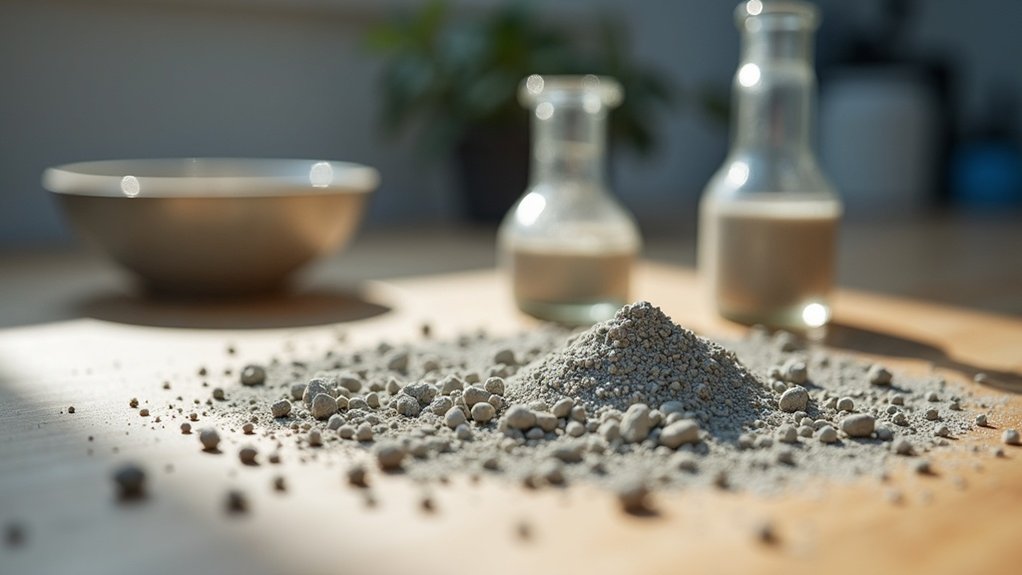
Understanding cementitious properties in mix design is crucial for producing durable concrete. Cement, which constitutes 10-15% of the mix, acts as the main binding agent, impacting strength and cohesion. The water-cement ratio is vital; it affects hydration and, consequently, both workability and durability. The choice of aggregate also significantly influences the performance of the mix. By selecting and combining these materials wisely, you can enhance the quality of your concrete and ensure greater structural integrity. Delve deeper to learn more about optimising your mix design.
Key Takeaways
- Cement serves as the main binding agent in concrete, essential for achieving strength and durability through hydration in the mix design.
- The water-cement ratio plays a crucial role in determining the quality of concrete, influencing factors such as hydration, workability, strength, and longevity.
- The type and gradation of aggregates affect the overall strength and durability of concrete; for instance, rounded aggregates typically require less cement compared to angular ones.
- Admixtures and additives can improve various concrete properties, such as workability, resistance to freeze-thaw cycles, and hydration rates, tailored to specific project needs.
- Conducting tests for compressive strength and durability is vital to ensure that the concrete meets performance standards and can endure environmental challenges.
The Role of Cement in Concrete Mixes
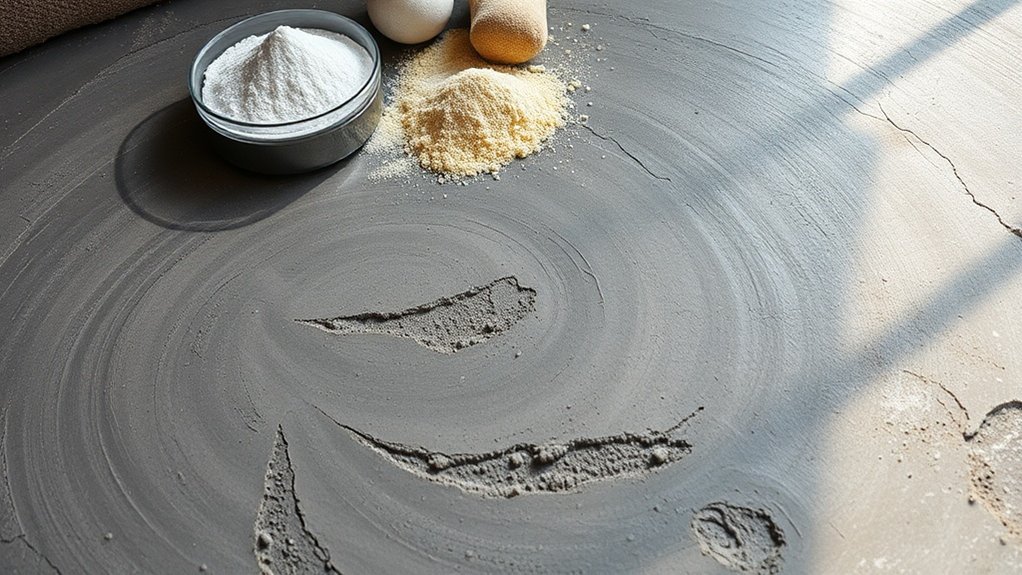
Cement is the key binding agent in concrete mixes, allowing all components to bond effectively through hydration. The most commonly used type, Portland cement, is made from limestone and clay, which affects its properties and performance.
Typically, cement makes up about 10-15% of the concrete mix, but its role is crucial for ensuring strength and durability. Optimising the amount of cement can enhance compressive strength, but it’s important to find a balance to prevent brittleness. Proper ratios are essential for achieving the desired performance in concrete projects. Excess cement can lead to decreased workability, which negatively impacts the overall quality of the mix.
Adopting sustainable practices in cement usage helps reduce environmental impact while maintaining structural integrity. Additionally, understanding how different cement types influence hydration rates and workability is essential for achieving the desired performance in concrete.
Ultimately, your mix design should focus on both functionality and sustainability to ensure durable concrete structures.
Importance of Water in Cementitious Mixes
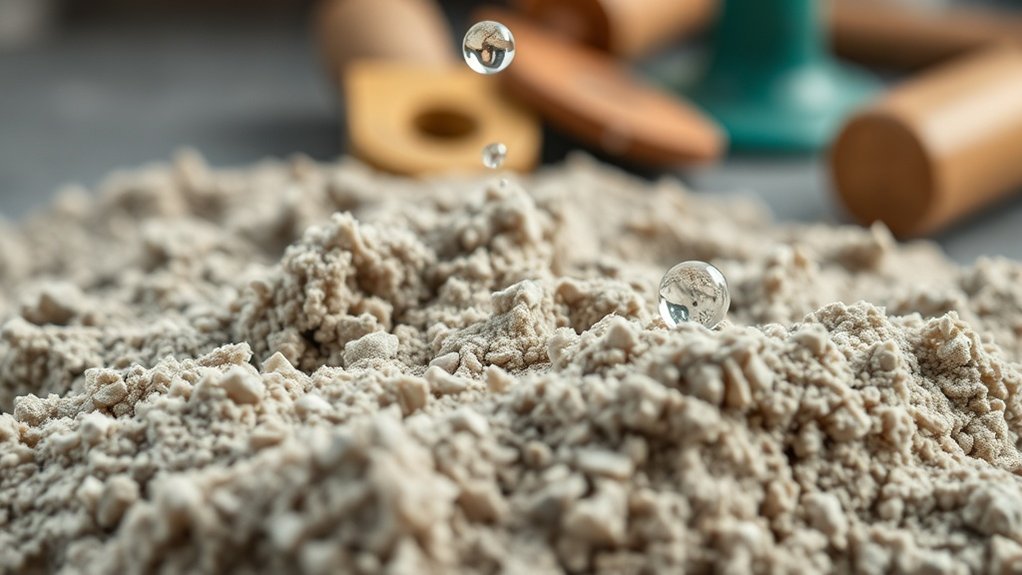
Water is essential in cementitious mixes, influencing the water-cement ratio that affects hydration and the overall quality of concrete. It’s crucial to strike a balance in this ratio to ensure effective hydration and maintain workability, without sacrificing strength. For instance, too much water can weaken the mix, while too little can lead to poor hydration. Achieving the right water-cement ratio is fundamental for optimizing both the workability and strength of the final concrete product. Additionally, using water-reducing admixtures can help achieve lower water-cement ratios while enhancing the durability of the concrete.
Water-Cement Ratio Impact
In cementitious mixes, the water-cement ratio (w/c) is crucial for both workability and performance of concrete. Getting this balance right is vital for optimising water usage and ensuring mix consistency.
Here are some key points to consider:
- A higher w/c ratio improves workability, making it easier to mix and place the concrete.
- A lower w/c ratio boosts strength, reduces porosity, and enhances durability. Admixtures such as water-reducing agents can further assist in lowering the w/c ratio while maintaining necessary fluidity.
- Too much water can cause segregation, which can weaken the structure.
- Maintaining the correct w/c ratio helps minimise shrinkage and cracking, extending the life of the concrete. Proper curing of concrete is essential for achieving desired strength and durability.
- Admixtures, such as plasticisers, can improve workability without the need for excess water.
Hydration Activation Process
The water-cement ratio is crucial for effective hydration, which activates cement mixes for optimal performance. When water is added, it begins to interact with the cement particles, triggering important chemical reactions. For example, tricalcium silicate (C3S) hydrates quickly, releasing calcium ions and generating heat that’s essential for early strength development.
Initially, hydration produces calcium silicate hydrate (C-S-H) and calcium hydroxide, both of which enhance the strength of the mix. However, as C-S-H forms, it can restrict water movement to unreacted cement, which slows down hydration over time.
Keeping the water levels in check is vital to ensure that reactions continue and hydration doesn’t stop prematurely.
Workability and Quality Control
Effective workability in cement mixes depends on managing water content, which is crucial for both the placement and performance of concrete.
Finding the right balance in workability is vital for ensuring mix consistency and maintaining strength. Here are some key points to consider:
- Keep an appropriate water-cement (w/c) ratio to prevent placement issues.
- Too much water can compromise hydration efficiency, resulting in lower durability.
- Closely monitor water content for quality assurance in construction.
- Consider using water-reducing admixtures to improve workability without sacrificing strength.
- Remember, adding an extra 10 litres of water can significantly reduce compressive strength.
Aggregate Types and Their Influence

Aggregates are crucial in concrete mix design, making up 60% to 80% of the total volume. The type and shape of aggregates you select significantly affect the concrete’s strength, workability, and durability.
For example, rounded aggregates create smoother mixes, requiring less cement paste and aiding in moisture control. In contrast, angular aggregates need more cement due to their increased surface area and friction, resulting in a harsher mix. Moreover, flat or elongated particles can compromise the shear strength of concrete.
Proper gradation is vital; it optimises particle packing and reduces voids. Additionally, the moisture content of aggregates can impact the water-cement ratio, which is essential for achieving the desired performance.
Therefore, understanding the types of aggregates and their effects is fundamental to effective mix design.
Understanding Admixtures and Additives

When selecting the right mix design, understanding the role of admixtures and additives is crucial for optimising concrete performance. The types of admixtures can significantly enhance performance, but it’s important to consider dosage limits and compatibility.
Here are some key points to remember:
- Water-reducing admixtures lower the water/cement ratio while maintaining strength, which can be particularly useful for structural applications.
- Air-entraining admixtures enhance freeze-thaw resistance, making them ideal for outdoor structures in colder climates.
- Set accelerators speed up hydration in cold weather, helping to prevent delays on site.
- Set retarders extend workability time, which is beneficial in hot weather or for complex pours.
- Supplementary Cementitious Materials (SCMs) can reduce environmental impact and improve durability, contributing to more sustainable construction practices.
The Concrete Mix Design Process

In the concrete mix design process, it’s crucial to proportion materials accurately to meet specific performance standards.
Testing ensures that your mix complies with strength and durability requirements. Additionally, adjusting for environmental factors and the availability of materials is important.
For instance, if you’re working in a colder climate, you might need to alter your mix to prevent freezing during curing.
This systematic approach is key to achieving the desired properties of concrete.
Proportioning Materials Effectively
Effective proportioning of materials in concrete mix design is crucial for achieving the desired performance and durability of the final product.
To ensure your mix is optimised, follow these steps:
- Determine the target compressive strength based on the structural requirements.
- Select an appropriate water-cement ratio that balances strength with workability.
- Choose aggregate sizes that are suitable for your structural components while maintaining good gradation.
- Adjust water and air content to improve durability, particularly in varying environmental conditions.
- Conduct trial mixes to refine your material choices and optimise proportions for the best outcomes.
Testing for Performance
Thorough testing of concrete mixes is vital to ensure they meet performance criteria after curing. Focus on key metrics like compressive strength, which is typically assessed at 28 days through concrete core compression tests.
Adhering to standards such as BS EN 12390-2 and BS EN 12390-3 ensures reliable specimen preparation and sampling.
Durability testing includes methods like electrical resistivity and pH measurement, which help predict long-term performance. Non-destructive testing methods, such as rebound hammer tests, can also estimate concrete hardness without damaging the structure.
By creating a detailed matrix of tests, you can link initial mixture properties to hardened performance, supporting quality assurance and collaboration among stakeholders.
This thorough approach helps ensure that your mix design meets both strength and durability requirements.
Adapting to Conditions
When designing a concrete mix, it’s essential to adapt to various conditions that affect both performance and durability. Here are key points to consider:
- Ensure the maximum size of coarse aggregate doesn’t exceed one-fifth of the narrowest dimension to prevent segregation.
- Adjust the water content to meet slump requirements, without compromising strength.
- Choose well-graded aggregates to improve density and minimise voids.
- Use air entrainment for freeze-thaw resistance, tailoring air content to the exposure conditions.
- Conduct trial mixes to fine-tune proportions until you achieve the desired strength and durability.
Key Properties Influenced by Cementitious Materials
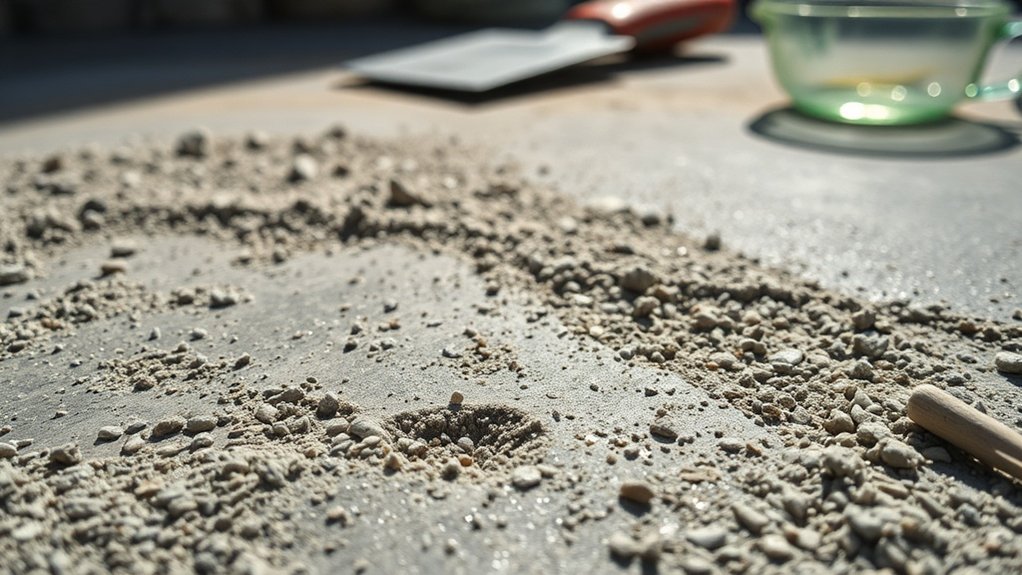
Cementitious materials are crucial in shaping the key properties of concrete, especially workability, strength, and durability. Components like portland cement and supplementary materials improve plasticity and cohesiveness, which are vital for workability.
The interactions between aggregates significantly affect the mix; their size and shape determine how well they fill gaps, influencing overall consistency. Air entrainment adds tiny bubbles, enhancing plasticity without increasing water content, further improving workability.
Understanding the mix’s rheological properties allows for precise adjustments in water to cementitious material ratios, ensuring that excess water doesn’t weaken the concrete.
Optimising these factors is essential for creating a strong and workable concrete mix.
Strength and Durability in Concrete

The strength and durability of concrete are vital for maintaining structural integrity and longevity in various applications. To ensure optimal performance, consider these key factors:
- Compressive strength determines load-bearing capacity; lower water-cement ratios enhance this strength.
- Tensile strength is crucial for resisting cracks and is usually much lower than compressive strength; reinforcing with steel or fibres helps to address this weakness.
- Flexural strength indicates concrete’s resistance to bending, which is important for beams and slabs; it typically ranges from 10–15% of compressive strength.
- Durability factors encompass resistance to abrasion, freeze-thaw cycles, and chemical exposure, all of which are heavily influenced by material selection.
- Environmental exposure affects performance; using effective curing methods and suitable cementitious materials can improve resilience.
Workability and Its Determinants
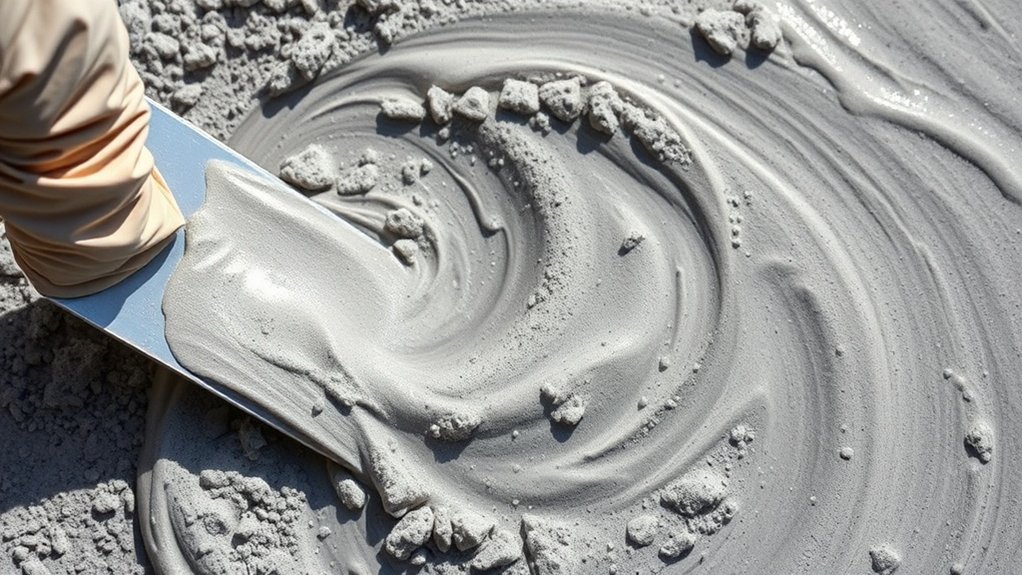
To achieve optimal workability in concrete mix design, consider several key factors that influence the material’s flow and placement ease.
Water content and the water-cement ratio are crucial; increasing water improves workability but can lead to segregation if overdone.
The shape of aggregates also matters—smooth, rounded aggregates enhance workability, while angular ones increase friction.
Moreover, well-graded aggregates ensure a consistent mix by filling voids and reducing water demand.
Finally, chemical admixtures can further improve workability, helping maintain desired performance without sacrificing strength.
It’s vital to balance these elements for effective concrete application.
Impact of Temperature on Concrete Properties

The effects of temperature fluctuations on concrete properties are significant and can impact its performance in various conditions. It’s vital to understand how temperature affects concrete to ensure its durability.
Here are some key points to consider:
- Thermal expansion can cause cracking if materials have differing coefficients of expansion.
- High temperatures can reduce compressive strength, particularly beyond 400°C.
- Hydration heat may speed up strength gain but can lead to cracking if not properly managed.
- The type of aggregate used affects thermal behaviour and can influence strength loss when heated.
- The properties of fresh concrete may change, requiring more water and careful attention to slump loss.
Understanding these factors can help in making informed decisions during the concrete mixing and curing processes.
Frequently Asked Questions
How Does Humidity Affect the Curing Process of Concrete?
Humidity levels significantly influence the curing process of concrete. When humidity is high, it aids hydration, which is beneficial for the concrete. Conversely, low humidity can lead to rapid evaporation, increasing the risk of cracks and compromising the strength of the final structure. Therefore, it’s crucial to adapt your curing methods according to the humidity conditions. For instance, on a hot, dry day, covering the concrete with damp burlap or using curing compounds can help retain moisture.
What Are the Environmental Impacts of Cement Production?
Cement production has significant environmental drawbacks; it generates high levels of carbon emissions and consumes natural resources. By exploring alternative binders, we can reduce these impacts, ensuring that construction meets our needs without compromising ecological health. This shift could lead to more sustainable building practices, benefiting both the environment and future generations.
Can Recycled Materials Be Used in Cementitious Mixes?
Yes, recycled aggregates can be used in cementitious mixes. They provide a sustainable alternative that lowers material costs and reduces environmental impact. When properly incorporated and optimised in concrete mix designs, they can also enhance durability. For instance, crushed concrete from demolition projects can be reused in new builds, helping to minimise waste and conserve resources.
How Do Different Cement Types Affect Long-Term Performance?
Cement selection plays a vital role in the strength and durability of concrete. Ordinary Portland Cement provides quick strength, making it ideal for fast-paced projects. In contrast, Portland Pozzolana Cement offers superior long-term durability, helping structures withstand harsh environmental conditions. Choosing the right cement type is essential for ensuring the performance and longevity of your construction projects.
What Is the Significance of Shrinkage in Concrete Mixes?
Shrinkage in concrete mixes significantly affects durability and the likelihood of cracking. By grasping how shrinkage occurs and applying effective strategies to mitigate it, you can improve the performance and lifespan of structures. This ensures they can withstand environmental stresses and retain their structural integrity over time. For instance, using the right curing techniques can help reduce shrinkage and prevent cracks, ultimately leading to more reliable constructions.
Conclusion
Understanding cementitious properties is key to mastering concrete mix design. Each element—cement, water, aggregates, and admixtures—works together to influence the final performance. As you refine your mix, you’re not just creating a material but establishing a foundation for lasting structures. By recognising these relationships, you can enhance strength, durability, and workability, ensuring your concrete stands the test of time. Embrace this knowledge to elevate your projects effectively.

Crafting the ideal concrete mix involves precise ratios and techniques that can elevate your project—discover the secrets to achieving unmatched Read more

The choice of aggregate size in concrete mix design is crucial for strength and durability, but what hidden factors could Read more

Harness the power of aggregate gradation to optimize concrete strength, but what key techniques can elevate your mix even further? Read more