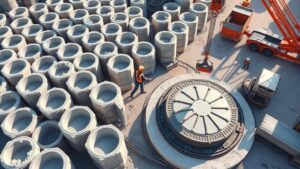
Ultra-high-performance concrete (UHPC) is vital for future projects thanks to its outstanding strength, durability, and efficiency. Its low permeability and unique pore structure make it resistant to environmental damage, which means less maintenance over time. This material allows for thinner and lighter structures, facilitating larger spans and faster construction. Additionally, UHPC supports sustainability by reducing CO2 emissions and promoting resource-efficient practices. As technology advances, the applications of UHPC in modern construction will only expand, making it an exciting option for builders.
Key Takeaways
- UHPC’s outstanding compressive strength enables innovative designs with larger spans and slimmer structural elements in future construction projects.
- Its durability and low permeability significantly cut maintenance needs, promoting long-term sustainability and lowering lifecycle costs for infrastructure.
- Using UHPC can speed up construction timelines, allowing for quicker project completion and faster returns on investment.
- Incorporating UHPC helps reduce carbon emissions and environmental impact, supporting sustainable building practices.
- Its unique properties improve seismic resilience and load distribution, making it ideal for essential infrastructure projects.
Understanding Ultra-High-Performance Concrete (UHPC)

Ultra-High-Performance Concrete (UHPC) is a remarkable leap in concrete technology, tailored to meet the rigorous demands of contemporary construction.
Its composition typically consists of 75-80% standard materials such as Portland cement, fine sand, and water, with the remaining 20-25% made up of specialised components like steel fibres and high-range water reducers (HRWR).
Crucially, UHPC has a low water content, around 9% by weight, which significantly boosts its strength and durability. To achieve these benefits, effective mixing techniques are crucial, involving an optimal mix of ingredients and a water-to-cement ratio usually below 0.25. These factors lead to UHPC’s exceptional compressive and tensile strengths, making it perfect for demanding infrastructure projects and innovative architectural designs.
Additionally, UHPC boasts a projected 100-year lifespan, which enhances its appeal for long-term infrastructure solutions.
Key Advantages of UHPC in Construction
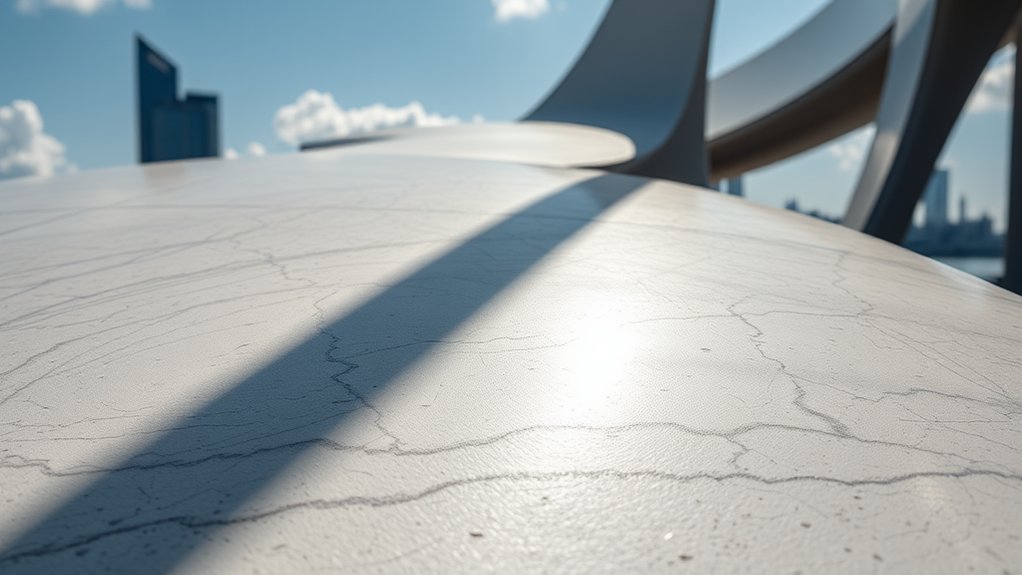
Here are four key benefits of UHPC:
- Cost Efficiency: Although the initial investment is higher, the lifecycle savings from reduced material usage and maintenance can be substantial.
- Structural Strength: UHPC’s exceptional properties allow for larger spans and slimmer elements, paving the way for innovative designs.
- Durability: With outstanding resistance to wear and environmental factors, UHPC structures can last over a century, significantly lowering repair needs.
- Accelerated Construction: Quick curing and the potential for prefabrication speed up construction timelines, minimising labour costs and disruptions.
Additionally, UHPC’s low permeability contributes to its durability by resisting moisture and chemical ingress, further enhancing the longevity of structures.
These advantages highlight how UHPC not only enhances performance but also transforms construction methodologies.
Applications of UHPC in Modern Infrastructure

In modern infrastructure, UHPC is transforming bridge and road design with its remarkable load-bearing capacity and durability. Its application in high-rise buildings also boosts structural performance and reduces maintenance requirements. As you examine these uses, think about how UHPC’s distinct properties lead to safer and more resilient structures. The compressive strength of UHPC often exceeds 150 MPa, further enhancing its capability to support demanding infrastructure projects.
Bridge and Highway Design
As engineers and designers aim to improve the safety and durability of infrastructure, the use of Ultra-High-Performance Concrete (UHPC) in bridge and highway projects has become a game changer.
UHPC’s distinct properties significantly enhance both the appearance of bridges and the safety of roads. Here are some key applications:
- Long-lasting Bridge Decks: UHPC creates more durable bridge deck panels, which reduces the need for maintenance.
- Improved Joint Systems: Field-cast UHPC joints enhance load distribution and lessen the risk of cracking.
- Seismic Retrofitting: Its exceptional strength bolsters critical structural components, ensuring safety in seismic events.
- Faster Construction: Quick strength development allows for swifter project completion, minimising delays for road users.
Using UHPC not only boosts performance but also improves the aesthetic value of infrastructure, making it a vital material for contemporary design.
High-Rise Building Applications
Ultra-High-Performance Concrete (UHPC) is transforming high-rise building applications with its exceptional structural efficiency and design flexibility. Its increased strength means that less reinforcement is required, enabling architects to create innovative designs that enhance the aesthetics of high-rise structures. This results in longer spans and distinctive architectural features that make a statement.
| Feature | Benefit |
|---|---|
| Structural Efficiency | Thinner elements, less material |
| Design Flexibility | Complex shapes, open interiors |
| Durability | Lifespan over 100 years |
In practical terms, UHPC allows for lighter, more elegant structures, while also providing the durability needed to withstand the test of time. Moreover, its superior strength and durability ensures that these structures can endure extreme conditions, significantly contributing to the long-term safety and integrity of modern infrastructure.
Economic Benefits of Using UHPC
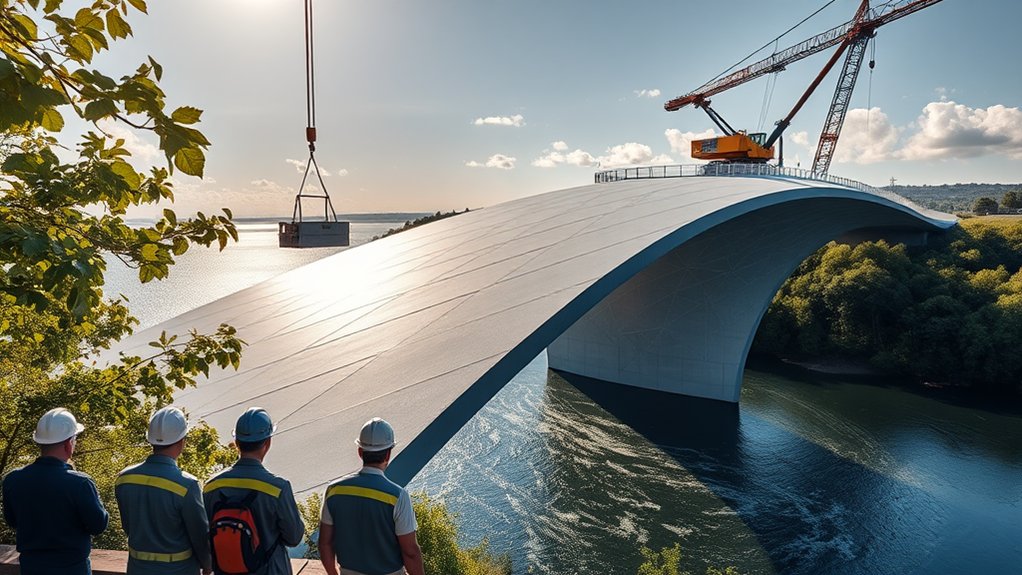
The economic benefits of using Ultra-High Performance Concrete (UHPC) are substantial, making it an attractive option for contemporary construction projects.
Here are some key advantages:
- Cost Savings: The exceptional durability of UHPC translates to lower maintenance costs over time.
- Material Efficiency: Thinner structures reduce material usage, cutting down on expenses.
- Labour Savings: With fewer materials and less reinforcement required, labour costs are significantly lowered.
- Quicker Construction: The enhanced strength of UHPC speeds up project completion, allowing for faster returns on investment.
Innovations and Future Trends in UHPC Technology
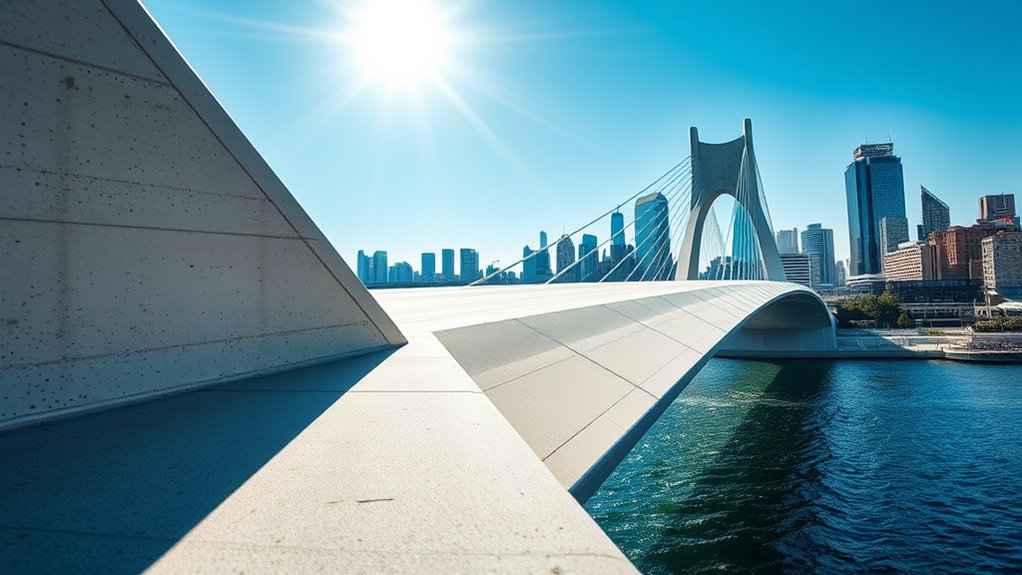
Innovations in UHPC (Ultra-High-Performance Concrete) technology are ushering in a new era for construction, prioritising efficiency and durability.
Spray-on UHPC systems are transforming repair methods, enabling engineers to apply UHPC swiftly to existing structures such as bridges and walls. This technique enhances the durability of standard concrete by creating protective layers, significantly reducing permeability.
Looking ahead, we anticipate a greater integration of UHPC with advanced materials to develop composite structures that optimise performance.
With ongoing improvements in spray technology, the efficiency of these applications is set to rise. Moreover, UHPC’s remarkable strength and resistance to freeze-thaw cycles make it an increasingly popular choice for infrastructure projects, ensuring longevity and reliability across various climates.
Sustainability and Environmental Impact of UHPC
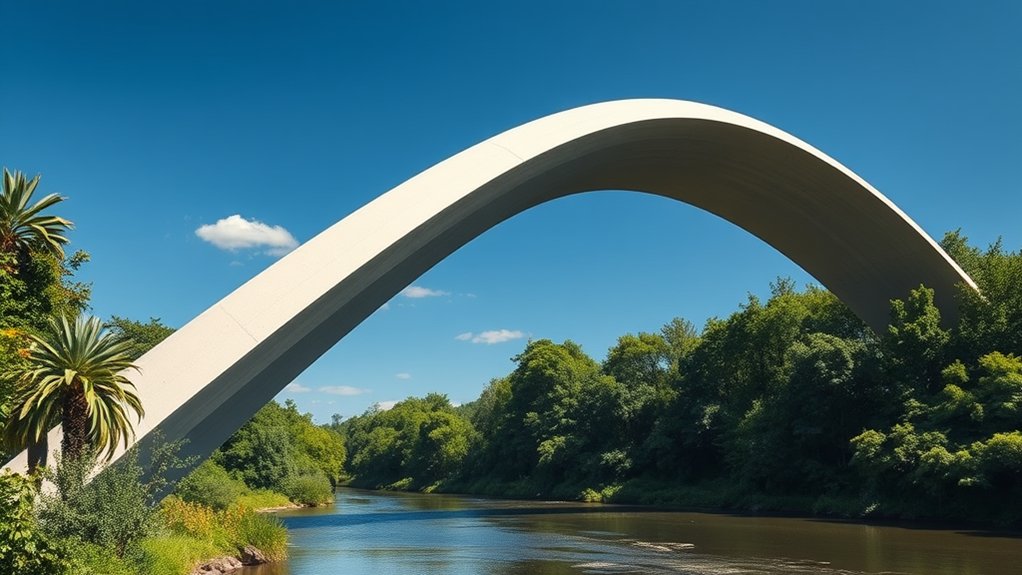
When looking at the sustainability of Ultra-High-Performance Concrete (UHPC), it’s clear that it uses resources more efficiently than traditional concrete, leading to less material waste.
Its durability means structures require less maintenance, which not only extends their lifespan but also reduces the environmental impact linked to repairs.
This makes UHPC a strong candidate for sustainable construction in the future. Furthermore, the use of supplementary cementitious materials in UHPC formulations can significantly lower CO2 emissions associated with traditional cement production.
Resource Efficiency Benefits
As the push for sustainable construction practices increases, Ultra-High-Performance Concrete (UHPC) shines with its resource efficiency benefits, significantly lessening environmental impact.
Here are some key advantages:
- Reduced Permeability: The dense microstructure of UHPC limits environmental degradation and enhances service life.
- Material Use: By eliminating coarse aggregates and minimising quantities, UHPC reduces the impact of material extraction and consumption.
- Lower Emissions: UHPC produces 22.8% less CO2 than steel structures, which helps to shrink the carbon footprint.
- Waste Reduction: Its superior durability results in less construction and demolition waste, allowing for more efficient resource use.
Reduced Maintenance Requirements
Ultra-High-Performance Concrete (UHPC) significantly cuts down maintenance needs, improving the sustainability and environmental impact of infrastructure projects.
Its unique pore structure limits water penetration and environmental damage, which reduces the risk of deterioration. This durability means fewer maintenance cycles, making your upkeep strategies more efficient and enhancing lifecycle assessments.
UHPC boasts high compressive strength and strain hardening properties, which help prevent cracking and spalling, further lessening the need for repairs.
Its fireproof and impact-resistant qualities also extend its service life, resulting in lower emissions linked to maintenance activities.
Frequently Asked Questions
How Does UHPC Compare to Traditional Concrete in Terms of Cost?
When conducting a cost analysis, UHPC generally costs significantly more than traditional concrete. However, its efficiency and durability can help balance out the initial investment, resulting in long-term savings on maintenance and overall project expenses. For instance, while a traditional concrete structure may require frequent repairs, a UHPC structure could last much longer without the need for extensive upkeep. This can be particularly advantageous for large projects or structures exposed to harsh conditions.
What Are the Limitations of Using UHPC in Construction?
Although UHPC boasts remarkable strength, it presents durability and workability challenges. Focusing solely on its strength can result in brittleness. It’s crucial to find a balance between performance features for successful application in construction projects. For instance, while a UHPC beam can support heavy loads, if it lacks flexibility, it may crack under stress.
Can UHPC Be Recycled After Its Lifespan?
Yes, UHPC can be recycled after its lifespan. Using specialised processes helps promote sustainable building practices, reduce waste, and conserve resources. However, it’s important to adjust the mix design and prepare aggregates properly for effective reuse. For example, crushed UHPC can be used as aggregate in new concrete, contributing to a circular economy in construction.
What Certifications or Standards Apply to UHPC Materials?
When building a bridge with Ultra-High Performance Concrete (UHPC), it’s essential to obtain ASTM C1856 certifications. These certifications ensure that the materials meet established performance standards and specifications. By adhering to these standards, you can ensure the strength and durability of your infrastructure projects, providing safe and reliable structures for the community.
How Does Temperature Affect the Curing Process of UHPC?
Temperature has a significant impact on the curing process of UHPC (Ultra-High Performance Concrete). To achieve optimal strength and durability, it’s essential to use effective curing methods and maintain precise temperature control. This ensures the microstructure develops correctly and reduces the risk of issues during hydration. For instance, higher temperatures can accelerate the curing process but may lead to cracking if not managed properly. Conversely, low temperatures can slow down hydration, delaying strength gain. Understanding and managing these temperature effects is crucial for successful UHPC applications.
Conclusion
In summary, ultra-high-performance concrete (UHPC) presents an exciting opportunity for modern construction projects, enhancing both performance and durability. Its remarkable properties can significantly boost structural strength, simplify building processes, and reduce long-term maintenance costs. As advancements in UHPC technology continue, it’s important to consider its role in promoting sustainable infrastructure. Ultimately, adopting UHPC could lead to meaningful improvements in construction practices, ensuring robust and responsible development for future generations.

Key advancements in concrete technology are reshaping construction; discover how innovations like self-healing properties and 3D printing are revolutionizing the Read more

In exploring the historical milestone of Portland cement, discover how this innovation transformed construction and reshaped urban landscapes forever. What Read more

Mastering Ultra-High-Performance Concrete (UHPC) reveals groundbreaking advantages in construction, but what secrets lie behind its remarkable strength and versatility?