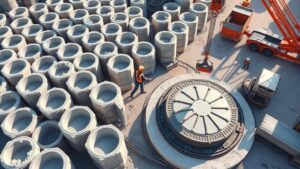
Ultra-High-Performance Concrete (UHPC) is transforming the construction industry with compressive strengths between 150 MPa and 210 MPa. This advanced material offers exceptional durability, low permeability, and impressive tensile strength, making it perfect for demanding applications. Its production methods not only improve material properties but also reduce carbon footprints and water usage—a significant plus for the environment. With versatile uses in bridge construction and high-rise buildings, UHPC is paving the way for the future of construction. Explore more about its technology and upcoming innovations.
Key Takeaways
- UHPC boasts impressive compressive strengths ranging from 150 MPa to 210 MPa, far exceeding that of traditional concrete.
- Its low permeability and durability ensure it performs well in demanding environments.
- Advanced mixing techniques and specialised additives enhance the mechanical properties of UHPC.
- Being lightweight and featuring quicker curing times, UHPC reduces construction time and labour costs, proving to be a cost-effective solution in the long run.
- Innovations like self-healing technologies and sustainable mixes make UHPC an attractive option for future construction projects.
Overview of Ultra-High-Performance Concrete
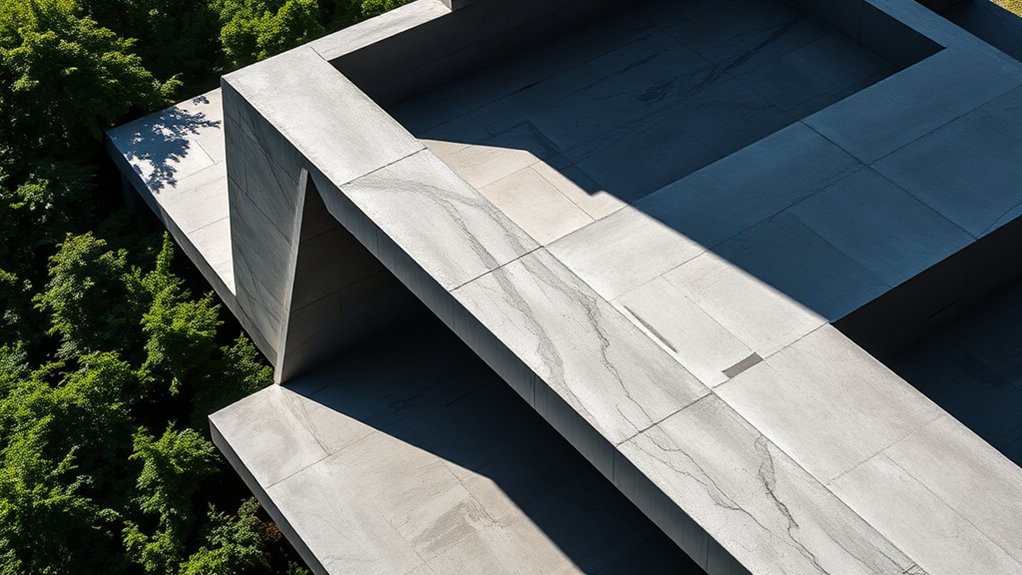
As engineering requirements change, ultra-high-performance concrete (UHPC) is proving to be a game-changer, raising the bar for concrete materials.
Developed in the late 1980s, UHPC boasts impressive compressive strengths between 150 MPa and 210 MPa, and tensile strengths exceeding 5 MPa, making it perfect for demanding applications. Its compressive strength of 18,000 to 35,000 psi is significantly higher than that of traditional concrete, further showcasing its capabilities. Additionally, UHPC’s low permeability enhances durability, while its ability to harden after cracking ensures long-lasting performance.
UHPC is widely used in bridge construction and highway infrastructure, effectively overcoming the limitations of traditional concrete.
Beyond its mechanical advantages, UHPC is more sustainable, leading to reduced maintenance and lower environmental impact.
This innovative material is vital for modern infrastructure, delivering enhanced performance and efficiency in construction projects.
Key Components and Materials

Understanding the key components and materials of ultra-high-performance concrete (UHPC) is crucial for engineers and architects looking to utilise its exceptional properties.
The choice of cement, such as Ordinary Portland Cement (OPC) or Ground Granulated Blast Furnace Slag (GGBS), plays a significant role in enhancing durability and strength. For aggregates, fine silica sand and ground quartz are preferred to improve packing density and flowability. Nonproprietary UHPC consists of a specific mix of these materials for optimal performance. Additionally, the projected lifespan of UHPC is around 100 years, making it a highly appealing choice for long-term infrastructure projects.
Admixtures, particularly high-range water-reducing agents, are essential for achieving low water-cement ratios while ensuring workability. Incorporating fibres, like short steel and synthetic options, can significantly enhance tensile strength and ductility.
Moreover, the push for sustainability has prompted the investigation of alkali-activated cements as eco-friendly alternatives, helping to ensure that UHPC meets contemporary engineering needs without harming the environment.
Exceptional Mechanical Properties
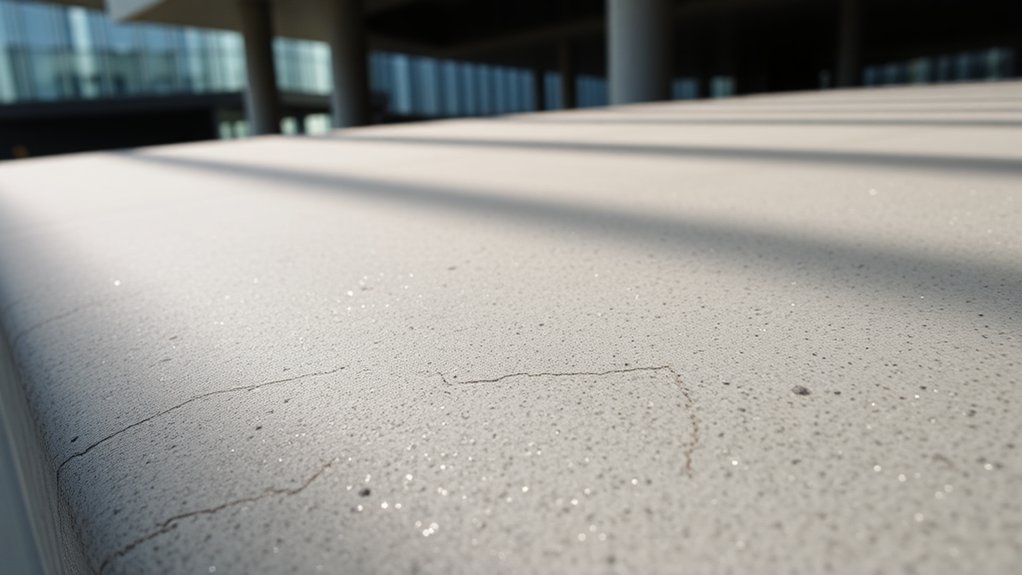
Ultra-high-performance concrete (UHPC) boasts outstanding mechanical properties that far exceed those of standard concrete. Here’s what makes it stand out:
- Compressive strength: With strengths over 120 MPa, and some mixes reaching up to 193 MPa, UHPC can handle extremely heavy loads.
- Tensile strength: Its tensile strength is around 9.0 MPa, nearly double that of traditional concrete, largely due to fibre reinforcement, which enhances ductility and crack resistance.
- Durability: UHPC shows minimal long-term creep and shrinkage, maintaining its structural integrity even under constant loads. This durability is further enhanced by the inclusion of high-reactivity metakaolin, which contributes to the overall performance of the concrete.
These properties, along with a high elastic modulus and excellent freeze-thaw resistance, make UHPC an ideal choice for challenging applications, ensuring durability and reliability in various conditions.
Efficient Production and Manufacturing Techniques
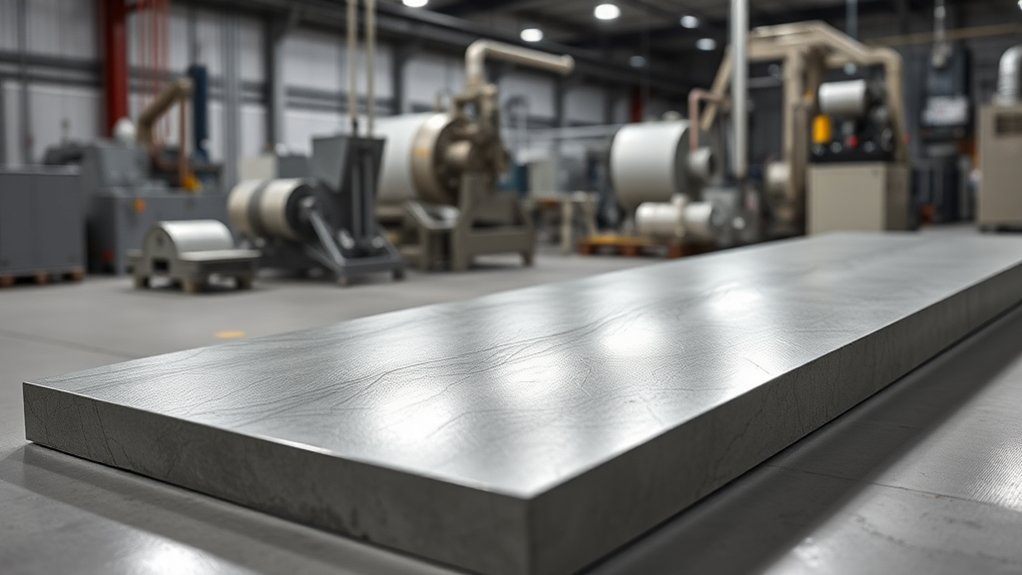
Efficient production and manufacturing techniques are crucial for optimising the performance and cost-effectiveness of ultra-high-performance concrete (UHPC).
To enhance production efficiency, the mix design should include key ingredients such as cement, silica fume, and a low water-to-binder ratio, which contribute to its high strength.
Employing advanced manufacturing tools like high-energy mixers and extending mixing times can improve material properties while controlling temperature.
It’s also important to use specialised additives, such as high-performance water-reducing agents and fibres, to enhance flowability and tensile strength.
Regular quality control through standard testing methods, including assessments of compressive and flexural strength, ensures that UHPC meets strict performance standards.
Versatile Applications and Uses
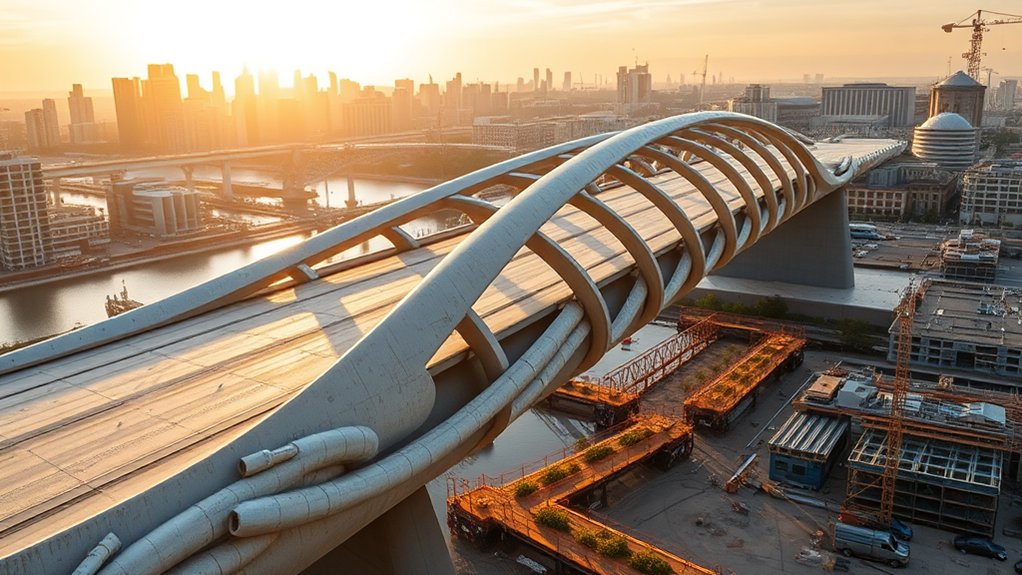
Ultra-high-performance concrete (UHPC) has a significant impact on bridge construction, high-rise buildings, and infrastructure repairs.
It improves structural integrity and longevity while simplifying the construction process.
Its versatility allows for creative solutions that tackle the challenges of modern engineering effectively.
Bridge Construction Innovations
As bridge construction advances, innovations such as Ultra-High-Performance Concrete (UHPC) are changing the way engineers approach design and assembly.
This cutting-edge material enhances bridge design and significantly improves construction efficiency by facilitating robust connections between precast elements, making on-site assembly simpler.
Here’s what you can expect:
- Reduced complexity with strong, durable joints that limit cracking.
- Quick assembly in fast-track bridge projects, thanks to UHPC’s high early strength.
- Enhanced durability and lifespan in deck panel connections, as demonstrated in key projects. Additionally, the use of supplementary cementitious materials in UHPC formulations contributes to its exceptional mechanical properties and environmental benefits.
High-Rise Building Solutions
Innovations in bridge construction, such as Ultra-High-Performance Concrete (UHPC), are transforming high-rise building solutions.
With its impressive compressive strength and flexibility, UHPC enables architects to design striking high-rise structures with thinner, sculptural elements that enhance visual appeal while ensuring durability.
For example, using UHPC allows for larger clear spans and uninterrupted interior spaces, catering to diverse tenant needs and supporting adaptive reuse.
This design flexibility not only maximises usability but also contributes to a more dynamic urban environment.
Moreover, UHPC’s high resilience and lower maintenance requirements extend the lifespan of high-rises, making them safer and more cost-effective over time.
Infrastructure Repair Advancements
While traditional concrete has been reliable for many years, Ultra-High-Performance Concrete (UHPC) is revolutionising infrastructure repair with its versatile applications.
This advanced material significantly enhances the longevity of structures through innovative repair techniques. Its dense composition reduces permeability and increases resistance to environmental damage, making it ideal for challenging conditions.
- Spray-on UHPC systems enable quick application for walls and pipes.
- Thin-bonded overlays are designed to endure heavy traffic, extending service life.
- Field-cast UHPC facilitates efficient repairs and closures in prefabricated systems.
Sustainability and Environmental Impact
Sustainability and environmental impact are key factors when assessing Ultra-High-Performance Concrete (UHPC) in contemporary construction. Although UHPC has a higher initial environmental footprint due to the production of cement and steel fibres, its long-term advantages often compensate for these initial costs. For instance, UHPC can reduce carbon emissions by approximately 14% and water usage by up to 43%.
| Aspect | Benefit | Impact |
|---|---|---|
| Carbon Footprint | 14% reduction compared to standard | Lower emissions over its lifespan |
| Material Efficiency | Reduced material usage | Enhances sustainability |
| Long-term Durability | Extended lifespan | Minimises maintenance needs |
| Water Footprint | 43% reduction | Improved resource efficiency |
| Innovative Binders | Use of alkali-activated materials | Overall lower environmental impact |
Conducting thorough environmental assessments is vital for maximising the sustainability of UHPC.
Benefits of Fiber Reinforcement
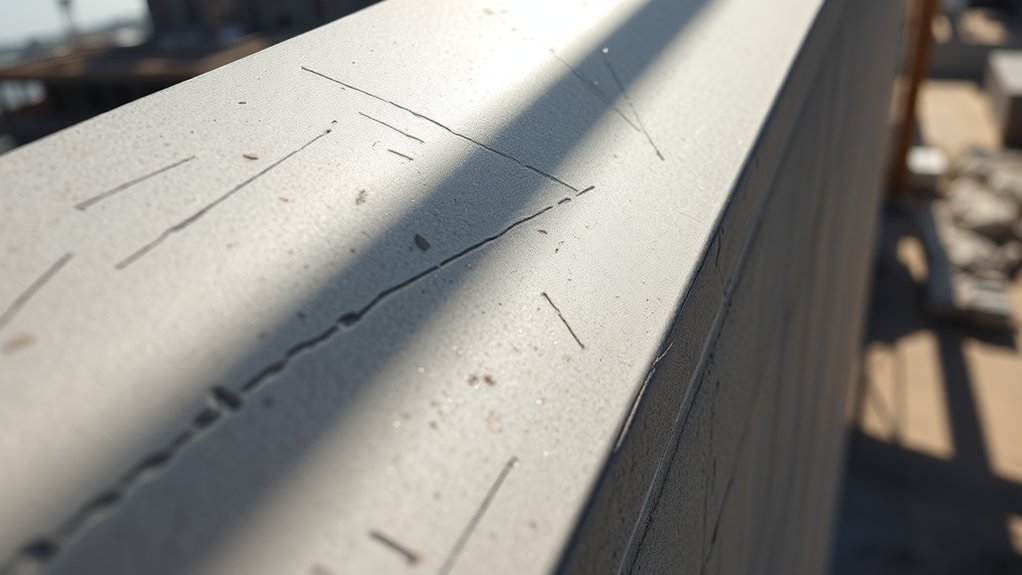
Fiber reinforcement significantly improves the mechanical properties of Ultra-High-Performance Concrete (UHPC), making it essential for contemporary construction.
By using different types of fibres, you gain enhanced tensile strength and ductility, crucial for high-performance applications.
- Improved Structural Integrity: Fibres create a strong matrix that reduces the likelihood of cracking and deformation.
- Material Efficiency: Optimising fibre use can lower material consumption while maintaining strength.
- Flexible Designs: The strength-to-weight ratio of fibre-reinforced UHPC allows for the creation of complex shapes.
With fibre reinforcement, UHPC offers exceptional bending capacity, shear resistance, and impact resistance, making it ideal for demanding structural applications.
Comparison With Traditional Concrete
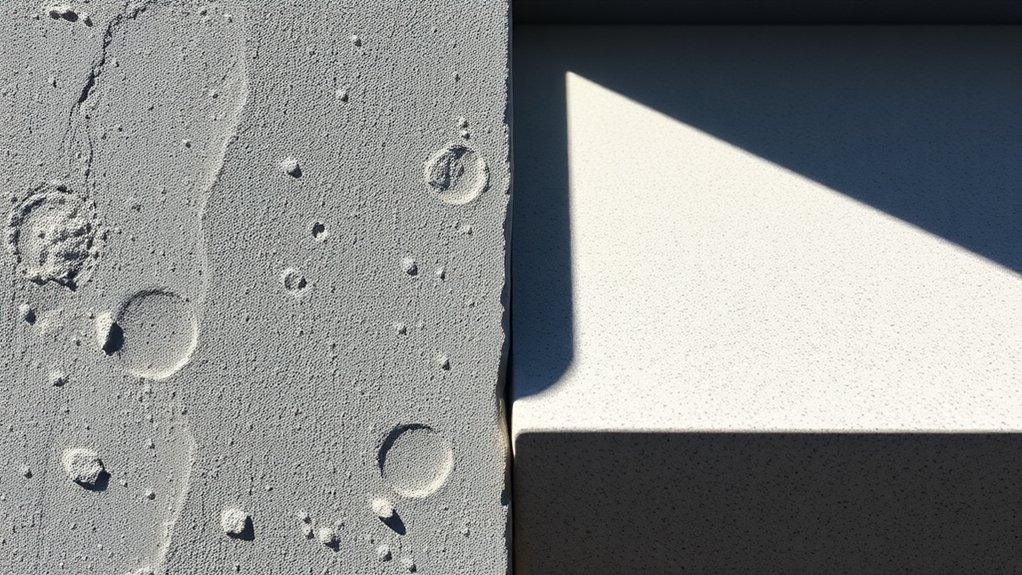
When comparing ultra-high-performance concrete (UHPC) to traditional concrete, you’ll see marked differences in strength, durability, and material make-up.
UHPC boasts much higher compressive and tensile strengths, allowing for innovative designs and improved resistance to environmental conditions. For example, structures made from UHPC can withstand harsher weather without deteriorating.
Moreover, considering lifecycle costs, UHPC’s durability can result in lower overall expenses, despite a higher initial investment.
Strength and Durability Differences
Ultra-High-Performance Concrete (UHPC) significantly outperforms traditional concrete in strength and durability, making it perfect for demanding applications.
In terms of strength, UHPC achieves a compressive strength of over 150 MPa (21.7 ksi), which is much higher than traditional concrete’s 20 to 35 MPa (3,000 to 5,000 psi). Its tensile strength is also impressive at 9.7 MPa (1,400 psi), well above traditional concrete’s 2.8 to 4.8 MPa (400-700 psi).
- The low water-to-binder ratio of UHPC enhances its durability.
- Its unique pore structure reduces maintenance requirements.
- The high tensile strength helps prevent cracking, ensuring lasting structural integrity.
These characteristics not only improve performance but also lessen environmental impact, making UHPC a revolutionary choice in construction.
Material Composition Variations
Traditional concrete relies on a mix of coarse and fine aggregates, but ultra-high-performance concrete (UHPC) is different.
It uses only fine, well-graded quartz sands and ultra-fine materials like silica fume, achieving a particle packing density of over 85%. This dense structure significantly reduces porosity, unlike traditional concrete, which typically has a packing density of 60–70%.
With a higher binder content and specialised superplasticisers, UHPC maintains an extremely low water-to-binder ratio, resulting in outstanding strength and durability.
Plus, the inclusion of high-strength fibres boosts tensile strength and crack resistance. These features make UHPC a far better option for demanding projects compared to traditional concrete.
Cost and Lifecycle Comparison
Although Ultra-High Performance Concrete (UHPC) offers exceptional strength and durability, it comes at a significantly higher cost than traditional concrete, ranging from three to twenty times more per cubic metre.
While the initial price might be daunting, a lifecycle analysis shows it can be cost-effective in the long run.
- Its remarkable durability cuts down on long-term maintenance and repair expenses.
- Faster curing times and lighter weight reduce construction duration and labour costs.
- Sleeker designs require less material, supporting sustainability efforts.
In the end, the higher upfront costs of UHPC are often offset by its longevity and reduced need for repairs, making it a smart choice for critical infrastructure.
When you consider the overall lifecycle costs, the long-term advantages of UHPC often outweigh its initial financial impact.
Innovations in UHPC Technology

Advancements in concrete technology are transforming the construction industry, particularly through innovations in ultra-high-performance concrete (UHPC). The use of smart materials and nano additives is significantly enhancing UHPC’s strength and durability.
For instance, these nano additives refine the concrete’s microstructure, leading to lower porosity and greater resistance to environmental damage.
Moreover, the integration of self-healing technologies in UHPC allows the material to automatically mend cracks, potentially extending its lifespan.
Researchers are also working on sustainable UHPC mixes that reduce carbon emissions while maintaining high performance.
As these developments progress, UHPC is increasingly addressing contemporary engineering challenges, paving the way for more efficient, resilient, and environmentally friendly construction practices.
This represents a notable advancement in material science and engineering.
Case Studies in UHPC Implementation
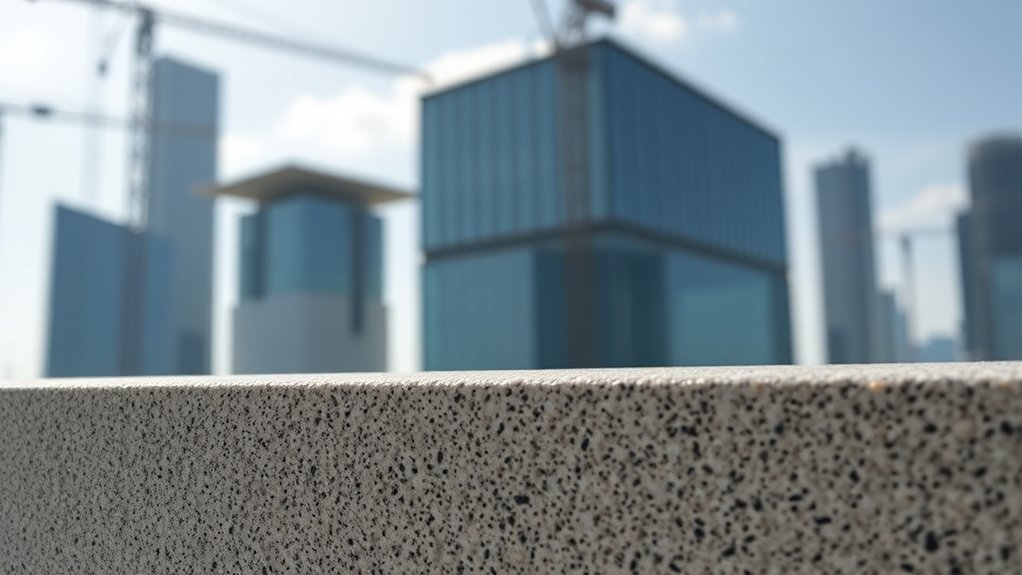
Case studies on the use of ultra-high-performance concrete (UHPC) demonstrate its significant impact on modern infrastructure projects.
Here are some key applications:
- Bridges: Redesigning bridges with UHPC can cut concrete volume by up to 40%, leading to greater efficiency.
- Retrofitting: UHPC is effective in preserving older structures, maintaining their integrity while minimising maintenance requirements.
- Durability: With excellent resistance to freeze-thaw cycles and water penetration, UHPC greatly extends the lifespan of buildings and infrastructure.
These examples highlight the importance of life-cycle cost analysis in assessing UHPC’s value, alongside its environmental advantages.
Future Trends in Ultra-High-Performance Concrete
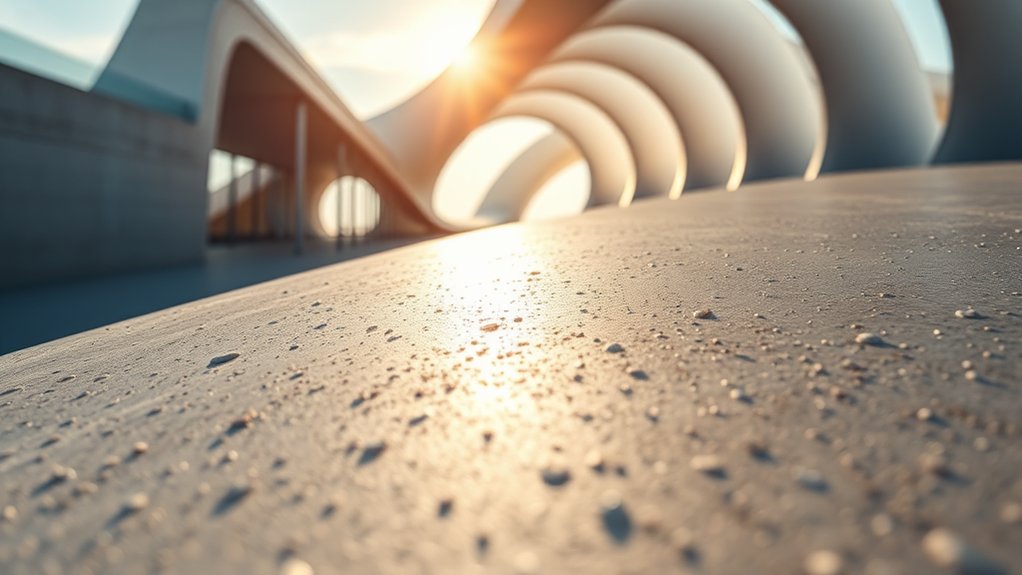
With the growing need for innovative construction materials, ultra-high-performance concrete (UHPC) is poised to revolutionise engineering and infrastructure. The market is expected to expand at a compound annual growth rate (CAGR) of 8.04%, with the Asia-Pacific region leading due to increased construction activities.
In emerging markets, UHPC’s design flexibility supports slender structures and striking architectural designs.
Future trends will concentrate on optimising material properties, aiming to reduce unit weight and cement content to boost sustainability. Advanced manufacturing methods like precision casting and prefabrication will enhance performance while lowering costs.
As applications broaden into urban infrastructure and challenging environments, UHPC’s mechanical strength and durability will be crucial in addressing the demands of modern engineering.
Frequently Asked Questions
How Does UHPC Perform in Extreme Weather Conditions?
In extreme weather conditions, UHPC demonstrates outstanding thermal resistance and freeze-thaw durability. Its high compressive strength and quick curing process ensure that structures can withstand harsh climates, reducing damage and prolonging their lifespan. For instance, bridges and pavements made from UHPC can better endure freezing temperatures and heavy rain, making them a reliable choice for infrastructure in challenging environments.
What Are the Common Challenges in UHPC Construction?
“Don’t put all your eggs in one basket.” In UHPC construction, various challenges can emerge, including mixing techniques, curing methods, high material costs, and labour demands, all of which complicate the process. For instance, ensuring proper curing is crucial for durability, but it can be tricky and time-consuming. Addressing these issues requires innovative solutions to achieve success in this specialised field.
Can UHPC Be Recycled After Use?
Yes, UHPC can be recycled, but there are some challenges. To improve its sustainability and extend its life cycle, better recycling methods are needed. These methods should tackle issues like the quality of fibres and aggregates to ensure that new mixtures perform well.
What Is the Typical Lifespan of UHPC Structures?
Durability is key in determining lifespan, and with Ultra-High Performance Concrete (UHPC), you can expect structures to last between 100 and 200 years. Its exceptional strength and resilience outshine standard concrete, making it a reliable choice for your engineering projects.
How Does UHPC Impact Construction Costs Compared to Traditional Concrete?
When you look at costs, UHPC seems pricier at first because of its material expenses. However, it offers savings through reduced maintenance needs and a longer lifespan. Over time, its durability can balance out those initial costs, making it a cost-effective choice for specific projects. For example, in bridge construction, UHPC can significantly reduce the frequency of repairs, ultimately saving money in the long run.
Conclusion
In conclusion, while traditional concrete has been reliable, Ultra-High-Performance Concrete (UHPC) is a game changer with its exceptional strength and durability. This innovative material not only overcomes the limitations of standard concrete but also enables new design possibilities in construction. As we look to the future, you’ll notice how combining traditional and modern technologies creates robust infrastructures that can endure both time and emerging challenges. Embrace this advancement.

Advancing construction techniques, Ultra-High-Performance Concrete (UHPC) promises unmatched durability and efficiency, but what groundbreaking innovations lie ahead?

In exploring the historical milestone of Portland cement, discover how this innovation transformed construction and reshaped urban landscapes forever. What Read more