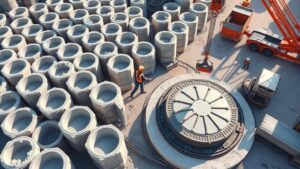
High-performance concrete (HPC) is specifically designed to provide exceptional strength and durability, often achieving compressive strength levels above 70 MPa. It incorporates advanced materials such as silica fume and low C3A cement to ensure low permeability and improved resistance to environmental factors. HPC is particularly suitable for demanding applications like bridges and tall buildings. Its durability results in reduced maintenance costs over time. By understanding its properties and uses, we can appreciate the significant benefits it offers for construction and infrastructure projects.
Key Takeaways
High-Performance Concrete (HPC) is designed for exceptional strength, durability, and performance, achieving over 70 MPa in compressive strength. Its low permeability and resistance to chemicals make it suitable for demanding environments, such as bridges and coastal structures.
Key ingredients include specialised cements, superplasticisers, and mineral admixtures like silica fume, which enhance strength and minimise porosity. HPC is particularly effective against freeze-thaw cycles and chloride penetration, ensuring long-lasting performance in tough conditions.
Although the initial investment is higher, HPC can lead to significant savings over time due to reduced maintenance and less frequent need for replacements.
Definition of High-Performance Concrete

High-performance concrete (HPC) is engineered to surpass standard concrete in terms of strength, durability, and overall performance, ensuring it meets strict design standards.
Typically, HPC achieves strengths exceeding 70 MPa and offers exceptional durability against environmental factors. It's made with specialised ingredients that enhance low permeability and resistance to chemical attacks, making it suitable for various structural applications. The incorporation of supplementary cementitious materials significantly contributes to the overall sustainability and performance of HPC.
Its improved workability during placement helps reduce problems like segregation. Consequently, HPC is ideal for projects that experience heavy traffic, marine structures, and high-rise buildings, where performance and longevity are essential. The distinctive properties of HPC ensure it can effectively withstand demanding conditions, including freeze-thaw resistance.
Key Components of High-Performance Concrete

When formulating high-performance concrete (HPC), selecting the right components is crucial for achieving optimal strength and durability.
Opt for low C3A cement, as it works effectively with superplasticisers. Ensure the water used is clean to aid proper mixing. Water-reducing admixtures can also be utilized to lower water content while maintaining fluidity.
For aggregates, consider both fine and coarse types; coarse aggregates help reduce water demand and enhance strength.
Incorporating silica fume or fly ash as supplementary cementitious materials can significantly improve compressive strength while reducing porosity. Additionally, choosing aggregates with appropriate gradation ensures a dense mix, minimising porosity and segregation. The compressive strength of HPC typically hovers around 60 MPa, making it suitable for demanding applications.
Essential Properties of High-Performance Concrete

The essential properties of high-performance concrete (HPC) are crucial for its use in demanding structural applications. HPC boasts a high modulus of elasticity, minimal creep and shrinkage, and improved resistance to freeze-thaw cycles and chloride ion penetration. Additionally, 4000 PSI ready mix concrete ensures optimal strength for industrial and commercial projects.
These features stem from carefully optimised concrete mixes, enabling HPC to endure harsh environmental conditions and mechanical wear. Its low permeability enhances durability, while additives like silica fume and slag cement improve resistance to acid and sulphate attacks. Furthermore, high-strength concrete can resist loads that normal-strength concrete cannot, making it an essential consideration in high-performance applications.
Consistent quality control during production is vital for ensuring reliable material properties, which are key to long-term structural integrity. Additionally, proper curing practices help to solidify these essential attributes, ensuring HPC meets strict performance standards across various applications.
Compressive Strength and Durability

Many types of concrete struggle under extreme conditions, but high-performance concrete (HPC) offers outstanding compressive strength and durability, making it ideal for demanding applications.
HPC typically boasts compressive strengths over 120 MPa (17,400 psi) and can reach up to 200 MPa (29,000 psi) in specialised mixes. Ultra-high performance concrete (UHPC) goes even further, with strengths ranging from 124 to 241 MPa (18,000 to 35,000 psi).
In terms of durability, HPC excels by resisting freeze-thaw cycles, chloride penetration, and abrasion.
Its low permeability improves resilience against chemical attacks, greatly ensuring long-lasting structural integrity. These qualities make HPC particularly suitable for high-traffic areas, bridges, and other critical infrastructure where strength and durability are essential.
Role of Admixtures in High-Performance Concrete

In high-performance concrete, admixtures are crucial for improving various properties.
For instance, chemical admixtures like superplasticisers enhance workability, making the concrete easier to place and finish.
Mineral admixtures, such as silica fume, significantly increase strength and durability.
Familiarity with these types of admixtures and their benefits is vital for optimising concrete performance in your projects.
Types of Admixtures
Admixtures are crucial for enhancing the performance of high-performance concrete (HPC). The choice of admixture can significantly affect how well the concrete meets specific project needs.
For example, chemical admixtures like air entrainers improve resistance to freeze-thaw cycles, while water-reducing agents help maintain workability with less water. Set retarders and accelerators allow for better control over setting times depending on the weather conditions.
Superplasticisers increase flowability without adding extra water, which is essential for achieving the right consistency.
Mineral admixtures, such as fly ash and silica fume, boost strength and durability by reacting with cement to improve bonding and lower permeability.
Understanding these admixtures helps tailor HPC for various uses, ensuring effective and sustainable construction solutions.
Benefits of Admixtures
When optimising high-performance concrete (HPC), admixtures play a vital role in enhancing its properties. They significantly improve strength, allowing HPC to bear heavy loads, and boost durability against environmental challenges like freeze-thaw cycles and chemical damage.
Enhanced workability makes placement and finishing easier, which is crucial for intricate designs. Admixtures also provide aesthetic flexibility, enabling custom textures and finishes.
Moreover, they help achieve low permeability and high compressive strength, which are essential for structures such as bridges and skyscrapers.
Workability and Its Importance
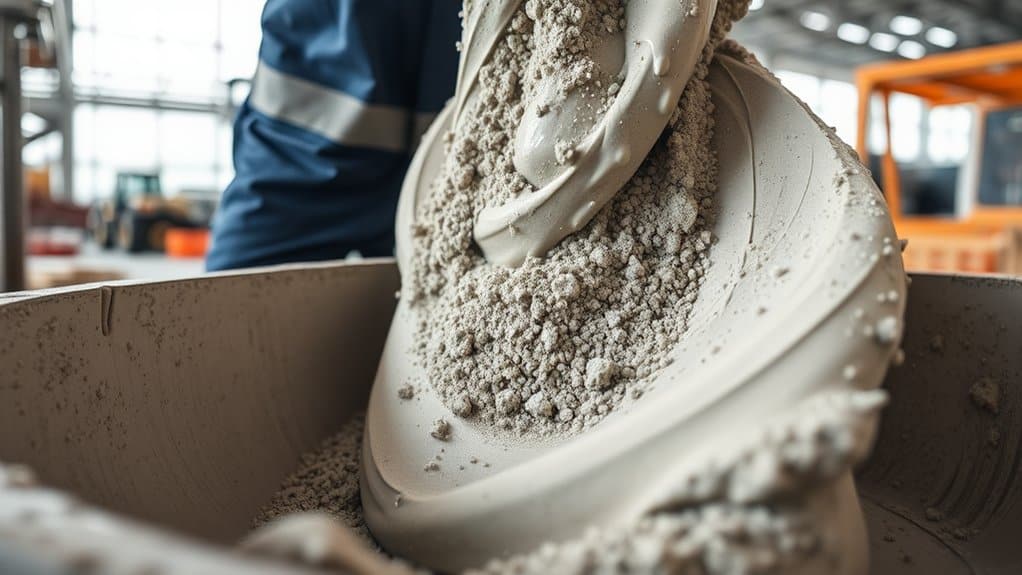
Workability is crucial for the successful completion of concrete projects, as it affects how easily the material can be mixed, placed, and finished. Understanding workability is vital, as it influences handling and ultimately impacts the concrete's strength and durability.
Key factors include the water-cement ratio, the characteristics of the aggregates, and the use of admixtures.
For example, using the Slump Test allows you to measure the consistency of the mix and make necessary adjustments. In projects with intricate shapes, adding superplasticisers can improve fluidity without sacrificing strength.
Striking the right balance ensures your high-performance concrete delivers optimal results while avoiding issues like segregation or honeycombing.
Freeze-Thaw Resistance in High-Performance Concrete

High-performance concrete must endure various environmental challenges, particularly freeze-thaw cycles in regions with harsh winters. To ensure durability, it's essential to optimise the air void system and design the mix correctly. Conducting freeze-thaw tests is crucial for assessing the concrete's ability to withstand microcrack formation and damage from ice.
| Factors | Impact on Freeze-Thaw Resistance |
|---|---|
| Air-Void System | Accommodates ice expansion, reducing potential damage |
| Aggregate Quality | Using frost-resistant aggregates helps prevent distress |
| Curing Conditions | Ensures adequate compressive strength before exposure |
Applications in Infrastructure Projects

As infrastructure projects increasingly require materials that can endure severe conditions and heavy loads, high-performance concrete (HPC) has become an essential solution. Its application in various settings is driven by performance metrics that ensure structural integrity and longevity.
Here are three key uses of HPC in infrastructure projects:
- Bridges: The high strength and durability of HPC make it perfect for load-bearing structures.
- Tall Buildings: HPC helps skyscrapers withstand significant environmental stresses.
- Pavements: Fast Track Concrete Paving technology employs HPC for quick reconstruction.
These innovations not only boost durability but also reduce maintenance needs, making HPC a crucial material in contemporary construction.
Its versatility allows for customised formulations, ensuring optimal performance across different projects.
Economic Considerations

When considering construction materials, the economic aspects of high-performance concrete (HPC) deserve careful thought.
While the initial costs are higher due to specialised ingredients and skilled labour, a detailed cost analysis shows that these upfront expenses can lead to substantial long-term savings.
For example, the durability of HPC means lower maintenance and replacement costs, improving the return on investment over time. Furthermore, smart designs and efficient use of materials can reduce overall volume and expenses.
As demand for HPC increases, innovations in the market are likely to drive prices down.
Environmental Benefits of High-Performance Concrete

High-performance concrete significantly lowers your project's carbon footprint by using supplementary materials like silica fume and slag, which reduce the dependence on Portland cement.
By incorporating recycled and waste materials, you support sustainable practices and improve the long-term durability of your structures.
These methods lead to a more environmentally friendly approach to construction, cutting down on resource use and minimising environmental impact.
Reduced Carbon Footprint
The urgent need to address climate change compels us to consider materials with lower carbon footprints, and high-performance concrete presents a viable solution. This type of concrete significantly cuts CO2 emissions through:
- Lifecycle Analysis: Research shows that replacing standard concrete with high-strength alternatives can lead to substantial reductions in greenhouse gases.
- Material Efficiency: High-performance concrete achieves structural integrity with less material, which directly decreases emissions from production.
- Alternative Binders: Incorporating materials like alkali-activated substances can boost carbon capture and enhance environmental performance.
Although energy consumption may differ, the benefits of high-performance concrete in reducing emissions make it a vital component of sustainable construction, contributing to a more environmentally friendly future.
Sustainable Material Utilization
Addressing the environmental impacts of construction materials is crucial as the industry seeks sustainable solutions.
High-performance concrete (HPC) supports this aim by incorporating recycled materials, such as waste tyre rubber and industrial by-products. By using mineral admixtures, you can significantly reduce cement content, optimising the material lifecycle and conserving non-renewable resources.
Additionally, alternative binders like alkali-activated materials can lower raw material input by up to 38%, though it's important to manage the energy required for their production.
Efficient mixing and curing processes also minimise waste, improving resource use during concrete production.
These strategies not only enhance the environmental performance of HPC but also encourage innovative construction practices, leading to a more sustainable future.
Long-Term Durability Benefits
High-performance concrete (HPC) stands out for its long-term durability, making it an excellent choice for modern construction. Here are the key benefits:
- Environmental Resistance: HPC is resilient against moisture and temperature changes, ensuring that structures remain stable over time.
- Lower Maintenance Needs: Thanks to its low permeability and exceptional strength, HPC reduces the frequency of repairs. This allows for more effective maintenance planning.
- Cost-Effective Solution: By minimising repair costs, HPC is a financially sensible option over the long term.
Durability testing further highlights HPC's strong performance, making it a trusted choice for projects that prioritise longevity and reduced upkeep.
This not only enhances resource efficiency but also contributes to sustainable infrastructure development.
Challenges in Mixing and Placing

Mixing and placing high-performance concrete involves several challenges that can affect its strength and durability. Insufficient mixing time can lead to compromised structural integrity, while too much air can weaken the mix.
It's vital to use effective mixing methods and ensure high-quality materials, as poor materials can greatly hinder performance.
When placing concrete, using the right equipment is crucial to prevent segregation, and thorough compaction helps achieve the necessary density. Vibration tools can assist in evenly distributing aggregates, while proper surface finishing is important to avoid defects.
Additionally, monitoring temperature during mixing and curing is essential to maintain the desired properties of the concrete.
Tackling these challenges is key to ensuring the concrete performs well in various conditions.
Future Trends in High-Performance Concrete Technology
The advancement of high-performance concrete technology is essential for enhancing structural integrity and sustainability in construction.
Here are some key trends to watch:
- Smart Concrete: The incorporation of IoT sensors enables real-time monitoring and predictive maintenance, improving the longevity and safety of structures.
- Nanotechnology: The use of nanoparticles can significantly boost strength and resistance to environmental factors, optimising performance.
- Sustainable Innovations: The movement towards eco-friendly concrete formulations aims to lower carbon emissions by using recycled materials, promoting sustainability.
These innovations are set to transform the construction industry, resulting in stronger and more sustainable buildings.
Frequently Asked Questions
How Does High-Performance Concrete Differ From Traditional Concrete?
High-performance concrete significantly surpasses traditional concrete in terms of durability and strength. It boasts greater compressive strength and enhanced resistance to environmental factors, making it perfect for challenging applications. This means less maintenance over time, saving both effort and costs. For instance, it's commonly used in bridges and high-rise buildings where reliability is essential.
What Are the Common Misconceptions About High-Performance Concrete?
It's important to clear up misconceptions about high-performance concrete, particularly regarding its capabilities. Many believe that it's simply stronger than standard concrete, but this isn't the whole story. High-performance concrete offers improved durability, workability, and resistance to environmental factors, but these benefits come from specific material variations and tailored mixes.
For example, using supplementary cementitious materials can enhance performance, but they require careful testing to ensure the right balance. Misunderstanding these aspects can lead to problems like premature failures or insufficient strength in your projects. Always consider the unique requirements of your application to achieve the best results.
Can High-Performance Concrete Be Recycled After Use?
Yes, high-performance concrete can be recycled using advanced techniques. This not only reduces landfill waste but also improves quality, supporting sustainable building practices for the future. For example, crushed concrete can be reused as aggregate in new mixes, helping to conserve natural resources.
What Safety Measures Are Needed When Working With High-Performance Concrete?
When working with high-performance concrete, it is crucial to adhere to safety standards. Always wear the right protective gear, such as masks, gloves, goggles, and coveralls. For instance, dust masks are essential to prevent inhalation of fine particles, while gloves protect your skin from chemicals.
Additionally, maintain proper ergonomics by using tools designed to reduce strain and ensure your workspace is organised to prevent accidents. Regular maintenance of equipment is also key to avoiding malfunction and promoting safety on site.
How Does High-Performance Concrete Impact Construction Timelines?
High-performance concrete significantly improves construction efficiency, enabling shorter project timelines. Its quick curing and prefabrication options allow for faster completion, reducing the time spent on-site and minimising disruptions. This effectively streamlines construction schedules, making projects more manageable. For instance, using high-performance concrete can lead to completing a building's core structure weeks ahead of schedule, allowing other trades to begin work sooner.
Conclusion
High-performance concrete is a vital component in modern construction, combining durability with efficiency. Its impressive properties enhance structural integrity and support sustainable building practices. By using advanced formulations and admixtures, you're not just constructing buildings; you're ensuring they withstand the test of time and environmental changes. Consider its applications in bridges and high-rise buildings; high-performance concrete truly represents a cornerstone of contemporary engineering.

Learn about the diverse types of concrete used in construction and discover which mix can transform your next project.

For a long-lasting driveway that laughs in the face of the UK's unpredictable weather, the C20 concrete mix is your Read more

In the UK, you've got a a lot of lightweight concrete types to choose from, each with its unique perks. Read more