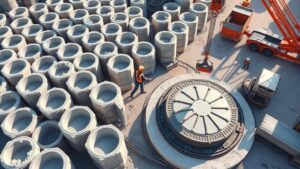
Using lightweight concrete in construction offers several advantages. It reduces structural loads, which enhances load-bearing capacity and cuts foundation costs. Its excellent thermal and sound insulation properties help maintain stable indoor temperatures and improve acoustic comfort. Furthermore, the lighter material boosts construction efficiency, simplifying logistics and reducing labour hours.
Lightweight concrete is also environmentally friendly, contributing to lower carbon footprints and greater durability. However, it's important to consider the challenges and innovations that are shaping its future in the construction industry.
Key Takeaways
- Lightweight concrete reduces structural load, enabling longer spans and smaller components. This enhances load-bearing capacity and lowers foundation costs.
- It offers excellent thermal and sound insulation, contributing to energy savings and improved acoustic comfort in homes.
- By lowering material weight, it streamlines construction processes, cutting transport costs and minimising the hours workers spend on site.
- It supports sustainability by having a lower carbon footprint, incorporating recycled aggregates, and requiring less maintenance due to its durability.
- However, it does require specialised knowledge for mixing and moisture management to ensure the structures perform effectively and last longer.
Reduced Structural Load
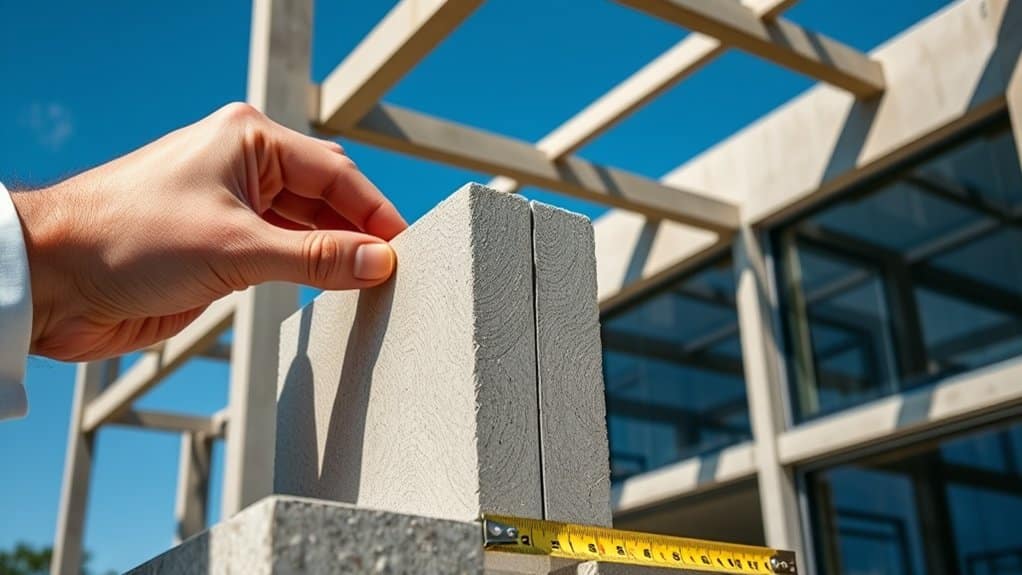
When selecting construction materials, lightweight concrete stands out for its ability to significantly reduce structural load. With a density of 90 to 120 pounds per cubic foot, it reduces dead weight, enabling longer spans and smaller structural components.
This reduction not only enhances the load-bearing capacity but also maintains structural integrity without sacrificing strength. Using lighter materials means smaller foundations, leading to considerable cost savings and decreased seismic impact due to lower inertia. Additionally, the low thermal conductivity of lightweight concrete aids in energy efficiency, further benefiting the overall project.
Moreover, the higher strength-to-weight ratio means less reinforcement is required, simplifying the construction process. Furthermore, its cost efficiency allows for innovative design options that can further optimize the overall construction project.
Thermal and Sound Insulation
As you consider the advantages of lightweight concrete, its outstanding thermal and sound insulation properties stand out in modern construction.
Lightweight concrete significantly improves thermal performance, with materials like perlite achieving thermal conductivity as low as 0.07-0.12 W/mK. This efficiency helps maintain stable indoor temperatures, leading to reduced heating and cooling expenses. Additionally, its excellent thermal insulation properties ensure energy cost savings for building owners. Moreover, lightweight concrete's enhanced thermal performance contributes to better overall building efficiency.
Furthermore, its sound absorption capabilities enhance acoustic comfort, making it particularly suitable for residential use, especially in multi-storey buildings. By incorporating specialised aggregates like expanded polystyrene or vermiculite, you can tailor insulation properties to fit specific project requirements.
Construction Efficiency
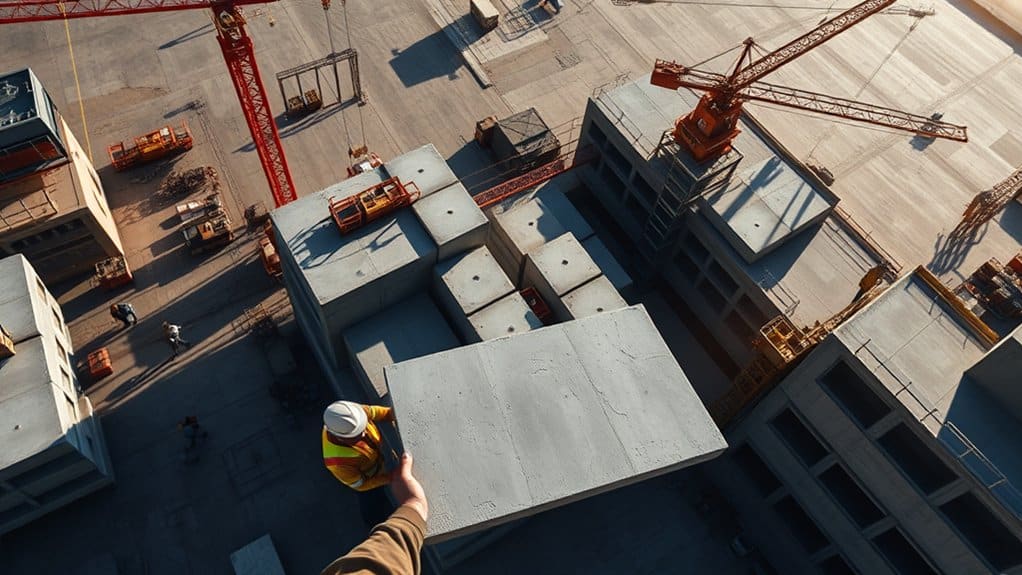
Lightweight concrete significantly boosts construction efficiency by simplifying processes and minimising material requirements. Its lower density results in reduced material usage and transport costs, which enhances logistics. Additionally, fewer worker hours are needed for placement due to its prefabrication capabilities, ultimately optimising labour efforts. The use of lightweight aggregates further contributes to the reduction in overall material weight, making it easier to handle during construction.
| Aspect | Benefits | Impact on Construction |
|---|---|---|
| Material Cost | Lower due to reduced density | Decreases overall expenditure |
| Transportation | Lighter weight eases logistics | Cuts down transport time |
| Labour Hours | Requires fewer hours | Improves workforce efficiency |
| Structural Load | Decreased dead loads | Boosts stability |
| Prefabrication | Simplifies lifting and placement | Streamlines on-site activities |
Environmental Benefits
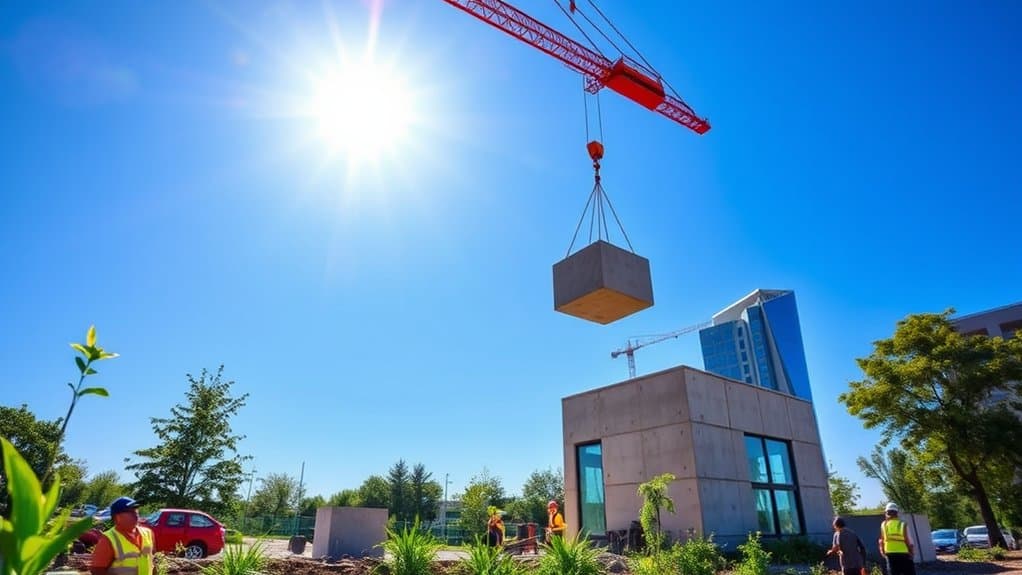
When considering the environmental benefits of lightweight concrete, its potential to lessen the ecological footprint of construction becomes clear.
With lower embodied carbon, it supports efforts to reduce carbon footprints by enabling more efficient structural designs that use less material. The reduced weight also leads to fewer transportation emissions, as you can carry more per load, further lowering environmental impact.
Incorporating recycled aggregates into lightweight concrete enhances sustainability by reusing waste and conserving resources. Additionally, its durability means a longer lifespan and reduced maintenance needs, which cuts down on the environmental costs associated with repairs and energy use. Furthermore, lightweight concrete types like LYTAG Lightweight Concrete are known for their versatility and sustainability, making them an excellent choice for eco-friendly construction practices.
Structural Performance
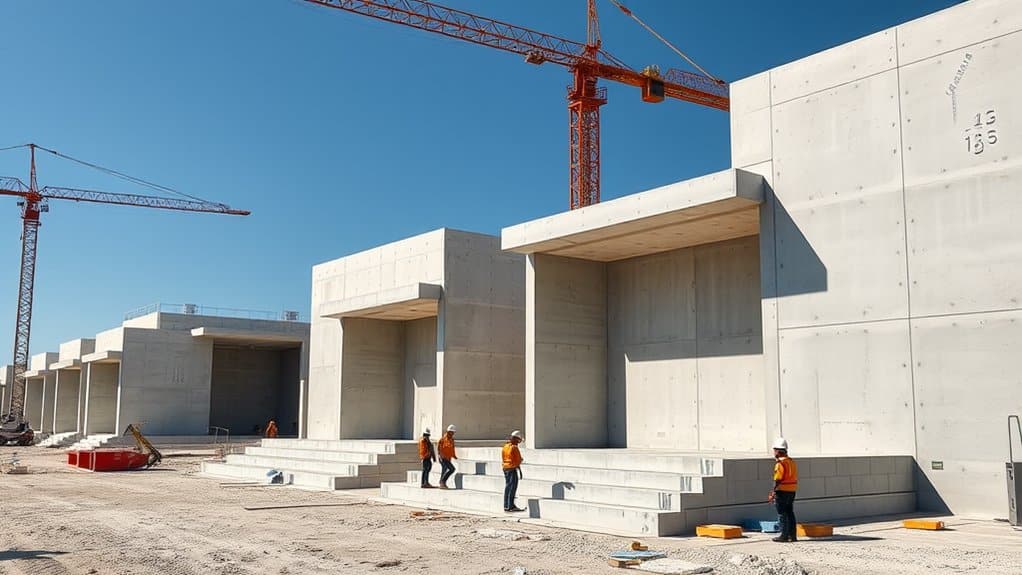
Traditional concrete has been the go-to choice in construction for years, but lightweight concrete offers notable benefits in structural performance that deserve attention. By lowering density, lightweight concrete reduces dead loads, enabling longer spans and requiring less foundation material. This efficient load distribution boosts seismic resilience, as lighter structures experience less seismic inertia.
Moreover, the material savings from reduced volume can lead to cost savings.
Lightweight concrete also boasts mechanical properties that include comparable compressive strength and improved flexibility, making it ideal for applications like high-rise buildings and bridge decks. Its durability is enhanced through internal curing and reduced shrinkage cracking, ensuring it stands the test of time.
Challenges and Limitations
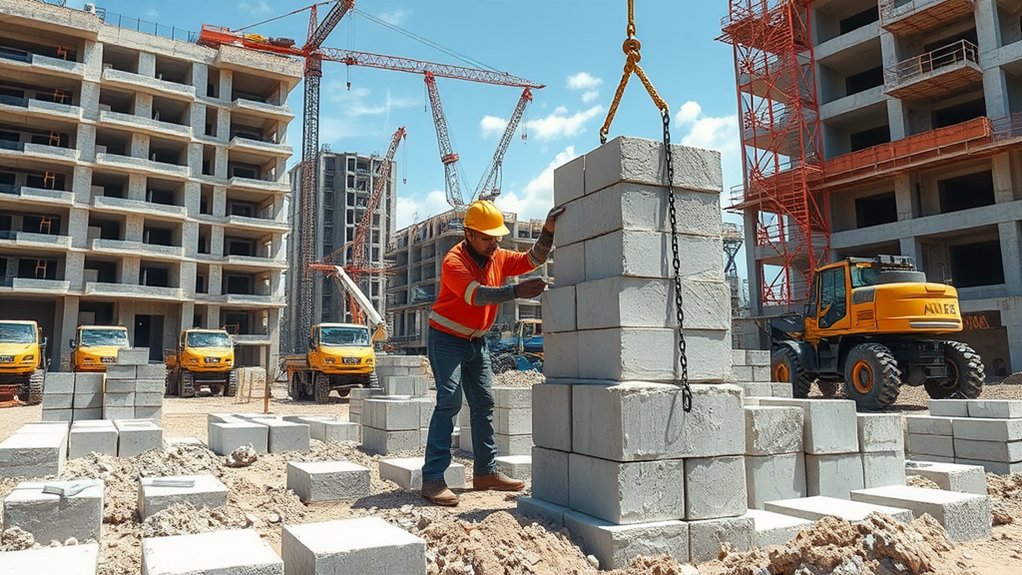
When working with lightweight concrete, you'll encounter notable moisture-related issues that can complicate your projects.
The longer curing time can cause delays and demands specialised mixing skills to ensure optimal performance.
Recognising these challenges is crucial for effective planning and execution in construction.
Moisture-Related Problems
Moisture-related issues in lightweight concrete present significant challenges that can disrupt construction timelines and inflate overall project costs. With moisture absorption ranging from 5 to 25% by weight, managing moisture and drying becomes complicated. This can lead to early deterioration of building elements, especially roofing and flooring.
| Issue | Impact | Mitigation Strategy |
|---|---|---|
| Excessive Moisture | Weakens roofing components | Use waterproof adhesives |
| Delayed Drying | Increases dehumidification costs | Limit water-cement ratio |
| Flooring Failures | Affects adhesive performance | Design for effective moisture management |
| Roofing System Challenges | Risks to new installations | Avoid lightweight concrete for roofs |
| Structural Deterioration | Compromises long-term performance | Optimise ambient conditions |
To ensure project success, addressing these issues through careful planning is crucial.
Extended Curing Time
Extended curing times present significant challenges when using lightweight concrete, mainly due to its increased moisture absorption. This can disrupt project schedules and necessitate careful planning.
Here are some key considerations:
- Curing Period: Lightweight concrete typically requires two to three times longer to cure compared to standard concrete.
- Moisture Retention: Its porous nature means it retains more moisture, which can hinder surface drying.
- Environmental Factors: Temperature and humidity levels can greatly affect hydration rates, complicating the curing process.
- Scheduling Delays: If not properly managed, extended curing can cause project delays, impacting timelines and budgets.
To ensure structural integrity and successful project completion, it's vital to address these curing challenges.
Effective planning and moisture management are crucial for achieving the best results.
Specialized Mixing Expertise
Achieving the best results with lightweight concrete demands specialised mixing skills, but it comes with its own set of challenges. Careful consideration of aggregate selection and precise mixing techniques is crucial for managing water content effectively. Here's a summary of key factors to keep in mind:
| Factor | Consideration |
|---|---|
| Aggregate Preparation | Pre-treatment and pre-saturation |
| Mix Design | Adjusting volumetric dosages |
| Water Management | Utilising water-reducing admixtures |
| Equipment | Employing plastic-lined mixers |
It's vital to tailor your methods based on moisture levels and density. You may need to extend mixing times to achieve the right consistency, and careful handling during transport is essential to preserve the properties of the lightweight concrete.
Application in Modern Architecture
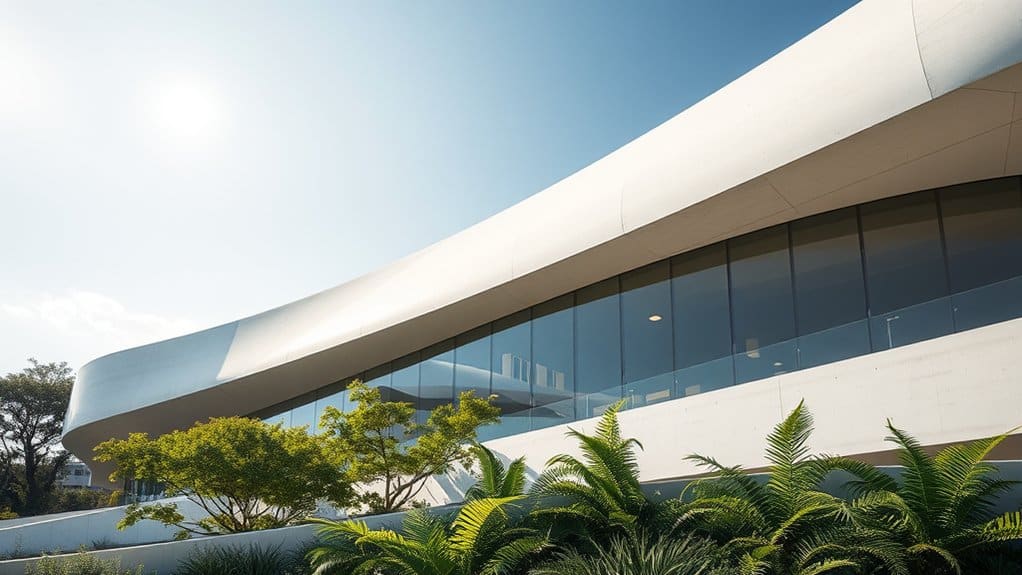
As architects increasingly adopt innovative designs, lightweight concrete is becoming essential in modern architecture. Its unique properties offer various applications that enhance architectural flexibility, enabling the creation of striking structures.
Here are some key advantages:
- Weight Reduction: It significantly lowers structural loads, making way for bolder designs.
- Thermal Insulation: Its excellent insulation properties can reduce energy costs and improve comfort levels.
- Increased Fire Resistance: The air voids in lightweight concrete enhance fire safety, which is crucial for contemporary buildings.
- Sustainable Practices: Using lightweight concrete supports environmentally friendly construction, aligning with current sustainability goals.
Future Trends in Lightweight Concrete Use
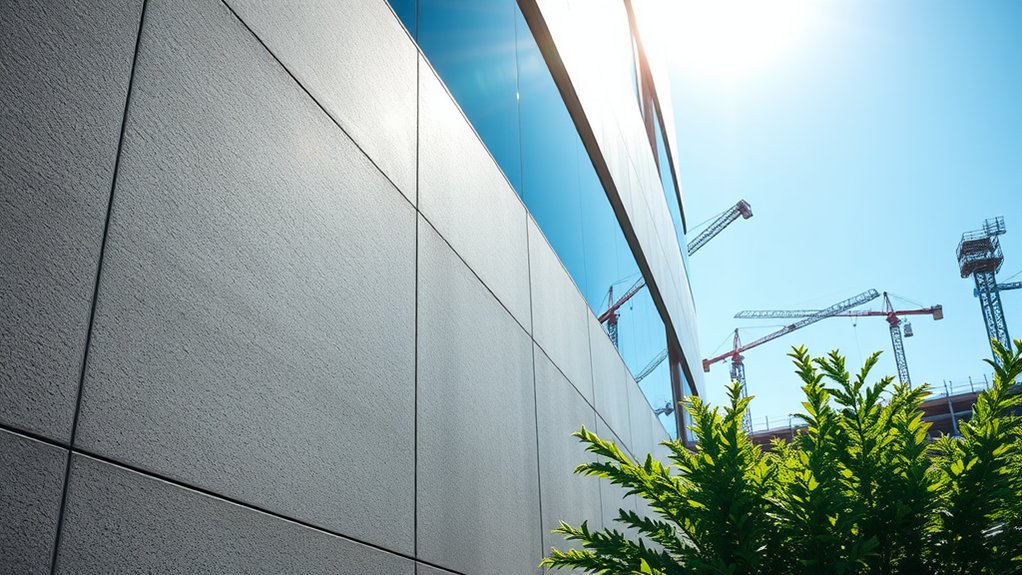
The construction industry is evolving, and future trends in lightweight concrete are set to transform building practices and design possibilities.
We can expect greater use of nanotechnology, where nanoparticles improve strength and durability, making lightweight concrete suitable for a wider range of projects.
Additionally, carbon capture technologies during production could significantly reduce carbon emissions, supporting global sustainability goals.
Innovations such as self-healing concrete and ultra-high-performance options are likely to emerge, enabling structures to better withstand environmental challenges and extend their lifespan.
These developments won't only enhance structural efficiency but also contribute to green building efforts, paving the way for a more sustainable future in construction.
Frequently Asked Questions
How Does Lightweight Concrete Compare in Cost to Traditional Concrete?
When comparing costs, you'll notice that the material expenses for lightweight concrete can be higher. However, it's important to consider that you may save on labour, require less structural support, and ultimately lower the overall project costs. This can make lightweight concrete a more financially savvy choice in construction. For example, the reduced weight can mean fewer materials needed for foundations, which can cut down both time and expense on site.
What Types of Projects Benefit Most From Lightweight Concrete?
Did you know that lightweight concrete can cut construction costs by up to 20%? It's especially advantageous for residential buildings and bridge construction, improving structural efficiency while reducing weight and speeding up project timelines.
Can Lightweight Concrete Be Recycled After Use?
Yes, lightweight concrete can be recycled, which contributes to sustainability in construction. However, there are challenges, such as separating materials and maintaining quality. Promoting the recycling of lightweight concrete can improve resource efficiency and minimise environmental impact in the construction sector.
What Are the Common Additives Used in Lightweight Concrete?
Common additives for lightweight concrete include expanded glass beads, pumice, and perlite. These materials help reduce weight, improve insulation, and enhance durability, making construction projects more efficient and sustainable. For instance, using pumice can significantly lower the overall weight of concrete, which is beneficial for high-rise buildings.
How Does Lightweight Concrete Affect Construction Insurance Rates?
Lightweight concrete can impact your construction insurance premiums by influencing risk assessments. Its distinct characteristics might necessitate specialised coverage, which can affect costs. For example, if the lightweight concrete is prone to moisture issues, insurers may see this as a higher risk. By planning ahead and addressing these potential problems, you can help reduce risks and, in turn, your overall insurance expenses.
Conclusion
If you're still using traditional concrete, it might be time to consider lightweight concrete. This innovative material reduces the load on structures and is more environmentally friendly. It's strong yet considerably lighter, making it a practical choice for modern construction. While there are some challenges, the benefits of lightweight concrete can lead to more efficient and sustainable buildings. Why not embrace a material that can help create structures that not only stand firm but also enhance our urban landscapes?

Learn about the diverse types of concrete used in construction and discover which mix can transform your next project.

For a long-lasting driveway that laughs in the face of the UK's unpredictable weather, the C20 concrete mix is your Read more

In the UK, you've got a a lot of lightweight concrete types to choose from, each with its unique perks. Read more