
Testing standards for ready-mix concrete are vital for ensuring quality and compliance in construction. Key organisations such as ACI, ASTM, and AASHTO establish guidelines for crucial tests like slump, compressive strength, and air content. Proper sampling methods are essential for accuracy, while maintaining the right temperature during mixing and curing affects hydration rates. Following these standards helps improve durability and performance. Regular testing and monitoring can further strengthen your concrete quality assurance practices.
Key Takeaways
Testing standards for ready-mix concrete are vital for ensuring quality and compliance with organisations like ACI, ASTM, and AASHTO. Key tests include slump tests, air content measurements, unit weight calculations, temperature checks, and compressive strength evaluations at set intervals.
To maintain accuracy, it's important to follow proper sampling procedures, which involve collecting composite samples and conducting tests promptly. Factors such as hydration rates and curing methods play a crucial role in the strength and durability of concrete, necessitating careful control of temperature and moisture.
By adhering to these standards, you can ensure reliable concrete performance, improve structural integrity, and gain acceptance within the industry.
Overview of Testing Standards

Testing standards for ready-mix concrete are crucial for ensuring quality and compliance in construction. Key challenges include maintaining appropriate air content and achieving sufficient compressive strength, which are essential for durability and structural stability. Following ASTM and ACI guidelines, you'll conduct laboratory tests such as slump and temperature checks to ensure mix consistency. Regular assessments of mix quality are necessary to confirm that materials meet buyer specifications and remain consistent throughout the project. On-site field tests also play a vital role in quality assurance, allowing you to verify the properties of freshly mixed concrete. Regular sampling is necessary to confirm that materials meet buyer specifications and remain consistent throughout the project. By carefully documenting test results and adjusting mix proportions based on performance data, you can ensure that your concrete meets all necessary standards for monitoring concrete quality safety and longevity.
Key Testing Agencies and Their Requirements

Ensuring compliance with testing standards for ready-mix concrete requires a clear understanding of the key organisations that set these protocols. Familiarity with these testing agencies is essential for maintaining quality and reliability in your projects.
Here are the main agencies and their requirements:
- American Concrete Institute (ACI): Responsible for developing concrete testing standards.
- AASHTO Accreditation Program: Accredit laboratories to ensure they meet concrete and asphalt testing standards.
- Cement and Concrete Reference Laboratory (CCRL): Runs proficiency sample programmes to verify quality control.
- ASTM (American Society for Testing and Materials): Provides comprehensive standards for materials and testing processes.
To achieve laboratory accreditation, ensure you fully comply with these standards, conduct regular audits, employ qualified personnel, and keep your equipment calibrated. Additionally, accredited laboratories often utilize various testing methods for material characterization to ensure the highest quality in concrete testing.
Essential Tests for Ready-Mixed Concrete

When using ready-mix concrete, it's vital to conduct tests that ensure its performance and durability. Key test methods include slump testing (ASTM C143) to evaluate workability, air content testing (ASTM C231) to assess freeze-thaw resistance, and unit weight measurements (ASTM C138) to determine density. Temperature testing (ASTM C1064) ensures the concrete is placed within acceptable limits, while yield tests (ASTM C138) verify correct proportions. For strength assessment, compressive strength tests (ASTM C39) are essential, usually performed at 7, 14, and 28 days, as compressive strength assessment is critical for monitoring strength development. Additionally, testing procedures save time and money for concrete contractors, reinforcing the importance of thorough evaluations. Flexural testing and non-destructive methods like the Schmidt Rebound Hammer offer further insights into concrete durability. By conducting these tests thoroughly, you can be confident that your concrete meets the required performance standards for its intended application.
Sampling Procedures for Concrete

To ensure accurate and reliable results, it's crucial to adhere to established sampling procedures for ready-mix concrete. Proper sampling techniques help you collect representative composite samples that truly reflect the batch's characteristics.
Here are the key steps to follow:
- Collect samples from the middle of the batch at regular intervals.
- For stationary mixers, use a receptacle to catch the concrete as it discharges.
- Ensure the composite sample is at least 1 cubic foot (28 litres) and remix it within 15 minutes.
- Carry out tests for slump, temperature, and air content within 5 minutes of obtaining the composite sample. This will help ensure the sample's uniform strength distribution, which is critical for accurate testing results.
Compressive Strength Testing Methods

Accurate compressive strength testing is crucial for assessing the performance of ready-mix concrete in structural applications. There are various methods available, such as ASTM C39 for breaking cylindrical specimens, and non-destructive techniques like the Rebound Hammer and Ultrasonic Pulse Velocity tests.
These methods offer quick strength evaluations, but they must be carefully calibrated to reduce inaccuracies due to surface conditions or moisture.
Additionally, the maturity method allows for predicting strength development over time by monitoring temperature changes.
For more precise assessments, the Pull-Out and Drilled Core tests provide reliable data by examining conditions in situ.
Whichever method you choose, following the specified strength criteria is essential for ensuring structural integrity and long-lasting performance.
Air Entrainment and Its Importance
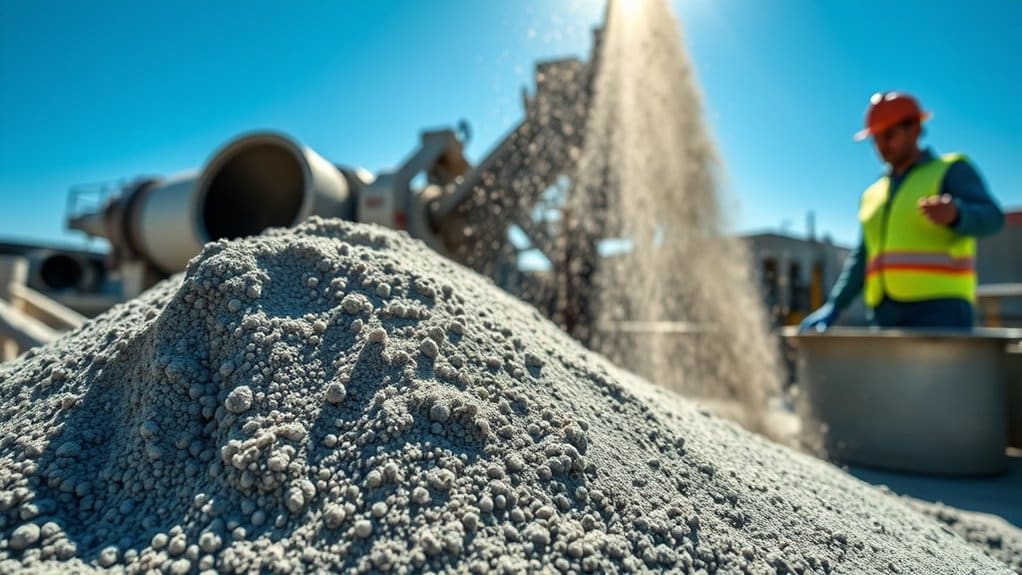
Air entrainment is crucial for enhancing the durability and performance of ready-mix concrete, especially in areas prone to freeze-thaw cycles.
Here are the key reasons why it matters:
- Air bubbles act as pressure relief valves, reducing damage during freeze-thaw cycles.
- Concrete specifications usually require an air content of 5% to 8% to ensure optimal freeze-thaw resistance.
- For exterior applications, air-entrained mixtures are essential for weather protection.
- Air-entraining admixtures improve workability and lower water demand, but higher percentages can make finishing more challenging.
Incorporating air entrainment significantly strengthens the structural integrity and lifespan of your concrete, making it vital for high-performance applications.
Unit Weight Measurements in Concrete

Understanding unit weight measurements in concrete is vital for ensuring the quality and performance of ready-mix concrete. Unit weight reflects the density of concrete and is usually measured using standard methods to ensure accuracy.
Following British Standards, such as BS 8500, provides clear guidelines for material composition, testing procedures, and acceptance criteria. You'll require specific equipment, including density apparatus and balance scales, to obtain precise measurements.
Factors such as material composition, moisture content, and air content significantly affect unit weight, making regular testing essential.
Accurate unit weight measurements help verify mix designs and avoid costly mistakes in material quantities and expenses. For instance, using the correct unit weight can prevent overordering or underordering materials, ultimately saving you time and money.
Temperature Control During Mixing and Curing

Controlling temperature during mixing and curing is essential for managing the hydration rate of cement, which directly affects the strength and durability of concrete.
Implement effective thermal monitoring techniques to ensure the curing process stays within specified temperature limits, thereby reducing the risk of defects.
For instance, using insulated blankets or heated enclosures can help maintain optimal temperatures.
Hydration Rate Influence
Temperature control during mixing and curing is vital for influencing the hydration rate of ready-mix concrete. Understanding how temperature affects hydration kinetics is key to achieving optimal concrete performance.
Here are some important points to consider:
- Hydration Rate: High temperatures speed up hydration, which can lead to rapid setting and increased risk of cracking.
- Cold Conditions: Low temperatures slow down hydration, delaying strength development and raising the risk of freeze-thaw damage.
- Water Management: Proper water dosing is crucial to maintain hydration while ensuring workability and strength aren't compromised.
- Monitoring: Employ thermal sensors to monitor temperature changes, ensuring consistent hydration during both mixing and curing.
Curing Process Importance
Maintaining the right conditions during the curing process is crucial for the performance of ready-mix concrete. Effective curing techniques, such as controlling temperature and humidity, are vital for optimal moisture retention.
Aim to keep temperatures between 10°C and 24°C, as this range promotes strength development and reduces the risk of cracking. Methods like ponding, fogging, or using curing blankets can help retain surface moisture, which is essential for hydration.
The curing duration also varies by cement type—standard Portland cement generally requires 7 days, while high early-strength cement can need just 3 to 5 days.
Following these guidelines not only boosts durability but also enhances resistance to environmental factors, ensuring your concrete structures last longer.
Thermal Monitoring Techniques
Effective thermal monitoring is crucial for ensuring the integrity of ready-mix concrete. By adopting specific techniques during mixing and curing, you can significantly enhance structural durability.
Here are some key thermal monitoring techniques to consider:
- Real-time Monitoring: Use wireless sensors to continuously monitor temperature changes throughout the mixing and curing processes.
- Pre-cooling Methods: Lower the mix temperature before placement by using chilled water, ice, or even liquid nitrogen.
- Temperature Limitation Protocols: Set maximum temperature differentials to reduce the risk of cracking in the concrete.
- Data Analysis: Regularly analyse temperature data to ensure compliance with specified limits and maintain structural integrity.
Quality Control Practices in Concrete Testing

Effective quality control practices in concrete testing are crucial for ensuring the structural integrity and longevity of ready-mix concrete.
It's essential to carry out thorough material testing to assess raw materials, ensuring they meet project specifications. This includes checking for material variability and inspecting for any harmful substances.
Accurate mix design is key; mix ratios must be precise to meet strength and durability requirements.
Following established testing protocols is important for quality assurance, as regular monitoring and documentation help spot any deviations early on.
Invest in training your staff to carry out consistent testing, and don't hesitate to seek technical support for more complex issues.
Adherence to ASTM and ACI Standards

By adhering to ASTM and ACI standards, you ensure that your ready-mix concrete meets essential certification and reliability criteria.
Consistent testing and strict adherence to guidelines help maintain the quality of your material. For example, regular testing can prevent issues like cracking and premature wear.
Complying with these standards significantly enhances the performance and longevity of your concrete structures.
Importance of Certification
Certification in the ready-mix concrete industry is crucial for ensuring compliance with British and European standards, which directly affects the quality and dependability of the concrete produced.
By obtaining certification, you can enjoy several benefits that enhance quality assurance, including:
- Compliance Verification: Confirms that production facilities adhere to industry standards.
- Engineer Certification: Ensures that inspecting engineers are qualified and licensed.
- Government Acceptance: Eases approval from agencies such as the Highways England.
- Quality Control: Validates the capability of plants to consistently produce high-quality concrete.
These factors not only enhance operational efficiency but also increase market visibility and build trust among stakeholders in the construction sector.
Testing Frequency Requirements
Quality assurance in ready-mix concrete goes beyond mere certification; it involves strict testing frequency requirements set by industry standards. According to ACI 318 and ACI 301, concrete samples should be taken daily, with adjustments based on the specifics of the project. To ensure effective quality control, adhere to the following guidelines:
| Testing Requirement | Frequency |
|---|---|
| Strength Tests | 1 per 110 cubic metres |
| Composite Samples | 1 per 76 cubic metres |
| Minimum Tests | 5 batches for fewer than 5 tests |
| Exemption Criteria | Fewer than 38 cubic metres |
Consistency and Reliability Standards
To ensure consistent and reliable ready-mix concrete, following ASTM and ACI standards is crucial.
These standards help measure consistency and assess reliability, guaranteeing quality during production. Key points include:
- ASTM C143 for slump tests, which check the concrete's consistency.
- ASTM C39 for compressive strength tests, measuring how much load the concrete can bear.
- ACI 318/R for structural design specifications that ensure quality assurance practices are met.
- Regular checks on aggregate quality, as per ASTM C136, to keep the right water-cement ratios.
Importance of Regular Testing and Monitoring

Regular testing and monitoring are vital for maintaining the integrity of concrete structures. These practices ensure compliance with industry standards, such as BS EN 206, and help maintain consistent quality across different batches. This consistency is crucial for safety and durability.
By following testing standards, you can identify potential weaknesses early, which can save on costly repairs. Routine tests, like slump, air content, and compressive strength, play a key role in quality assurance, leading to fewer defects and higher customer satisfaction.
Monitoring not only mitigates risks but also promotes cost efficiency, as issues can be addressed before they develop into major problems. Ultimately, a strong commitment to testing and monitoring protects both your project and its stakeholders.
Frequently Asked Questions
How Do Weather Conditions Affect Concrete Testing Results?
Weather conditions significantly influence concrete testing results. For instance, high temperatures can speed up hydration rates, while low humidity can affect the water-cement ratio, ultimately compromising the concrete's strength and durability. It's crucial to monitor these factors during testing to ensure optimal performance. For example, if testing occurs on a hot day, the concrete may set too quickly, leading to potential weaknesses. Always consider the weather to achieve the best results.
What Are the Potential Consequences of Inadequate Concrete Testing?
Inadequate concrete testing threatens the durability and structural integrity of buildings. It can result in construction delays and spiralling costs due to the need for additional testing. Moreover, it increases legal liabilities, putting project safety and success at risk. For instance, if a bridge's concrete isn't properly tested, it could lead to serious safety issues down the line. Prioritising thorough concrete testing is essential to ensure both compliance and public safety.
Can Testing Standards Vary by Region or Project Type?
Yes, testing standards can differ significantly depending on the region and the specific type of project. For instance, construction projects in London may need to adhere to different health and safety regulations than those in rural areas. It's essential to consider local laws and environmental factors to ensure your approach meets both the project requirements and regional norms for the best outcomes.
How Can I Find Certified Testing Agencies Near Me?
To locate certified testing agencies near you, begin by searching online for local resources. For example, if you require concrete testing for a new project, reaching out to certification bodies like the ACI can direct you to trustworthy options.
What Are the Costs Associated With Ready-Mix Concrete Testing?
The costs for testing ready-mix concrete include laboratory fees for sampling and analysis, as well as expenses for testing equipment such as slump cones and thermometers. These costs can significantly affect your project budget and quality assurance measures. For instance, if you're working on a large construction site, investing in reliable testing can prevent costly issues down the line, ensuring the concrete meets required standards.
Conclusion
It might seem straightforward to mix some ingredients and label it as concrete, but that's not the case. Regular testing and strict compliance with British Standards (BS) and the standards set by the American Concrete Institute (ACI) are crucial for ensuring quality and performance. No one wants their buildings to fail due to skipped tests. Remember, thorough testing is not optional; it's essential for creating durable ready-mix concrete.

Learn about the diverse types of concrete used in construction and discover which mix can transform your next project.

For a long-lasting driveway that laughs in the face of the UK's unpredictable weather, the C20 concrete mix is your Read more

In the UK, you've got a a lot of lightweight concrete types to choose from, each with its unique perks. Read more