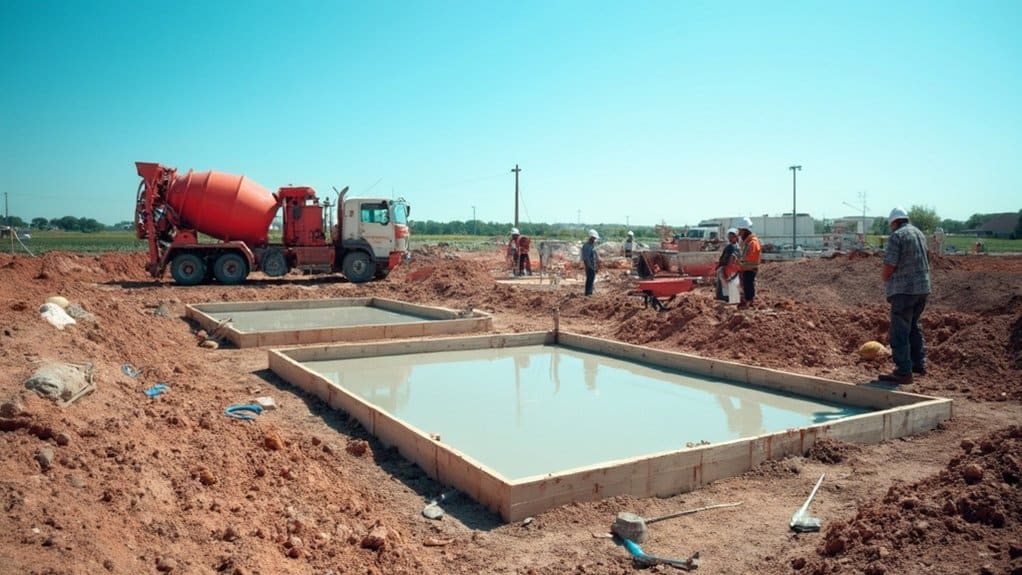
To prepare your job site for ready-mix concrete delivery, start by checking access for delivery vehicles and ensuring clear routes. Remove any debris and vegetation, using machinery if necessary. Securely install the formwork and confirm that all stabilisation measures are in place. Position any required reinforcement and utilities before the delivery arrives. Gather your essential tools and safety gear to create a secure working environment. There's much to consider for a successful delivery, so let's delve into further details.
Key Takeaways
- Assess site accessibility to ensure delivery vehicles can manoeuvre without obstruction, taking into account vehicle dimensions and any road restrictions.
- Clear the job site of debris and vegetation to create a safe and efficient workspace for concrete delivery.
- Check the excavation depth and soil conditions to guarantee proper support for the concrete and to prevent issues during delivery.
- Implement safety measures, including personal protective equipment (PPE) and fall protection, to keep workers safe during the concrete delivery process.
- Prepare the necessary tools and curing equipment ahead of time to ensure a smooth pour and to protect the concrete after it has been laid.
Assessing Site Accessibility for Delivery Vehicles

When preparing for concrete delivery, it's essential to assess site accessibility for delivery vehicles to avoid delays or complications.
Start by checking the dimensions of the vehicle; typical concrete trucks measure around 11 metres long and need sufficient clearance. Look out for potential access issues, such as narrow gates or uneven surfaces that could hinder manoeuvrability. Ensure the ground is stable to prevent the truck from getting stuck, particularly in soft or muddy conditions. Be aware of any road restrictions, like weight limits or low-hanging obstacles, and inform your supplier about these. Additionally, plan the delivery route carefully to reduce travel time and steer clear of potential blockages, such as parked cars or ongoing roadworks that could obstruct access on the day of delivery. Local suppliers enhance efficiency and reduce overall project costs, which can further streamline the delivery process. Selecting the right pump size can also facilitate better access and efficiency during concrete delivery.
Clearing and Excavating the Job Site
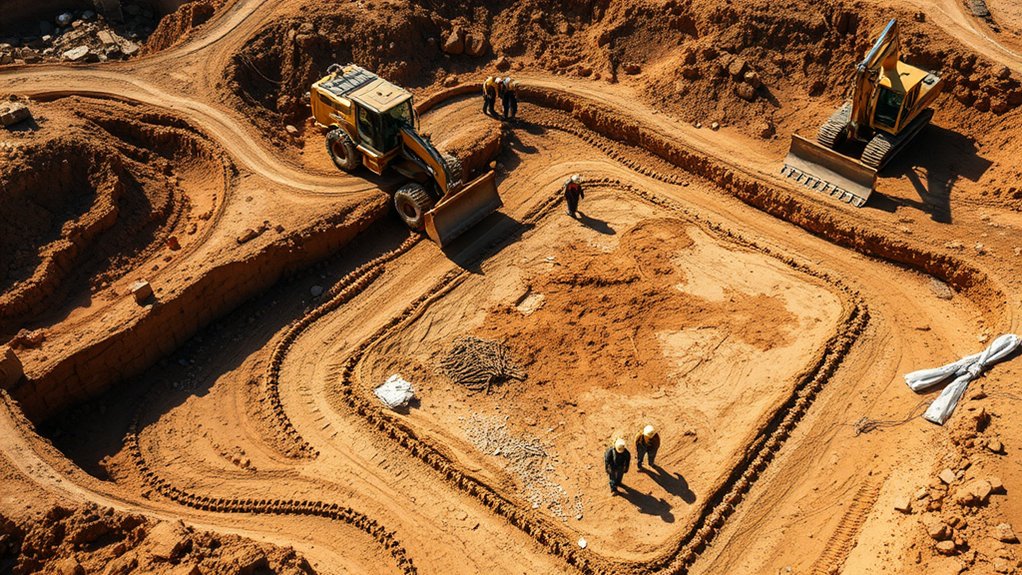
Before pouring concrete, ensure the job site is cleared of any debris and vegetation that may hinder the process. Clearing Vegetation is crucial as it allows for a safer and more efficient workspace. Check the excavation depth to confirm it's suitable for the weight of the concrete and any structures above. It's also important to assess drainage to avoid water issues that could jeopardise your project's integrity. Additionally, consider adding a layer of gravel under concrete to enhance stability and drainage, which is essential for preventing cracking and shifting of slabs.
Debris and Vegetation Removal
Clearing and excavating the site is crucial for a smooth concrete delivery, ensuring a safe and efficient working environment. Begin with a careful assessment of the area to identify any obstacles, such as broken structures or rubbish. Employ heavy machinery like bulldozers to safely remove large debris, and ensure proper disposal in line with environmental regulations. Next, evaluate the vegetation, focusing on the removal of undergrowth and trees as needed. Use specialised equipment, such as mulchers or stump grinders, for effective clearing. Always prioritise safety by providing personal protective equipment (PPE) and clear signage to safeguard workers during this process. Proper management of debris and vegetation improves site accessibility and minimises the risk of future issues, while also ensuring clear access routes for trucks delivering the concrete. Additionally, having a pumping service can significantly enhance the placement speed of the concrete, making the delivery process even more efficient.
Excavation Depth Verification
Once you've cleared the site of debris and vegetation, verifying the excavation depth is essential.
Start by using suitable excavation methods, like open cut for larger areas or trenching for precise depth checks. Employ backhoes or excavators that are appropriate for the soil type.
Conduct soil tests to assess its composition and bearing capacity, informing your depth and stability evaluations.
Always follow safety protocols, including daily trench inspections and keeping heavy machinery at a safe distance from trench edges.
This methodical approach ensures accurate depth verification and maintains a safe working environment for all involved.
Site Drainage Assessment
Have you thought about the importance of proper drainage for your concrete work site? A thorough site drainage assessment is crucial.
Begin with a soil analysis to assess the type and quality of the soil, as this affects drainage efficiency. Identify existing drainage patterns and any nearby structures that could influence water flow. Remove any vegetation and debris that may obstruct your assessment.
Grade the site to enhance natural water flow, and dig shallow channels to redirect water away from the construction area. Install effective drainage solutions, such as pipes or soakaways, ensuring they're well-compacted to prevent settling.
Lastly, keep an eye on the site to address any drainage issues that may arise during the project.
Installing Formwork and Ensuring Stability
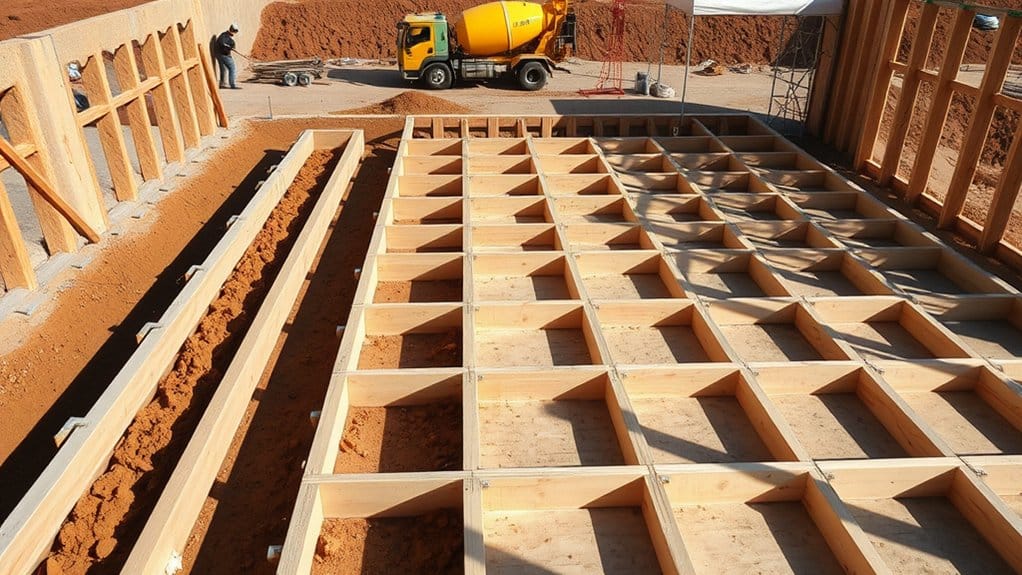
When installing formwork for your concrete project, stability is crucial to avoid issues during the pour. Start by selecting suitable materials such as timber, metal, or plastic based on your project's requirements.
Next, ensure your forms align with the project plans, taking precise measurements. Position the forms around the perimeter and brace them securely to maintain alignment. Use heavy-duty props or braces to prevent any movement under load.
Remember to apply a release agent to the inside surfaces for easier removal later on. Regularly check the stability of your setup, ensuring joints are tight and drainage is considered, so your pour goes ahead without any hitches.
Properly Placing Reinforcement and Utilities
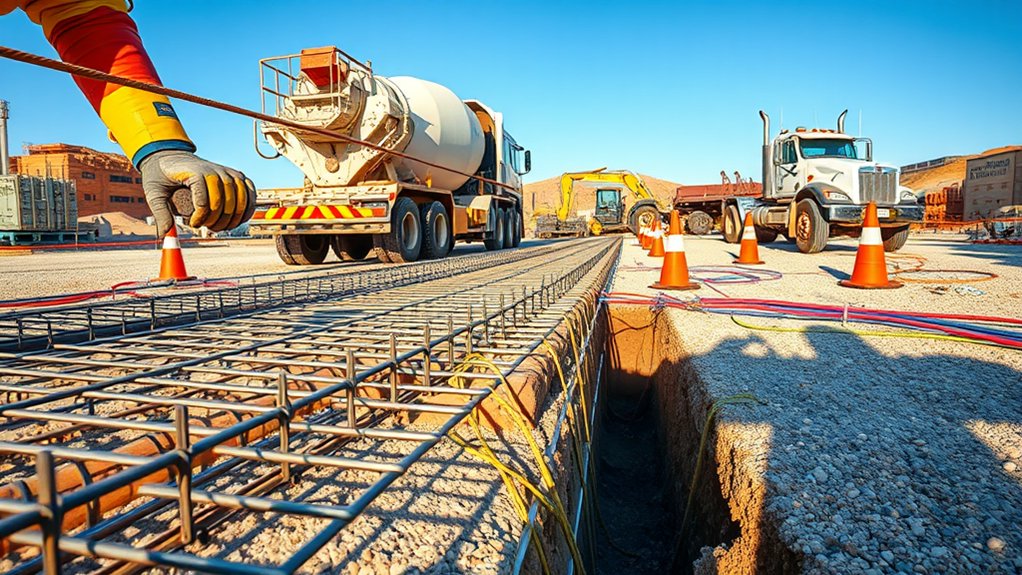
After securing the formwork, concentrate on the proper placement of reinforcement and utilities to ensure the integrity of your concrete structure.
Begin with selecting the right rebar; opt for the appropriate grade and size based on your project's load requirements. Follow the design specifications for rebar placement to ensure it effectively distributes loads and prevents cracking. Use bar supports to maintain the correct height and position of the rebar, adhering to building regulations.
Don't overlook utility verification—double-check the positioning of plumbing and electrical conduits before pouring concrete. Properly embedding these utilities safeguards them from damage during the process.
Conduct regular site inspections to ensure everything is secure and correctly positioned, setting your project up for success.
Gathering Essential Tools and Equipment

When preparing for concrete delivery, it's crucial to gather the right tools and equipment for a smooth process.
Ensure you have essentials like wheelbarrows, hand tools, and safety gear.
Also, don't overlook curing equipment to protect your concrete after it's poured, ensuring maximum strength and durability.
Required Tools Overview
Gathering the right tools and equipment is crucial for a successful concrete delivery job site. Your tool selection should prioritise efficiency and effectiveness to ensure you're ready for various tasks. Regular maintenance of equipment is vital to prevent delays and ensure safety.
| Tool Category | Essential Tools |
|---|---|
| Transporting Concrete | Wheelbarrows, Buckets, Pumps |
| Leveling and Finishing | Floats, Edgers, Trowels |
| Mixing and Testing | Portable Mixers, Testing Kits |
| Site Preparation Tools | Ground Compactors, Grading Tools |
| Maintenance Equipment | Power Generators, Toolboxes |
Make sure you have the right tools before starting to avoid any hiccups on the job. For example, having a reliable wheelbarrow can save you time when moving concrete, while proper trowels will ensure a smooth finish. Always keep your equipment in good condition to maintain safety and efficiency on site.
Safety Gear Essentials
Before concrete delivery starts, it's crucial to have the right safety gear to protect yourself and your team on-site.
Follow PPE guidelines and ensure everyone wears hard hats to guard against falling objects and steel-toe boots to protect feet from heavy loads.
Use respirators to avoid inhaling silica dust and alkali-resistant gloves to prevent chemical burns.
Safety goggles are vital for protecting your eyes from concrete splashes.
If working at height, make sure to use fall protection gear and guardrails.
Everyone on-site should complete safety training to understand the importance of this equipment.
With proper preparation, you can reduce hazards and create a safer work environment.
Curing Equipment Preparation
Preparing your curing equipment is crucial for ensuring concrete sets correctly and attains the desired strength.
Begin by selecting suitable curing methods, such as moisture rooms or curing tanks, depending on the scale of your project. Ensure you have temperature control devices and humidity monitors to maintain optimal conditions.
Clear the workspace for easy access to equipment and check that the ground is level for stability. Protect your equipment from the elements and ensure a reliable power supply is available.
Regular maintenance is essential; carry out inspections, perform leak checks, and log curing conditions.
With the right tools and thorough preparation, you'll achieve effective curing for your concrete project.
Implementing Health and Safety Measures
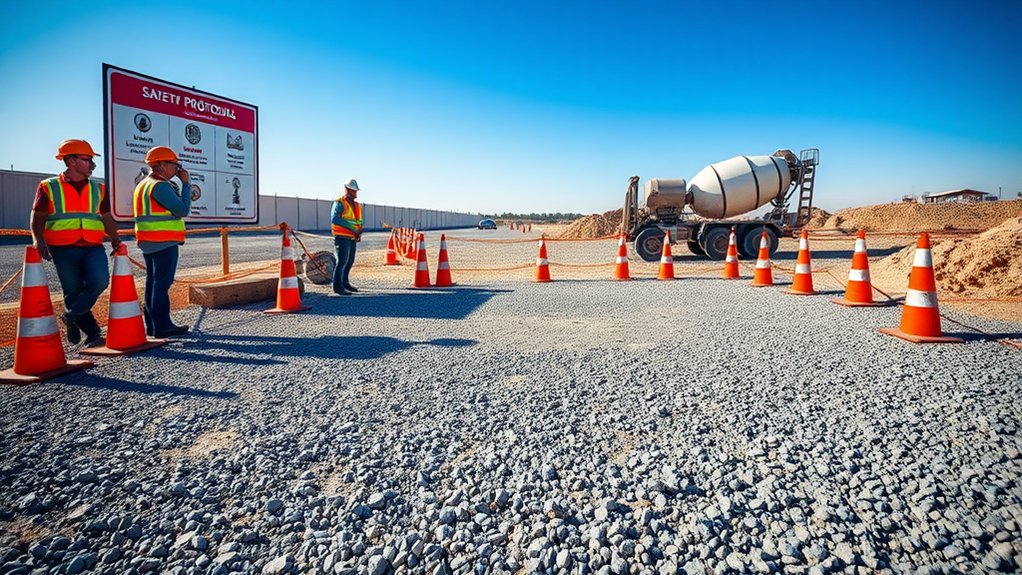
When preparing for concrete delivery, implementing health and safety measures is crucial for a smooth operation.
Ensure all workers receive proper training on safety protocols, particularly for handling wet concrete and operating equipment. Provide personal protective equipment, such as gloves, safety glasses, and hard hats, to reduce risks.
Identify potential hazards on-site, like slippery surfaces or falling objects, and establish clear communication among the team to address any issues quickly.
Regularly maintain equipment, especially concrete pumps, to avoid malfunctions.
Also, have a clear evacuation route for emergencies and ensure all personnel are aware of it.
Frequently Asked Questions
What Should I Do if It Rains on Pour Day?
If it rains on pour day, set up rain protection such as tarps and ensure proper drainage to avoid water pooling. Keep an eye on the site and remove any excess water to maintain the quality and stability of the concrete.
How Can I Ensure Accurate Concrete Mix Proportions?
To ensure accurate concrete mix proportions, pay close attention to your mix design and aggregate selection. Think of it like a baker weighing ingredients for a cake; precision is key to achieving the strength and durability your project requires.
What Is the Best Time of Day to Pour Concrete?
The ideal time to pour concrete is in the early morning or late afternoon to steer clear of the peak heat. This is important because cooler temperatures help with the curing process, minimising the risk of cracks and ensuring a solid finish. For instance, pouring in the morning can help avoid the scorching midday sun, leading to better results.
How Do I Handle Unexpected Site Obstacles During Preparation?
To manage unexpected site obstacles, carry out a comprehensive site assessment in advance. Develop contingency plans to tackle potential issues, maintain clear communication within your team, and use the right equipment to quickly resolve any challenges. For instance, if you discover unstable ground, having the necessary tools and a plan for reinforcement can save time and prevent delays.
What Permits Are Required for Concrete Pouring Projects?
Before you start pouring concrete, ensure you have the necessary permits. Familiarise yourself with local regulations, planning permissions, and any environmental guidelines. For instance, if you're building a driveway, check if you need permission for drainage or if there are restrictions in your area. Being aware of these requirements helps your project run smoothly and keeps you compliant with the law.
Conclusion
Preparing your job site for ready-mix concrete delivery is crucial for a successful pour. Start by ensuring easy access for the delivery vehicle; clear any obstacles that might impede entry. Next, secure your formwork to prevent movement during the pour. Safety should be your top priority; have the necessary protective gear and equipment at hand.
Think of it like preparing for a big event—everything needs to be in place for things to go smoothly. With careful planning and attention to detail, your project will progress efficiently and stand the test of time.

Learn about the diverse types of concrete used in construction and discover which mix can transform your next project.

For a long-lasting driveway that laughs in the face of the UK's unpredictable weather, the C20 concrete mix is your Read more

In the UK, you've got a a lot of lightweight concrete types to choose from, each with its unique perks. Read more