To prevent segregation in ready-mix concrete during delivery, ensure a proper mix design with a water-cement ratio of 0.4 to 0.6 and use well-graded aggregates. During mixing, follow precise protocols and avoid making the mix too fluid. Use specialised transit mixers to maintain uniformity and keep a close eye on temperatures. When pouring, use smooth techniques to preserve the mix's integrity, and apply effective compaction methods afterwards. Having a robust quality control system in place is key to achieving consistent results. By following these steps, you can significantly enhance the quality of your concrete.
Key Takeaways
- Maintain a water-cement ratio between 0.4 and 0.6 to avoid excessive fluidity during delivery.
- Use specialised transit mixers to ensure consistent mixing and reduce the risk of segregation while in transit.
- Continuously monitor temperature and use cooling agents in hot weather to keep the mix intact.
- Employ smooth pouring techniques and layer placement methods to ensure even distribution and proper compaction.
- Train operators on effective transit mixer operation and handling practices to lessen the chances of segregation during delivery.
Importance of Proper Mix Design

Mix design plays a crucial role in ready-mix concrete, as a well-balanced formulation is essential to prevent segregation. Properly proportioning cement, water, and aggregates ensures the right mix. It's important to maintain a water-cement ratio of 0.4 to 0.6 to avoid excessive fluidity, which can cause materials to separate. The gradation of aggregates is key; using well-graded aggregates helps reduce the risk of segregation during mixing and placement. A smooth gradation curve ensures ideal particle size distribution, improving the mix's cohesion. Following standards like IS 10262:2019 will help you achieve a stable, homogeneous mix that effectively reduces the likelihood of segregation. Additionally, optimizing mix design enhances the overall quality of the concrete, further minimizing the risk of unwanted segregation during delivery. Furthermore, ensuring consistent quality assurance throughout the mixing process is vital to maintaining the integrity of the concrete and preventing segregation during transportation.
Effective Mixing Process

A well-designed mix is crucial for an effective mixing process in ready-mix concrete. Use batch plants for accurate ingredient measurement and transit mixers for continuous mixing during transport.
It's important to follow proper mixing protocols to ensure even distribution of aggregates and prevent segregation. Add ingredients gradually to avoid lumps, and carefully monitor water levels to achieve the right consistency without overmixing. Concrete is a composite material made of cement, aggregates, and water, which highlights the importance of a balanced mix. Additionally, maintaining quality control throughout the mixing process is essential for achieving the desired performance.
Regularly check the performance of mixers and calibrate equipment to maintain consistency. Employ trained operators for optimal mixer operation and use compaction tools, such as vibrators, to improve uniformity.
Consider adding additives to enhance workability and adjust mixing times according to temperature. Continuous feedback is key to refining your mixing procedures for reliable results.
Handling and Transportation Best Practices

To ensure your concrete mix remains intact during transport, consider using specialised transit mixers that keep the mix uniform. It's also important to manage temperature effectively to avoid thermal changes that can cause segregation. Additionally, maintaining proper mixing techniques during and after transport is crucial to prevent any risk of segregation. Implementing concrete pumps can further enhance the delivery process by ensuring precise placement and reducing the risk of segregation during transportation.
Specialized Transit Mixers
Understanding how to operate and transport specialised transit mixers is vital for maintaining concrete quality and preventing segregation. The design of the mixer drum is crucial; continuous rotation ensures a consistent mix, reducing the risk of segregation.
Proper loading is essential; uneven distribution of materials can cause problems during transit. Regular maintenance of mechanical components helps avoid breakdowns that could disrupt the mixing process.
Training operators is key, as experienced drivers know the right drum rotation speeds and handling techniques needed for a uniform blend.
Using GPS for route optimisation can also boost delivery efficiency and further minimise segregation risks. By following these best practices, you can significantly enhance the quality of your concrete deliveries.
Temperature Control Measures
When transporting ready-mix concrete, it's vital to maintain the ideal temperature to prevent segregation and ensure mix quality.
Use continuous temperature monitoring with sensors to keep track of the mix's temperature during transit, allowing you to respond promptly if it rises.
In hot weather, consider adding cooling agents like cold water or ice to keep temperatures down and avoid rapid hydration that can cause segregation.
Scheduling deliveries for cooler parts of the day and covering the mix with insulated blankets can help maintain a steady temperature.
In colder weather, employ heating solutions to keep the mix above freezing.
Regular inspections of delivery trucks are also essential to ensure equipment is effective, reducing the risks associated with temperature fluctuations during transport.
Techniques for Placing Concrete

When placing concrete, it's crucial to use smooth pouring techniques to maintain the integrity of the mix.
A layered placement strategy ensures even distribution and effective compaction. Additionally, employing proper vibration and compaction methods helps consolidate the mix and prevents segregation.
For instance, if you're pouring a patio, start at one corner and work your way across, ensuring each layer is well-compacted before adding the next.
Smooth Pouring Techniques
To achieve a smooth and effective concrete pour, follow these five key techniques.
First, maintain a steady pace during pouring to ensure even concrete flow and prevent weak spots.
Second, use tools such as vibrators or tamping rods to remove air bubbles and achieve a consistent finish.
Third, check the water-cement ratio; getting this right reduces the risk of segregation while maintaining strength.
Fourth, avoid excessive movement during placement, as it can separate aggregates and fines.
Lastly, ensure your formwork is correctly aligned before pouring; this prevents segregation due to improper placement.
Layered Placement Strategy
Implementing a layered placement strategy is crucial for achieving strong structural integrity in concrete work. Start by ensuring uniform layer thickness to prevent uneven settlement.
Use bonding agents between layers to boost cohesion and strength, and keep an eye on temperature to avoid thermal gradients that can lead to segregation.
It's important to place each layer before the previous one has fully set to prevent cold joints. Techniques like tamping should be used during placement for proper consolidation, ensuring each layer is compacted adequately.
Additionally, maintain continuous pouring without interruptions to optimise timing and reduce the risk of cold joints.
Vibration and Compaction Methods
Effective vibration and compaction methods are crucial for proper concrete placement, as they significantly affect the strength and durability of the material.
Vibration techniques help reduce segregation by improving concrete flow and removing air pockets. Depending on your structure, use either internal or external vibrators. It's important to maintain correct spacing and duration to ensure effective consolidation.
Choose compaction tools, from manual options to advanced machinery, based on your project's specific needs. Proper compaction guarantees an even distribution of concrete components and reduces voids.
Keep an eye on vibration parameters like frequency and amplitude, as excessive compaction can lead to segregation. Mastering these techniques will enhance the integrity of your concrete work.
Compaction Methods to Ensure Homogeneity

Achieving homogeneity in ready-mix concrete relies on effective compaction methods to eliminate air voids and ensure uniform density.
For small projects, manual techniques with handheld tools can suffice, but for larger applications, mechanical options like internal and surface vibrators are more efficient. These vibrators effectively remove air and promote consistent density.
For specialised needs, pressure and jolting methods can be utilised in laboratory settings, while spinning compaction is ideal for cylindrical precast products.
Table vibrators are useful for enhancing density in thin precast elements. It's crucial to prioritise immediate compaction after pouring, but be careful not to over-vibrate, as this can compromise the mix's integrity and lead to segregation.
Quality Control Measures for Consistency
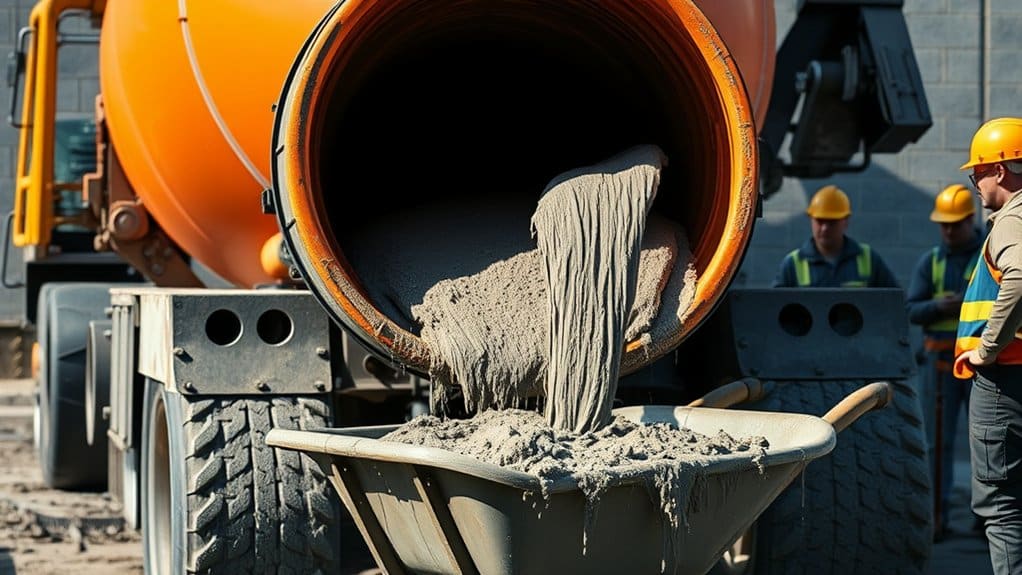
Maintaining consistency in ready-mix concrete is crucial for performance, and effective quality control measures are key to achieving this.
Start by ensuring the use of high-quality materials; well-graded aggregates and compliant cement are vital for mix consistency. Regular testing for moisture content helps manage the water-cement ratio effectively.
Use precise batching and consistent mixing protocols, with automated systems to reduce variability. Real-time monitoring with advanced sensors allows for immediate adjustments, improving quality assurance.
Standardised procedures, such as those from the British Standards Institution (BSI), ensure uniformity across batches.
Conduct regular testing, including slump tests and on-site evaluations, to ensure the mix meets specifications. Address any inconsistencies promptly to prevent segregation during delivery.
Technological Solutions for Monitoring

Quality control measures rely heavily on effective monitoring systems. To tackle segregation in ready-mix concrete, consider integrating advanced sensors into your mixing equipment. These sensors can provide real-time data on temperature, moisture, and mixing speed.
Additionally, using IoT-enabled trucks allows for continuous monitoring of concrete properties during transport, enabling timely adjustments. Automated batching systems ensure precise material measurement, while vibration sensors monitor drum rotation to prevent segregation.
Continuous Improvement and Training

To effectively prevent segregation in ready-mix concrete, it is essential to cultivate a culture of continuous improvement and training. Regular audits and data analysis help pinpoint inefficiencies, while staff training through workshops and technical sessions ensures your team stays informed on the latest practices. By setting clear performance metrics, you can track progress and adjust your strategies accordingly.
| Training Focus | Benefits | Continuous Improvement |
|---|---|---|
| Industry Workshops | Stay updated with technology | Enhanced quality standards |
| Technical Training | Master batching techniques | Reduced errors |
| Quality Control | Consistency in delivery | Increased client trust |
| Handling Education | Prevent segregation | Efficient processes |
| Material Knowledge | Better resource usage | Sustainable practices |
Promoting this culture not only improves quality but also reduces the risks of segregation.
Frequently Asked Questions
What Environmental Factors Affect Segregation During Delivery?
Environmental factors that influence segregation during delivery include variations in temperature and humidity. For example, on a hot day, the concrete mix may dry out too quickly, leading to inconsistent consistency. To combat this, you should adjust your mixing techniques and delivery methods. This will help maintain the right consistency and reduce the risk of segregation throughout the delivery process.
How Does Concrete Age Impact Segregation Risk?
As concrete ages, hydration slows, and its structure becomes weaker, which raises the risk of segregation. For instance, older concrete can become more porous, and factors like weather conditions can worsen this problem, ultimately compromising its durability and structural integrity.
What Role Does Aggregate Size Play in Segregation?
Aggregate size significantly impacts segregation by affecting particle distribution and grading. Properly graded aggregates ensure cohesive mixtures, reducing the risk of separation during handling. For example, using a mix of different sized aggregates helps fill gaps, leading to better workability and a more uniform concrete matrix. Ultimately, the right aggregate size contributes to a stronger, more reliable final product.
Can Weather Conditions Influence Concrete Delivery Quality?
Yes, weather conditions significantly affect the quality of concrete delivery. For instance, rain can increase the water-cement ratio, which can weaken the mix. Similarly, fluctuations in temperature and high humidity can hinder proper curing, ultimately compromising the strength and durability of the finished product. It's crucial to monitor weather conditions closely to ensure optimal results.
What Should Be Done if Segregation Occurs Post-Delivery?
When segregation occurs, it's essential to act quickly. Start with a segregation assessment, then apply post-delivery solutions such as remixing or using vibrators to ensure uniformity. This helps maintain the quality and strength of your concrete structure. For example, if you notice uneven distribution of aggregates, remixing can help restore consistency.
Conclusion
To prevent segregation in ready-mix concrete during delivery, it's essential to implement effective mix design and follow best practices in handling and transport. Using advanced compaction methods and real-time monitoring technology can significantly improve consistency. Just as the Romans mastered their aqueducts with careful attention to detail, your focus on ongoing training and improvement will ensure the quality and durability of your concrete. This approach will lead to successful projects and satisfied clients.

Learn about the diverse types of concrete used in construction and discover which mix can transform your next project.

For a long-lasting driveway that laughs in the face of the UK's unpredictable weather, the C20 concrete mix is your Read more

In the UK, you've got a a lot of lightweight concrete types to choose from, each with its unique perks. Read more