Admixtures are crucial for enhancing the performance of ready-mix concrete by altering essential properties. They improve workability, making the concrete easier to handle and place, and can also manage setting times to suit different temperatures and project timelines. For instance, water-reducing agents lower water content, which increases strength and durability, while air-entraining agents boost resistance to freeze-thaw cycles. Moreover, admixtures facilitate the use of recycled materials, supporting sustainability efforts. Their innovative formulations are key to future trends aimed at reducing carbon emissions in concrete. Consider how these advancements can positively influence your projects and the broader construction industry.
Key Takeaways
- Admixtures enhance the workability of ready-mix concrete, making it easier to handle and place in intricate structures and difficult conditions.
- They provide controlled setting times, which is useful for adapting to various weather conditions and project timelines, helping to prevent premature hardening.
- Water-reducing admixtures lower water content without compromising strength, improving durability and reducing the risk of cracking in the final product.
- The addition of air-entraining admixtures boosts the concrete's resistance to freeze-thaw cycles, which enhances its long-term durability and performance.
- Advanced admixtures contribute to sustainability by facilitating the use of recycled materials and lowering carbon emissions during concrete production.
Understanding Admixtures
Concrete is a vital building material, but its performance can be significantly improved with the right admixtures.
Admixtures are chemical additives that alter the properties of concrete to suit specific needs. By grasping the basics of admixture chemistry, you can customise concrete mixes for various projects.
For example, some admixtures enhance workability, making it easier to place and finish the concrete, while others boost strength and durability, leading to longer-lasting structures. Additionally, admixtures can adjust setting times according to environmental conditions, ensuring optimal performance in different situations. Furthermore, mineral admixtures can be used to improve durability and workability, further enhancing the overall performance of concrete. Moreover, the use of superplasticizers can significantly increase the workability of high-performance concrete mixes without compromising strength.
Choosing the right admixture is crucial for achieving the desired results in your concrete work.
Types of Admixtures

Understanding the different types of admixtures is crucial for optimising concrete performance for specific applications. There are several key categories, each with its own purpose.
Water-reducing admixtures (Type A) decrease water content while improving workability, making it easier to handle the mix. These admixtures can reduce water usage by 5-12% while maintaining the desired strength.
Retarding admixtures (Type B) extend the setting time, which is particularly important in hot weather to prevent premature hardening.
Conversely, accelerating admixtures (Type C) speed up strength development, which is beneficial for quick construction projects.
Superplasticisers significantly enhance workability, allowing for mixes with higher strength.
Air-entraining admixtures introduce tiny air bubbles, which improve durability against freeze-thaw cycles.
There are also specialised admixtures, like shrinkage reducers and high-range water reducers, tailored to specific performance needs.
Choosing the right admixture will directly affect the characteristics of your concrete, so making informed decisions is essential for achieving the desired results.
Benefits of Using Admixtures

Using admixtures in ready-mix concrete significantly improves workability, making it easier to handle and place. These additives allow for controlled setting times, which is beneficial for different weather conditions and project schedules. Additionally, admixtures enhance durability and strength, ensuring that your constructions last longer and maintain structural integrity. For instance, if you're working on a project in a hot climate, a retardant admixture can help prevent the concrete from setting too quickly, giving you more time to work. This adaptability to environmental conditions ensures that the concrete performs optimally throughout its lifespan. Furthermore, incorporating recycled materials in admixtures can contribute to sustainability practices within the construction industry.
Enhanced Workability Features
Admixtures significantly improve the workability of ready-mix concrete, streamlining the construction process. These formulations tackle workability issues by enhancing fluidity, ease of placement, and pumpability. By reducing water content and maintaining consistent slump, you achieve smoother application and increased durability.
| Feature | Benefit | Application |
|---|---|---|
| Fluidity Improvement | Simplifies handling and placement | Complex structures |
| Pumpability Enhancement | Speeds up on-site transportation | High-rise buildings |
| Consistency Maintenance | Preserves workability over time | Prolonged construction delays |
Using admixtures not only makes mixing and placement easier but also boosts overall performance, ensuring your projects meet high standards, regardless of the conditions. Additionally, proper mix design and understanding component interactions are essential for achieving specific performance standards and optimizing concrete mixes.
Controlled Setting Times
Construction schedules often require efficiency, and using admixtures to control setting times can significantly improve project execution.
Hydration-controlling admixtures offer predictable set times, ensuring consistent hydration during curing. This consistency is crucial in preventing issues like cold joints, especially during lengthy placements.
For urgent projects, accelerators enable quicker completion without sacrificing initial workability, while retarders provide flexibility in hot weather or for large pours.
These solutions cater to various project needs, allowing you to adapt to different conditions effectively.
In short, leveraging controlled setting times through the right admixtures enhances overall project performance, helping you meet deadlines without compromising on quality.
Improved Durability and Strength
Achieving controlled setting times is crucial for improving the overall performance of concrete, particularly in terms of durability and strength.
By using admixtures, you can significantly enhance your mix's properties through:
- Reduced Permeability: Incorporating supplementary cementitious materials (SCMs) like fly ash can lower water absorption, which is essential for durability.
- Enhanced Strength: Reducing the water-cement ratio optimises strength and increases resistance to environmental damage.
- Corrosion Protection: Admixtures such as corrosion inhibitors help shield against chemical attacks, prolonging the lifespan of your structures.
These improvements not only strengthen the concrete against harsh conditions but also ensure long-term performance.
Enhancing Workability
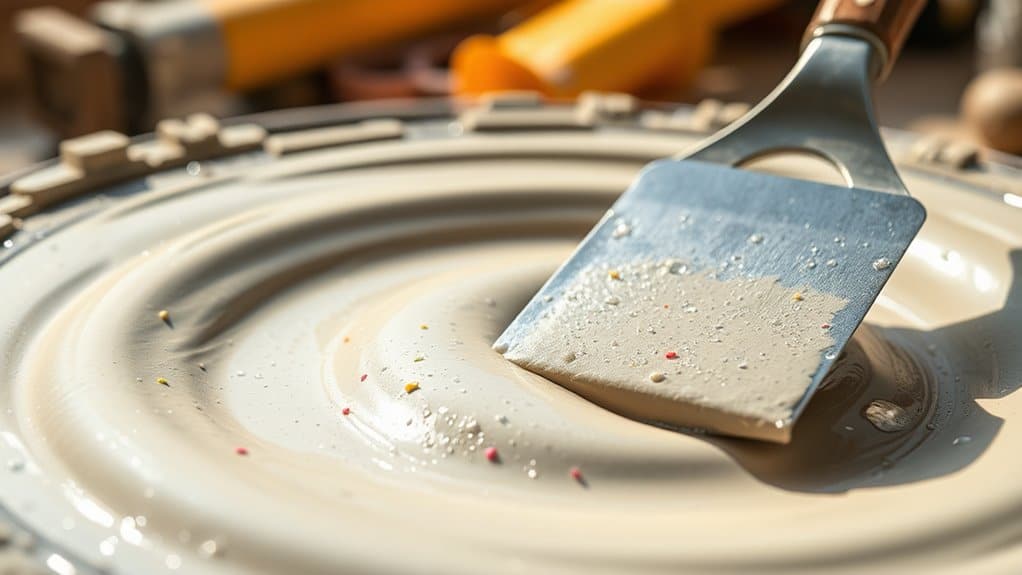
To improve workability in ready-mix concrete, using specific admixtures can significantly ease the placement and finishing processes.
Workability challenges often arise with difficult mixes or intricate placements. Water-reducing admixtures are a practical solution; they lower water content while maintaining flow, making pouring and compaction easier.
These admixtures enhance consistency and pumpability, which streamlines on-site transport. Air-entraining admixtures also play a vital role by reducing bleeding and ensuring even air bubble distribution, crucial for freeze-thaw resistance.
Collectively, these admixtures enable smoother application and help maintain slump, allowing you to meet performance requirements while boosting durability and strength in your ready-mix concrete projects.
Controlling Setting Time
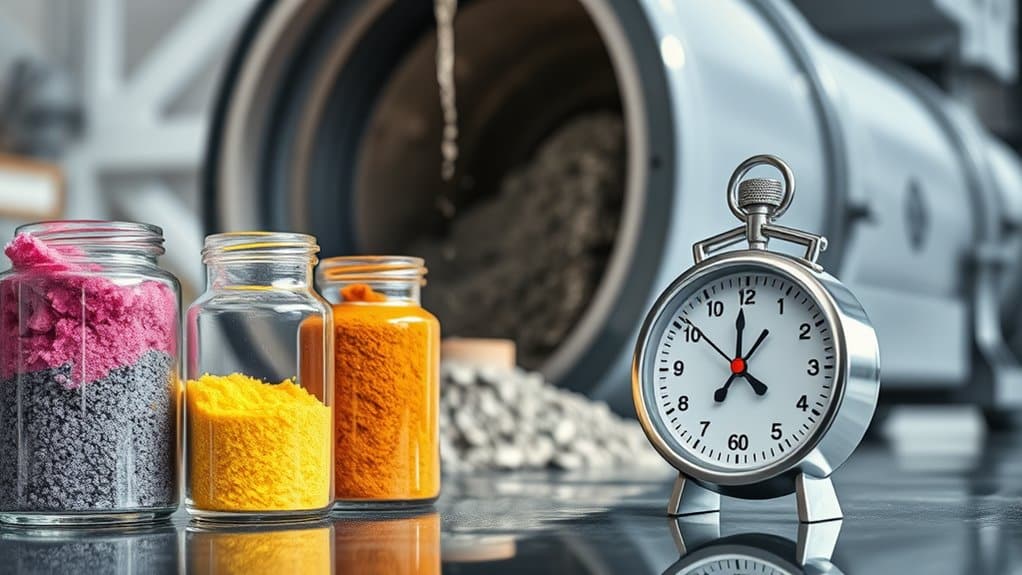
Controlling setting time is essential for optimising concrete performance in various conditions.
You can speed up the setting time for projects in cold weather or use retarders for larger pours that require more working time.
By carefully adjusting admixture dosages and timing, you can effectively manage the setting process to suit your project's specific needs.
For example, if you're pouring concrete in winter, using accelerators can help ensure the mix sets properly before the cold affects it.
Accelerating Setting Benefits
Accelerating admixtures significantly improve the setting time of concrete, offering key advantages for various construction projects.
Here are the main benefits:
- Quicker Strength Gain: These admixtures speed up hydration, allowing for faster development of strength in the concrete.
- Better Performance in Cold Conditions: They're particularly useful for work in temperatures below 13°C (55°F), helping to ensure projects stay on schedule.
- Improved Workability: Accelerating admixtures enhance the pumpability and application of concrete, especially when used alongside water-reducing agents.
Retarding Setting Applications
Hot weather and complex pours can make concrete placement tricky, but retarding admixtures offer an effective solution for managing setting times.
These admixtures work by delaying the hydration of tricalcium aluminate (C3A) and tricalcium silicate (C3S), which helps to extend the workability period. This is especially useful in high temperatures, where quick setting can hinder workability and create cold joints.
For instance, lignosulfonate and citric acid-based admixtures allow you to transport concrete over longer distances without it stiffening too soon.
Using retarding admixtures not only leads to better finishes and reduces the risk of cracking but also enhances the overall structural integrity.
Therefore, they're vital for successful concrete placement, especially in challenging conditions.
Precise Control Techniques
Achieving precise control over setting time in concrete is crucial for optimal performance during placement.
Here are some techniques to help you manage setting times effectively:
- Adjust Mix Proportions: Alter the water-cement ratio and consider using rapid-hardening cement to affect how quickly the concrete sets.
- Use Accelerators: Add calcium chloride or other accelerators to enhance hydration, particularly in colder conditions.
- Monitor Environmental Conditions: Keep an eye on temperature and humidity; high temperatures can speed up setting, while high humidity may slow it down.
Balancing these factors is key to optimising performance.
Improving Durability

To improve the durability of ready-mix concrete, it's important to optimise several key factors, including the water-cement ratio, aggregate gradation, and the choice of admixtures.
Optimising the water-cement ratio is crucial; reducing water content lowers permeability, which helps prevent moisture-related issues such as chloride ingress.
Using water-reducing admixtures allows you to maintain workability without adding more water, resulting in stronger concrete with less shrinkage.
Incorporating air-entraining agents is also beneficial, as they create tiny bubbles that relieve pressure during freeze-thaw cycles, reducing the risk of cracking.
Strength Enhancement Techniques
To enhance the strength of ready-mix concrete, a strategic approach is essential for improving durability. Here are some effective techniques:
- Reinforce with Steel: Adding steel rebar boosts tensile strength, making the concrete more resilient.
- Cement to Water Ratio: Keep the right ratio to optimise the concrete's strength. A lower water content often leads to stronger concrete.
- Use Admixtures: Incorporate water reducers and superplasticisers to improve workability without compromising strength.
These methods significantly affect performance metrics and ensure reliable strength testing results.
Additionally, employing slow curing techniques allows the concrete to hydrate effectively, leading to maximum strength development.
Environmental Advantages

With the growing demand for sustainable construction, admixtures in ready-mix concrete play a vital role in reducing environmental impact.
These additives improve concrete workability, which helps to lower water usage and promote conservation. They also allow for a reduction in cement content by incorporating supplementary cementitious materials (SCMs), significantly cutting down CO2 emissions from cement production.
Moreover, by using recycled aggregates and industrial by-products, admixtures contribute to a circular economy, minimising waste and dependence on virgin materials.
Enhanced durability from these admixtures extends the lifespan of structures, leading to less frequent maintenance and lower resource consumption over time.
Application in Cold Weather
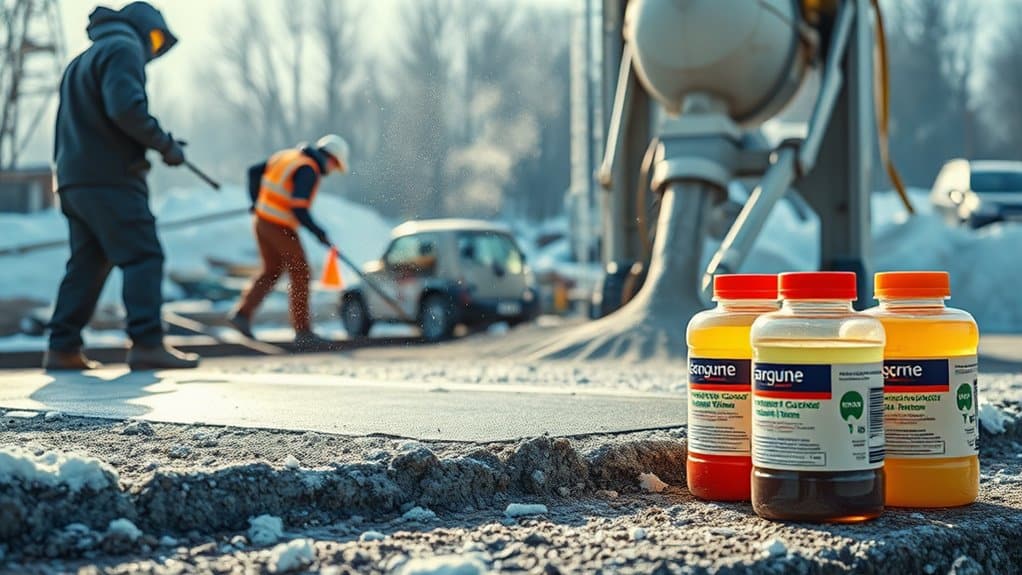
When working in cold weather, it's important to use accelerating admixtures to speed up hydration and improve early strength.
Incorporating superplasticisers can enhance workability, ensuring the concrete performs well.
Additionally, effective curing methods are essential to maintain the durability and integrity of your concrete in these challenging conditions.
For example, covering the concrete with blankets or using heated enclosures can help retain warmth and moisture, promoting better curing outcomes.
Accelerating Admixtures Benefits
Accelerating admixtures are essential for maintaining concrete performance in cold weather, where low temperatures can slow down setting times.
Using these admixtures offers several advantages:
- Quicker Setting Times: They significantly reduce initial setting times, enabling you to finish and put concrete into service within hours.
- Enhanced Strength: Accelerating admixtures promote early-age strength development, crucial for safely removing forms.
- Freeze Resistance: When used at higher dosages, they can prevent freezing at temperatures as low as -7 to 0°C (20 to 32°F), ensuring the concrete remains durable.
Enhanced Workability Techniques
Enhanced workability techniques are crucial for ensuring optimal concrete performance in cold weather. Lower temperatures can create significant workability challenges, but there are effective solutions to tackle these issues.
Start with an improved mix design, using heated water and high-early strength cement to speed up setting times. Consider incorporating air-entrained concrete to bolster freeze-thaw resistance.
Using modified admixtures, such as water-reducing agents, helps lower the water-cement ratio and enhances flowability.
To accelerate curing, calcium chloride-based accelerators can be beneficial, but it's wise to avoid fly ash in these conditions.
Additionally, implement proper handling techniques, like insulating freshly poured concrete and closely monitoring temperatures.
These strategies not only improve workability but also ensure the durability and integrity of your concrete during cold spells.
Curing Strategies in Cold
Curing concrete in cold weather can be challenging, but with the right strategies, you can ensure it gains the strength and durability it needs.
Here are some effective methods to tackle low temperatures:
- Insulate the Concrete: Use insulated blankets or plastic sheeting to trap heat and moisture.
- Warm the Mix Water: Heat the water and aggregates before mixing to maintain a higher concrete temperature.
- Temperature Monitoring: Keep an eye on the concrete temperature, ensuring it stays above 4°C (40°F) throughout the curing process.
Incorporating gradual temperature changes and using accelerating chemical admixtures can help prevent freezing and improve performance.
It's crucial to insulate freshly poured concrete and consistently check conditions to achieve the desired results in cold weather.
Make these curing methods a priority to protect the quality of your concrete and prevent damage.
Application in Hot Weather
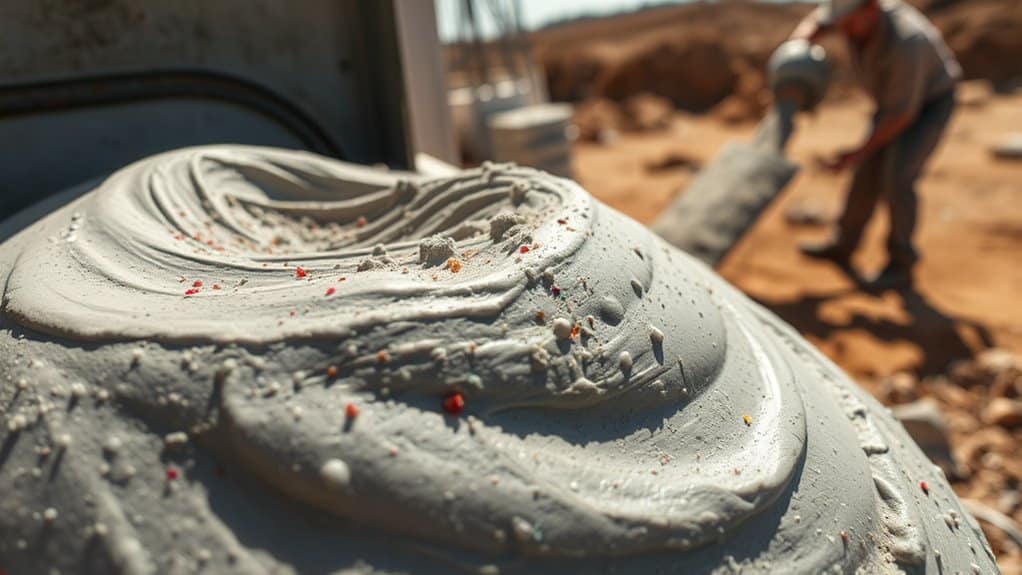
When pouring concrete in hot weather, it's crucial to recognise the specific challenges that high temperatures present. Elevated heat speeds up water evaporation and cement hydration, which can lead to premature setting and cracking during curing.
To counter these issues, schedule mixer trucks to reduce waiting times and plan concrete pours for the cooler parts of the day.
Using retarding admixtures can help prolong setting times, making finishing easier. Superplasticisers improve workability without increasing water content, which helps maintain consistency.
Additionally, opting for low-heat cement and supplementary materials can reduce heat generation and the risk of thermal cracking.
Incorporating Recycled Materials

Incorporating recycled materials into ready-mix concrete addresses environmental concerns while improving performance.
Using recycled aggregates offers several key benefits:
- Waste Reduction: Recycling helps minimise construction and demolition waste, supporting environmental sustainability.
- Energy Efficiency: Recycled materials enhance thermal insulation, making energy use more efficient.
- Cost Savings: Substituting some mineral aggregates with recycled ones can reduce overall concrete mix costs.
However, it's important to ensure the quality of recycled aggregates, as this can affect compressive strength and other mechanical properties.
Consistent quality in your mixes is crucial for maintaining performance.
Future Trends in Admixtures
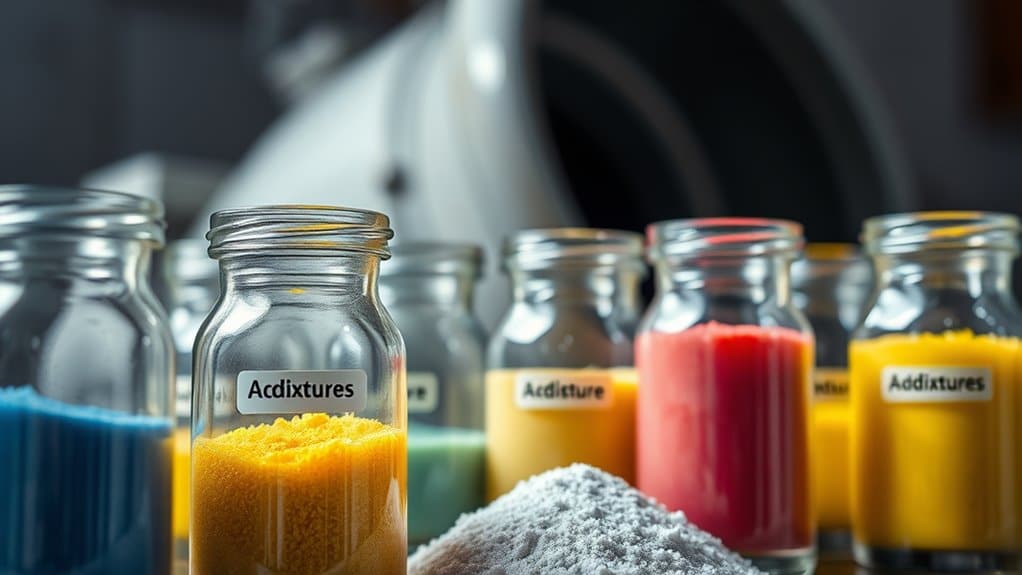
As the construction industry advances, the future of concrete admixtures is set to embrace both innovation and sustainability.
Expect to see significant developments, such as advanced chemical admixtures and bio-sourced materials that help reduce carbon emissions. Market forecasts suggest a compound annual growth rate of 6.1% from 2024 to 2029, driven by the rising demand for high-performance solutions in infrastructure renewal and smart city projects.
Key trends will include improvements in durability through self-healing technologies and corrosion inhibitors, alongside a shift towards eco-friendly formulations.
Major companies are innovating their product lines to incorporate sustainable materials, aligning concrete admixtures with global sustainability goals.
Adopting these advancements will be essential for the success of your construction projects.
Frequently Asked Questions
How Do Admixtures Affect the Cost of Ready-Mix Concrete?
Admixture costs can significantly influence the price of ready-mix concrete. By comparing prices, you can discover the cost advantages of different admixtures. This helps you enhance performance while keeping expenses in check, ensuring your project stays within budget and meets durability standards. For instance, using a high-performance water-reducing admixture may initially seem more expensive, but it can reduce the overall amount of concrete needed, saving you money in the long run.
Can Admixtures Be Used With Any Type of Cement?
Yes, you can use admixtures with different types of cement, but it's important to check their compatibility. Various cement types can react differently with admixtures, which may impact their performance. For instance, a water-reducing admixture might work well with Portland cement but could behave unpredictably with a blended cement. Therefore, testing and optimisation are crucial to achieve the best results.
Are There Any Health Risks Associated With Admixtures?
Yes, there are health risks associated with admixtures, such as chemical burns and respiratory problems. To reduce these risks, it's essential to use safety measures like wearing protective gear, ensuring good ventilation, and avoiding skin contact. For instance, always wear gloves when handling chemicals to prevent skin irritation. Taking these precautions can help prevent serious injuries and long-term health issues.
How Should Admixtures Be Stored and Handled?
Ensure that admixtures are stored properly in insulated tanks, keeping an eye on temperature and ventilation. Stick to strict handling procedures to avoid contamination. Use precise dosing equipment for efficient and accurate admixture integration into concrete, ensuring consistent quality throughout.
What Role Do Admixtures Play in Concrete Recycling Processes?
Did you know that using recycled concrete can lower carbon emissions by as much as 70%? Admixtures play a crucial role in this by improving workability and durability. They help make recycling concrete more sustainable, enhancing material efficiency and performance. For example, incorporating plasticiser admixtures can make the concrete easier to work with, ensuring a smoother finish and better structural integrity.
Conclusion
Incorporating admixtures into ready-mix concrete is essential for optimising performance. They enhance workability, control setting times, and adapt to different weather conditions, significantly boosting concrete's durability and sustainability. As you consider future trends, think about how these innovations can elevate your projects. It's time to harness the full potential of admixtures for superior concrete solutions. Embrace these advancements to ensure your concrete lasts.

Learn about the diverse types of concrete used in construction and discover which mix can transform your next project.

For a long-lasting driveway that laughs in the face of the UK's unpredictable weather, the C20 concrete mix is your Read more

In the UK, you've got a a lot of lightweight concrete types to choose from, each with its unique perks. Read more