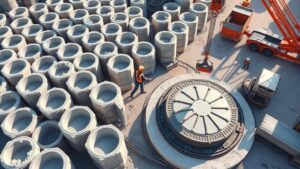
High-strength ready-mix concrete has a compressive strength of over 50 MPa (6,000 psi), making it essential for demanding construction projects. It's perfect for foundations, high-rise buildings, and industrial applications due to its exceptional durability. The mix is carefully formulated with high-quality cement and additives, which improve its resistance to wear and environmental factors. This concrete significantly enhances load-bearing capacity and lowers long-term maintenance costs.
While the initial investment may be higher, the long-term savings often make it worthwhile. By grasping its characteristics and benefits, you can make informed decisions for your projects and uncover a range of applications.
Key Takeaways
High-strength ready-mix concrete has a compressive strength of over 50 MPa, achieved through a carefully designed mix for improved durability and performance. It's often used in foundations, skyscrapers, bridges, and other infrastructure projects because of its excellent load-bearing capacity.
This type of concrete can lead to long-term cost savings by reducing maintenance requirements and cutting down on labour and material waste. It is produced in controlled conditions, which ensures consistent quality and greater resistance to environmental wear and tear.
Effective curing methods, like continuous moist curing, are essential for maximising strength and performance after placement.
Definition and Characteristics
High-strength ready-mix concrete is a specialised material designed to exceed a compressive strength of 50 MPa (6,000 psi), making it suitable for demanding structural applications.
Its formulation includes high-quality cement, a precise water-to-cement ratio of 0.25 to 0.35, and often incorporates chemical admixtures or supplementary cementitious materials. This careful mix enhances durability, resulting in lower permeability and higher flexural strength, which help to minimise water infiltration and reduce the risk of corrosion in reinforcement bars. Additionally, 4000 PSI ready mix concrete ensures optimal strength for industrial and commercial projects, providing a reliable foundation for various applications.
This type of concrete is particularly resilient against wear, erosion, and weathering, making it ideal for harsh environments. In addition, its enhanced performance is essential for long-span bridges and structures in seismic zones due to better energy absorption.
To achieve its full compressive strength, controlled curing conditions and temperature management during mixing are crucial, ensuring that the material meets strict project specifications.
Applications and Uses

In modern construction, ready-mix concrete is incredibly versatile, making it suitable for a range of applications in residential, commercial, and infrastructure projects.
In homes, it's commonly used for foundations, walls, driveways, and patios, delivering the strength and durability required for lasting structures. High-strength ready-mix concrete often incorporates supplementary cementitious materials, which enhance its performance and sustainability. Ready Mix Concrete is also available in various grades and strengths depending on project requirements, ensuring optimal performance.
For commercial purposes, high-strength ready-mix concrete is essential for high-rise buildings, commercial flooring, and parking areas, as it can withstand heavy traffic and environmental pressures.
It also plays a crucial role in industrial facilities, ensuring structures endure tough conditions.
This adaptability positions high-strength ready-mix concrete as an excellent choice for various building needs, enhancing performance and longevity across the construction sector.
Benefits and Advantages

When it comes to construction materials, the benefits of ready-mix concrete are clear. Its durability comes from being produced in controlled environments, which ensures consistent strength and less variability, leading to reliable performance. This consistency translates to fewer repairs and reduced long-term maintenance costs. Additionally, the stringent quality standards adhered to in production ensure each batch meets specific project requirements, enhancing structural integrity. The custom mixes available for different applications further enhance the adaptability of ready-mix concrete.
Moreover, ready-mix concrete can save money by cutting down on labour costs and minimising material waste. With efficient delivery and prep processes, project timelines can be shortened, boosting productivity and profitability.
By eliminating on-site mixing, ready-mix concrete not only lowers safety risks but also helps conserve energy and resources, making it a more environmentally friendly choice.
Design and Production Considerations
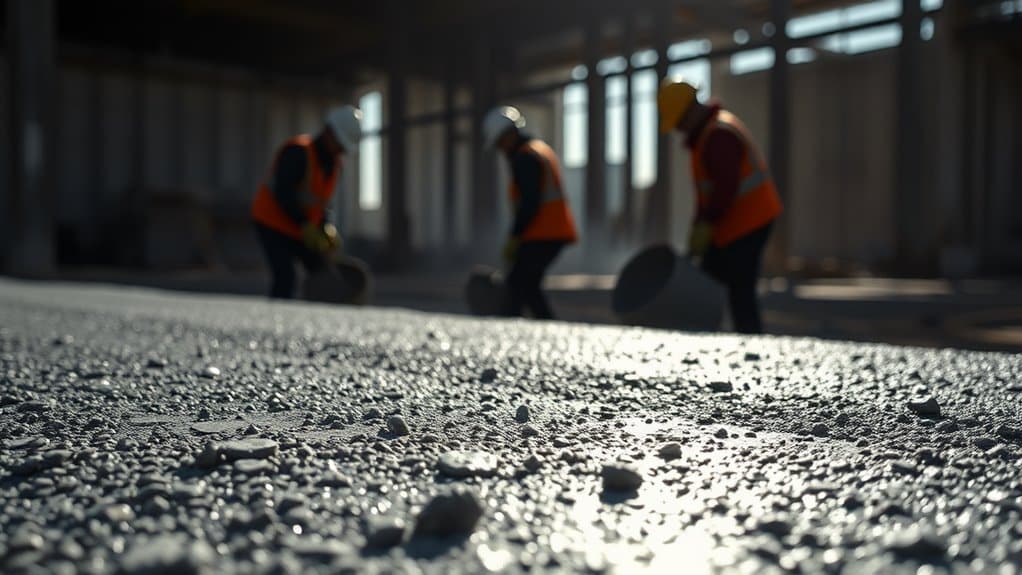
When designing and producing high-strength ready-mix concrete, it's crucial to follow established guidelines such as ACI 211.1. This framework helps balance cost with essential qualities like strength, durability, and workability.
Ensure your mix design includes high-quality materials, such as well-graded aggregates and appropriate admixtures. Pay close attention to the water/cement ratio, as this significantly affects performance.
Utilise wet batch production methods with a compulsory mixer to achieve consistent results. Accurate moisture measurement and precise dosing systems are vital for reducing variability.
Implement effective control systems for temperature and moisture correction. Regular testing of materials and equipment calibration is essential for quality assurance.
This careful approach will enhance the overall quality and performance of the concrete.
Common Misconceptions and Limitations

High-strength ready-mix concrete is often misunderstood, leading to misconceptions about its cost, applications, and versatility. Many assume it's only for large projects, but it can be effectively used in smaller applications too.
Contrary to popular belief, high-strength concrete offers durability on par with site-mixed varieties. Its ability to be customised means it can meet a range of project requirements.
While it may be more expensive than standard mixes, the benefits often justify the investment. However, there are limitations to consider, such as quality control and workability challenges.
Understanding these factors will help you make informed decisions when selecting high-strength ready-mix concrete for your projects.
Future Developments and Trends
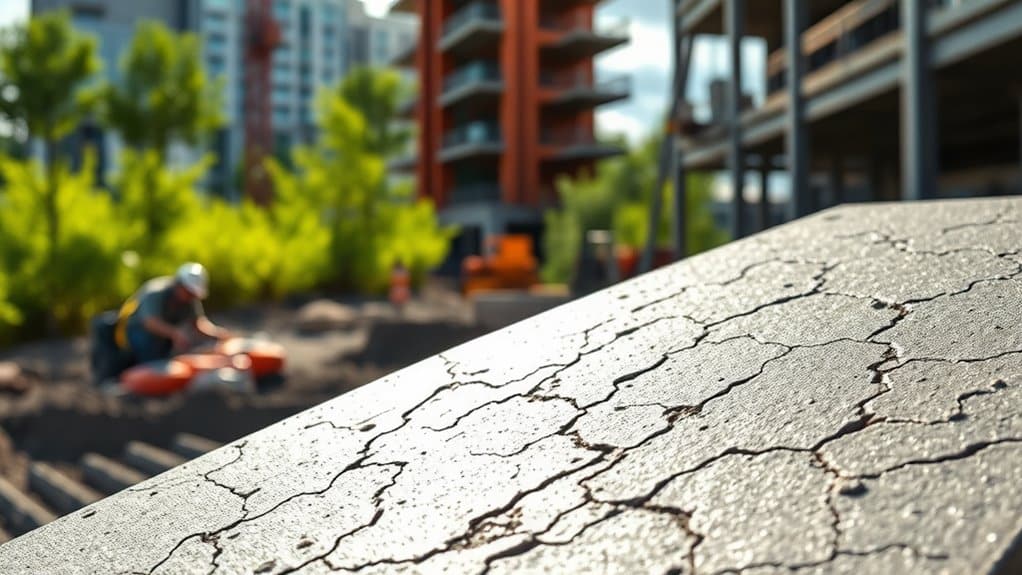
Misconceptions about high-strength ready-mix concrete often cloud its potential for innovation and sustainability. Advances in high-strength concrete formulations now incorporate supplemental cementitious materials, improving strength while promoting eco-friendliness.
Innovations like low-carbon cements and recycled aggregates position high-strength concrete as a top choice in contemporary construction.
Technologies such as 3D printing and smart concrete, including self-healing materials, are transforming the industry. Improved mixing techniques ensure consistent quality, while ultra-high-performance concrete meets the needs of tall buildings.
Ongoing investments in infrastructure further heighten the demand for sustainable concrete solutions. As the construction sector evolves, embracing these advancements will foster safer, more sustainable building practices, ultimately changing our approach to concrete construction.
Comparison With Conventional Concrete
While conventional concrete serves basic construction needs, high-strength concrete significantly outshines it in key areas like compressive strength, durability, and lifespan.
High-strength concrete can achieve compressive strengths over 50 MPa, whereas conventional concrete typically ranges from 20 to 40 MPa. This enhanced strength means it can bear heavier loads, making it suitable for high-rise buildings and demanding infrastructure projects.
Moreover, high-strength concrete has lower permeability, which improves its resistance to corrosion and weathering, leading to better long-term performance.
It not only withstands dynamic loads more effectively but also requires less maintenance. Although it comes with a higher initial cost, the long-term savings make it a more economical choice.
Best Practices for Use
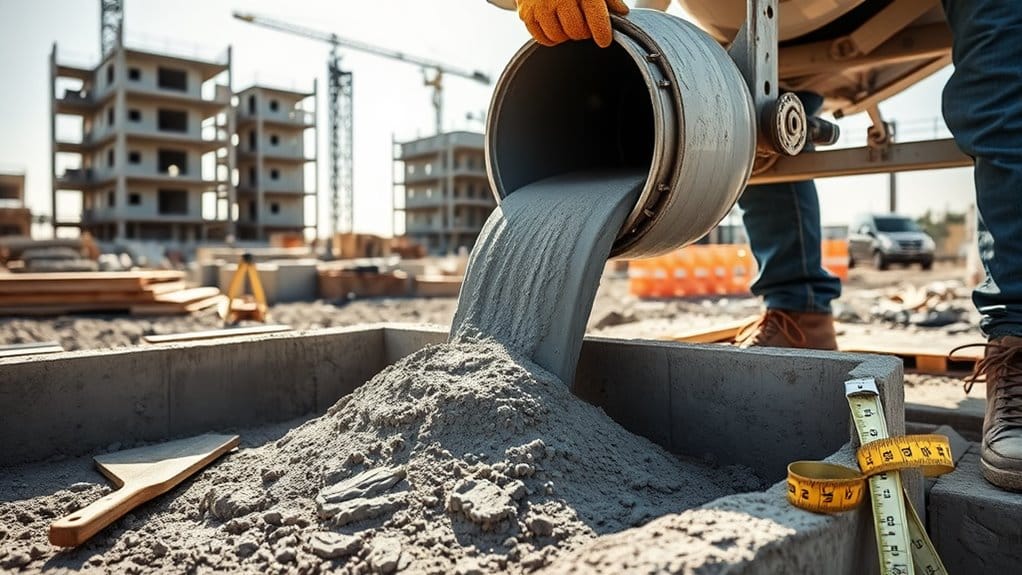
High-strength ready-mix concrete requires specific practices to ensure its performance and longevity.
Start with precise mixing techniques—accurately measure your materials to achieve the correct mix proportions. Use quality mixers and batch plants for thorough blending, and control the mixing time to avoid segregation.
When placing the concrete, use effective techniques and ensure proper formwork and reinforcement. Employ vibration methods to improve consolidation and keep an eye on flow and slump for workability.
Curing is essential; use methods like water curing or curing compounds right after placement. Maintain adequate moisture levels and be aware of weather conditions for optimal curing.
Continuous moist-curing for at least 28 days is crucial for achieving maximum strength. By following these guidelines, you can ensure the durability and strength of your concrete.
Frequently Asked Questions
How Does High-Strength Concrete Compare in Cost to Standard Concrete?
When comparing costs, high-strength concrete generally falls between £120 to £160 per cubic metre. This pricing can vary based on factors like strength requirements and the scale of the project, making it 15% to 43% pricier than standard concrete.
What Are the Environmental Impacts of High-Strength Concrete Production?
The production of high-strength concrete has a significant environmental impact, primarily due to its carbon footprint and resource consumption. The processes involved are energy-intensive, and the extraction of raw materials can lead to habitat destruction and increased emissions. For instance, quarrying for aggregates not only disrupts local ecosystems but also requires considerable energy, contributing to climate change. This highlights the urgent need for sustainable practices within the construction industry.
Can High-Strength Concrete Be Recycled After Use?
Yes, high-strength concrete can be recycled after use, much like a phoenix rising from the ashes. Various recycling methods improve the durability of concrete, allowing for effective repurposing while reducing environmental impact and conserving resources. For instance, recycled concrete can be used as aggregate in new concrete mixes or as a base material for roads and pavements.
How Is High-Strength Concrete Affected by Extreme Weather Conditions?
Extreme weather conditions can significantly impact high-strength concrete, particularly in terms of freeze-thaw resistance and thermal expansion. In cold weather, there's a risk of freezing and delayed curing, which can weaken the concrete. Conversely, heat accelerates the hydration process, making it crucial to manage temperatures effectively and optimise the mix for the best performance. For instance, during a cold snap, using insulation or heating blankets can help maintain the right conditions for curing, while in hot weather, adding retarders can slow down hydration to prevent cracking.
What Maintenance Is Required for Structures Using High-Strength Concrete?
Regular maintenance can extend a structure's lifespan by as much as 30%. Simple preventive measures, such as sealing cracks and employing effective repair techniques, are essential to ensure your high-strength concrete remains durable and functional. For example, addressing small cracks promptly can prevent more significant issues down the line, saving time and money.
Conclusion
In summary, high-strength ready-mix concrete exemplifies modern engineering, akin to the remarkable structures of the past that have endured through the ages. Its enhanced durability and load-bearing capacity make it perfect for demanding projects, such as high-rise buildings and bridges. By recognising its advantages and following best practices, you can maximise its effectiveness. As you consider future developments, keep in mind that advancements in concrete technology may soon transform the construction landscape.

Learn about the diverse types of concrete used in construction and discover which mix can transform your next project.

For a long-lasting driveway that laughs in the face of the UK's unpredictable weather, the C20 concrete mix is your Read more

In the UK, you've got a a lot of lightweight concrete types to choose from, each with its unique perks. Read more